Spanish summer in a glass

Who knew Halle (near Brussels) could feel like Spain or even feel like summer in middle of winter?! Andy De Brouwer did as he was the one to create this oasis in his restaurant Les Eleveurs (aka a Walhalla for food and wine 🙂 ) together with the Rueda wine region.  Rueda might not seem too familiar, but Verdejo might ring a bell for more people as it is without any doubt the Spain’s most famous white wine… or one of as technically speaking Sherry (Jerez) is also a white wine 🙂

Rueda location

Rueda location (2)

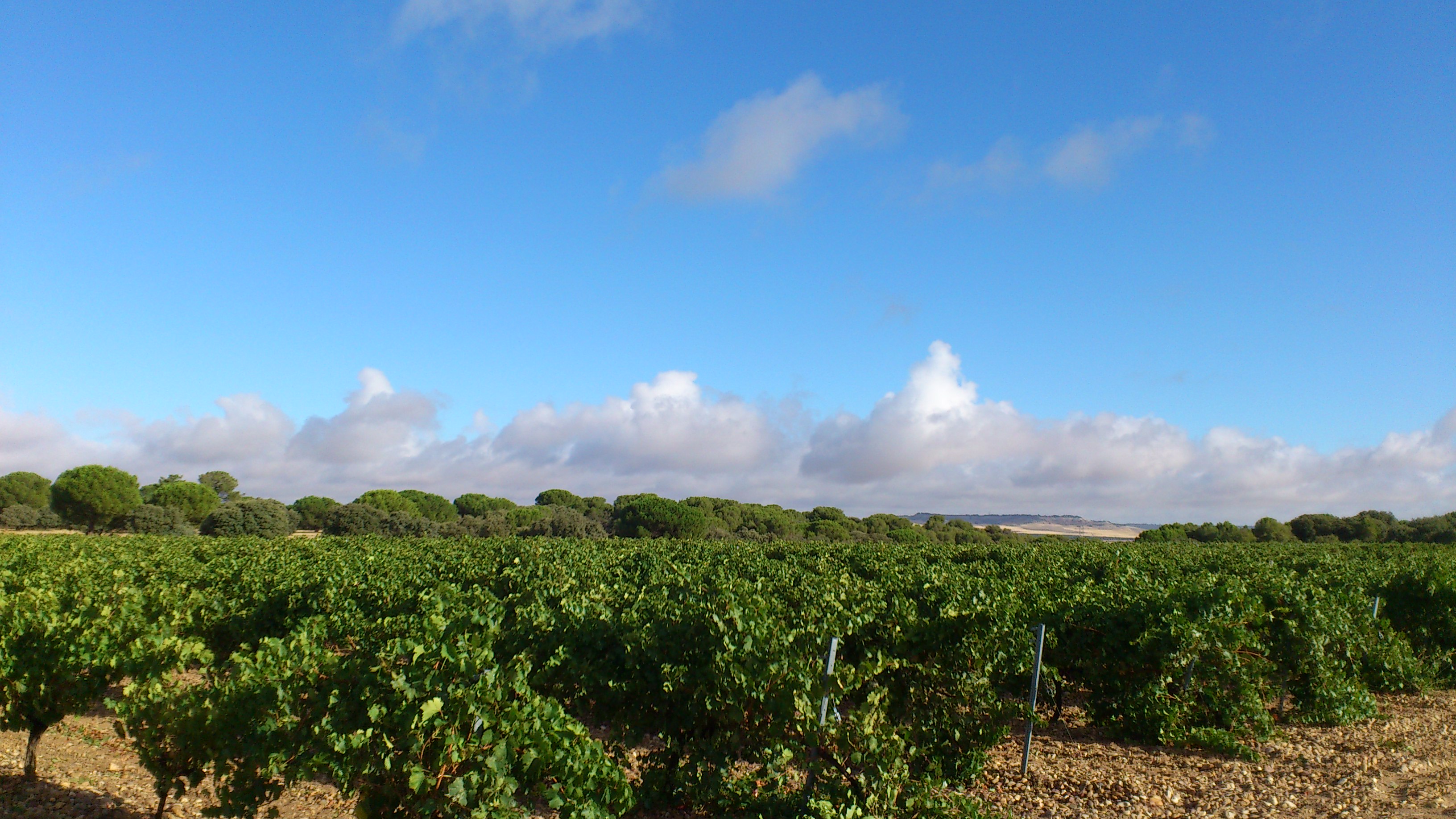
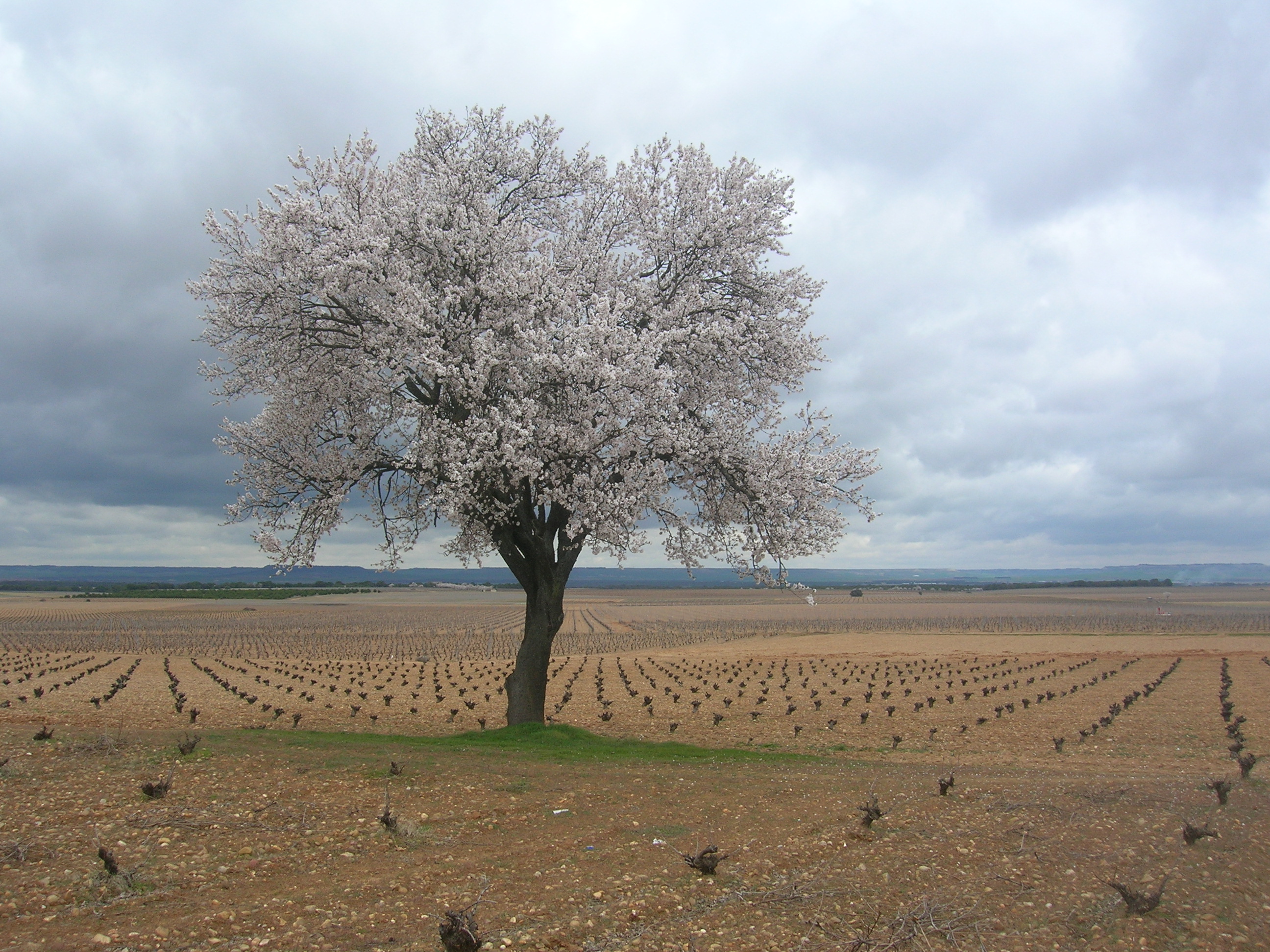
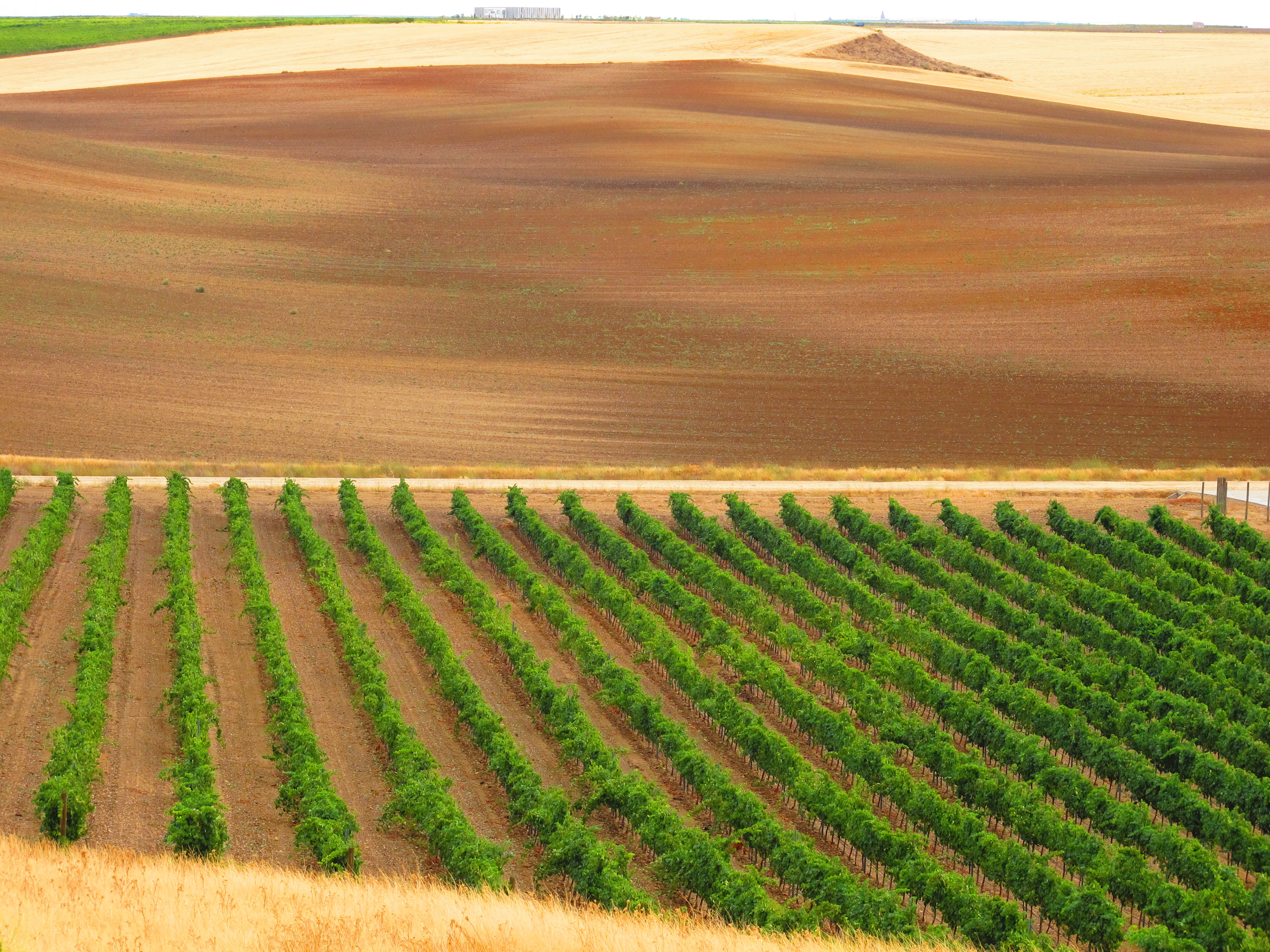
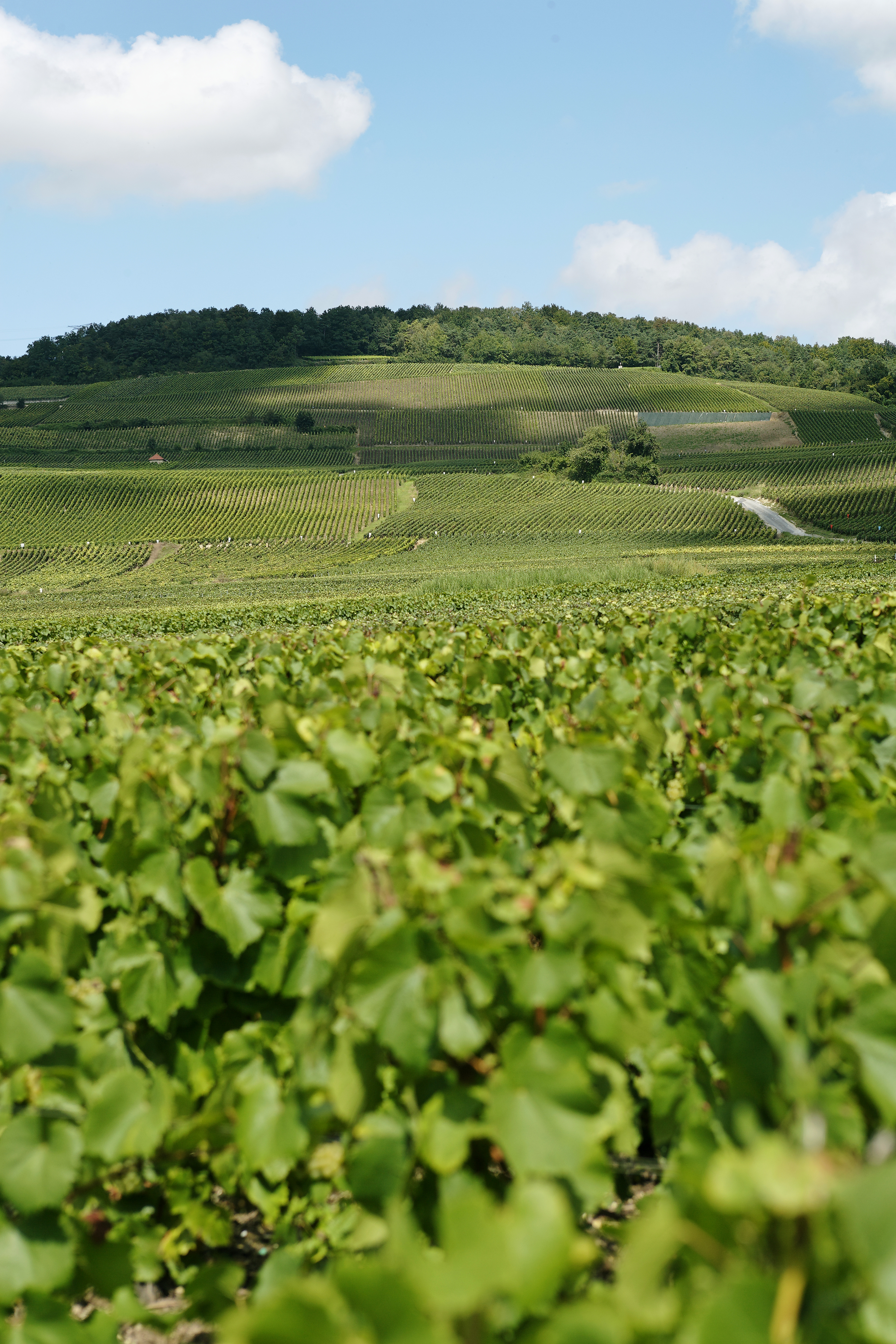
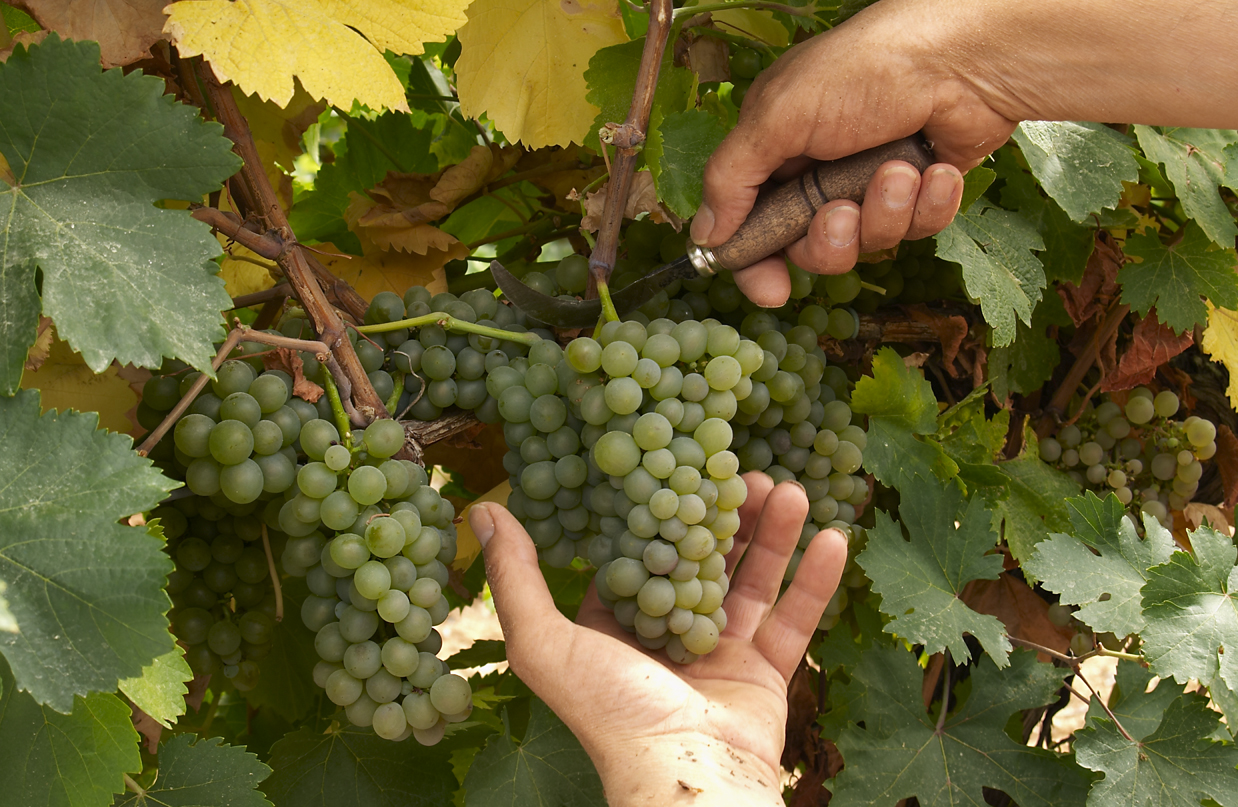
The Rueda region is located in the North of Spain between Portugal and that other very famous Spanish wine region Rioja. You can see it as the Spanish part of the Portuguese Douro valley as the Duera (Douro) river continues its path in this region. The vineyards/vines in the Rueda region are planted 700 to 800 meters above sea- level on dark grey – brown soils… mostly  stony (but easy to farm), with good ventilation and draining. Important to know is that the soil is very rich of calcium and magnesium essential for a good development of the vines.

_DSF4011 D.O. Rueda 5-¬ salida - 001147 DSC_1615 DSCN3698 M.I.Suizos_Sept_2012 (9) M.I.Suizos_Sept_2012 (14)

I must rephrase what I said before as I said this region mostly know for it white wine, but it does also have some world renowned red’s of Toro, Ribera del Duero and Leon. The wine grape of Toro, called Tinta de Toro, has long been considered a mutant of Tempranillo (one of the main grapes in the Rioja region).  Today we’ll be focusing on the white wines.

Why I referred to summer is because the Rueda wines or Verdejo is the perfect wine for on a warm summer’s day in the garden under a pergola with some olives or some thinly sliced Parma ham or Pata Negra. Basically an everyman’s friend…  young, playful, refreshing, smooth and floral. Typically Verdejo wines are aromatic (very fruity), often soft, and full-bodied. That full-bodyness it has to thank to the altitude on which the grapes  are grown (+600m)

Rueda wines

If Andy wouldn’t have told me it would have taking me much longer to find out what the smell and taste of the Verdejo reminded me of, as it did remind me of something I had tasted before… Apparently the Verdejo grape is a sister grape of Sauvignon Blanc and therefore has more or less the same notions as a Sauvignon Blanc and the confuse the enemy even more they sometimes also blend the 2 grape kinds together 🙂 . Sooo being a Sauvignon Blanc lover it won’t come as a surprise I like Verdejo wines as well??!! Also this was the reason it seemed so familiar.  But do keep in mind that it are young wines that should be drunk young as they are not really aging material… also most Verdejo or Rueda wines in general (white ones) haven’t seen too much wooden barrels, which also isn’t necessary as it would make this already  lovely wine more complex without too much reason if it would stay a long time in wooden barrels:-).If they blend the Verdejo with the Sauvignon Blanc it will make a richer and more aromatic wine.
20141216_200255

20141216_200313

20141216_220346 20141216_220339

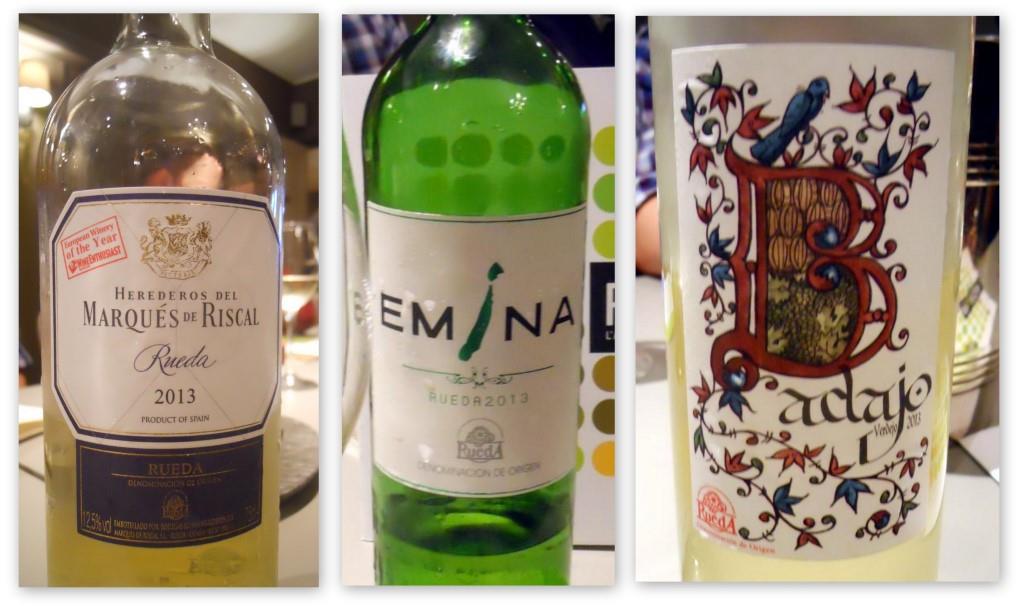
We can do is a make a little distinction between the wines that are really ‘apero’ material as other do require a little snack or dish with it… From the 9 wines we tasted, the first 3 were the perfect example of non expensive (around 7 EUR)  ‘apero’ or ‘summery’ wines (don’t get me wrong all 9 go well without food, but the 3 first best). The wines I’m talking about were a 2013 Rueda Verdejo by  Marqués de Riscal (100% Verdejo), a 2013 Verdejo by  Emina (100% Verdejo)  and last but not least the 2013 Badajo Rueda Verdejo by Gotica. I loved the label from the Badajo as it reminded me a of the wallpaper I used on one of the walls from my still to be born daughter 🙂 🙂  (JUST FYI). Although all 3 wines are 100% of Verdejo grapes you could taste a small difference, the Marques de Riscal fruitier, whereas the Emina was more silt/salty like. FYI all the wines I’m mentioning are available in Belgium.
Apero Ruedas

What I did enjoy was that for the remaining wines Andy and Nico (chef from Les Eleveurs) created and found some great matching dishes tapa style to go with the wines :-). The first matching dish they had to find was to fit with the 2013 Analivia Verdejo by Pagos del Rey. Although it won’t come as a surprise that most dishes included fish as although with can also match some meats the best pairing is still with fish… So for the first dish they went for a puffed  codfish skin with hand peeled grey shrimps and avocado. The freshness of the dish went perfectly with the fruitiness and freshness of the wine. I do love my grey shrimps from the North-sea!!

20141216_205350

Followed by crayfish with a risotto ‘croquette’ to match the Verdejo de Alberto still in the wine types of before nothing extravagant yet, just lovely and easy to drink.
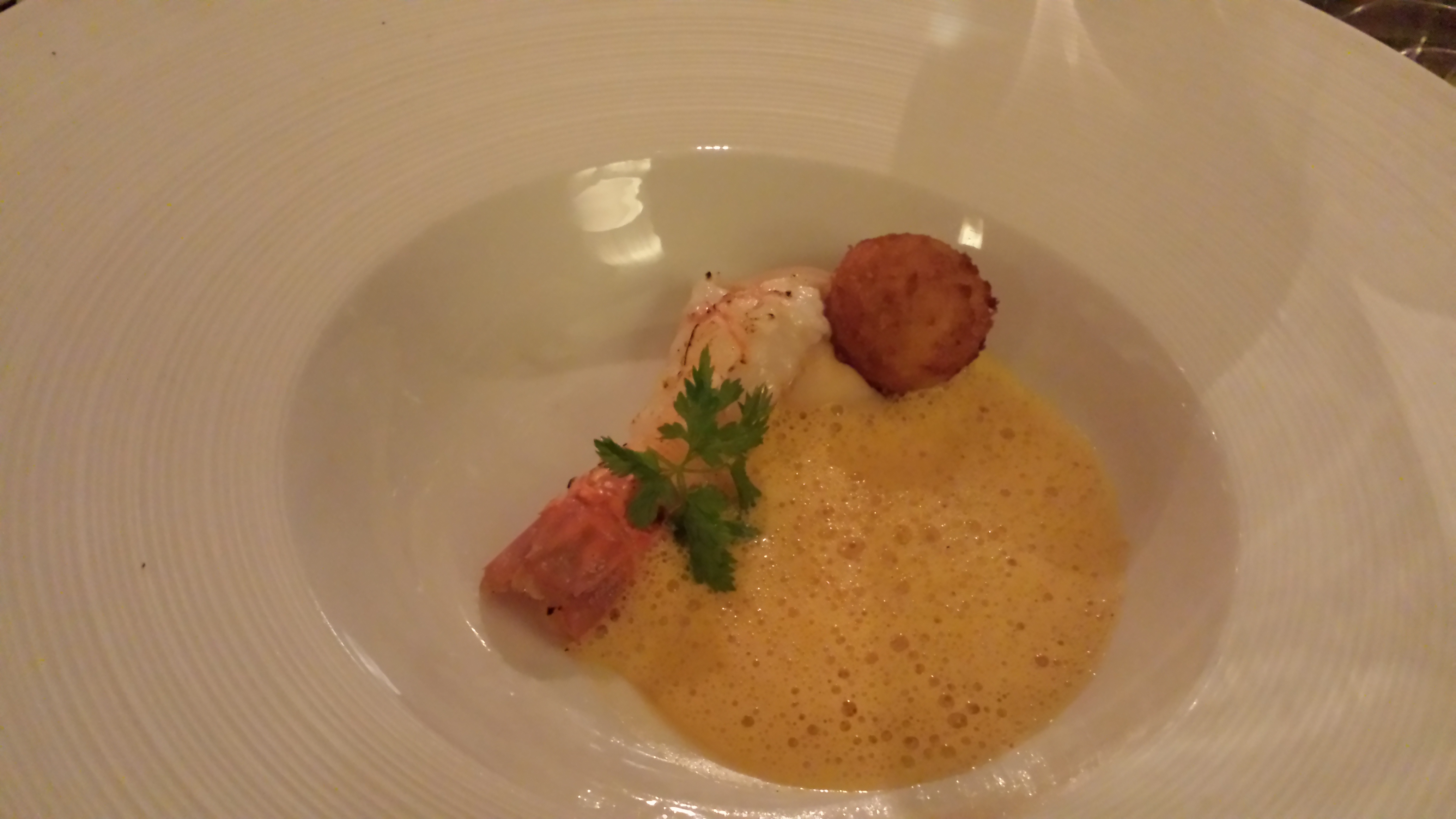
20141216_212744

The wines that were about to follow were slightly more ‘complex’ wines in comparison with the previous ones as some of them did get a little wooden barrel time (not too much though). The Verdejo from Traslagares  is a good example.Well balanced acidity with a touch of bitterness and the taste for 2nd glass and one the favorites of the evening 🙂 Perfect for the hand-caught bass with eggplant caviar and a black olive crumble.
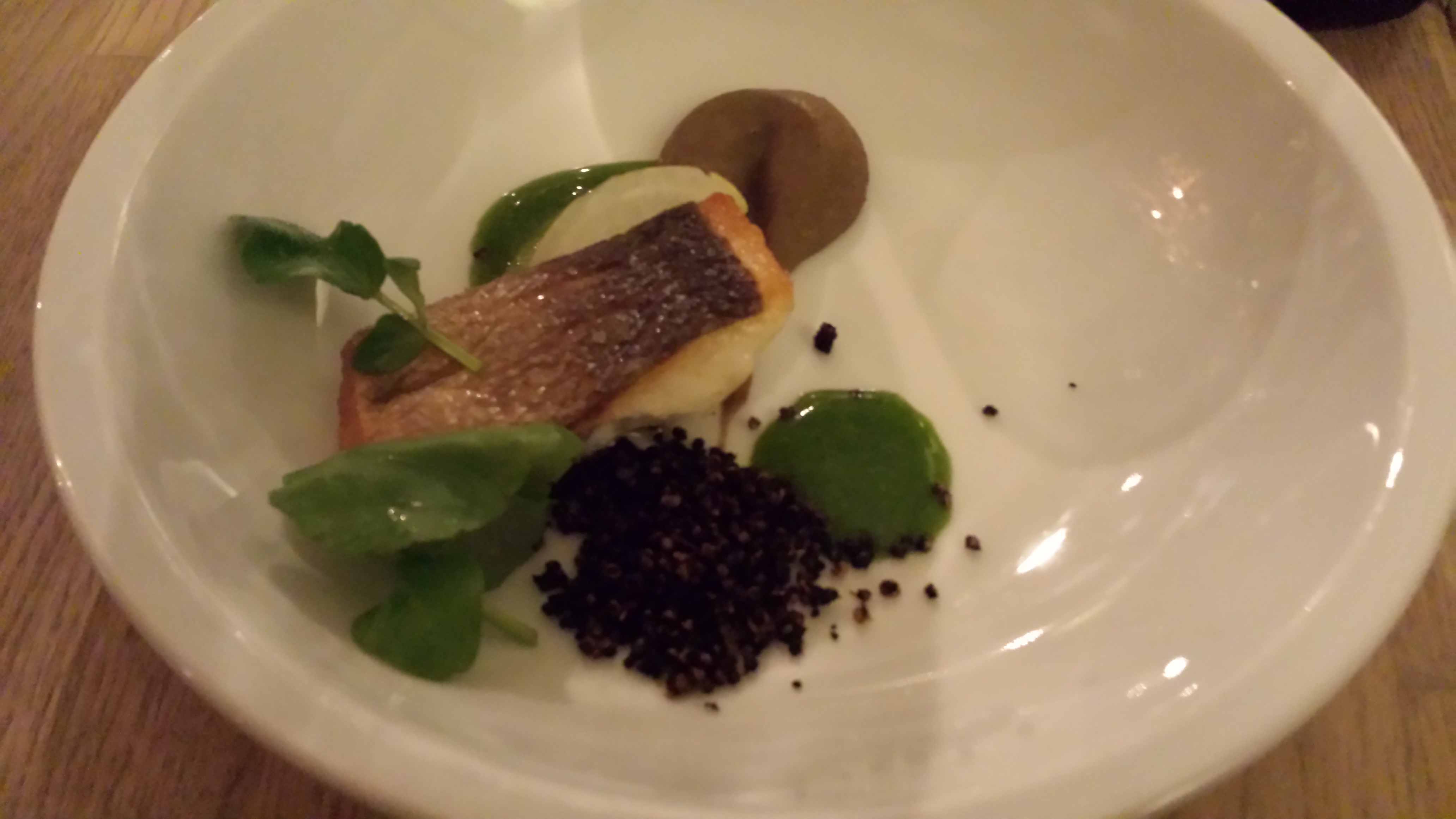
20141216_220308

As first non fish dish we received a on low heat roasted chicken leg Moroccan style paired for the Rueda Verdejo wine by Reina de Castilla probably the most complex wine together with the last wine of the night.
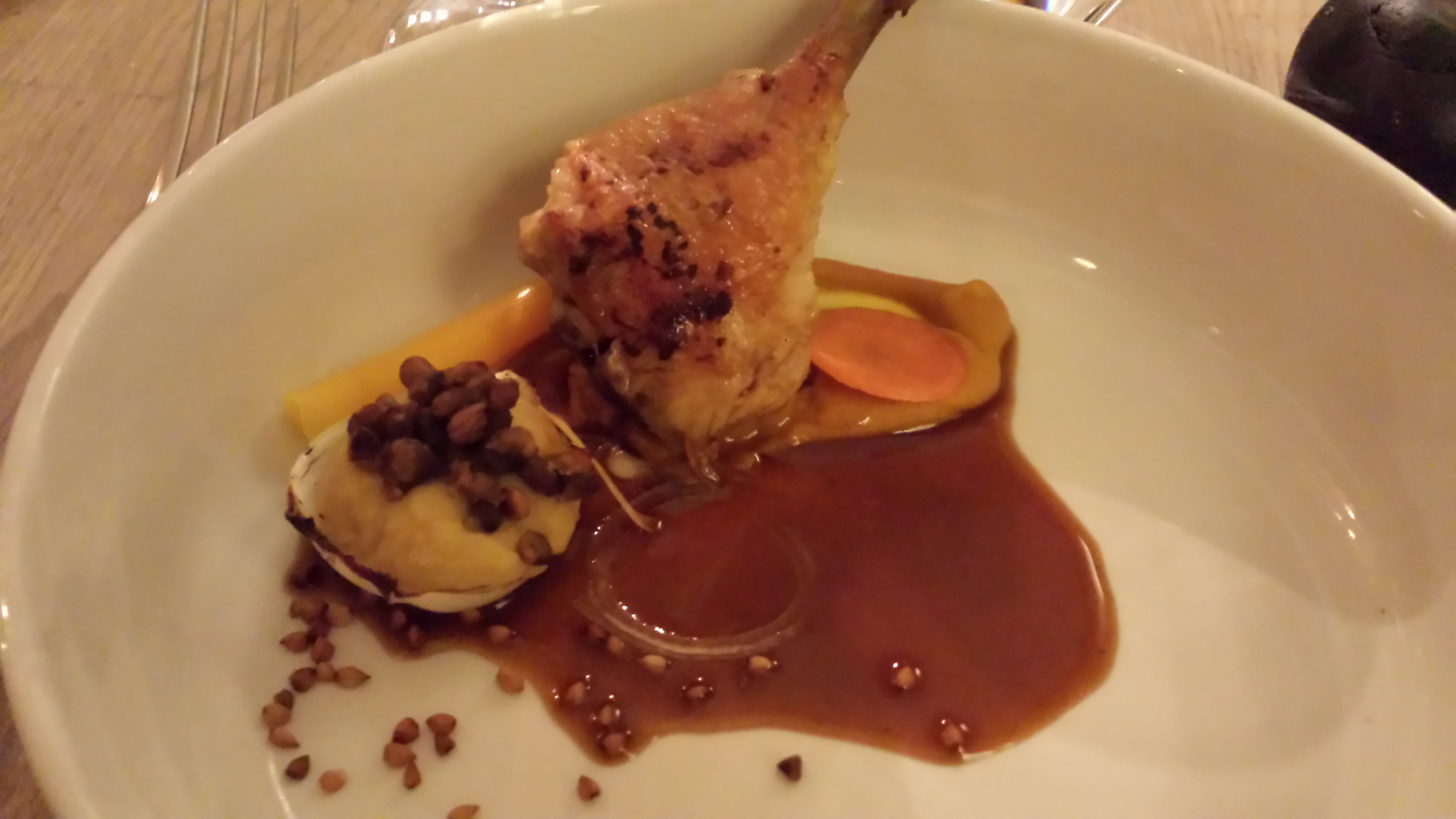
20141216_223749

The frosting on the cake is always the dessert, isn’t it? Normally they had forseen cheeses, but as I’m not really a cheesy guy (in every sense of the word) they gave me a caramel/pear/ice/chocolat dessert which also match perfect with I think favorite wine of the evening the PR3 Barricas Verdejo by Prado Rey that has been on wood for 9 months… which is a long time for this type of wine and results in a stronger wine, but still not too complex, I’d rather call it tropical with a light wood sense in between .

20141216_230956

RUEDA - HALLE1TT

I can’t wait for it to be summer, but I’m sure glass of Rueda wine will help me to keep patient as it truly is summer in a glass!

Hope to visit this region some day!

Thanks to Rueda Wines and Andy De Brouwer for learning me more about wines…

How to make Cannelés de Bordeaux

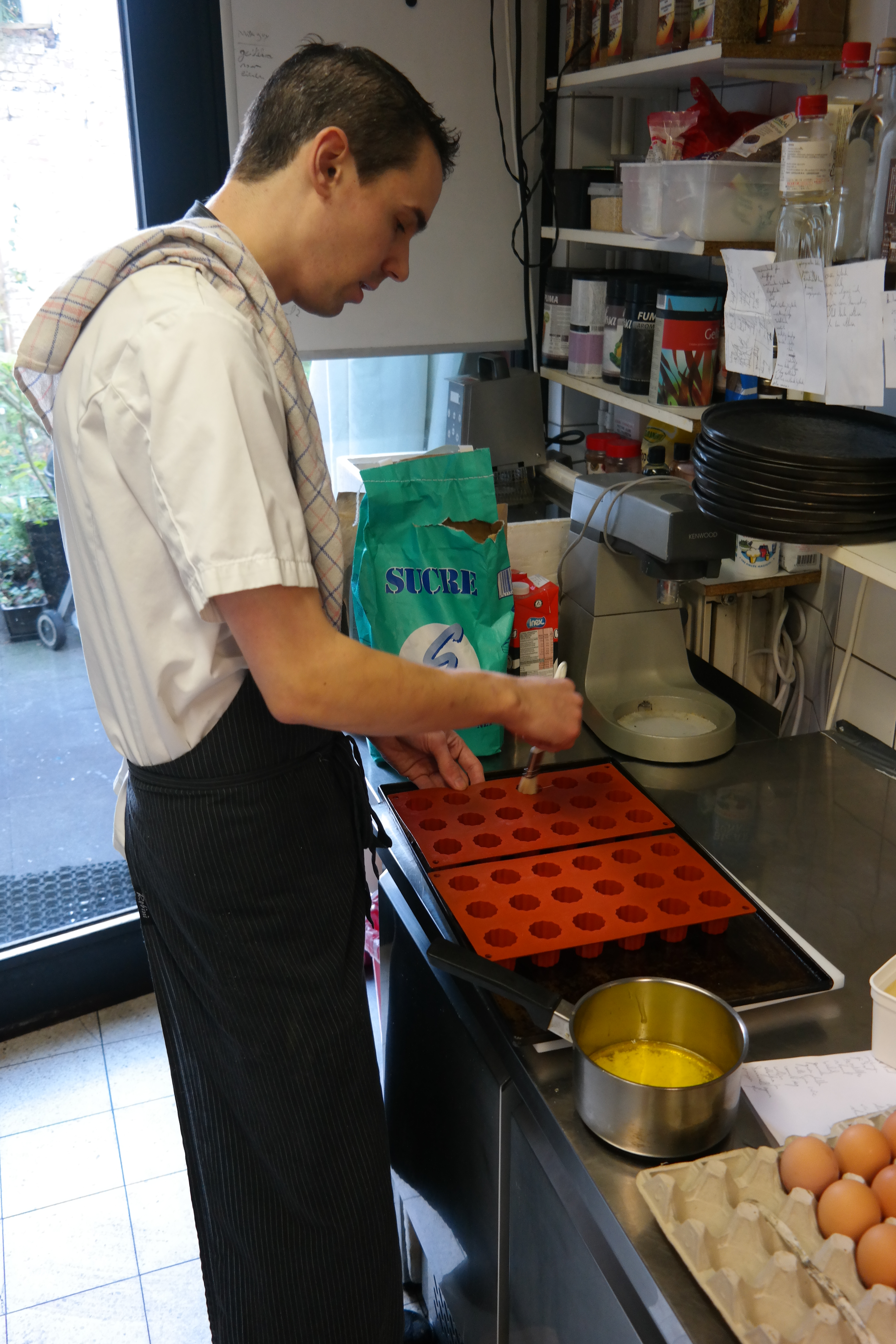
Making desserts has never been my thing, also in cooking school (highschool) we learned how to make lots of nice desserts it didn’t crumble my cookie 😉 😉 😉 Nevertheless from time to time I like eating  like a nice ‘tarte tatin’ or ‘rice pie’… I don’t reallyt make them myself as you can buy them very well prepared in lots of bakeryshops. A dessert or better ‘ friandise‘ I was very keen on learning how to make as you don’t find easily (well prepared ones even more difficult) are ‘Cannelés de Bordeaux’. When a few weeks ago I got served some cannelés at restaurant Ardent and I just had to ask the chef how he made them as even though the recipe isn’t difficult there are always a few tips and tricks you can’t find in books… I even pushed my luck that far on asking him very very kindly if he could maybe show me :-). Lucky me Wouter van Steenwinkel is a very friendly guy who was more than willing to teach me all the tips and tricks to make my beloved ‘Cannelés de Bordeaux’ 🙂 (and to give me a few to eat at home that never got  home 🙂 🙂 )

SAMSUNG CSC

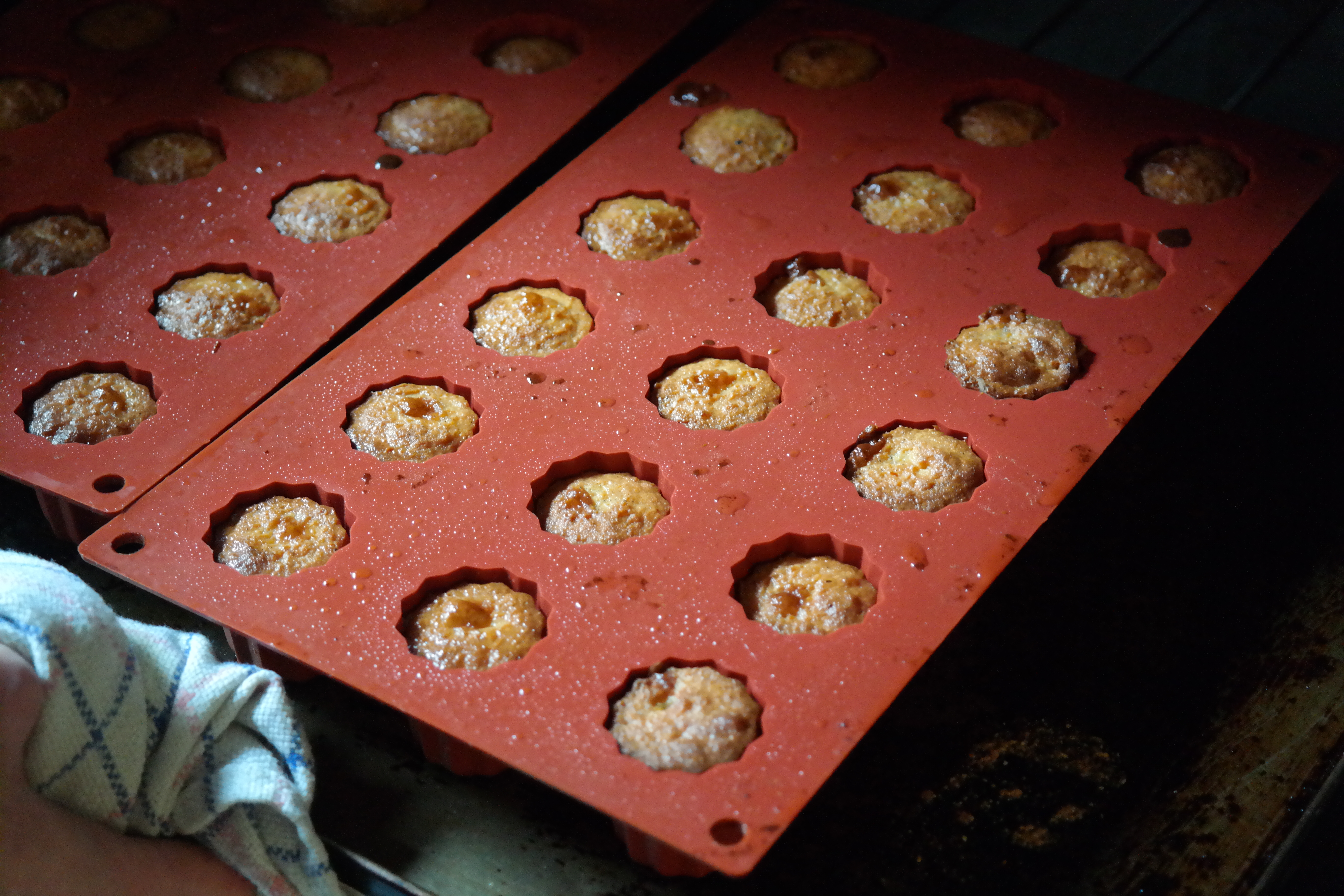
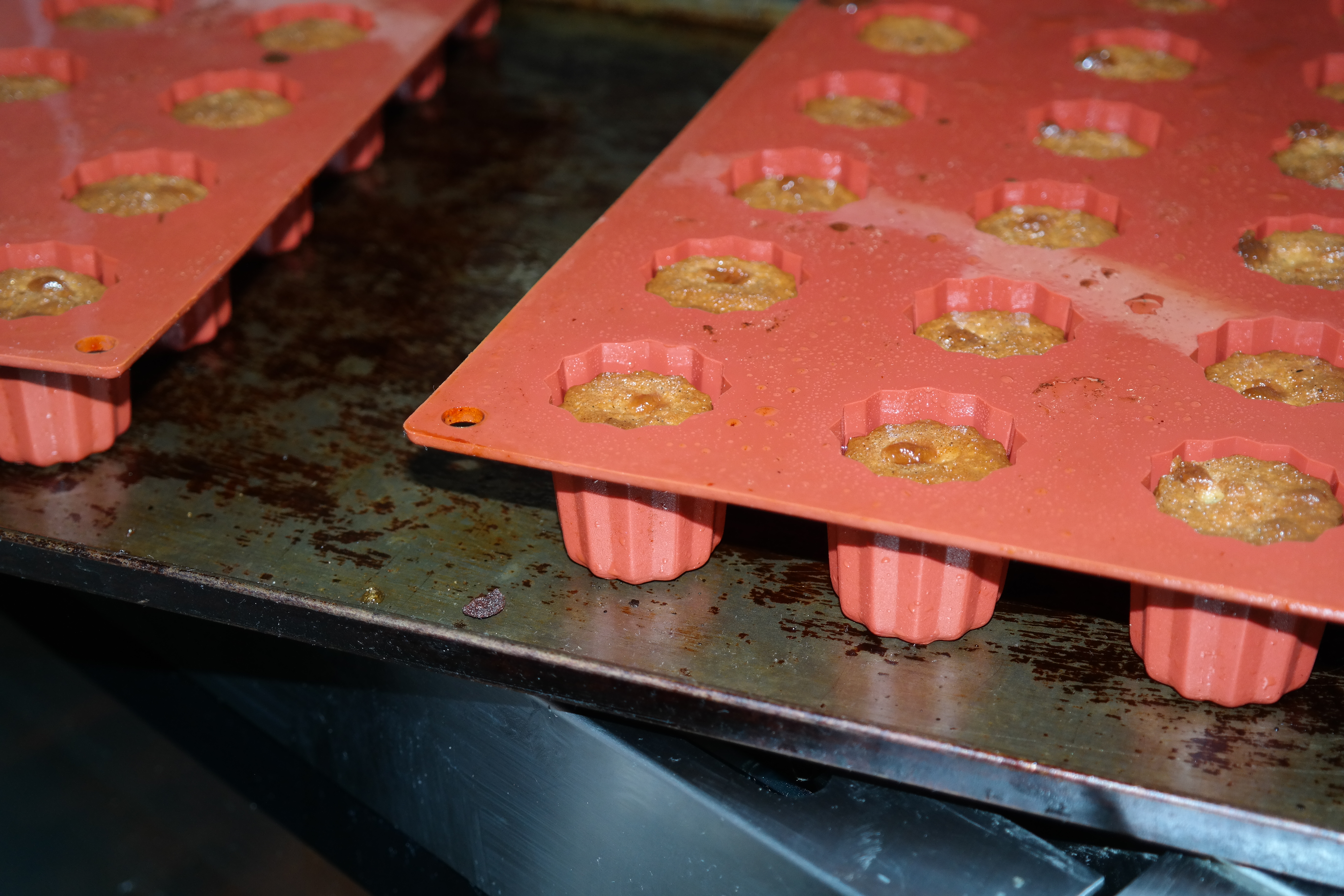
The recipe below is to make ca.75 cannelés. Before we start I must tell you that the batter must be made a day in advance before baking!! The good news is that the batter can be kept for almost 2 weeks in the fridge.  It is also advisable to prepare the cannelés in silicone baking tin (if you have stainless steel they’ll also work, but they don’t give an extra value to the result)

Ingredients:

  • 1l milk
  • 100g butter (cut in small dice)
  • 1 dried vanilla fruit (NO EXTRACT, THE ACTUAL FRUIT)
  • 4 eggs
  • 4 eggyolks
  • 500g sugar
  • 200g flour
  • Brown rum
  • Salt
  • Beeswax (for cooking not for cleaning) or butter to grease the baking tin
  • A needle

Getting Started

The batter:

  • Put a the milk, butter and vanilla fruit (but open) to a boil on a medium heat

SAMSUNG CSC SAMSUNG CSC

  • Take a large bowl to make the batter.
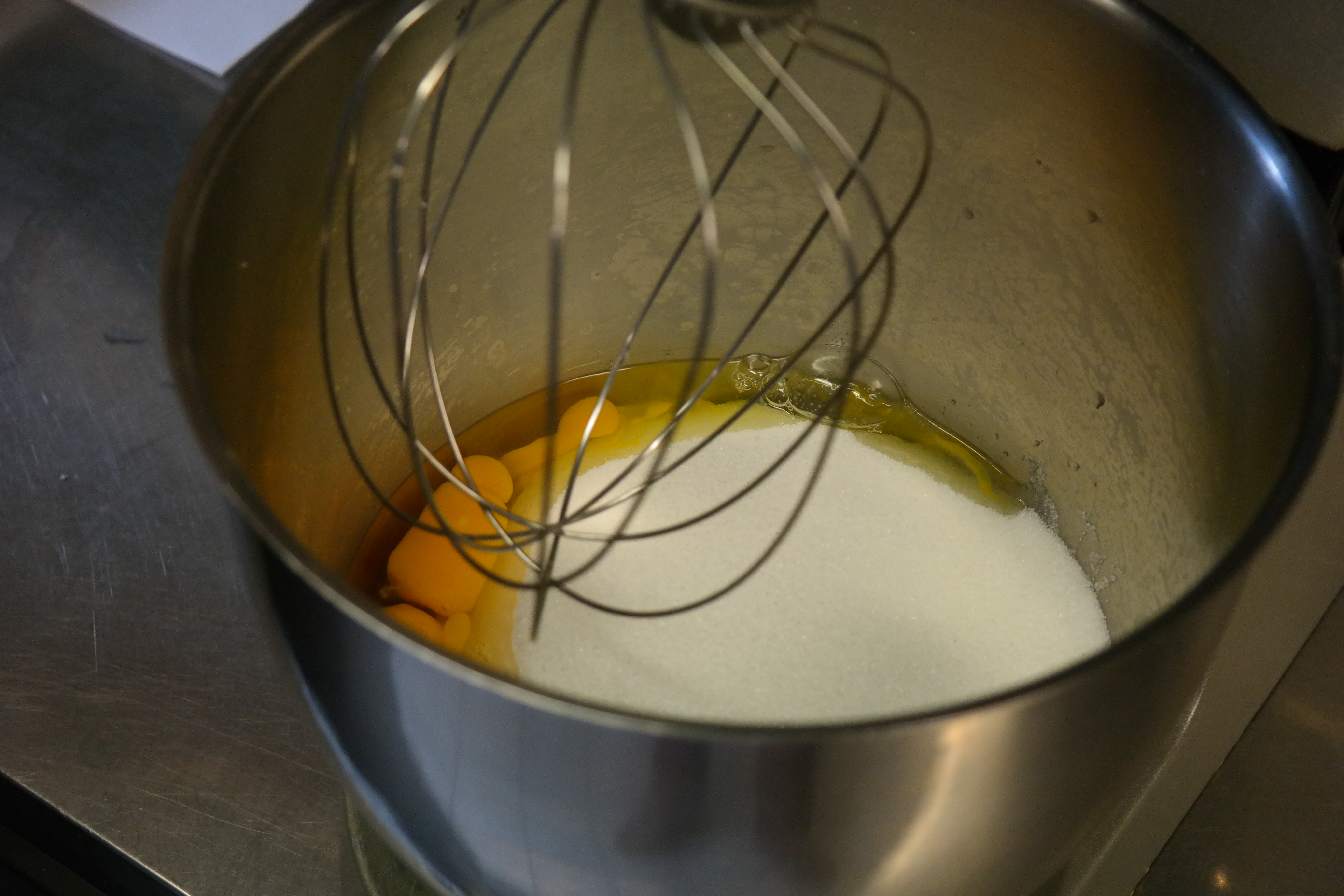
  • Put all the eggs together with the sugar and start mixing them. Just mixing as there doesn’t need to be too much air in the eggs….

SAMSUNG CSC SAMSUNG CSC

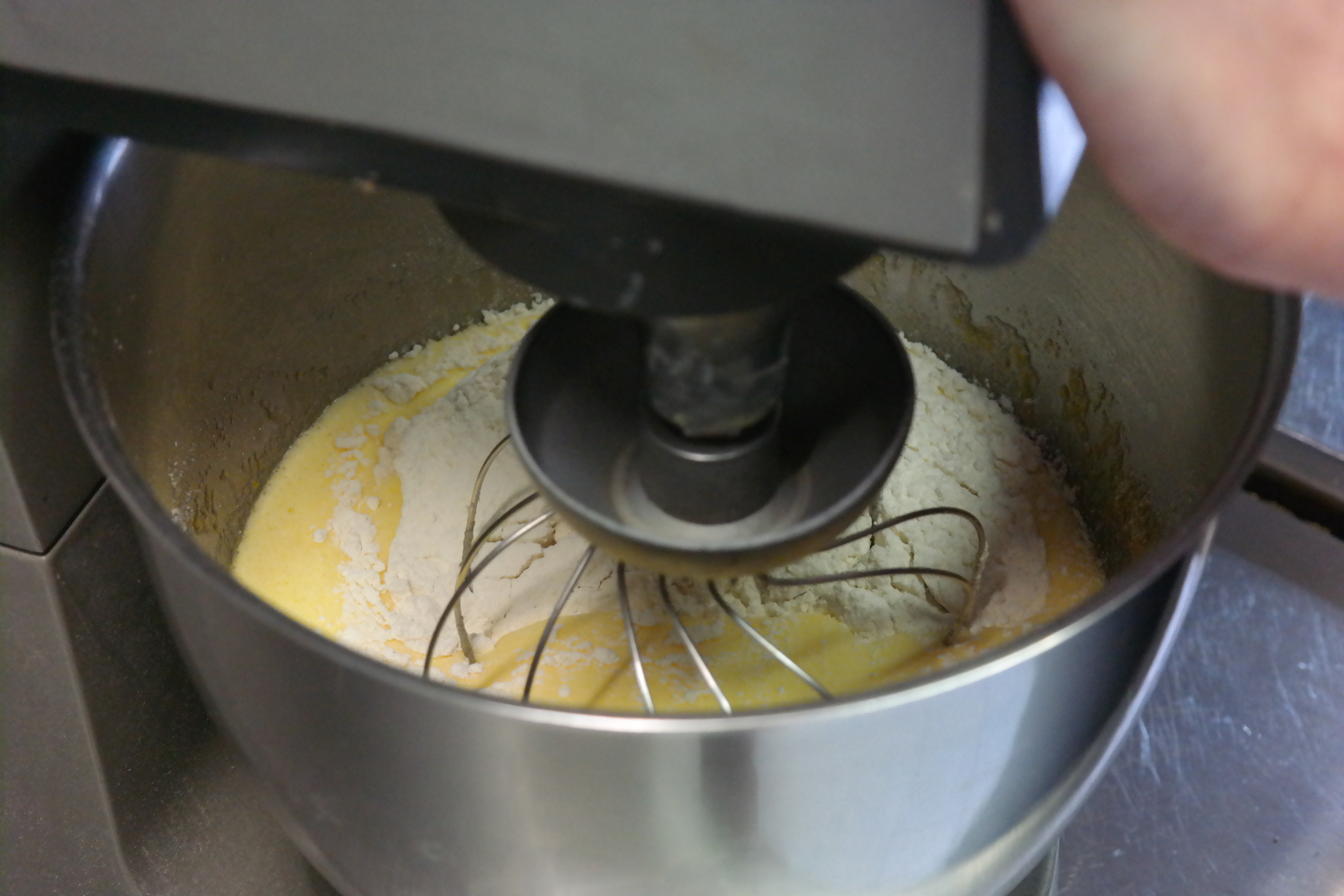
  • Add the flour and a pinch of salt. Mix again until you don’t see the flour anymore.

SAMSUNG CSC SAMSUNG CSC

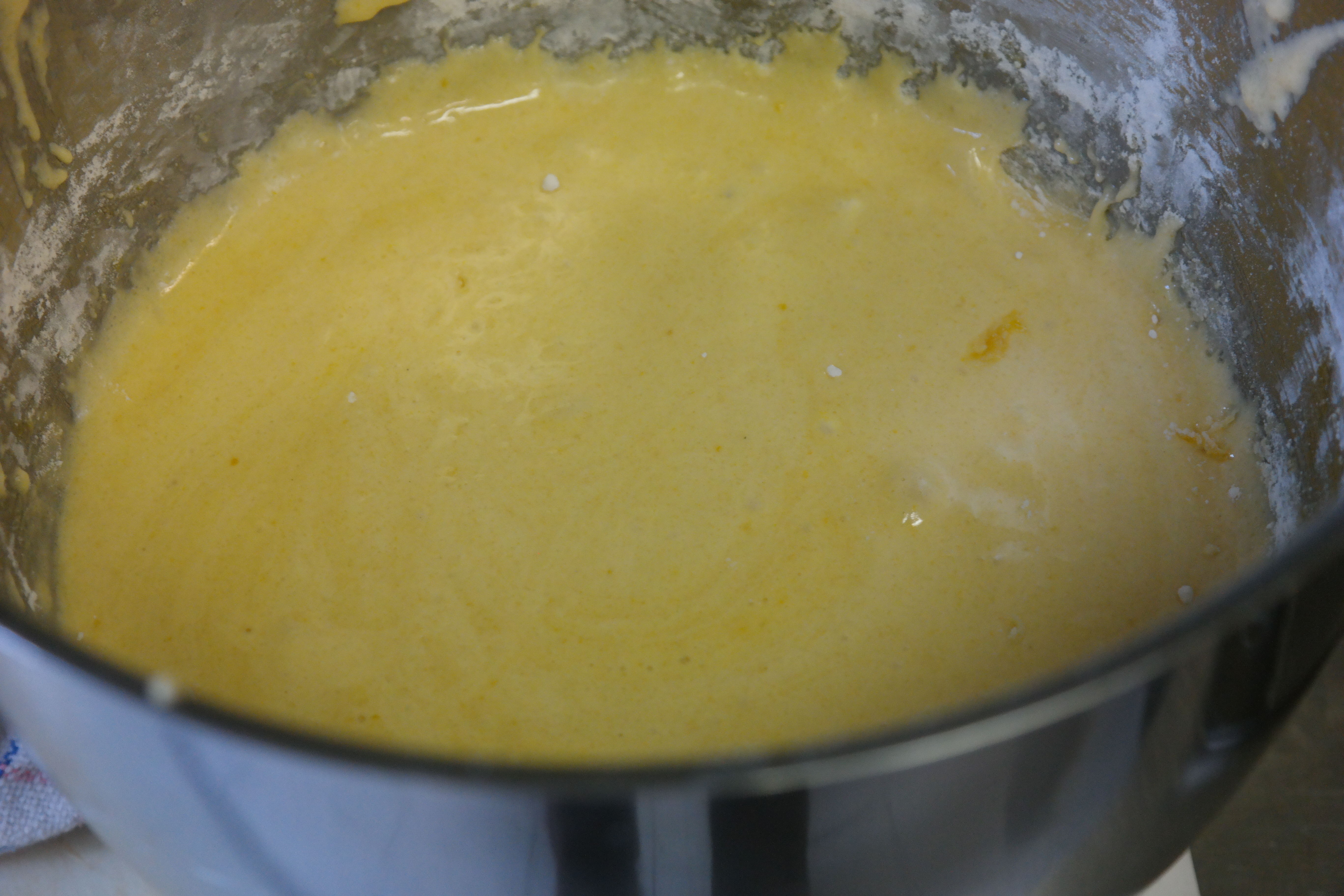
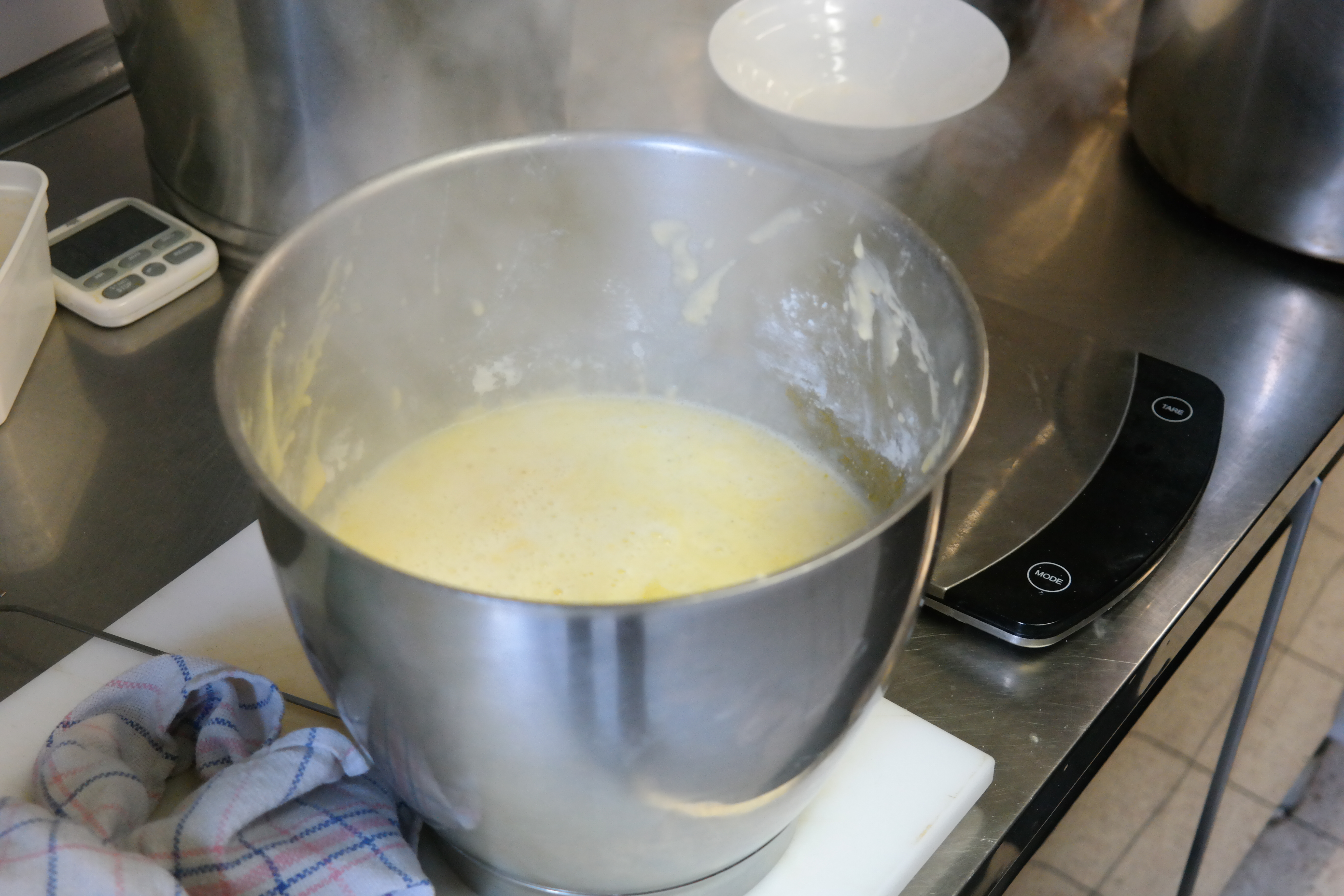
  • When the butter had been totally dissolved in the milk add the milk to the egg mix, just a little bit at a time en kip mixing with a whisk(so NOT all in one time )

SAMSUNG CSC SAMSUNG CSC SAMSUNG CSC

  • When you added all the milk add a bit of brown rum. How much is up to you (it speaks for itself that you shouldn’t be adding a whole bottle. Let’s say a shot glass will do 🙂 don’t act as if you don’t have a glass like that at home from a crazy tequila night ;-). Give a last whisk.

SAMSUNG CSC SAMSUNG CSC

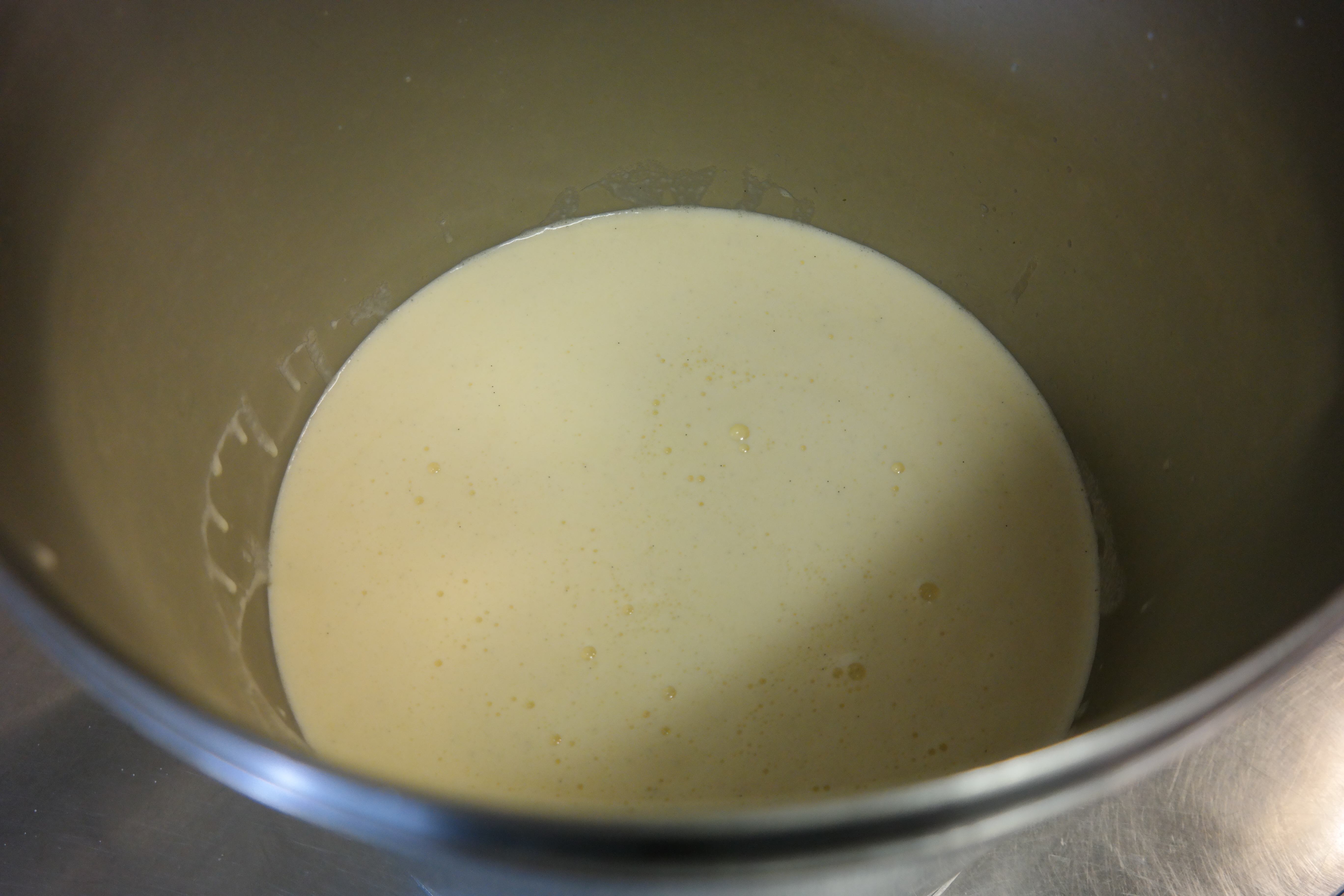
  • Sieve the batter into a bucket or other recipient, something in which you can put the batter to put it in your fridge. Let it first cool down before putting in fridge.

Baking the cannelés:

  • Pre-heat your oven at 200°C (392°F)
  • Give you batter a quit little mix with a whisk or ladle.
  • Lightly grease the baking tine with either melted butter or beeswax

SAMSUNG CSC

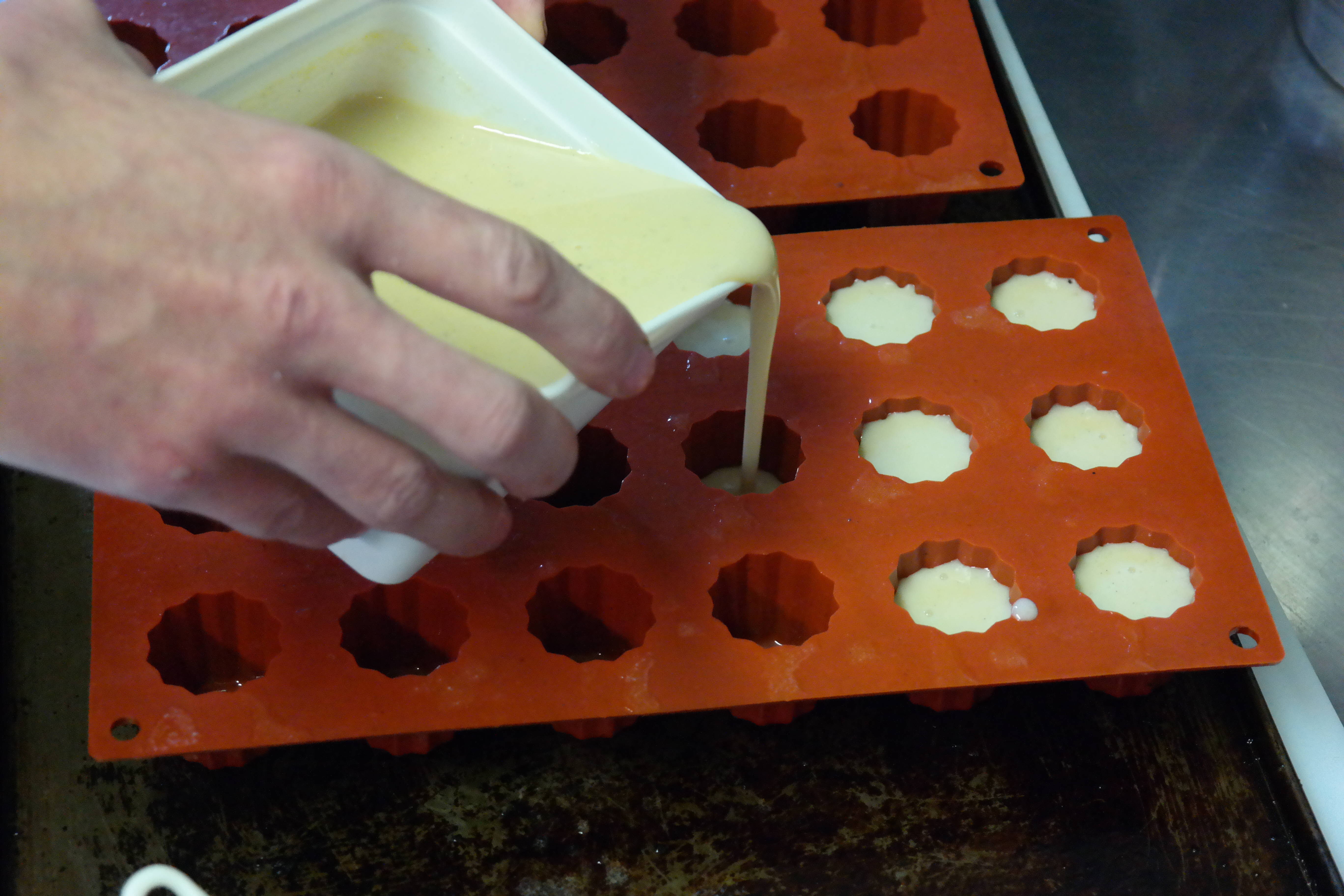
  • Pour the batter into the forms, but not all the way to the top as the cannelés will grow. SO keep it a few millimeters from the top.

SAMSUNG CSC SAMSUNG CSC

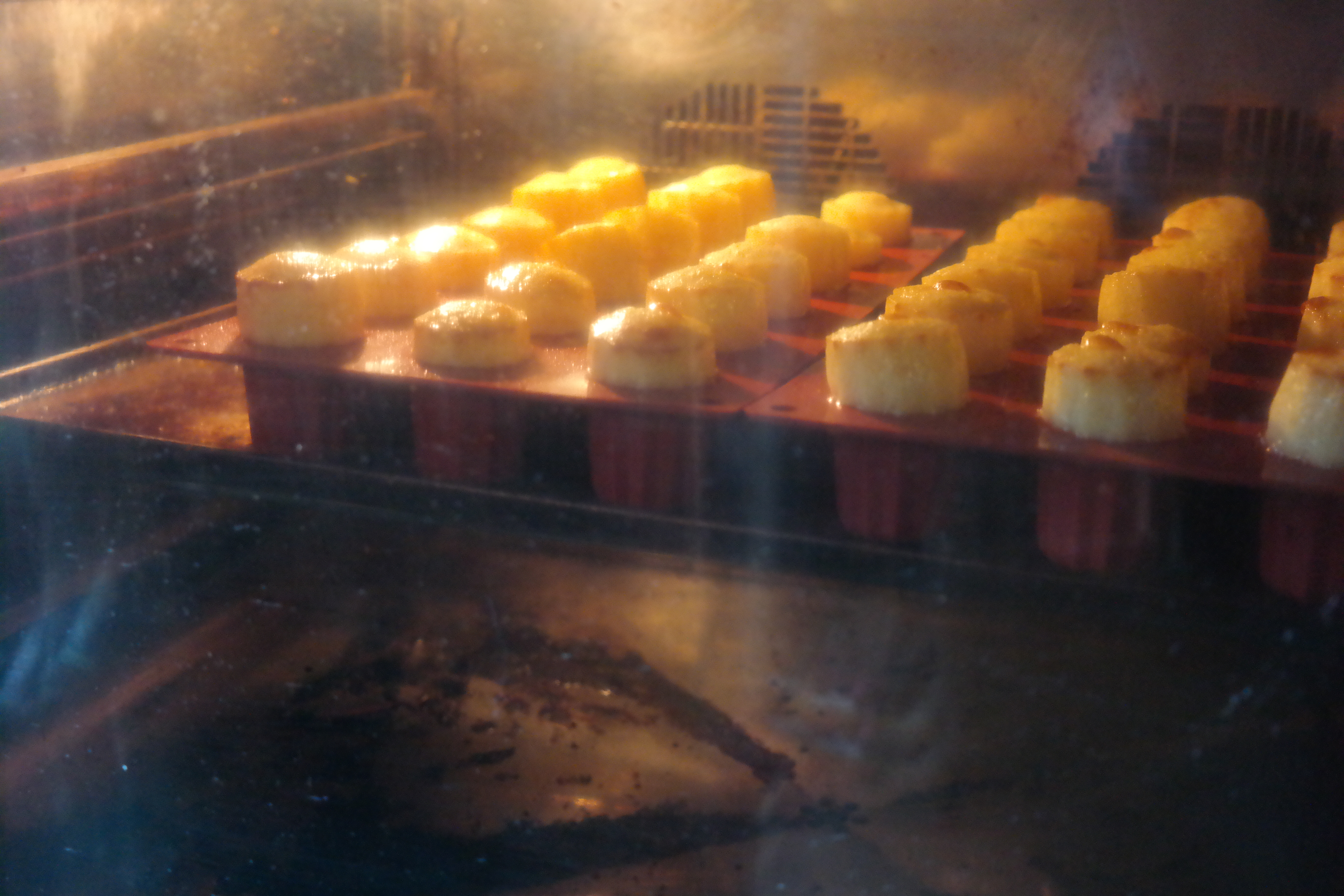
  • Put in the pre-heated oven for 10 minutes
  • Change the oven temperature into 180°C (356°F)
  • Open the oven and sting the cannelés with a needle on the sides so they collaps

SAMSUNG CSC SAMSUNG CSC SAMSUNG CSC SAMSUNG CSC SAMSUNG CSC

  • Close the oven and let them bake for another 30minutes
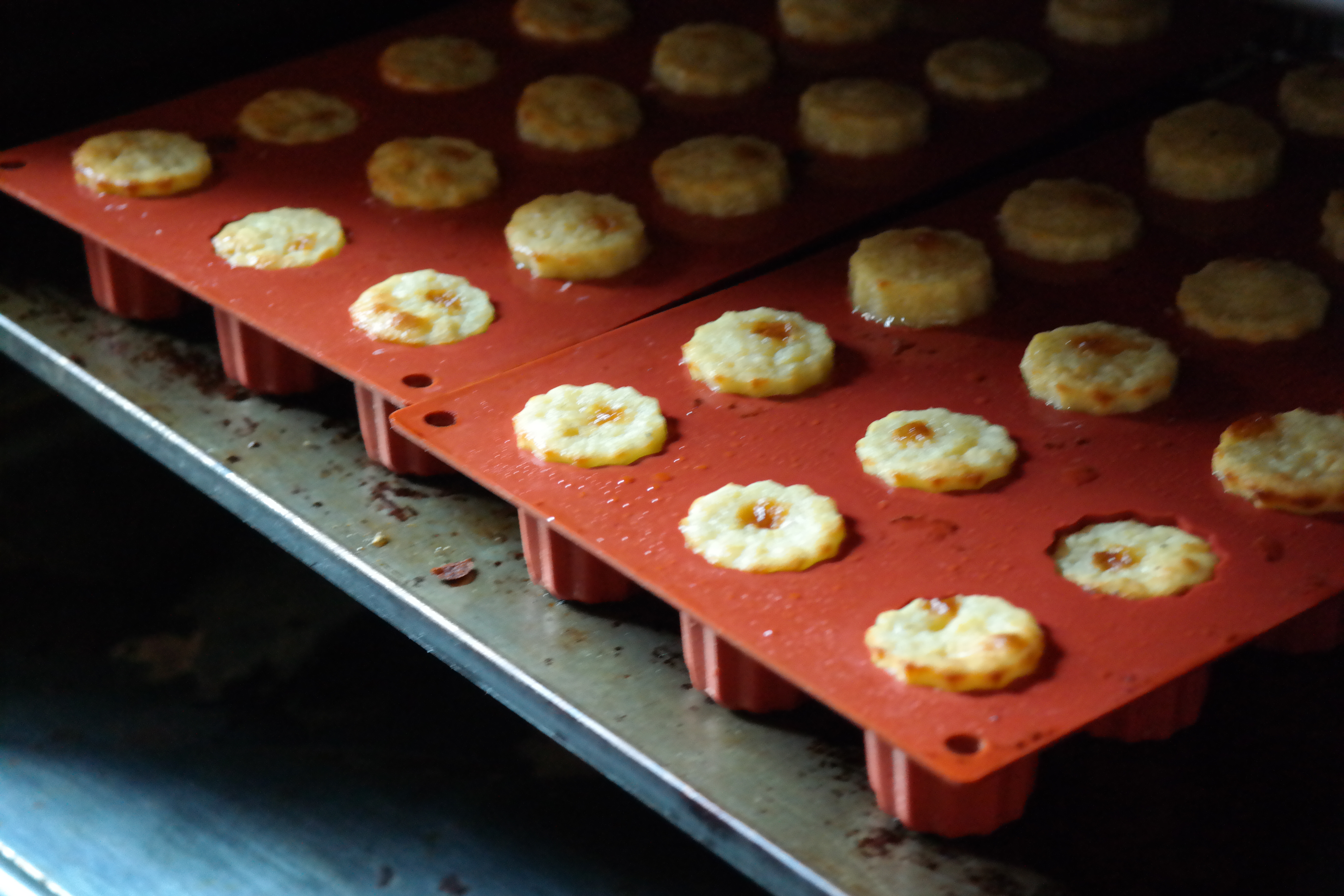
  • After 30 minutes turn the form over on top of a baking tray and put the cannelés for a few more minutes (2) in the oven

SAMSUNG CSC SAMSUNG CSC SAMSUNG CSC SAMSUNG CSC

  • Take them out of the oven to cool down

SAMSUNG CSC

Enjoy!!

A special thanks to Wouter van Steenwinkel from Restaurant Ardent for making this happen 🙂

Tour de France without bikes but with wine and bubbles: J de Telmont

The initial plan was to just drive home after visiting the Beaune vineyards, but then I saw the Champagne region wasn’t an enormous detour to get back home… so what else could I do?? I just had to make the little ‘detour’ via the Champagne region to visit my 2nd Champagne vineyard aka J. de Telmont. I wanted to visit the J. de Telmont vineyard for a while now, it is one of the 3 champagne vineyards on my ‘wish /to do’ list (the other 2 are Bollinger that I visited last year and the 3rd vineyard I’m not gonna say yet 🙂 ). I know there are more than 3 vineyards in this region, but these are already for a long time the only ones I feel like visiting…. (it is like with everything else, you always have a few favorites)

Champagne telmont

When most people think of the Champagne region they automatically think of Reims or Erpernay, but there are many more little towns around those 2 bigger ‘cities’ where Champagne is made. I know this is only my 2nd time in this region, but I do find it funny to see how close all the Champagne houses are to each other… no matter how you turn your head, you’ll always see another/ different one 🙂 Just made something clear, there is Champagne and champagne. I’ll clarify, it is not because on the label there is written ‘Champagne’ that it means it is a good champagne… Drinking a good champagne is a totally different sensation. In a good champagne there might be lots of bubbles, but they don’t disturb you or don’t get acid reflux or a headache the day after like you sometimes get when drinking ‘lesser quality’ champagnes. In case you were wondering,  J. de Telmont is one the good ones, otherwise I wouldn’t be writing about them 😉

CHAMPAGNE J DE TELMONT VIGNES 2

What I like and admire about J. de Telmont is that besides making very nice Champagnes, they also try to teach people how the whole ‘making-of’ process works. (BTW this is also the motto and philosophy of the house: conviviality, hospitality and sharing)  They even go that far that you can blend your own champagne aka ‘Les Ateliers J. De Telmont‘ … I can hear you think that this is probably something only for professionals?? Wrong! This is something they do for and with everybody who is interested in it . Even the best sommeliers learn a lot from these workshops. For our visit we were honored to be guided around by mr. Bertrand Lhopital himself, 4th generation of the Lhopital family to lead  the company and to work (together with his team) to make every champagne they make their best champagne. He told us that from time to time some couples who are getting married come to make their own champagne for their wedding…

CHAMPAGNE J DE TELMONT B. LHOPITAL

I did already tell you this but just in case you forgot, champagne gets made from 3 grape varieties:Chardonnay, Pinot Noir and Pinot Meunier. These grapes must come from the area/region defined by the Champagne heritage board, if they don’t the finished product may not wear the name ‘Champagne’ but rather ‘Crémant’ (like Crémant de Loire, Crémant de Bourgogne). Champagne gets made in 2 fermentation periods. During the first fermentation the champagne makers will be making an actual (normal, but slightly more acidic) wine and it is only during the 2nd fermentation (aka Malolactic fermentation) by adding sugar that over time the bubbles will get in the wine and it will be come a Champagne. The assembling of different wines (from same or different grapes) happens just before the 2nd fermentation. Then what makes that not all champagnes taste the same?? Well because every champagne maker will just like any other winemakers ‘play’ with assembling  wines from different vintages, age their wines in wooden  barrels or stainless steel tanks and age wines longer etc…. all of this also in combination with working with the best grapes and traditions (FYI these are just a few examples)

SAMSUNG CSC

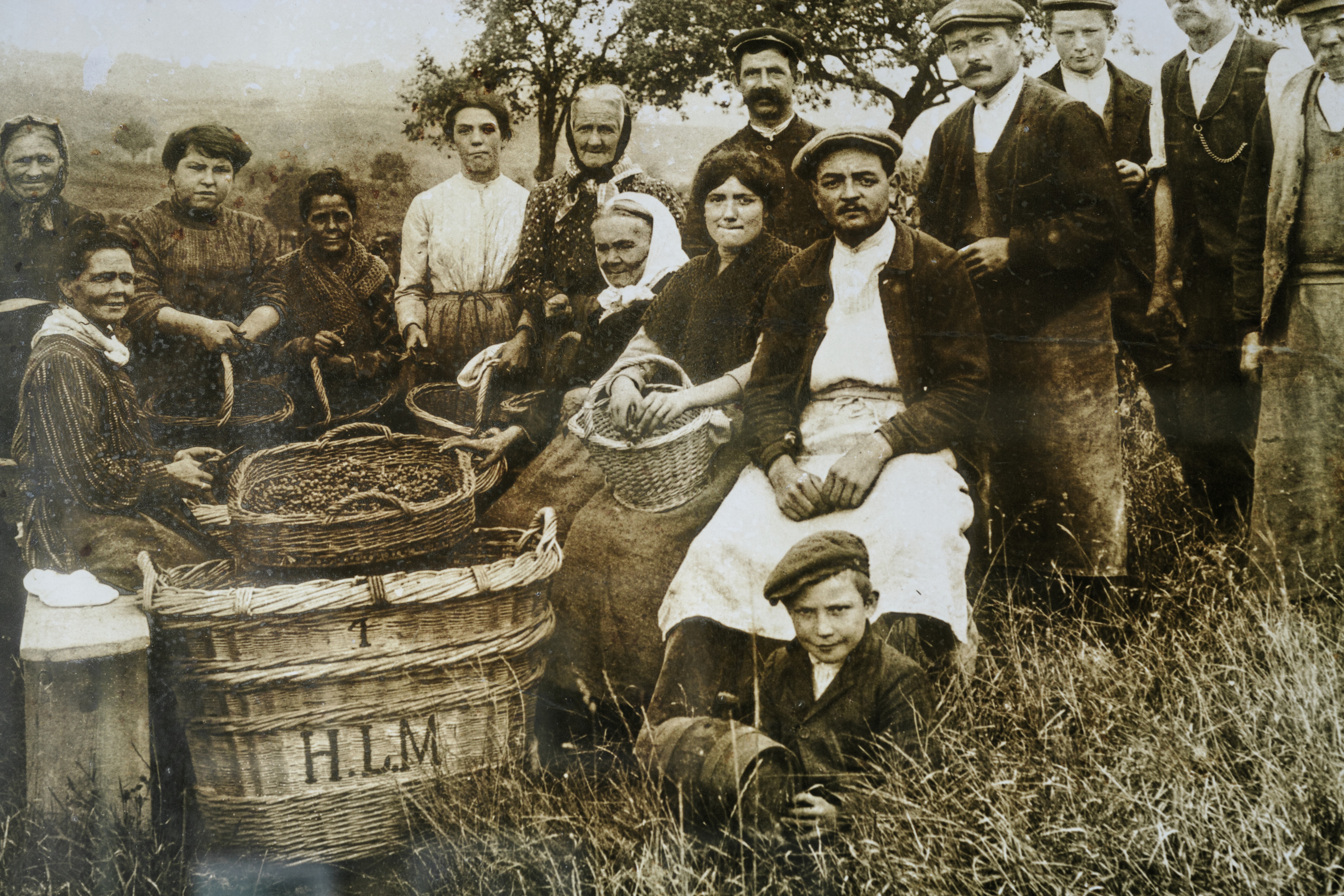
J. de Telmont was founded in 1912, but it was not until 1959 that André Lhopital (Bertrand’s grandfather) decided to change their name from Lhopital into Telmont… Why Telmont??  Well, it might seem like it corresponds to a person (I also initially thought this), but this is not true. As new name he wanted to use the name of his best parcel of land with historic vines from the vineyard on them aka “Beaumonts”. Unfortunately this name was already in use and there was refused by the CIVC. Mr Lhopital then opted to chance “Beaumonts “into “Belmont”, but again CIVC refused as there was still too much resemblance with the name“Beaumonts”. As Mr. Lhopital was no quitter he decided to try one more time by change “b” into “t” and adding initials to make it more special with as a result that in 1952 finally CIVC approved the vineyard was known as J. De Telmont 🙂 talking about perseverance!!

CHAMPAGNE J DE TELMONT VENDANGES 1912

It was not my first contact with J. de Telmont as I was already able to taste some of their Champagnes during the yearly ‘Best Belgian sommelier’ trophy from which J. de Telmont since a few years is sponsor. It was during these first contacts that J. de Telmont came on my ‘wishlist’ of vineyards I definitely wanted to visit as the few things I tasted gave me taste for more exploring of their selection 🙂

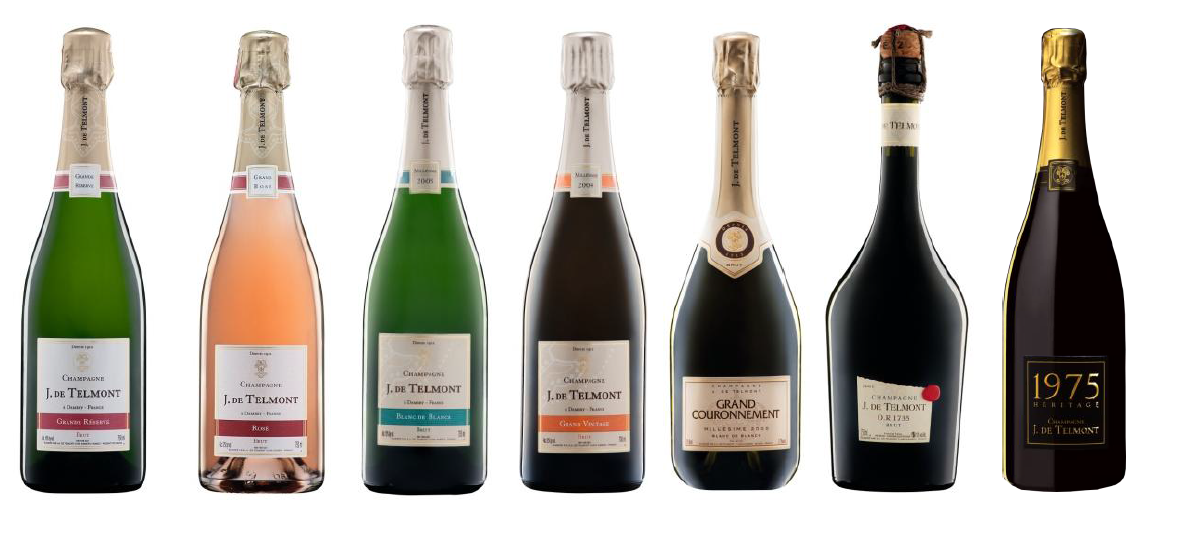
Telmont Champagnes

I don’t want to sound cliche because I keep saying this, but I love hearing a passionate person like in this case mr. Lhopital speak. It is so contagious, I mean you just want to keep listing to what they have to say. They can make the most technical things sound like some the easiest and explain it in such a way that you can actually understand it as they really want to you to understand it (without only throwing around with fancy terms that sometimes make things more confusing). This is also what I always try to do in my blogpost of when explaining something in person. A good example was that we got to taste some wines before their 2nd fermentation to understand how the wines keep developing and change over time and during the 2nd fermentation. The frosting on  the cake for me (besides tasting the finished product) is always walking through enormous cellars where maybe millions of bottles are stored from all vintages… a walk through Telmont’s history basically.
SAMSUNG CSC SAMSUNG CSC

SAMSUNG CSC SAMSUNG CSC

To celebrate this exceptional anniversary, the family Lhopital wants to share some of their history by reselling some of their older (best) vintage from 1964, 1969, 1975, 1976, 1982, 1985, 1986, 1990 and 1992. Champagne from ‘Collection Héritage’ as they are called are elaborated with 100 % Pinot Meunier grape variety You would expect this would be for exceptionally high prices, but you are wrong. They Lhopital family wanted the prices reasonable as they want everybody to be able to enjoy this and not only the happy few… it is part of their philosophy (sharing).  It speaks for itself that they won’t be giving them neither, but can be bought ,depending the vintage, from 70 to 150EUR… Just as comparison if you would want a Burgundy or Bordeaux wine from 1964 you’ll have add a few zero’s.. J. de Telmont just wants everybody to be able to enjoy a bit of that legacy. SOOO if you want to know how 1985 tasted like… here is you chance 🙂

Old vintages

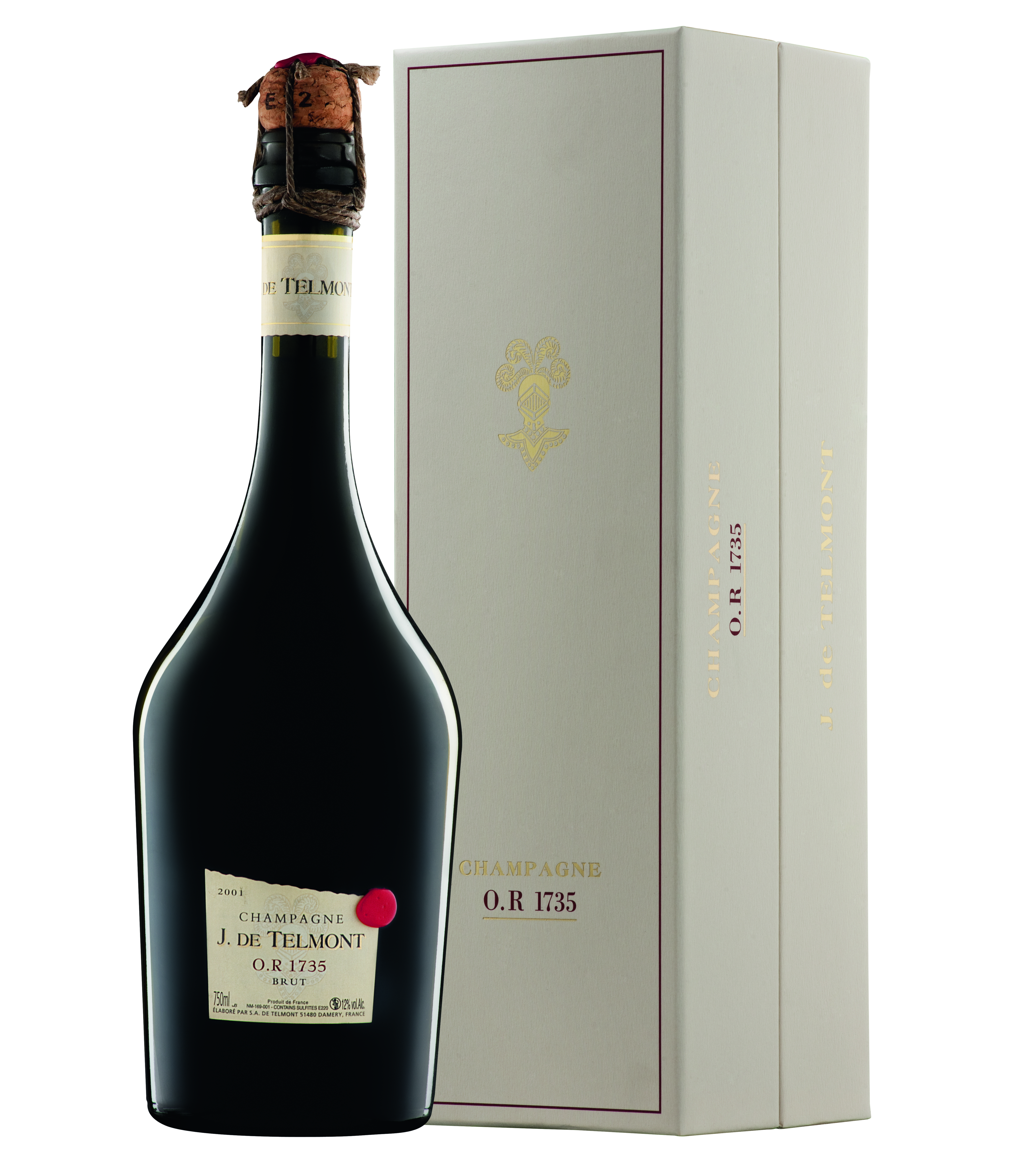
My absolute favorite champagne of the Telmont selection would be the Centenaire which unfortunately is not for sale and can only be tasted in exceptional cases like this year’s Gala diner after the ‘Best Belgian Sommlier’ trophy where fortunate enough to be part of :-). This one does without any doubt get followed by the O.R.1735 which is has the wonderful smell grilled/ freshly baked brioches or bread with notes of vanilla and a taste that makes every sip of champagne a feast… the O.R. 1735 is in a few words a Blanc de Blancs Grand Cru (Grapes come from Grand Cru area’s). If you afterwards compare it with the ‘regular’ Blanc de blancs, you’ll find the same notes, but less complex and less vanilla notes.

CHAMPAGNE_J_DE_TELMONT_OR_1735_COFFRET_PS

CHAMPAGNE_J_DE_TELMONT_BLANC_DE_BLANCS_PS

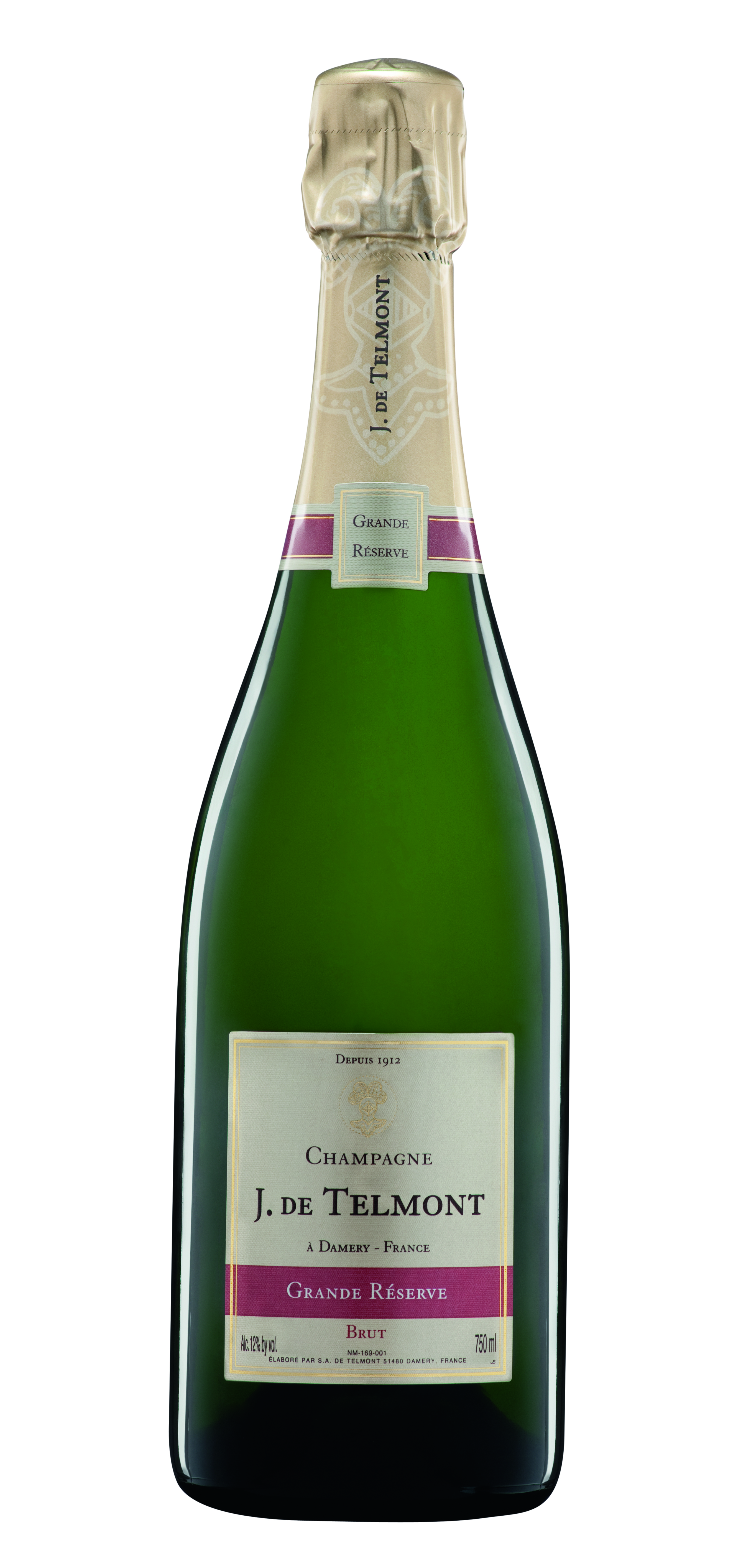
From the non 100% Chardonnay champagnes my preference went to the Grande Réserve Brut which had and is the perfect balance between all 3 grape kinds as it exists out of equal shares of all 3 grape types (Chardonnay, Pinot Meunier and Pinot Noir). A very round full bodied wine with notes of fresh hard white fruits. I guess it won’t come as a surprise when I tell you that by miracle the just mentioned champagnes found its way to our homes (both mine as Carlos’) 🙂 🙂 My excuse was my daughter’s birth and being able to celebrate it with a good glass… not sure what Carlos’ excuse was 😉 ???

CHAMPAGNE_J_DE_TELMONT_GRANDE_RESERVE_ASIA_PS

After our visit we can confirm that their philosophy isn’t only a few words, but in fact their way of work as it felt like visiting friends for whom they took all their time and we were the most important (hospitality and conviviality)and we learned a lot about champagne making and got to taste some real beauties (sharing)….Just the way I like it!!

SAMSUNG CSC

The end 🙂 We go back home with lots of new knowledge and a trunk full of wine 🙂


Tour de France without bikes but with wine: Les Hospices de Beaune

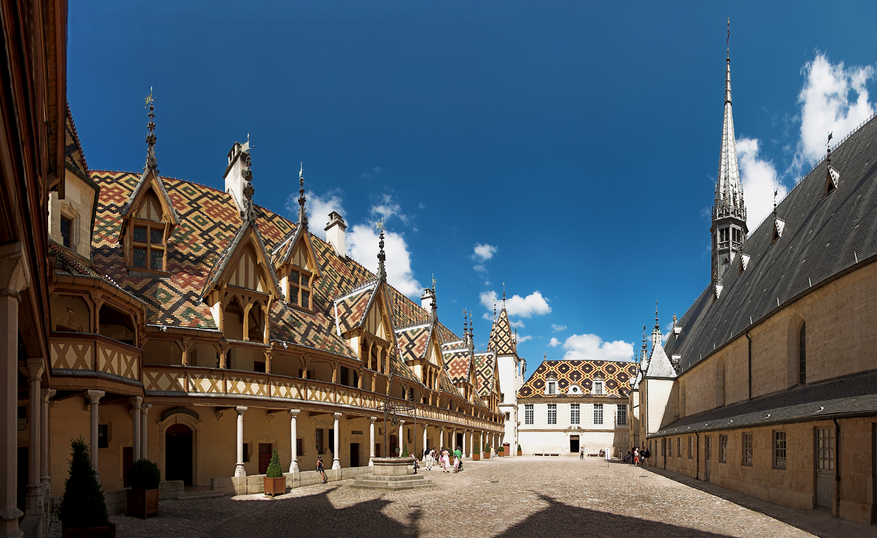
We obviously had to eat during our, but this wasn’t easy as thought… not because there were not enough restaurants, but because the famous Hospices de Beaune were about to take place the next days (so lots of people from all over the world already traveled to Beaune). The Hospices de Beaune aka Hôtel-Dieu de Beaune is first of all know for formerly being a charitable almshouse in Beaune founded in 1443 by chancellor of Burgundy Nicolas Rolin, as a hospital for the poor. The Hôtel-Dieu, one very beautiful building to say the least. Nowadays they service their patients are in new/modern hospital buildings.
Hôtel Dieu (2) Hôtel Dieu

The second reason they are very well know (mostly amongst winelovers) is because of their yearly charity wine auction held in November (so the period I was in Beaune :-)) already since 1851 (on the 3rd Sunday of November to be more precise) . Domaine des Hospices de Beaune is a non-profit organization that owns around 61 hectares (150 acres) of donated vineyard land by patients (with most appellations being Grand and Premier cru). So as they are a non-profit organization they decided to yearly keep auctions where the bidding happens mostly by professionals, but surprisingly also by a lot of private buyer and they can bid on 31 cuvées of red wine and 13 of white wine. I have no clue for which prices these barrels are sold, but I’m sure some nice investments can be done by the cause. The Hospices de Beaune is also the moment all winemakers in Beaune open their doors to the public and they whole town celebrates with food and wine 🙂 Also it is up to the buyer to age, cure and elaborate the wine further…

Auction

Hospices de Beaune

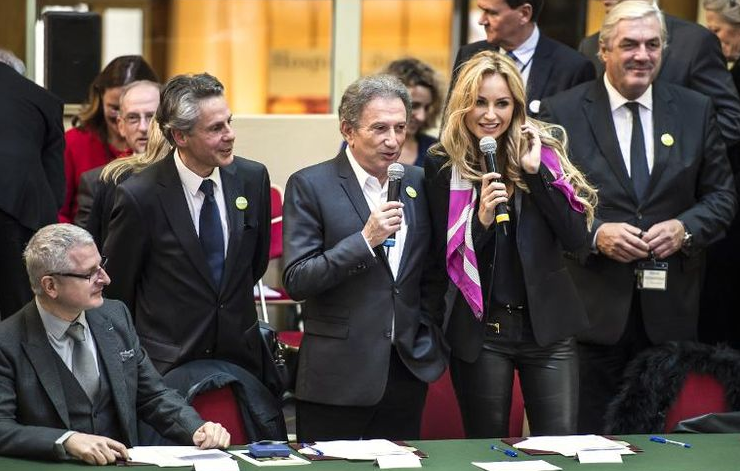
This year's hosts Michel Drucker et l'ex-mannequin Adriana Karembeu

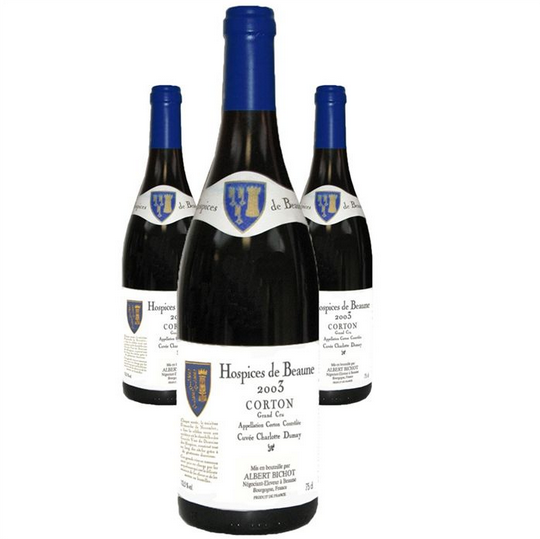
Hospices de Beaune wine

Hospices de Beaune wine Bouchard

So moral of my story is that most restaurants were fully booked and I just had to look harder to find one 🙂 But instead of looking I just asked local people as to my opinion this is still the best way to discover good new places! One of the restaurants we were suggested and liked during our stay in Beaune was the Ermitage de Corton located a few minutes outside the city center of Beaune (direction Nuits St. Georges). The spot if you are looking for good refined food to be enjoyed in a relax atmosphere and put your thoughts on hold for a few hours. That is how I would describe the Ermitage de Corton…

Ermitage de Corton

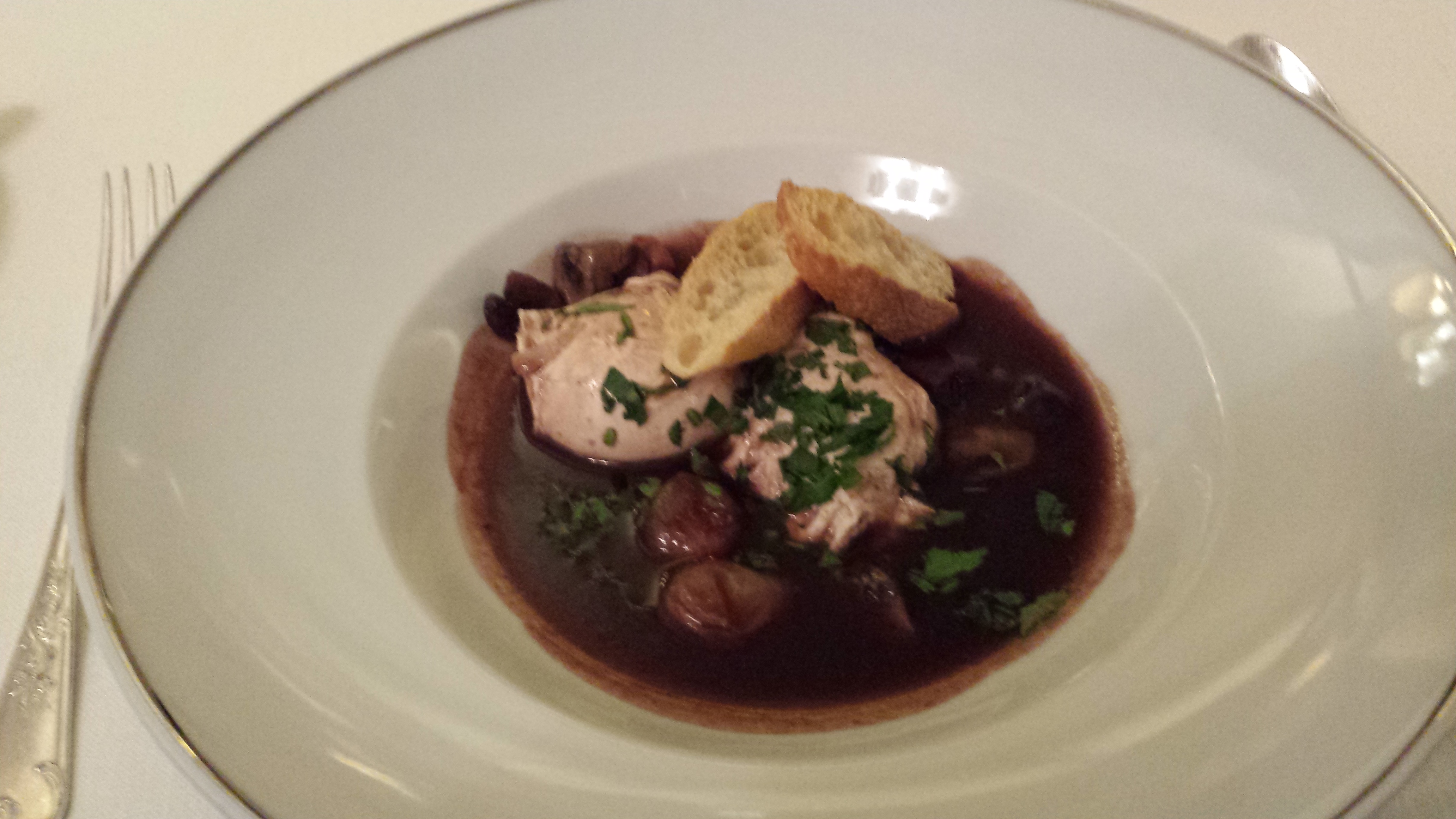
As we were in Bourgogne it didn’t seem a bad idea to take the menu Bourguignon… I started with a Poached egg a in a red wine sauce with onion and bacon. Carlos being a snail lover started with the Chinese cabbage stuffed with snails, butternut and chestnut mousse.  Mine tasted as I wanted it to taste, which is basically comfort food where you can taste the butter and rich ingredients 🙂

Chinese cabbage stuffed with snails, butternut and chestnut mousse Poached egg a in a red wine sauce with onion and bacon

As we already had been tasting the whole day it wasn’t easy to decided which wine we wanted, but as I know Carlos is a big white wine fan we chose a nice bottle  2011 Saint-Romain, “Sous Le Château” by Christophe Buisson. Why I chose this wine? Well first of all I wanted to try a local wine that I hadn’t tried yet that was affordable 🙂 . I can also say for a fact it was a very nice bottle of wine, very floral with a little richer taste that everybody would like. Perfect for an evening amongst friends.

Saint-Romain Sous Le Château 2011

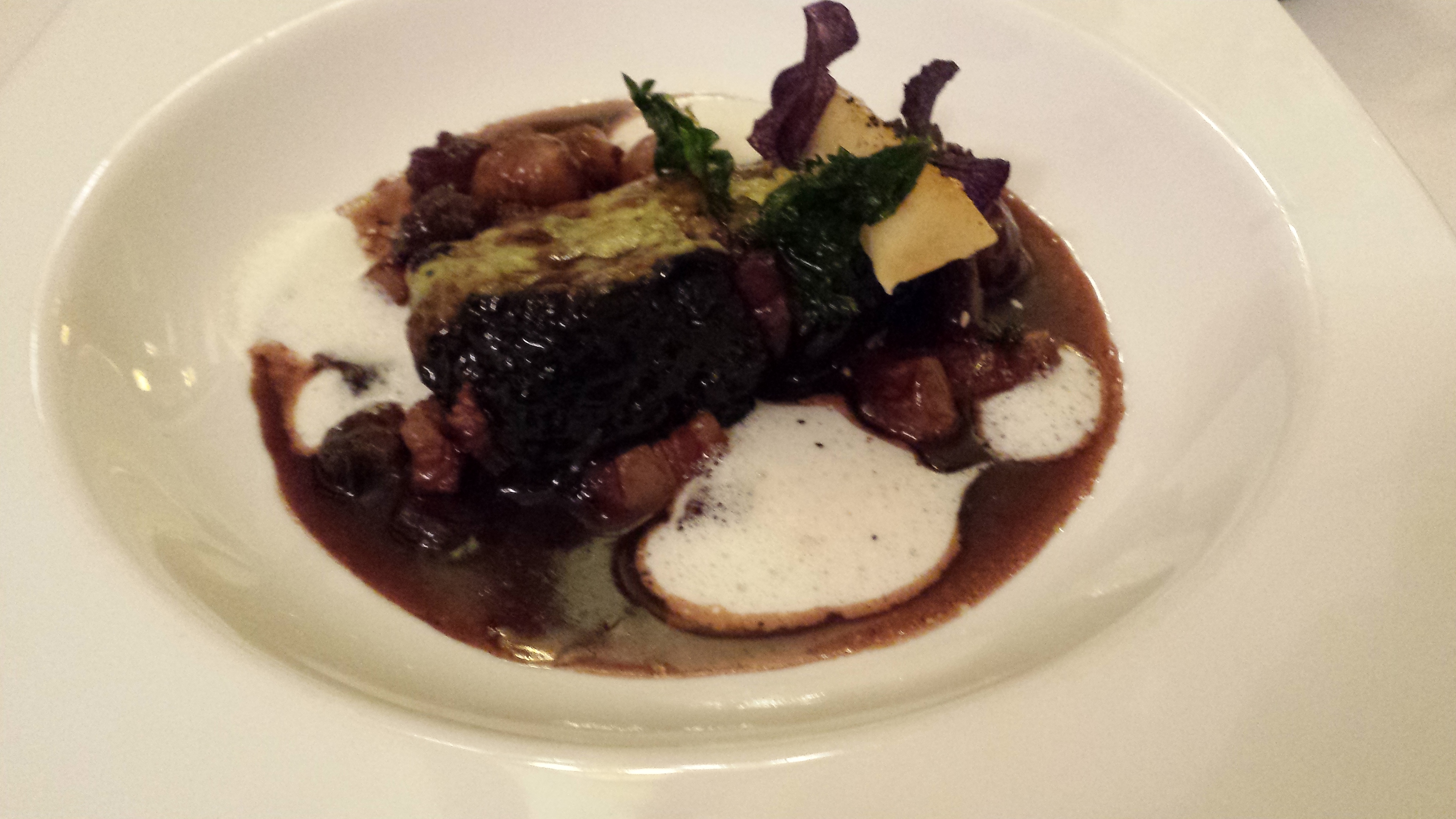
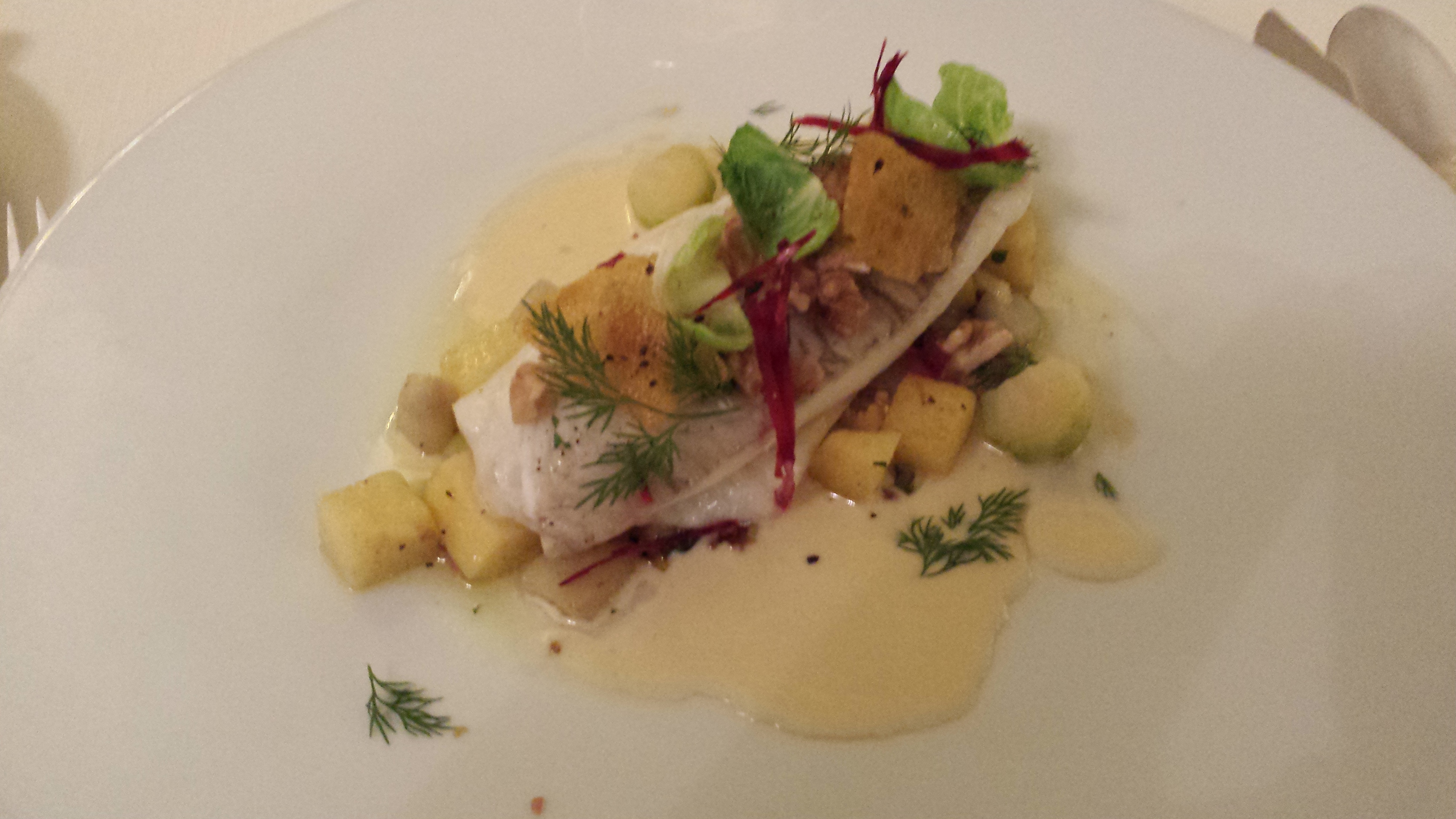
We continued our meal with for me Steamed fillet of plaice with quinces, lemons and walnuts, Crémant Sauce and polenta crisps. Although I must admit Carlos’ choice did make me doubt as he had the Beef cheeks cooked in a red wine sauce during 7 hours… (I did get to taste some 😉 )

Beef cheeks cooked in a red wine sauce during 7 hours Steamed fillet of plaice with quinces, lemons and walnuts, Crémant Sauce and polenta crisps

We finished our meal with French toast of gingerbread, pears poached in red wine… more comfort food I’d say. A lovely meal in great company!

French toast of gingerbread, pears poached in red wine

A few other places you have to try when you have the chance when visiting Beaune:

Up to Damery …