Time to put the sommeliers in the spotlight: Arvid Rosengren

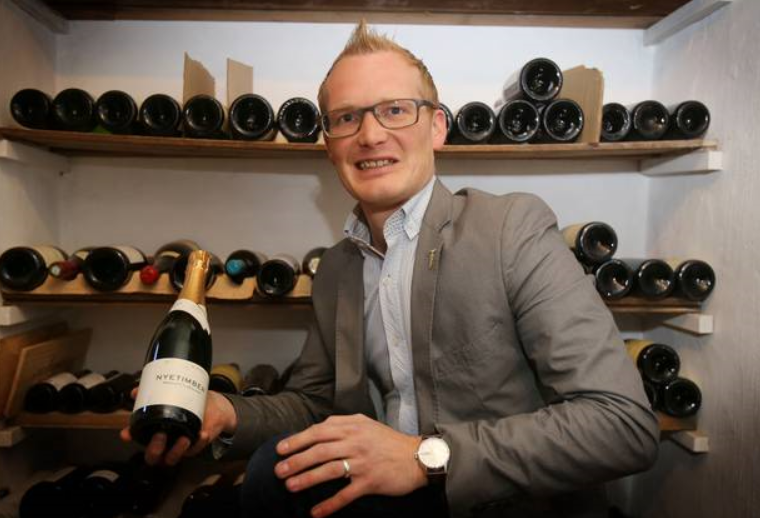
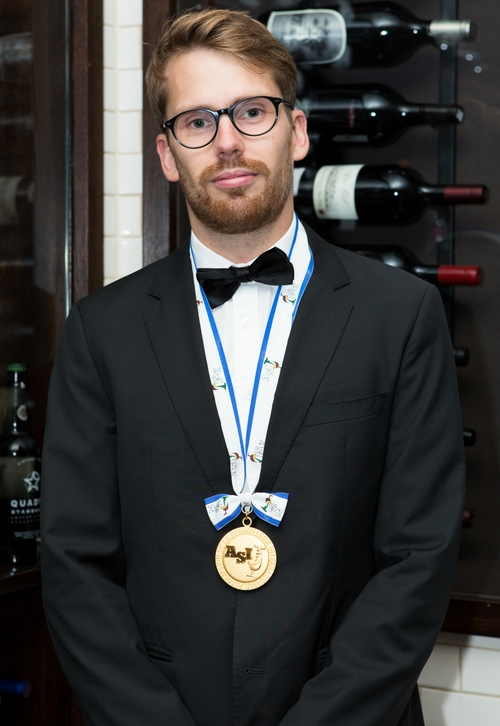
There are a lot of sommeliers that I had on my list that I wanted to ‘interview’ and one that absolutely had to be on the list was this year’s winner of the title ‘Best Sommelier of the world’ Arvid Rosengren. I have never witnessed the World Championship, but if I already see the difficulty level on country level (in Belgium)… I can only imagine how difficult it must be on the international level.

Arvid Rosengren 2

What surprises me even more is that Arvid is only 31 years old!!! An impressive age to already be working on this level… Arvid currently works (already some years)  in the trendy NYC restaurant Chalie Bird (a neighborhood restaurant that combines great food and a fun and in my eyes has something Scandinavian over it) as wine director. What is funny about this is that the reason for Arvid to move to NYC and to work there is just because some friends of his said he had to do it 🙂

If you would want to know Arvid’s whole carreer I would suggest reading his biography 🙂

I very glad that just like with all the other sommeliers Arvid found the time to answer 10 questions to find out more about the life as sommelier.
Arvid Rosengren

What is your favorite wine region to work with?

To be a great sommelier, you have to be an omnivore, and love all kinds of wine. I do have particular strong feelings for Piemonte, Jerez, Mosel, Northern Rhône, Galicia and the Loire valley among others. However, the most fun, infuriating, difficult yet rewarding region to work with is Burgundy. The level of complexity is just unparalleled.

What does it take to be a good sommelier according to you?

An almost impossible combination of varied and sometimes opposing skillsets. Passion, empathy and humility are the most important. But to be great you of course need knowledge too, as well as organizational skills and fundamental understanding of economy.

Arvid by ASI

Is the job of a sommelier underestimated/valued?

I think it’s depending on where you are. In some markets it is undervalued and underdeveloped. In others the sommeliers are approaching the level of rock star chefs.

When and how did you get the passion for wine?

I was always intrigued by flavor and aromas, so I tasted wine from a young age (but not great wine for sure). I really got serious when I was 20 and started working with wine. I never went back.

Who is your big example in the wine/sommelier world?

There are so many role models. Gerard Basset, Andreas Larsson, Bobby Stuckey and Richard Betts are all people I admire and look up to, for different reasons.

Paolo basso_Arvid_ Gerard Basset

What is your approach for pairing wines(or other beverages) with dishes?

Easy does it. I used to taste through hundreds of bottles to find the right 5 to serve in a wine menu. What I figured out is that even though we put crazy effort into it, people’s taste is still subjective. So pairing for me is foremost about good wine and good food, and avoiding the most common pitfalls and disasters.

Which wine region would you recommend everybody to visit and why?

So many choices! Jerez probably. It is such a special place, and so hard to understand just from reading about it.

For which wine would you make a big sacrifice to be able to taste?

Haha, I’ve been pretty fortunate in being able to taste most of my dream wines. There are of course bucket list wines that are, like 1945 Romanée Conti that I would love to get a chance to try

Romanée Conti 1945

What is your most wonderful memory of hotel management school?

Not hotel management, but Culinary school! We were a small group that got hired by a local hunting farm to organize small dinners for their clients. We went totally overboard with everything… crazy decorations using half of the forest, stuffed animals etc, different every day.

A culinary or wine experience everybody should have had besides have a meal at your restaurant, shop, winery, etc..?

I often get asked what is the best wine I’ve ever tasted and usually it’s impossible to say, I’ve tasted a lot, forgotten a lot too. But I think I can answer that since last year, when I tasted with Gérard and Jean-Louis Chave in their cellars in Mauves after a brutally hot day of walking the vineyards. The bottle of 1978 Hermitage that Gérard opened for us will always hold a special place in my heart and memory.
Hidden treasures: Wines from Valtellina

I like wines from all over the world, I’m not a wine snob nor am I too chauvinistic but most of my preferred wines come from Italy 🙂 . That I’m a big fan of Valpolicella wines you already found out when I spoke to you about my wine trip through the Valpolicella wine region. The wine region that is on top of my list (and I have to admit also lays closest to my heart) is Valtellina! It is not only my preferred region because my family roots are here (most of my family lives in Valtellina), but also because this region produces the most wonderful wines!!

Valtellina

valtellina 2

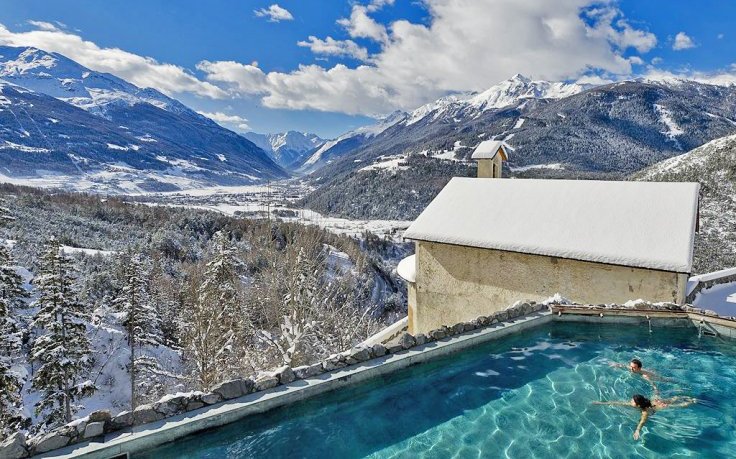
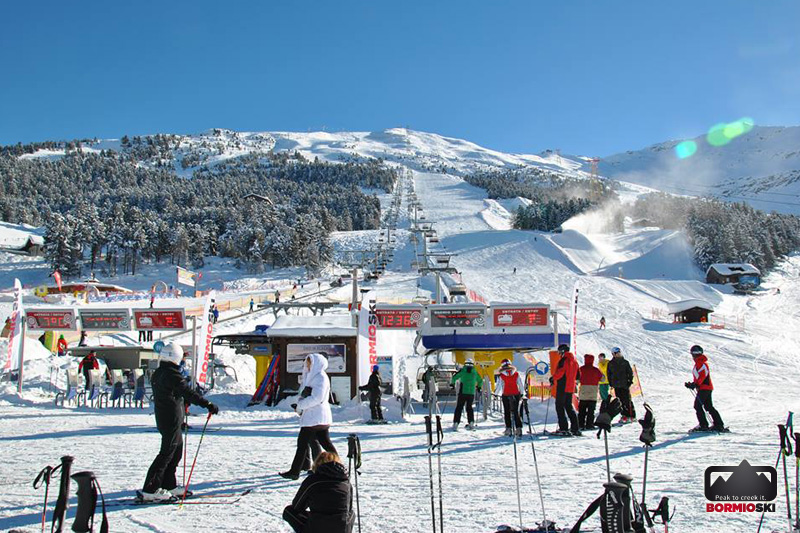
For many people it is still an unknown region and lots of times a forgotten region, unfairly if you ask me. I’m also not sure why this region isn’t more well known? Valtellina is a small region in the moutains in the North of Lombardy somewhere inbetween the Como lake and the Swiss border. Valtellina is mostly known amongst ski lovers as Valtellina has some of the most renowned ski areas in the world with towns like Bormio and Livigno (also known as it is taxfree) as the most famous.  Every time I visit this region I fall in love with it over and over again.

Bormio bagni caldi

Bormio 2000

Bormio 2000 2

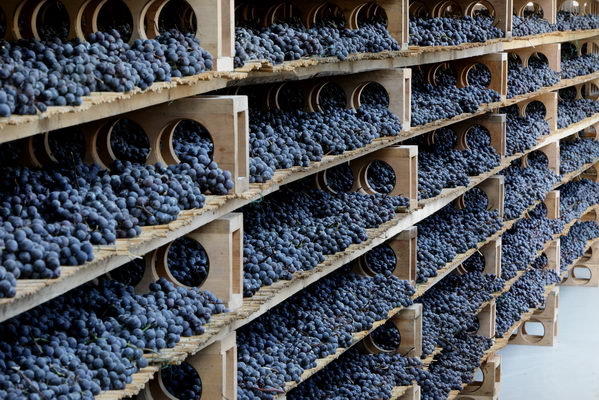
The wines in the Valtellina region are mostly made with the Chiavennasca grape that is better known as Nebbiolo… YES indeed the grapes used to make that other Italian beauty called Barolo 🙂 . In this region however the wines go with names like Sassella, Inferno, Valgella and Sforzato which are bascially the names of area’s between  Villapunta and Tirano with exception for Sforzato. The Sforzato wine is the Valtellina version of Valpolicella’s Amarone. Sforzato gets made in the same way by using partially ‘dried’ grapes aka the appassimento method (The drying process concentrates sugars and results in higher alcohol wines).

apassimento by consorziovini valtellina

vineyards by valtellina

The wine estate that has put the Valtellina wines on the map on an International level (and I think everybody agrees on this) is Nino Negri. I’ve known Nino Negri my whole life as my dad also used to sell their wines in his restaurant… mainly because back then you didn’t find any other producers from the region in Belgium, but also that to my opinion they were and still are one of the best producers in the area. I wouldn’t be able to name a favorite from their gamma as I like all, but if you are a wine lover do try their Le Tense, Mazer, Sfurzat and if the budget allows it the 5 stelle which is an indescribable beautiful wine. It does warm up my heart that more and more wines from other wine producers from Valtellina found their way to Belgium  or even to other countries all over the world. All or most Valtellina winemakers have joined forces and created a consortium that represents the whole wine region. I see this as a positive thing as together they are stronger then separately.

Nino Negri

5 stelle

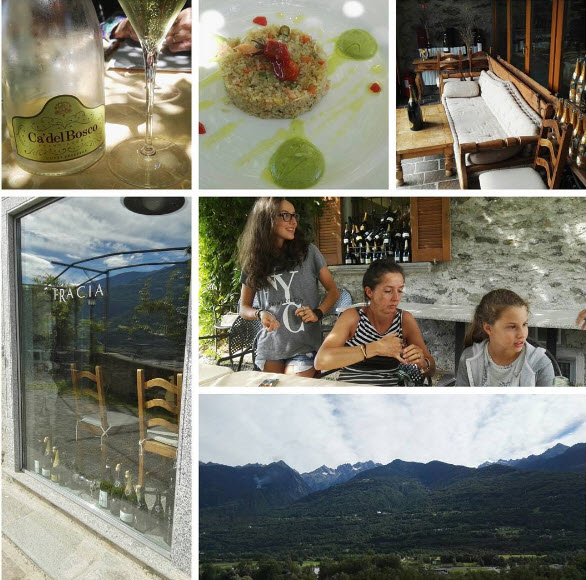
When I am in the region I do always try to taste as many “new” producers (or maybe just ones that I didn’t know about). A few weeks ago (as you might have see on my FB or Instagram) I was in Valtellina for a family visit with my dad. Normally my babygirl was coming along, but unfortunately she became ill the night before leaving… so she stayed at home with my wife. I was sad she couldn’t come, but at the other hand this way we had the liberty of visiting some wine estates 🙂 🙂 If it were up to me I would have visited many more, but our main purpose for travelling to Valtellina was to visit family and the vineyard visits had to happen in between the family visits.

family time valtellina

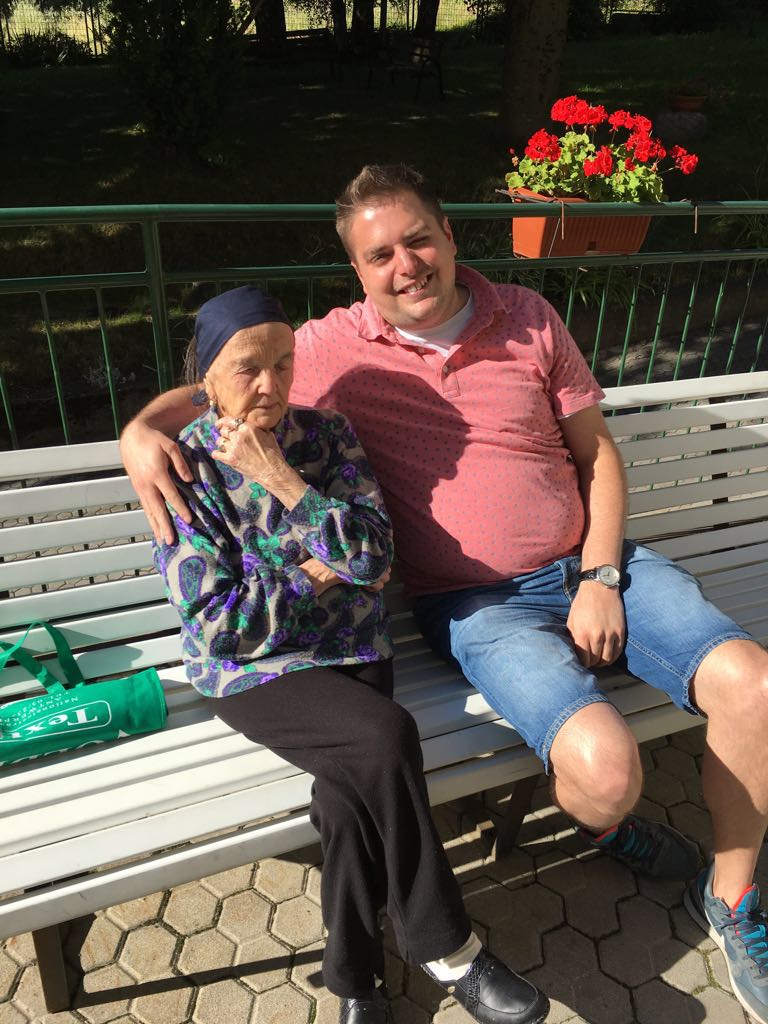
Nonna

Initially I planned to visit 3 vineyards: Rivetti & Lauro, Balgera and Menegola. However we sadly didn’t manage to visit the last (Menegola) due to time issues, but I’m really sad about it because I was really looking forward to it… next time without any doubt!!!

menegola07

The diffrences between the Rivetti & Lauro estate and Balgera couldn’t have been bigger. Rivetti is only producing wines for 3 years, whereas Balgera was one of the first estates to make wine in the region and it now already the 5th generation of winemakers. Balgera is rather a classical style wine maker who respects the traditions, Rivetti on the other hand is a more modern estate that experiments with new methods and grapes…. I wouldn’t say that I prefer one over the other. They both have a different style of wine and depending on the circumstances I’ll prefer drinking one over the other 🙂 but I guess that’s the case with every wine

Balgera rivetti & lauro

To be continued….

Time to put the sommeliers in the spotlight: Fiona Morrison

You might have noticed that the sommelier or even the wine world is mostly lead by men. The number of lady sommeliers is not as high as we would like it to be… although the tables are turning as more and more ladies are finding their way towards the wine/sommelier industry. The sommelier I want to put in the picture today is the one and only Fiona Morrison!!! A role model to lots of ladies (and men) in the wine industry!! Fiona is one of only three Masters of Wine in Belgium and the only woman. Next to that writer of MANY wine articles and books (for which she received the James Beard Award and the Prix Lanson), she creates wine lists for SN Brussels Airlines, is a wine consultant at Christie’s, gives conferences, is a Trustee of the Institute of Masters of Wine and a newly elected member of the Academie Internationale du Vin, a high powered wine think tank. She also is a regular judge at the Best Sommelier of Belgium contest.

Fiona Morrison

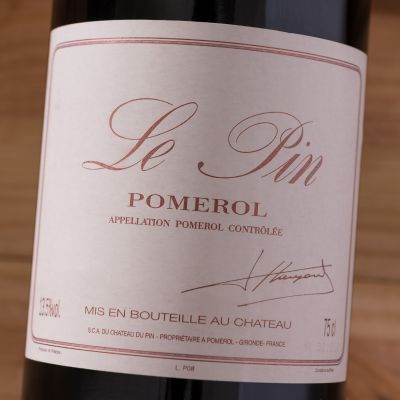
As if all of that was not enough Fiona’s main occupation is helping her husband (the one and only Jacques Thienpont) to make the wine and manage their three estates that I think need no introduction: Le Pin (Pomerol – one of or if not the most renowned/exclusive wine house from Pomerol), L’IF (Saint Emilion) and Chateau Goubau (Côtes de Castillon). And in between all of that she still found some time to answer my 10 questions!!

Jacques Thienpont

Chateau Le Pin

What always fascinated me about Fiona is the fact that she speaks British English, makes wine in France and lives in Belgium 🙂 🙂  (or at least she commutes between her homes in Bordeaux and Belgium). One day I’ll find out what the story is behind that 😉

What is your favorite wine region to work with?

I obviously spend most of my time working in Bordeaux; making wine, buying wine, visiting producers and selling wine from there – I came of âge with Bordeaux and I know it intimately. However I love working with our fabulous collection of Burgundy estates and my interaction with them gives me so much pleasure.

What does it take to be a good sommelier according to you?

I would rate personality and communication skills above knowledge. If you don’t have the right way of communicating with your clients and transferring your knowledge in a clear way, then all your training and tasting is worthless. As a client,  you can tell immediately if the sommelier has the right attitude.

Is the job of a sommelier underestimated/valued?

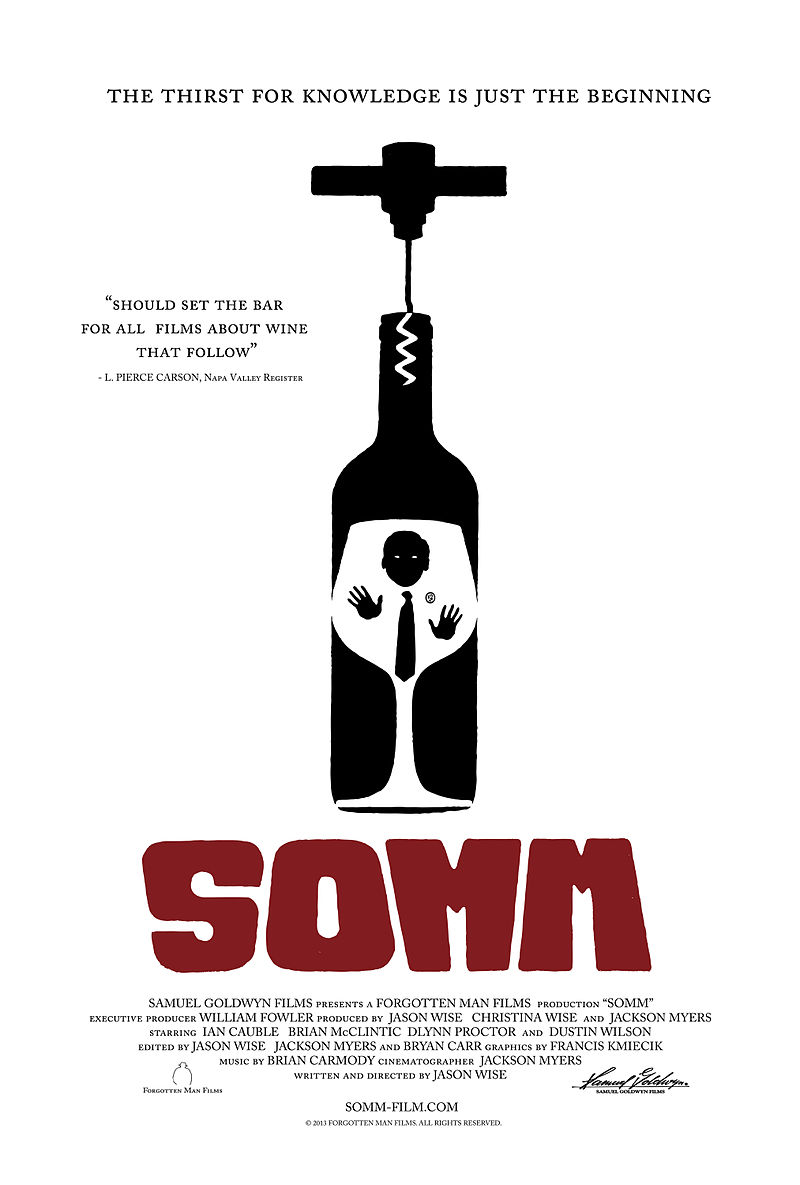
No.  I think today thanks to the World Sommelier competition, the Master Sommelier exam, the film “Somm”, the rôle of the sommelier is better understood and appreciated than ever before.  Today, sommeliers are more important than the wine press in spreading the word about new wines, starting new trends, pointing out forgotten treasures.

Somm film

When and how did you get the passion for wine?

I was lucky to grow up in a household where wine was a part of most meals. Sunday lunches were always a time when my father opened a great bottle of wine.  At University there was a Wine Society; I finally came to run it and with a team, won several blind wine tasting competitions against other universities.  The rest is history!

Who is your big example in the wine/sommelier world?

I have enormous respect for Gerard Basset – he is ambitious but very humble still and I love his enquiring mind and his attitude to wine. I also believe that sommeliers take themselves to seriously sometimes, my antidote to that is William “Pazzo” Wouters who I love to laugh with – alongside a great bottle of wine of course.

Gerard Basset

What is your approach for pairing wines(or other beverages) with dishes?

I am so curious that I’m always trying new things. I look much more at the texture of the dish and the type of sauce it is served with rather than whether it is a steak or a sole.   I often think of wine as that crucial squeeze of lemon on fresh fish – it brings out the freshness and the flavour of the dish without overwhelming it.  Of course, wine should then be able to be tasted for its own merits so I look for “food wines” with good acidity, fresh fruit, balance and elegance – I am not a great fan of oak or extraction and I don’t feel that I have to play by the rules.

Which wine region would you recommend everybody to visit and why?

Here I would have to say Bordeaux. First of all, the city of Bordeaux is drop dead gorgeous now that it has had a make-over and has so many great bars and restaurants and places to visit (check out the new Cité du Vin).

Then there are so many legendary places to visit – a drive up the D2, the route de chateaux to see all those famous names – Margaux, Palmer, the Léovilles, the Pichons, Latour, Lafite, Cos – the list goes on.   A visit to the Right Bank is made spectacular by the medieval beauty of St. Emilion and the rolling vineyards and countryside.  Entre-deux-Mers has great castles and bike trails and very democratically priced wines.  In fact , there are  so many different styles of wine at so many price points that there is a wine to suit every budget and taste.

For which wine would you make a big sacrifice to be able to taste?

I was born in a great vintage, so I love it when I have a chance to get my hands on that.   I also adore the wines of Egon Muller:  his Scharzhofberger vineyard is fabulous and I have had the great chance to taste some historic older vintages.  Once you have tasted a great wine, you want to repeat that expérience again so I am often making big sacrifices for the sake of great bottles!!

What is your most wonderful memory of hotel management school or viticulture studies?

It was the camaraderie of studying so hard for the Master of Wine exam and knowing that so few of us would make it that it made our tastings, courses and lectures so intense and wonderful. I am so proud of the Master of Wine institution and the way it can open up the lives of wine professionals to a new way of thinking, tasting and communicating about wine.

A culinary or wine experience everybody should have had besides have a meal at your restaurant, shop, winery, etc..?

Some of my most vivid culinary and wine memories are those that were the most simple, often experienced “alfresco” as a picnic or barbecue. I remember lobster bakes on the beach in Maine with a stash of old Burgundies from the 1960s that I bought as an odd lot at an auction and we drank out of  old goblets;  I remember end of harvest barbecues with freshly picked cepes served raw with olive oil and salt and young Le Pin.  You don’t need too much ceremony or a white tablecloth to have a legendary expérience…..although a dinner with Josep Roca when he paired the best of Spanish wines with his brother’s cuisine came pretty close.

Josep Roca by Fundacion excelencia

Time to put the sommeliers in the spotlight: Yanick Dehandschutter

Yannick Dehandschutter is the next sommelier to answer my 10 questions. Yanick is the sommelier/owner of wine restaurant Sir Kwinten where I personally like to go a lot. I met Yanick when he was competing for the title of “Best Sommelier of Belgium 2013-2014” or better, I was one of the judges grading him 🙂 What I liked about Yanick was his smoothness of doing everything and his strong social skills, he won that year so I guess I wasn’t the only person with that opinion.

Yanick best sommelier of belgium

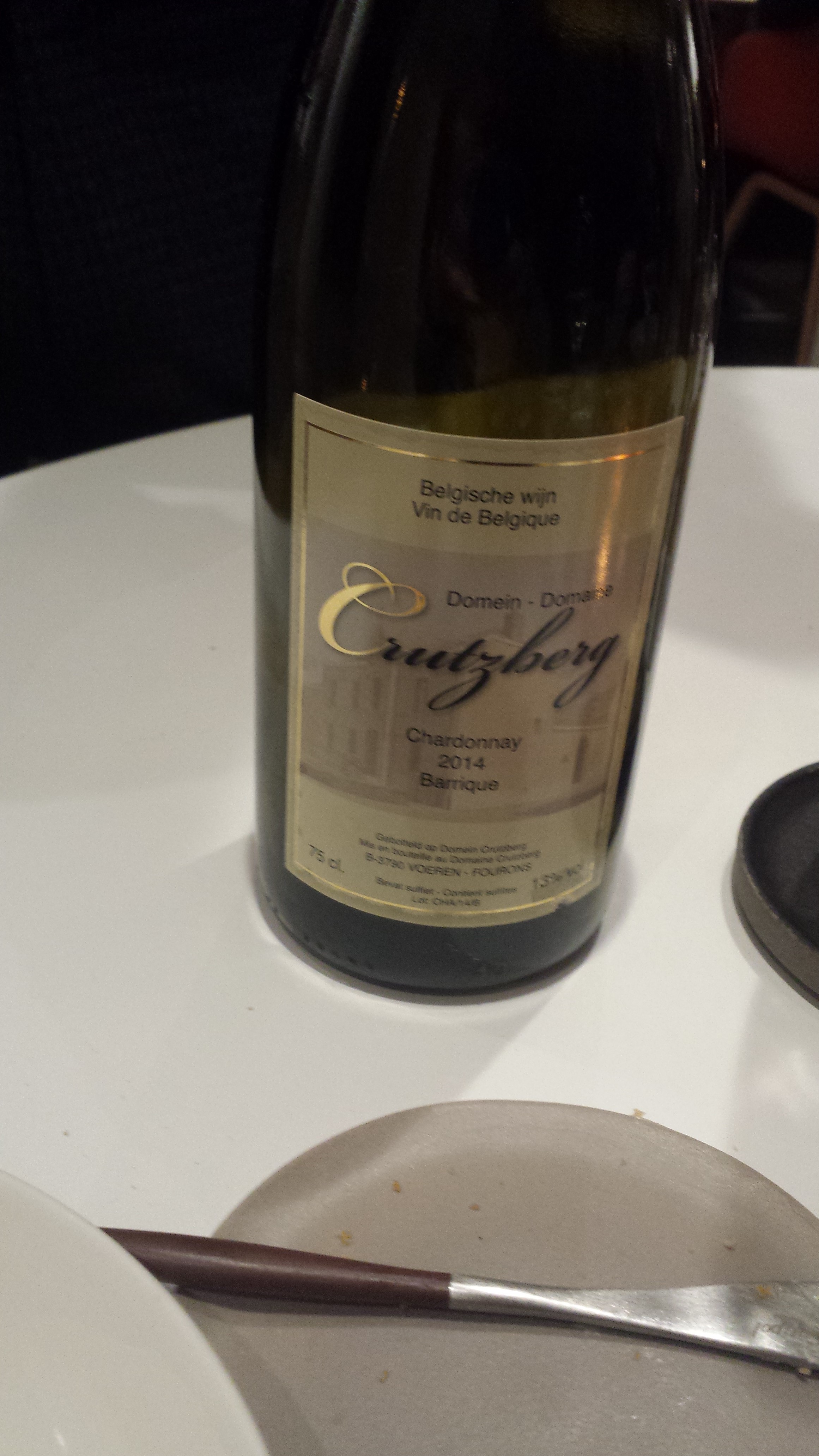
When you ever have the chance to eat at his restaurant you’ll see that when he gives you more info on the wine he serves it is like he is reading you a story or poem! He also likes to surprise his guests, he sometimes serves a wine without telling  what it is for you to find out what it is… time over time you’ll be surprised about which wine it turns out to be. With me one of the greatest discoveries was a white Belgian wine, I literally bought the vineyard’s last bottles of that wine afterwards 🙂

Crutzberg

Next to the title of Best Sommelier of Belgium Yanick has lots of other awards and prices that he can show off with 🙂 Not that he does it, but fi I would have that many awards I think I would 😉 😉 . What I admire in people like Yanick (and all other top sommeliers), is their passion!!! Passion is always the best drive for success!!!

Yanick

What maybe not every knows yet is that Yanick will also be making his debut on the national cooking channel NJAM! The sky is the limit I’d say.

Yanick op Njam tv

The questions:

What is your favorite wine region to work with?

I’m of the principle that a good sommelier must be ‘open’ for everything that gets made. That’s why I obligate myself to serve/pair wines from totally different regions with our menus.

As long as the wines were purified with respect for the terroir and local grapes I’m happy :-). I notice that I’m usually more tempted in staying in Europe with y choice of wines and less with wines from outside of Europe. For the moment my favorites to work with for white wines is Austria and for the reds Piemonte.

What does it take to be a good sommelier according to you?

Knowledge of wine regions, grapes and vineyards are the base for a strong/good sommelier. Next to that ‘social skills’ are very import for me.

A sommelier should be able to pass the correct information to the customer in a pleasant understandable way. I think that it is also important to be able to estimate a customer’s ‘wine profile’, is a customer more classic or does he rather prefer something new, does he like a lot of info or non… you should feel it.

Is the job of a sommelier underestimated/valued?

No, not to my opinion. Today people are much more ‘gastronomically educated’ and know that it’s not an easy sector. It demands 200% of passion and dedication. Because our sector gets put in the spotlight more often people do get more respect for the job and the people doing this job.

Especially the young generation seems very interested and shows a lot of respect for all we do. It must also be said that the knowledge about culinary products in general has improved enormously amongst people and they’re able to valuate/appreciate the quality.

When and how did you get the passion for wine?

My Parents are already in the restaurant business for more than 30years, so I basically grew up in it. For my 10th birthday we went to a Michelin starred restaurant and it really rocked my world, from that moment it became my favorite hobby ;-).

During my period I spend in hotel management school I didn’t really had a preference, I like both working in the kitchen as serving people in the restaurant. It was at the age of 14 that I started tasting more wines and that’s when I knew this would become my favorite 🙂 . After my specialization year in hotel management school the passion only grew…

Who is your big example in the wine/sommelier world?

I have lots of respect and admiration for all passionate winemaker on our planet that make it possible for us as sommelier to serve and offer a wonderful product.  I also believe more and more in a better cooperation between sommelier and winemaker. We as sommelier can help blending and advice the consumer’s needs , a winemaker from his side can give us much ‘extra’ technical knowledge that in the end makes us a better sommelier.

What is your approach for pairing wines (or other bevrages) with dishes?

Taste and most of all testing. It has occurred lots of times that the things that seem obvious actually don’t work together/match and vice versa. I think that this is the point where a sommelier has the liberty of playing around and should dare to innovate and make unexpected matches.  It speaks for itself that before you serve this pairing to your customers you should be 100% behind this decision. This is definitely one of my favorite subjects, but it is obviously something personal and complex.

Which wine region would you recommend everybody to visit and why?

Piëmonte, beautiful region, top gastronomy and the wines obviously!

For which wine would you make a big sacrifice to be able to taste?

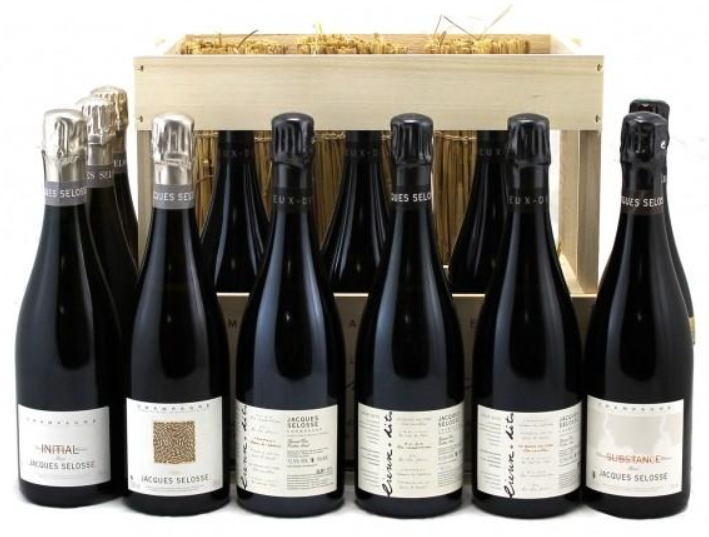
It is always a unique experience to be allowed to taste Selosse Champagne after a long aging in the cellar at the right time. To my opinion a remarkable product!

Selosse champagne

What is you most wonderful memory of hotel management school?

During my specialization year I was allowed to participate in the Côtes du Rhône Challenge in Avignon, together with my teacher José Lemahieu, a man for whom I have an enormous respect (especially for this passion and knowledge about wine! We won 1st place, I was only 17 years old and it is something I will never forget. Truly a wonderful experience!

A culinary or wine experience everybody should have had besides having a meal in your restaurant, shop, winery , etc…?

Skiing  is a one of my favorite hobbies, preferably in Austria. I just love it to sit on a sunny terrace after having skied a few hours and open a top bottle of  Paul Achs, a Prager or Knoll I recommend to everybody 🙂

Time to put the sommeliers in the spotlight: Eric Boschman

For my French speaking readers the name Eric Boschman will sound more familiar as Eric already appears for many years on French TV shows, radio shows, magazines, columns in newspapers, etc…. Eric’s ambition is sharing his passion for wine with as many people as possible.

Eric Boschman

What many people maybe don’t know is that this former “Best Sommelier of Belgium (1988)” before all his media work has walked quite the path like working in former 3 Michelin star restaurant Chez Bruneau  (at that time he worked there it still had its 3 stars), own his own restaurant,  write many books on wine/gastronomy, won many prestigious prices and has coached lots of sommeliers that participated to European and World championships. So you could definitely say he knows what he is talking about. If you would ever meet Eric Boschman, you will notice that he breaths wine, he talks wine (and food) and always looks very colorful:-)… to say it in a few words: a very passionate man when it comes to wine/gastronomy. For me passionate people are always my favorite people to listen to as  they always want to transmit their enthusiasm/passion to you in every possible way. it is also from these kind of people that you’ll learn most. I asked Eric, just like with a few other top sommeliers or wine personalities, to answer 10 questions to  give us a sneak peak in the world and life of a top sommelier.

Eric Boschman2

What is your favorite wine region to work with?

It is really complicated to talk about just one. My life is made up from my passion for wine since I was born; and also since I was “ born in wine” ;- I love to taste new flavors, meet producers I’ve never met before. My favorite is probably to become, but I really loved all the ones I’ve visited and tasted before. To be honest, in Alentejo, Peloponnese, Champagne, Bordeaux, Swartland, Piemonte, Bourgogne, Luxembourg, Wallonia, Douro, Valais, Mosel, Rioja, Central Valley, Curico, I felt like at home 😉 😉 😉

What does it take to be a good sommelier according to you?

He must be an open minded guy; speak English and French fluently (the 2 languages of the wine industry in the world), and be able to discover a new taste every day. He must also be an honourable cook, to understand what is a menu and be able to match the wine with the the food. A good sommelier must have a large library, because a lot of information isn’t found on the web, and that web is not always really accurate. I believe that a good sommelier must have a heavy and large “cultural background”; he has to travel, to meet other cultures, felling(feelings?), characters, male, female, and different approachs to wine. The worst sommelier is a sectarian, a guy who believes that a good wine have only one form. Exactly like the moment stream(?) about “vins natures & vins oranges”, it’s ridiculous to close his mind just because of a technical way to vinifiate(?). At least, a good sommelier is a sharer, a story teller. We are not talking about wine or technology, we are sharing human stories and feeling. If it’s just a job or a business, go to work in a bank or any administration because it’s a time-consuming job and we’re never enough paid for what we give; and that’s normal…

Is the job of a sommelier underestimated/valued?

The sommelier is really underestimated. We are more artist than the Chefs, because we never repeat the same combination between food and wine, because the circumstances are changing all the time. We are comedians, we are acting. Nobody goes to a restaurant just for eating; no one. If you’re hungry, you eat a sandwich or any fast food. When people go to a restaurant, they ‘re looking for a complete “experience”. If the food is gorgeous and the service wrong, you never go back to that restaurant, but if the food is just “average” but the service give you some “love& fun” you’ll be back and give a second chance to the chef. It’s just a general climate that the media create about chefs since Paul Bocuse decided (for private reasons) to “kill” the service, everyone seems to forget that the waiters are fundamental and the sommelier can easily kill the dinner by matching wrong wines to the food…

When and how did you get the passion for wine?

I hate “routine”, I’m probably the worst person in terms of administration and repeating moment. Since I was in the hotel school, I was confronted by that state of mind. Wine is a daily source of rebirth. That was the only way to survive in that job that I love 😉

Who is your big example in the wine/sommelier world?

Eric Baumard. Is a real genius, a man with one of the biggest knowledge I know. But he stays human, never pretentious, just sharing his passion for life, wine and fun. And for him,there is a goal at every moment: have fun ! He Is the best sommelier of Europe, vice world champion, to summarise his titles; and is the actual restaurant director of the 3 Michelin stars George V restaurant in Paris. He’s handicapped since he was 18 following a crash, and he rebuilt his life completely after that terrible moment. HeIs more than an example, he’s one of my best friends.

What is your approach for pairing wines(or other beverages) with dishes?

I’m following 2 or 3 different approaches. One is the most important: following my instinct, I can not explain exactly, but it works 😉 I feel the wine and I imagine the full taste of the dish. I try to establish(?) found a king of complicity between the taste and flavors, and I’m looking for a “structural opposition” to give some volume.

My second way is to combine by color. Clear food needs a white wine or a blond beer, dark food needs a red or dark beer; it’s a base to go further

Eric Boschman3

Which wine region would you recommend everybody to visit and why?

Go to Douro, because it’s the most beautiful scenic landscape in the world and the wines are gorgeous. I love Port, it ages more than anyone (any other), and better than a lot.

For which wine would you make a big sacrifice to be able to taste?

Chateauneuf du Pape Marie Beurrier from Henry Bonnot on a really old vintage

Dom Pérignon 1964 on magnum, because I’ve already drunk it twice and I want to taste it again and again

Chartreuse Tarragone 1964 Yellow because it’s the one my ex wife and I keep  to drink the day she decides to pass the way by asking her  active euthanasie. And I don’t want to finish the bottle.

Eric boschman by VW magazine

What is your most wonderful memory of hotel management school?

Work at the Royal Palace when Francois Mitterand was on his official visit to Belgium. My last day at school was also a great moment, for different reasons.

A culinary or wine experience everybody should have had besides have a meal at your restaurant, shop, winery, etc..?

I’ve no commercial issue with public, but I’ve created the first Wine Man Show in the world. It’s a stand up show during around 1h45 to 2h, following the atmosphere. Before coming, people just need to be ready for surprises. They don’t need any experience or wine knowledge

Eric Boschman4

Time to put the sommeliers in the spotlight: Benoit Couderé

The next sommelier to put in the spotlight is this year’s Best Sommelier of Belgium Benoit Couderé. Benoit has been head sommelier for many years of the 3 Michelin starred restaurant Karmeliet located in the city center of Bruges. Unfortunately after 33 years,  of which 20 with 3 Michelin stars, Chef/owner Geert Van Hecke decided it was time to close the doors and start enjoying life more.

Benoit Couderé 2

As our dear friend Benoit has a very good reputation it didn’t take too long for him to find a new challenge, he will start working as consultant for the supermarket chain Carrefour. I know it might seem a strange choice, but I’m sure Benoit will be a great added value for Carrefour to lift up their wine assortment to an even higher level in Belgium. When I met Benoit he seemed like a very silent/modest maybe even shy type, but once you start talking about wine all of that changes instantly 🙂 He starts lighting up and starts talking wine in the most fascinating and passionate way.  Just like with the other sommeliers, I asked the same 10 questions to Benoit to find out more about the life of a sommelier.

Benoit Couderé

What is your favorite wine region to work with?

Difficult question: German Rieslings, Wachau, Bourgogne, Côte du Rhône, …

What does it take to be a good sommelier according to you?

Knowledge, passion, being social, good with languages, understanding/feeling the ‘food-wine’ language, having a good knowledge of purchase/stock management for his of her wine cellar.

Is the job of a sommelier underestimated/valued?

Yes, quite a bit! That’s also why I think restaurants should invest in a good sommelier. On a long term this will have a very positive impact for both the restaurant and the guests visiting it.

When and how did you get the passion for wine?

Already since I was a little boy I was fascinated by my grandfather’s winecellar and this fascination only became bigger while doing my studies at the  ‘hotel management school at Koksijde .

Of course another thing that played a big role was visits to lots of vineyards… especially when hearing  the passionate winemakers talk and that get their enjoyment of seeing people loving their wines.

Who is your big example in the wine/sommelier world?

All colleagues that share the same passion as me and want to share that passion with everybody… friends, guests, family

What is your approach for pairing wines(or other beverages) with dishes?

The wine must have a good balance in all its dimensions, only then you can let the wine “connect” with dishes. Obviously the finesse of the preparation must speak for itself.

Some complex wines are sometimes better to be enjoyed without food, to fully enjoy its depth, finesse and character.

Which wine region would you recommend everybody to visit and why?

The Hemel-en aarde valley in South- Africa, in January I was fortunate enough to have visited a few vineyards in the valley that had brilliant wines and breath taking landscapes!!

Hemel en aarde valley

For which wine would you make a big sacrifice to be able to taste?

Very old madeira vintages en red Burgundy wines from Henri Jayer that I wasn’t able to taste yet…and unfortunately doesn’t get produced anymore 😦 (as owner/winemaker died)

What is your most wonderful memory of hotel management school?

In the 5th year of high school we were allowed to bring our own wines from time to time to wine class.

One time my dad gave me an old Pommard to bring to school that had evolved quite vegetal 🙂 at that time not much appreciate by my fellow students, now 13yrs later we would all know better 🙂

A culinary or wine experience everybody should have had besides have a meal at your restaurant?

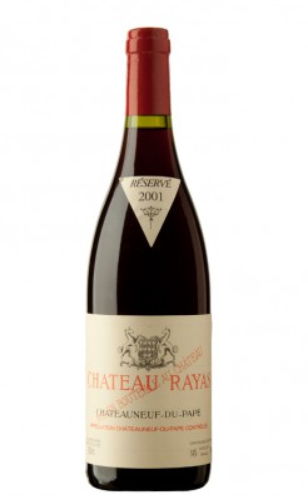
A Geert van Hecke classic Pithivier.  A Puff pastry pie filled with cuckoo Malinois, foie, cream of salsify and truffle. An absolute TOP dish that should be enjoyed with a  Château Rayas 2001 from Châteauneuf-du -Pape

Chateau Rayas 2001


Wine of a mythical purity: Jermann

It was finally time to have a trip with my 2 favorite girls, my wife and daughter 🙂 I know it seems like I only go on holiday with other people, but it isn’t. This year we set sail to Friuli to visit another favorite woman in my life, my dear Zia Livia. Zia Livia might already have a blessed age of 83, but she is as active as a 40 year old that and cooks like nobody else can (not even in restaurants). Until now I always was the apple of her eye, but let’s say I had to leave this spot to my baby girl 🙂

zia and elo

When I go on holiday with my wife I try to hold myself and not make it a wine trip. I allow myself to visit 1 (max 2) vineyards… I mean otherwise it be like a kid standing in front of a candy shop not being allowed to go in 🙂 . My mind was made up very quickly that I wanted to visit the Jermann wine estate. If I would have to describe Jermann in 1 word it would be “Flawless” or “multi-layered”!! What impresses me most about these wines is the purity and depth of flavor coupled with huge mineral extract, all perfectly in balance. In case you wouldn’t know it, the Friuli region is mostly known for its white wines. They do also have some really nice red wines like Refosco, but their main focus is white wine…

Jermann

The Jermann winery was founded by current owner Silvio Jermann’s Austrian great-grandfather Antonio in 1881. A heritage Silvio is very proud of and cherishes a lot. You also notice the Austrian background when you visit the winery. FYI you will notice that  there will be less pictures and no pictures from the inside of the wine estate… this is due to the fact I was not allowed to take pictures from the inside of the building… So you’ll have to take my word for how it looks, if not there is only 1 solution… visiting the vineyard yourself 😉

Silvio Jermann

It must be said that Silvio Jermann is one of the winemakers that changed Italian wine history and created a new era in vinification of white wines. It did take him a bit of effort to convince his parents to change their way of winemaking as they had more conservative views. Something remarkable is that Silvio’s choice of country to build up experience in winemaking after his studies at some of the most renowned wine academies Conegliano and Istituto di San Michele. His choice went to Canada, not the first country I would think of… nevertheless I have drunk some very nice wines from Canada. Silvio’s move to Canada gave him the chance to broaden his horizon and the freedom to do some research of new techniques to make wine.

Jermann Azienda 5

Let’s say that the research has paid off as he did not only convince his parents with his multi-layered, extract-loaded whites, he convinced the whole wine world!! You could see it as a combo of Collio’s incredible terroir and Silvio’s daring flair.. of lots of small vineyards that are personally monitored by Silvio, and unique blends of autochthonal and international grape varieties.

I do recognize this aim for perfection from another monument/innovator in Italian winemaking I visted this year, Guiseppe Quintarelli…Just like at Guiseppe, it was Silvio who has put the vineyard on the map and expanded it to what it is today. Today Jermann has around 200ha of land, of which not all is used to make wine, but only 3/4.

Jermann Azienda 1 Jermann Azienda 2 Jermann Azienda 3 Jermann Azienda 4

I already visited lots of vineyards, but I must admit that Jermann is one of the most impressive I’ve seen. Maybe because they only move to this newly build location I in 2007 (with first harvest in 2006) or better on 07.07.07 :-)I was told that Silvio likes numbers or dates like this. But I think the beautiful pieces of art, the gardens (including a golf course as Silvio is a Golfer… to bad he wasn’t there as we could have had a little match as I also played golf for a long time 🙂 ). You feel quit “Zen” at this vineyard…. or at least that’s how I felt when visiting it (hope people working there experience it in the same way).  Although I think the lovely Serena also played a big part 🙂 FYI Serena is the person who showed us around the estate.

Azienda Jermann

Like always the best part of the visit is at the end… the tasting of the wines. They upgraded the tasting as there is no better way to taste wines than with food ?? Local artisan products like San Daniele (my all time favorite ham!!), some cheese, polenta and freshly baked bread 🙂 Simple things, but things that rock my world!! We started with their evergreens or less complex or “entry level” wines the Pinot Grigio and Pinot Bianco. All from 2015, a wine year every winemaker is enthusiastic about

winetasting Winetasting

The Jermann white wines are either made from one of the following grapes or a blend: Sauvignon, Chardonnay, Ribolla Gialla, Malvasia Istriana, Picolit, Tocai Friulano and Riesling Renano. The grapes might change, but they all have 1 thing in common, purity!! What you’ll notice when you see a white wine bottle from Jermann (as off their 2009 vintage if I remember it good), is that they have a screw cap instead of the classic cork. The reason for this is keeping the taste of the wine how Silvio made it, a classic cork would change the wine’s taste too much and  after lots of research they found out that with a screw the changing of the wine is far less.

Jermann

I also see it as a kind of statement as for most people when they see a bottle with screw cap they think it is a wine of lesser quality… but in this case they get proven wrong!! AND another good thing about a screw cap is that you’re bottle will never taste cork 🙂 🙂

During this tasting I got proven again that I sometimes have expensive taste 🙂 🙂 no no just kidding… All wines were very pleasant to drink, but my preference always goes to full bodied wines… which in the case of Jermann would be the “Where dreams”(97% chardonnay) and their Vintage Tunina (a blend of Sauvignon, Chardonnay, Ribolla Gialla, Malvasia Istriana, Picolit) . What intrigued me in the “where dreams” before I even tasted it was the many times it changed its name 🙂 . The first 9 years it was called “Where the Dreams have no end…” (for every vintage they had a different color for the capsule). In 1996 it became “Were Dreams, now it is just wine!” and they changed the capsule in  blue, bearing a stylized Comet Hale-Bopp.  Finally in 2003 they returned to their “roots” with: “W…. Dreams ………”, adding the year of harvest and a drawing of Mars on the capsule.  A wine with a story behind it. ..A nice note: The wine was actually dedicated to U2’s “The Joshua Tree” album (1987) and specifically to the song “Where the streets have no name” 🙂 . When I actually tasted it, it does indeed make you dream of opening a second bottle of it 😉  charm hand in hand with complexity and rare elegant refined notes of exotic fruits, melted butter, vanilla… and they nose doesn’t disappoint the taste as the whole pallet comes through when taking a sip!!

Jermann where dreams

As for the Tunina it was love at first sniff 🙂 the tempting aromas, the complexity, honey, mango, lime…. it all works! Again here the taste doesn’t let you down… and again that full body!!

Result of my visit? Yes, a few more bottle for my cellar (of which 3 have already disappeared) and less space in the car 🙂 🙂

I could and would like to tell you more, but I can only suggest to taste the wines yourself and maybe even plan a visit to the vineyard.

For more info  you can always contact Jermann directly. for my Belgian friends, you can check with our friends from Young Charly as they are the Belgian Dealer 🙂


Time to put the sommeliers in the spotlight: Antoine Lehebel

I know it sounds strange when I tell you a Frenchman won the title of Best Belgian Sommelier in  and defended the Belgian colors during the World’s Best Sommelier Competition earlier this year 🙂  🙂 And yet it is all true!! It was my dear friend Antoine Lehebel has done it all with lots of pride and a big smile. Antoine Lehebel is head-sommelier of the Brussels Michelin starred top restaurant Villa Lorraine  and a great example that even if you didn’t go the hotel management school you can succeed as a sommelier!! You only need the drive of wanting to do everything to  achieve your goal … And I also know Antoine still has lots of ambition left as he already has lots of new targets he wants to succeed in 🙂 What I like about Antoine is that he is a very modest/humble person who loves every aspect of his job. Sometimes I wish I felt the same about my job 🙂  Just like with William Wouters, I asked Antoine 10 questions that give you a view in the life of a top sommelier.

Antoine 2

 What is your favorite wine region to work with?

I love the Loire valley because of the diversity of wines, and honestly you have so many great vignerons there. You can play with the style, color, age of the wines, and you can find a lot of original stuff too… and the region is really dynamic so it really is one of my favourite region to work with. I was born there too so there is a touch of chauvinism also… 😉

What does it take to be a good sommelier according to you?

Passion for wine, eagerness to share with people, and a bit of fun also, an evening in a restaurant should never be boring you need to have a good time, and a sommelier (or anyone working on the floor for that matter) should be able to make you feel at home.

Is the job of a sommelier underestimated/valued?

It depends, obviously as a guest you only see the tip of the iceberg, but sometimes do not realise all the work involved before your service, but we can feel more and more interest about this job, which is very gratifying, we all need to keep up the good work to make this role even more estimated in the future.

When and how did you get the passion for wine?

It all started in London when I started to work in an indian restaurant, the German Manager was a sommelier for some years and started to teach me a bit. I got hooked very quickly, and never stopped since then.

Who is your big example in the wine/sommelier world?

Well first that would be Thomas Heimann who’s been my mentor when I started in the trade, and then I do not think I have one “big example”, there are too many great sommeliers around.

What is your approach for pairing wines(or other beverages) with dishes?

There’s a sense of feeling obviously, and I always try do find some harmony in the flavours, but it is really fun for me to get quite technical too, i think the association of tastes, and their effect on the perception you have is an amazing subject to study. you can actually make a taste changing according to your pairing, which is a nice game to play, but obviously it takes a bit interest on that matter.

Which wine region would you recommend everybody to visit and why?

The Douro Valley without hesitation! breathtaking landscapes, brilliant wines, and the dry wines are getting better and better, I am very fond of that region. You can easily spend a full week there and come back for more because you never have enough time to see all of it!

For which wine would you make a big sacrifice to be able to taste?

Very old german rieslings, I have a great memory of a 1949 riesling Sonnenhur spätlese from J.J Prüm, probably the best wine I have ever tried (so far)

What is your most wonderful memory of hotel management school?

I actually did not go through any hotel management school, so I can not really answer this question.

A culinary or wine experience everybody should have had besides have a meal at your restaurant, shop, winery, etc..?

The restaurant “le pot d’étain”, in the Chablis region, at l’Isle sur Serein (well, it is lost in a small village 30 km from Chablis but is definitely worth the trip), the food is traditional french fare, very well executed, and the wine cellar is like….the best i have ever seen, with very kind prices and the best french wines represented in any region.

Time to put the sommeliers in the spotlight: William Wouters

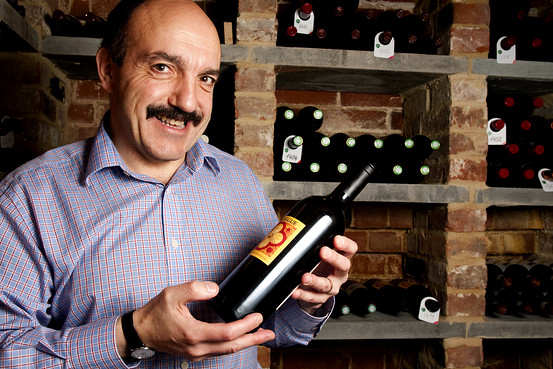
William Wouters

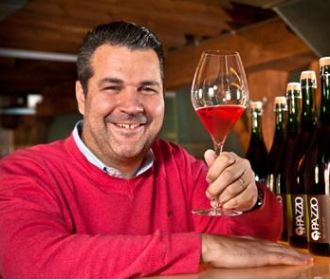
In the world of gastronomy it are always the chefs that are put in the spotlight! Time for a change I’d say and put that spotlight on the sommeliers for a change :-). Especially with the ASI Worldchampionship for sommeliers coming to Belgium in 2019, they deserve it more then ever! That’s why I’ve send 10 questions to a few top sommeliers to find out more about their world… The first sommelier I’ve send the questions to is William Wouters aka ‘el presidente’ 🙂  or better the chairman of the Belgian Sommelier Guild and the person who we have to thank for bringing the championship to Belgium. I personally already know William since I’ve been born and have to admit that I look up to William when it comes down to wine and knowledge about wine!! He has learned me lots of things and still helps me to discover wines, vineyards, etc… I also know for a fact that I’m not the only one looking up to him. Lot’s of Top sommeliers still ask William for advice or help. For many years William has worked and participated in lots of competitions at international level with results one shouldn’t be modest about!! What I also always liked about William is that his motto is “wine doesn’t have to be expensive to be good”!!! A motto that was also a golden rule in his restaurant (Pazzo)

William wouters

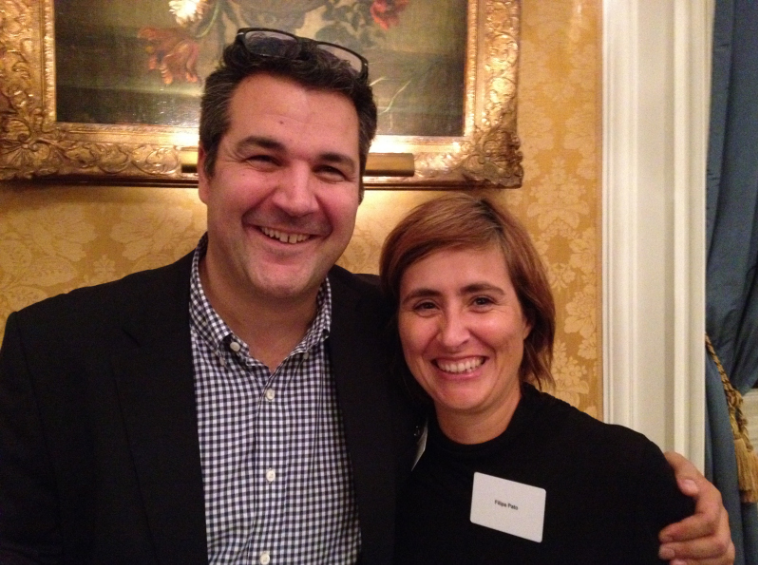
Every winegrower, (top)sommelier or person involved with wine I mention I’m from Belgium comes with a at least one story about a crazy night they had at the Pazzo winebar with William 🙂 (who used to be the owner of Pazzo). 2 years ago William decided to leave Pazzo in the good hands of  chef Ingrid Neven and Tom Dhooghe. The mean reason for that was William being able to spend more time with his wife and kids in Portugal. William’s wife Filipa Pato is a very renowned Portugese wine maker who comes from a long line of winemakers in her family. You could also see it as William changing sides 🙂 from sommelier serving the wines, to winemaker making the wines.

William en filipa

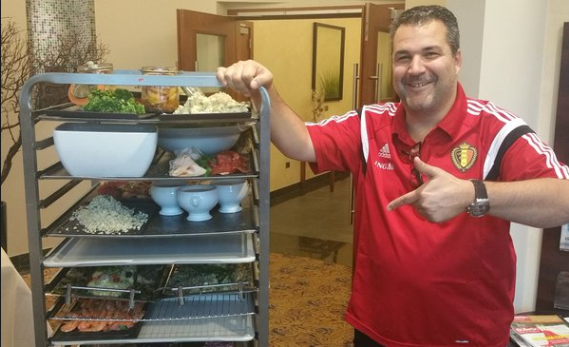
Although it must be said he also spends lots of his time with his other passion… football. William is also the cook or better person coordinating the cooks for the Belgian national football team (Red Devils) and therefore also travelling a lot with them.

William red devil

What is your favorite wine region to work with?

Bairrada – you all know why… 😉 😉

What does it take to be a good sommelier according to you?

A broad knowledge of all beverages and a good culture about food. Perhaps the most important thing is: a very good “social” intelligence

Is the job of a sommelier underestimated/valued?

Underestimated because a sommelier is a kind of a barometer in direct contact with the customer. He feels the straight needs and consequently acts to them. A good sommelier is a big added value in the front of a restaurant, bistro, wine bar, wine shop,…

When and how did you get the passion for wine?

From small on I was intrigued by the complexity of wine and the wine world in general, the diversity, the interaction with the climate, soil, grape varieties, perception of the winemakers, link to gastronomy… the more you know, the less you know, the more you want to know… (Confucius 🙂 )

Who is your big example in the wine/sommelier world?

Obelix, he fell into a barrel with the magical potion as a kid, I think sometimes the same happened to me, but I was probably too small to remember

What is your approach for pairing wines(or other beverages) with dishes?

Feeling… This is the biggest challenge for a sommelier! There is no such thing as right or wrong… Depends of many factors : people, the mood, time of the day, the weather, the budget, taste, …

Which wine region would you recommend everybody to visit and why?

Bairrada – you know why… 😉 . No, no kidding, I would recommend to visit as many wine regions as possible. As a sommelier it is very important to go into the vineyards and speak to the winegrowers and winemakers to understand better the wines that are made, and why they are made in a certain way. Wines for me should always reflect the place they are coming from. Authenticity is a key word for me

For which wine would you make a big sacrifice to be able to taste?

For all the wines I don’t know. So I think I still have a lot of work to do!

What is your most wonderful memory of hotel management school?

That I always “had to be” a volunteer to go to things related to wine and other beverages. I really loved it! Also to share these experiences with the friends and colleagues gave huge satisfaction.

A culinary or wine experience everybody should have had besides have a meal at your restaurant?

Whatever, wherever, whenever be open minded and keep your eyes, ears and certainly your tastebuds open! This is the intriguing trigger that will always keep you eager to improve as a sommelier! You are never done!

Italian road trip 2016: all good things come to end

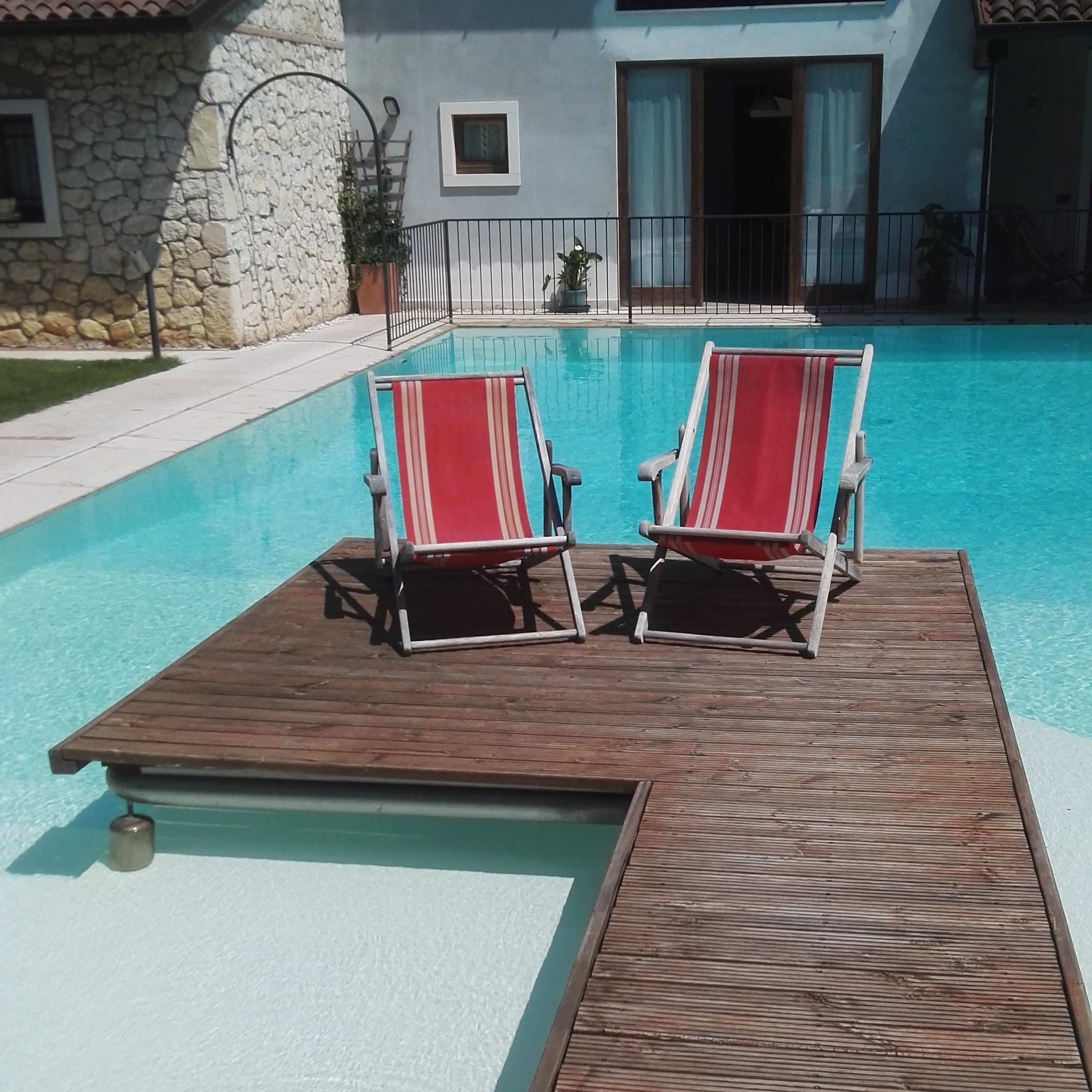
We might be on our way to visit the last vineyard, but that doesn’t make it less worth it!! The last vineyard we would visit on white wine Saturday and even from our trip was Sandro de Bruno at the eastern side of Verona. As we arrived a bit early at our destination we decided to already check-in at our B&B (named La Dolce vita :-)) Once we arrived we also found out it was the perfect spot to stop after lunch and have a little siesta before visiting our last vineyard. I guess the picture below gives you an idea about oasis of piece we arrived at. Another great news fact, we still had some room left in the trunk of our car for more wine 🙂 🙂

Il paradiso

Not that we were stressed, but you would be surprised how tiring visiting and tasting can get. I can definitely recommend the B&B as they also have a very nice breakfast and very friendly hosts. The B&B was also only 1km away from the Sandro de Bruno vineyard, so we had all the time in the world as it would only take us a minute to get there for our visit.

Sandro de Bruno

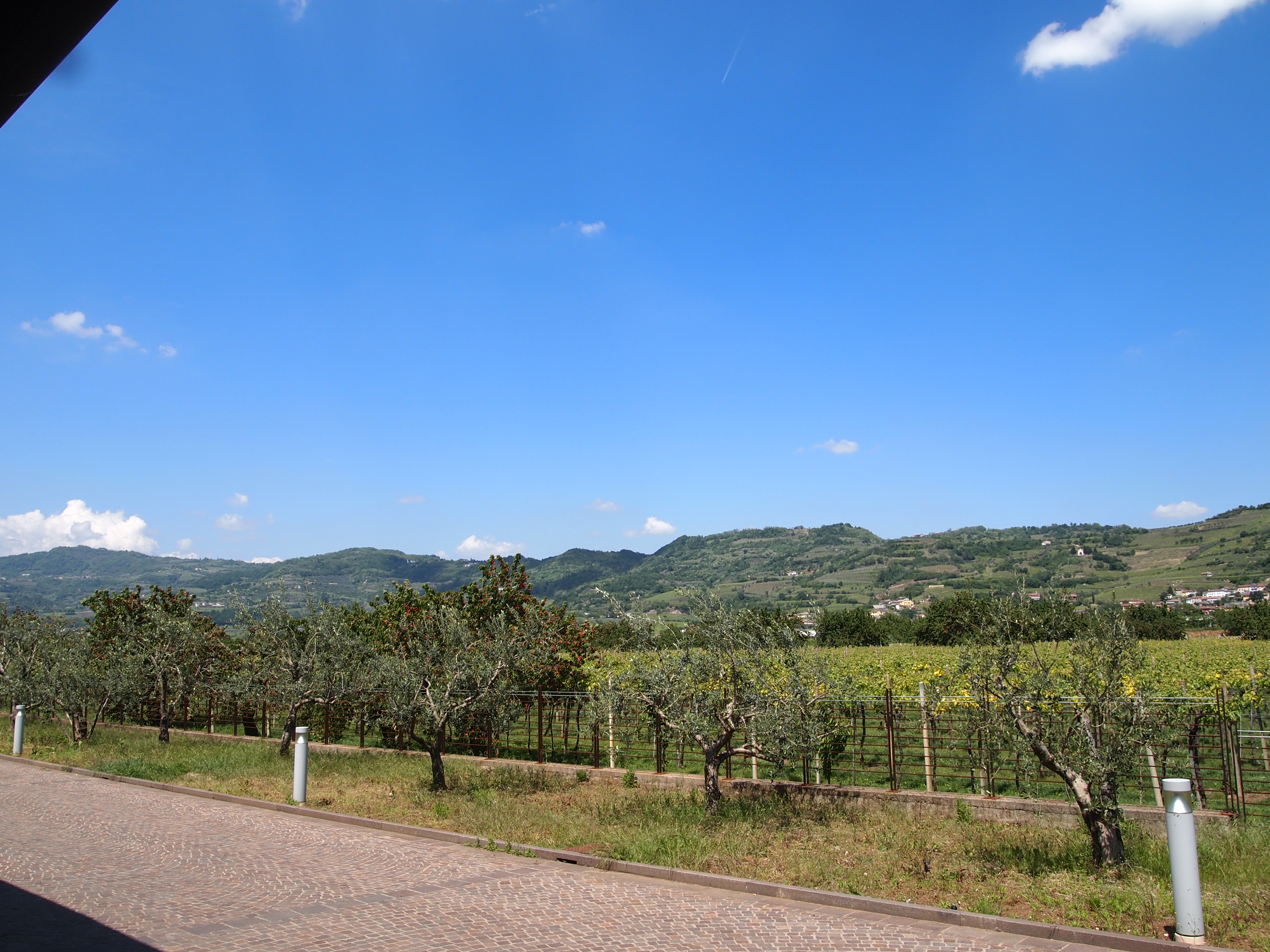
The Sandro de Bruno winery saw the daylight in the year 2000, so you would think it is a young winery. It’s not! In reality the winery is already making wine  since 1930 or better current owner Sandro’s dad and his dad’s 2 brothers were making wine since 1930… Sandro changed the name of the winery  in the year 2000(when he took over and after buying the parts of his uncles) as a tribute to his dad into ‘Sandro de Bruno’ which comes from Sandro ‘son of’ Bruno… it is as simple as that 🙂

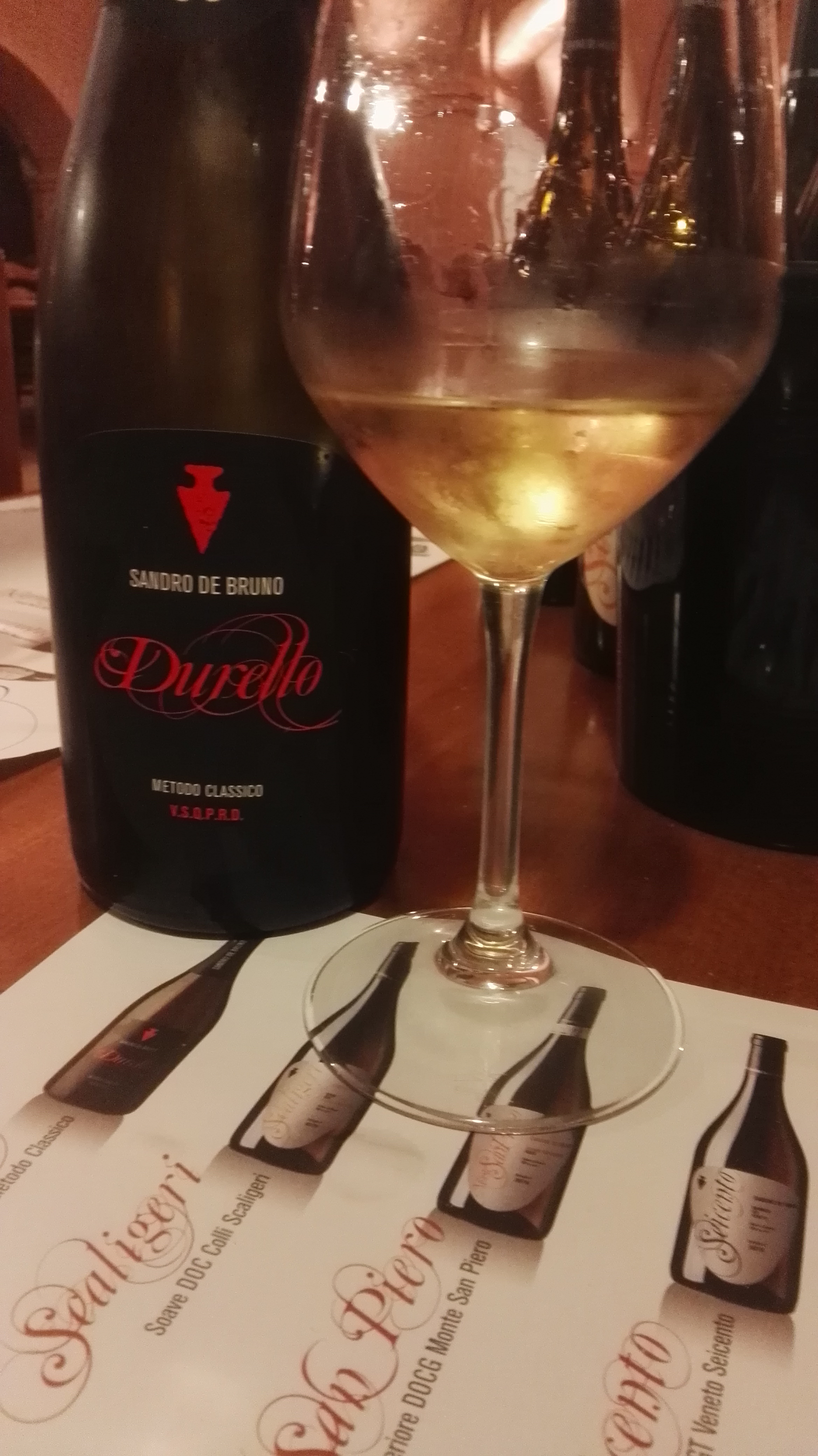
Sandro de Bruno produces different kinds of wine, but 2 of them are their trademark wines (I think that’s the best way to call them) : the Soave and the Durello. Let’s first start with the Durello (or Durella how the grape is actually called) a DOC wine, meaning the Durello can only come from a specific area in this case from the area between the provinces of Verona and Vicenza (DOCG would mean it would need to come from a specific town or more specified area and only from that place like chianti or Barolo, or Amarone, etc…). The Durello/Durella grape is a strong  autochthonic grape variety. Strong because it is said to be disease resistant and grows best on a soil composed of lime and clay of volcanic origin. Indeed volcanic origin… I was surprised to find out that the area we were at has a volcanic origin… I didn’t know the area used to be volcanic. Another remarkable characteristic of the grape is the thick and leathery skin (may be the reason for it name as ‘duro’ means hard in Italian). What I’ve learned from tasting other wines that come from volcanic areas is that they have lots of minerality in them. For the Durello this isn’t any different. Something fascinating is that there are around 500 growers growing the grape variety but only I0 of them actually bottle the wine of which Sandro de Bruno is 1. Because of its high level of acidity the grape is 99% used to make spumante wines.  At the nose you notice lots of white flowers and minerality. It combines nature and freshness and its character lends itself good to be paired with seafood I think 🙂 I’ll have it a try at home… according to Sandro it pairs great with codfish alla Vicentina.

Durello

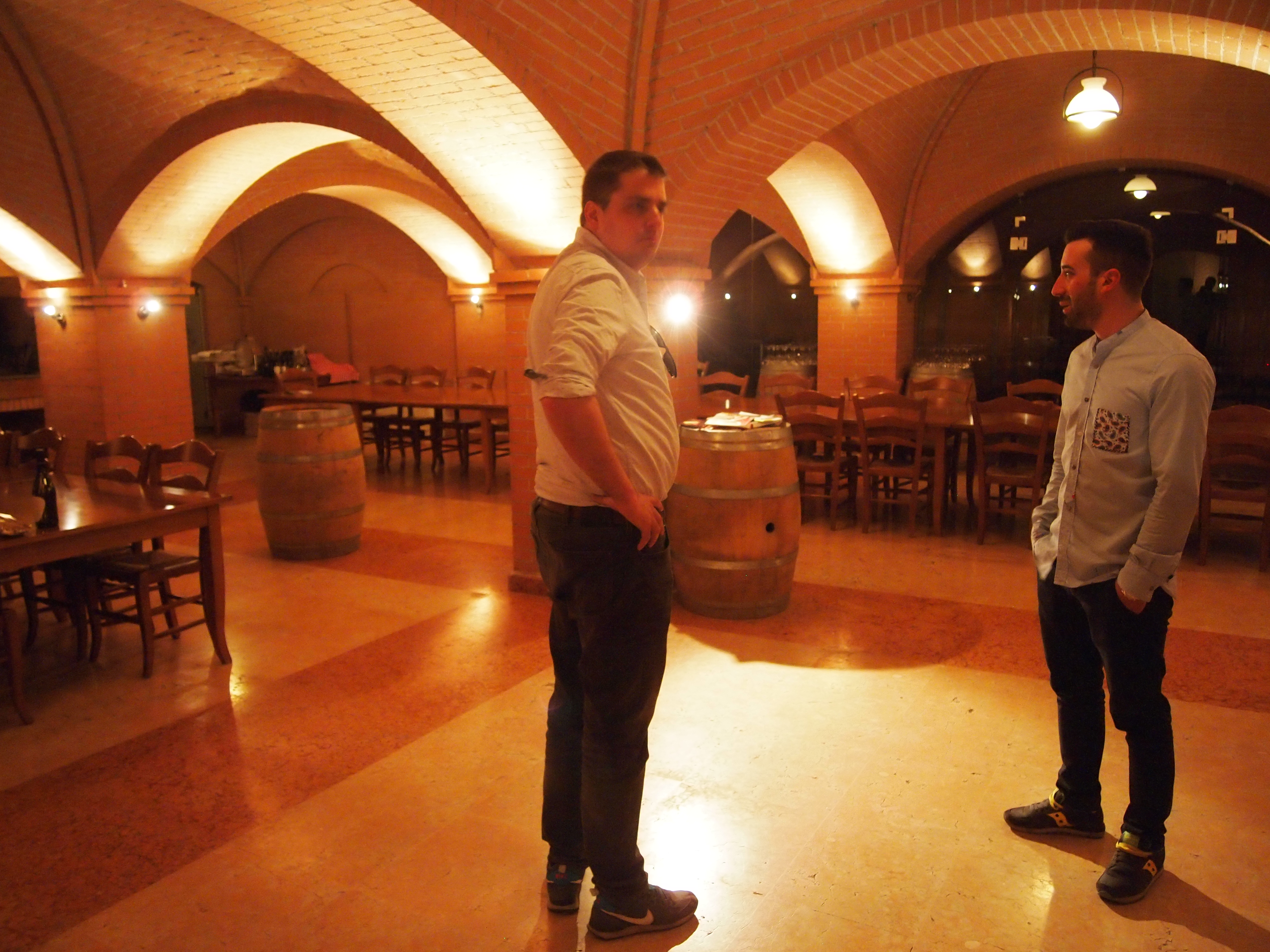
At our visit we did see Sandro, but as he and his wife had to go to Genova it was Andrea (who was about our age) who showed us around the winery. At all vineyards we were received with open arms, at Sandro de Bruno it at some point felt like we were just having a drink with a friend at a bar or so 🙂 It felt so relaxed!!

Sandro de Bruno Sandro de Bruno 2 Sandro de Bruno 3 Sandro de Bruno4

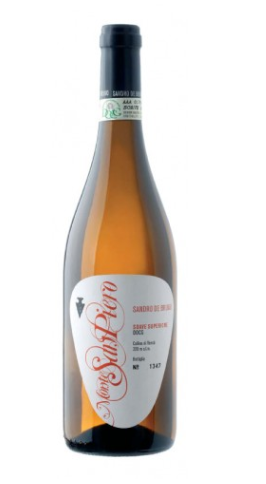
Soave as I mentioned is their 2nd most important wine.  For me Soave has always been around, but never got the attention it deserved.  Soave was produced in a medium-bodied style that was often compared to Chardonnay, except with a distinct bitter almond note. In most cases people in that case chose a bottle of chardonnay over one of Soave  or at least this until the end of the 90’s as since the 21st century trends have been turning and now Soave is the new Pinot Grigio in the US 🙂 Basically a wine everybody wants to drink + it must be said that producers like Sandro de Bruno and others in the region have worked very hard to make the opinions turn!!  The main grape variety that has to be present in Soave wine is Garganega , but can be blend with Trebbiano di Soave and Chardonnay. The Garganega grape also lends itself well to produce sweet recioto (who knows maybe they could even make a White Amarone if they let it ferment more 🙂 ) wines that have the potential to improve with bottle age for a decade or more.  Garganega can make classic white wines, both complex and satisfying!  Sandro de Bruno has 2 kinds of Soave, a regular (DOC) and a superiore (DOCG). Although I like both, I have a slight preference for the superiore, maybe because it has been in wooden barrels and therefore has more body, whereas the DOC Soave only saw stainless steel thanks… Let me say it like this, the DOC would be perfect as apero in your garden, the DOCG Superiore is more appropriate with food. as it has a broader aroma and complexity (and again the nice minerality)… and is rounder (good with white meat).  It are definitely very good wines with a very good price/quality ratio!! Also the bottles I bought at the vineyard are already finished… so I guess I like them

Soave superiore

What I find amazing is that on every bottle of Sandro de Bruno, is that all info on the wine can be found on the back label. Info like best served with which dishes, the best temperature to serve it, which grapes used, etc… basically a simplified technical sheet :-).  Also every bottle is numbered, although I don’t remember why that was 😦 nevertheless the content in the bottle is nectar of the Gods!!

Thanks Andrea for the tour and Sandro for making such great wines!! Hope to see you soon. In case you would have questions regarding the wine, you can contact Sandro de Bruno or for Belgium you can check with Alex from The Vine.  Sad enough our trip ended after this visit…but they gave us a wonderful dinner advise that was maybe the best from our whole trip!! if you would ever be in the neighborhood do stop at il Convivio!!!! A true  hidden treasure!! I also know the bottle you see on the picture (and that we had) from during our meal isn’t one from Sandro de Bruno, but as we had already been tasting their wines whole afternoon I was also keen on finding out which other great wines they had in the area…

Il convivio

I can’t wait for the next wine trip with my buddy Carlos!! Always a pleasure to travel with him…. Although I’m now first travelling with my lovely wife and baby girl to Friuli!