A sip of the Sicilian sun in the heart of Brussels

I’m sitting here in the sun thinking that is has been waaaay to long since my last blog post…. Although technically speaking I’ve still been writing, but for the Belgian Sommelier Association and next to that I am very busy co-organizing the ASI Best Sommelier of the World competition that will  be hosted in Antwerp in 2019 (seems far away, but I assure you that it isn’t 🙂 ).  I’ve also been busy as I became dad for the 2nd time and I can say for a fact that that doesn’t make organising your days easier 🙂

Even though I didn’t write too much for my blog anymore I did get to know many wonderful the last months. Last week for example I got to taste some top Sicilian wines made by the Planeta winery . Unlike many other wineries of this size that have been making wines for centuries Planeta only started making wines in the 90’s…  The Planeta family (from Spanish origin) has been in agriculture since 1585… the current generation is already the 17th generation in agriculture in Sicily. The Planeta winery story started in the Menfi/Sambuca region (South West of Sicily)  where 2 generations  bundled their forces or better Alessio, Santi and their uncle Diego Planeta (and eventually also Diego’s daughter Francesca)  with a little helping hand of oenologist Carlo Corino.
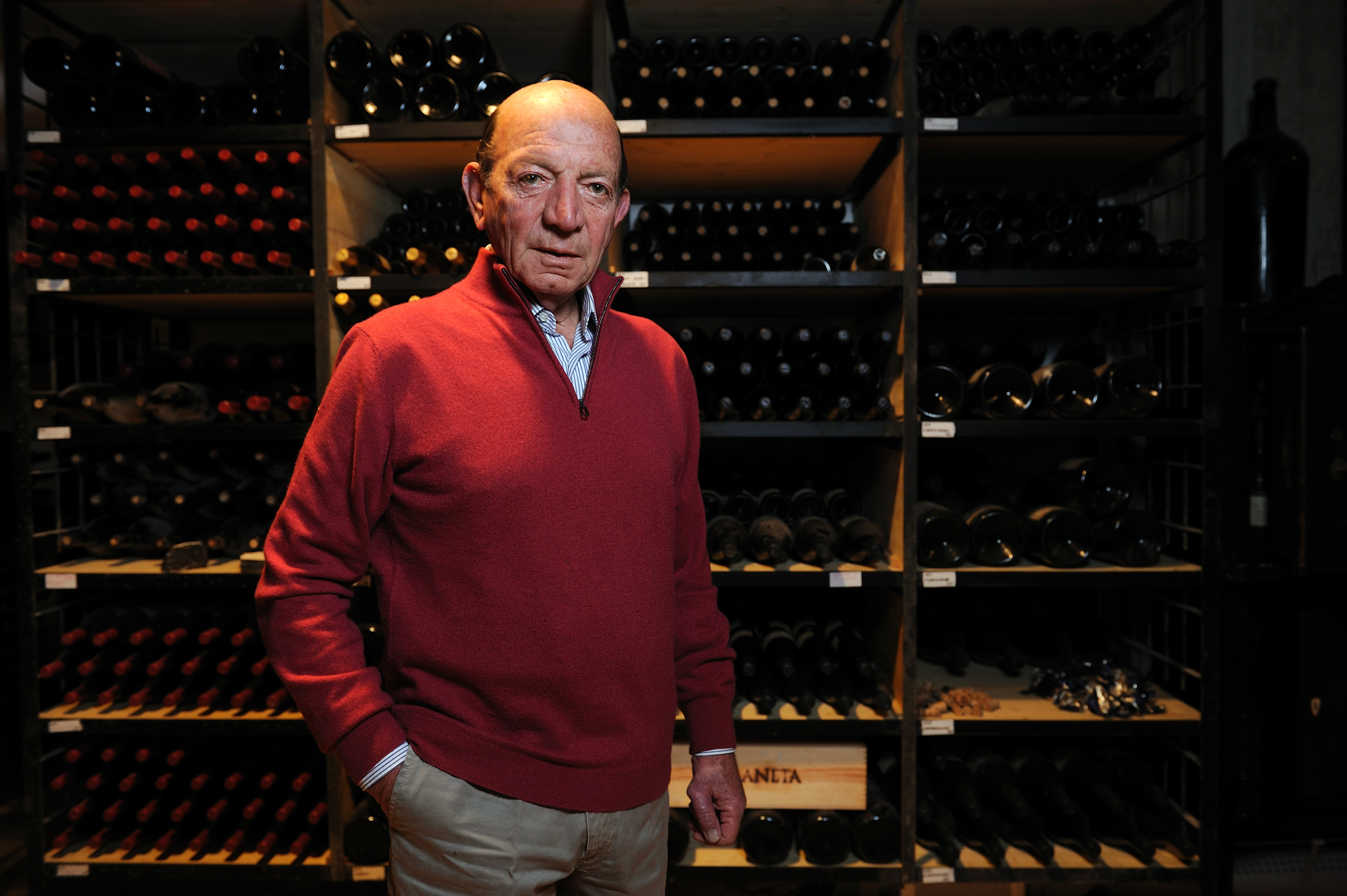
It might seem easy to make wines in a place like Sicily (or any southern wine regions) because of its constant sunshine, but that sunshine also has its disadvantages… lots of sun often translates into high sugars and basically also high alcohol percentage. Unfortunately this was also the reputation southern wines had for many years  high alcohol and not  easy to drink… BUT thanks to modern techniques and knowhow  we are able to harmonize and control all of this much better resulting in some magnificent wines.  Already from the start our friends from Planeta were determined to plant both local and international types of grape and it was an immediate success as in 1995 they were honored by many famous wine journalists/critics with their Chardonnay (that had been in wooden barrels).

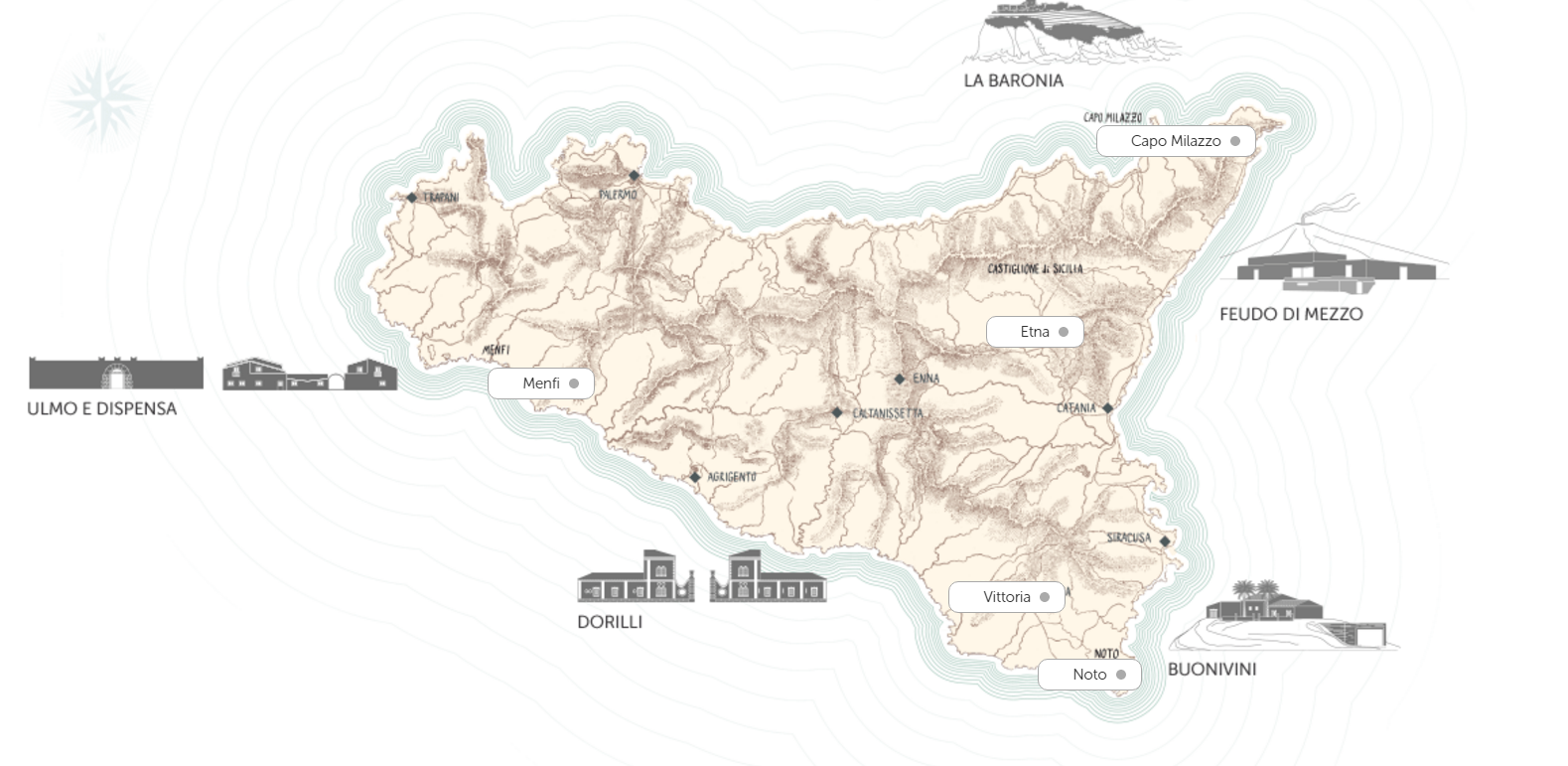
Today 27 years later they have 6 wineries  (around 400ha) spread over Sicily  : Ulmo at Sambuca di Sicilia, Dispensa at Menfi, Dorilli at Vittoria, Buonivini at Noto, Feudo di Mezzo on Etna and finally La Baronia at Capo Milazzo.  It also seems they keep growing both in quality as quantity
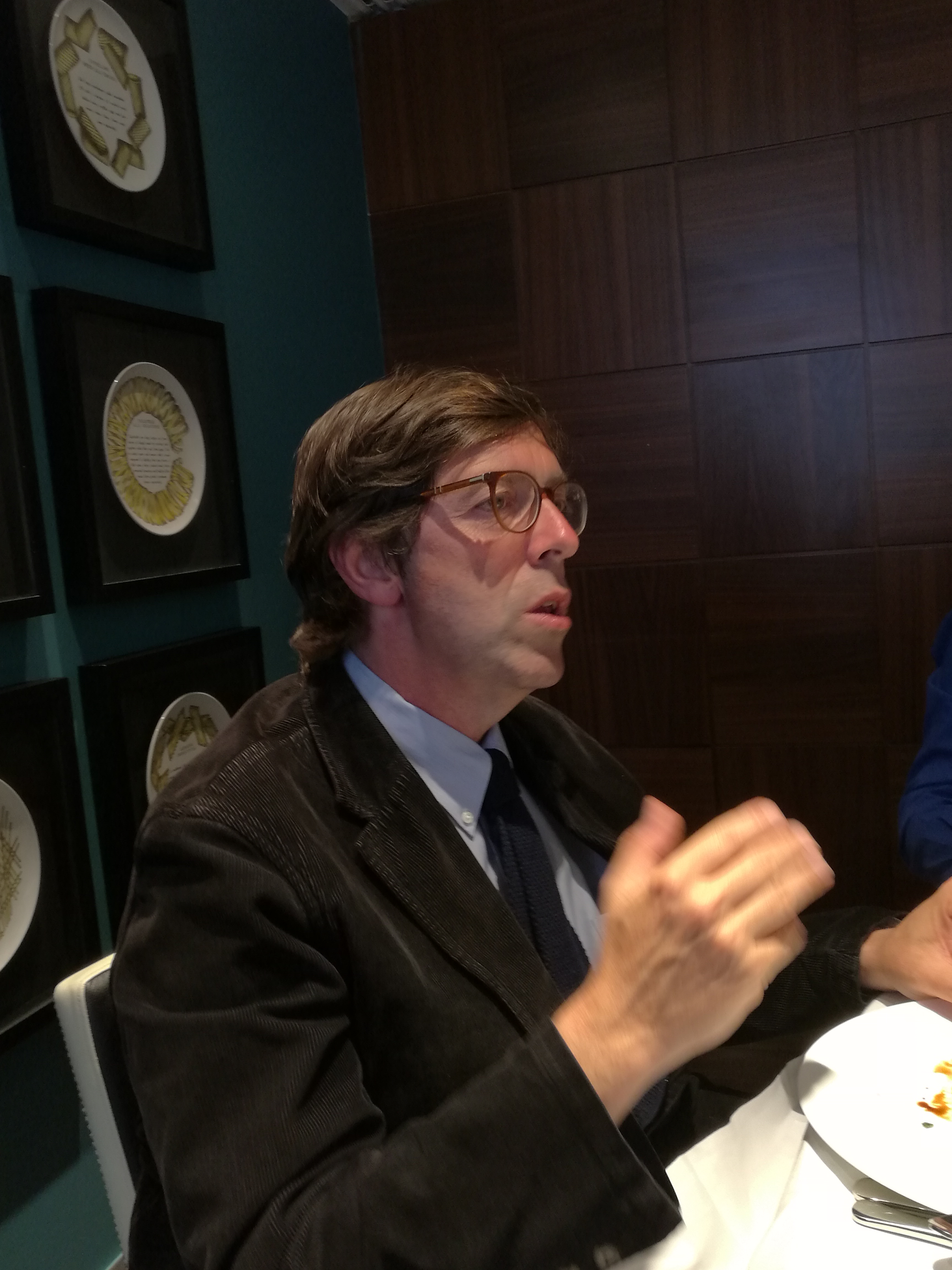
Tasting the Planeta wines under the Sicilian sun would have been perfection, but tasting them in the heart of Brussels at restaurant Bocconi did get close (thanks to the warm and great people at my table obviously). The lunch also wouldn’t have been the same without the great care of host/sommelier Jean- François who clearly knows what he’s doing!! During the lunch I was fortunate enough to sit next to Alessio Planeta who spoke with lots of passion about his wines and the beautiful island of Sicliy.
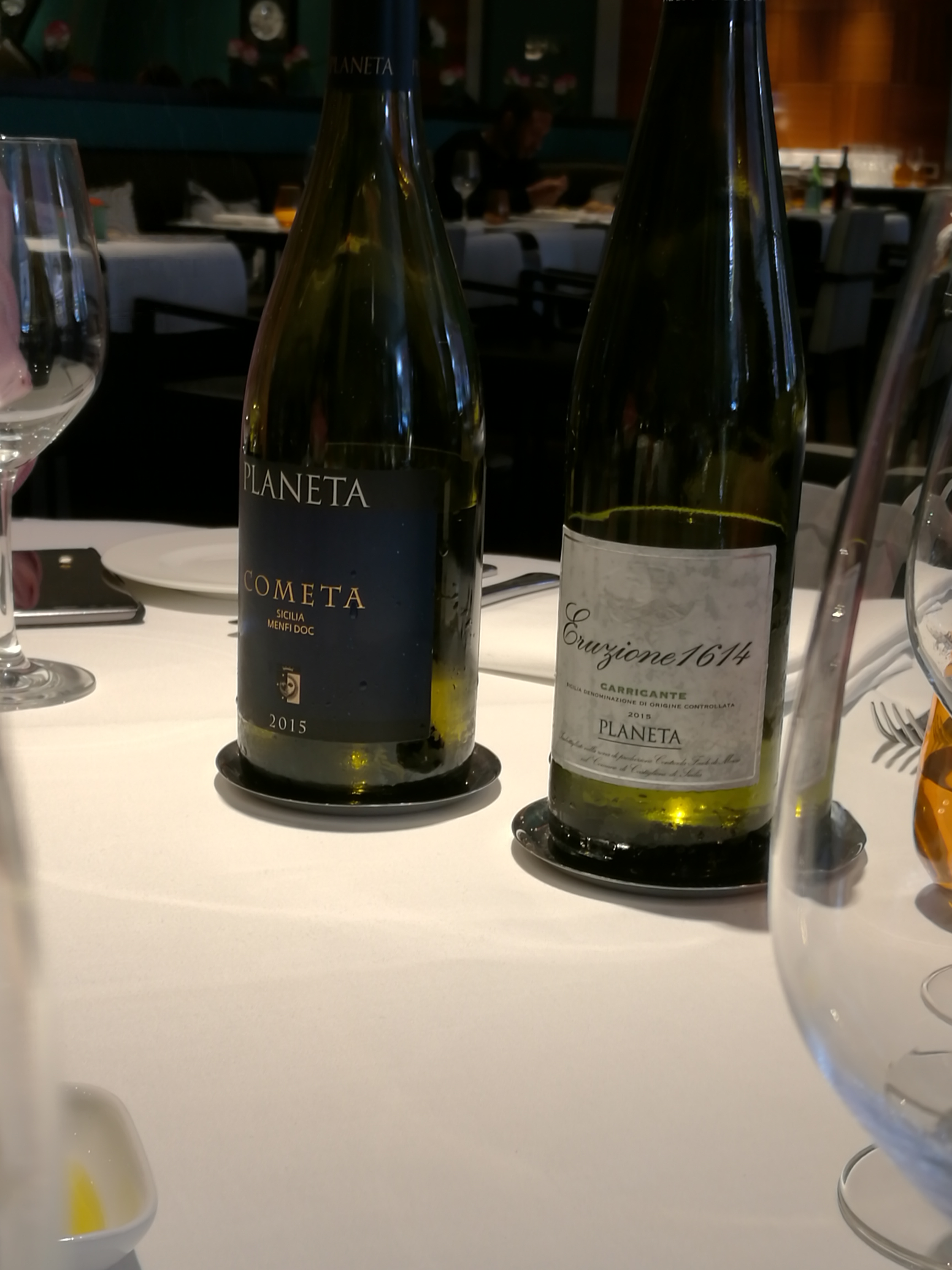
When you think of Silicy you think red wine, but for me their whites are as impressive.  It speaks for itself that one should always go crescendo, but if the first wine you get already is of such level that you don’t know it is possible to even go higher… but apparently it can ;-). The first wines we were served were the 2015 Cometa  that already has a cult status since his first edition and 2015 Eruzione Carricante 1614. The Cometa is fresh acidic, has a terrific savoury length and is a very stylish and wine that can convince everybody. What I think everybody would like about this wine is its aromatic notes of citrus and tropical fruit with some hinds of white peach and the fact that it doesn’t dissapoint when taking the first sip (on the contrary). If you like Rieseling style wines, I’m sure you’ll like the Eruzione 1614 as it contains 10% of Rieseling (90% Carricante) . A palate of fresh apricote and green apples with energizing minerals… again a wonderful easy to drink wine.
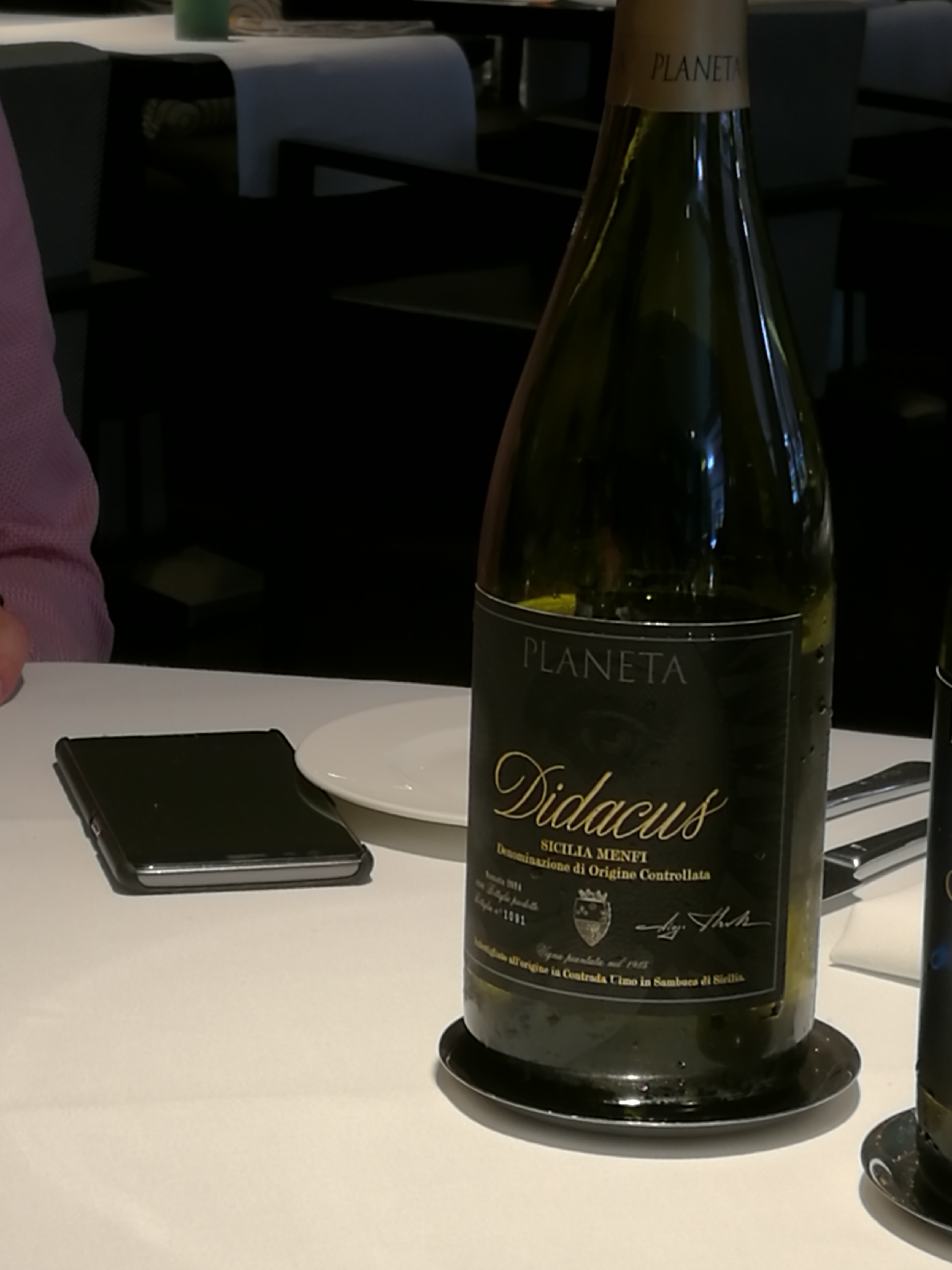
The previous wines were great, but the absolute star of the lunch was the 2014 Didacus which means Diego in Latin (referring to Diego Planeta who has been very important to the re-birth of the Sicilian wines). The Didacus was actually created as a ‘celebration’ wine for the 20 th anniversary of the first Chardonnay they made in 1994.  Although the price of this wine is quit high, it is majestic and very classy  wine that has everything I love:  full bodied, complex and yet very fresh with a magnificant finish that lasts forever :-)…I think that is all thanks to the old vines that are from 1985… It is a wine that can easily stand next to the best Burgundy Chardonnay’s. I hope you will get a chance to taste it some day, but as there are only few bottles this might become a very tricky quest.
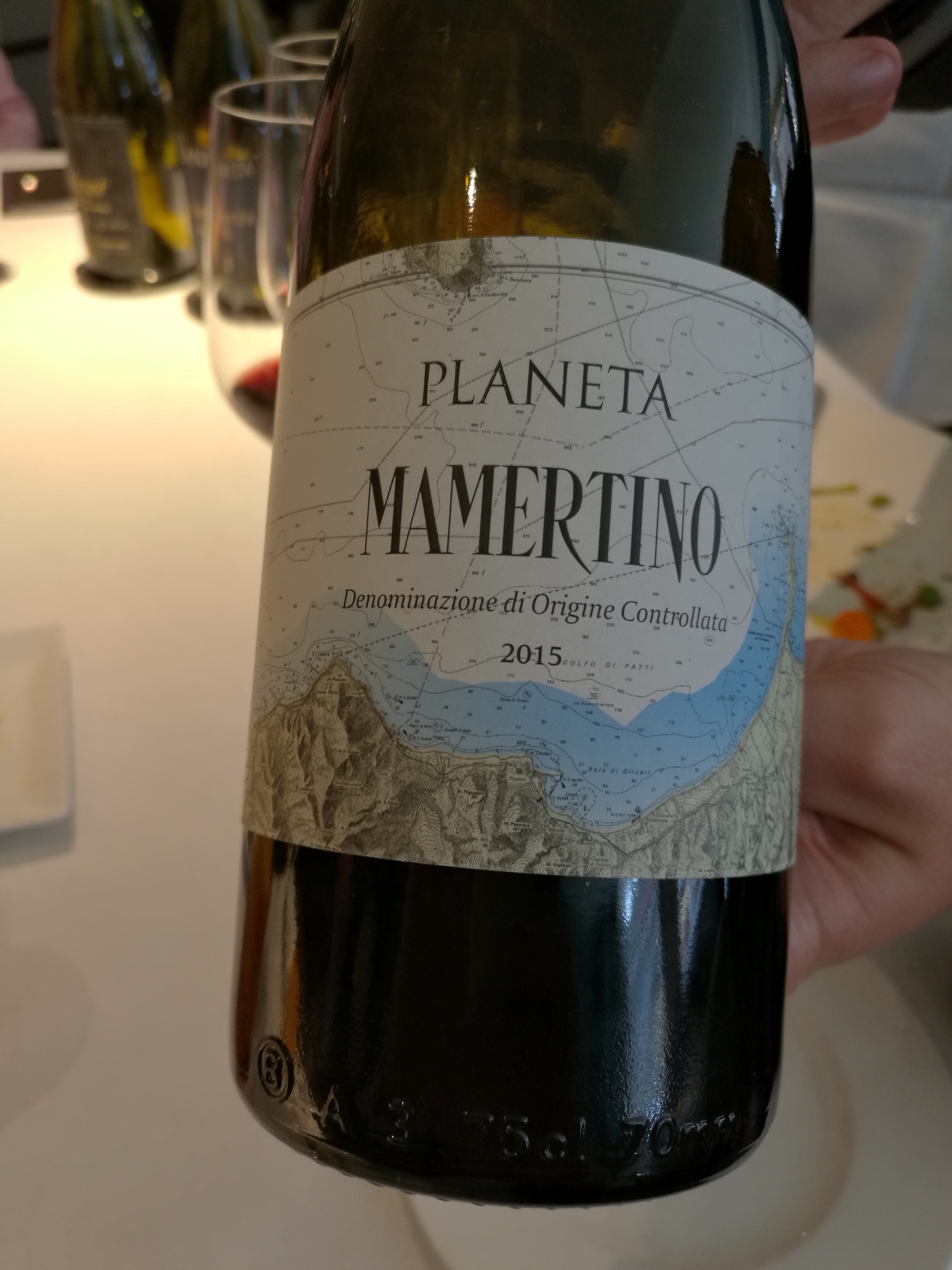
After the wonderful whites it was time to discover some reds with a first in line the 2015 Mamertino (60% Nero d’avola 40% Nocera) followed by the 2007 and 2011 Santa Cicilia and as last but definitely not least the 2014 Eruzione 1614 Nerello Mascalese that for me together with the Didacus were the stars of the lunch (it will also not surprise you that I now have a few bottles of the Eruzione in my personal cellar).  The Marmetino has an elegant floral nose with hinds of roses and prunes  with refined tannines and velvety soft finish.
From the Santa Cicilia Alessio wanted us to put 2 different years next to each other, the 2007 and the 2011. I must say that I was very surprised how full of life the 2007 was. When you tast the wine you notice black fruit notes mixing on a minerally frame as bright acidity and spice drive the fruit-filled finish. Although I must also admit that when I tasted both wines they for some reason made me think of candy or cassis… If i would have to compare both I’d say the 2001 is a bit more bitter with hinds of chocolate and spices… My preference went to the 2007, but that’s a matter of personal taste.

They kept the best for last 🙂 the 2014 red Eruzione!! This wine is one with a LOT of potentional and can easily stay a few more years in your cellar. Light ruby Pinot Noir-like color. What I liked about this wine was the very gentle handling of tannins, which, with Nerello Mascalese, can easily get a bit rustic round the edges. Delicate Pinot Noir-like flavours, red fruits but needs more concentration and fatness on the palate… it basically found its way to my cellar at home 😉

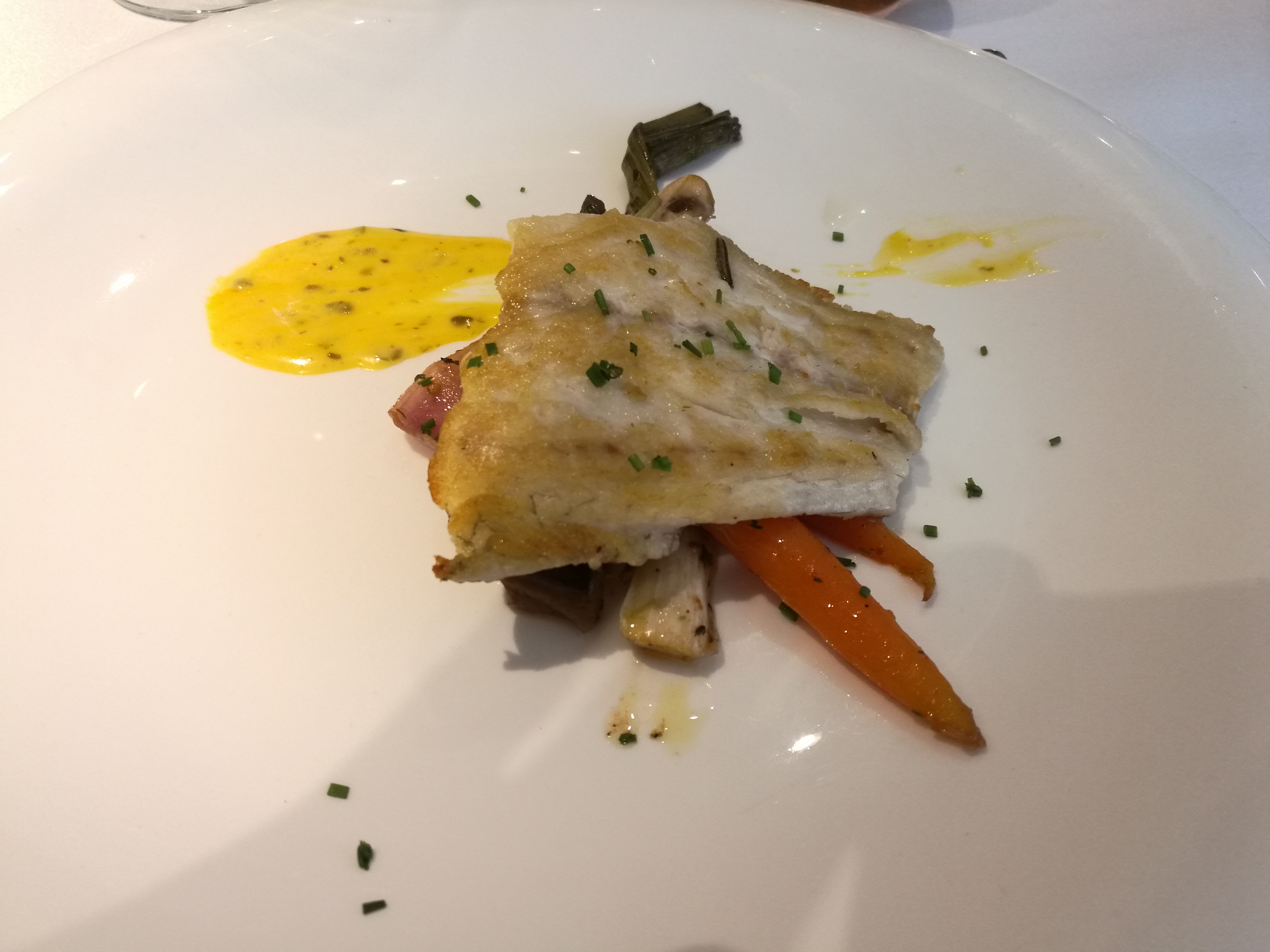
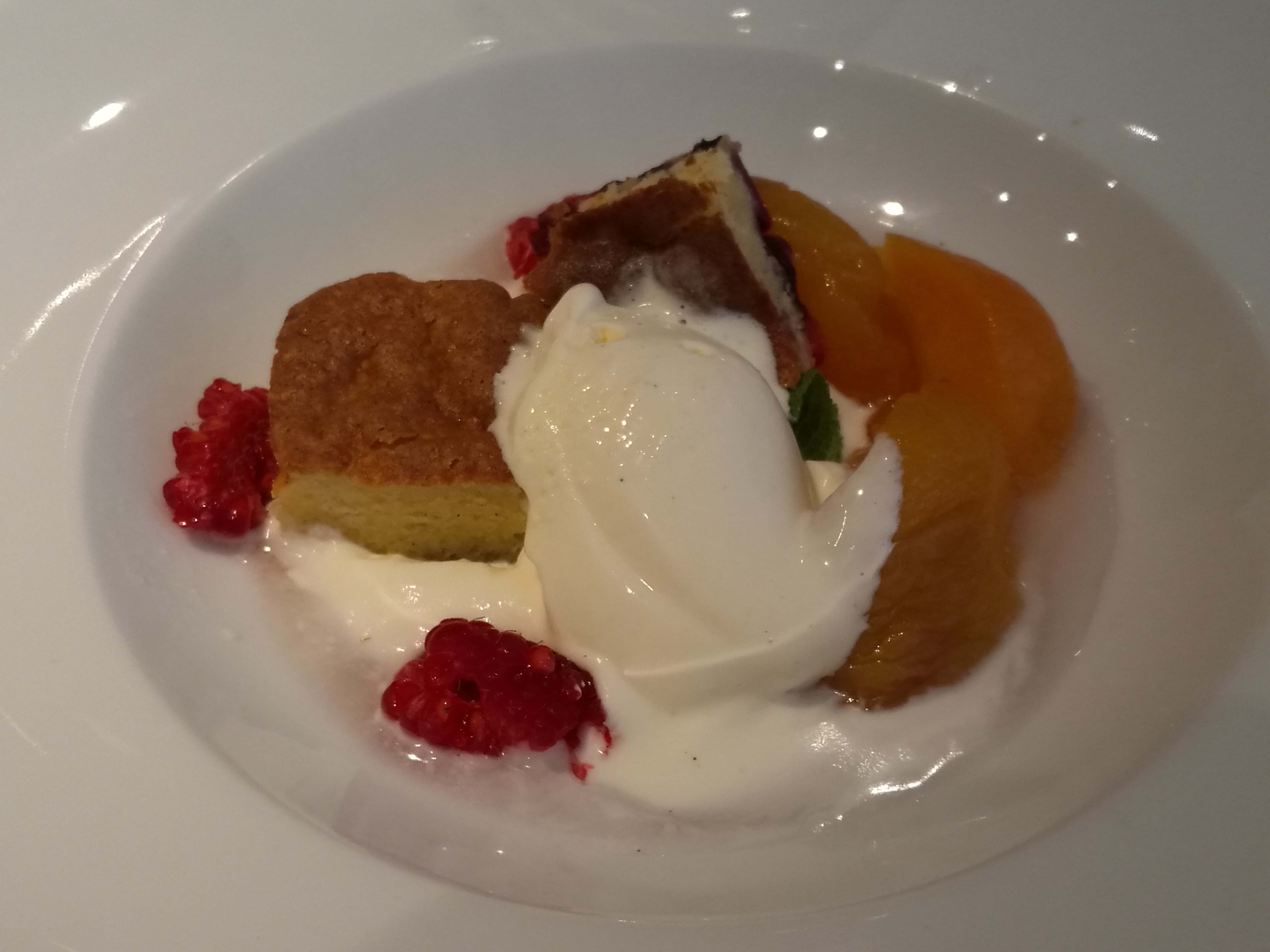
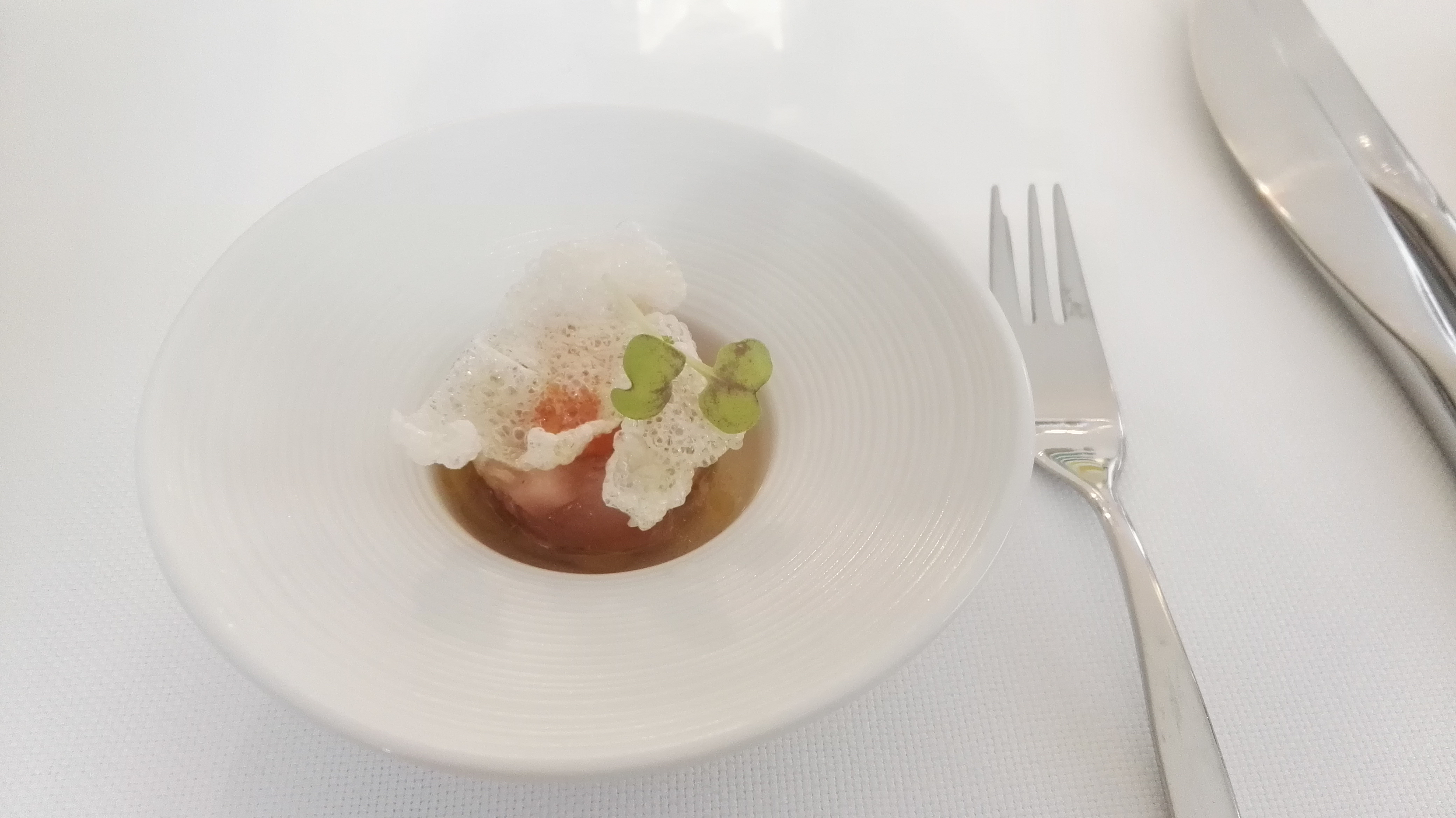
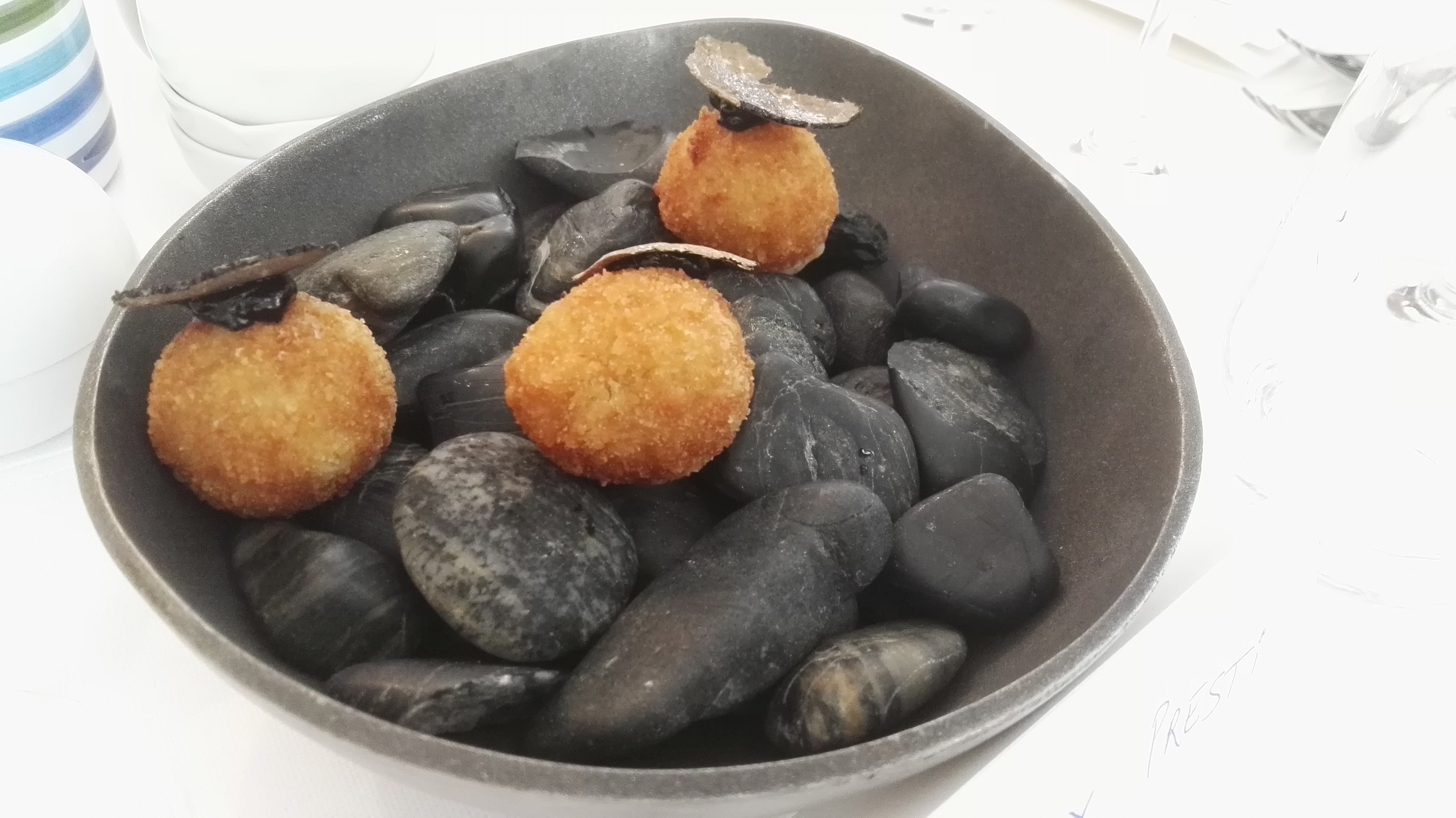
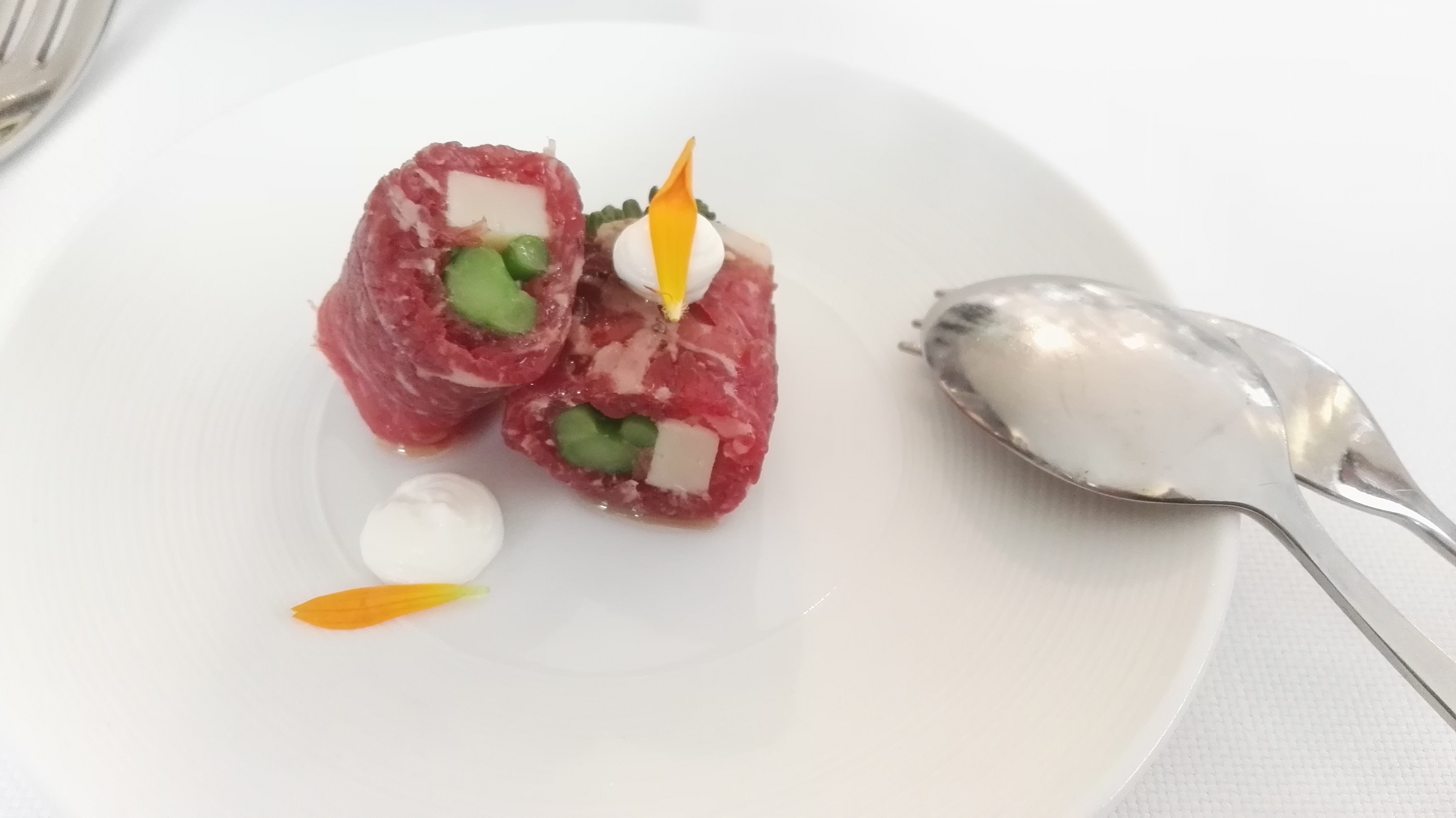
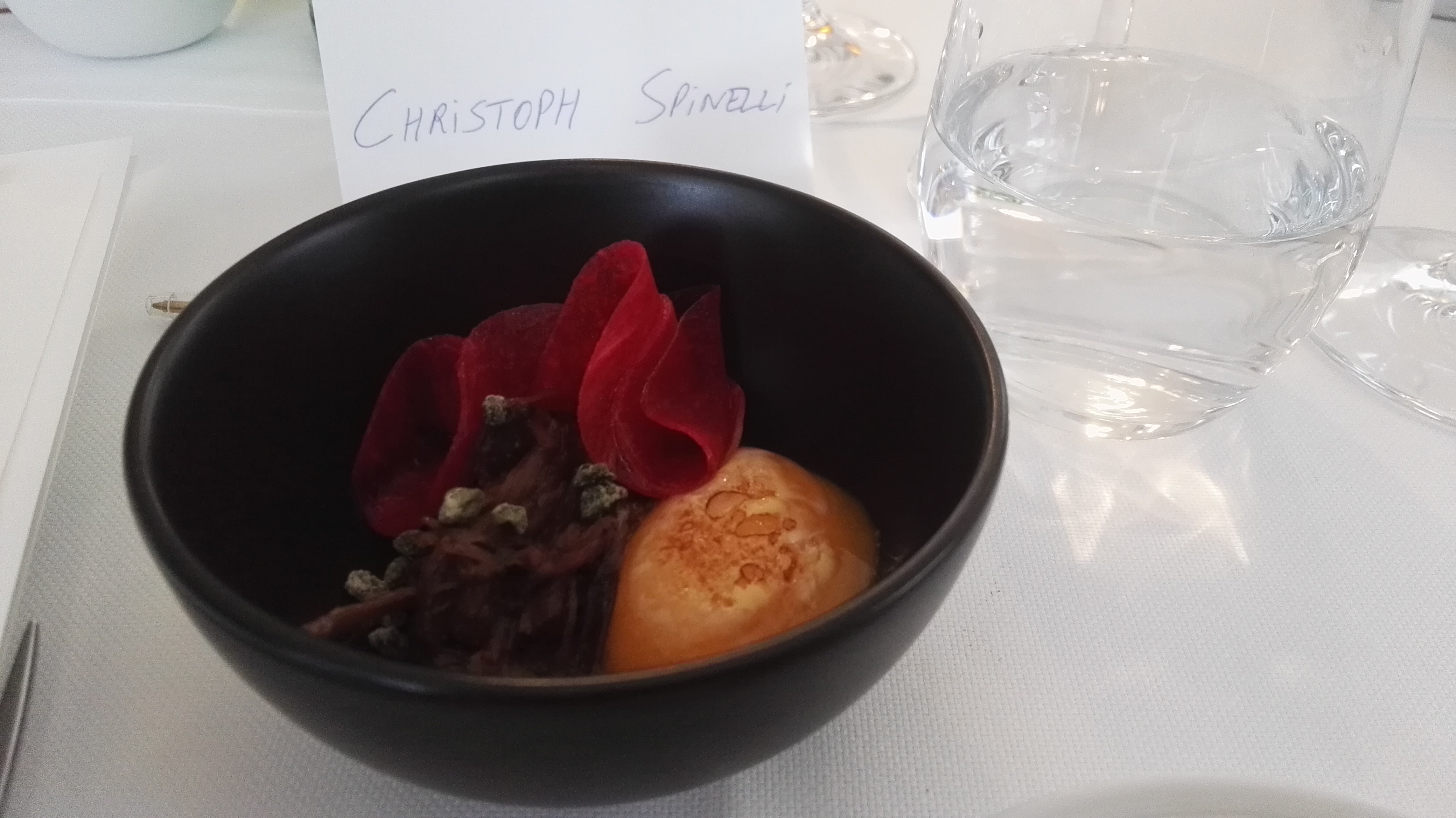
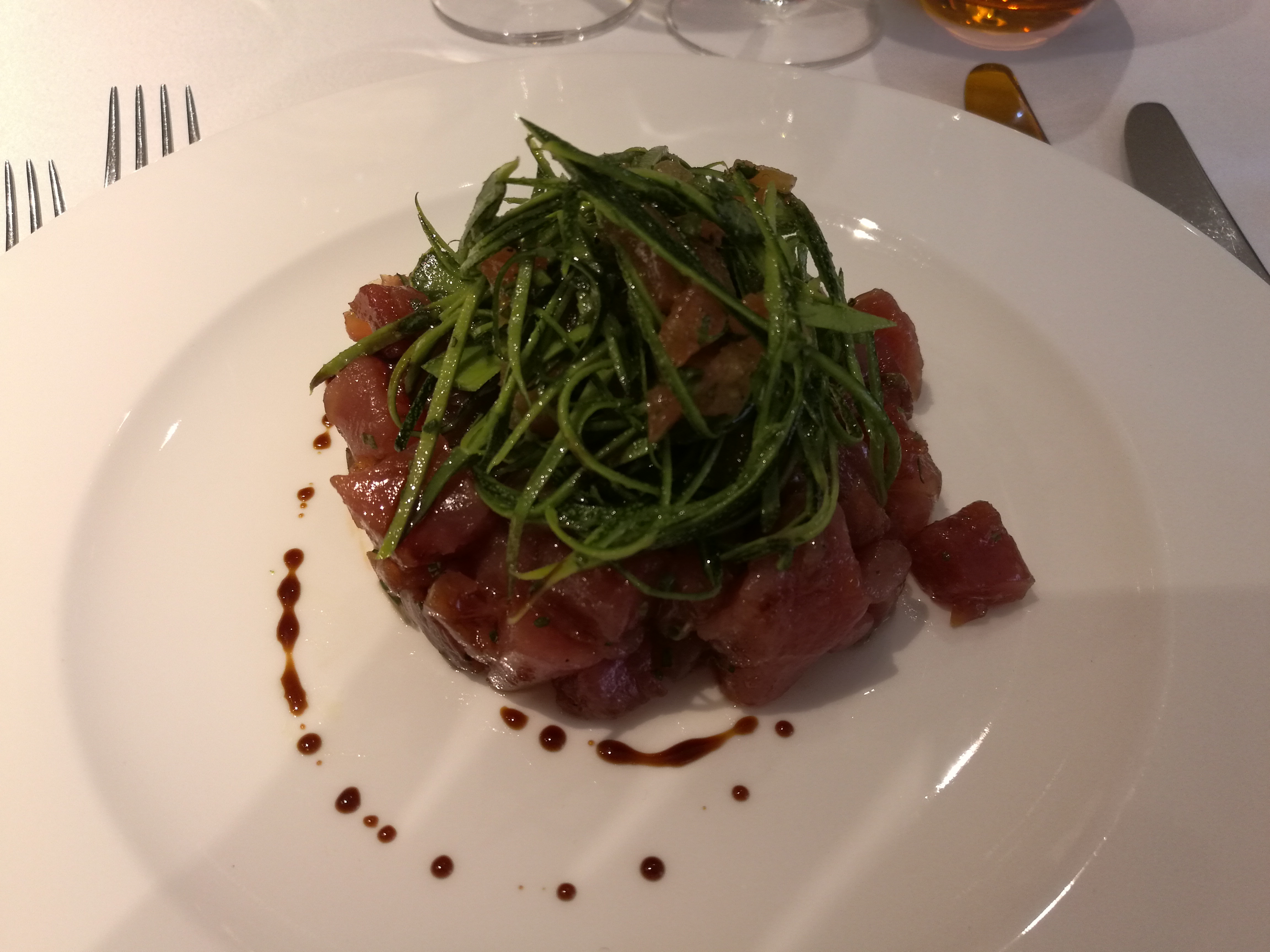
Great wines,  but also great food!! Feast your eyes on some of the treats we were served
I think next time I defintely need to try these wines in the Sicilian sun (I think another wine trip is presenting itself 🙂 🙂 ) Thank you very much Alessio for this wonderful lunch!

For all my Belgian readers in case you want more info on Planeta wines please contact Young Charly. For all my non-Belgian readers, please contact Planeta to help you to get in contact with your local salesman .
Sommeliers themed lunch: Prosecco vs Champagne and cava

Champagne, cava, prosecco or another bubbly wine… everybody has their favorite, but are they able to distinguish that same favorite when tasting blind? Last week I was present at yet another wonderful sommelier themed lunch organized by Zonin in presence of Lorenzo Zonin. What I always like about their lunches is that you learn enormously! Not only just by listening to the top sommeliers who are also present or to Lorenzo Zonin, but also by yourself. Every lunch they have a different theme and all wines you get are always to be tasted blind. Of these wines you have to distinguish (depending of the theme) what wine it is, vintage, kind of grapes used, etc… I can say for a fact that we’ve (as it wasn’t only me) discovered many great wines . What  I think for all of the lunches I’ve already had the one still most stuck in our minds is the American Barolo styled wine from the Zonin estate in Virginia as everybody was convinced that it was a very old Barolo Piemonte!

sommeliers-themed-lunch

What usually happens during these lunches is that the Zonin wines are put next to sometimes French wines, American wines from other colleague estates or sometimes against wines from different Zonin estates. They do this as this way they can see how they should/could improve their wines (in a nutshell). Our theme this time  was sparkling wines. So it was  Zonin sprakling wines (Prosecco) versus Champagnes and top cava’s. I know many amongst you think it is easy to distinguish which is which, but trust me blind tasting is harder than you might think. What makes it even more mind breaking is that it could be either 3 and having to tell which grapes they used adds extra spice 🙂 Let’s not forget that I’m an amateur, not a pro sommelier.

blind-tasting blind-tasting-2

Let me first start with a few facts  about  Prosecco. Something I didn’t know is that Prosecco that now is mostly known as a regional product from around Treviso actually originates from Friuli (from the 8th century) or  better from the village Prosecco on the Karst hills above Trieste (so right next to the Slovenian border). Although back then it was called a Pucinum wine produced with Glera grapes (and I’m pretty sure there were not yet too many refined bubbles involved.  Prosecco DOC can be made in 556 villages spread over 9 provinces in 2 regions Trieste and Treviso.  For it to become DOCG it would need to come from specific villages around Valdobbiadene , Colli Asolani  or Coneglino Valdobbiadene.  It is only since 2009 that use of vintages has become a common thing. Also in contrast to Champagne or Cava, with Prosecco there is no fermentation in bottles.  Tasting notes: Prosecco is very fruity and floral with in general dominant notes of green apple and pear. If you would go to the more refined Prosecco’s you’ll find aromas of peach and almonds.

prosecco-by-lorenzo-zonin

The biggest difference between Prosecco, Champagne and Cava would first of all be the types of grapes used.  For Prosecco this would be mainly Glera (Verdiso, Bianchetta, Trevigiana, Perera, Glera Lunga, Chardonnay, Pinot Bianco, Pinot Grigio & Pinot Nero up to 15%). For Champagne this would be Pinot Noir, Pinot Munier & Chardonnay. For cava it are Macabeu, Parellada & Xarello (Chardonnay, Pinot Noir & Subirat Parent). FYI to know more about the grape variaties check this link .  I know some people tend to say that Prosecco is sweeter, but I think they are confusing Prosecco with Moscato d’Asti that is indeed a sweet bubbly wine. Another difference between the 3 would be type types there are. Prosecco only has Brut, Extra Dry, Dry or Demi Sec… our French and Spanish French add Extra Brut, Extra Sec(o), Sec(o) and Doux/dolce. Although the biggest difference next to the grapes would be the bubbles itself .  FYI, the facts above are generally speaking as of course it all depends of the winery, etc…
vicky sommelier-themed-lunch-3 me lorenzo-zonin catherine

The location for this edition of sommeliers themed lunch was restaurant Tartufo   (just outside Brussels).  A great discovery btw!!

chef-at-work-2 chef-working

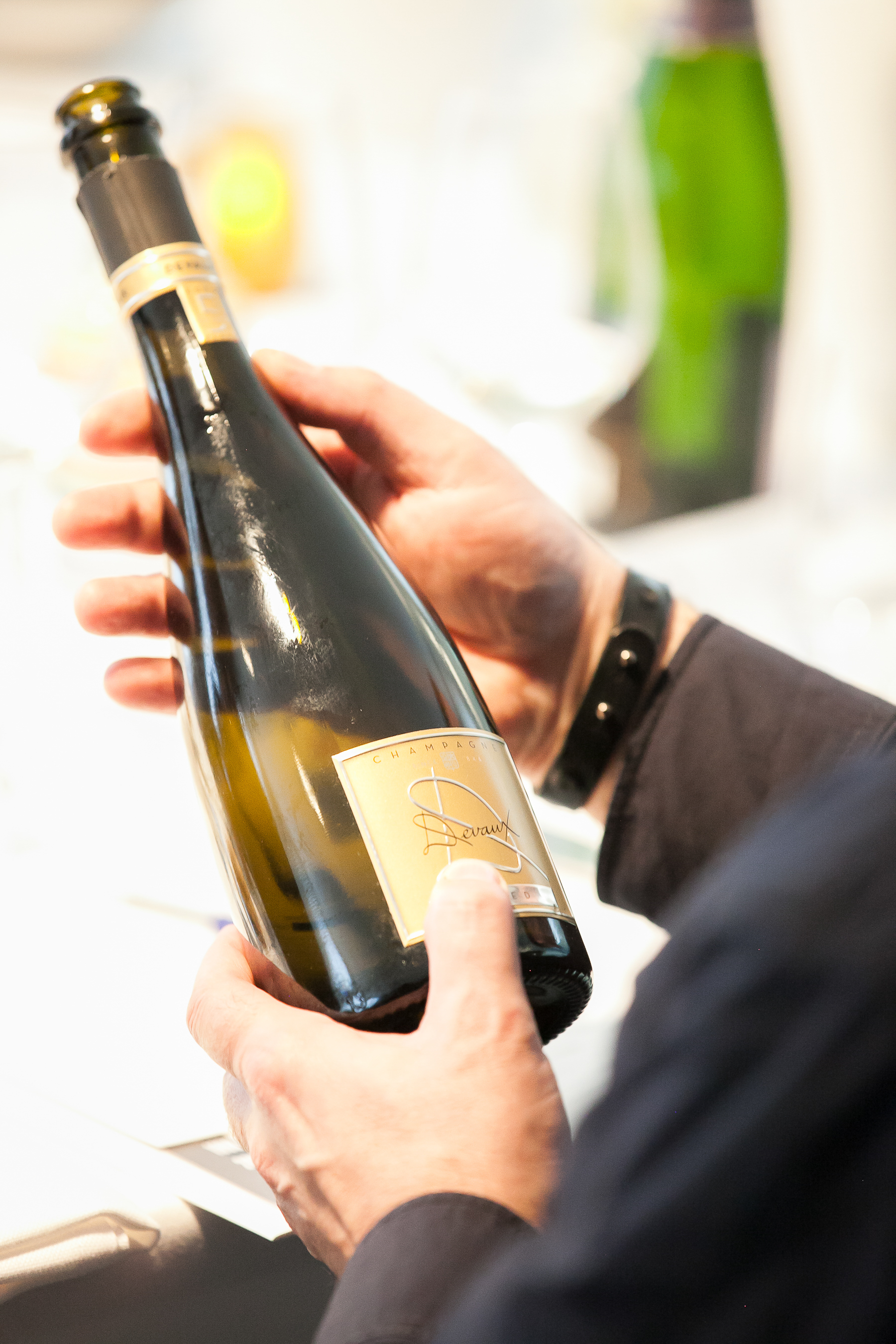
Chef Kayes Ghourabi  has made it a meal to remember.  The first dish we were served (after a wonderful series of tasty appetizers) was scallop with foie gras d’oie and truffles. Paired with this we got 3  glasses. For us to tell which was the Champagne, Cava or Prosecco 🙂   The 2nd glass everybody was convinced it was top cava, but when they revealed the bottles it ended up to be Champagne by Devaux .  We didn’t see that one coming… then again that’s part of the game. So the first one was a Prestige 1821 DOCG Prosecco by Zonin, 2nd (Blanc de Noirs) and 3rd glass (Cuvée D) a different champagne by Devaux . The Cuvée D combined freshness with lovely orangy/mandarine notes 🙂 . In Prestige the freshness comes first with notes of green apple and nice aromas.

appetizer 5 Appeziter 1 appetizer 2 appetizer 3 appeziter 4

Scallop with Foie gras

Zonin Prestige Devaux champagne 1 Champagne devaux 2

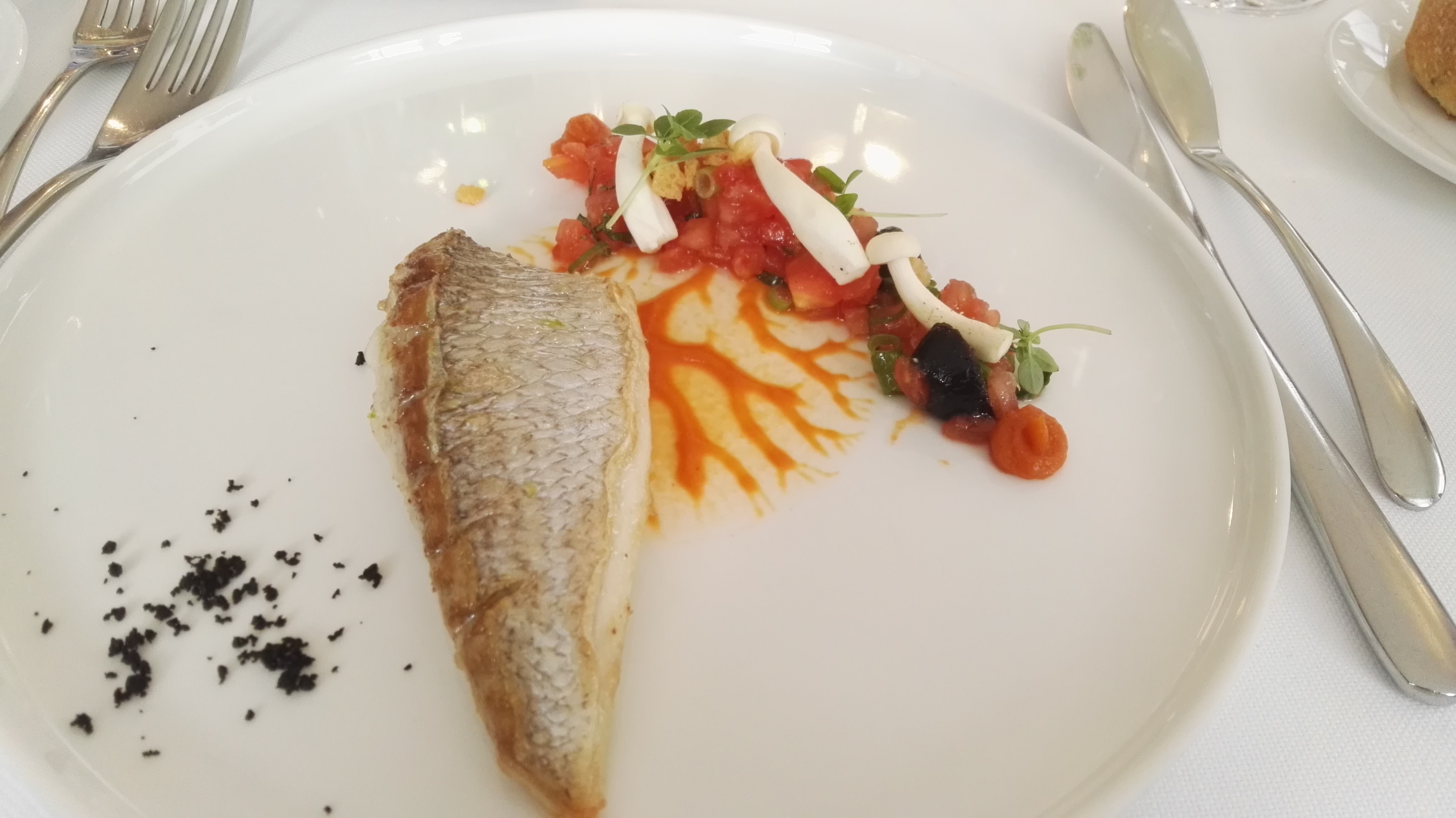
With the sparkling wines served with the next dish (Seabream with tomatoes, basil and olives) we were lifted up the next level of tasting as we had to say which grapes was used in the 3 glasses of Prosecco?! Was it Pinot Grigio, Pinot Bianco or Pinot Nero. The Pinot Bianco is somehow the ‘easiest to distinguish as it is the most exuberant/aromatic of all 3… or at least that’s the theory… Even if I didn’t immediately found out which one was which I must admit my preference out of 3 went to the Pinot Bianco , second place would go to the Pinot Nero and 3rd place would go to the Pinot Grigio. Not that any of them would be a sacrifice to drink 🙂

Seabreamprosecco-white-editionzonin-black-editionzonin-grey-edition

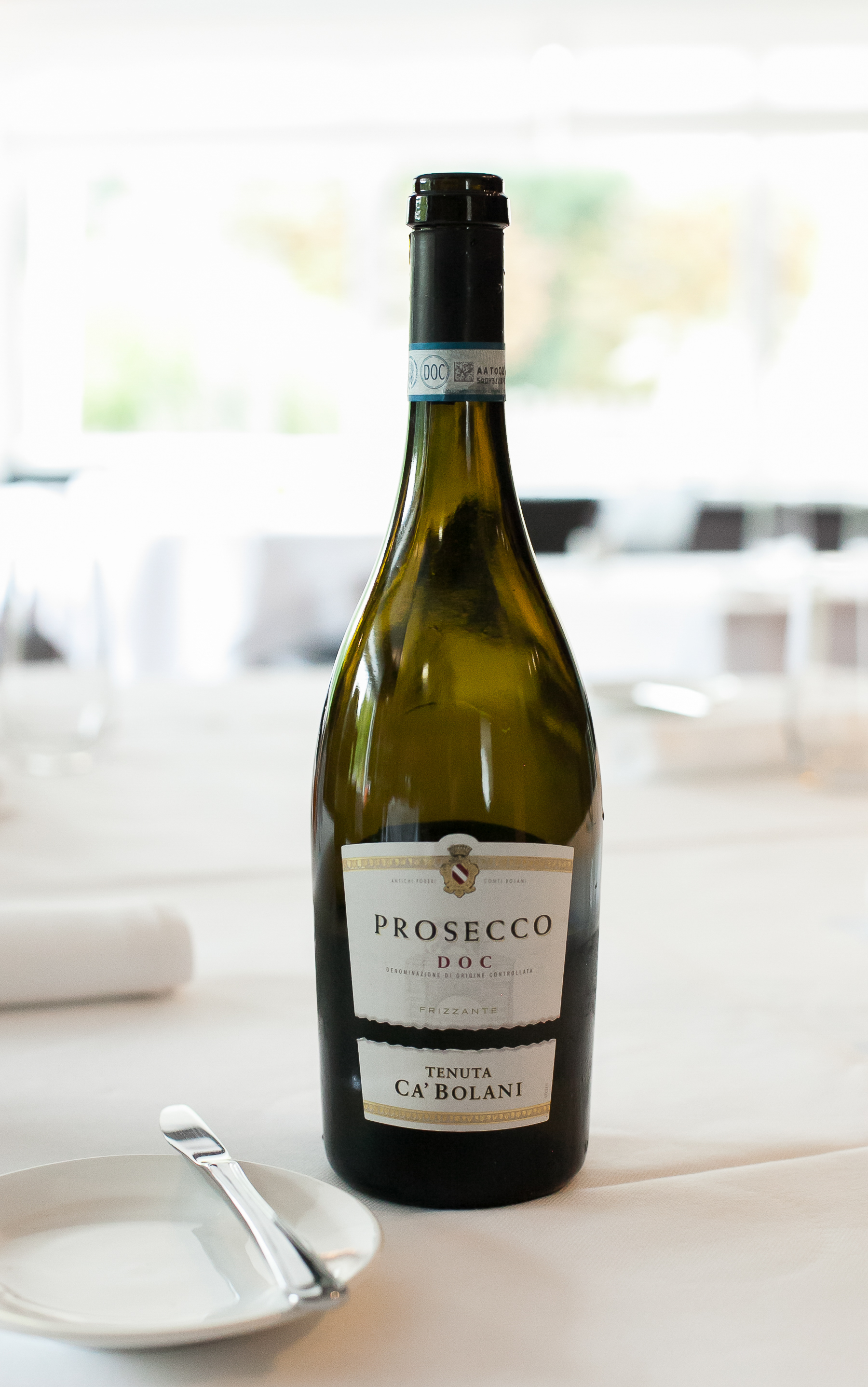
With the Main course which was Pike Perch (fish) with butternut and salsify we didn’t get 3, but 4 glasses again with the task to say if it were Champagne, Cava or Prosecco… It resulted in there being served 2 Prosecco’s: 1 Frizzante and 1 classic Cà Bolani Prosseco  DOC (always a winner and an every man’s friend) and 2 Cava’s : MVSA Brut Nature and  Masia Sabor Brut.

Pik perch

masia-sabor mvsa-brut-nature prosecco-doc

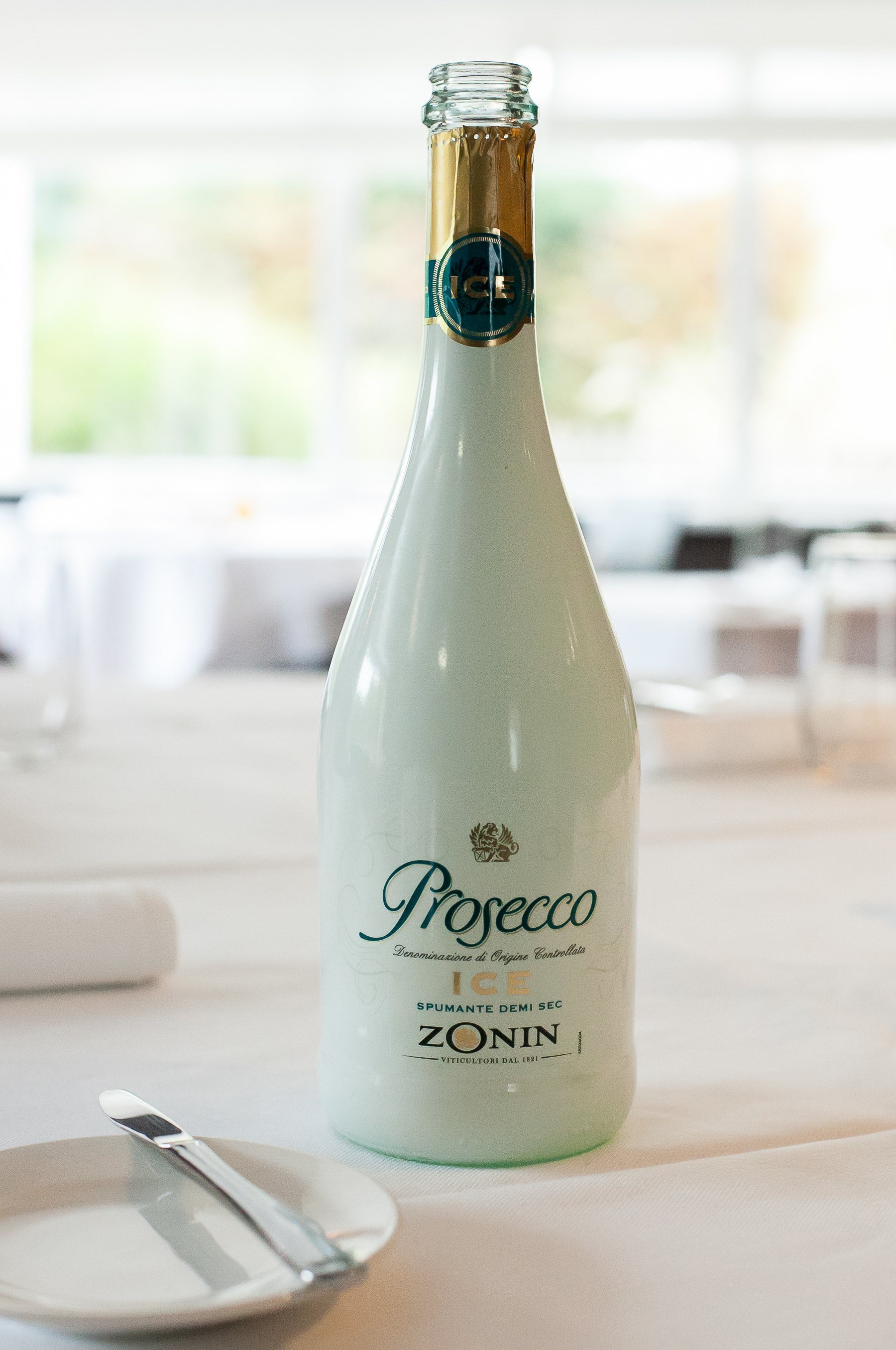
The ‘easiest’ sparkling wine to distinguish  was the one that came with the chocolate dessert. You could immediately tell it was a prosecco because of the smell, the looks and the ‘bubbles’ being thicker. When they put it in out glass the foam stayed a while in the glass… just like with a pint of beer. It was the zonin ICE demi-sec. Attractively intense, very fruity and aromatic with hints of jasmine and ripe Golden apples. It is deliciously well balanced….

Cholate Moeulleux

zoinin-ice

Again glad I could be part of this wonderful event!! My favorites of the day were the Zonin White Edition , the Conegliano Valdobbiadene Superiore DOCG Prestige 1821, Cà Bolani Prosseco  DOC , MVSA Brut Nature  and the Cuvée D

For more info on Zonin wines please contact Hasselt Millésime or Winespot

Heavenly delights white truffles and Barolo wine

That I’m a fan of the Nebbiolo grape is clear by now I think? For the last few posts I’ve been talking to you about the Valtellina variant. This time however  I’ll be talking about its more famous brother from the neighboring region Piemonte  (Alba/Asti). I know it seemed that I don’t like Alba/Asti  or Barolo variant, but I do without any doubt like them. It is just that as my roots are in Vatellina it has a special place in my heart… but I wouldn’t call drinking a Barolo a big sacrifice 😉 It is just like Luciano Taliano (owner of the Montaribaldi vineyard) said during the meal we had a couple of days ago at Spiga d’oro:  he is fan of all his wines, but the Barbaresco is the apple of his eye… why? Because his family roots are in Barbaresco….

montaribaldi

The older a Nebbiolo wine get the “easier” it gets to recognize them, because as they age the wines take on a ‘brick-orange’ shade at the rim of the glass. I know it might sound strange but you should just try it once putting an older Nebbiolo wine next to for example an older Sangiovese wine… The difference in color couldn’t be bigger. Next to its ‘characteristic’ color the Nebbiolo wine comes with fragrances of violets, tar, wild herbs, cherries, raspberries, truffles and tobacco. The most ideal location is at an elevation between 150 and 300 meter. What is special about the nebbiolo grape is that it usually only gets harvested in October, sometimes even at towards the end of the month. This is ‘special’ if you know most grapes in other regions get picked at the end of august or the latest at the end of September… then again the climate and hours of sun during the year obviously decides this … I know the Nebbiolo grape might seem like an easy grape to grow, but it isn’t as it does not adapt particularly well to various vineyard soil types. It prefers soils with high concentration of calcareous marl.

montaribaldi-vineyards-2

Just like in many other regions there are multiple approaches on making wine, a ‘traditional’ way and a ‘modern’ way. Both have their pro’s and contra’s. A contra of the traditional way or at least how it used to be done many years ago was the ‘lack’ of taking hygiene in consideration that would lead to the a bacterial infection and in the end development of off flavors and potential wine faults that would require at least 24 hours decanting to alleviate . Nowadays winemaking for both traditionalists and modernists include strict hygiene controls and the use of some modern winemaking equipment… so if you no worries anymore 🙂

The most famous wines from Piemonte made with the Nebbiolo grape are without doubt Barolo and Barbaresco. The way to distinguish the 2 wines was very well described by Giorgia Tontodonati from the Montaribaldi vineyard. Barbaresco is the ‘queen’ elegant, ‘softer’ and aromatic, Barolo is the ‘King’ very complex and strong.

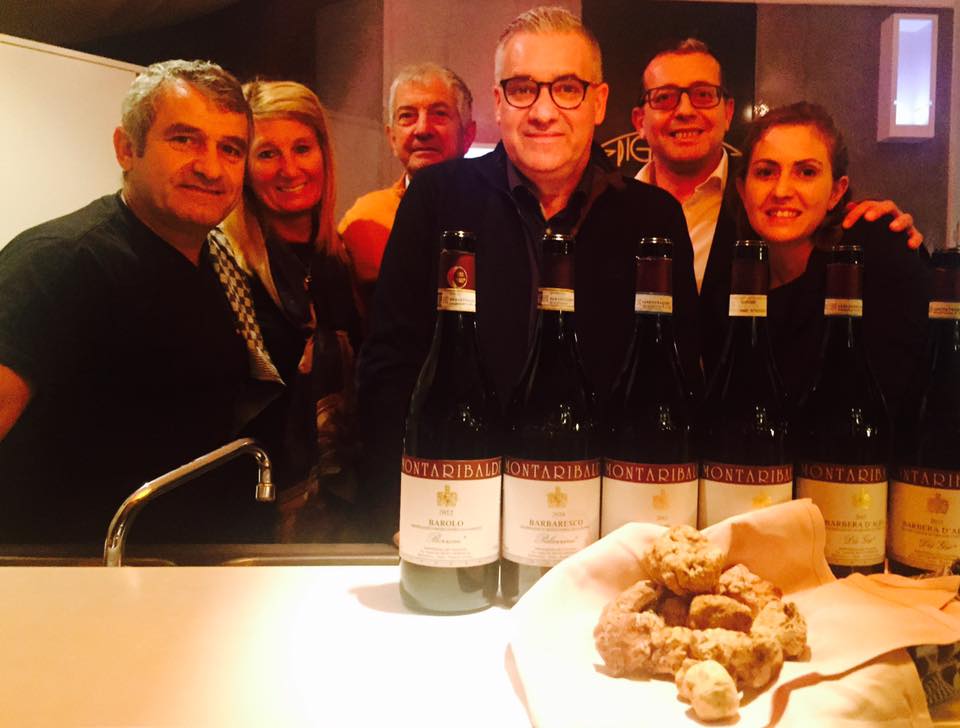
I’ve already had the pleasure to have travelled many times to Piemonte to discover the many wonderful things this region has to offer. Next to their wonderful wines they  also have a very refined cuisine with evergreens like ravioli del plin, Tajarin al sugo, vitel tonné (vitello tonnato), Agnolotti, carne cruda alla piemontese, etc… BUT the other world famous trademark product of the of Piemonte is the one and only white truffle! Earlier this week all these wonderful things got combined at one of my preferred Italian restaurants in Belgium Spiga d’oro by my dear friend Franco Di Taranto… As tip of the iceberg he had invited Luciano Taliano from the Montaribaldi winery and trifolau Ezio who brought white truffles he had found the day before… only when in Alba itself you’ll get them on the day itself 🙂 To describe the evening in 1 word “Mythical”!! As I’m not really the man who sticks to one word (sorry for that)  I’ll tell you more about this wonderful evening that made me feel in Piemonte all over again!!

truffles-and-wine-2

Montaribaldi is a quite young vineyard as the brothers Roberto and Luciano Taliano only opened it around 1994. Technically speaking the vineyard already existed earlier, but in 1994 as after he acquired the vineyards from his father Guiseppe aka ‘Pino’ who had founded it in 1968. The vineyard was named Montaribaldi after the old Roman roads that link the winery to the vineyards. Luciano’s goal was and still is to create a diverse selection of holdings that highlights the different wines of the region.

montaribaldi-family

What I think is the reason for success of Montaribaldi wines is the accurate selection of grapes (the wine gets made on the land) and careful vinification. They also are very fortunate to have vines located in between the ones from their renowned neighbor Angelo Gaja. After having tasted their wines I can only come to the following conclusion their balance, length, intensity and concentration of flavors are all right how they supposed to be! Combine these wines with a meal by Franco and you have a feast… We were served the following menu with paired wines:

my-table

A secret celery and truffle salad ‘Arte e Querce’ prepared by Ezio’s wife Clelia. The salad got served with a 2015 Roero Arneis (white). I never saw a man so proud!! You could really tell truffles are Ezio’s passion as he was flaking it so proudly… very endearing to see 🙂

Celery truffle saladRoero Arneis

ezio

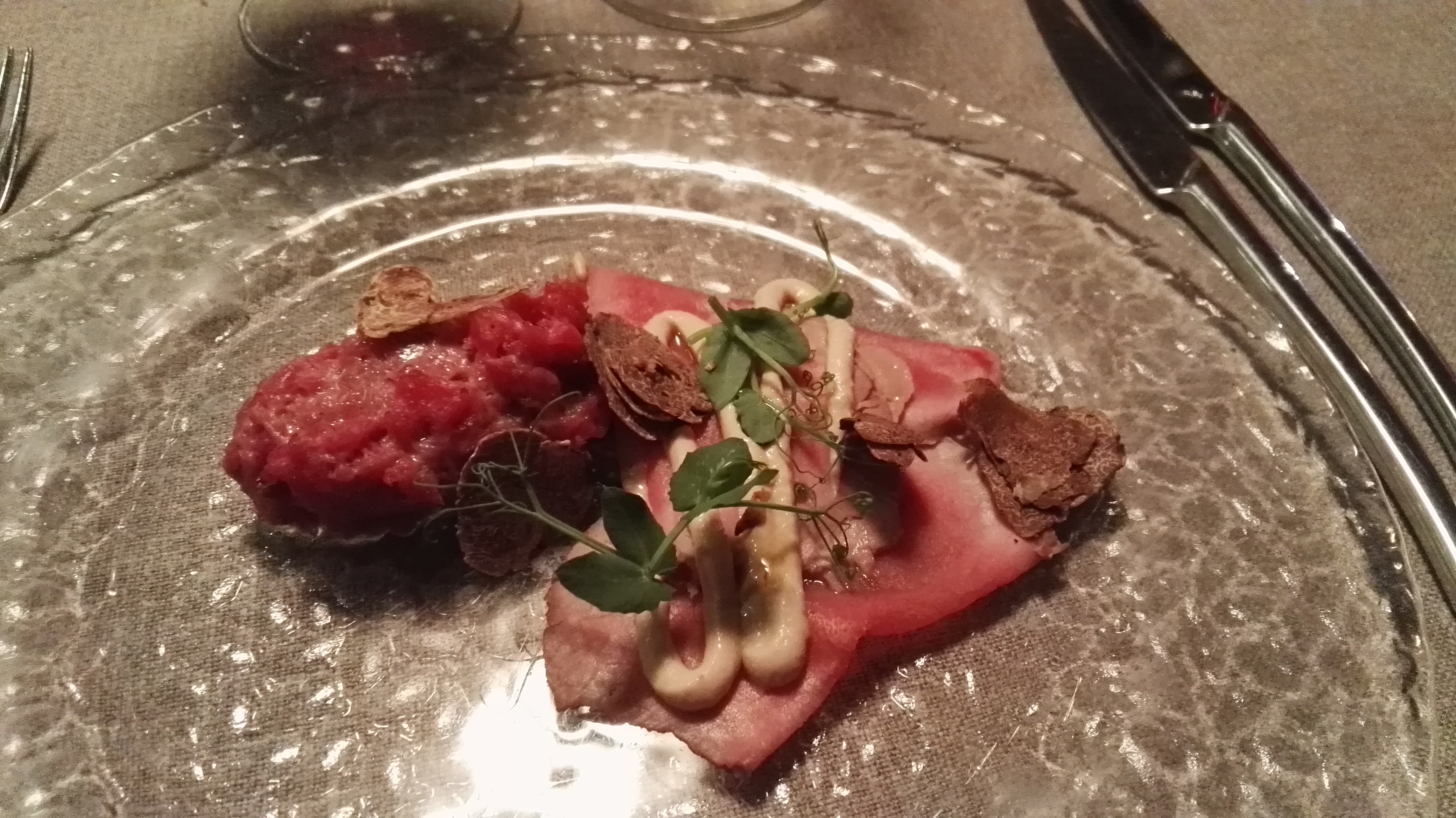
Vitel Tonné & Carne cruda a l’Albese con tartufo bianco paired with a 2012 Barbera

Barbera Vitel tonné

Robbilo tre latte with blac truffle, leek from Cervere, pears, beetroot and cugnamust from Nebbiolo. This dish got paired with a refreshing 2010 Langhe

RobbioloLanghe

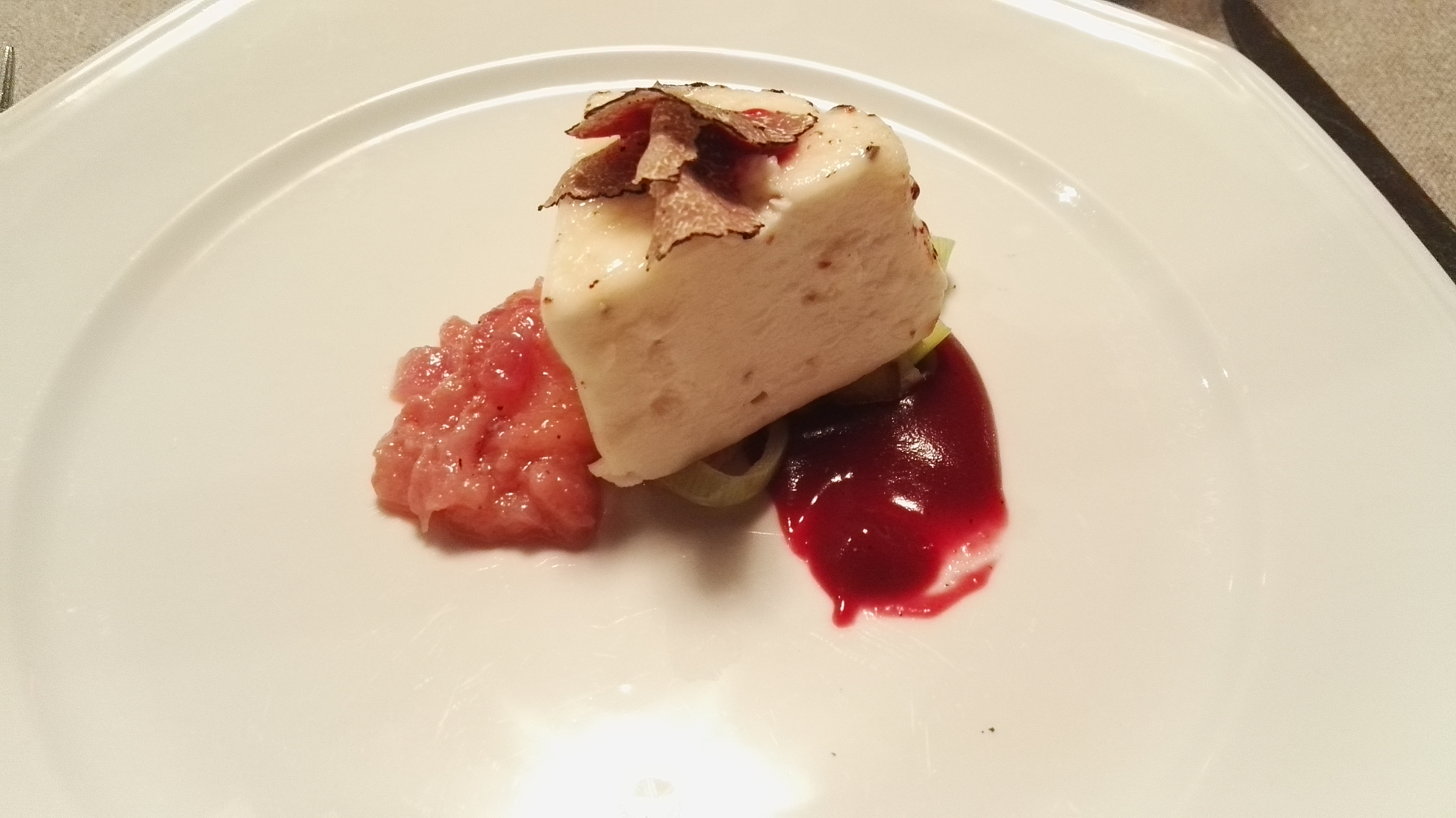
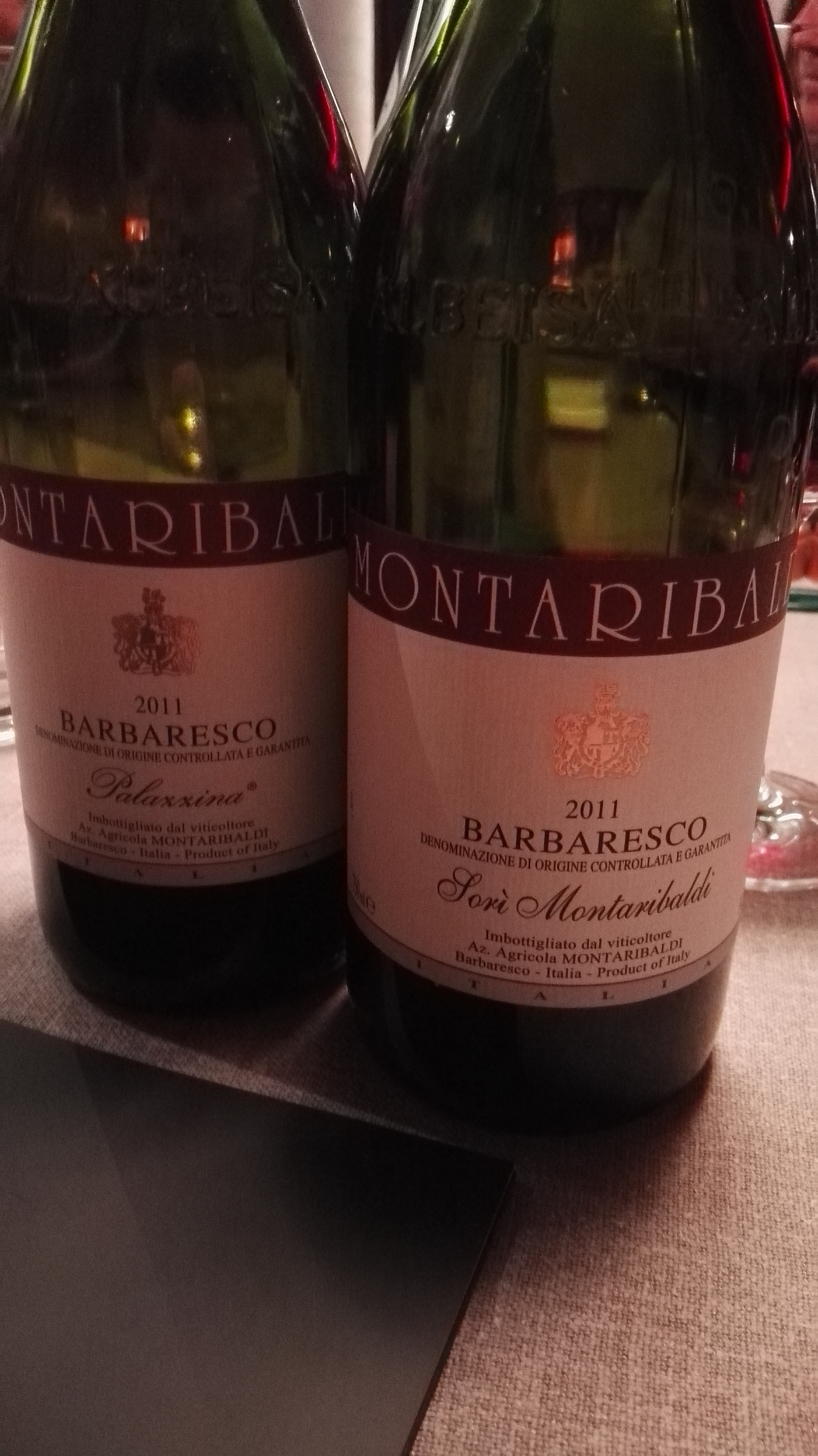
“Cocotte” (cheese fondu) from Fontina cheese with fennel sausage and white truffle flakes. Served with 2 Barbaresco’s from different pieces of land aka Palazzina and Sori. Both wines were from 2011.

Barbaresco Cocotte

The main course of the evening was venison with a Barolo reduction with white truffle that got paired with the wine everybody was looking forward to drink the 2012 Barolo.

Main course SVI

Barolo

To end our meal we got served a chocolate dessert together with a Moscato d’asti. We did also get some white truffle flakes on our chocolate dessert, I didn’t refuse it but if it wouldn’t have been there the dessert would have equally been good 🙂

dessert

For me when you prepare a dish with truffles, it should be the truffles playing the main role!! Here again the key word ‘simplicity’ is important to make sure the truffle gets the justice it supposed to get. That’s exactly what my dear friend Franco did. My first words after my meal (and you can check with the people at my table) were “I feel like going to Piemonte now”!! So I guess a trip to Piemonte won’t be far off 😉 😉

I’m not sure why I always have to say which wine I prefer as I like all of them and I don’t want you guys to think that because I prefer one over the other it means the other wines were bad… as they weren’t  🙂  But just to keep everybody happy I admit that the Barbaresco’s charmed me most with on the first place the Sori. On the nose sweet and penetrating notes of licorice and chocolate, firmer and more sustained on the palate but with the roundness and solidity of a high quality extraction. Maybe the fact Luciano talked with so much love about it had an influence ooooooooor that Giorgia compared it with a queen 😉 😉 who knows?! One thing is for sure once again I’ll need to expand my wine cellar and definitely have another winetrip to Piemonte 🙂

the-event-team

Many thanks to Franco,  Aline, Toni, Luciano, Giorgia, Ezio and his wife for making this an unforgettable evening (and of course also my table guests 🙂 )

For more info on Montaribaldi wines in Belgium please contact SVI.

Hidden treasures, wines from Valtellina: Balgera

Like in every craft you have craftsmen who prefer working the classical way according to traditions and others prefer searching/ trying new things. In wine making this is exactly the same. That is why during my last trip to Valtellina I was very keen on visiting one of each. Rivetti & Lauro to see what result blending the Nebbiolo (Chiavennasca) with non autochthon grapes would give and Balgera to see how Valtellina wines are made according to tradition.  Which one I prefer? It all depends on the occasion when drinking a particular wine. Sometimes I prefer drinking myself a ‘classically made Sfurzat’, other times I feel like going for a Nebbiolo blend wine… There’s no wrong or right, rather a choice for every occasion and somebody’s taste 🙂

balgera

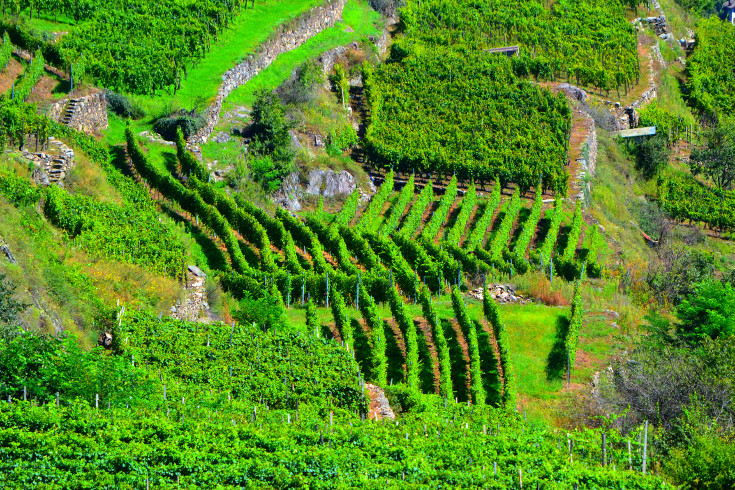
Valtellina DOC is a magnificent series of terraced vineyards on the southern hillside of the Rhaetian Alps!! A beautiful and unique landscape  (I can’t say it enough as my love for this region is enormous) at an altitude of 750 meters above sea level. Viticultur in Valtellina is often called ‘heroic viticulture’ as no machines can be used during harvest due to the location of the terraces that are sometimes on very steep hillsides.

10467072_661511227267088_3446416861065792973_o valgellalong

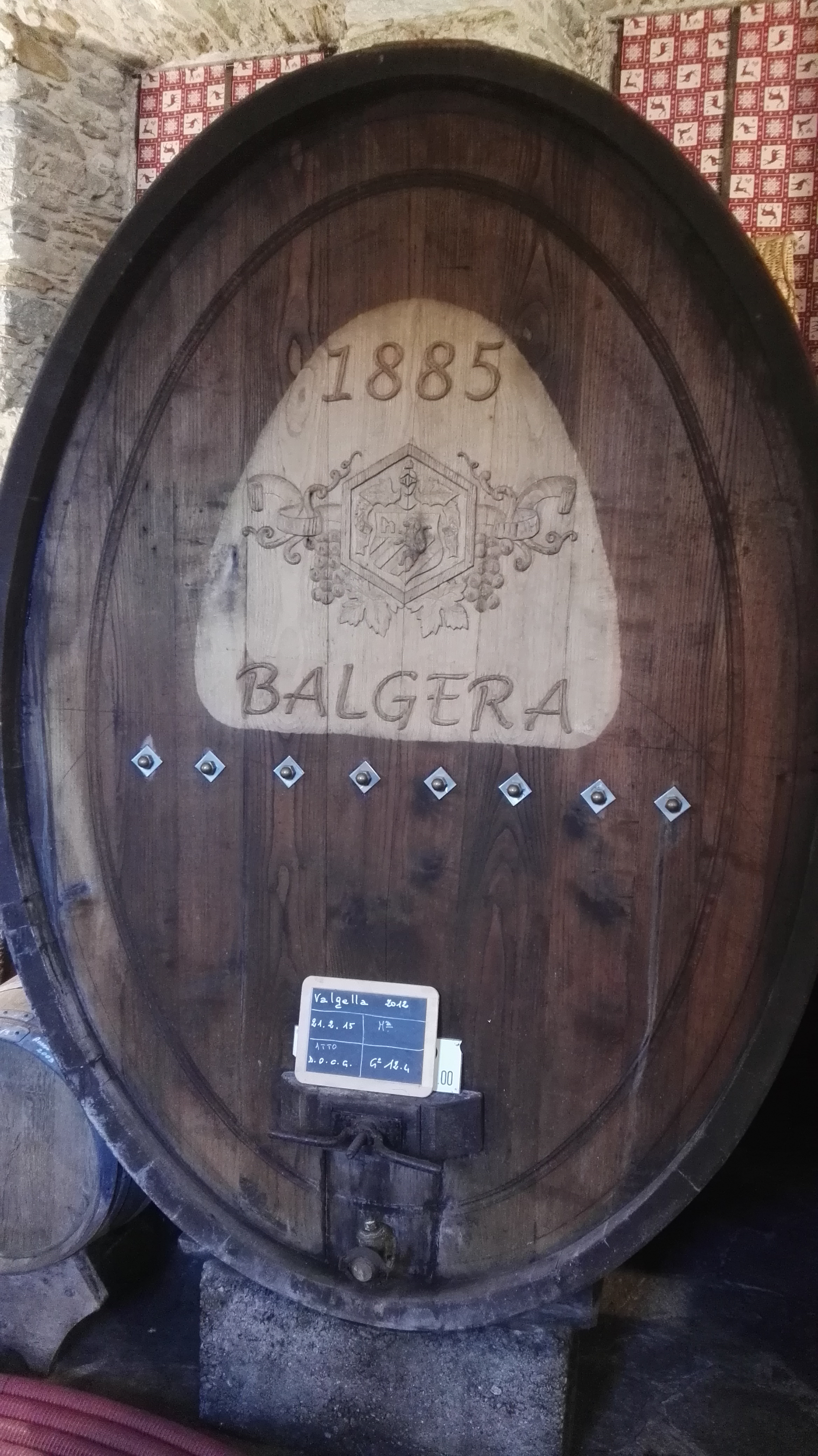
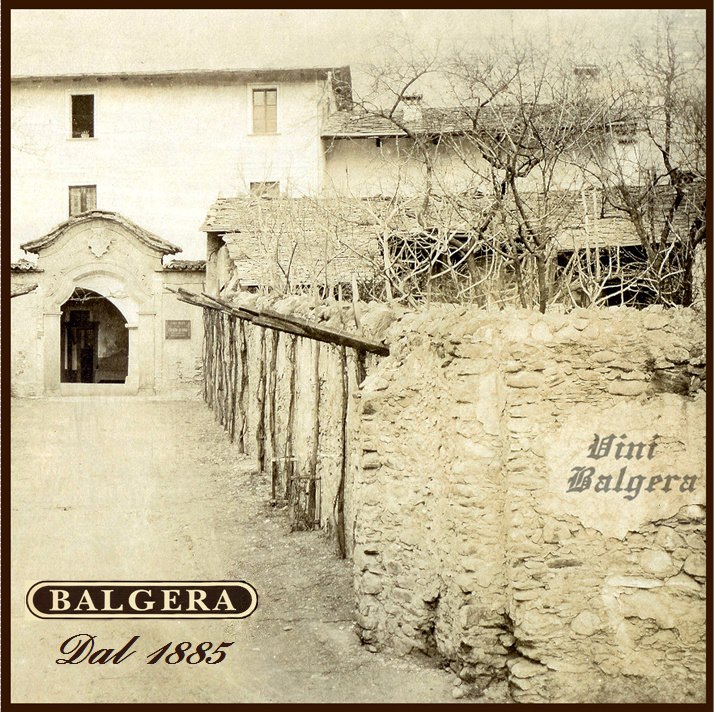
Azienda Agricola Balgera is one of the oldest winemakers in Valtellina and was founded in 1885 by Pietro Balgera. Balgera, that now is run by the 5th generation, calls itself ‘protector of traditions’ as they find it important to continue making the product(s) that has put Valtellina on the map. I say tradition, they basically combine the ancient ‘know how’  with the modern winemaking techniques.  What Paolo Balgera offers is wines of an exceptional elegance, great structure and exquisite aromatics of fragrance!!

Balgera since 1885

481595_390136111071269_1274094912_n

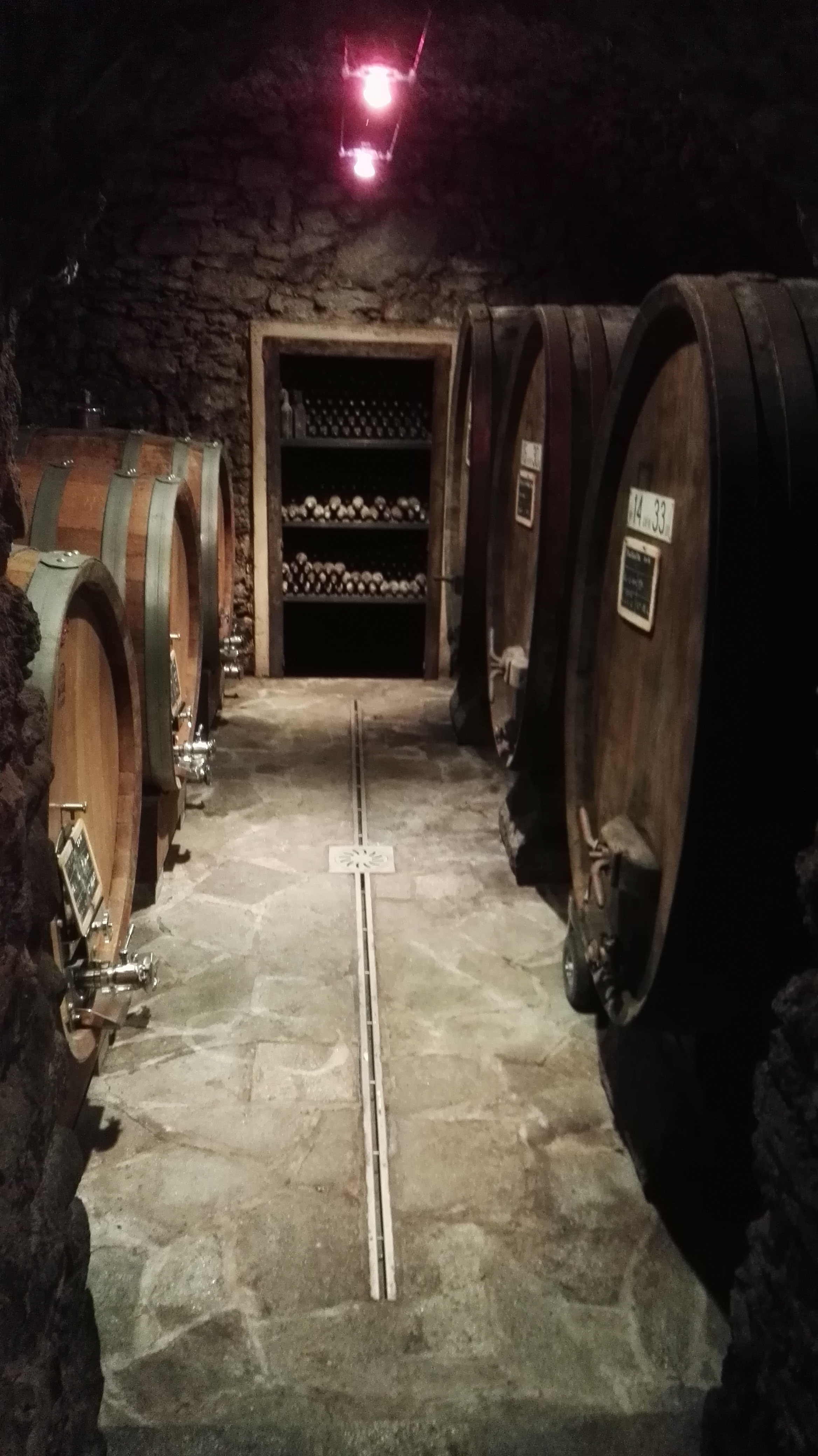
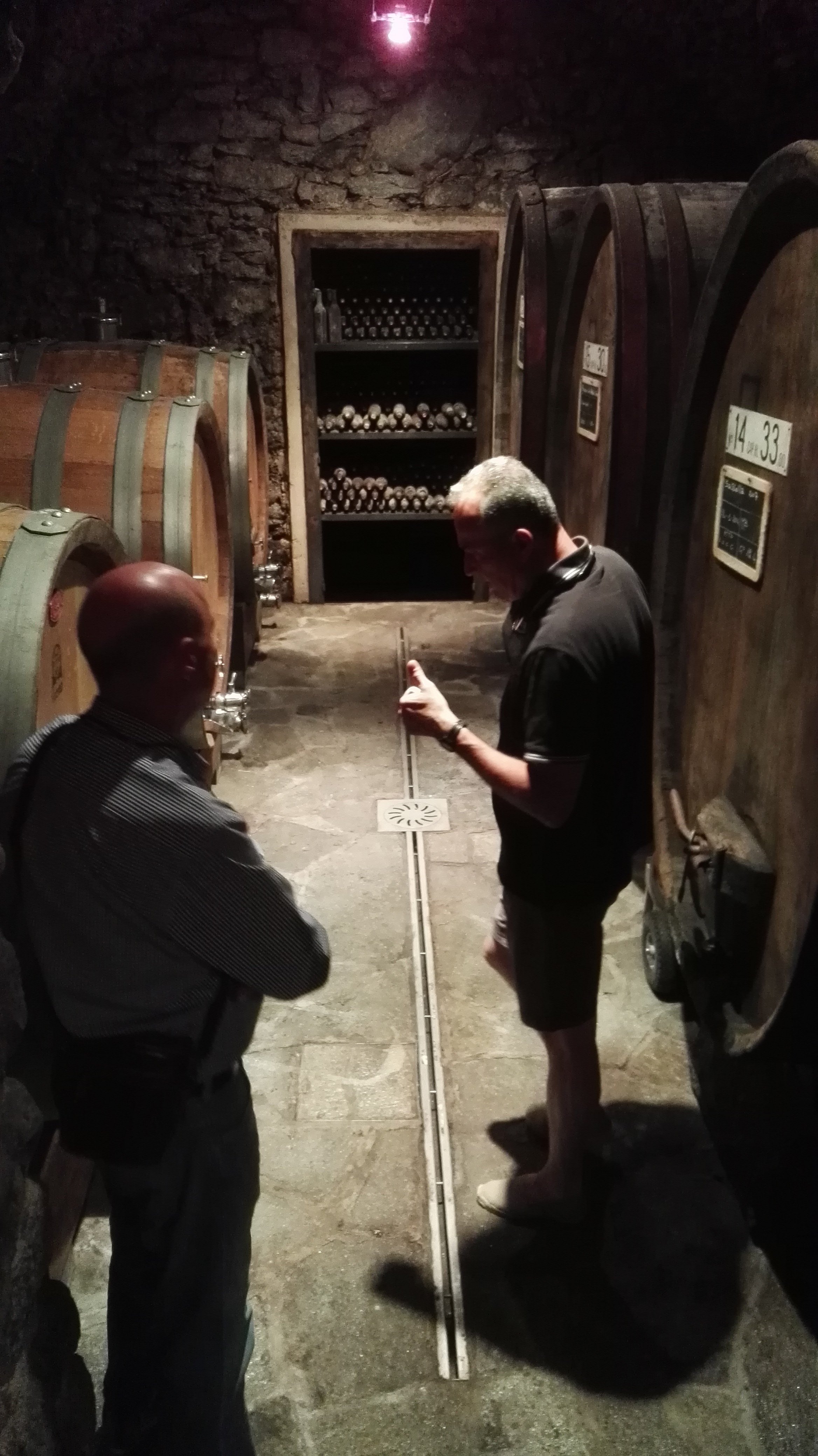
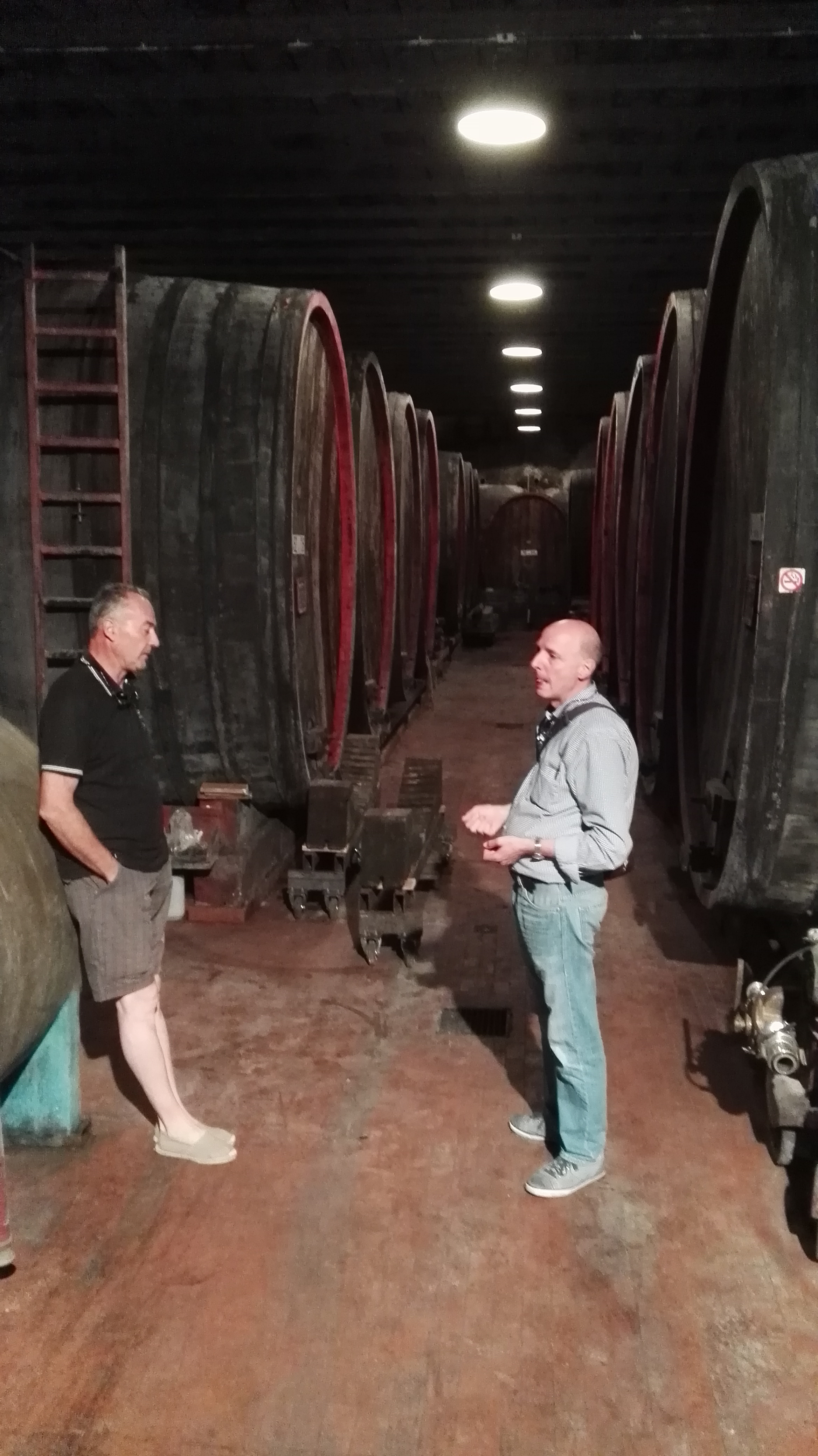
Something both winemakers I’ve met have in common is the pride and passion for what they do!! Passionate men/women are always the best ones to learn from and producers of the best end product. A remarkable detail is that Balgera keeps the wines in large barrels for up to ten years before bottling, yet they are fresh and delicious (you would think they wouldn’t be after all that time). When I asked Paolo why he sometimes waits up to ten years to bottle wine he replied “I bottle my wines when they are ready, if this takes one or more years extra this is how it shall be”. What I understand from this is that for Paolo a wine can only leave towards the consumers when they are “perfect” and not a moment sooner. No matter if it is a ‘regular’ Sassella or a top bottle of Sfurzat that a consumer opens, the experience must equally be exceptional. I believe this is the key to be a good winemaker.

Balgera 1 Balgera 2 Balgera 3 Balgera 4

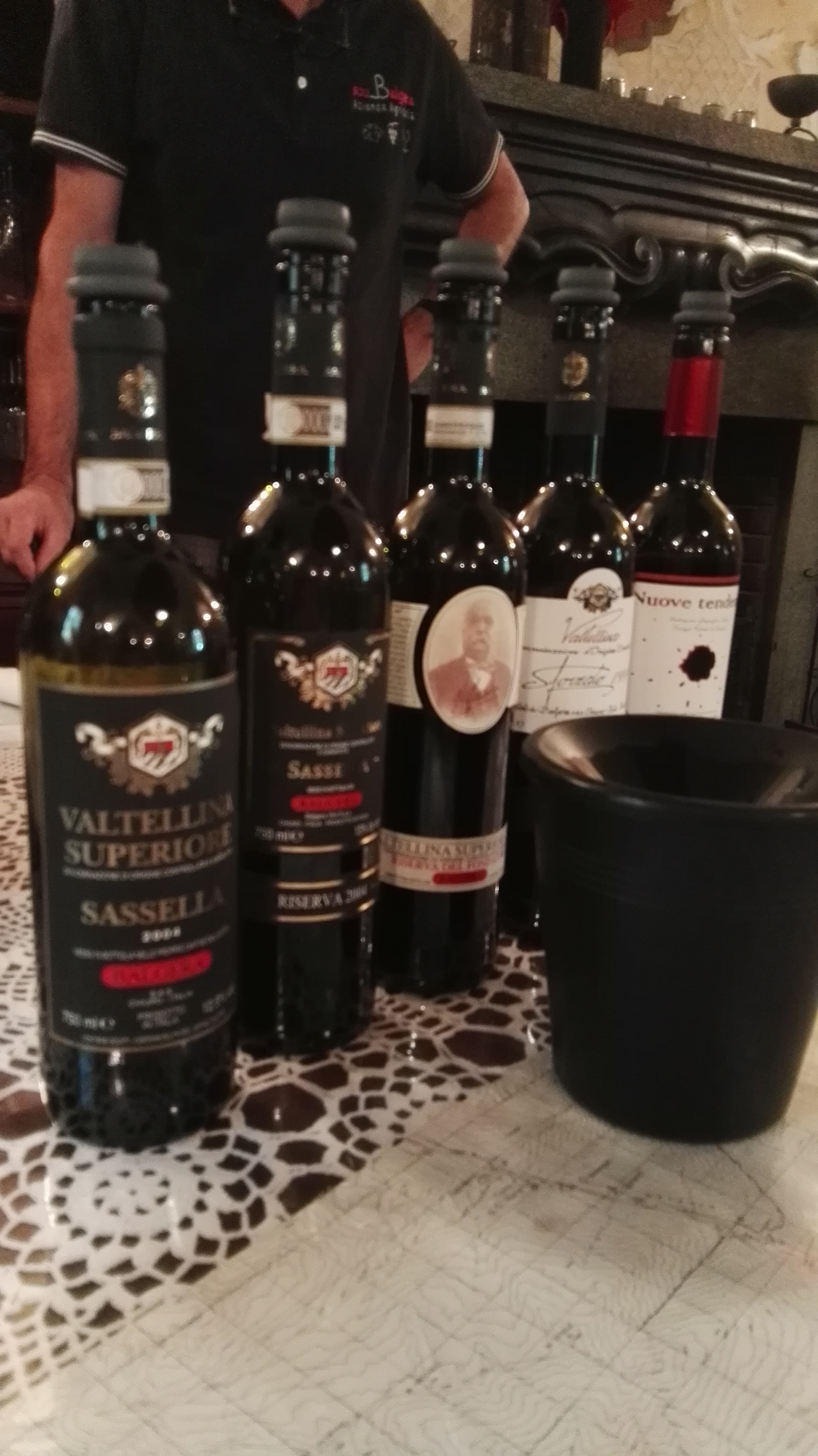
When you taste the wines you clearly taste the craftsmanship. Their Sassella for example ( a Nebbiolo, Rossola Nera and Pignola blend) is a beautiful expressive, long, fresh wine combining acidity with depth of flavor. What makes this wine as nice is probably because of the process it goes through. After the harvest the grapes get destemmed and lightly crushed, where after the fermentation is carried out with indigenous yeasts. The Sassella is macerated for a total of around 15 days, then spends a year in tank and up to 10 more years in large (3,000L) barrels. To think this is not even their “top” wine and yet they do take their time making it.

Sassella

A wine whose name always intrigued me or rather it’s name was the Inferno which basically means ‘hell’ 🙂  not that I’m a Satan worshiper, but when I was as small boy I had a lot of imagination… anyway the reason why it is called inferno is because of the particular heat found here; the soil is also different from the other zones of the Valtellina in that it is chalky, rather than a morenic combination. The inferno is a lovely wine with excellent acidity

But my all time favorite ( no matter what) in the region is the Sfurzat or Sforzato (100% Nebbiolo aka Chiavenasca)!! Full, warm and persistent, very structured and yet very fine with hints of violets and dried blackberry jam but a very complex… just how I like my wines. We did also taste other wines, but nothing beats my beloved Sforzato 🙂

Sforzato

I hope that during my next trip to Valtellina (which is probably very soon) I’ll be discovering more hidden treasures of this wonderful region!

Hidden treasures: wines from Valtellina: Rivetti e Lauro

I know it has been a while, but I finally made it to continue my story about my visit to my preferred wine region and 2 wineries . Like I mentioned in my first blogpost about this trip with my dad , Valtellina is a a wine region that is very underestimated and sadly even unknown to many people. As this is a region that lays very close to my heart I want to promote it as much as I can 🙂

rivetti_lauro

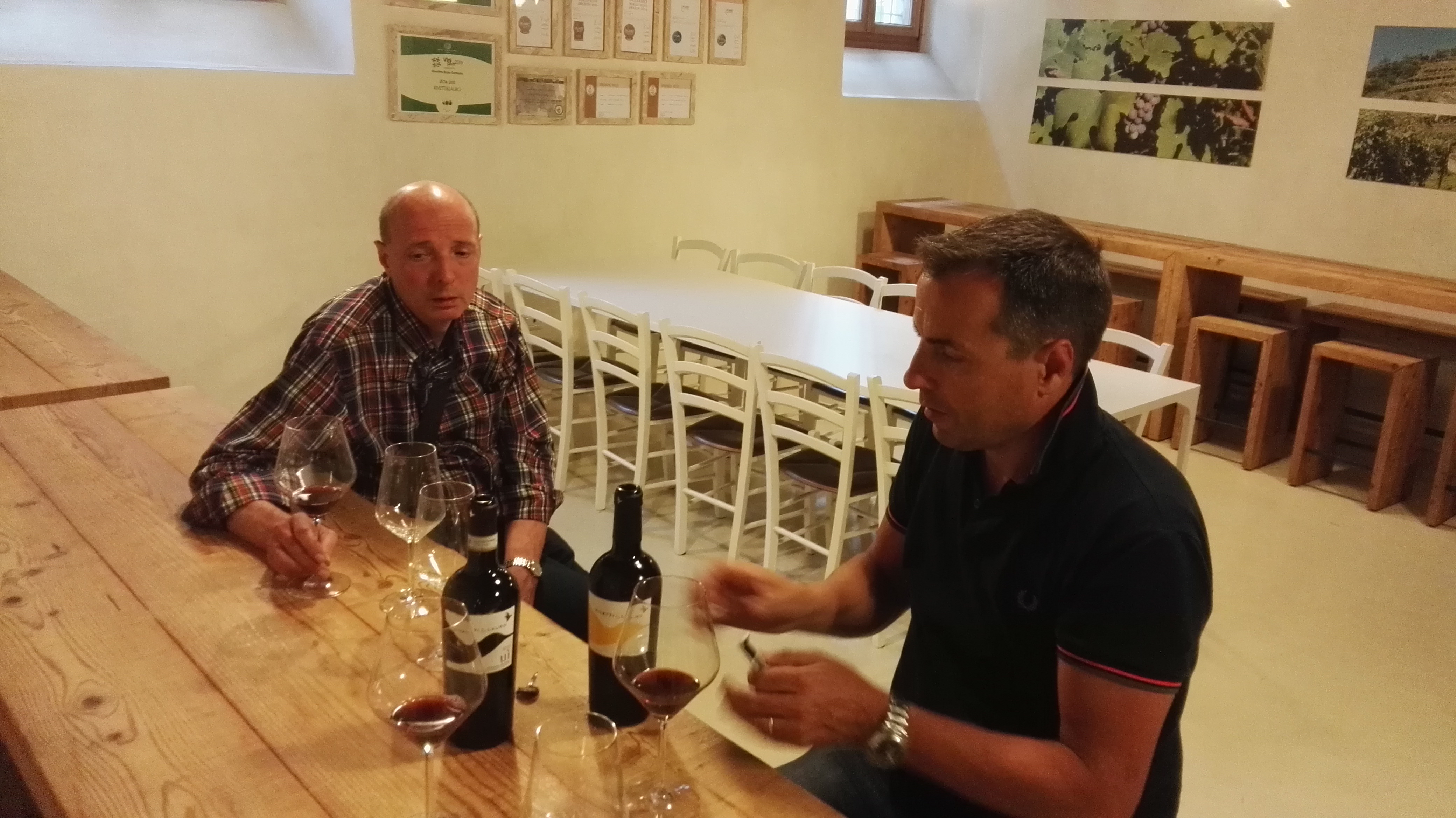
The first vineyard I visited during my stay was Rivetti & Lauro  a rather new winery as they only exist since 2010.  If I have to be completely honest it was a Belgian friend of mine who brought this vineyard to my attention 🙂 🙂 He told me I absolutely had to try their wines as they were spectacular. Who am I not to do as I’m told. Now that I’ve tried them I do agree with my friend and I can also speak for my dad as he bought 3 boxes of wine 🙂 .  What intrigued me most about this winery was its location in Tirano. It intrigued me as I always thought all of the wineries (Nino Negri, Nero, Sandro Fay, Bettini, etc…)in Valtellina were or had to be located near/right around Sondrio (or Chiuro  to be more specific). So it was something I wanted explore and  know more about.

Valtellina - cartina denominazioni d'origine

Just for the record, I am not a professional sommelier yet 🙂 I’m learning every day and I prefer learning everything by visiting and trying and I have some incredible people guiding me towards the estates that are worth visiting.

Rivetti & Lauro is a story about friends that shared a passion for many years and decided to take their passion to the next level. It was 2010 Alberto Rivetti and Dino Lauro opened the doors of their winery “Rivetti & Lauro”. Dino Lauro with over 20years experience in wine business at Nino Negri and 2 years at Salis. Alberto Rivetti on the other hand comes from the world of Coffee but also has a very good business background. They did also get a little help from former friends/ colleagues to realize their dream Catia, Emanuele and Pietro (that also have a long experience in winemaking).

lauro_-rivetti

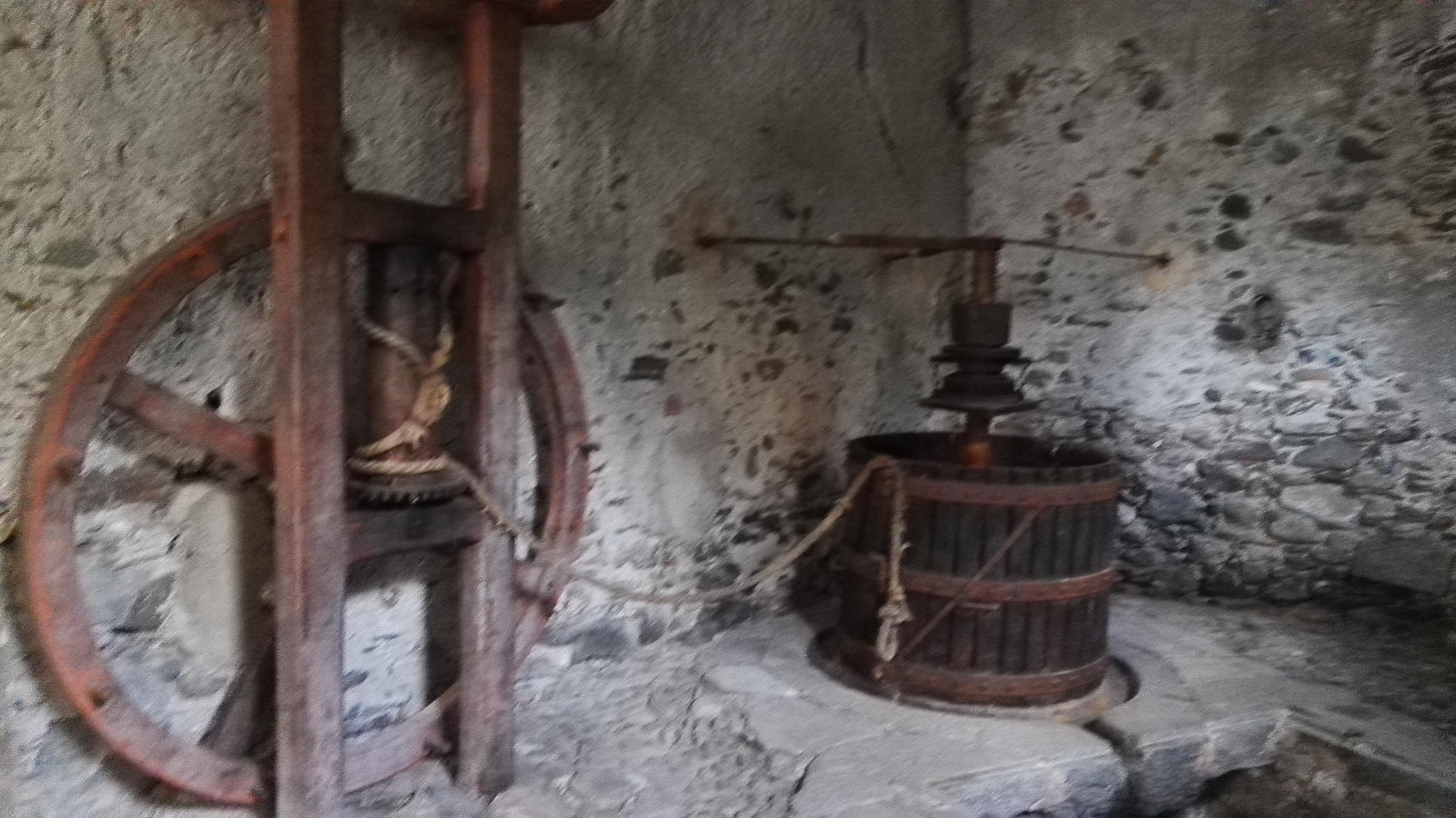
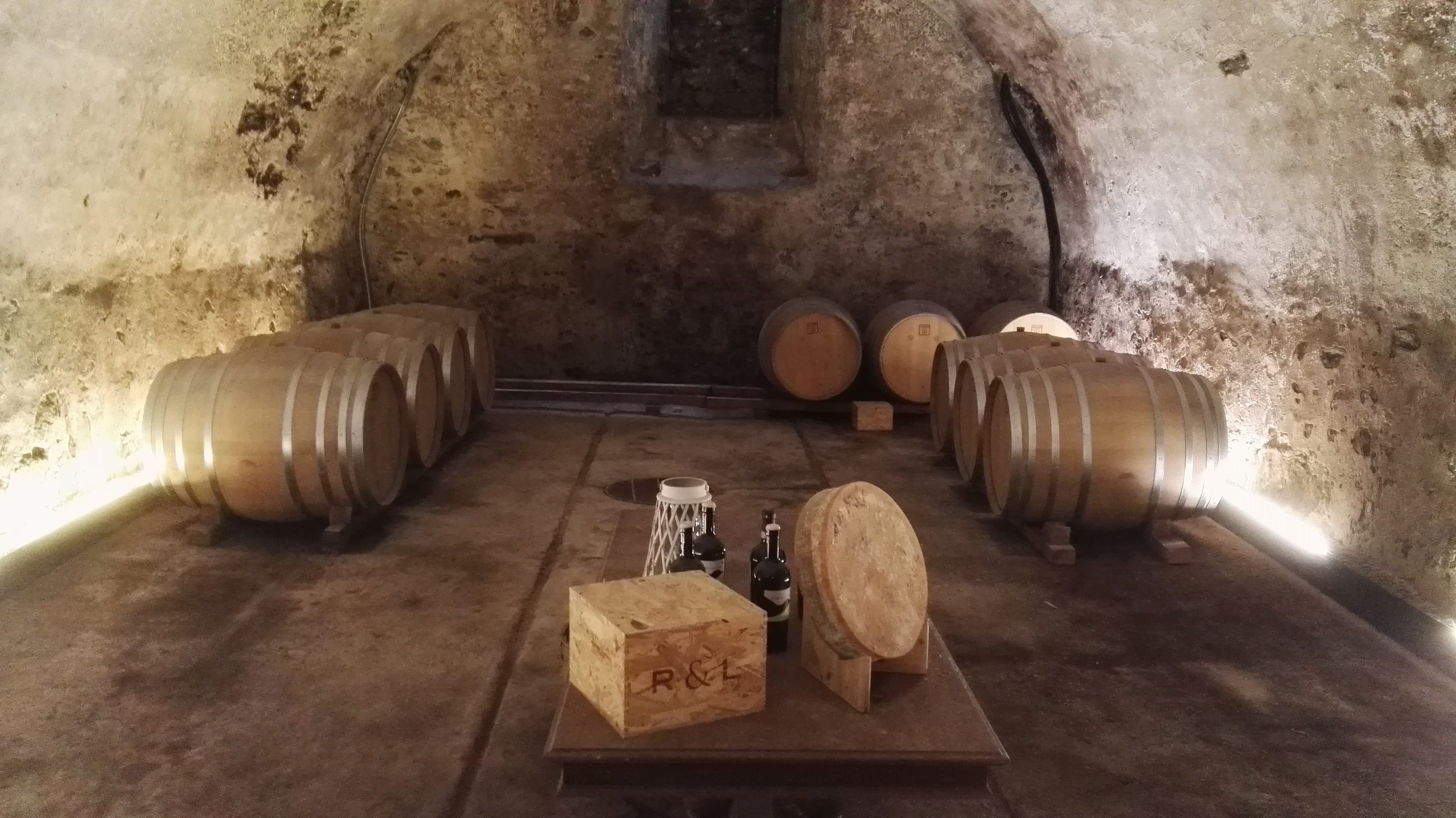
As base location Rivetti & Lauro  found a very beautiful unique location and are settled  in the historical cellars of Torelli’s Palace. Palazzo Torelli is a 16th century castle from Count Luigi Torelli who was an important personality of the valley and in Italian history. They also still have a beautiful old wine press in their cellar!! FYI they did remodel and renovate the cellar first 🙂

mde

dav

dav

dav

Did you know that Valtellina is the largest terraced wine-growing area in the Italian mountains? It is!  This basically means lots and lots of manual labor during the harvest as every grape has to be picked by hand. On top of that it is also a place where Nebbiolo is grown (or in this region better known as Chiavennasca), a grape kind that is the synonym for noble and extraordinary quality. As we all know a great wine is made on the vineyards…the human only helps it a bit, but without the good ingredients the human goes nowhere 🙂 The showpiece wine or top of the top would be the Sforzato which is the Valtellina variant of Amarone (with different grapes that is) as they also use the grape drying technique like they do in the Valpolicella wine region. So now you also know why I’m such a big fan of those 2 regions…

vines

What distinguishes Rivetti & Lauro from other vineyards in the area is that they are experimenting by growing new grape kinds and assembling them with the traditional Nebbiolo. I know that for lots it is like swearing in church, but I must say that it resulted in some very nice assemblies. The Rivetti & Lauro winery is also one of the smaller ones in Valtellina with a production of around 25000 bottles of wine that after vinification in small stainless steel tanks they get refined in French oak barrels. I always find it very courageous to open a new winery and trying to do their own thing and experiment and basically let a new wind blow through this wine region.

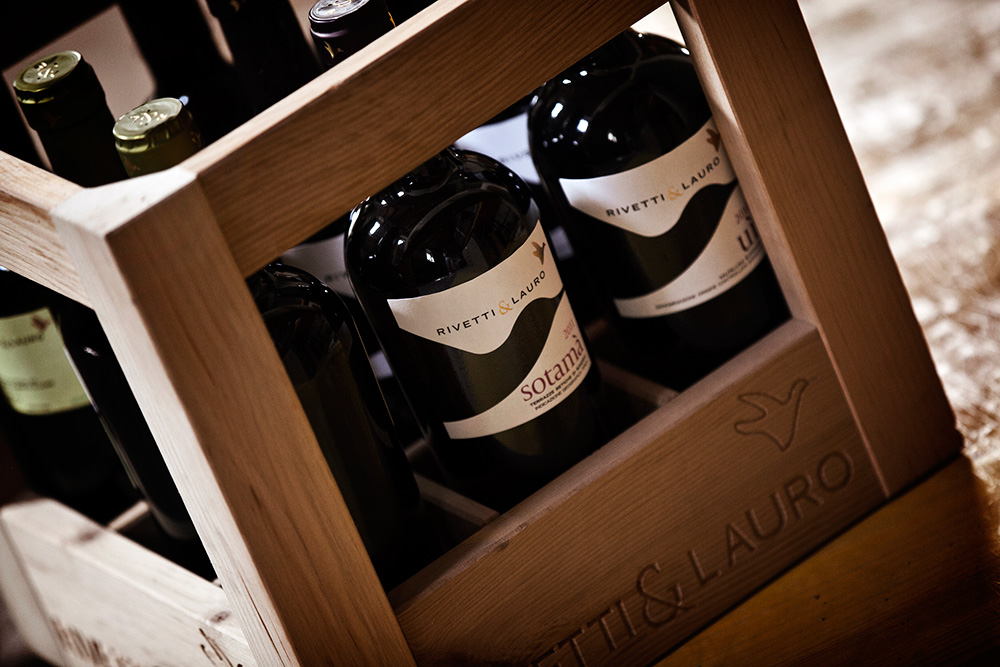
Rivetti & Lauro have 8 different types of wine( 7 red and 1 white). Wines going from the full-bodied pride of Valtellina the Sforzato  and Sassella (both 100%Nebbiolo) to the “experimental”  wines like the Cormelo’ a Nebbiolo and Merlot blend (basically the Valtellina variant of the Super Tuscans 😉 ) or the Satama’ a Nebbiolo – Shiraz blend.  One of my personal favorites from Rivetti & Lauro is the UI’ a Nebbiolo in purezza (100% Nebbiolo) that aged for 24months in steel and wooden barrels.  The UI’ balances both complexity and refinement  perfectly and is a real pleasure to drink!! I noticed intense aroma of raisins mixes with the spices, hazelnut with tannins and acidity typical of wines from long vitality.

ui-rivetti-e-lauro

Although my biggest love of this wine region and my all time favorite will always be and stay the Sforzato/ Sfurzat!!! One of the most beautiful wines around if you ask me. If you would ever have the chance every year the wine region holds a Sforzato tasting from and with all the wine makers from the region… I call it paradise!!

It was a pleasure to have met this wonderful winery and its wonderful people!! Up to the next 🙂


Hidden treasures: Wines from Valtellina

I like wines from all over the world, I’m not a wine snob nor am I too chauvinistic but most of my preferred wines come from Italy 🙂 . That I’m a big fan of Valpolicella wines you already found out when I spoke to you about my wine trip through the Valpolicella wine region. The wine region that is on top of my list (and I have to admit also lays closest to my heart) is Valtellina! It is not only my preferred region because my family roots are here (most of my family lives in Valtellina), but also because this region produces the most wonderful wines!!

Valtellina

valtellina 2

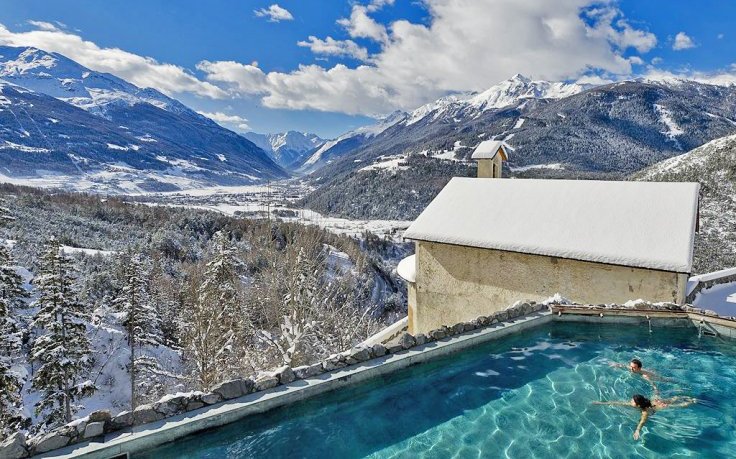
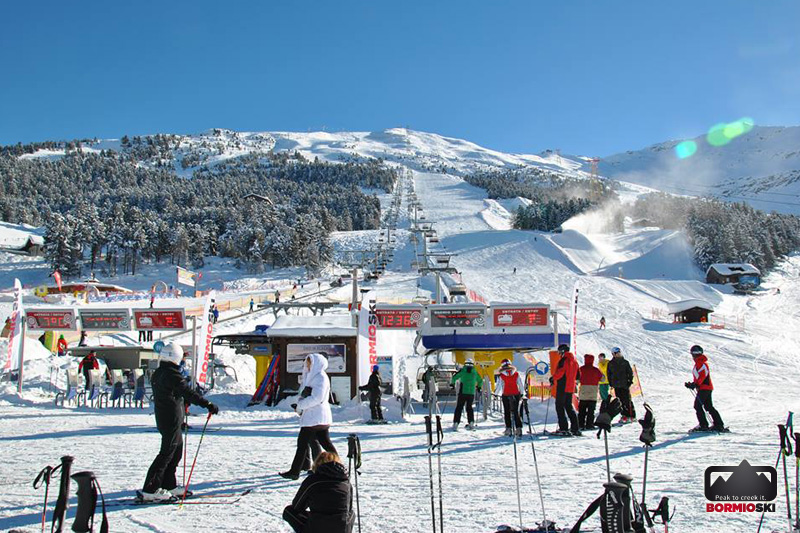
For many people it is still an unknown region and lots of times a forgotten region, unfairly if you ask me. I’m also not sure why this region isn’t more well known? Valtellina is a small region in the moutains in the North of Lombardy somewhere inbetween the Como lake and the Swiss border. Valtellina is mostly known amongst ski lovers as Valtellina has some of the most renowned ski areas in the world with towns like Bormio and Livigno (also known as it is taxfree) as the most famous.  Every time I visit this region I fall in love with it over and over again.

Bormio bagni caldi

Bormio 2000

Bormio 2000 2

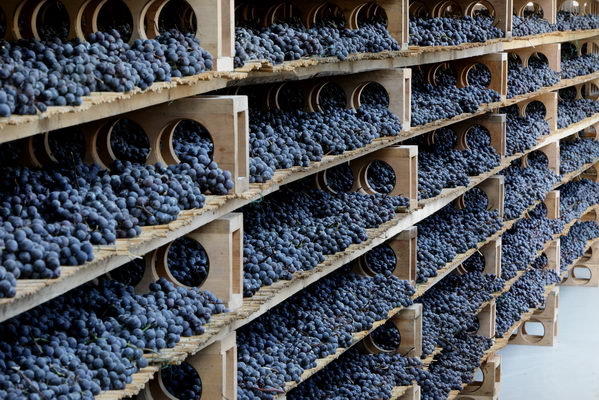
The wines in the Valtellina region are mostly made with the Chiavennasca grape that is better known as Nebbiolo… YES indeed the grapes used to make that other Italian beauty called Barolo 🙂 . In this region however the wines go with names like Sassella, Inferno, Valgella and Sforzato which are bascially the names of area’s between  Villapunta and Tirano with exception for Sforzato. The Sforzato wine is the Valtellina version of Valpolicella’s Amarone. Sforzato gets made in the same way by using partially ‘dried’ grapes aka the appassimento method (The drying process concentrates sugars and results in higher alcohol wines).

apassimento by consorziovini valtellina

vineyards by valtellina

The wine estate that has put the Valtellina wines on the map on an International level (and I think everybody agrees on this) is Nino Negri. I’ve known Nino Negri my whole life as my dad also used to sell their wines in his restaurant… mainly because back then you didn’t find any other producers from the region in Belgium, but also that to my opinion they were and still are one of the best producers in the area. I wouldn’t be able to name a favorite from their gamma as I like all, but if you are a wine lover do try their Le Tense, Mazer, Sfurzat and if the budget allows it the 5 stelle which is an indescribable beautiful wine. It does warm up my heart that more and more wines from other wine producers from Valtellina found their way to Belgium  or even to other countries all over the world. All or most Valtellina winemakers have joined forces and created a consortium that represents the whole wine region. I see this as a positive thing as together they are stronger then separately.

Nino Negri

5 stelle

When I am in the region I do always try to taste as many “new” producers (or maybe just ones that I didn’t know about). A few weeks ago (as you might have see on my FB or Instagram) I was in Valtellina for a family visit with my dad. Normally my babygirl was coming along, but unfortunately she became ill the night before leaving… so she stayed at home with my wife. I was sad she couldn’t come, but at the other hand this way we had the liberty of visiting some wine estates 🙂 🙂 If it were up to me I would have visited many more, but our main purpose for travelling to Valtellina was to visit family and the vineyard visits had to happen in between the family visits.

family time valtellina

Nonna

Initially I planned to visit 3 vineyards: Rivetti & Lauro, Balgera and Menegola. However we sadly didn’t manage to visit the last (Menegola) due to time issues, but I’m really sad about it because I was really looking forward to it… next time without any doubt!!!

menegola07

The diffrences between the Rivetti & Lauro estate and Balgera couldn’t have been bigger. Rivetti is only producing wines for 3 years, whereas Balgera was one of the first estates to make wine in the region and it now already the 5th generation of winemakers. Balgera is rather a classical style wine maker who respects the traditions, Rivetti on the other hand is a more modern estate that experiments with new methods and grapes…. I wouldn’t say that I prefer one over the other. They both have a different style of wine and depending on the circumstances I’ll prefer drinking one over the other 🙂 but I guess that’s the case with every wine

Balgera rivetti & lauro

To be continued….

Wine of a mythical purity: Jermann

It was finally time to have a trip with my 2 favorite girls, my wife and daughter 🙂 I know it seems like I only go on holiday with other people, but it isn’t. This year we set sail to Friuli to visit another favorite woman in my life, my dear Zia Livia. Zia Livia might already have a blessed age of 83, but she is as active as a 40 year old that and cooks like nobody else can (not even in restaurants). Until now I always was the apple of her eye, but let’s say I had to leave this spot to my baby girl 🙂

zia and elo

When I go on holiday with my wife I try to hold myself and not make it a wine trip. I allow myself to visit 1 (max 2) vineyards… I mean otherwise it be like a kid standing in front of a candy shop not being allowed to go in 🙂 . My mind was made up very quickly that I wanted to visit the Jermann wine estate. If I would have to describe Jermann in 1 word it would be “Flawless” or “multi-layered”!! What impresses me most about these wines is the purity and depth of flavor coupled with huge mineral extract, all perfectly in balance. In case you wouldn’t know it, the Friuli region is mostly known for its white wines. They do also have some really nice red wines like Refosco, but their main focus is white wine…

Jermann

The Jermann winery was founded by current owner Silvio Jermann’s Austrian great-grandfather Antonio in 1881. A heritage Silvio is very proud of and cherishes a lot. You also notice the Austrian background when you visit the winery. FYI you will notice that  there will be less pictures and no pictures from the inside of the wine estate… this is due to the fact I was not allowed to take pictures from the inside of the building… So you’ll have to take my word for how it looks, if not there is only 1 solution… visiting the vineyard yourself 😉

Silvio Jermann

It must be said that Silvio Jermann is one of the winemakers that changed Italian wine history and created a new era in vinification of white wines. It did take him a bit of effort to convince his parents to change their way of winemaking as they had more conservative views. Something remarkable is that Silvio’s choice of country to build up experience in winemaking after his studies at some of the most renowned wine academies Conegliano and Istituto di San Michele. His choice went to Canada, not the first country I would think of… nevertheless I have drunk some very nice wines from Canada. Silvio’s move to Canada gave him the chance to broaden his horizon and the freedom to do some research of new techniques to make wine.

Jermann Azienda 5

Let’s say that the research has paid off as he did not only convince his parents with his multi-layered, extract-loaded whites, he convinced the whole wine world!! You could see it as a combo of Collio’s incredible terroir and Silvio’s daring flair.. of lots of small vineyards that are personally monitored by Silvio, and unique blends of autochthonal and international grape varieties.

I do recognize this aim for perfection from another monument/innovator in Italian winemaking I visted this year, Guiseppe Quintarelli…Just like at Guiseppe, it was Silvio who has put the vineyard on the map and expanded it to what it is today. Today Jermann has around 200ha of land, of which not all is used to make wine, but only 3/4.

Jermann Azienda 1 Jermann Azienda 2 Jermann Azienda 3 Jermann Azienda 4

I already visited lots of vineyards, but I must admit that Jermann is one of the most impressive I’ve seen. Maybe because they only move to this newly build location I in 2007 (with first harvest in 2006) or better on 07.07.07 :-)I was told that Silvio likes numbers or dates like this. But I think the beautiful pieces of art, the gardens (including a golf course as Silvio is a Golfer… to bad he wasn’t there as we could have had a little match as I also played golf for a long time 🙂 ). You feel quit “Zen” at this vineyard…. or at least that’s how I felt when visiting it (hope people working there experience it in the same way).  Although I think the lovely Serena also played a big part 🙂 FYI Serena is the person who showed us around the estate.

Azienda Jermann

Like always the best part of the visit is at the end… the tasting of the wines. They upgraded the tasting as there is no better way to taste wines than with food ?? Local artisan products like San Daniele (my all time favorite ham!!), some cheese, polenta and freshly baked bread 🙂 Simple things, but things that rock my world!! We started with their evergreens or less complex or “entry level” wines the Pinot Grigio and Pinot Bianco. All from 2015, a wine year every winemaker is enthusiastic about

winetasting Winetasting

The Jermann white wines are either made from one of the following grapes or a blend: Sauvignon, Chardonnay, Ribolla Gialla, Malvasia Istriana, Picolit, Tocai Friulano and Riesling Renano. The grapes might change, but they all have 1 thing in common, purity!! What you’ll notice when you see a white wine bottle from Jermann (as off their 2009 vintage if I remember it good), is that they have a screw cap instead of the classic cork. The reason for this is keeping the taste of the wine how Silvio made it, a classic cork would change the wine’s taste too much and  after lots of research they found out that with a screw the changing of the wine is far less.

Jermann

I also see it as a kind of statement as for most people when they see a bottle with screw cap they think it is a wine of lesser quality… but in this case they get proven wrong!! AND another good thing about a screw cap is that you’re bottle will never taste cork 🙂 🙂

During this tasting I got proven again that I sometimes have expensive taste 🙂 🙂 no no just kidding… All wines were very pleasant to drink, but my preference always goes to full bodied wines… which in the case of Jermann would be the “Where dreams”(97% chardonnay) and their Vintage Tunina (a blend of Sauvignon, Chardonnay, Ribolla Gialla, Malvasia Istriana, Picolit) . What intrigued me in the “where dreams” before I even tasted it was the many times it changed its name 🙂 . The first 9 years it was called “Where the Dreams have no end…” (for every vintage they had a different color for the capsule). In 1996 it became “Were Dreams, now it is just wine!” and they changed the capsule in  blue, bearing a stylized Comet Hale-Bopp.  Finally in 2003 they returned to their “roots” with: “W…. Dreams ………”, adding the year of harvest and a drawing of Mars on the capsule.  A wine with a story behind it. ..A nice note: The wine was actually dedicated to U2’s “The Joshua Tree” album (1987) and specifically to the song “Where the streets have no name” 🙂 . When I actually tasted it, it does indeed make you dream of opening a second bottle of it 😉  charm hand in hand with complexity and rare elegant refined notes of exotic fruits, melted butter, vanilla… and they nose doesn’t disappoint the taste as the whole pallet comes through when taking a sip!!

Jermann where dreams

As for the Tunina it was love at first sniff 🙂 the tempting aromas, the complexity, honey, mango, lime…. it all works! Again here the taste doesn’t let you down… and again that full body!!

Result of my visit? Yes, a few more bottle for my cellar (of which 3 have already disappeared) and less space in the car 🙂 🙂

I could and would like to tell you more, but I can only suggest to taste the wines yourself and maybe even plan a visit to the vineyard.

For more info  you can always contact Jermann directly. for my Belgian friends, you can check with our friends from Young Charly as they are the Belgian Dealer 🙂


Italian road trip 2016: all good things come to end

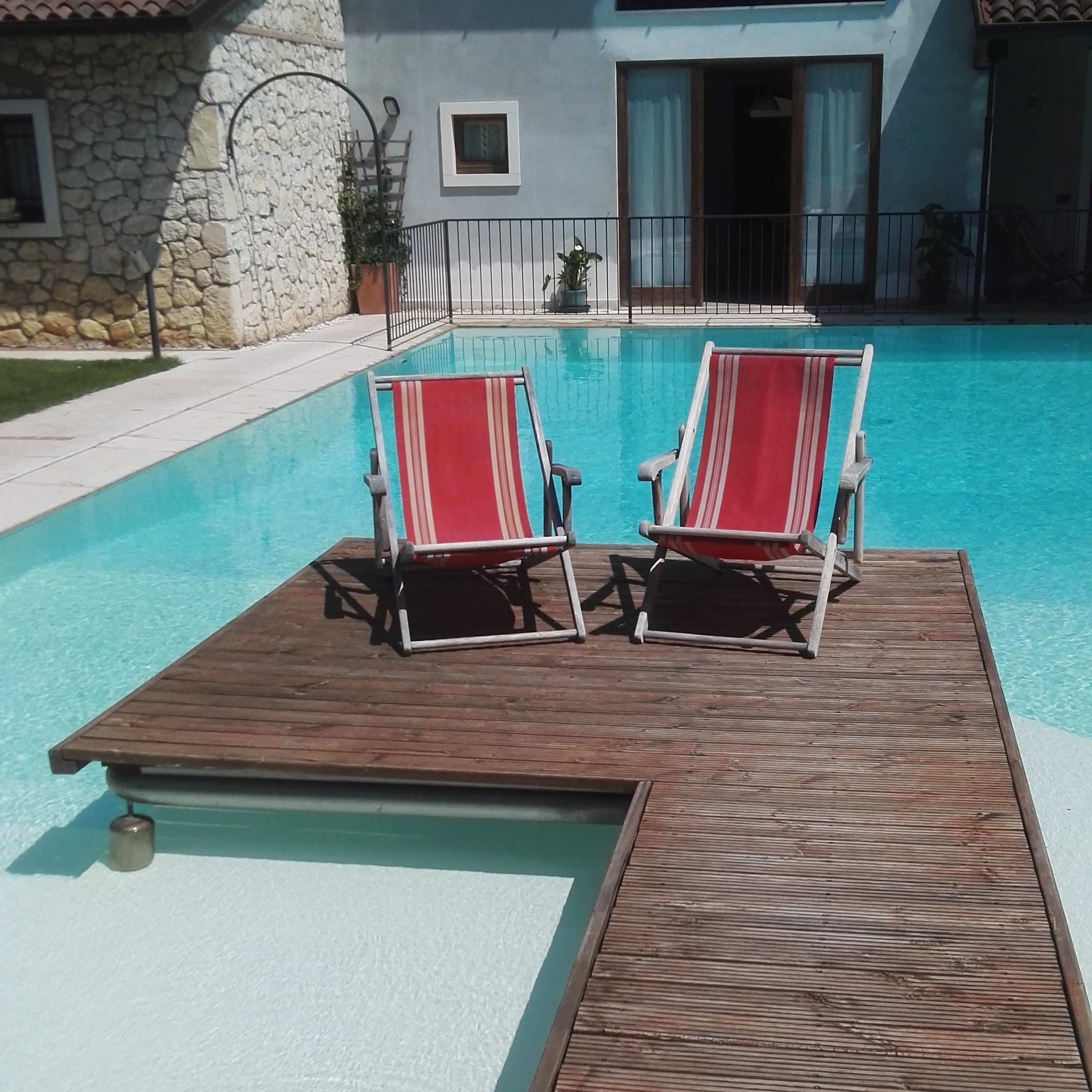
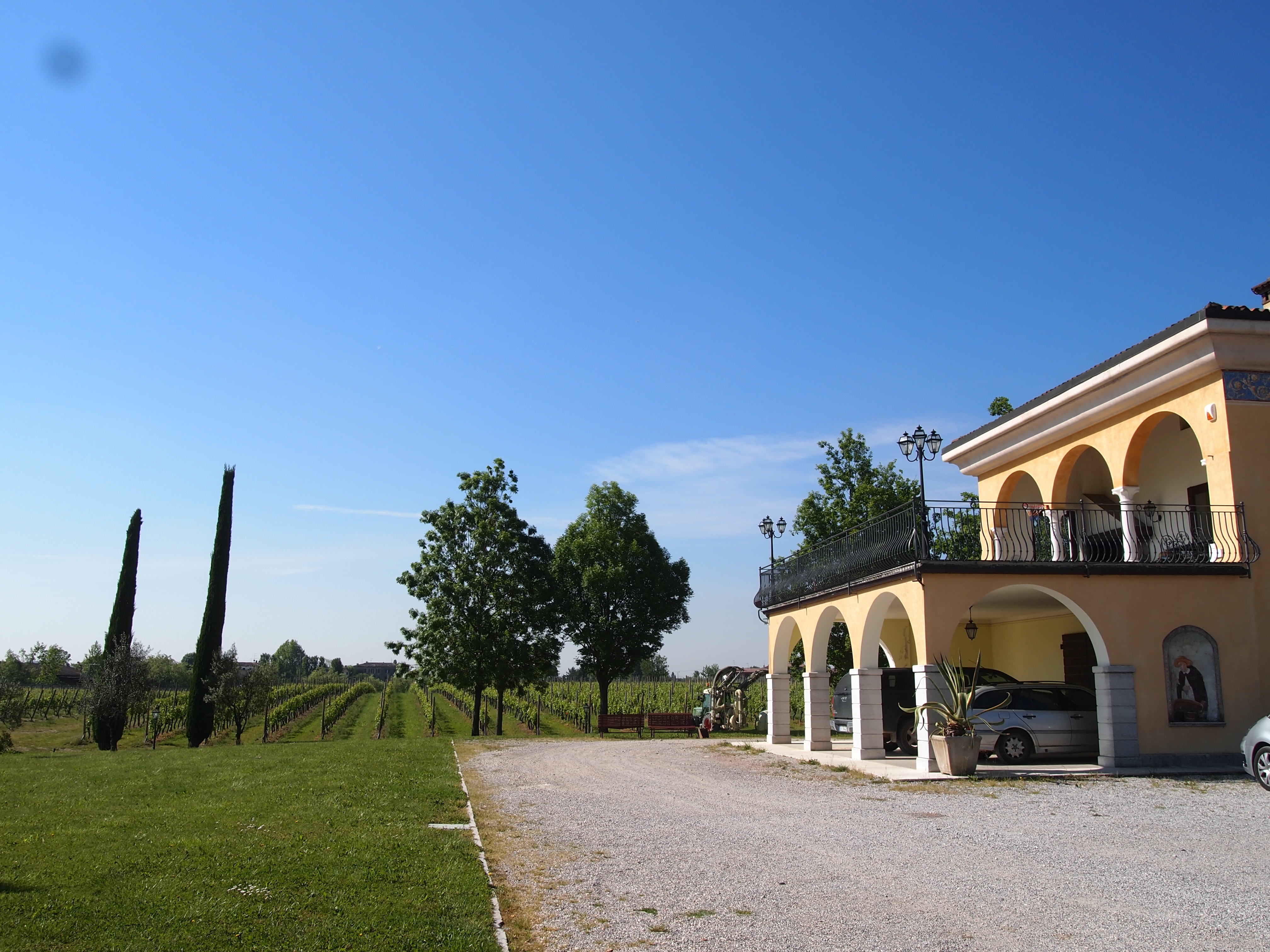
We might be on our way to visit the last vineyard, but that doesn’t make it less worth it!! The last vineyard we would visit on white wine Saturday and even from our trip was Sandro de Bruno at the eastern side of Verona. As we arrived a bit early at our destination we decided to already check-in at our B&B (named La Dolce vita :-)) Once we arrived we also found out it was the perfect spot to stop after lunch and have a little siesta before visiting our last vineyard. I guess the picture below gives you an idea about oasis of piece we arrived at. Another great news fact, we still had some room left in the trunk of our car for more wine 🙂 🙂

Il paradiso

Not that we were stressed, but you would be surprised how tiring visiting and tasting can get. I can definitely recommend the B&B as they also have a very nice breakfast and very friendly hosts. The B&B was also only 1km away from the Sandro de Bruno vineyard, so we had all the time in the world as it would only take us a minute to get there for our visit.

Sandro de Bruno

The Sandro de Bruno winery saw the daylight in the year 2000, so you would think it is a young winery. It’s not! In reality the winery is already making wine  since 1930 or better current owner Sandro’s dad and his dad’s 2 brothers were making wine since 1930… Sandro changed the name of the winery  in the year 2000(when he took over and after buying the parts of his uncles) as a tribute to his dad into ‘Sandro de Bruno’ which comes from Sandro ‘son of’ Bruno… it is as simple as that 🙂

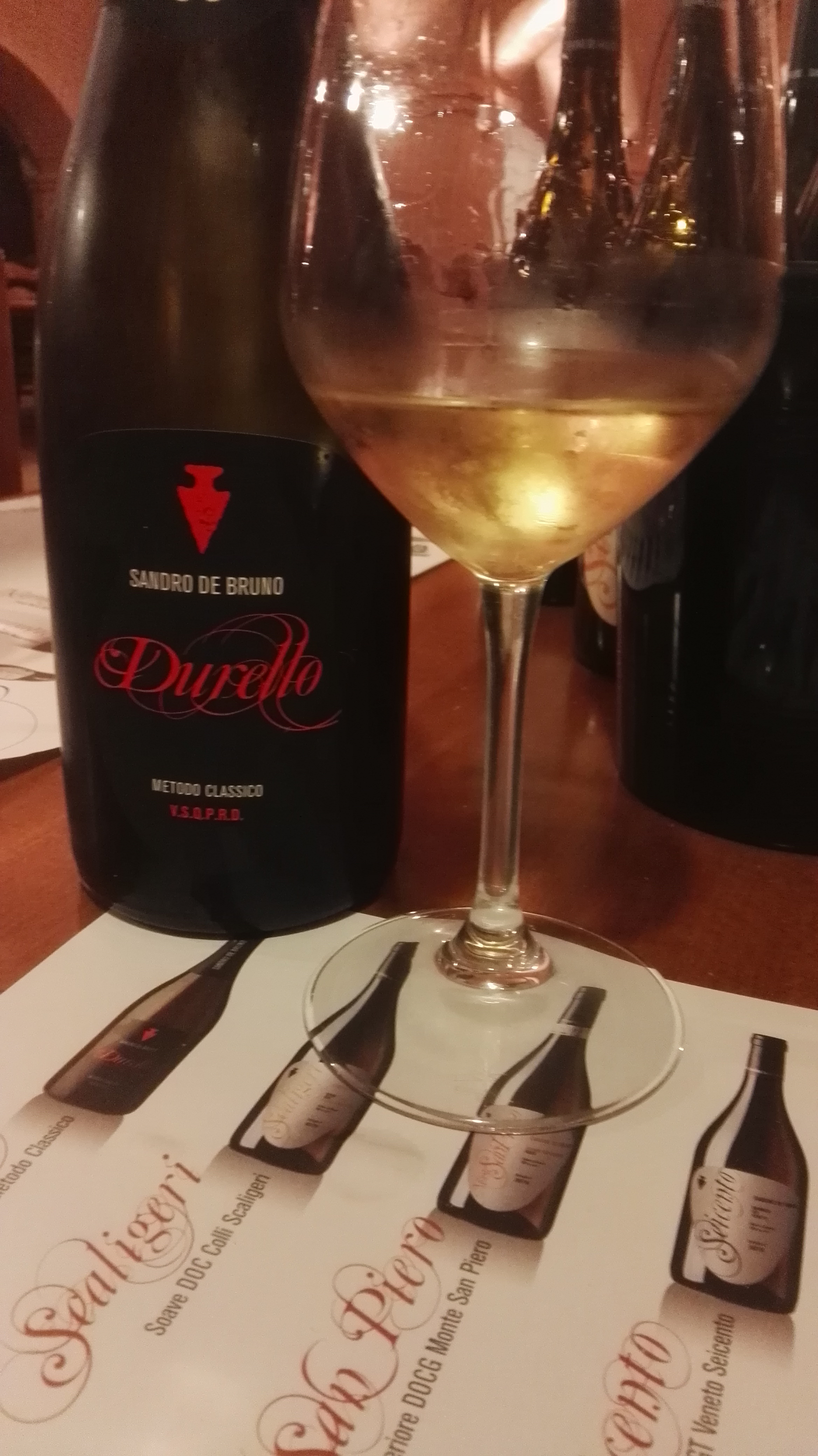
Sandro de Bruno produces different kinds of wine, but 2 of them are their trademark wines (I think that’s the best way to call them) : the Soave and the Durello. Let’s first start with the Durello (or Durella how the grape is actually called) a DOC wine, meaning the Durello can only come from a specific area in this case from the area between the provinces of Verona and Vicenza (DOCG would mean it would need to come from a specific town or more specified area and only from that place like chianti or Barolo, or Amarone, etc…). The Durello/Durella grape is a strong  autochthonic grape variety. Strong because it is said to be disease resistant and grows best on a soil composed of lime and clay of volcanic origin. Indeed volcanic origin… I was surprised to find out that the area we were at has a volcanic origin… I didn’t know the area used to be volcanic. Another remarkable characteristic of the grape is the thick and leathery skin (may be the reason for it name as ‘duro’ means hard in Italian). What I’ve learned from tasting other wines that come from volcanic areas is that they have lots of minerality in them. For the Durello this isn’t any different. Something fascinating is that there are around 500 growers growing the grape variety but only I0 of them actually bottle the wine of which Sandro de Bruno is 1. Because of its high level of acidity the grape is 99% used to make spumante wines.  At the nose you notice lots of white flowers and minerality. It combines nature and freshness and its character lends itself good to be paired with seafood I think 🙂 I’ll have it a try at home… according to Sandro it pairs great with codfish alla Vicentina.

Durello

At our visit we did see Sandro, but as he and his wife had to go to Genova it was Andrea (who was about our age) who showed us around the winery. At all vineyards we were received with open arms, at Sandro de Bruno it at some point felt like we were just having a drink with a friend at a bar or so 🙂 It felt so relaxed!!

Sandro de Bruno Sandro de Bruno 2 Sandro de Bruno 3 Sandro de Bruno4

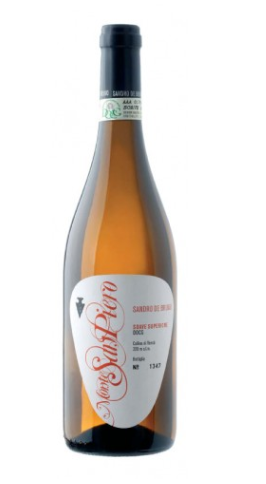
Soave as I mentioned is their 2nd most important wine.  For me Soave has always been around, but never got the attention it deserved.  Soave was produced in a medium-bodied style that was often compared to Chardonnay, except with a distinct bitter almond note. In most cases people in that case chose a bottle of chardonnay over one of Soave  or at least this until the end of the 90’s as since the 21st century trends have been turning and now Soave is the new Pinot Grigio in the US 🙂 Basically a wine everybody wants to drink + it must be said that producers like Sandro de Bruno and others in the region have worked very hard to make the opinions turn!!  The main grape variety that has to be present in Soave wine is Garganega , but can be blend with Trebbiano di Soave and Chardonnay. The Garganega grape also lends itself well to produce sweet recioto (who knows maybe they could even make a White Amarone if they let it ferment more 🙂 ) wines that have the potential to improve with bottle age for a decade or more.  Garganega can make classic white wines, both complex and satisfying!  Sandro de Bruno has 2 kinds of Soave, a regular (DOC) and a superiore (DOCG). Although I like both, I have a slight preference for the superiore, maybe because it has been in wooden barrels and therefore has more body, whereas the DOC Soave only saw stainless steel thanks… Let me say it like this, the DOC would be perfect as apero in your garden, the DOCG Superiore is more appropriate with food. as it has a broader aroma and complexity (and again the nice minerality)… and is rounder (good with white meat).  It are definitely very good wines with a very good price/quality ratio!! Also the bottles I bought at the vineyard are already finished… so I guess I like them

Soave superiore

What I find amazing is that on every bottle of Sandro de Bruno, is that all info on the wine can be found on the back label. Info like best served with which dishes, the best temperature to serve it, which grapes used, etc… basically a simplified technical sheet :-).  Also every bottle is numbered, although I don’t remember why that was 😦 nevertheless the content in the bottle is nectar of the Gods!!

Thanks Andrea for the tour and Sandro for making such great wines!! Hope to see you soon. In case you would have questions regarding the wine, you can contact Sandro de Bruno or for Belgium you can check with Alex from The Vine.  Sad enough our trip ended after this visit…but they gave us a wonderful dinner advise that was maybe the best from our whole trip!! if you would ever be in the neighborhood do stop at il Convivio!!!! A true  hidden treasure!! I also know the bottle you see on the picture (and that we had) from during our meal isn’t one from Sandro de Bruno, but as we had already been tasting their wines whole afternoon I was also keen on finding out which other great wines they had in the area…

Il convivio

I can’t wait for the next wine trip with my buddy Carlos!! Always a pleasure to travel with him…. Although I’m now first travelling with my lovely wife and baby girl to Friuli!

Italian road trip 2016: at the home of the Friars

Our trip had already been unbelievable… we had visited some great vineyards we, had some great food and had been very lucky with the weather as well 🙂 Travelling when the sun shines makes a trip much nicer. As if we ordered it, the sun was heating and more present on white wine Saturday than it was the other days!  So visiting a vineyard a stone’s throw away from the Garda lake was perfect, add great white wine to that and you have a perfect holiday 🙂 Coincidentally the vineyard we were visiting that morning had lots of great white wines 🙂 LUCKY US 😉

Ca dei Frati near Garda lake

When you visit a vineyard you always have some wines you prefer over others. It doesn’t mean those wines you don’t like are bad, they are just not how you prefer your wines to be…  If I tell you that we took home at least 1 bottle from every wine in the assortment from the Ca’ dei Frati vineyard…what does that tell you? Yes, in first place that our character or intention to buy less wine was out of the window. Also that my car has a big trunk, but also that all wines we tasted were our thing :-). For both of us (Carlos and me), so I consider this something quite rare 🙂

Ca’ dei Frati is as I mentioned before only a stone’s throw away from the Garda lake or from a town called Sirmione (I always remember Sirmione as the Garda Lake town with the Castle :-)) . That first bottle of Frati by ca dei Frati I had a few years ago at the Pazzo winebar with my dad left a big impression with us… ever since that day I had put the Ca’ dei Frati vineyard on my ‘to-do’ list if I was ever in the neighborhood… now, a few years later that moment had finally come. It was the Stefano (husband of the founder’s daughter and responsible for export) who showed us around the estate accompanied by his 2 year old son who insisted to come along 🙂 he reminded me a lot of my sweet little baby girl as they share the same big appetite 🙂 FYI, I know that you might say she inherited that from her dad, but at that age I was a very bad eater! It was only at the age of 12 when going to the chef school the tide had turned and I never looked back 😉

Ca dei Frati estate 1 Ca dei Frati estate 2 Ca dei Frati estate 4

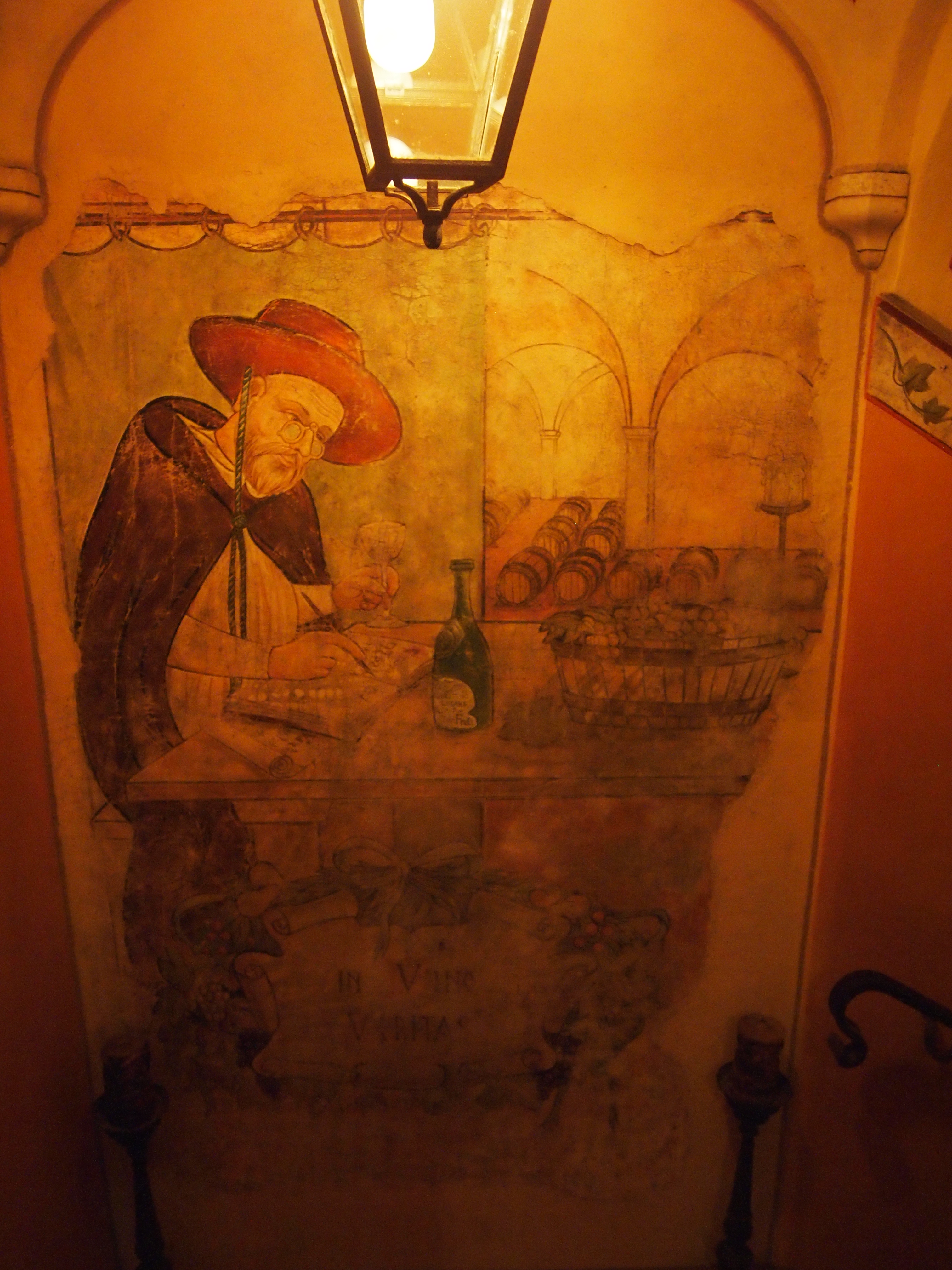
I’m wondering off here… back to Ca’ dei Frati. You might have guessed the winery has something to do with ‘Friars’? You have guessed correctly as the winery used to be ‘Casa dei Frati’ or Home of the Friars in English. In documents from the 18th century the Del Cere Family (who owns the property since 1939) has found there is told that the home that is now the Ca’ dei Frati vineyard already had a wine cellar back then and that it was owned by Friars. It was only in 1939 that the wine estate was founded by Felice Dal Cero, the current owner’s grandfather who left the company to his son Pietro around 1969.  It was Pietro who actually made the Ca’ dei Frati estate world famous and expanded from 12ha to over 100ha 🙂 So you could definitely speak about an expansion and growth.  Since 2012 after Pietro’s passing away it are his 2 sons and daughter (and their families)that carry on the family tradition and legacy. The estate also keeps growing and modernizing…

Ca dei Frati estate 9 Ca dei Frati estate 8

Ca dei Frati estate 7

Ca dei Frati estate 6 Ca dei Frati estate 5 Ca dei Frati estate 3

Unlike lots of people might think, the vineyard is located in the Italian region Lomardy and not Veneto… but I admit it’s a close call is they are really at the border of both regions.  The vineyards themselves are among the best in the region (as the estate was on the first in the area), on limestone silt soils at the southern part of the Garda lake rich in mineral salts which help the fruit to reach high levels of ripeness. It really gives beautiful wines as a result.

90% of the wine production at Ca’ dei frati is white wines with exception of 2 red wines and 2 rosé wines. The story behind 1 of the 2 reds is special because it is a tribute to Pietro! Not just any wine, an Amarone. Yes, An Amarone! The Amarone gets cultivated (as it is dictated by the DOCG and with the allowed grapes:  Corvina, Corvinone, rondinella and Croatina) in the Valpolicella area. In reality it was Pietro’s project to go back to his ‘radici’ (roots –  as het originates from the Valpolicella region where his grandfather was a winemaker), unfortunately didn’t make it to see his ‘baby’ grow and meet the world. This is why the family decided to finish this wine and make it as a tribute. A success I might add (beautiful product)! The Pietro Dal Cero Amarone had quit the rest before it was sold (2008 it the first edition of this wine that is currently sold) 24months in a barrel, 12months in stainless steel  and 24months in its bottle. Patience is again the keyword here…

Amarone Pietre del cero

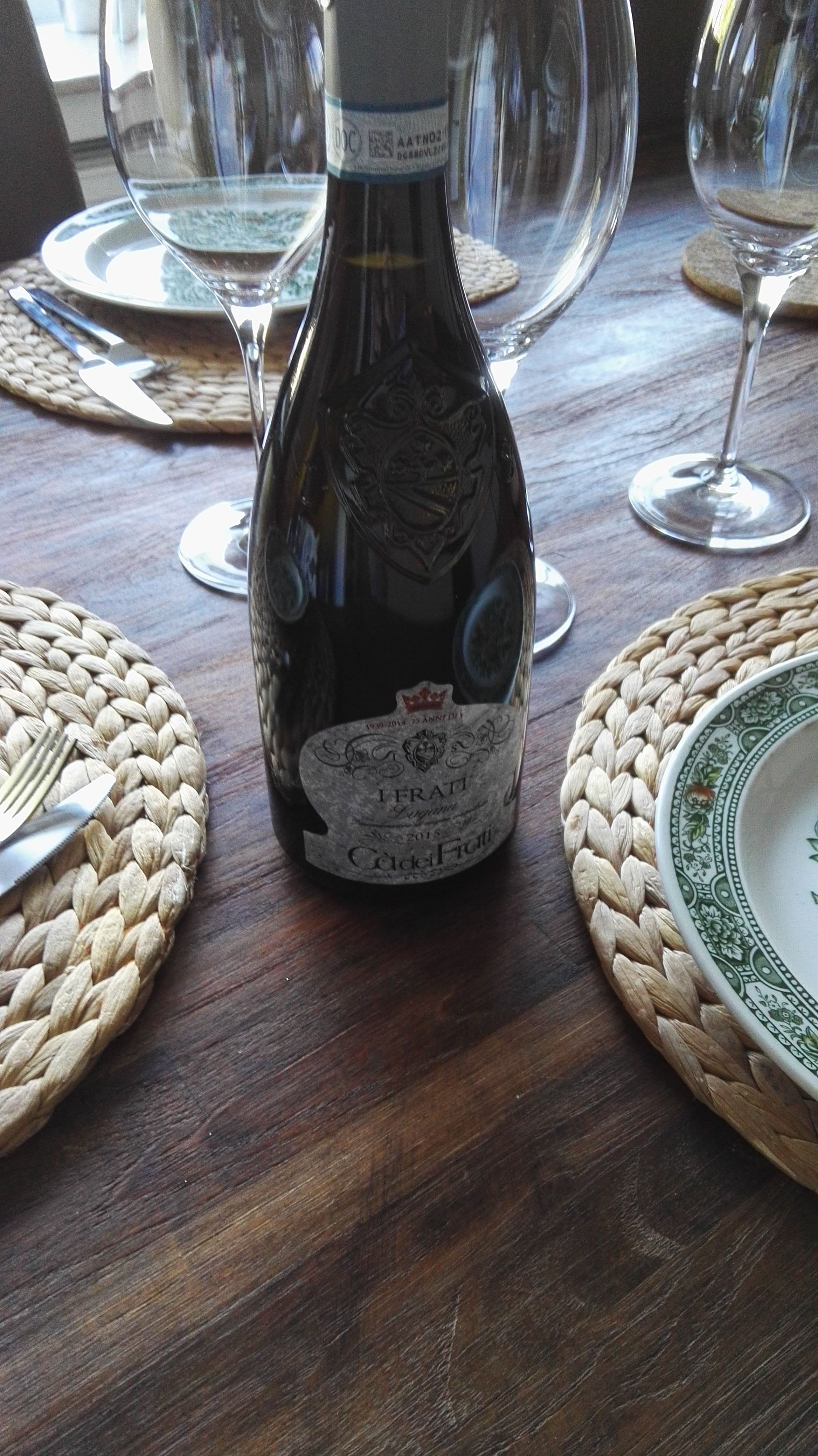
For the white wines their most well-known wine is without any doubt the Lugana.  Lugana is made with the Turbiano grape (aka Trebbiano di Lugana) which is  the essential ingredient for white wines in the region.  According to regulations a Lugana can only be names Lugana when it at least holts 90% of the Turbiano grape. They are characterized by their freshness , fruit concentration, underlying floral and spice notes, and delicate acidity.  Or basically a pleasure for the nose and taste buds.  Ca’ dei Frati has 2 different Lugana wines: Frati and Brolettino. FYI The Brolettino was in 2014 in the list of 50 best wines from Decanter. The only difference between the 2 is that one (Frati) was only in stainless steel and the other (Brolettino) stayed 10months in barriques and 3 more months on bottle.  I wouldn’t really see one is better, as they both have different characteristics, both very rich wines.  On the nose there were intense aromas of lime, white flowers, almonds and green apple… at taste there are the nice minerals and the green apples 🙂 FYI, it was actually the Frati I had that night at Pazzo and also the first bottle I opened when I came home from this trip 🙂 .

Frati

When looking at the grapes used in their other wines,  both the still as the sparkling, I noticed Ca’ dei Frati also uses Sangiovese and Barbera grapes in their wines… this is the second time on this trip I learn that in Veneto and Lombardy these grapes  are used to blend.  They obviously do enrich the wines. The Sangiovese is used for the other red wine from the Ca’ dei Frati estate  (Ronchedone), but more surprisingly also for the Rosé wines (from which 1 is still and the other sparkling). For the Rosa dei Frati and the Cuvée which is the rosé sparkling wine they blend Sangiovese with Barbera, Groppello and Marzemino . The first thing that came to mind when having a taste of this wine “this would be something for my wife” :-)… how dare she tell me I only think of myself during my winetrips :-)Rosa dei Frati has notes of  green apple, wild cherry and white almond. In the mouth it immediately shows authority… it keeps it fresh and delicate thanks to a pleasant acidity that points out the carefree ease of drinking 🙂  but at the same time robust and capable of being elected the versatile star of the table!! Need I say more? Basically a bottle that can become everybody’s friend 😉 (the same goes for the Cuvée by the way that adds a bubble 🙂 🙂 (I know to much smiley’s, but that’s the way it is)

Rosé ca dei Frati

Again a very unforgettable experience where we learned a lot and can’t wait to visit the vineyards again when their renovations are finished as they were already very impressive now that they were not finished yet.

Up to the last vineyard of our trip 😦 Up to our friends of Sandro de Bruno

For more information or to purchase Ca’dei Frati wines in Belgium please contact Non solo vino. For other countries please check with the wine estate itself.

Italian road trip 2016: the aim for perfection

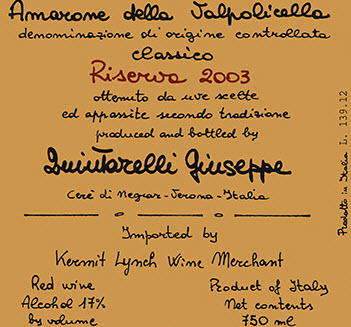
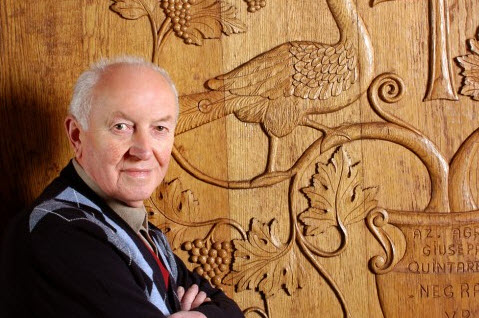
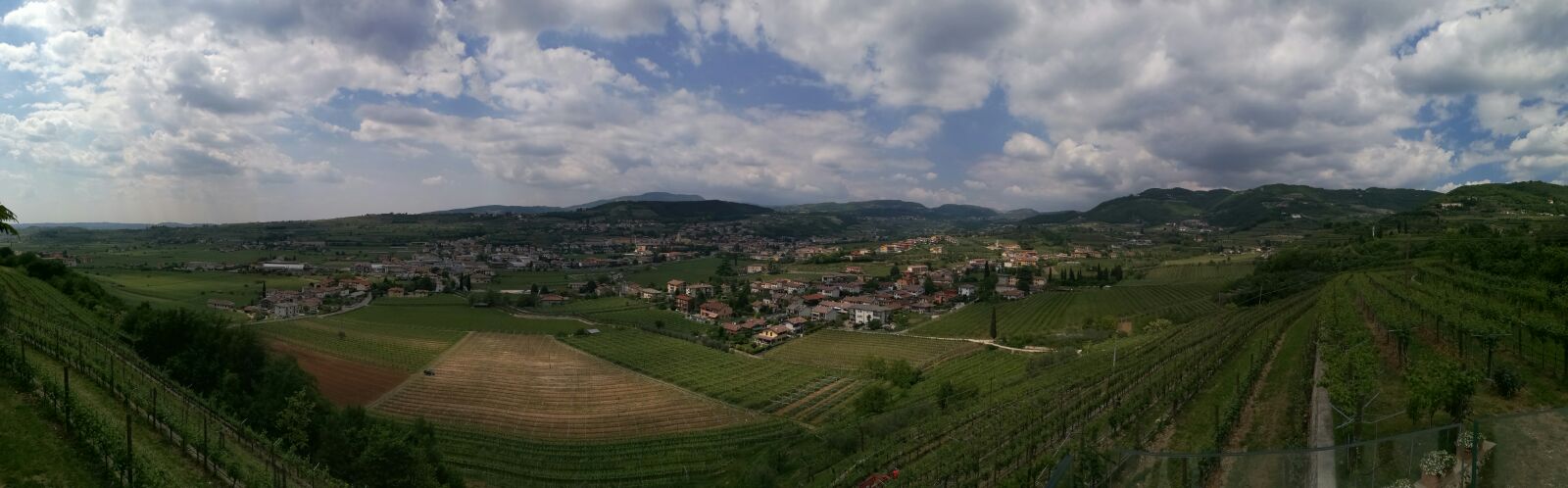
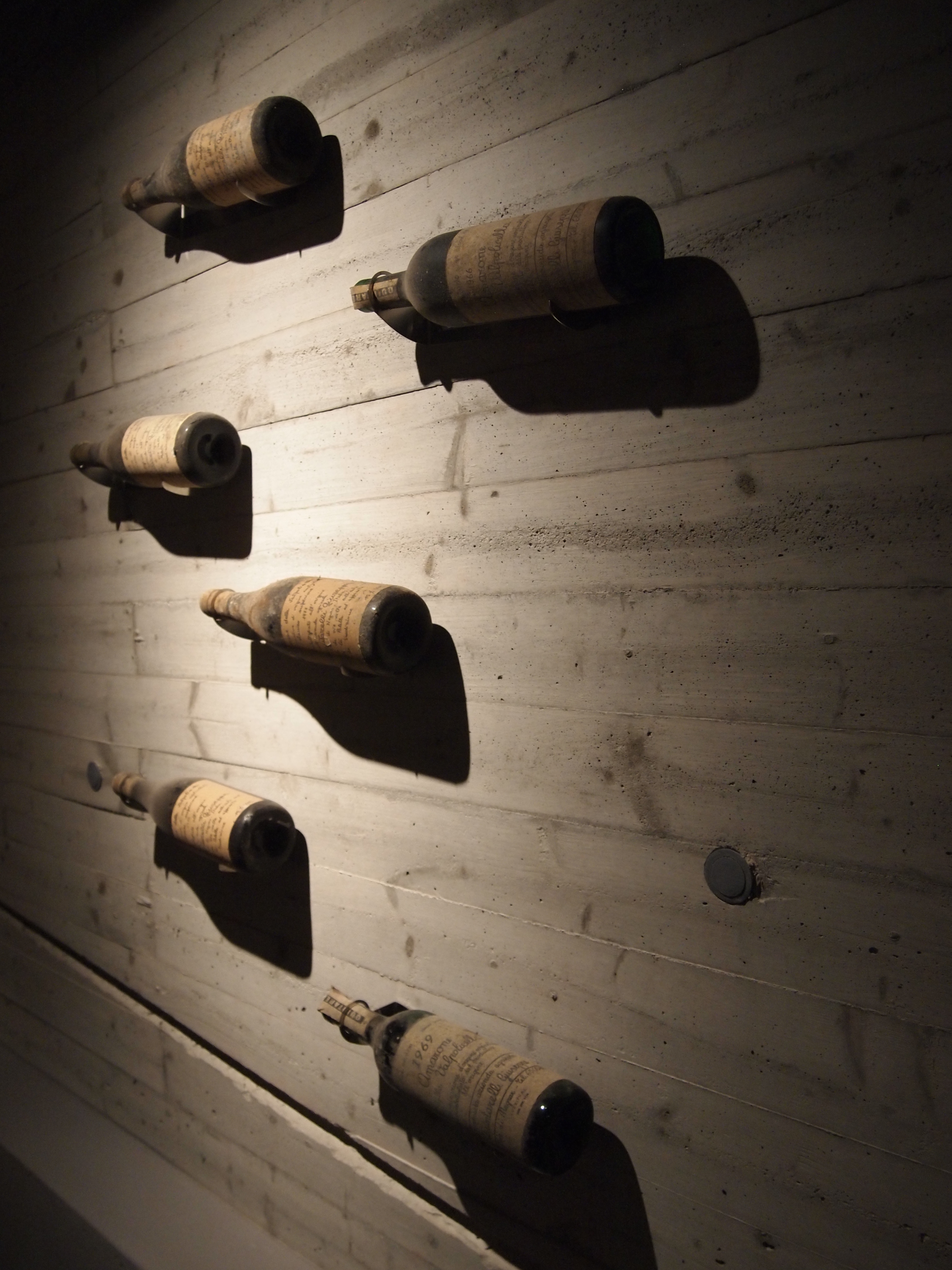
Our next stop apparently was a very special one as every sommelier, winemaker or person involved with wine I told we were visiting the vineyard of Guiseppe Quintarelli was surprised (maybe even a bit jealous) they wanted to receive us… I’ve been told that they rarely open their doors for visits. So I can say for a fact that we felt honored!! Guiseppe Quintarellli stands for a style, a tradition, a way of doing things… but also for time, effort, patience, and care that go into the making wine. Although I think most people who didn’t have had the pleasure of drinking the wine will for sure recognize the handwritten labels of the wine that were all handwritten by a family friend who was cook from a local restaurant 🙂

Label Guiseppe quintarelli

Unfortuantely Guiseppe passed away a few years ago at age of 84, but his legacy will live forever. Today it are 2 of his 3 daughters together with his grand children that continue leading the family vineyard that Guiseppe himself took over from his father in 1924. The word ‘perfection’ or ‘perfectionist’ is used a lot to describe Guiseppe who’s drive for perfection was from an unknown level. From the corks, to the bottles, to the grape selection, etc… everything had to be perfect (even if this meant inspecting every bunch of grapes separately). This perfection is also the explanation why most of the wines they produce are not produced/available or exists every year. If for example the grapes that were normally foreseen to make an Amarone were not good enough, they don’t want to put the label Amarone on it but rather call it Rosso del Bepi…for many a fantastic wine, but for Guiseppe not worthy the name Amarone:-) INDEED, this level of perfection :-). Other estates would just call it Amarone… FYI, all grapes are handpicked!!!

Guiseppe

The perfection and strict selection also leads to the estate ‘only’ producing 60 000 bottles a year (all types of wine together). Unfortunately this also has an impact on its price (if it is too expensive or not is another discussion), but drinking a wine from the hand of the Master himself is never a disappointment!! You can’t really compare these wines to any other in the region, with maybe one exception Romano dal Forno (but they have lesser vine locations in comparison to Quintarelli), who was Giuseppe Quintarelli’s protégée. Something remarkable (in comparison to other wineries in the area) is the kinds of grapes used for their wines as next to the traditional Corvina and Rondinella they blend it with Cabernet Sauvignon (used a lot in Bordeaux wines) and hints of Nebbiolo (used for Barolo), Sangiovese (used for Brunelllo & Chianti)  and Croatina… A blend of everybody’s favorites could be a good description 🙂  maybe we could name a new style??  Bordeaux al Amarone or a Super-Tuscan-Barolo Amarone-style…? Super Tuscan as in some way it makes me think of Ornelaia, Tignanello and Sassicaia aka the super Tuscans as they also blend with French grapes. In case of Guiseppe he takes even a step further to also blending with some Italy’s most renowned grapes 🙂

IMG-20160506-WA0005

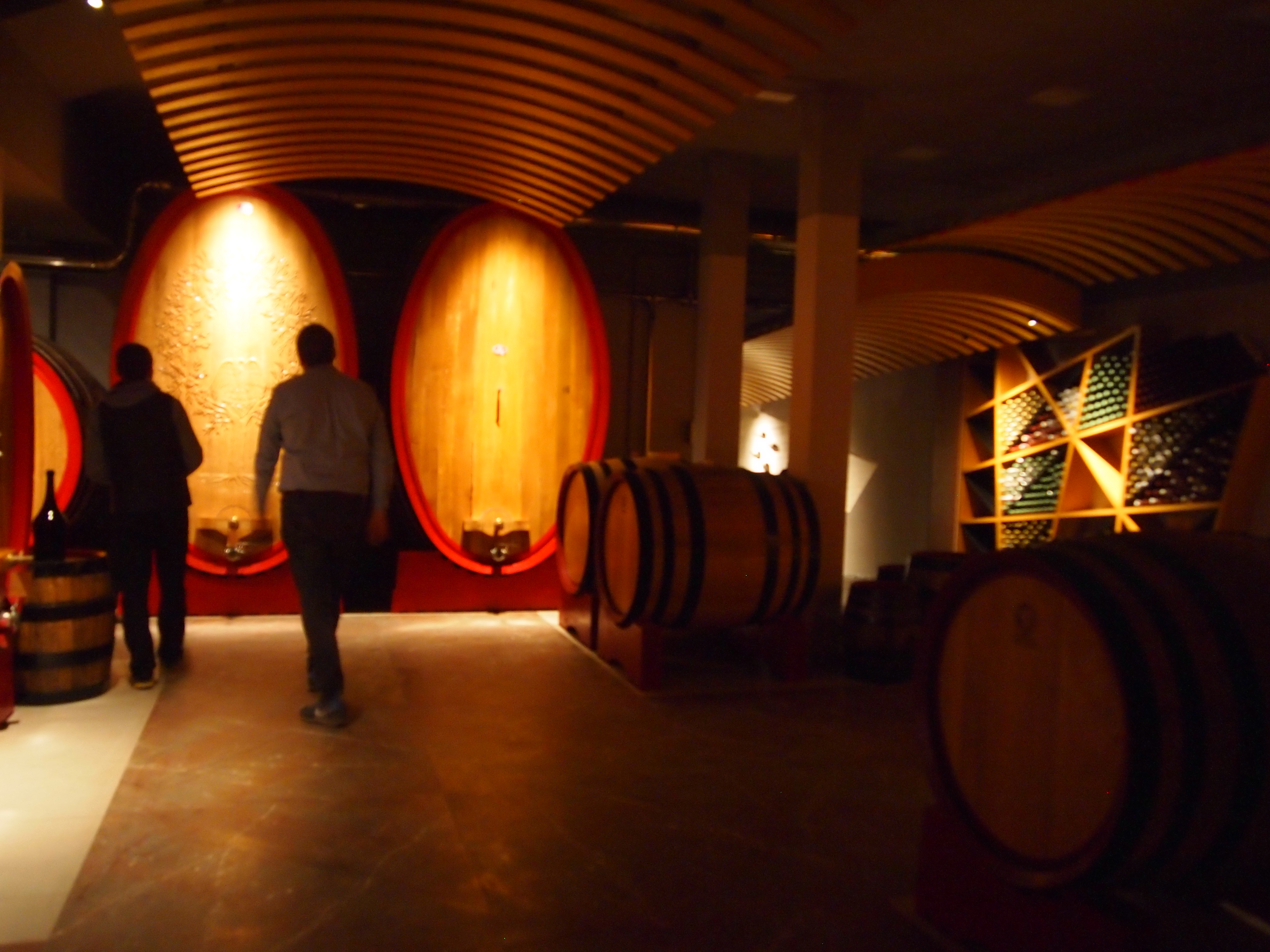
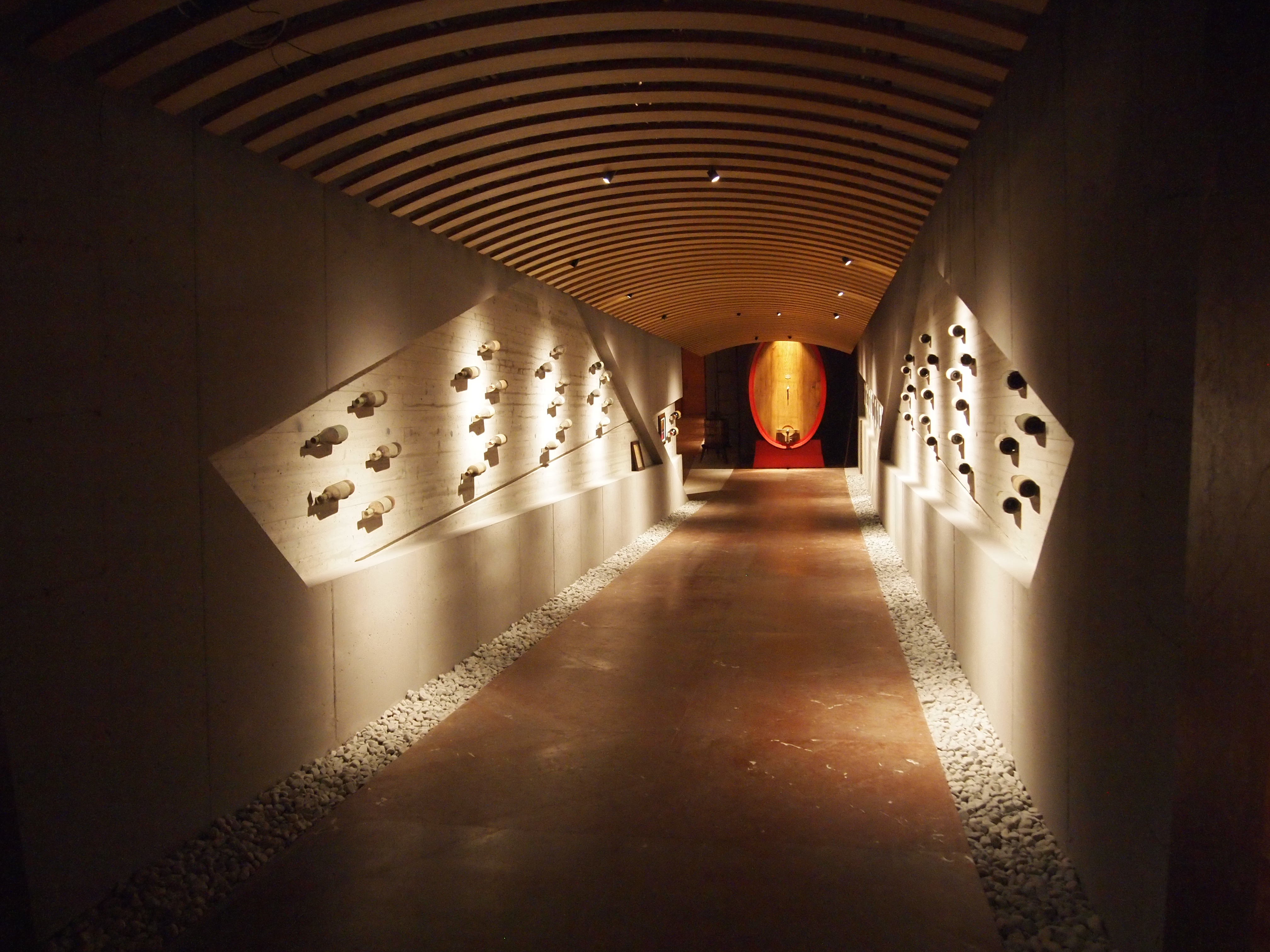
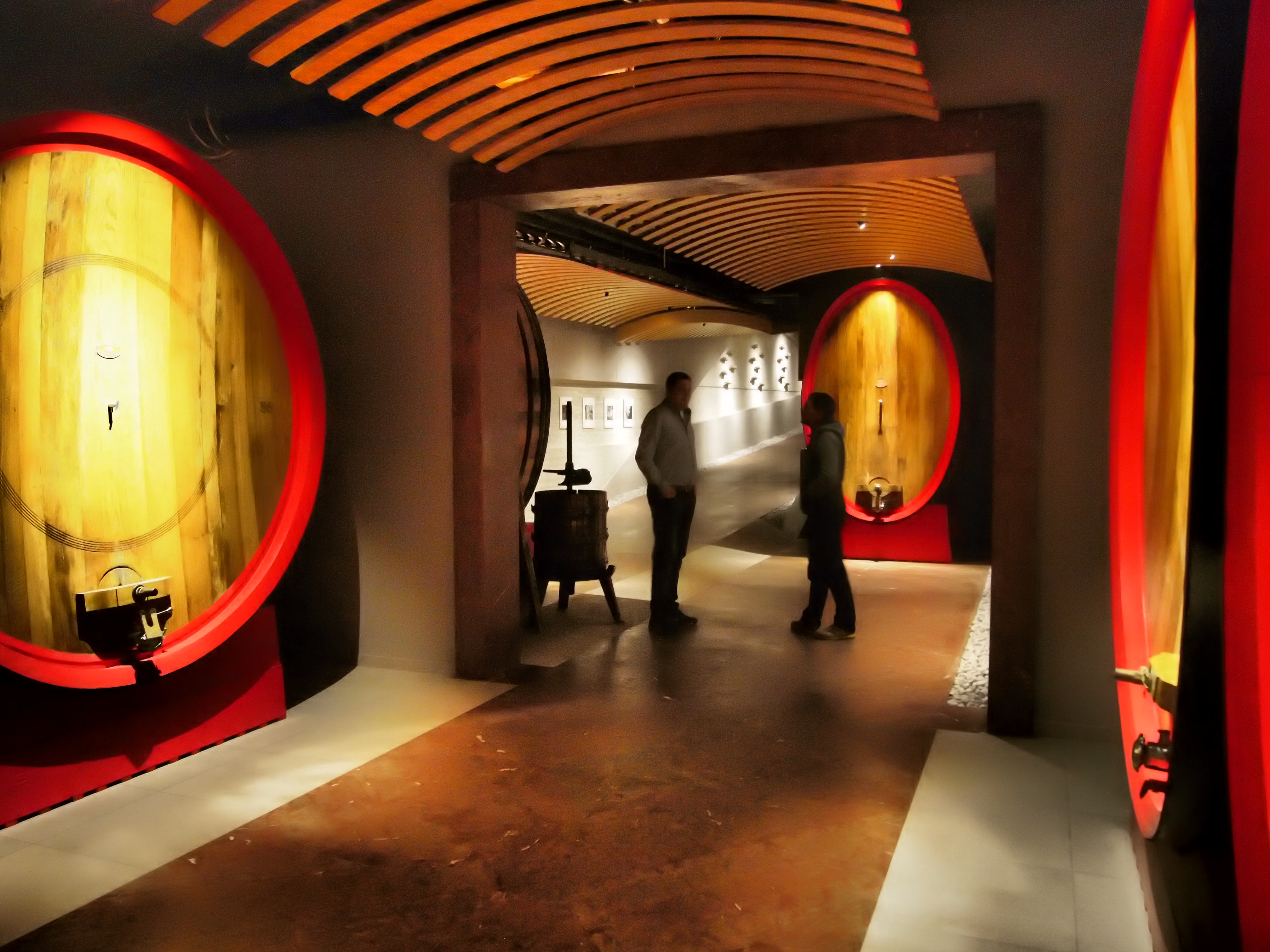
When we arrived at the Quintarelli vineyard it was grandson Francesco who hosted us and showed us around the vineyard. You could clearly tell that a new generation was running the vineyard as they were in the middle of renovations (that were already busy for 2 years if I’m correct). The parts that were already done were a success a good marriage between the old and the new 🙂 . Francesco told me he (and his entire family) were looking forward to the moment they could finally stop living on a construction site.

Quintarelli 1 Quintarelli 2 Quintarelli 3 Quintarelli 5 Quintarelli 6 Quintarelli 7  Quintarelli 9

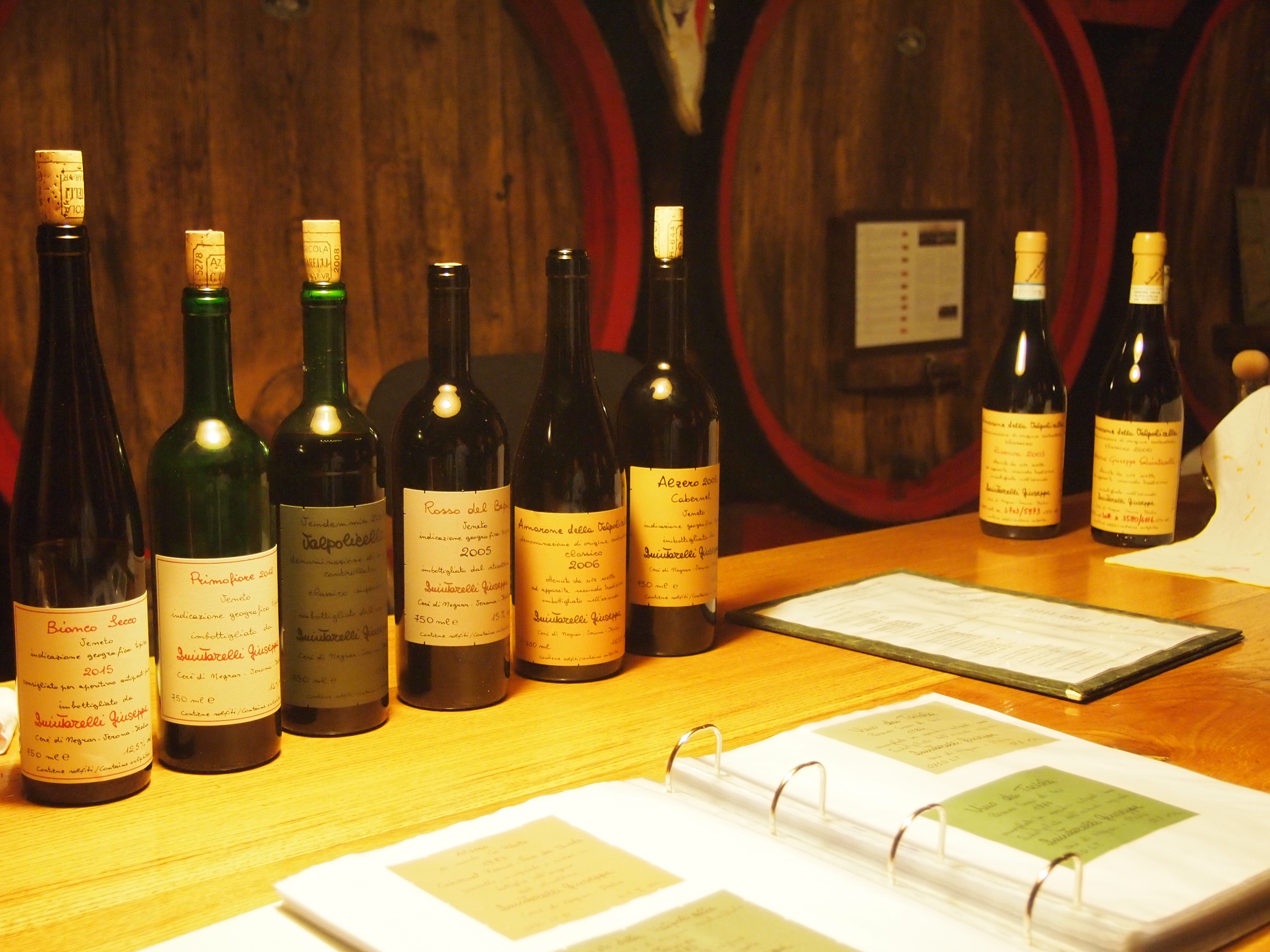
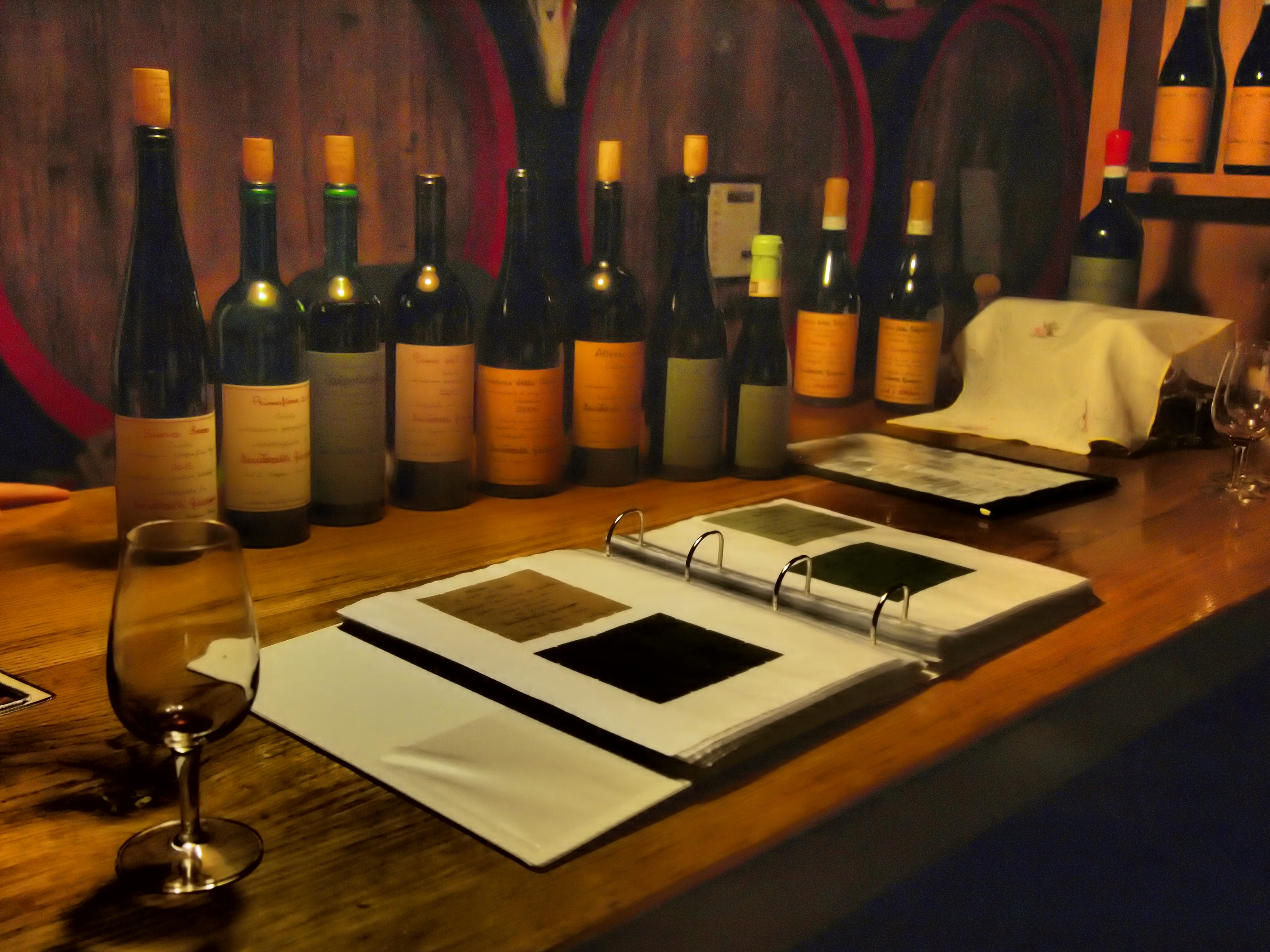
I would be lying if I would say I wasn’t looking forward to the tasting as this is always the best part of a tour right 😉 We started with the Bianco Secco which already put smiles on our faces just by smelling the wine. If I then tell you it only went crescendo you’ll believe me when I say that our smile only became bigger as the tasting continued.

Quintarelli wine tasting

Tasting the wines starting from the Valpolicella up to the Amarone’s brings up a very comforting feeling like ‘sliding’ into an old leather armchair in front a fireplace… it somehow also calms you and its aroma’s wrap themselves around you.  The 2001 Valpolicella we started with its first aroma’s we discovered were black cherry with hints of leather spices and dried flowers. Not as full-bodied as an Amarone… let’s call it medium-bodied :-).  In the mouth we find earthy and mineral tastes… very velvety and beautiful finish. Could it get better we thought? Yes it could 🙂  I won’t be describing all the wines, but the 2003 Amarone does require some extra attention as this was one of the last wines bottled by Guiseppe himself!! It is a wine with lots of different layers and it keeps changing when opening up… we obviously (sadly) we didn’t sit there for hours to drink to finish the whole bottle 🙂 but in the time we were sitting there you know it is a wine that keeps surprising after every sip … Complex though! Ethereal aromas, seductive spices and an unbelievable balance!! Once you have a taste of Quintarelli’s Amarones it will keep you it’s power for always and you’ll never forget that experience. Normally I would be spitting wine when tasting, but this time I didn’t 🙂

Tasting

As the production of all of the Quintarelli wines are so small, on site you are only “allowed” to buy 2 bottles per types of wine. A reason is  basically because the wines are so wanted all over the world that their stock at the winery itself isn’t enormous They  ‘only’ have 60 000 bottles a year to distribute. I don’t think that the importers of their wines have limits.. but then again they also don’t have enormous stocks… Moral of this story… if you ever get the chance to drink one (even better if somebody else offer the bottle 😉 ) do it without hesitation!!

If you might have more questions about  Quintarelli wines you can contact Young Charly. Also if you might want to buy a bottle they are also the perfect people to contact. You might have also noticed I never put a link towards a website, this is because for as far as I know they aren’t online also not on social media… the word is spread mouth to mouth…

After Red Friday we were ready for white wine Saturday 🙂 Up to Sirmione!!