From Barcelona with bubbels

That cava is more than just a ‘copy’ from champagne is something you could already read in one of my previous blogposts. Since that day I had the pleasure tasting more premium cava’s from which 1 jumped out for me. A premium cava is a more refined cava or to use the more professional words Special Cuvées, Reserva’s and Gran Reserva’s that have had minimum aging of 15 months. What the aging does to a Cava (or a sparkling wine in general) is mostly ‘calming’ down the bubbles 🙂 If you drink a Cava or Champagne that had less aging time the bubbles in it will be much more aggressive or extra brut… if you give the sparkling wine more time to age/ rest the bubbles will be more subtle and refined. This is also why I give the preference to premium Cava (or sparkling wines that aged a bit more), as when the bubbles are too aggressive I get a headache 😦 .
Cava premium pic by CRC

To come back to the Cava that jumped out, it was the 2014 Organic cava named Bruant from the AA Privat Bodega.  Organic, indeed… strange that an organic wine jumps out for me as normally wines that are too Bio/ organic have a taste that just ain’t my cup of tea… whereas in this case the Bodega has created something wonderful. All other cava’s I tried at the same time as the Bruant (about 7 or 8 others) were very good, but the Bruant just had that extra ‘punch’ and harmony. It even made me shut up for a while, which is a difficult thing to happen as I love talking a lot 😉 This is also why I’m only writing about the Bruant and not about the other ones… FYI this is my personal taste obviously, it might be possible that if you would have tried all of them that you would have given preference to one of the others like the Reserva brut from Carles Andreu or a Reserva Real from Bodega Freixenet (that are also fantastc cava’s btw) . The moment you are drinking it will also always have an influence…

2014 Bruant AA privat

AA Privat or better Alta Alella Privat is a winery that was only founded 20 years ago by renowned enologist Josep Maria Pujol-Busquets and his wife only 10km outside Barcelona (making it the closest vineyard to Barcelona) right at the Mediterranean sea. They might only be doing this on their own for 20 years, but we can say for sure they created a success as they are on the wine list of some the best restaurants in the world!! The Bruant was even the ‘house’ cava from the 2nd best restaurant in the world El Celler de Can Roca (where I was already fortunate enough to have dined). It was also the first cava ever to get a +90 score from Robert Parker. So it is not just me liking this cava 🙂

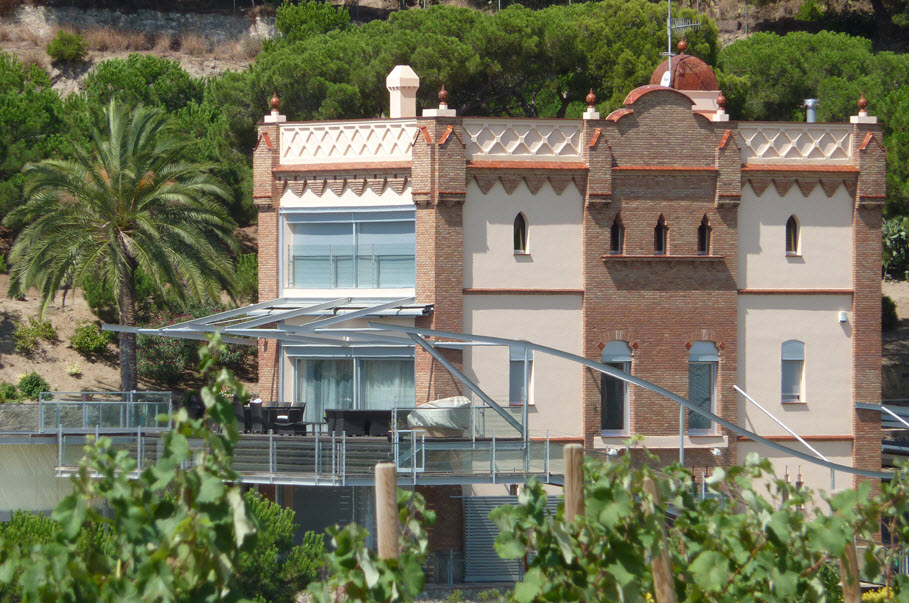
AA family Aa vineyard 2 AA vineyard

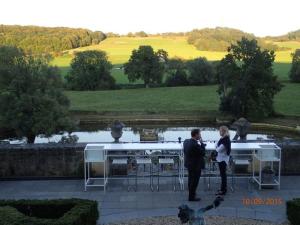
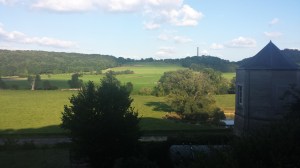
Alta Alella is a organic (natural) winery located in the 4000 Hectare Natural park of Serralada de Marina (of which they use around 60Ha). The AA estate is working mostly according the micro vinification technique. This basically means they use a technique where the wine is fermented in small vats. Micro vinification allows a winemaker to express the most natural ‘unadulterated’ characteristics of a single territory. So it doesn’t get more natural then this 🙂 Just by the fact I like Bruant a lot and by seeing the above pictures I feel a next wine trip presenting itself 🙂 I also doubt it will take me more than a year 😉

To come back to the Bruant . What I liked about this cava was the purity (0 dosage  – so no added sugars) and refined bubbles that are almost not visible by the eye and very subtle at the taste.  It has the most magnificent inviting aromas of fresh flowers and white fruits which also translates itself in the taste. I’m sure that even if one doesn’t know anything about wine will appreciate this cava (an every man’s friend if you will) . I know that I can obviously say a lot, the only way for you to see if I’m right is by tasting it 😉 but I’m sure it will not disappoint!!

It was also funny finding out that the person importing the AA Privat wines used to be an SAP consultant just like me (even the same modules) 🙂 Maybe I should also change career and leave SAP for what it is??!!

I know if might seems like I’m trying to sell you something, but it’s not (not in this article, nor in all my other articles). I’m just trying to convince you to basically try something new and to be amazed :-). Go for quality and not a quantity product… I also hope next time you are in a shop and you don’t know what bubbles to take that you’ll maybe try a bottle of Premium (Reserva or Gran Reserva) Cava instead of of Champagne or ‘cheap’ bubbles’ made by a company only caring for quantity (although it must be said that not all cheap bubbles are bad, but some are 🙂 ) and that you’ll notice that a product like Cava deserves more respect as a product and don’t see it as just a ‘cheap’ wannabe Champagne.

Where to buy? For my Belgian readers check: http://www.oinosshop.be/

For my foreign readers check: http://www.altaalella.wine/

For all questions regarding Premium cava you contact the cava association
Italian road trip 2016: exploring Dante Alighieri’s legacy

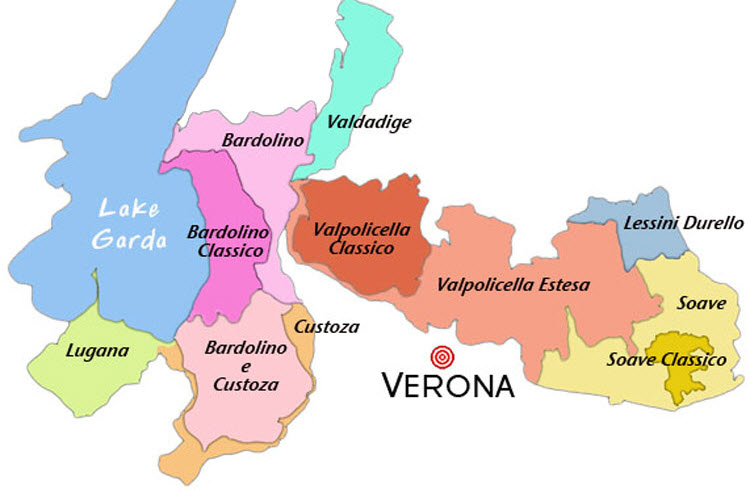
After a good night of rest and a large breakfast we were ready to set sail to one of my favorite wine regions in Italy aka Valpolicella located just outside the city of Verona. First stop Azienda Agricola Masi aka the trigger for me coming on this winetrip. You might have already noticed I have a slight preference for full bodied wines that are still easy to drink. Well this is exactly how I would describe the Masi wines (or maybe even the Valpolicella wines in general). Before I continue talking about the estate I will first tell you a bit more about the Valpolicella region.

Masi Logo

The Valpolicella region is located as I mentioned before just outside of the city of Verona and even more important right next to Garda lake and close to the Adriatic sea. Why do I say “more important”, I say it because the proximity of the lake and sea have a very big impact on the climate (mild continental climate) and therefore also on the winemaking in the region.  There are 3 main grape varieties used to make Valpolicella wines: Corvina, Molinara and Rondinella. Some vineyards might add other variaties like Corvinone, Rossignola, Negrara, Barbera and even Sangiovese (that you mostly known from Tuscan Wines), but it will always be in combo with (at least 1 )the 3 mentioned before. The most well known wine of the region is the Amarone which is considered one of the 3 great Italian wines next to Barolo and Brunello di Montalcino.

Valpolicella region Valpolicella by amaronetours

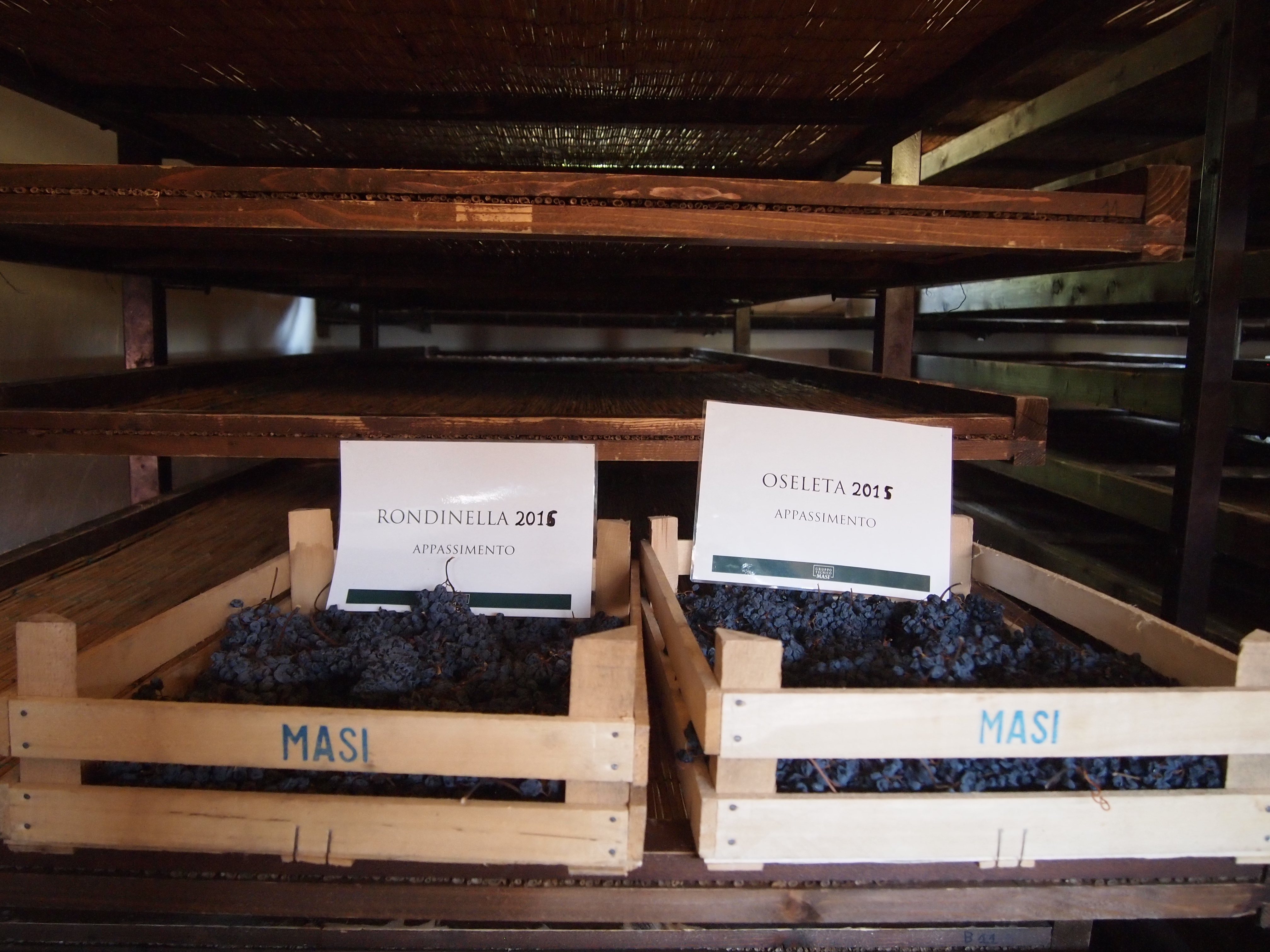
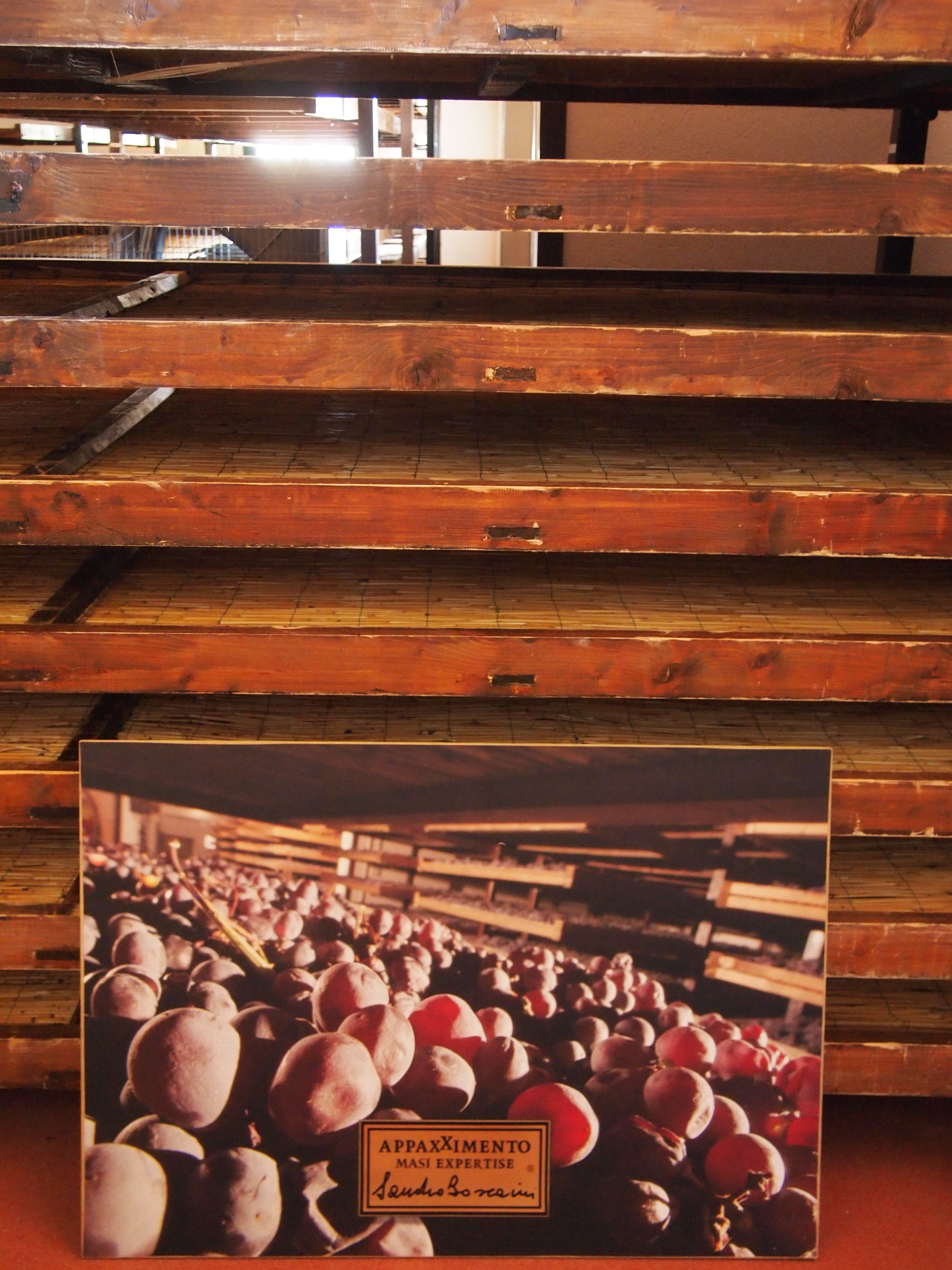
What I find funny is that Amarone is yet another example like lots of other great things (Tarte Tatin, etc…) in this world Amarone was also discovered by mistake. The story goes that many many years ago people in the Valpolicella region had left Recioto wine (sweet dessert wine) untouched for a longer period of time which resulted in a longer fermentation and in new wine that we know today as Amarone 🙂 Obviously the Amarone we drink now is much more refined as the ones from back then, but the basic principales for making the Amarone stayed the same… One thing you can say is that the winemakers of the Amarone are patient people as the process for making it takes a lot of time… (an important keyword in good winemaking – time/patience) but they get rewarded with a very unique and wonderful product. To make the Amarone, the grapes are put on wooden shelves or bins (in case of Masi after lots of studies and tests they have discovered that for their way of working bamboo bins seemed best)  and are left to dry naturally for x months (I think the minimum period was 3 months) which will make that the ‘juices’ and ‘flavors’ left in the grapes are much stronger/intense.  In the next step they will gently press the grapes to get the best juices out. If they wouldn’t do it gently the bitter flavor of the stalks would come into the wine. Finally the ‘grape juice’ is put to wrest mostly in Veronese barrels (that are bigger then the regular/ traditional barrique/barrel and specific for the Valpolicella region) to become the perfect Amarone. (FYI, this is it explained in a few words, otherwise my blogposts would become a book 🙂 )

Passimento 1 Passimento 2 Passimento 3 Aging 1

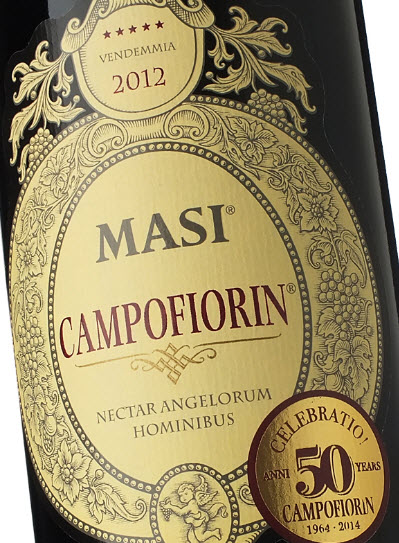
As they only pressed the grapes gently, there is still juice left in the grapes… this is how the Ripasso/Ripassa gets born. They basically press the left over juice out of the grapes and make another wine out of it… you can call it a ‘Amarone light’ :-).  This is where the Masi story starts to detaching itself from the other wineries (around 1964) after years also making Ripasso wine, to Masi it somehow felt like when you use a teabag for a second cup of tea… it will be good, but it could be better… + they also noticed that many wineries in the area with the aim of quantity instead of quality and therefor a more “negative” vibe came over the Ripasso (Although it must be said there obviously also some great Ripasso/a wines circling around). This made them think that they could lift the Ripasso up by adding ‘fresh’ grape juice (that had lesser time on the wooden shelves ) and this is how the Campofiorin or THE showpiece (after the Amarone) of Masi Agricola was born.

Campofiorin

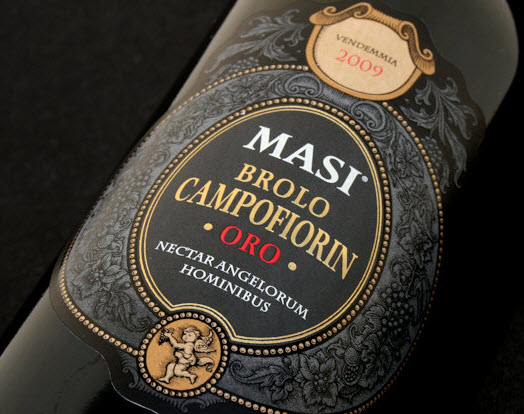
What I like about the Campofiorin (and about the better Ripasso’s) is (I’ll be honest) first of all the price/quality ratio… you get a wonderful full bodied wine for a affordable price + a wine that most people will like for sure… whereas the Amarone does require a bigger budget and is a more complex wine . Don’t get me wrong I love Amarone and I do have some great bottles in my personal collection, but let’s say I won’t open it for everybody 🙂 (only for people who appreciate a refined product like Amarone). Do also try to taste the Campofiorin Riserva or better the Brolo Campofionin Oro, which is an even a more refined version of the campofiorin.

Brolo

The Masi estate also re-discovered/introduced a grape variety that had almost disappeared entirely out of the Verona area. I’m talking about the Oseleta grape which means ‘little bird’ in the local Veronese dialect. The name actually refers to small grapes that ripen late in the season and are often still hanging after the vine has lost its leaves. Lots of years the grape variaty was seen as non important grape due to it low yields (because of being such a small grape). What the Oseleta does in the wines where it is added, it give it more backbone and creates more tannic structure, minerality and dark berry notes. This is in very big contrast with the other grape kinds in the Valpolicella wines like Corvina that are light, more gentle and have low tannins. FYI they added the Oseleta to the Campofiorin Riserva, the Toar and the Riserva di costasera (Amarone Riserva). In the Private collection of Masi they also have a wine 100% Oseleta grapes, the Osar (which mean ‘to dare’ in dialect). In contrast with the other wines in this case the grapes are not dried, but harvested later… it has a beautiful perfume of black plum, berries and cherry, with a subtle spiciness 🙂

Oseleta

The re-discovery of this grape variety might been luck, but at the other side it’s not! Masi is a company that with lots of respect for the past also always looks forward and wants to innovate. Masi created half way the 1980’s a specific department for it called the ‘Masi Technical Group’. The Technical group is basically a team of experts dedicated to quality control, research, technical analysis and experimentation of everything that has to do with wine to in the end create new/better wines (also think/work more ecological). This also the reason of Masi’s high quality products (going from the ‘intro’ wine to their Amarone riserva’s). It has also come this far that the Masi Technical group now also does consultancy to help out other wineries to improve their wine making process.

Gruppo Technico

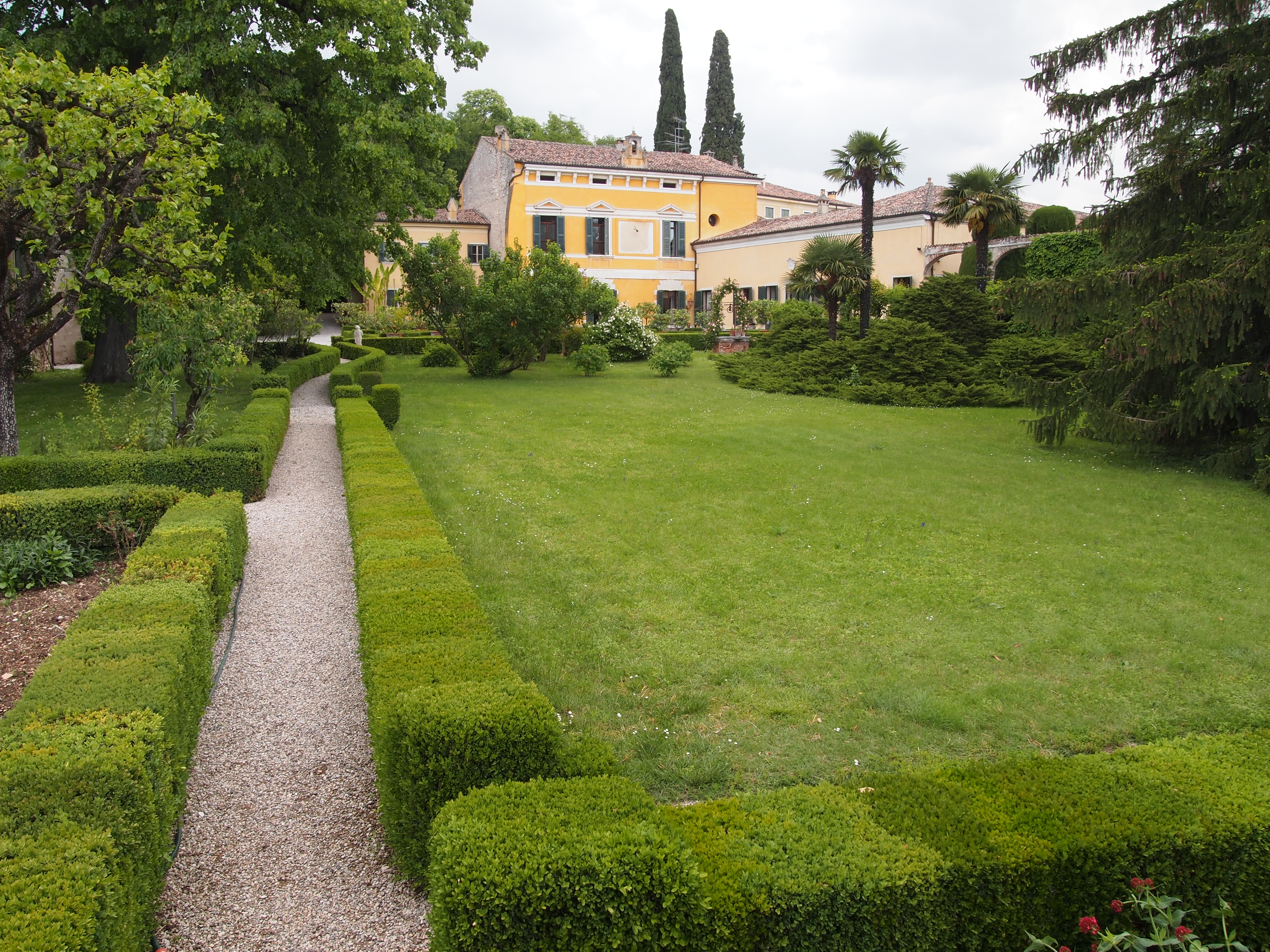
You might have noticed that there are quite a few names linked to the Masi wine estate, the most famous will the name Serego Alighieri. Unlike other big colleague wine estates, Masi doesn’t buy other wineries, they collaborate with other wineries. Mostly in other wine regions like cantine Conti Bossi in Trento (Spumante)…with as exception the neighboring estate Serego Alighieri. Most of the wineries are smaller wineries of which Masi believes that have great potential and are a very good added value. Most of those wineries want to grow and innovate, but don’t always have the possibilities to make this happen. What Masi offers them is the use of the Technical Group which basically means the Masi expertise. In return Masi gets a new high quality wine assortment in their gamma (FYI, the wineries keep their name on all bottles, there is only a small mention of Masi). In the case of the Serego Alighieri might seem strange as the estate is literally right next to Masi. This collaboration started over a talk between Sandro Bosciani (CEO of Masi) and the Serego Alighieri family who’s estate  (still family owned) already exists since the 13th century and was the residence of the one and only Dante Alighieri ( the most famous Italian poet). As you can imagine knowing the estate is already in this area since the 13th century, is has some of the best and most unique piece of land with coincidentally vines on them :-). These vines or the wine made from its grapes was only for own/personal use and not for sale. To make a long story short, Masi was interested in the great vineyard locations and Serego Alighieri to make their wines better and maybe even start selling them… the rest of the collaboration is history. I do recommend you if you ever have the chance to visit the winery and castle of Serego Alighieri… like a walk through history.

Serego Alighieri Serego Alighieri 2 Serego Alighieri 3 Serego Alighieri 4 Serego Alighieri 5 The Serego Alighieri Villa

A very interesting project of Masi is their winemaking project in the Argentina (Mendoza). They describe it as “Argentinean Nature, Venetian Style” 🙂 After research Masi had discovered that the Mendoza region (Tupungato to be more precise) has the perfect climatic and conditions  to do the “appassimento” technique used to make the Amarone. I can say for a fact that it lead to some great wines like the Passo Doble as intro wine(although Intro wine is maybe a understatement) and the Corbec as the Argentinian Amarone if you will. The Corbec (as the name might reveal) is a mix of the Corvina (70%)and Malbec (30%) grapes or as I would call it a wonderful marriage. Bursting with aromas of raspberry  and roasted cherries …  a deep and mysterious wine are the first that come to mind. You do feel the wonderful balance of structure and body, with well rounded tannins but smooth like butter. Definitely one of my favorite Masi project wines :-).

Corbec

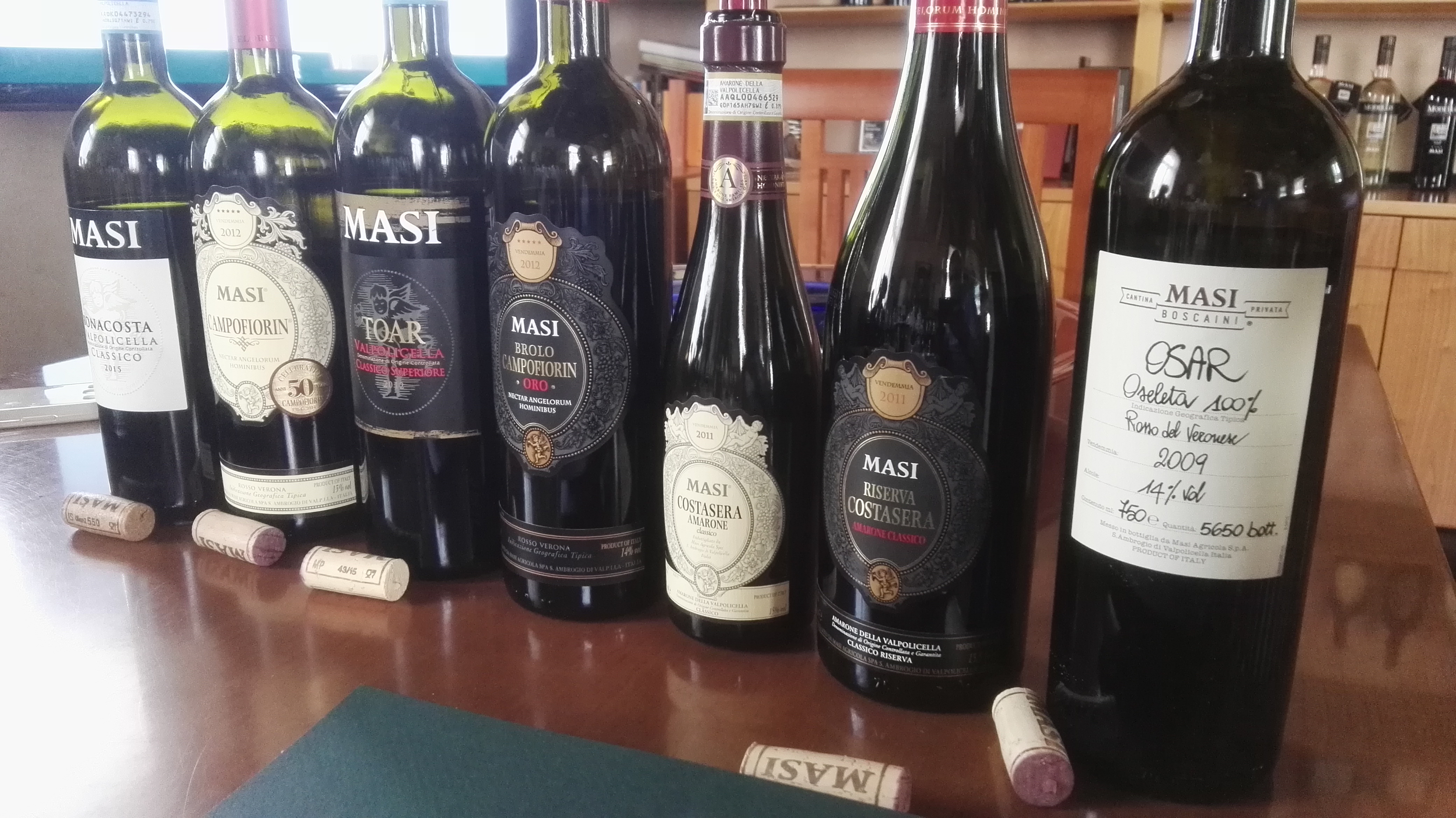
To get a clear view on how the Masi wines are all in the same line (crescendo that is) we had a wine tasting of their wines starting with their “base” wine the Bonacosta that has a lot of character for intro wine. The reason they wanted me to taste the whole range is because you don’t always get the chance to do this… We continued with my beloved Campofiorin wines that are the best of two worlds if you ask me (I’m also pretty sure Carlos agreed)… we ended with what is sometimes called ‘vino di meditazione’ (meditation wine) a wine that requires silence because it is just that good aka Amarone Costasera and Amarone Riserva

Masi Tasting Masi Tasting 2

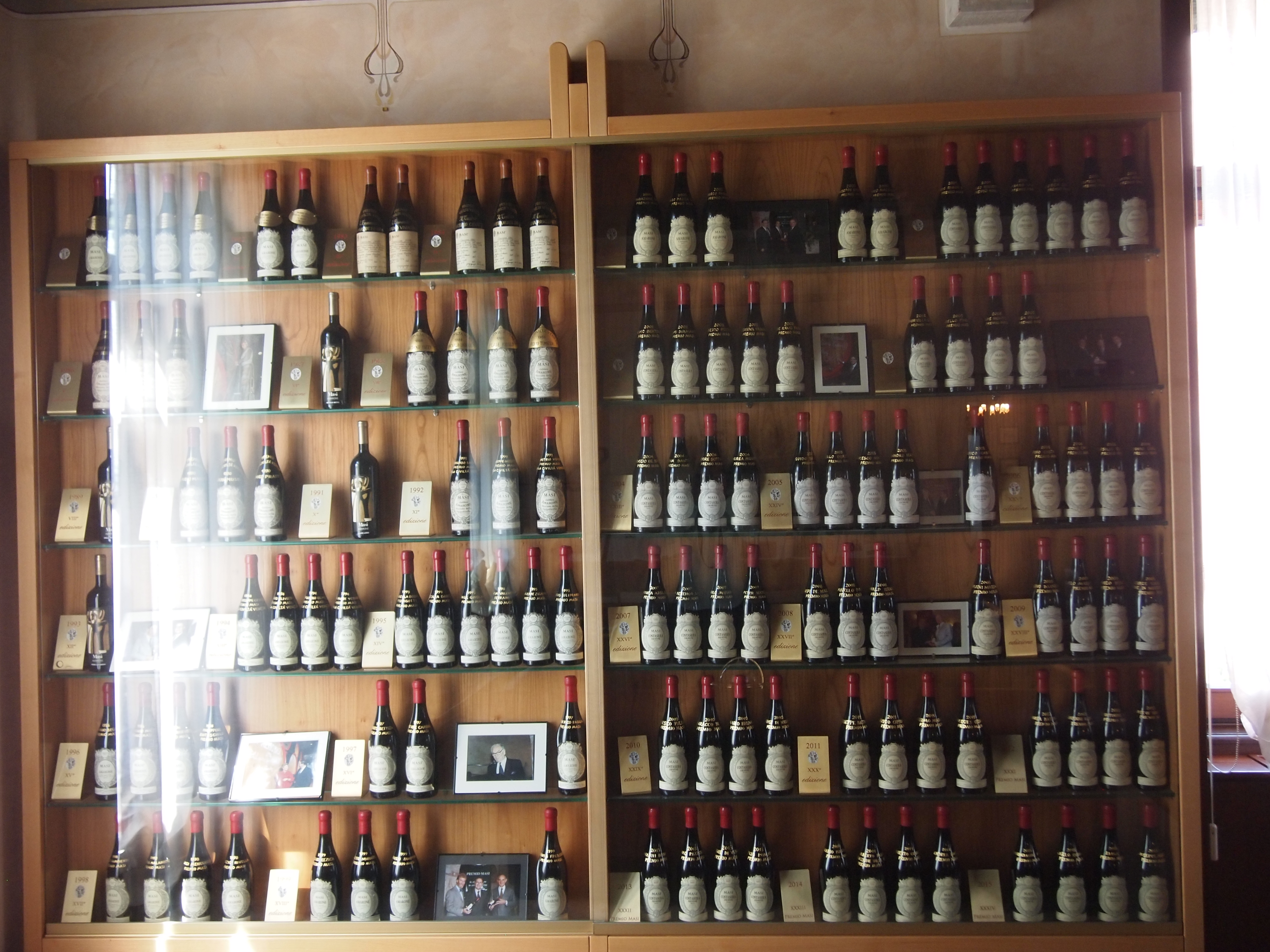
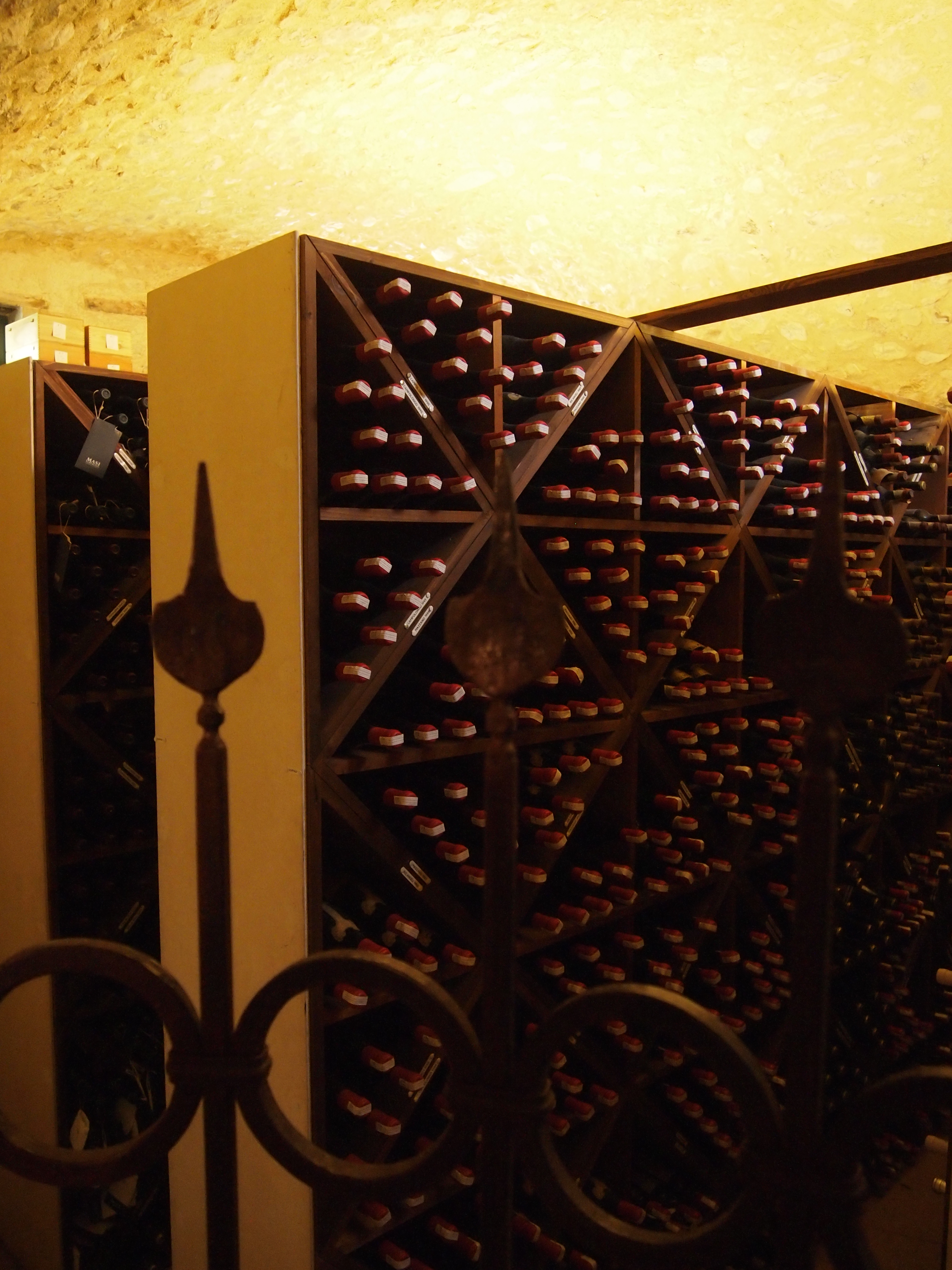
I could keep talking about Masi (or about their collaborations) as there is still so much to tell, but one has to stop somewhere. Also this way you have a reason to visit the vineyard 🙂 (to find out more) I know it also seems like I’m always very positive when I write my articles, but I only write about things I like… I’m also all about the people behind a winery (or restaurants, etc…). When there is a good connection between me and the people (especially after visiting the vineyard) and if they have a wonderful product I am the biggest ambassador they can imagine :-)…and I guess by the size of this article you can say I’m a big Masi fan 🙂

MASI 7 MASI 6 MASI 5 MASI 4  MASI 2 MASI 1

I know I might be repeating myself, but what I like about the Masi wines that no matter if you drink younger or very old vintages… the red wire in all the wines is the freshness of full bodied wine! Once again we couldn’t resist ourselves from taking some souvenirs for our wives 😉 😉 or was it just 1 for them 10 for us 🙂 as their biggest will for sure be having us back by their side… and when we’re happy they’re happy right?

In case you would want more information about Masi wines you can check their website. For my Belgian readers you can contact Young Charly.

Up to the next stop in my Italian winetrip…Guiseppe Quintarelli

Italian roadtrip 2016: 1st stop and already beyond the clouds

It had already been almost a year since my last wine trip, so it was about time to do another one. My idea to do one again actually came during a meal with Raffaele Bosciani from Masi who said he hoped I would pass by one day… let’s call it the trigger 🙂 The only problem I still had was to convince or better find the perfect time to tell my wife I was going on a wine trip… AND Then it happened, as if the gods were favorable to me my wife told me she was thinking of going on a weekend with her sister 🙂 🙂 In the time she was still thinking I had already planned 2 trips 🙂 (one wine trip with by buddy Carlos and one with my daughter to visit my grandparents in Italy). Deciding which vineyards to visit was quite difficult as I wanted to visit lots of them, but I must say I had my mind made up pretty quickly. This wine trip brought us to 3 different Italian regions, we started in Alto Adige with a visit to the Elena Walch vineyard. We continued our trip in Veneto with visiting Masi and Guiseppe Quintarelli (and surprise stops at Farina and Bulgioni). To finally end our trip on what we called white wine Saturday at Ca dei Frati in Lombardy and Sandro de Bruno in Veneto again (Soave).

Route trip

What I love about travelling to Italy, is the fact that no matter where you go or how big the vineyard is they still receive you as you are part of the family.. I guess that’s the southern hospitality…

On the road

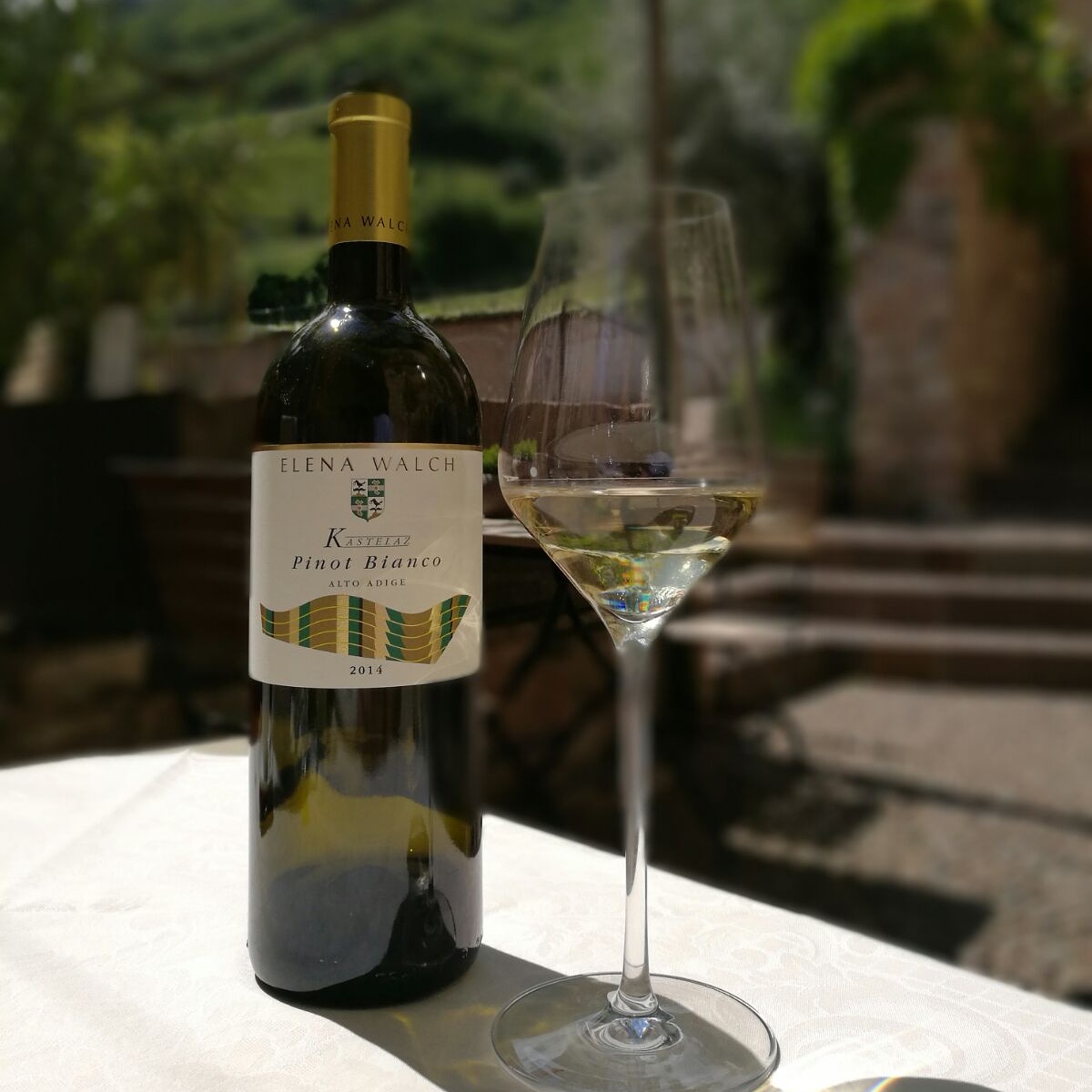
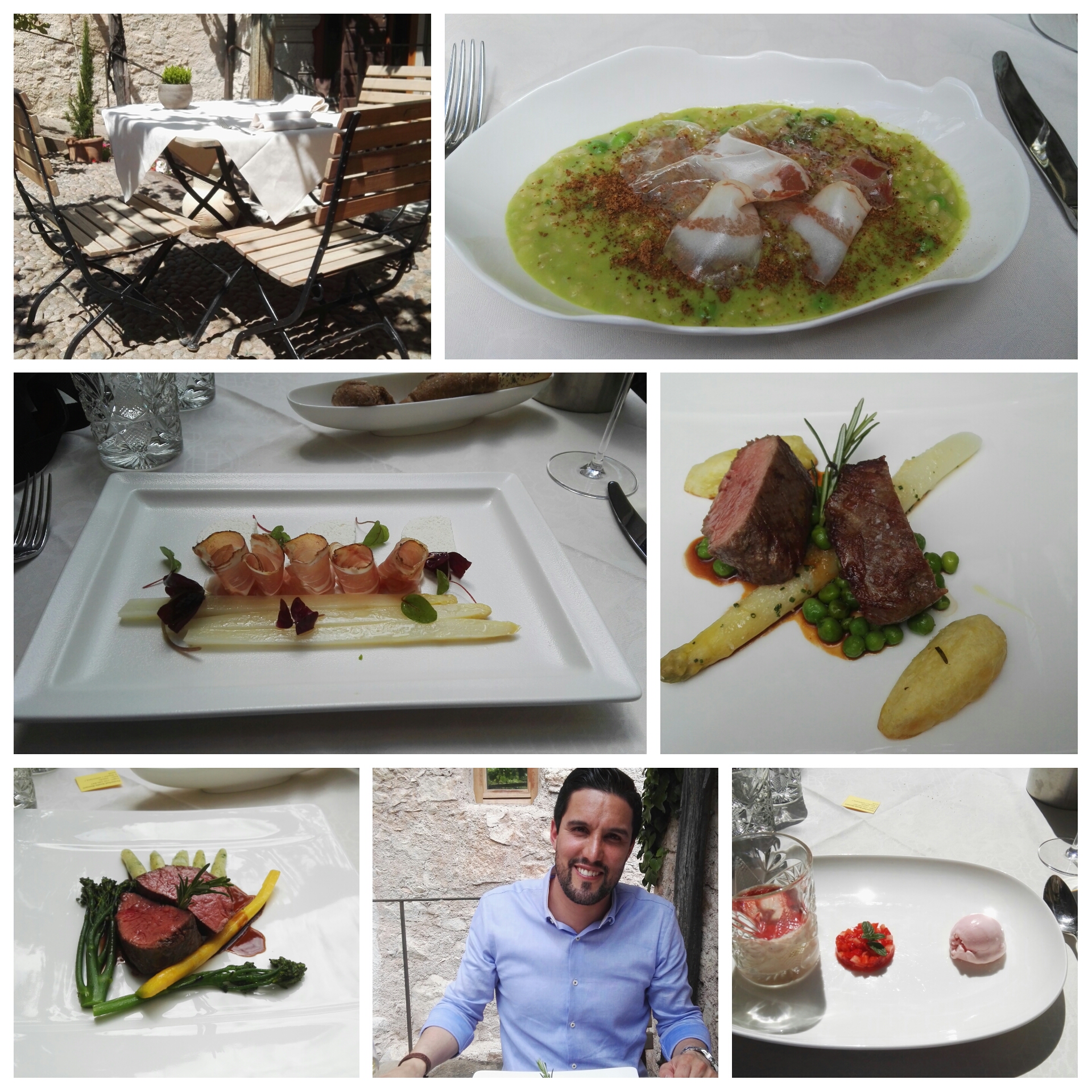
After a looooong drive we finally arrived in a little town of Termeno that is a few kilometers from Bolzano and from the Austrian border. What you notice when you are in this region is the Austrian influence in the housing, but also the fact that I think around 80% of the people speak German as first language (but all of them also speak very good Italian). We also couldn’t have imagined a better way to start our trip/holiday then in Termeno, we started it with a wonderful lunch at  Ansitz Romani outside in the open air with a nice bottle of Pinot Bianco from the Elena Walch estate… to already get familiar with the vineyard we were about to visit after the lunch  😉 FYI believe it or not, but the picture of the wine was taken with a smart phone camera (Huawei P9 –  with Leica lens)

Pinot Bianco Elena Walch

Ansitz Romani

Normally it was Julia Walch who would be showing us around, but unfortunately she had to travel abroad… but she had found good substitutes, her mother aka Elena Walch herself 🙂 and Lena a lovely young lady (oenology student) who was doing a internship at the vineyard and who I can say was very passionate about wines.

Elena Walch and daughters

Azienda vinicola Elena Walch was only founded in 1985 but the Walch Family already makes wine under the the name Wilhelm Walch that make ‘table wine’( or everyday wine or however you prefer calling it) since 1869 but it was not until Elena’s husband took over the family estate that he together with his wife Elena (who until then was architect) decided to start making next to the Wilhelm range of wines also wines of a higher quality or better ‘Cru’ wines from the grapes of their best parcels which they would make under the name Elena Walch. Eventhough Elena stopped working as an architect in 1985  when they founded the Elena Walch estate, you can clearly see that once an architect – always an architect 🙂 you see the influence of an architect in the newest part of the estate (the buildings that is) . You just know these are details only an architect would think of (I know Elena didn’t design it herself, but I’m sure she influenced it) like special lightning, the shapes of everything, etc…

It also seems like the next generation is getting ready to take over the torch as both daughters of Elena Walch recently joined the family estate and work in the Marketing department and took over most of the travelling from their parents.  When I asked Elena if it was difficult to work together with her daughters she said: “It is not difficult, but you do notice the difference with a regular employee. When you tell a regular employee something he’ll just do it. My daughters on the other hand 🙂 :-)”  But was very happy they were around and helping and continuing the business.

Elena Walche Estate 1 Elena Walche Estate2 Elena Walche Estate3 Elena Walche Estate4 Elena Walche Estate5 Elena Walche Estate6

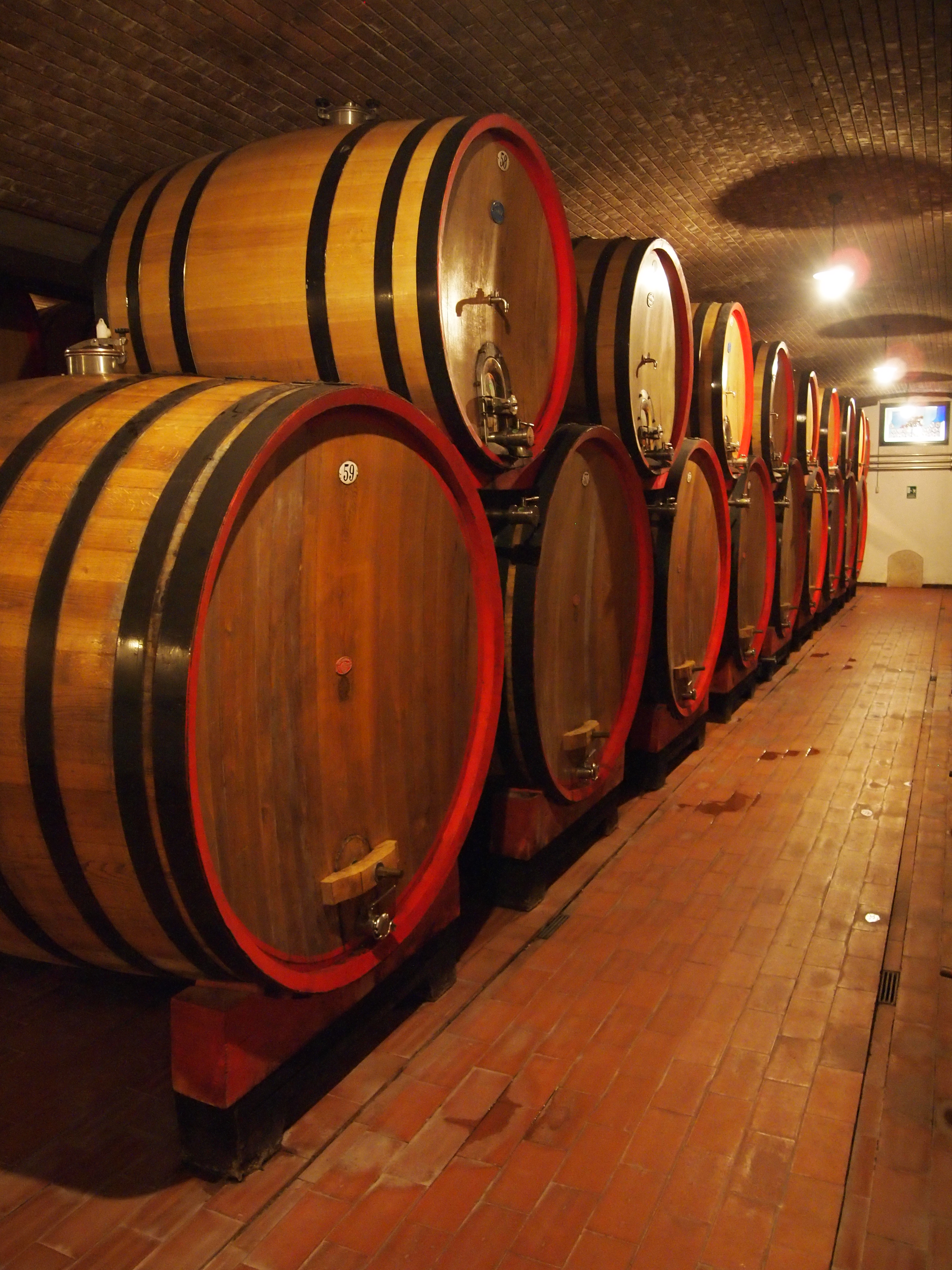
The vineyard does use the most modern techniques and machinery , but they do still try to respect tradition. This you mainly see in the older part of the vineyard. What I personally love is the big decorated barrels… something they only back in the day as nowadays making the decorating  would cost too much

Elena Walche Estate 7  Elena Walche Estate 9 Elena Walche Estate 10 Elena Walche Estate 11 Elena Walche Estate 13

The philosophy of the estate is dedicated to its ‘terroir’. They have the idea that wines must be the expression of the grounds, climate and even of the cultivation in the vineyard that like mentioned gets done according to the most modern techniques and to principles of sustainability. The two main territories (where the grapes grow)  of the Elena Walch estate are Castel Ringberg (the ‘regular’ top wines. In France they would call it premier cru) and Kastelaz (the absolute top or Grand Cru) that today have a surface of almost 55 Ha. Where other estates in the region might mix grapes from multiple territories, at Elena Walch they handle the grapes separate (something similar like they do at the Bollinger Champagne estate).

Castel Ringberg that was once owned by the Hapsburg dynasty is located on mostly steep chalky soil, but with some sandy and loamy parts (basically a quit unique combination as mostly it is one of the 3). Because of the diversity of soil  it allows the estates to be very flexible and grow a very wide range of grape variaties: Pinot Grigio, Chardonnay, Sauvignon, Riesling, Cabernet Sauvignon, Lagrein, Schiava. Again something very unique. I was really surprised about the amount of varieties as I thought in the mountains (even-though the Elena Walch vineyards are only up to 400m altitude above sea level) were very difficult and only a few grape varieties were strong enough to grow here… but that’s why I like to visit vineyards as you always learn news things you don’t always learn in books 😉

Castel Ringberg

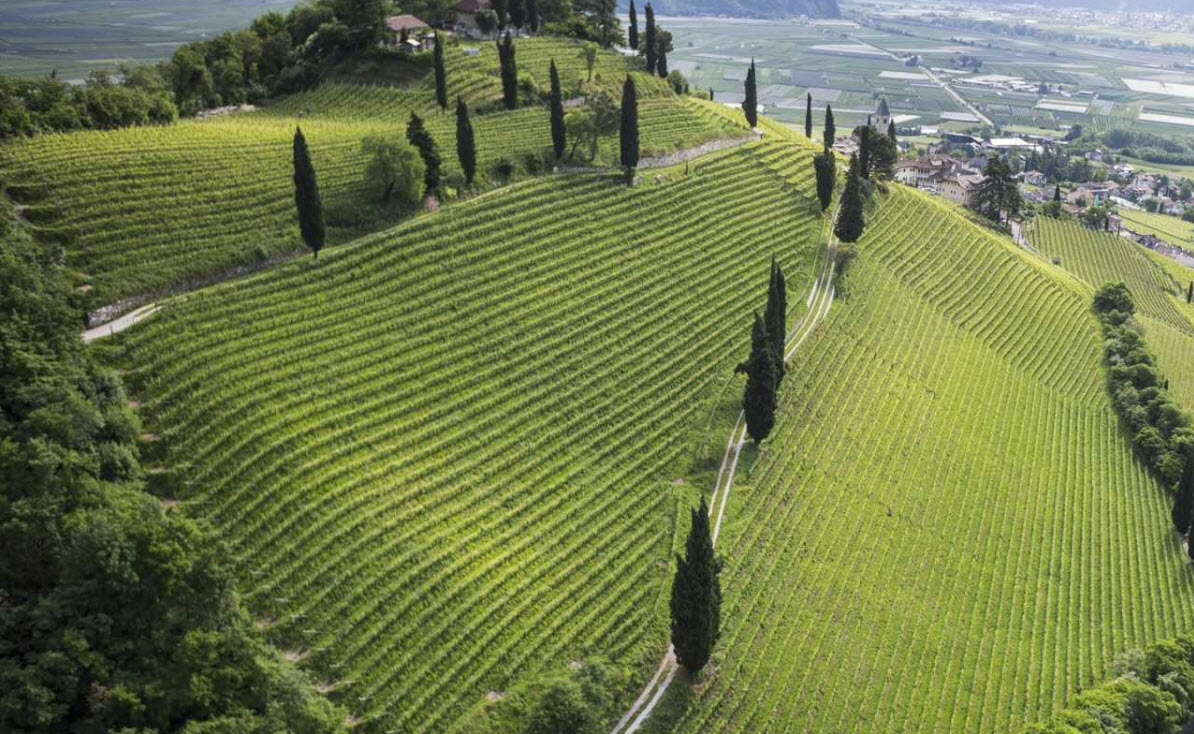
What makes Kastelaz more special for Elena Walch or maybe even for the whole region is the southern location of it that creates micro-climatic conditions. Most other pieces of land in Alto Adige follow the valley and therefore get less sunshine. In difference with Ringberg, at Kastelaz there are only 3 grape varieties grown Gewürztraminer, Merlot and Pinot Bianco. This is due first of all because the soil here is chalk with raw rock like granite which isn’t the ideal soil for grapes, only a few can survive in these conditions

Kastelaz

It is of course all nice to know that they separate all of this, but how does it reflect in the glass.  Well we obviously didn’t try all the wines they have as that is I believe 31 different wines. From the wines we did try you can actually draw a line or find a red wire in all the wines (and it seems that most guides like Robert Parker, Gambero Rosso and Wine spectator agree on this when I read their comments about the wines they tasted). The Elena Walch wines are full bodied yet very elegant with a harmonious acidity where needed and a long length/finish (that I personally like a lot) and on top of all that every wine (because of its grape variety and location where it came from) adds that own specific mark on the identity.  Every taster we were served asked for more… I mean even the heavier red wines had that fresh part in them and want you to have more 🙂

Just FYI another piece of modern architecture at the estate is the Bistrot where we tasted the wines… not to speak about the view

Elena Walch Bistrot

One of our favorites (and I do think I speak for myself as for Carlos who joined me during this trip) was the Castel Ringberg Sauvignon with its fresh nose of minerals and green apples that definitely do not disappoint once you taste!! You’d be surprised how often a wine has a wonderful nose, but when you taste it its not what you hoped for… but in this case the taste was everything you’d hoped it to be 🙂 that’s also why we brought a box home :-). I do realize I can buy all those wines here in Belgium or anywhere else in the world for that matter…but you just get caught up in that moment that you just have to have it then and there 🙂 🙂 (a feeling we had quit a few times during this trip 🙂

Sauvignon

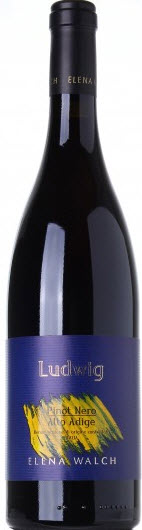
Another wine that got our immediate attention was the Pinot Nero ‘Ludwig’ Aged for 14 months in half new oak and half old oak, its power is discreetly brought to the surface by subtle tannins and lively acidity. Perfumed, complex, elegant, it is drinkable now, but I guess a bit of aging wouldn’t hurt… so we’ll have to try not to touch those bottles we brought back home 😦

Pinot Nero Ludwig

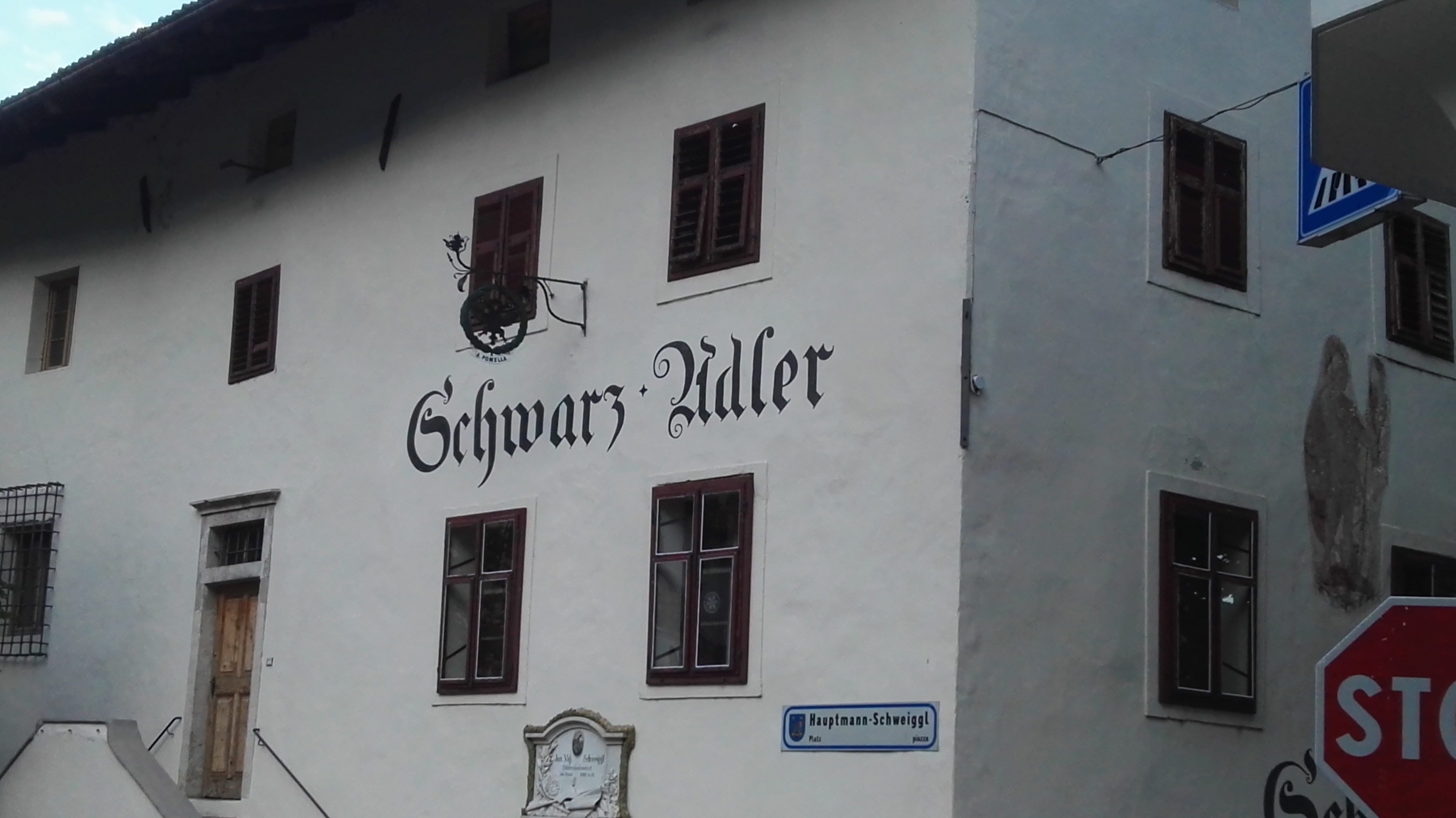
I can say for a fact that we couldn’t have imagined a better first day! A great lunch (with great wine), being around lovely beautiful ladies a whole afternoon (I don’t remember seeing to many men working at Elena Walch‘s estate) and finishing the day with a good piece of meat and some great red wine at the Schwarz Adler 🙂 What more do we need?? We also slept like babies as it had been a very very long day.

dav

Next stop VERONA!!!

In case you would want more information on Elena Walch wines or where to buy them in Belgium you can contact Young Charly. For the rest of the world you can check the Elena Walch website or contact the Elena Walch estate directly

Sommelier themed lunch: Italy vs. USA

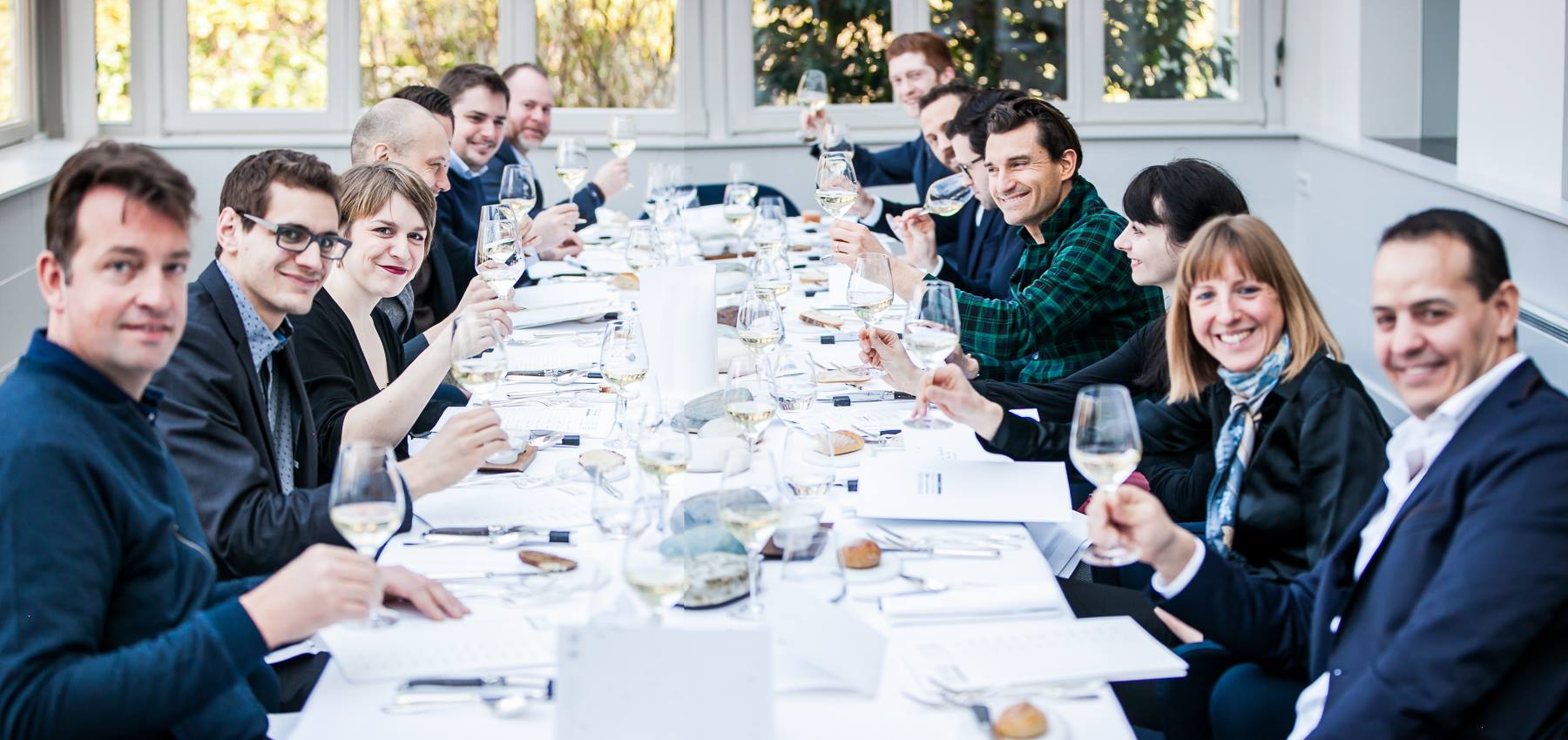
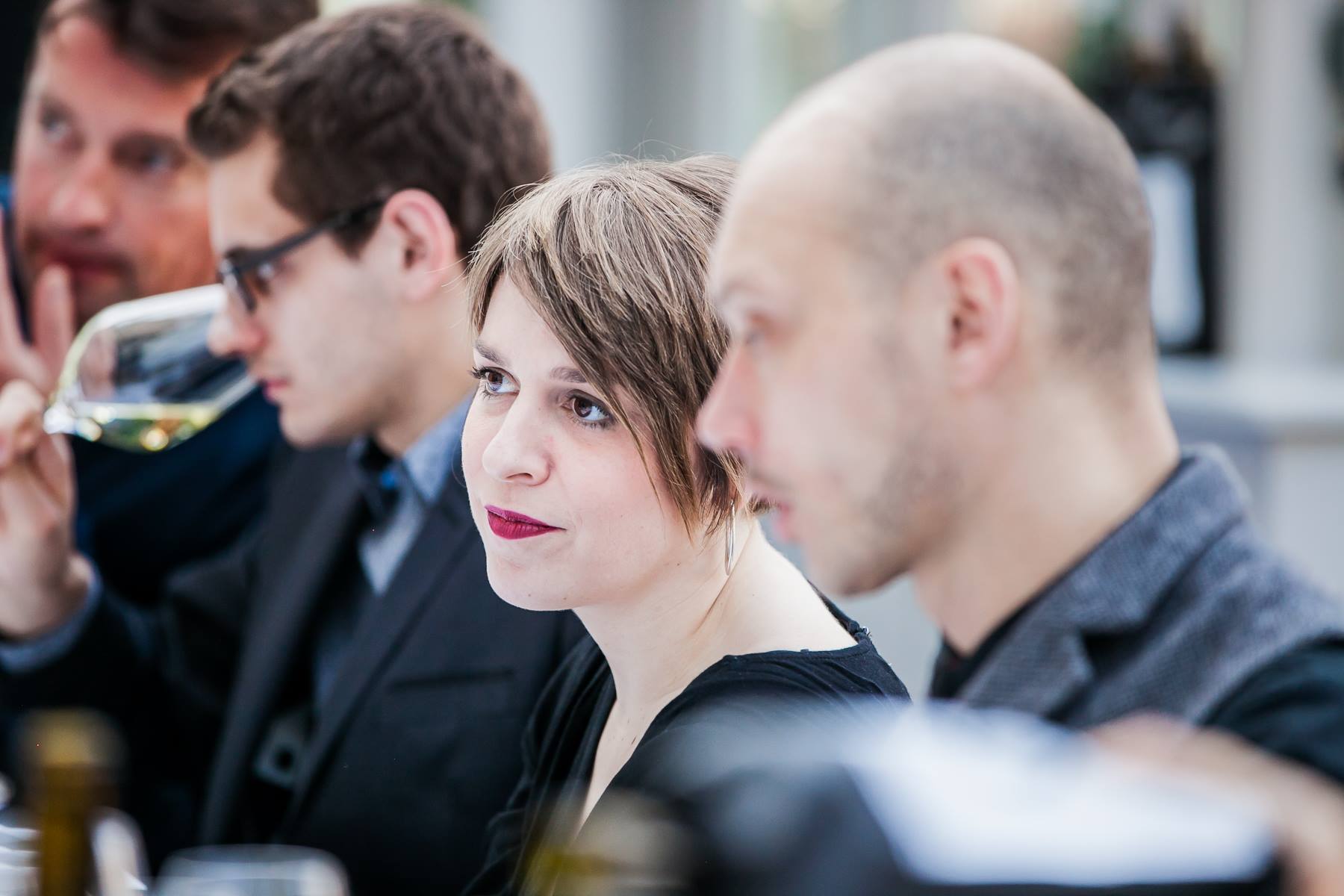
To yearly tradition I was present at the Zonin sommelier themed lunch. This lunch is basically the Zonin wine estate bringing together Top sommeliers for a blind wine tasting to talk about the wines served during a lunch in a great restaurant. An event they do in lots of countries all over the world.  I can hear you think that this seems like a way to promote Zonin wines, which in some way is correct, but in last editions they also served non-Zonin wines. What I maybe should have also mentioned is that all sommeliers  write down their thoughts on every wine, give it a score and as it is a blind tasting guess which wine it is and its vintage. Afterwards they collect all the answers and see how they would be able to improve their wines. So you could see it as a Marketing strategy, but I rather see it as a case study to improve your products! That some wines getting served are being liked and turn up on the sommeliers wine list is a plus and a compliment to the winemakers or better a sign that they made very good end product.

The group at table

Cesar Roman discussions 2 discussions 3 discussions 4 discussions Me and Antoine

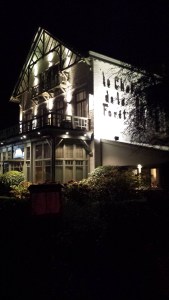
This year’s sommelier themed lunch took place at Le Chalet de la forêt in the green part of Brussels. Last time I was here I enjoyed my meal, but wasn’t blown away, this time however I did get blow away. Not sure what the ‘problem’ was last time, but I became a big fan after this lunch!! This year the lunch theme was to distinguish the Italian from the American Zonin wines. They would serve wines from both countries, made from the same grape, and it was up to us to say which one was from one of their Italian estates and which one from their Virginia estate. I must admit we got surprised in a positive way a couple of times. To support what I said earlier, they don’t even sell their Virginia wines outside the US and UK :-). Anyhow it was a fun afternoon amongst friends as I know most of the sommeliers present and of course Lorenzo Zonin, whose daughter has 10 days difference with mine 🙂 (10 day older if I’m right)

09-03-2016 09-10-50

I do know that I’m not a top sommelier or a sommelier like the other people at the table, but I like good food, good wine and I love talking about it 🙂 AND I have learned a lot over the last few years from the others at the table.

hapjes 2 hapjes

All of this said, after some great finger food it was time to start our lunch with a Gamberoni tartar with cold consommé and Oscietra caviar. A pleasure for the taste buds because of the little spiciness from the tartar and freshness from fish and citrus. I started my lunches in worse ways 🙂 . FYI I did take pictures of my own, but I chose to  use some from the photographer Pascal Hermans as nothing beats pictures of a real photographer!! I’m sure you’ll which ones are mine and which ones aren’t 🙂

1st course

wine 1

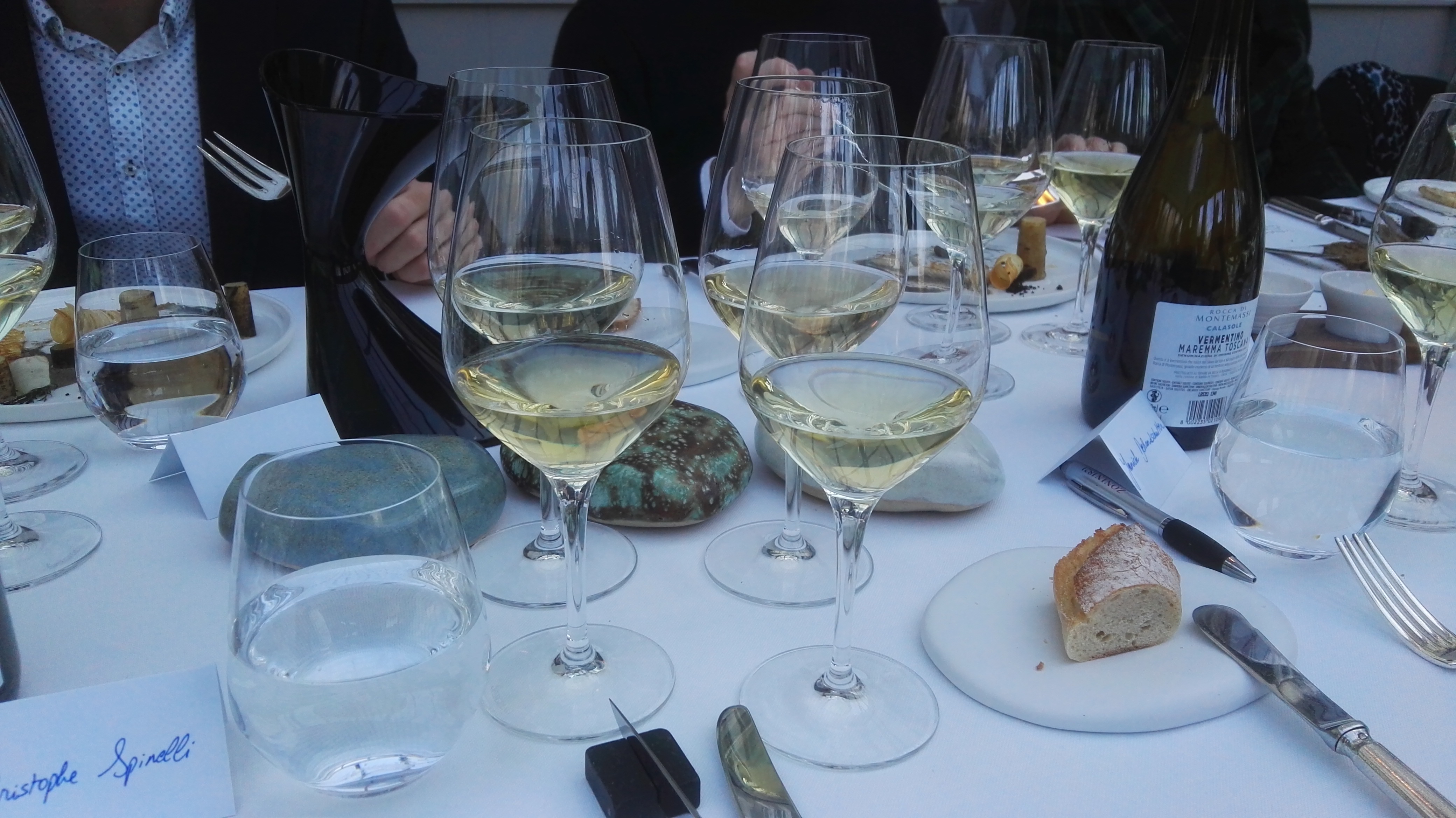
As for the wines being served with this dish I was 98% sure when tasting which one it was, Vermentino, as I thought remembering it from visiting some of the Zonin estates last year. Funny enough I was right about the wines, but the one I thought was Italian was from Virginia and vice versa.  I was confused by the typical ‘vementino’ scent and thought this could only come from Italy, as the other one was more floral, fresh/fruity.  I personally enjoyed or better I wouldn’t mind having a few bottles  from the Vermentino from the Rocca di Montemasi  estate for this summer.

wine with 1st course

If only the blind tasting would continue this way, I would definitely recognize more easily  🙂 But they made it harder 🙂 instead of 2 we got 4 glasses of wines from 2 different blends… oooooh boy 😦 These 4 wines that were the pairing with a signature Chalet dish: Noirmoutier sole “forêt” with parsnip, champagne butter and truffle. A piece of art in a plate that you don’t want to destroy 🙂 but glad I did it as it was njammy.

dav

As for the wines, like mentioned they made it harder by putting 4 glasses instead of 2. Admitted that they helped us a bit letting us know that there was Viognier and Chardonnay. Up to us to decide which ones and also from which country and their vintage 🙂

4 glasses of wine

I didn’t found out which wines were viognier and which chardonnay, but that’s where it stopped for me 🙂

dav

Up to the reds, here again 4 glasses 🙂 Tips here were that there were 2 ‘Bordeaux’ like blends, 1 Sangiovese and 1 Nebbiolo. The Nebbiolo I distinguished pretty fast due to it specific more orange color.. The same for the Sangiovese due to its specific nose (don’t know how to explain it), but also because it is one of my favorite red wines from the Zonin estates aka the Il Solatio . This gave me a little push in the back to find out which ones were the ‘Bordeaux’ like blends.  When they revealed the wines, I must say I was surpised to find out the Nebbiolo was a ‘Barolo’ from Virginia!! I would have sworn it was a blend from Italy. I’m also sure I wasn’t the only one!!

Red wines

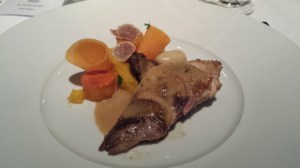
I almost forgot, these wines were served with the half wild duck (not sure which half 🙂 🙂 ) with fruited fennel and gravy (no, not your average meat gravy). I remember once a famous Michelin Star chef telling me what the perfect dish was: ‘when somebody finishes its plate and wants an other one exactly like it, that’s the perfect this’. This duck, was one of those dishes that if I could have, I would have 🙂 The meat melted like butter and the gravy had a some of that American BBQ taste in it that we all love (I think it’s called calories ;-)). No seriously, mind blowing dish!!

Duck

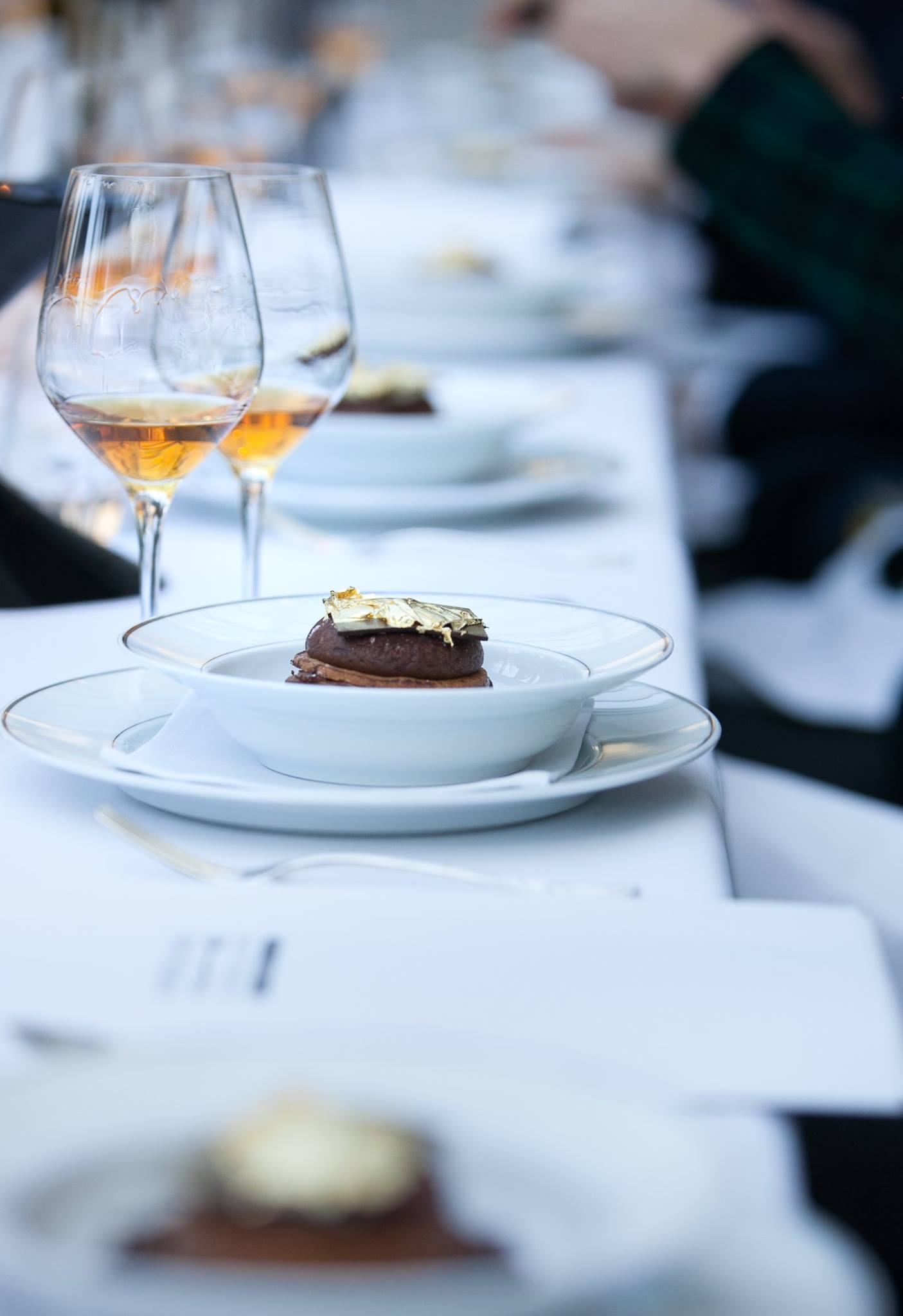
The cherry or frosting on the cake was the dessert that was specially given as they found out Lorenzo was a chocoholic 🙂 and it was of the same level as the previous dish with the big difference being that a second dish of this would kill you 🙂 🙂 and you’d be condemned on having a nap in the restaurant 😉

dessert

And as if the chocolate wasn’t yet a step close enough to heaven, they paired with it what is for me that best vin santo I have ever tasted, the vin santo from Castello d’albolla!! They served just like the other wines that we didn’t know what it was, but you could guess that one out of a thousand.

Cesar and the Vin Santo heaven me in heaven

It was again, like previous times a wonderful lunch!! I’ve learned and enjoyed at the same time. Special thanks to Lorenzo Zonin and the Chalet de la Forêt team (with their to Sommelier Cesar Roman) for making this all happen.

In case you would have more question about Zonin wines, please contact Hasselt Millesime as they can tell you everything about it!!

It’s all about making good choices

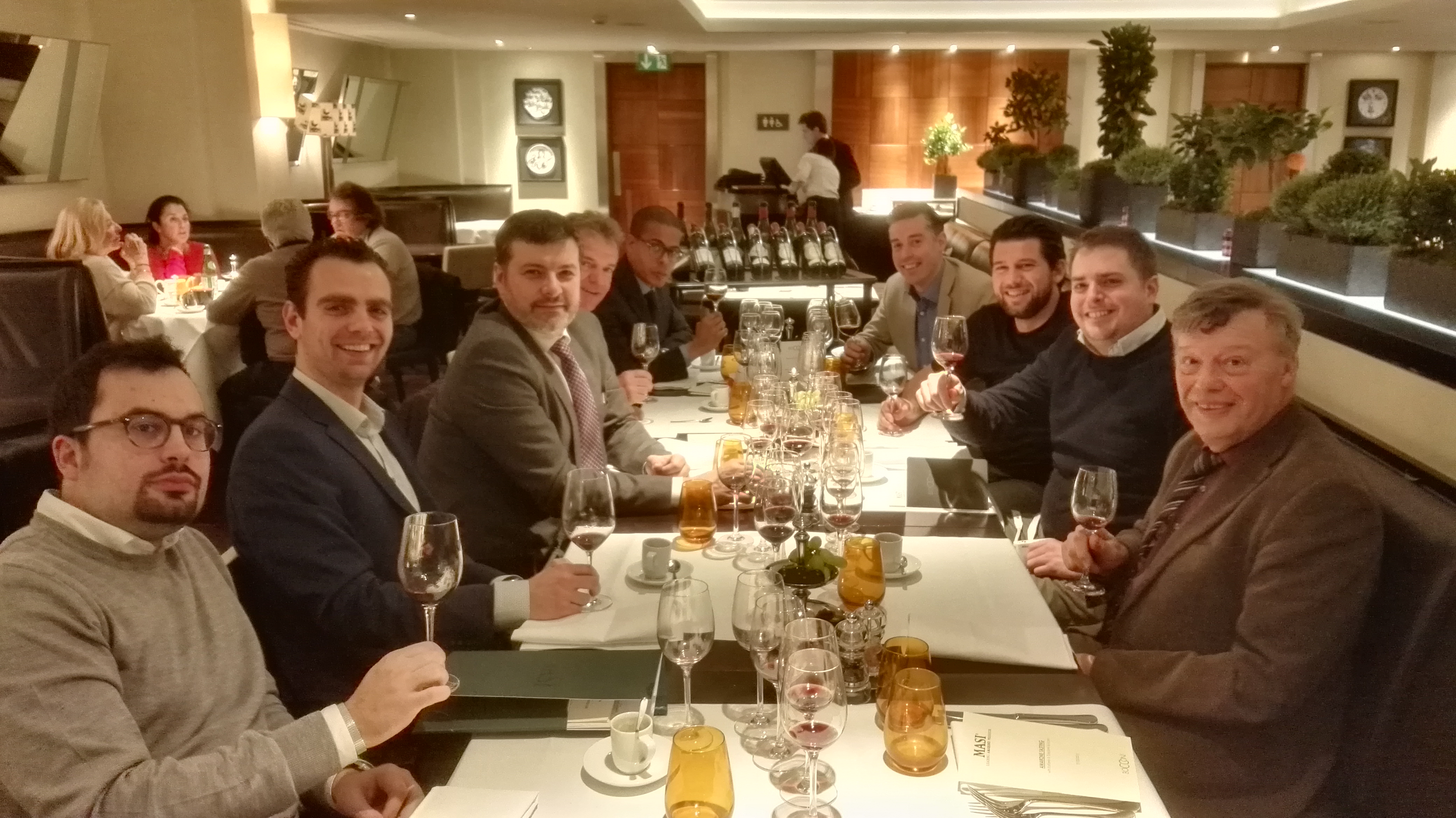
When I used to work for my previous employer I used to have more days off of work… so when I now get invited for a lunch I have to choose wisely, as I also need to days for when my baby girl gets sick 🙂  So I don’t just want to take a day off to afterwards regret I took one. A few days ago I choose well joining the lunch with the winemakers of Masi at the Bocconi restaurant that is located in the Amigo hotel (one of if not THE fanciest hotel in Brussels/Belgium – last time I was here, was to hang with my friends from the P!nk band). It was a good decision as Masi is producer of my favorite wines, the Valpolicella wines with as their top wine the “Amarone” (which has same status as a Barolo or Brunello di montalcino). When arriving at the lunch I was even more convinced I made a good choice of joining as when arriving I found out the lunch was themed “Amarone lunch” 🙂 🙂 so basically “Amarone” served throughout the whole meal with exception of the aperitif and 1 white wine. I can say for a fact that I already had worse drinks during lunch 😉

Masi

It is also always nice when tasting a wine to have the winemakers in front of you! They can tell you anecdotes or stories about how a wine is made or were it found its origin. This time it was not different. During our lunch we were joined by Raffaele & Giacomo Boscaini members of family that owns Masi. Also at our table, 2 Belgian top sommeliers Gianluca di Taranto(The Jane) and Bram van der Aa (previously Pazzo). So enough knowledge around one table for me to learn many new things.

People at the lunch

What I personally like about Amarone or Valpolicella in general, is the notions of cherries in it (this is also why I like drinking Merlot wines because of the red fruit flavors) that give the wine a touch of sweetness and fruitiness. Obviously depending on the producer of the wine the fruitiness, etc… will differ, but it will always be in there 🙂 During this lunch I was fortunate enough to taste 6 Amarone wines from 1988, 1990, 1995 and 3 from 1997 and what surprised me is the freshness of these wines. I mean when you think of a 30 your old wine, you think of the total opposite of fresh and 1 glass would be more than enough…

Wines during our lunch

The 6 Amaroni we tasted:

All 6 were obviously mind blowing, but everybody unanimously agreed that the 1990 Amarone was the favorite of the day! Elegant, velvety wine at the top of it game very soft and round in the mouth… in Belgium we have a saying for how good this wine was “like and angel peeing on your tongue”!! Like I said earlier, not one of these six wines had a disturbing heavy taste you might expect from wines this age, rather round well balanced wines.  Every time I drink a good Amarone (or Valpolicella)  I always remember why I like them so much 🙂 I could also keep talking about how good and wonderful they are, but I just don’t know enough words and I do think you get my point… The plans for another trip to Verona are getting more real than ever before (FYI, this last sentence is for my wife 😉 😉 )

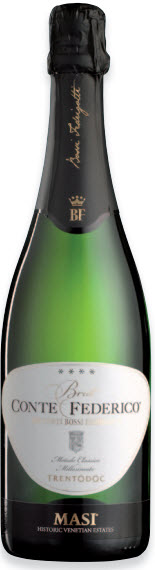
I do also want to say a few words about the 1 sparkling and 1 white wine we had as I personally didn’t know Masi had sparkling wine 🙂 . For the sparkling wine Masi opted instaid of buying land and start growing their own grapes to join their forces with an existing winery making sparkling and white wines. In this case it was the small estate of Bossi Fedrigotti that is located in the Trento region. Masi doesn’t have the ambition to start mass production of sparkling or white wines, but this is rather completing their wine range by adding high quality white and sparkling wines… which to my opinion they certainly achieved with Bossi Fedrigotti as I think they share the same vision as Masi “better less but good, than a lot and not as good”. From the sparkling wine aka Conte Federico for example there are only produced around 10.000 bottles… but if you get hold of a bottle do try it! I’m sure my wife would be a fan of this bubbles, easy to drink, no disturbing bubbles and a bit of fruitiness…

Conte federico

The Bossi Fedrigotti white wine was a very special blend that if they’d tell you, you wouldn’t believe it.  The Vign’asmara (the wine’s name) is a blend of chardonnay with traminer :-). To say it Masi’s own words: “The pronounced perfumes of the Traminer grape, a typical Trentino variety, are combined in an unusual and innovative way with international Chardonnay flavours. Ageing in French oak casks enhances the elegance and the personality of this wine”… I couldn’t say it better myself.

Vign'asmara

You might have noticed that I didn’t talk about the food yet, but during this lunch it were the wines that played the main role! The food was nice, nothing too complicated… Just some good food to accompany the wines. As the wines were strong, you the dishes also had to be of a stronger kind. We started with a Risotto with radicchio and Montasio cheese. This dish was followed by a beef roast with polenta and broccoli. We finished with an apple dessert and mint ice cream. Sorry I must rephrase, we actually finished with a ristretto coffee… one person actually would have preferred drinking a cappuccino, but after hearing (at the table among the Italians) it was not done to have a cappuccino after 14h, he (non Italian) didn’t dare to take one 🙂 🙂

Risotto Beef roast Apple dessert

I had a wonderful lunch and am looking forward to visit the Masi winery!! I could have saved you a lot of reading by just saying in 1 sentence the wine was great 🙂 but you know by now how enthousiastic me gets 🙂 In case you have more questions about Masi wines or want to purchase them in Belgium, please contact Young Charly

Soon more about the Masi Wine estate (after my winery visit 🙂 :-))

Spanish premium style bubbles

When people talk about Cava wine they always feel the need to compare it with Champagne (the same goes for Spumante or Prosecco). They mostly also see Cava (or prosecco or Spumante or any other sparkling wine) as an inferior product compared to Champagne. To my opinion the only things they have in common is the way they get produced and the fact they both have bubbles in them… besides that it are products that have their own style with their own identity and characteristics. That one prefers drinking Champagne over Cava (or another sparkling wine) or vice versa is a matter of taste and preference for a particular style (or that’s what it should be, not just because of the name of a product). This doesn’t mean I don’t like Champagne, I’m just saying there is more than only Champagne 🙂

Cava premium pic by CRC

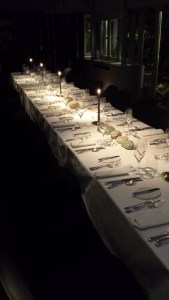
A few weeks ago I joined a dinner hosted by the Spanish Ambassador to get to know the top segment of Spanish bubbles aka Premium Cava’s. The choice of restaurant for this dinner at ‘Le Chalet de la fôret’ didn’t come as an entire surprise knowing the restaurant recently added a new TOP member to their team. After working 4 beautiful years at the legendary restaurant ‘Comme Chez Soi’ my dear friend César Roman decided it was time for something new and joined the 2 Michelin starred restaurant ‘Le Chalet de la fôret’s team. I cannot imagine a better ‘ambassador’ for Spanish wines than César, he’s one very proud Spanish person 🙂 (who can blame him?). César’s aim at ‘Le Chalet de la fôret’ is making their wine cellar the most beautiful/best in Belgium…

20151022_231609

20151022_190649

20151022_191025

20151022_205134

Did you know the following things about Cava? Did you know that yearly there are produced around 241 million bottles on over 33 352 hectares of land ? With 97% of the land being in the Sant Sadurni d’Anoia region, basically the area around Barcelona (to keep it simple). It also seem that Belgians are on the most important cava drinkers. There are 3 kinds of Cava: Cava (around 9 months of aging), Cava Reserva (around 15 months of aging)and Cava Gran Reserva (around 30 months of aging)?  Of the 241 million bottles I mentioned before 30 million are considered as Premium cava which are Special Cuvées, Reserva’s and Gran Reserva’s….

Types of cava

The biggest “problem” during the dinner was keeping up the pass :-). There were about 10 different Cava’s served during our 5 course meal. It might not seem a lot, but you would be surprised…. You probably think I will say I loved every Cava we were served during the dinner, to that I say no! There were some I preferred over others, but this doesn’t mean they weren’t good, they just were not my cup of tea…  (of course not, you were having Cava not tea 😉 OK, bad joke). We started and ended in the same way, with beautiful bubbles 🙂

Just FYI the full list of cava’s we tasted:

My preferred Cava’s of the night were the 2010 Núria Claverol by Sumarroca because of its complex brioche/almond/ smokey aroma’s with citrus accents and even hinds of pear… basically a rich cava with refined buttery touches 🙂 (butter = good). Fun fact, the bottles of the Núria are numbered… Another favorite is the 2012 Maria Del Mar Brut Nature  Gran Reserva by Pere Ventura that has a ‘creamy’ texture with more or less the fruity accents as the previous one, but this time more herbal tones as well. Next in my favorites list would be the 2004 Reserva Particular by Recaredo. I notice  loads of tropical fruits, ‘jammed’ citrus (like a marmalade), fresh bakery accents with sweet spices  with a very fresh and pleasant elegance with a medium long after taste… simply beautiful!! Last but not least the 2013 Subirat Parent Brut Reserva by Vilarnau. The last one is one that I think is the biggest ‘everybody’s friend’ of the whole evening as the other cava’s were more complex and therefor more special… The Vilarnau had a very fruity (lycee, peach) smell, the taste reminded me a bit of a tropical fruit salad 🙂 basically a very pretty and distinctive wine. I was surprised that eventhough of the premium Cava’s came from bigger Bodegas, they were not of lower quality!! SO basically size doesn’t seem to matter in Spain 🙂 😉 (just pointing out the facts)

20151022_215729

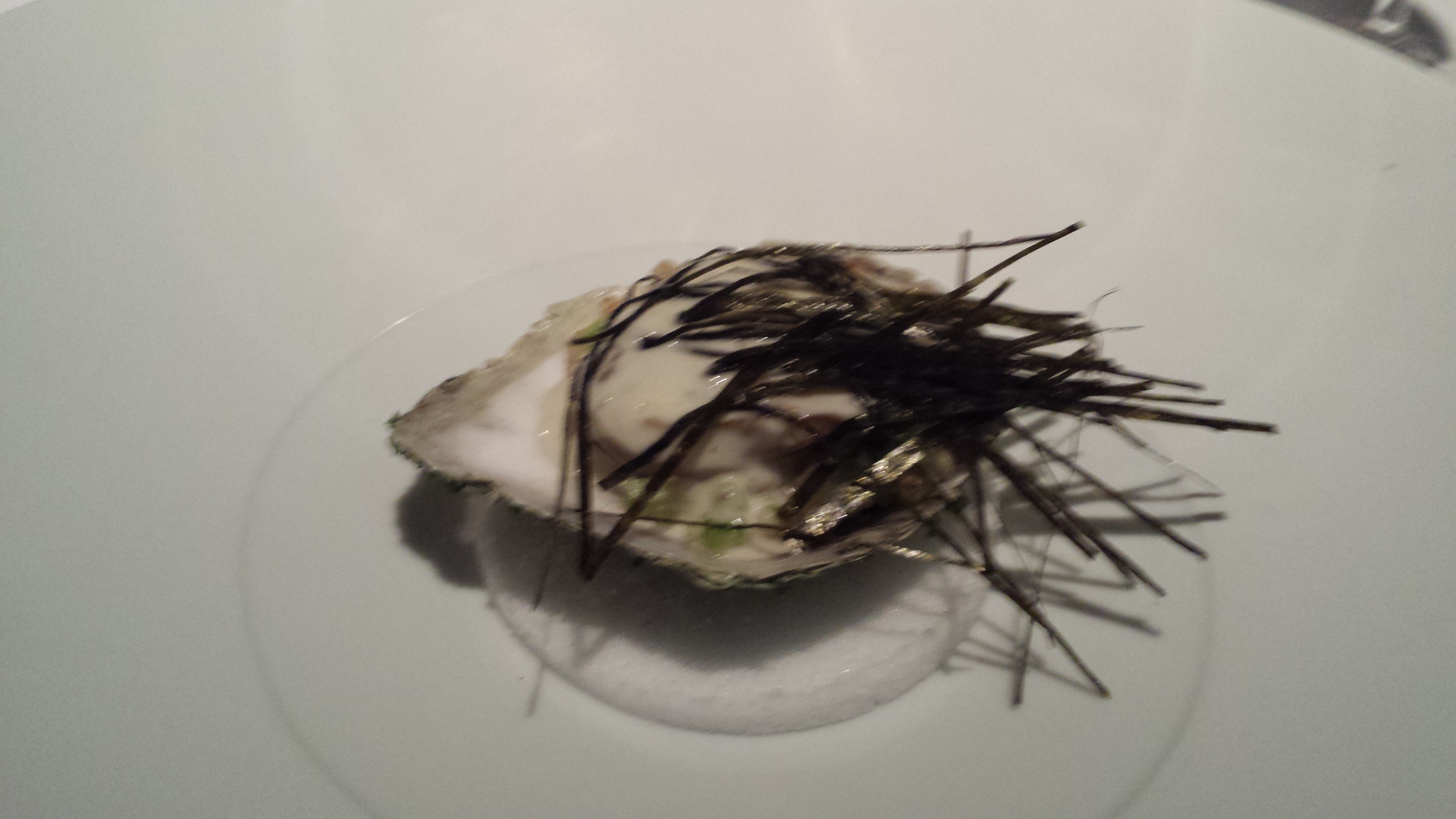
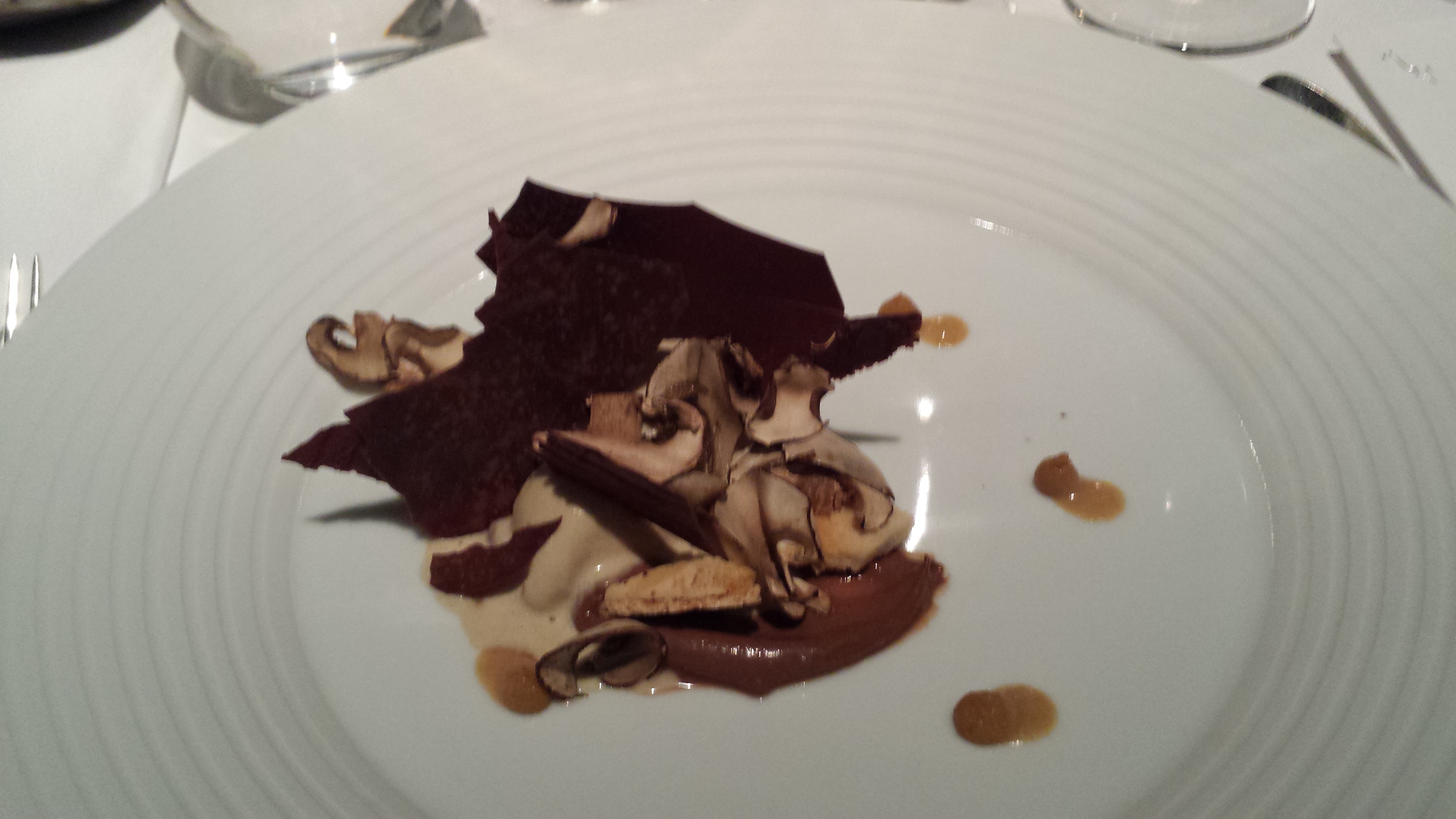
As we ate at a lovely restaurant like Le Chalet de la fôret something must also be said about the food?! In general you can say that ever dish looks like a picture and you can see the advanced way of cooking from the first look you give to the plate…however you do see that the chefs knows his basics as they come back in every dish (you need to know the basics before you can start experimenting). The first dish one the menu was (after some appetizers) a grilled cadoret Oyster from Bretagne, buckwheat  and iodée vinaigrette, followed by a seabass (line caught) salisfy, Jerusalem artichoke and a Xarel-Lo sauce . To continue with pheasant breast with white truffle, foie gras sauce, pumpkin variation and sautéed ceps. Followed by a melted Old Bruges cheese. To finish with a chocolate dessert with mushrooms. Yes mushrooms 🙂 I must admit that this was the strangest dish of all and not really my thing, but i finished it anyhow
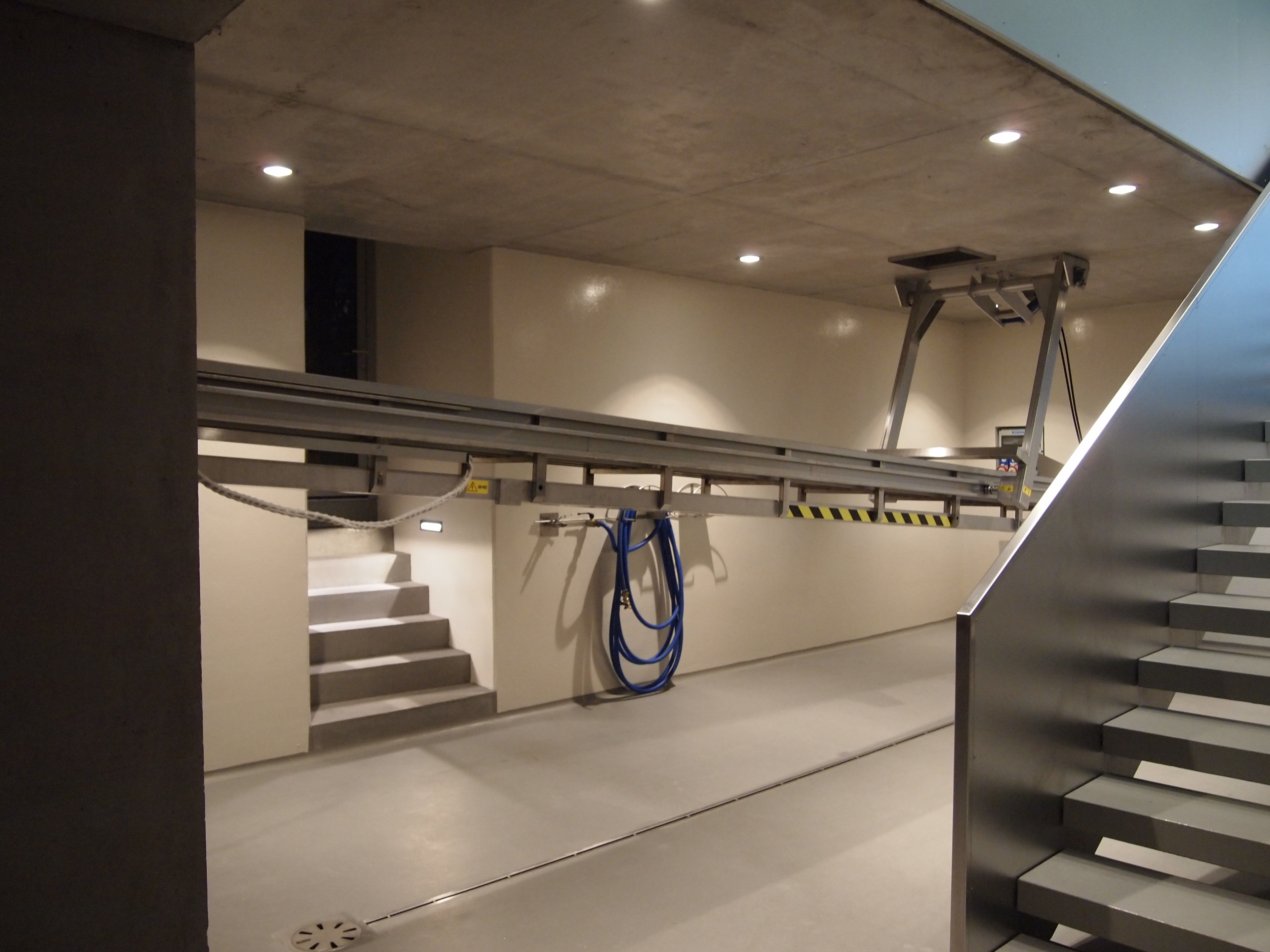
20151022_203735 20151022_210800

20151022_225243

The dish that after 2 weeks is still the first image that pops in my head when thinking of Le Chalet is  the pheasant breast with white truffle, foie gras sauce, pumpkin variation and sautéed ceps. Maybe for that reason the Cava served with this (Particular de Recaredo Gran Reserva by Recaredo) was one of my favorites? Who knows 🙂

20151022_215634

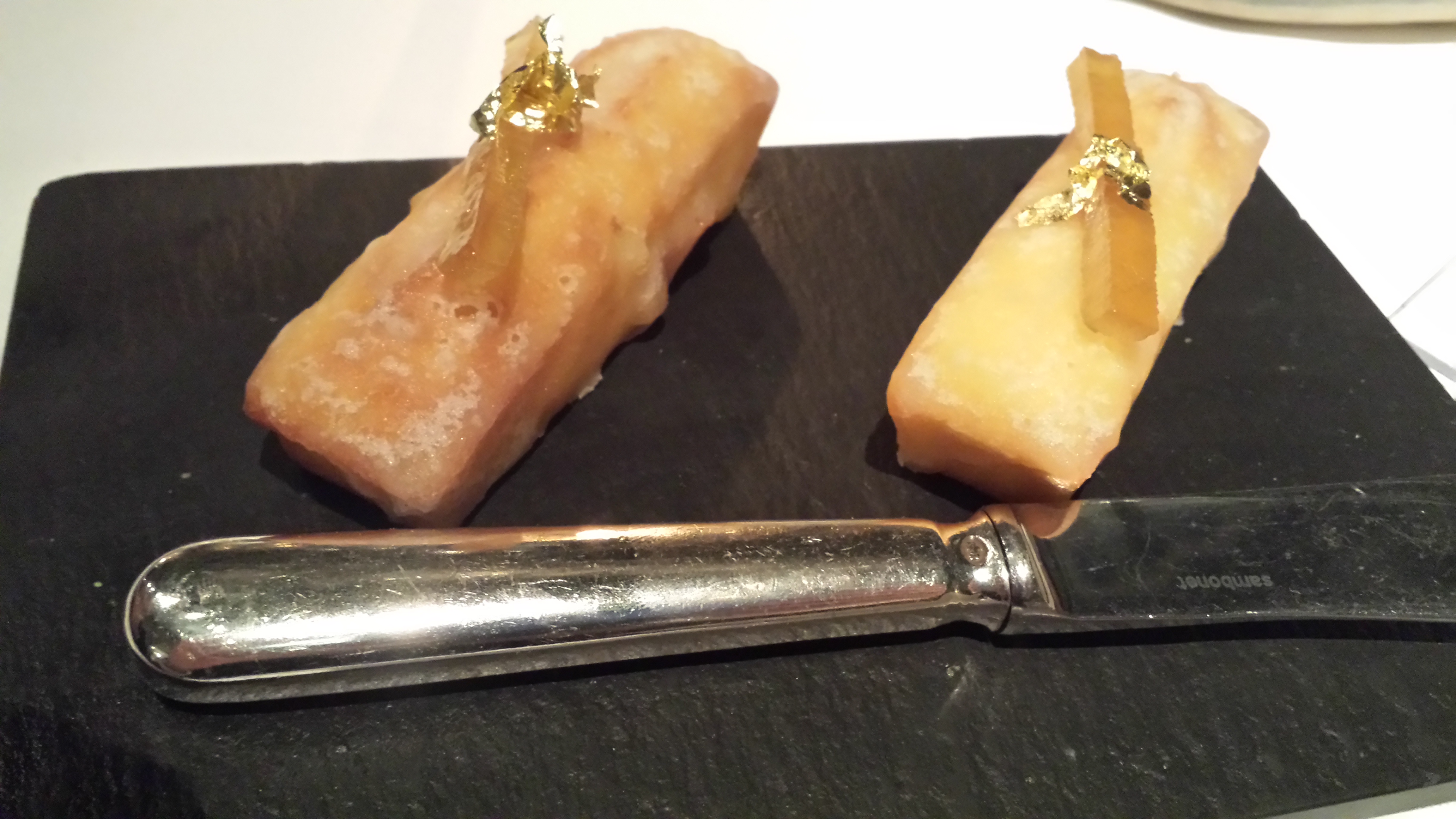
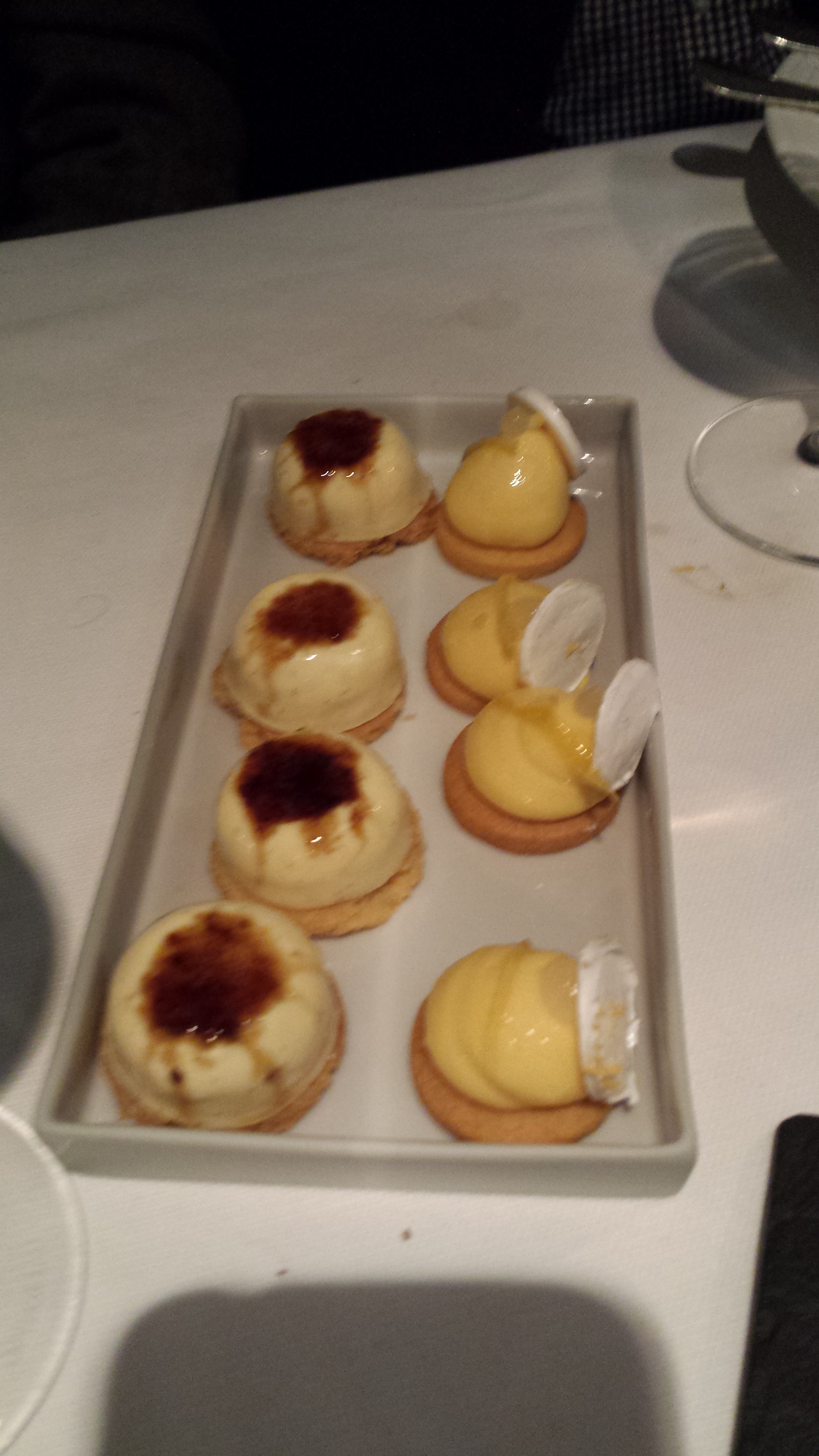
The dinner wouldn’t end perfect without all the ‘friandises’ aka sweets that come with the coffee 🙂 The chefs have outdone themselves as I like every piece of the assortment 🙂 🙂

20151022_225707 20151022_230003 20151022_230125

An evening to remember!! In case you would want more info on Cava don’t hesitate to contact the Cava Rugulatory board as they will be able to answer all you questions 🙂

Sherry with capital S

Ever since my wife and I visited the bodega of Tio Pepe a few years ago we became huge Sherry Jerez) fans. Lots of people know this and started giving bottles of Sherry as a gift  and  whenever I walk into a shop where they sell sherry’s the meat is weak and I end up buying a bottle :-)… basically this results in having quit a few bottles of Sherry and funny enough 90% from  Lustau  🙂  We occasionally  do enjoy drinking it in the evening in front of TV to accompany some dessert. I say occasionally as we mostly only open bottles of wine when we have company… we just don’t have the need for it on other days… So the best thing to do is to find some friends who want to sacrifice themselves and organize a get together/tasting to open all of them ;-).

19-10-2015 16-38-20

That’s exactly what I did, I organized myself a Lustau Sherry tasting at home!! Coincidentally the friends I invited and that sacrificed themselves are some of the best sommeliers in Belgium and far beyond the country borders.  Gianluca di Taranto (The Jane) who is always keen to learn more about wines and Cesar Roman (Le chalet de la Forêt) who is the biggest Sherry fan I know. I know how to pick my friends 🙂 :-). Not only did they bring themselves, they also brought a few bottles and some food 🙂 so basically extra bottles to taste…

Just like in my blog post a few years ago I’m still of the opinion that wines like Sherry, Porto, Madeira and Marsala are under valuated for an unknown reason… although I just think the problem is that those people never tried a good Sherry, Porto, etc… Otherwise they would be a big fan just like me! Unlike what they know or think there are many different kinds of these wines (as that’s what they are in fact), a flavor for everybody and for every occasion. In the Sherry world for example you have Fino, Palo Cortado, Amontillado, Manzanilla, Oloroso, PX (Pedro Ximénez), etc… There is a bigger difference than only the name. They have different smells, tastes, color, etc… Me personally I am an Oloroso fan as it always leaves a nice I would say nutty caramel (not sweet, unless they blended it with PX) kind taste in your mouth. If you are more into very sweet wines, you’d be better to go for a PX or an Oloroso Dulce… If you like more refined taste a Palo Cortado or Amontillado…

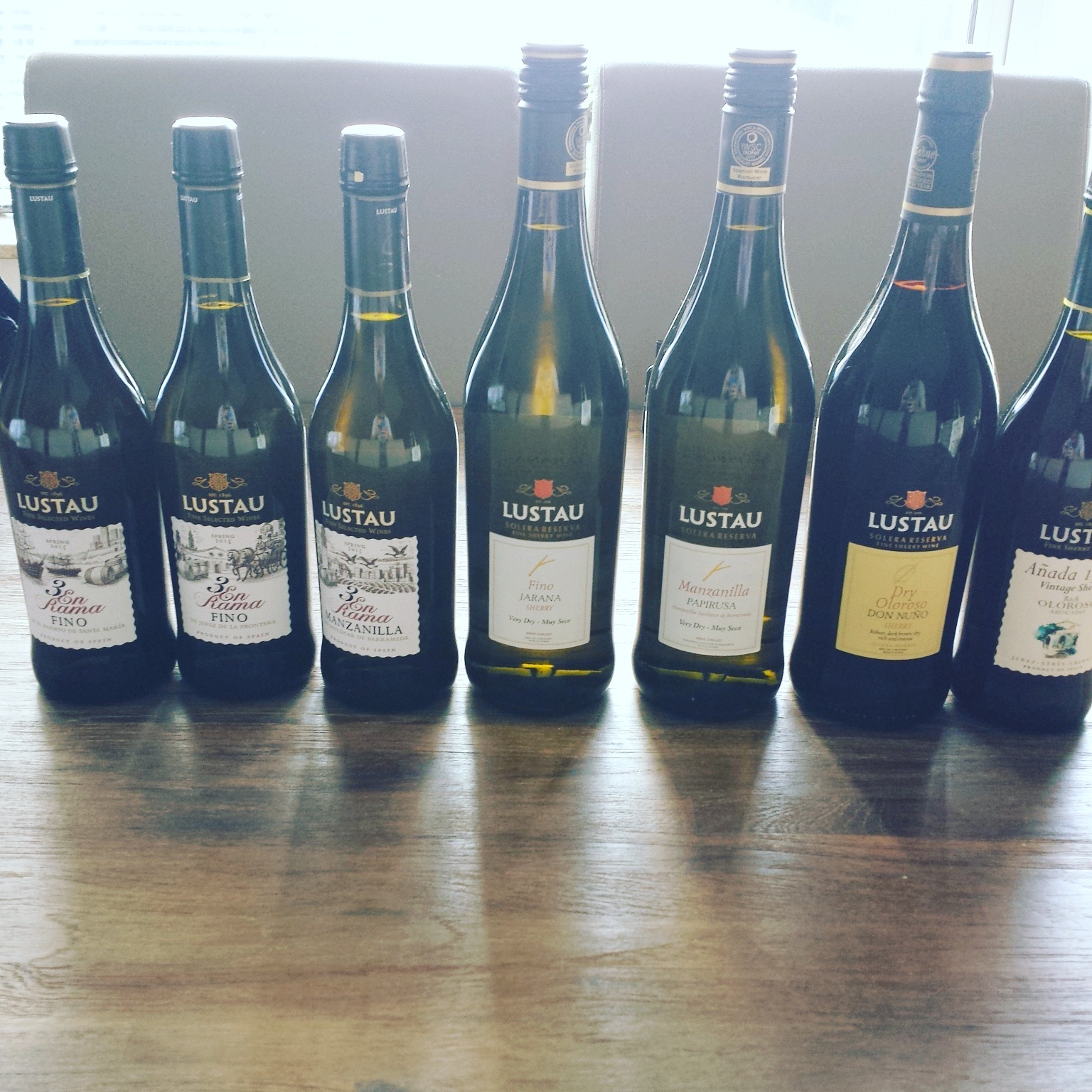
Like I mentioned before I had a Lustau Sherry Tasting with a few friends, and below you’ll find the bottles we tasted:

IMG_20151018_105049

  • ‘3 en Rama’ collection: existing out of a Fino from Jerez de la Frontera, another from El Puerto de Santa María and a Manzanilla from Sanlúcar de Barrameda

I was told to better understand/appreciate the difference from the ‘En Rama’ collection is putting them next to the ‘familiar’ aka classic Fino and Manzanilla collection. We did as told 🙂  En Rama style basically means that the Sherry has been bottled straight from the cask with no additional treatment. What they try to do is to make a product as biological as possible. In reality the en rama’ sherries still undergoes minimal clarification,  as a 100% raw wine, bottled without any filtering would go bad after a one or two weeks and has a non appetizing color. So they do filter it the ‘en rama’  but only taking away the largest, solid particles.
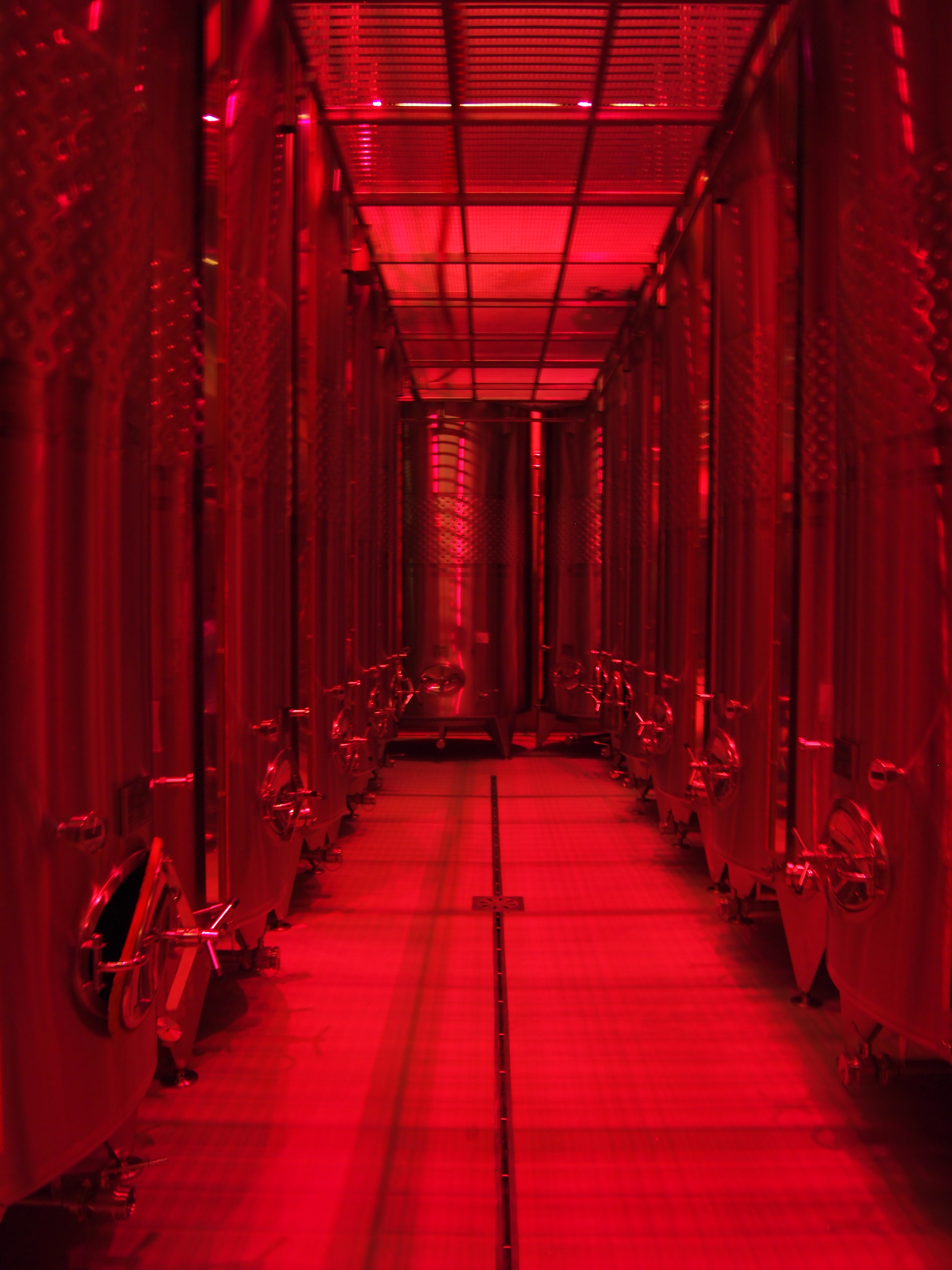
En rama

Time to put all the theory in practice and start opening bottles. As the best to enjoy a drink is with food, we filled the table with Iberic ham, cheeses, freshly made hummus, home made porcini under oil to mention a few :-). The most special piece on the table was the ‘Manteca colora’ which is a kind of pâté that tastes a bit like chorizo which in this case looked a bit like a heart but was surprisingly good. According to my dear friend Cesar this is something that farmers eat before going on the land… so you can imagine it is not a cholesterol friendly piece of meat 😉
SAMSUNG CSC

SAMSUNG CSC

SAMSUNG CSC

We started our tasting by comparing the 2 Manzanilla’s. Manzanilla is the same wine as a Fino, but it just aged in a different place closer to the sea (in a particular area near San Lucar) resulting in a product tasting very differently than a Fino. The first thing that we notice is the difference in color as the ‘En Rama’ is much more yellow than the Papirusa (probably due to the less filtering). When you smell and taste the ‘En rama’ you notice that it is much more complex and contains more acidity… I find it very fascinating that nature can do such wonderful things when letting it do its thing without helping (to much)

SAMSUNG CSC

When putting the 3 Fino’s (Regular, En Rama Puerto and En Rama Jerez) next to each other the differences are even more striking!! Especially the 2 En Rama’s where the ‘En Rama Fino El Puerto Santa maria’has a much saltier taste to it because of the influence the sea had (a as you might have understood by the ‘El Puerto’ part that it is near the sea)… Whereas the ‘En rama from Jerez de la Frontera’ has notes from apples that reminded us of Calvados (the smell). Normally I’m not really a Fino fan as I remembered it being very sharp both in taste and smell… but maybe that’s the house style of Tio Pepe as the Lustau Fino’s were much less ‘aggressive’… I would even say that the regular/familiar Fino was soft and smokey 🙂

SAMSUNG CSC

SAMSUNG CSC

If I would have to make a choice between the Manzanilla’s and Fino’s above the one that I would most probably be tempted to drink again would be the “En Rama” from Jerez de la Frontera… I think because of its complexity and something unexplainable that attracts me more to it 🙂 It was indeed a very good suggestion to put the ‘En Rama’ next to the Familiar collection.

The Oloroso’s were and are still my favorites and were exactly how I expected them to be 🙂 Although both oloroso’s serve for a different purpose, the Don Nuño is more for with meat I might even say game meat and the Añada being a blend from Oloroso and PX would be more appropriate with a dessert. The Añada was definitly the favorite from the ladies at the table (So we are now sure they have a sweet tooth 🙂 )

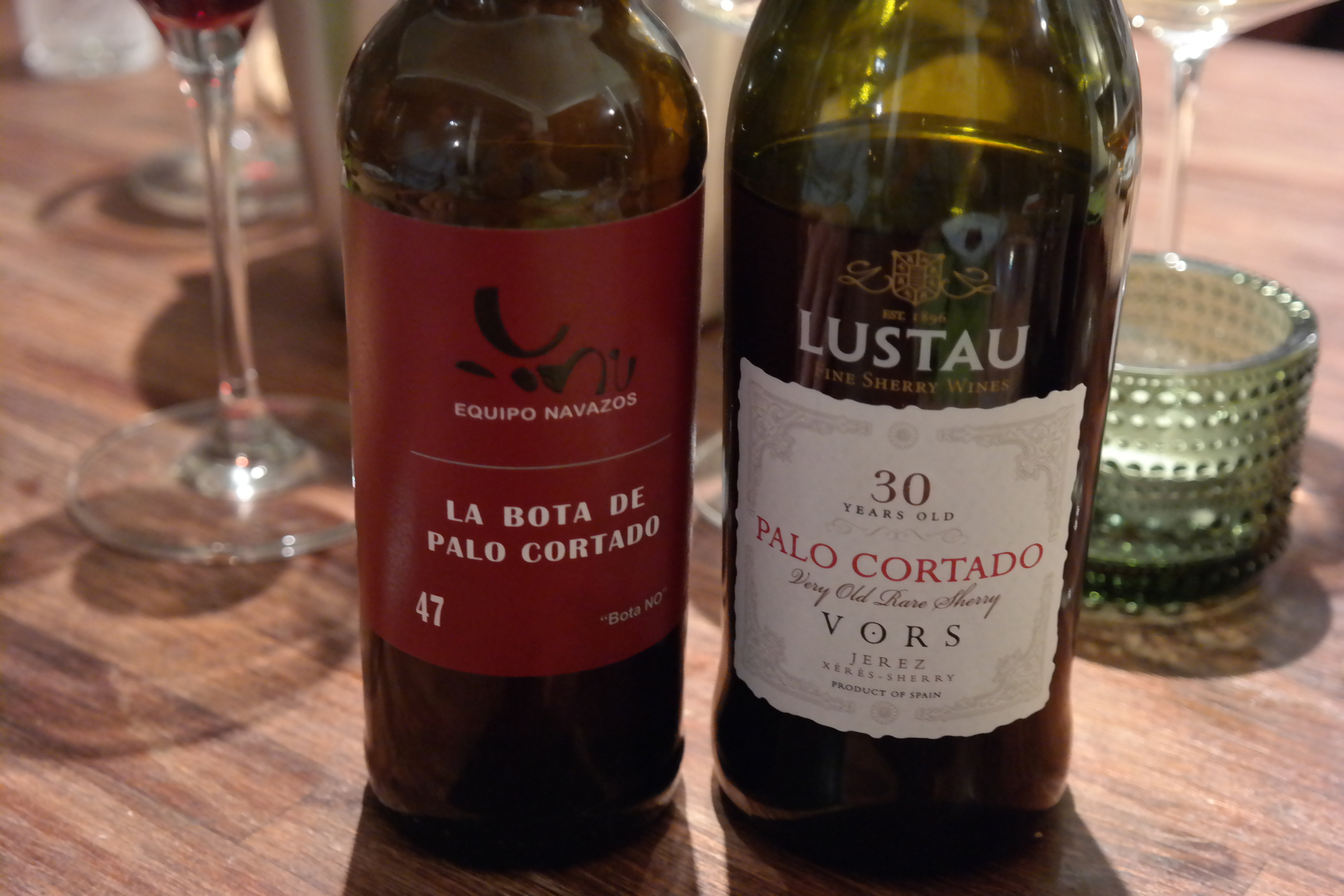
The stars of the evening were without any doubt the Palo Cortado VORS  and the 47 La bota de Palo Cortado by Equipo Navazos. It might be strange to put them next to eachother as the VORS is around 30 years old and the 47 La Bota is around 80 years old, but they competed really well next to each other. I don’t know what it is, but the is always a mistery around Palo Cortado, such a mistery that there was even made a documentary about it that was presented on the Berlin Film Festival!? Palo Cortado is a wine that “occurs”, rather by accident – you can’t actively produce it and I think that this is the big reason for all the legacy and mistery around it 🙂 That, and the fact that the taste of these product is a combo from all the best from Oloroso and Fino and Amontillado in 1 wine but with more complexity and interesting flavors to discover 🙂 So what’s not to love ?? My personal preference went to the VORS, but the sparkle in the eyes of Gianluca and especially Cesar when sipping of the ’47 bota’ I guess that was their favorite… maybe that it is the difference between pro sommeliers and me an ‘amateur’… I think the 47 bota was to complex and to special for my taste buts… maybe I’ll have to train them some more to refine them like a pro sommelier!

SAMSUNG CSC

I had a wonderful evening with my 2 dear friend Cesar and Gianluca (and their wives and the little Ignacio (Cesar’s son) who was extreeeeeeemly cute 🙂 ) I learned a lot tonight from you guys and can’t for the next ‘tasting’ event. I became an even bigger Sherry fan as I was before (or maybe I should thank Lustau for that 😉 )

In case you want to know more about sherry in general, as very good website to look on would be sherrynotes. In case you want to know more about Lustau Sherry in Belgium (like where to purchase, etc..) you can contact or pass by my friend of Young Charly as they do the import of Lustau. For the other countries check the Lustau website

The night with a Bolgheri Pearl

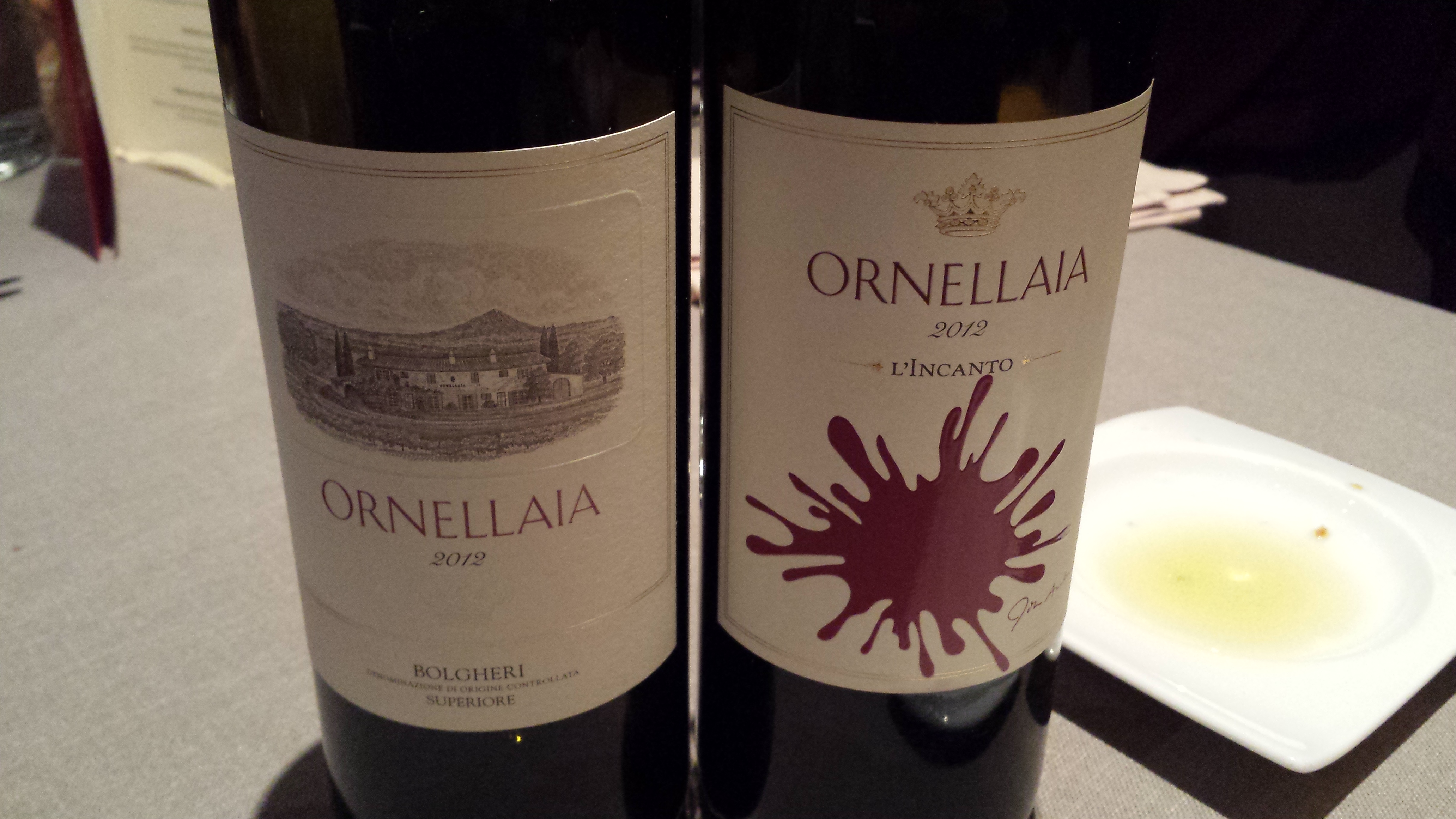
Italy has – just like France – some iconic wine estates. In Piemonte for example they have Gaja. In Tuscany they have even 3 of these iconic wine estates, Sassicaia (technically speaking this is Tenuta San Guido), Tignanello and Ornellaia. Today I will will give you some background about Ornellaia. The reason I mention the other 2 estates is that together they are better known as ‘Super Tuscans’. What makes them special is that they were the first vineyards in Italy to produce wines ‘bordeaux’ style by using French grapes in combination with the Tuscan ‘sangiovese’ grape… which basically results in very beautiful Italians wines with a French flare. A few nights ago I joined one these 3 estates, namely the Ornellaia estate, for a dinner at one of my favorite Italian restaurants in Belgium Spiga d’oro.

Ornellaia

Before I continue I do want to mention that I’m not going to mingle myself in the discussion if wines like the top Ornellaia wines are not worth their price, as  I think that it depends of your financial resources if you find those wines expensive or not. It also depends if wish to spend your money on wines like this.. But I agree to say that without any doubt they are very good wines and I wouldn’t mind to have to drink them again 🙂 and that is what it is all about, right?

Ornellaia wine

It was actually my friend Bram who asked me to join the Ornelaia dinner and I’m glad he did as I had never tried the Ornellaia wines before with exception for the ‘Le Volte’ I got as a Christmas present a few years ago (which I liked). The fact that the diner was taking place at Spiga d’oro was a bonus 🙂 Franco makes every dish a refined Italian celebration and pleasure for one’s taste buds 🙂

11014902_754282998025333_3812939208107455492_n

It is more than obvious that you cannot start your dinner with the best wine, you have to build up crescendo and end with the best… this way you’ll remember that best for always and crave for more :-). I think I must rephrase that sentence, as I’m sure it is every winemakers aim to make every wine his best wine!! Maybe I should have said you should end with the wine that got even more attention, care and patience from the winemaker:-). The purpose of an ‘entry’ level wine is getting to know a vineyard or estate. This wine will also be the wine with which 90% of the people will have the first contact with you estate, so you would want it to be an ‘everybody’s’ friend. I think that the winemakers of the Ornellaia estate succeeded in this purpose with ‘Le Volte’! During the dinner it was indeed the second time I tasted it and although this time it was the 2013 vintage and the one I had before the 2008 vintage, it tasted as youthfully fresh and left the same fruit-forward mouth feel as I remembered it. This time with a bit more tones of red cherry, sweet spice and I even want to say chocolate.

Le volte

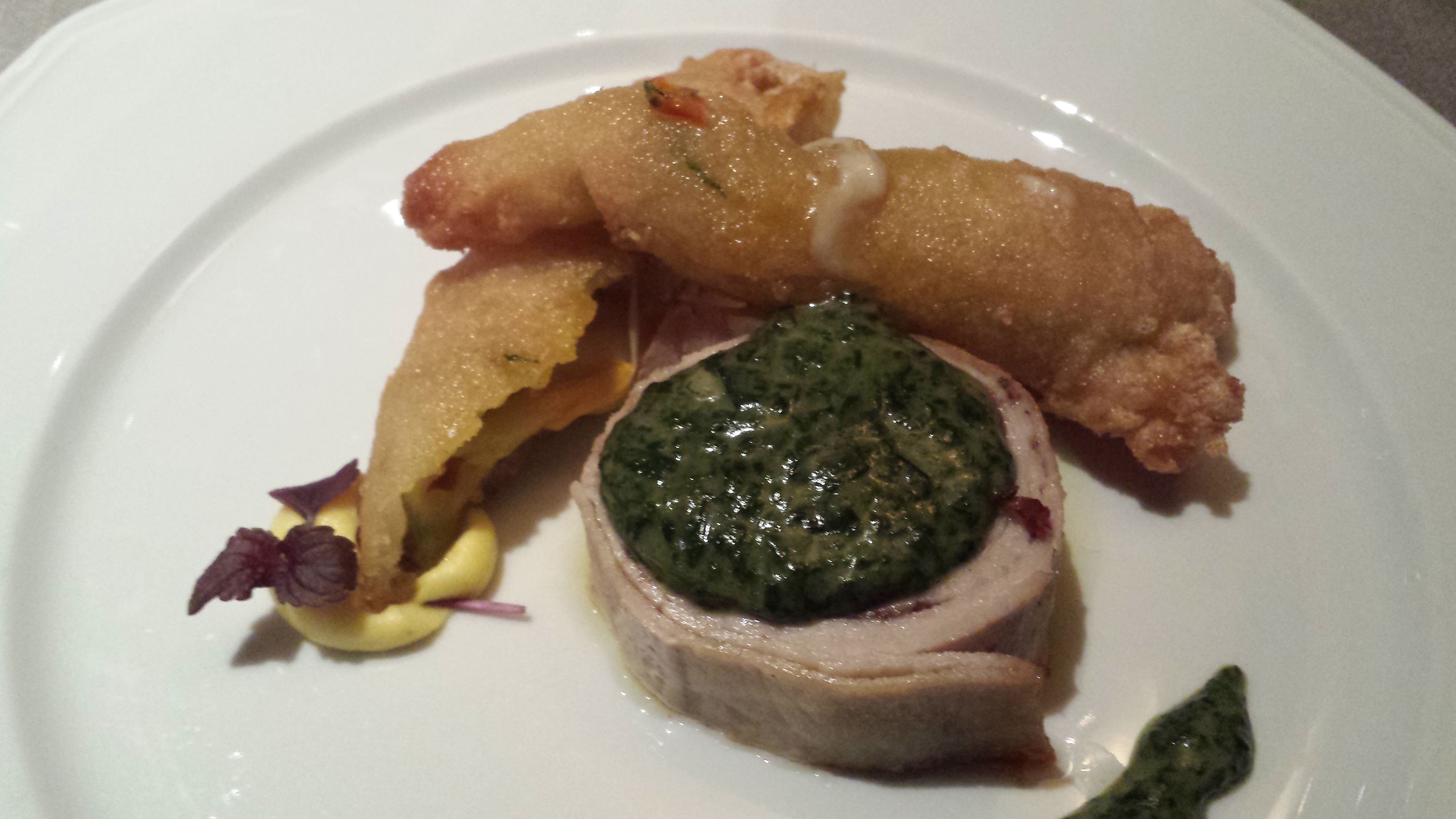
Le Volte’s freshness worked really nice with subtlety of the Veal involtino with fennel salami, ragú of chianina and a Fiorentina spinachsauce  we were served as a 1st course. As well as with the chickenliver crostini or short raised calzone with pecorino Toscano we were served as appetizers  (that were heavenly btw)… I’m a pizza fan, but not such a fan of pecorino cheese, but Franco showed me with this ‘simple’ dish that it’s all about how one prepares it…

Crostini with chickenlivers

Short raised calzone with pecorino Toscano

Veal involtino, fennel salami, ragú of chianina and a Fiorentina spinachsauce

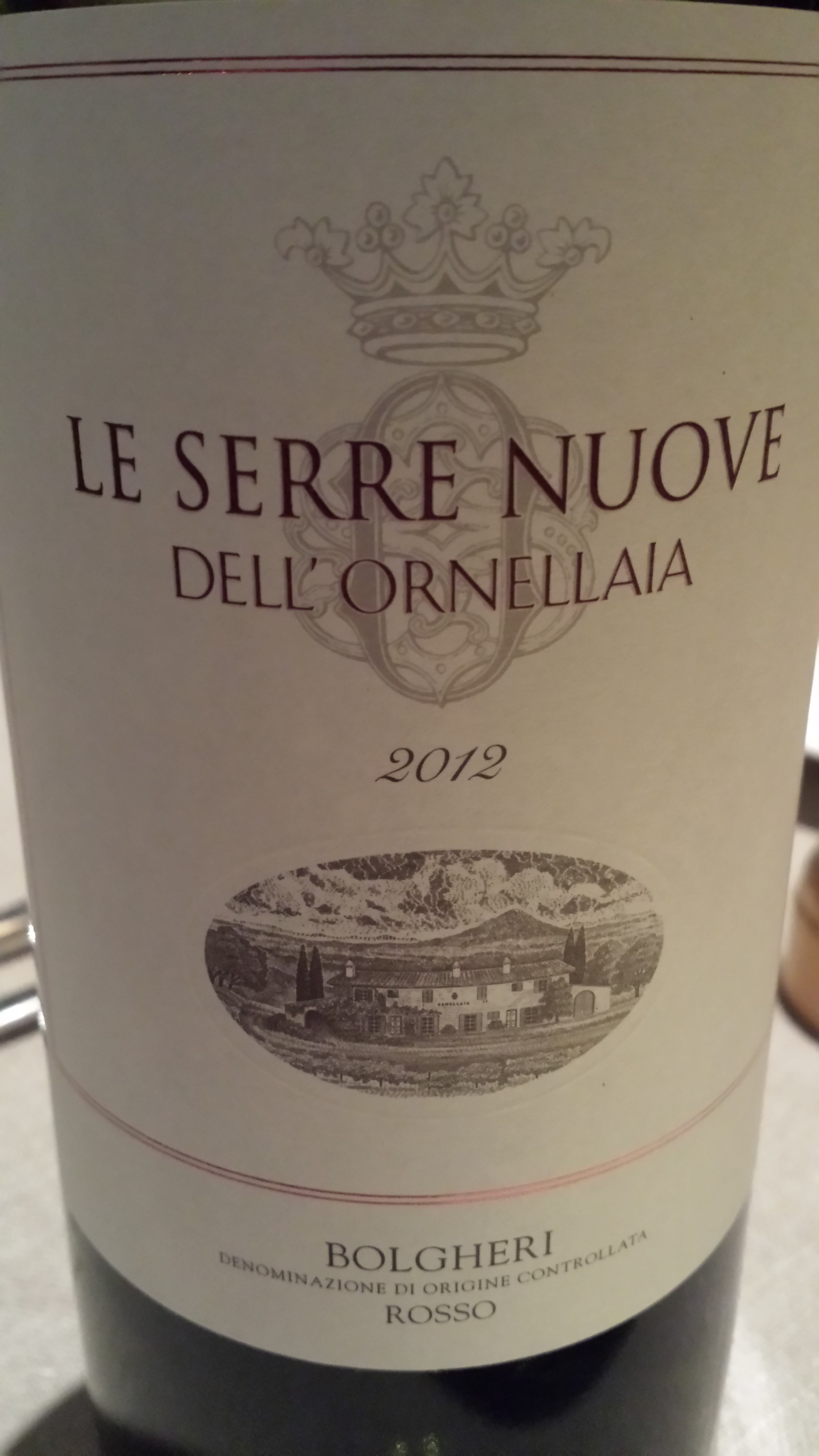
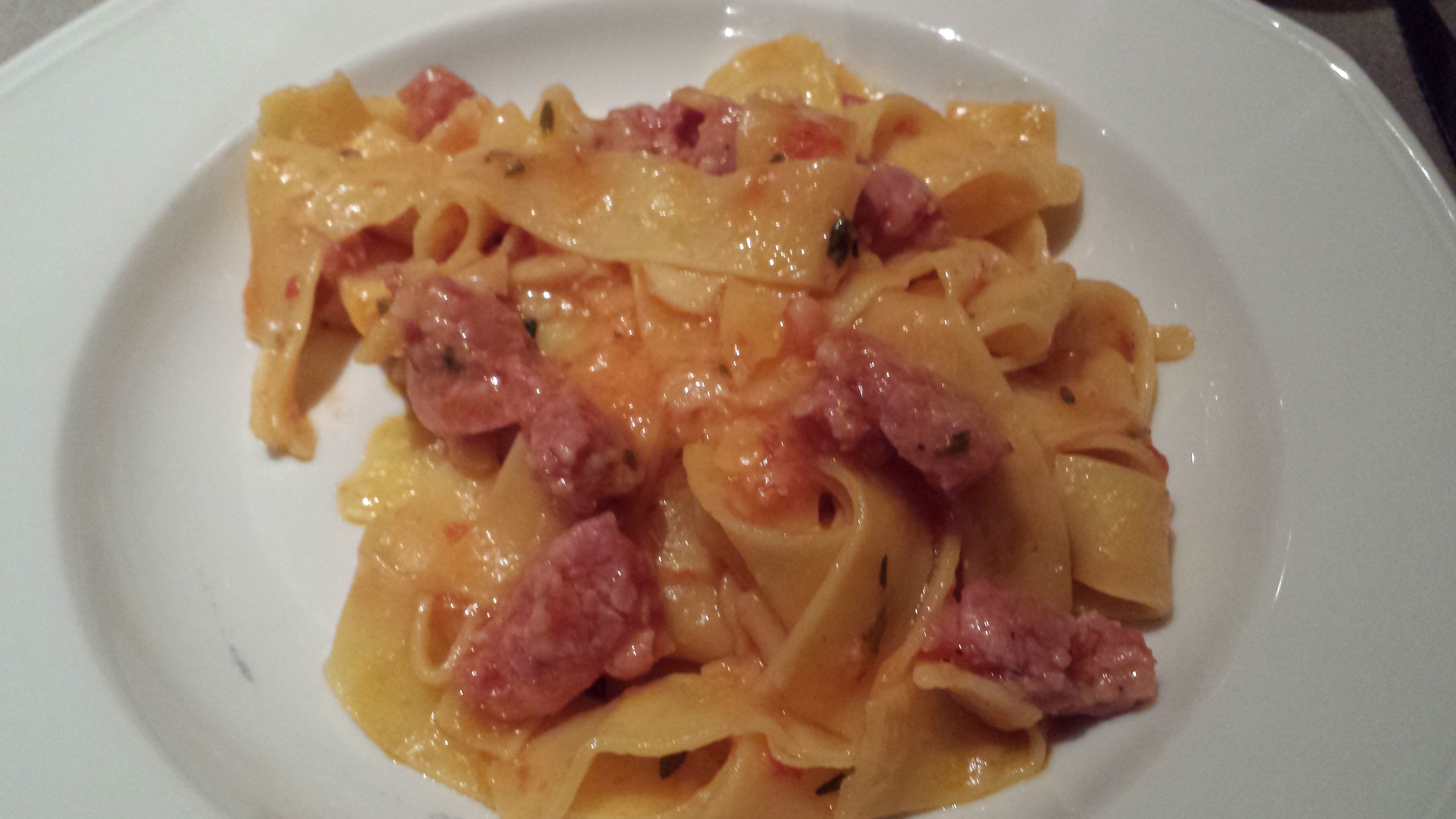
What was about to follow was an absolute winner for me from the moment I saw it on the menu, Papardell di Grano Duro with fresh truffle sausage from Panzano (made by a top butcher aka Cecchini). God, I so love sausage (I wanted to say Italian sausage, but ALL men reading it would take it in a wrong way 😉 pervs (I know, it takes one to know one ;-)). Now it was time to start exploring new unknown wines (for me) of the Ornellaia estate and go 1 step higher with the 2012 ‘Le Serre Nuove’ that with his fuller body can work against the ‘fattiness’ of the sausage and harmonize with its walnut and red fruity (because of the Merlot) aftertaste (although I think if you age this wine a bit more you have an even more sparkling star)

20151007_201029

Papardell di Grano Duro with fresh truffle sausage from Panzano

What was about to follow was in some ways an unexpected surprise as they only make 2000, yes 2000 bottles of this wine!! Resulting in only having around 60 bottles available in Belgium. I’m talking about the Ornellaia Bianco. I know it seems strange to have a white wine after 2 reds, but its strong enough to handle it. In this wine you’ll find a blend of Sauvignon and Viognier… a strange combo, but it works! That’s all I can say… the only down side, as they only make 2000 bottles buying one isn’t an option (for both budget and availability reasons 🙂 ).

IMG_20151007_204541

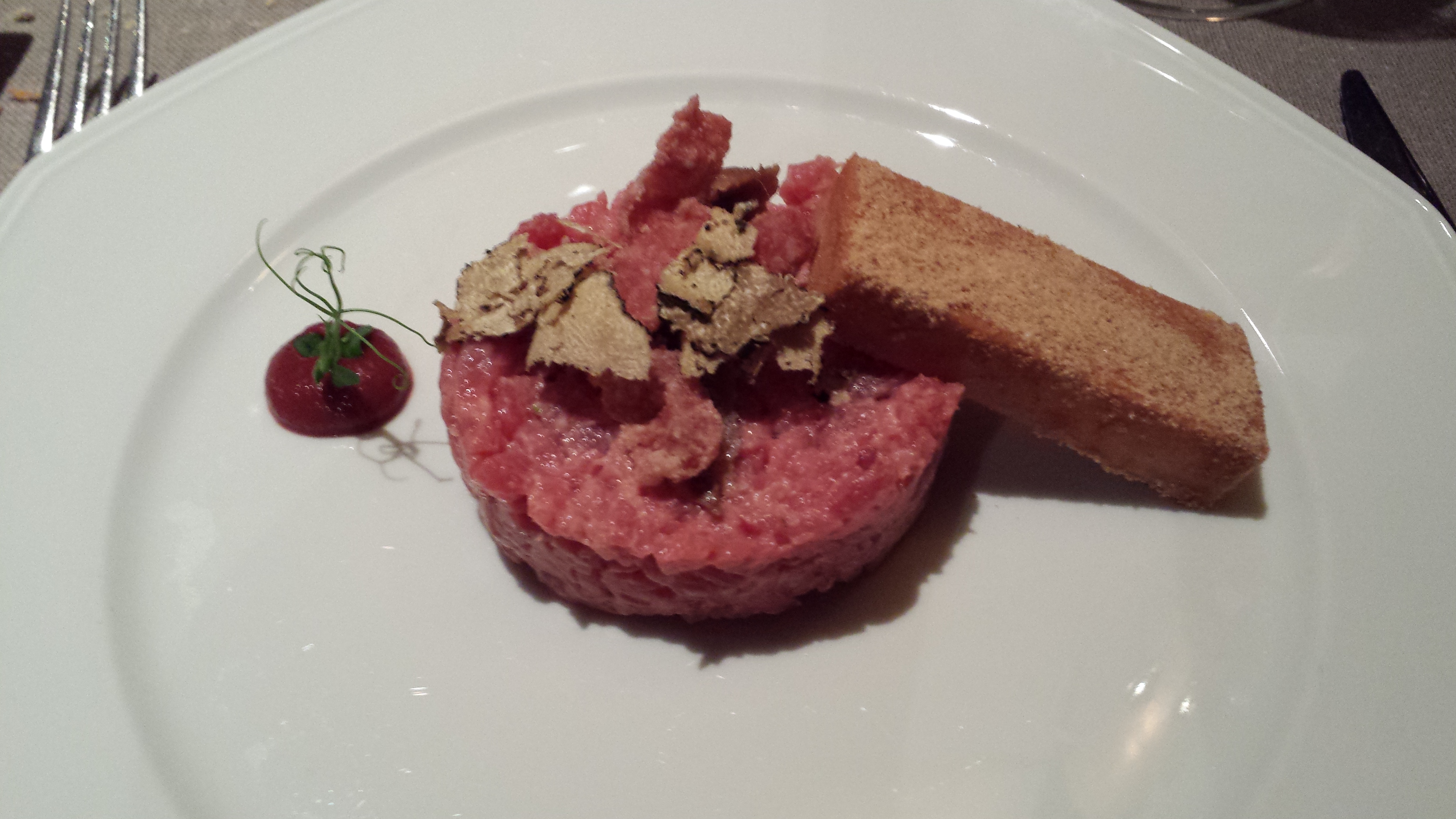
I don’t want to suck up to Franco or so, but with the marinated chianina tartare with cantuccini breaded goose liver, Cetara anchovy and beetroot dish he showed me again that it’s all about the preparation. Just like pecorino (or Goat cheese), I’m not a too big fan of goose liver, the taste just doesn’t float my boat (Although I am a big pâté fan)… so I’m not sure what Franco did, maybe it was my favorite cookie crust around it that made it different, but I liked 🙂

Marinated chianina tartare with cantuccini breaded goose liver, Cetara anchovy and beetroot

The previous wine was without any doubt the headline of the night, but the wine I’m sure everybody came for was the one and only Ornellaia Superiore!! This wine needs something strong with it, so it got served with a Tagliata from grilled Chianina (red meat) with chianti salt, braised spinach with truffle pecorino, fried Porcini and chickpea crème. Both winners I’d say (wine and dish). The dish makes me happy because of its rich flavors (I love gravy and butter!!!) … and I can only say the same for the wine. I like my wines full bodied, strong and yet this wine is all about elegance with a long finish and interesting flavors of blueberries (some said tobacco, never tasted tobacco, so no idea how it tastes :-))

20151007_211517

Tagliata from grilled Chianina with chianti salt, braised spinach with truffle pecorino, fried Porcini and chickpea crème

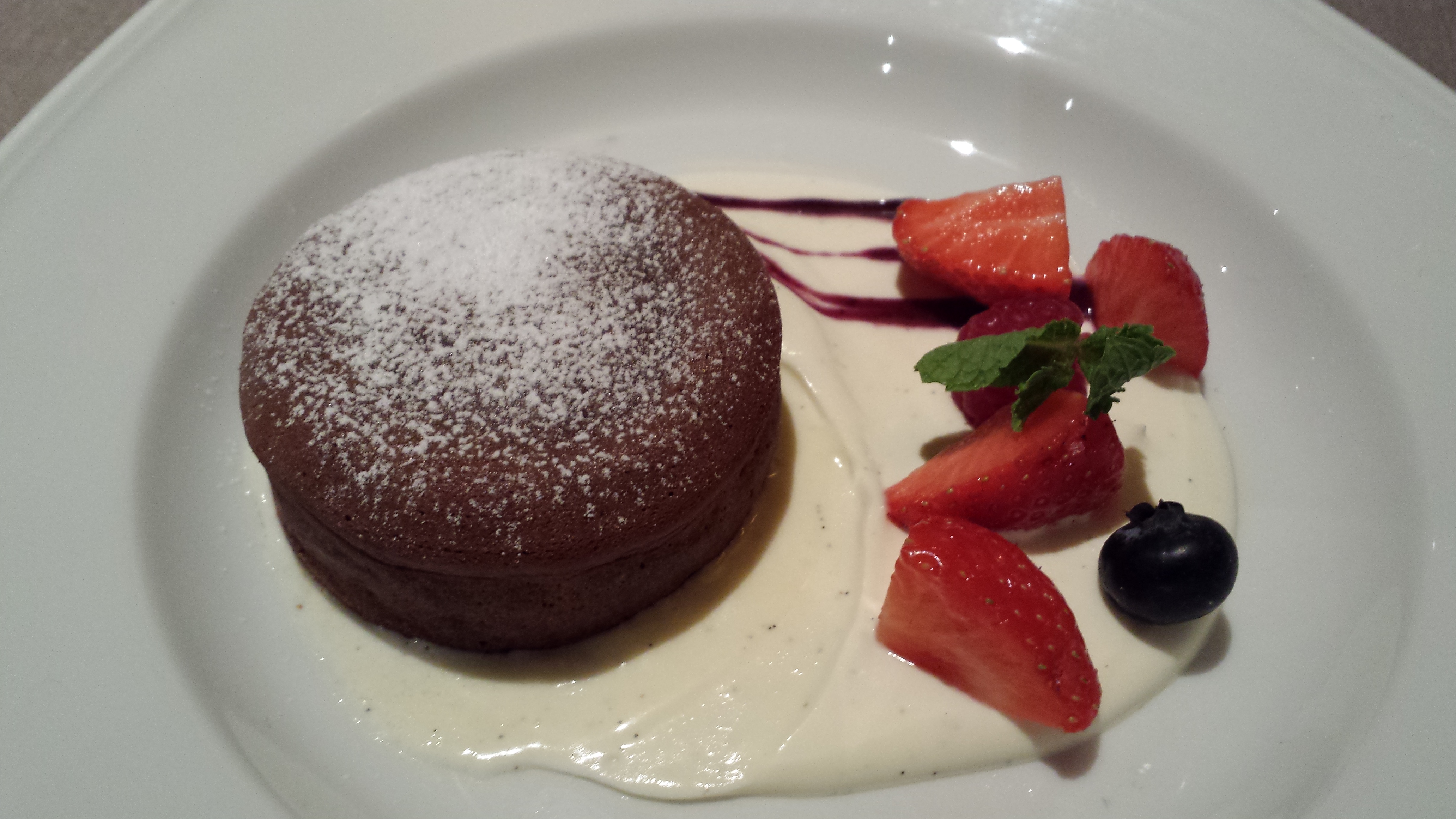
My wife was sooo jealous when she saw what Franco had prepared for us as dessert, a Vahlrona chocolate Baba in a vanilla soup with a blueberry basil coulis (My wife is a chocoholic).With the dessert we were served Ornus from Ornellaia (which comes from Fraxinus Ornus”, the Latin name for the Manna-Tree or Flowering Ash (in Italian, Orniello). To my opinion it was a bit too sweet . I don’t like to be ‘negative’ but it wasn’t 100% my taste, a little bit more acidity would have made it perfect. So it is not that they had force me to drink it, as it was nice, but not as much as I had hoped 🙂 (but that’s my taste)

Vahlrona chocolate Baba in a vanilla soup with a blueberry basil coulis

Nevertheless, I had a wonderful evening full of wonderful experiences and I am glad I could be part of this unique event to try these unique wines!! (in unique company 🙂 )

In case you would want to purchase or  more information about the Ornellaia wines in Belgium I would advice you to contact Young Charly (for other countries check website  Ornellaia).

Feeling Royal

That I love wine is not a secret anymore and that I like wine from all over the world neither… but I do have a few preferred wine regions. In my top 3 is without any doubt Valpolicella. To situate it, the Valpolicella region is around Verona and a stone throw away from the Garda Lake. I like the Valpolicella wines because it are rich, full bodied and if you go to the Ripasso or Amarone level stronger wines that ask for some stronger food like a good piece of meat for example. So when my dad send me that there was a wine & dine event from the highly reputated Valpolicella wine estate Allegrini I didn’t have to think twice, when he then added it was at the astonishing Chateau Neercanne in Maastricht no thinking was required anymore… it just is a MUST DO and we also didn’t really have to convince our friends Carlos and Ignace to much to join 😉 . Although Allegrini is one of Valpolicella’s biggest and most reputed wine estates from this region, I actually know/knew the Allegrini wines from the days my dad had his restaurant and where he used to sell a few of their wines like the Lagrolla and the Amarone. It is also in my dad’s restaurant I fell in love with the wine region after my first sip of Amarone that happend to be from Allegrini. After that sip I got the taste for more… and even after having tasted lots, I must admit that Allegrini’s Amarone is definitely in my top 3 (of Amarone’s). FYI I’m not saying this to suck up or so because I’m writing an article about Allegrini wines, it is just a fact that I am sharing with you :-).

Chateau Neercanne (1)

Chateau Neercanne (6)

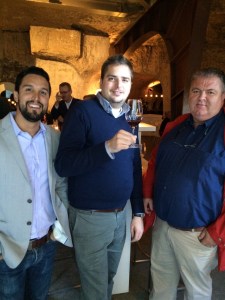
Carlos, Me & Ignace

Making wine is something for very patient people and takes a lot of effort (lots of manual labor) and as if wasn’t hard enough the first wine makers from the Valpolicella region thought they could make it even harder. What distinquighes Valpolicella wine making, or at least for Amarone (the Top Valpolicella wine) , from other wines is that after picking the grapes they are put in bins (they used to be in wood, but nowadays in plastic)  to let them loose their juices naturally… so you can imagine that it takes a while before the juices is out of the  grapes. From the juice they make Amarone wine and from the juice there still is in the grapes they make Ripasso which comes from the word ‘ripassare’  which means ‘re-use’ of the grapes from the Amarone. After this the wines also age in wooden barrels for while. So this is why a an Amarone costs a bit more than the usual bottle of wine, but for me it is definitely worth the price (not for every day of course). I know some people will say they don’t get the ‘fuzz’ around Amarone wines… this is probably a judgement based on an Amarone bought in a supermarket, not that you can’t buy good wines in a supermarket, but some top wines you just have to try the best to understand why it is so highly appreciated!   To those people I say try an Amarone like the one from Allegrini and you’ll immediately it a totally different thing and you’ll get it 🙂 I do  know the price is much higher, that’s why you should buy it and drink it at a special occasion

Chateau Neercanne (2)

Chateau Neercanne (3) Chateau Neercanne (4)

Back to the wine & dine event 🙂 The first part of the evening was actually a wine tasting from wines from other vineyards within the Allegrini group in company of the Allegrini family (Marilisa Allegrini) who explained us more about all the wines (also the rest of the evening) . It were wines from their Corte Giara estate to be more precise.  If I’m not wrong it is estate managed an run by the next generation of the Allegrini family Starting off with a Pinot grigio and Soave that are perfect for one a warm summers day with some Parma (or San daniele) ham with some fresh figs under a pergola :-)…  to continue with the reds from the same estate with exception for the ‘Palazzo della Torre‘ which is from the ‘original’ Allegrini estate … You would expect the Amarone would be my preferred, but no it were actually the ‘Palazzo della Torre‘ and the Ripasso  that got my preference as they had a bigger punch and were richer of taste… not that the Amarone wasn’t good (it was), but maybe I’m more a lover of the classical ‘valpolicella’ or ‘Amarone’ taste  and this one didn’t have it 😉 Ooor maybe I just have to try them again with a meal, because then they it might become a whole different story. Stronger wines usual need some food (strong) with it. Just to be sure, I’ll buy a few bottles and compare them again 🙂 🙂 (any excuse to buy good wines is good 😉 )

Chateau Neercanne (5) My dad and Mrs Allegrini Palazzo della Torre

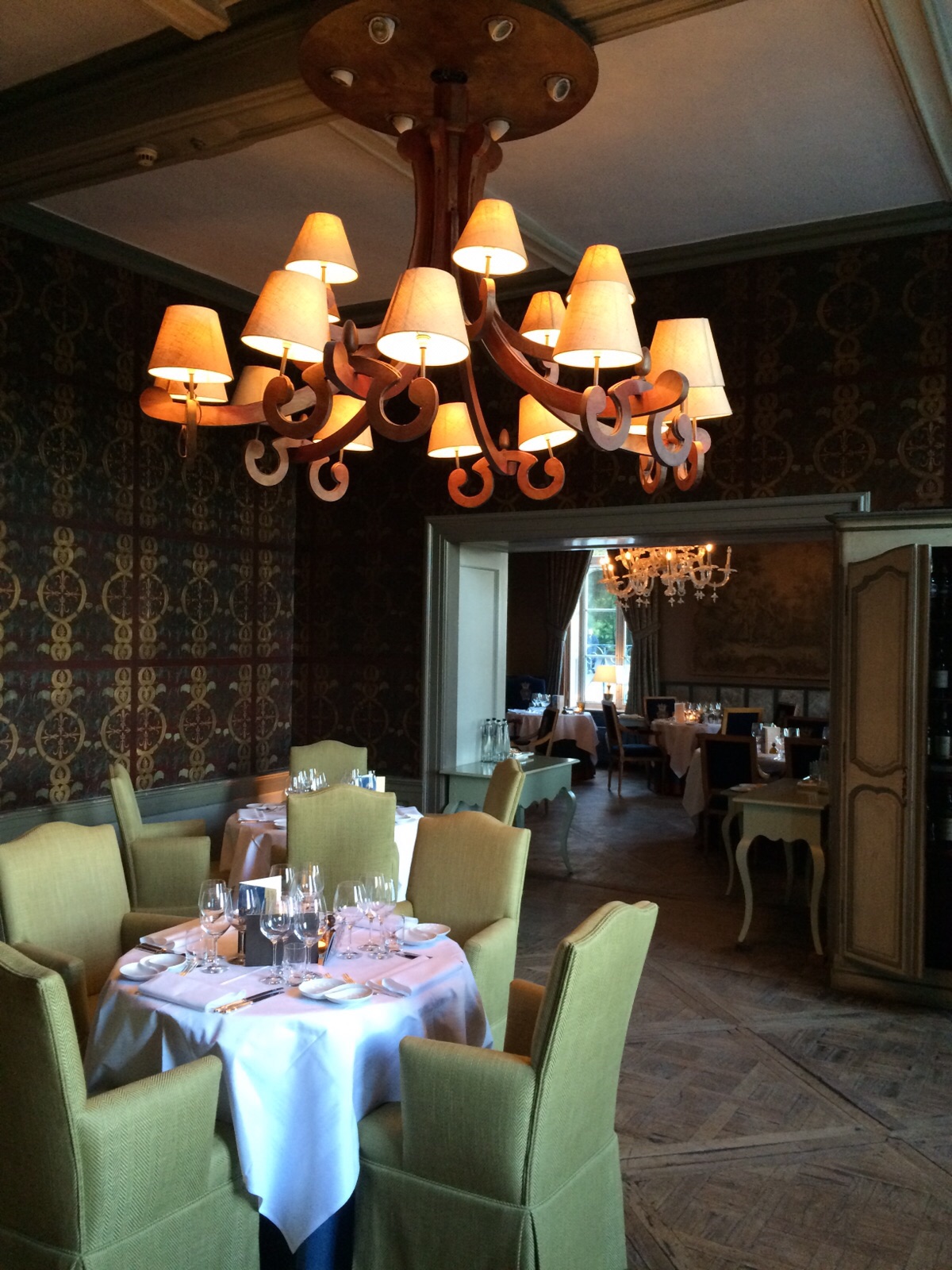
After the wonderful tasting with little nibbles it was time to start with the official part and try the wines from the ‘original’ Allegrini estate (not to say their best wines). No better way to do this than with a meal prepared by Hans Snijders from Chateau Neercanne !!  Which comes down to great dishes cooked to perfection with sauces that make every sauce you tasted before taste like water… I could have eaten a whole pot of sauce (from every dish we were served 🙂 ). Also to eat dishes like this in a magnificent setting like in Chateau Neercanne makes me feel like a king! Somehow it also makes me feel like dressing up like a king  from the Renaissance era 🙂 And to make the evening more complete we had Marilisa Allegrini to give us more about the Allegrini wines and even the beautiful Valpolicella region!

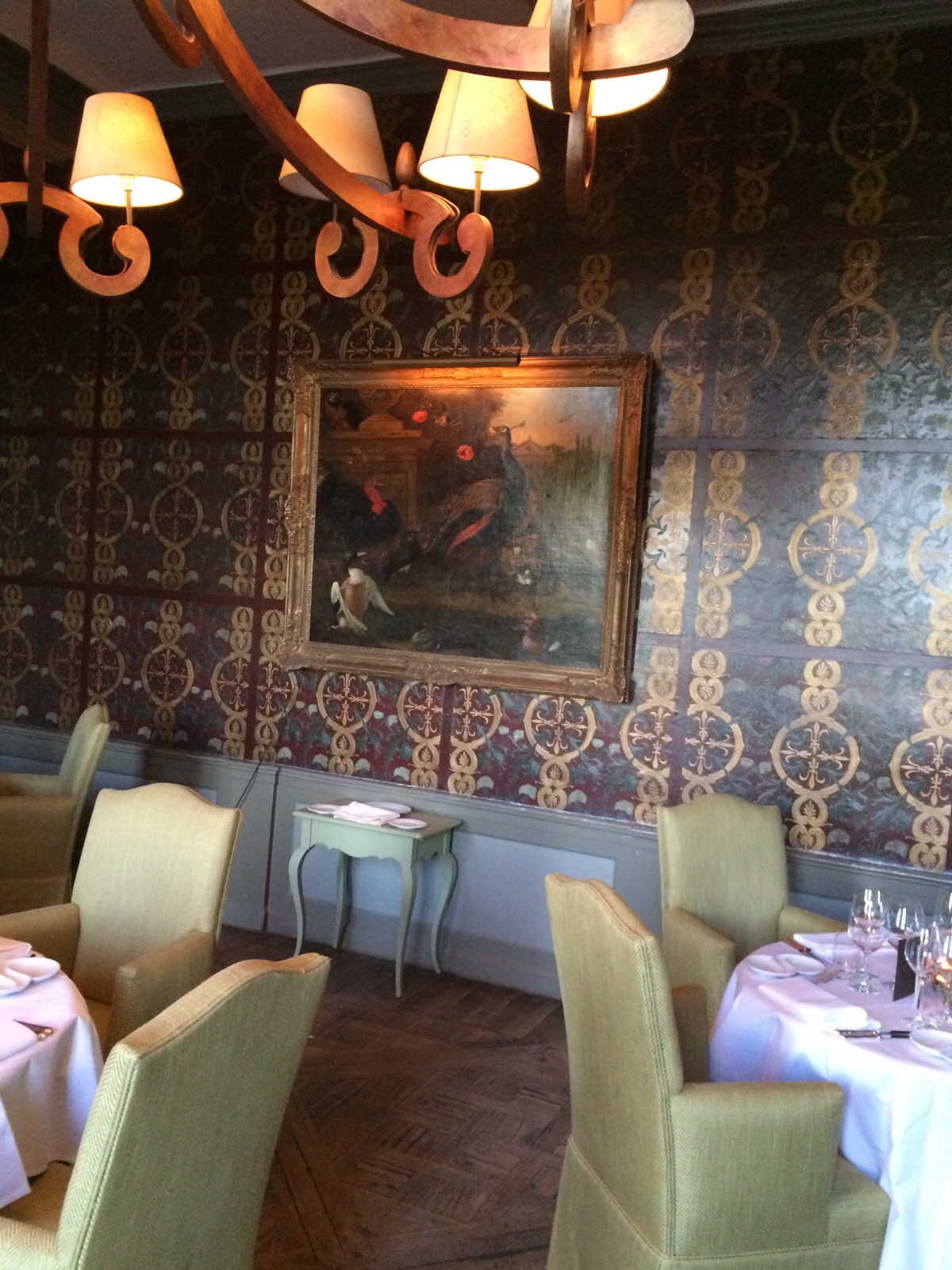
Neercanne interieur 1 Neercanne interieur 2 Neercanne interieur 3 Neercanne interieur 4 Neercanne interieur 5 Neercanne interieur 6 Neercanne interieur 7 Neercanne interieur 8

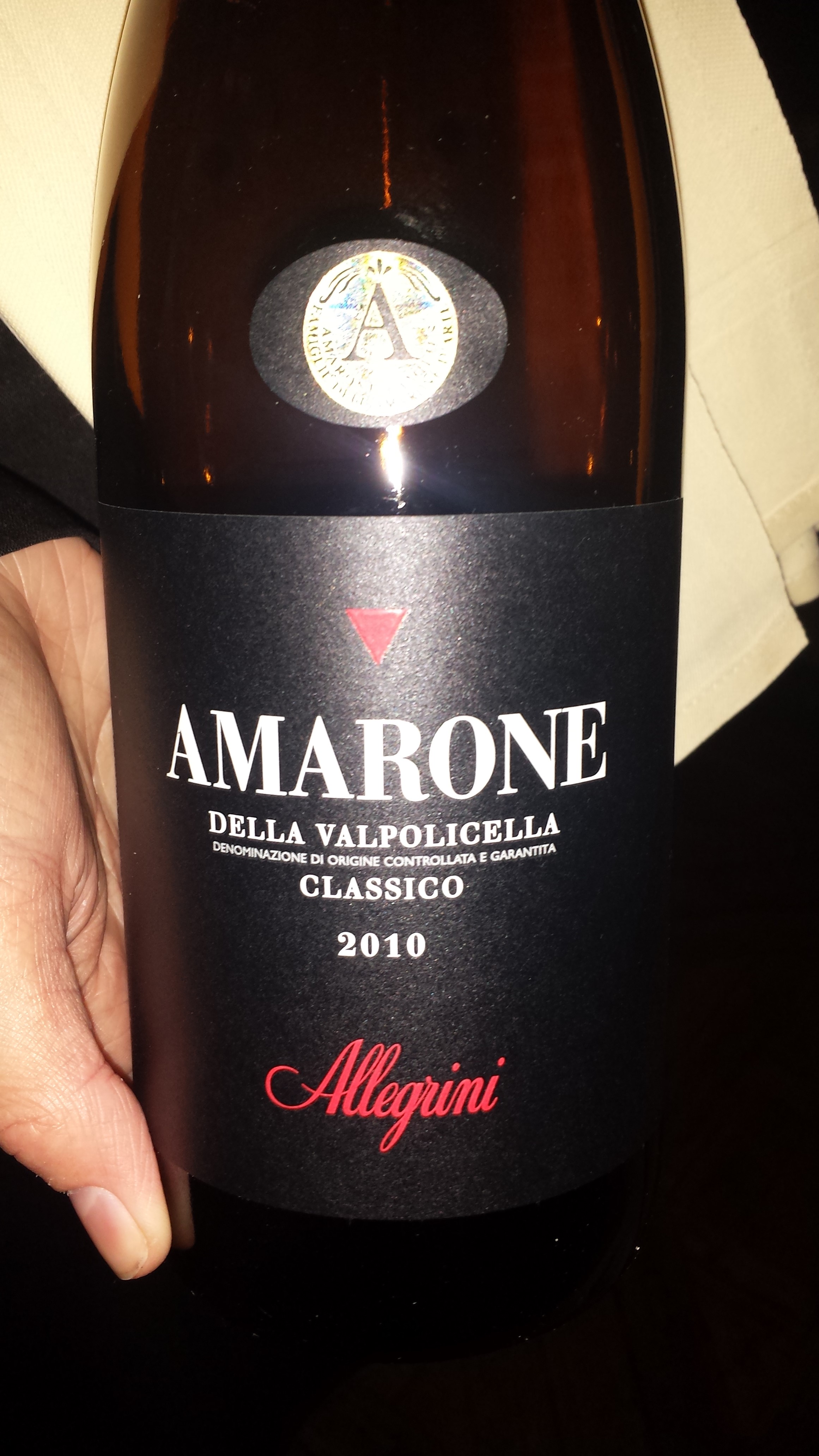
I know all the wines they would serve would be good, but personally I was mostly looking forward to taste the bitter-sweet dark chocolate, raisin, dried fig (maybe even a bit of cherry) aroma’s and flavors of  the Amarone Classico from Allegrini again!

20150910_211105

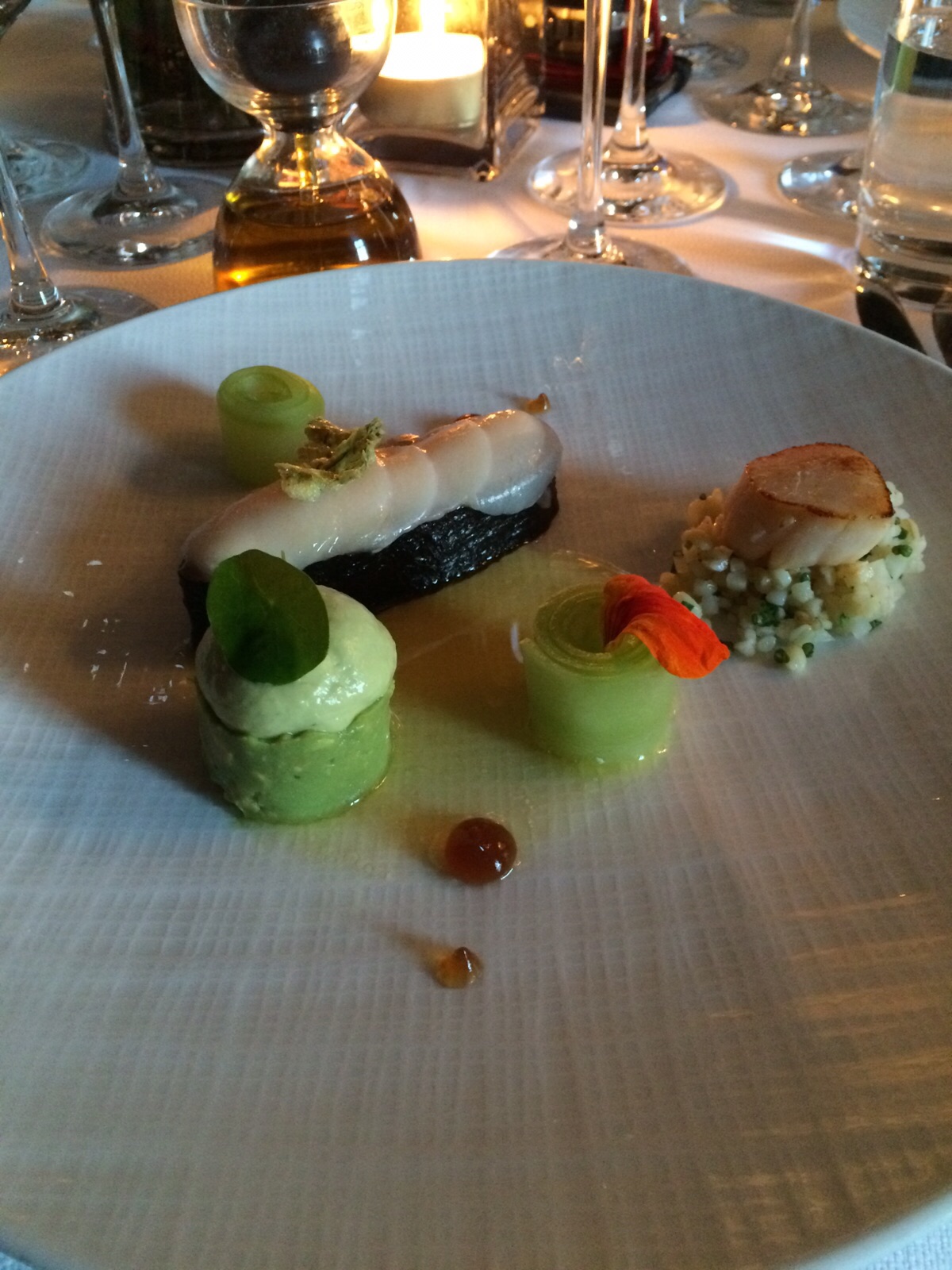
You guys know I love eating at restaurant Pazzo  in Antwerp and you might remember that some time ago I mentioned that chef Ingrid Neven from Pazzo has started her career at Chateau Neercanne… and the first dish we got served at Chateau Neercanne, Marinated salmon with nori, scallop with a avocado cream and Sambai vinaigrette, tasted like a Pazzo dish 🙂 🙂 how funny is that?? I think it was the taste of the sambai vinaigrette that gave me this idea …So now I know where Ingrid learned to make her great vinaigrette’s and sauces 🙂 A very beautiful dish with refreshing flavors with a perfect sweet, sour lemony taste … something that always makes me happy  and that got well balanced out with the Soave DOC from Allegrini

Marinated salmon with nori, scallop with a avocado cream and Sambai vinegrette (4)

What followed only went crescendo. starting with a in soy , ginger and brown sugar  marinated duck with apple chutney that was in perfect harmonization with the La Grola ‘s  dark fruit (wild berries) flavors

Duck marinated in soy, ginger and brown sugar with apple chutney (1)

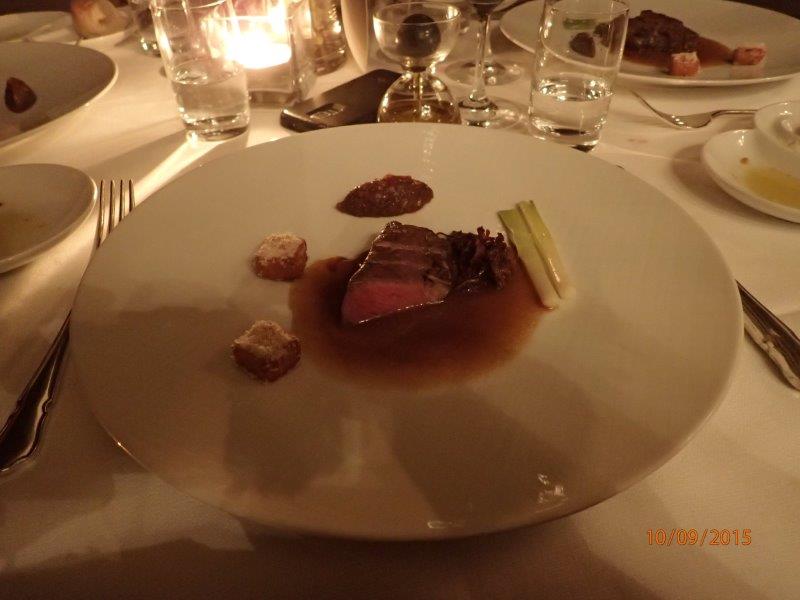
The frosting on the cake was without any doubt the Angus with stewed angus, chanterelles and gnocchi with Belper cheese… I know the dish looks small on the dish, but it was very big in flavors that were needed to be able to match up with a strong wine like the Amarone Classico from Allegrini.

Angus with stewed angus, chanterelles and gnocchi with Belper cheese (3)

A meal stands or falls with the last dish you get, as that is the one that stays longest in your memory… There are lots of restaurants where you’ll get a wonderful meal, but where dessert is just ok, not the sweet piece of heaven you would want at the end of your meal… Hans Snijders in our case managed to make a goal with the dessert he served us, a taste of Dulcey chocolate, creamy caramel and flavours of coffee… I was afraid the coffee flavors would be too present, but the were well balanced out. We were served a recioto della Valpolicella Classico which is a sweeter wine with accents of cherries… We were even served a little meringue pie as second dessert 🙂

Taste of Dulcey chocolate, creamy caramel and flavours of coffee (2) Taste of Dulcey chocolate, creamy caramel and flavours of coffee (3)

We had a wonderful evening!! First of all because of the lovely company at my table who I consider as family (of course my dad is actually family, but you know what I mean 🙂 🙂 )… but it would have been this fun without Hans Snijders, Marilisa Allegrini and their know-how of making good products !! Thank you to them and their teams  for giving us an unforgettable evening

P9100025

The boys 11


Save water, drink wine

“I drink when I’m happy and when I’m sad. Sometimes I drink when I’m alone. When I have company I consider it obligatory. I trifle with it if I’m not hungry and I drink it when I am. Otherwise I never touch it, unless I’m thirsty”  by Madame Jacques Bollinger who was obviously referring to Champagne…Me personally I would relate it to wine in general :-). Finding a good wine bar in Antwerp to drink a good glass of wine until 1 or 2 years ago was a difficult quest… you barely had them  (with exception of the Pazzo wine bar). The past year however more wine bars seemed to find their place in Antwerp. (which I like) One of those wine bars/shops that opened 2 weeks ago was Avini aka the Avignonesi flagship bar/shop.

Avignonesi

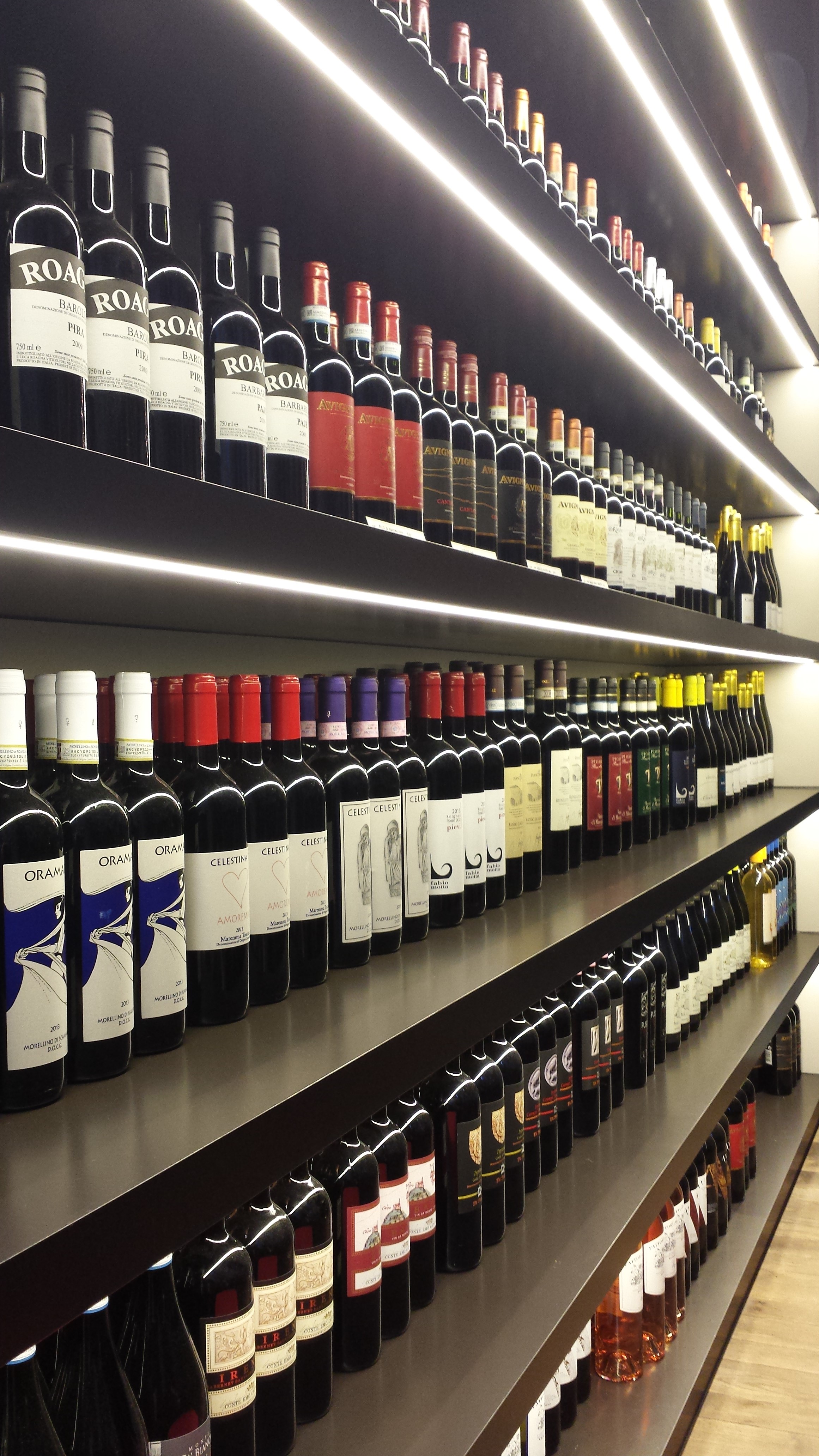
Avini already caught my attention before it opened. Not only because I know the owners (Thomas was singer in a band I used play in high school – I played drums), but also because it would be a wine bar/shop serving only Italian wines (yes, the chauvinistic Italian in me rises on moments like that ;-)). Not only Avignonesi wines (as that’s what you would expect it beeing a ‘flagship bar), they also serve wines from estates from all over Italy (the usual suspects, Tuscany, Piemonte, Alto Adige, Valpolicella) that you can either buy to enjoy at home or drink at the wine bar (maybe with some bruscetta or other antipasti) for which you pay the so called ‘cork-fee’ of around 10EUR per bottle. This does make it very interesting to open some real beauties they have in their collection. (I already put some on my list for next time)

20150708_212036

20150708_212121

20150708_230416

When I went to Avini earlier this week, my mind was set on trying the Nobile di Montepulciano and especially the Grifi from Avignonesi as I had heard lots about it. Why especially the Grifi? Because it was, before Avignonesi was taken over by the new owner, one of its most famous wines that unfortunately wasn’t made anymore since 1996 (read more about it in this article). As I think the new/current owner probably was (or became) also a fan of this wine, she decided to remake the wine 🙂 Thank you for that Virginie, I did enjoy it 🙂 It had this great round aftertaste and was full bodied, something I like about red wine. I wish I could express/explain it in a fancy way like pro sommeliers, but I’ll just stick to that I liked it ;-).

I did finish off with a weakness of mine, fortified wines like Porto, Sherry, Madeira, Marsala or in this case Vin Santo… Lucky me they even had 3 different kinds (technically 2, as 1 is not called vin santo, but its the same thing). I tried 2, so already 1 reason for me to go back to Avini.

VIn santo

I enjoyed my evening, first of all thanks to my buddy Laurent who joined me, the host and hostess for taking good care of us and because of the nice we were able to taste. I know they just opened and searching for the exact thing they want to do, but I do hope that one day they will be serving wines from less known regions in Italy like Valtellina, Lazio or made with less famous grapes :-). BUT I did get the taste for trying more of the Avignonesi wines (about wish I’ll take some more soon, I’m sure).

I wish Eline and Thomas all the best and see you soon!