A trip to little Burgundy the end

Optimbulles

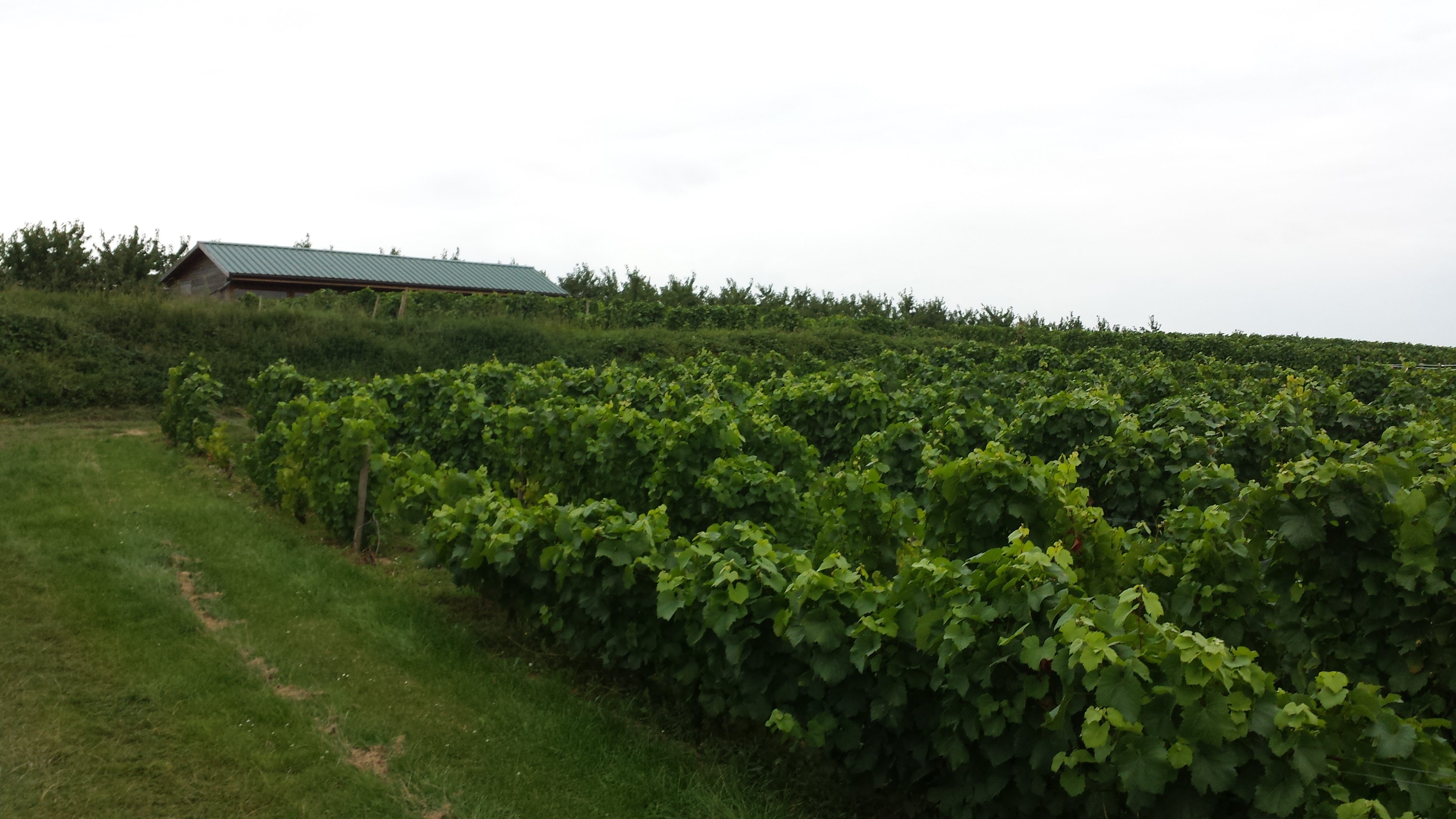
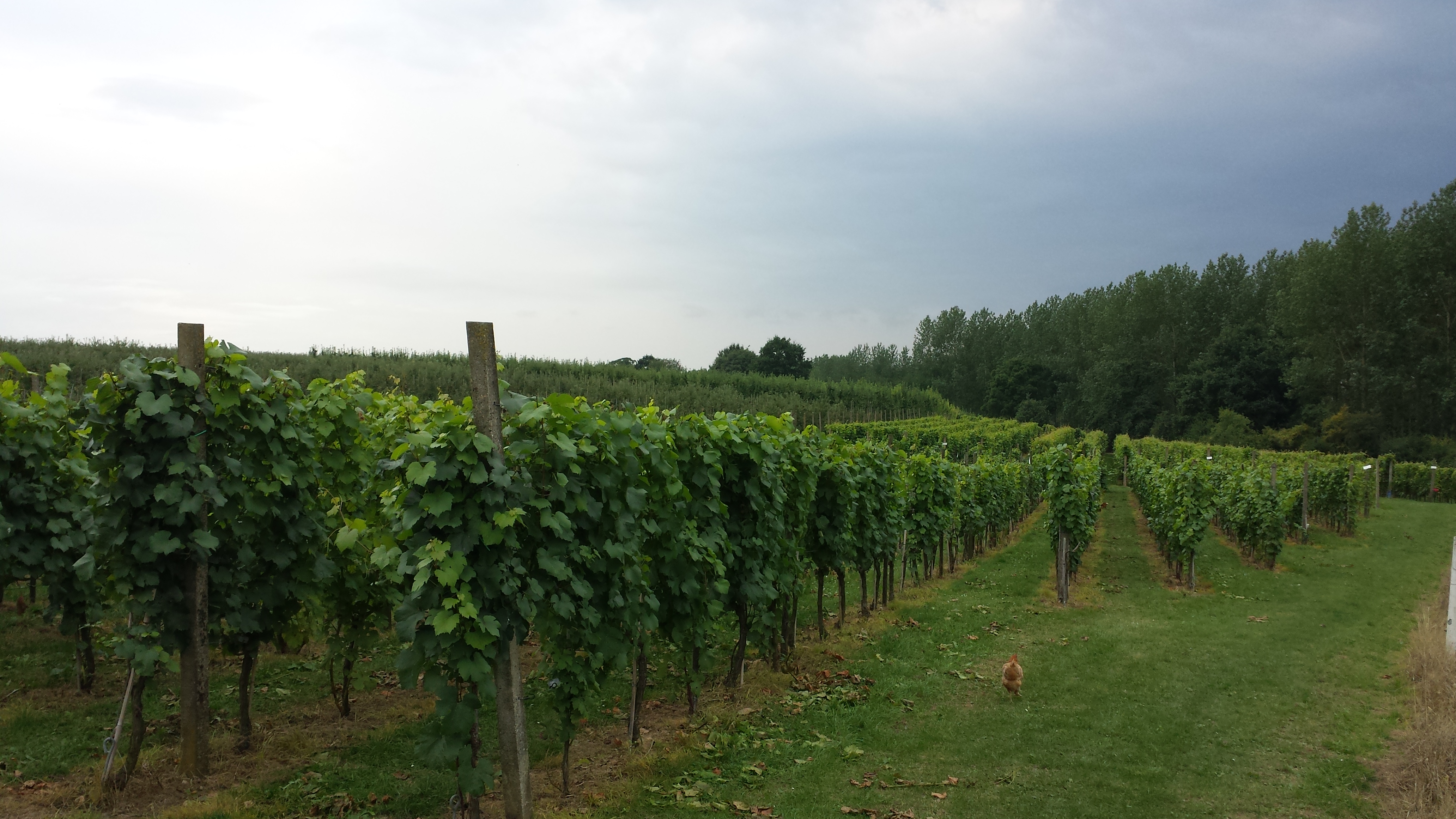
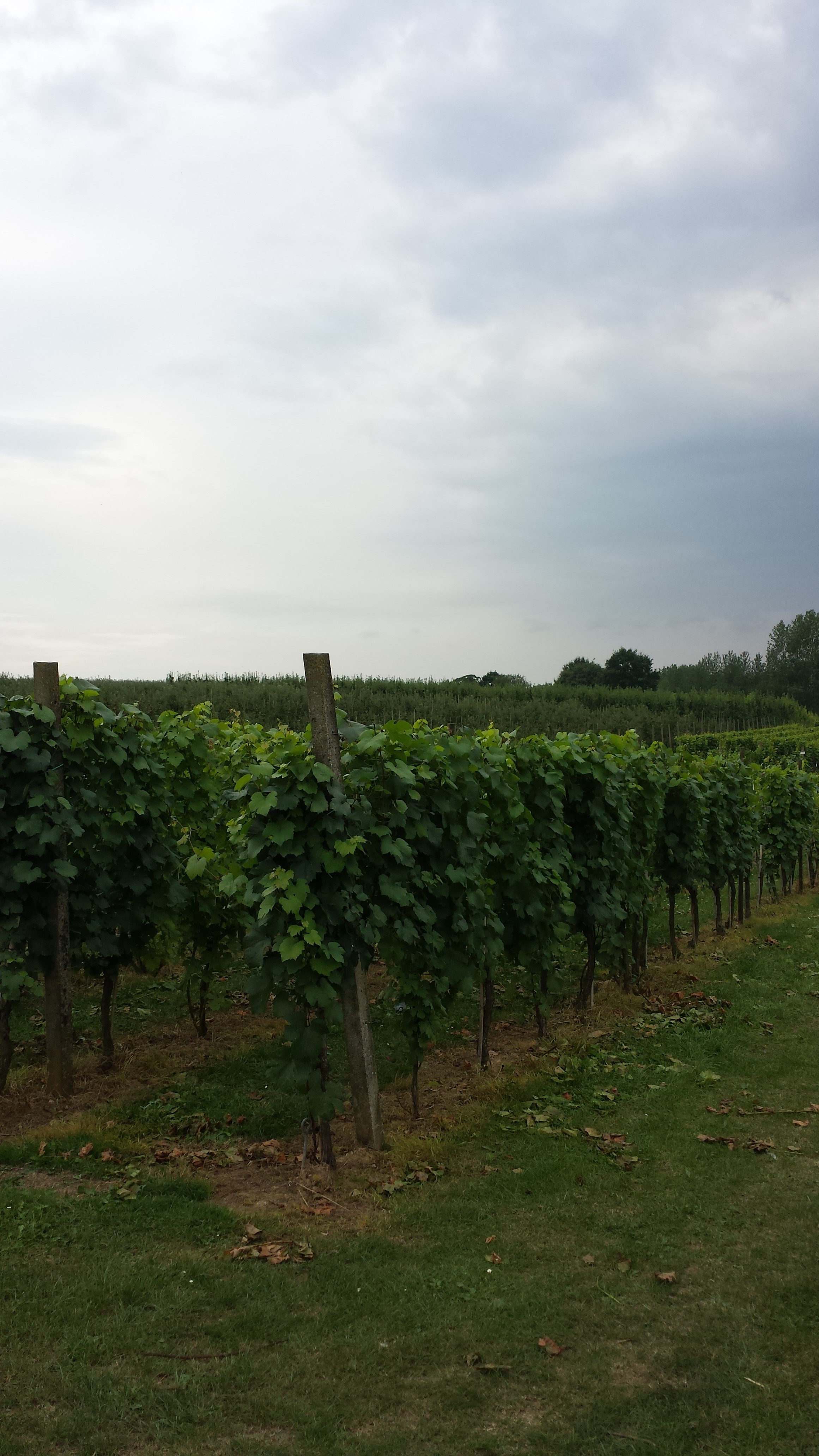
The last vineyard we visited on our trip through Borgloon was Optimbulles or formally known as Champinnot. Champinnot had to change their name as the association behind the French Champagne wine region took it to court as the name referred too much to “Champagne”. Luckily this didn’t stop them to make wine! Visiting this vineyard as last was the perfect ending of an incredible slightly sunny day on top of a hill overlooking the beautiful Borgloon fields! And I couldn’t imagine ending this day without a nice glass of wine 🙂

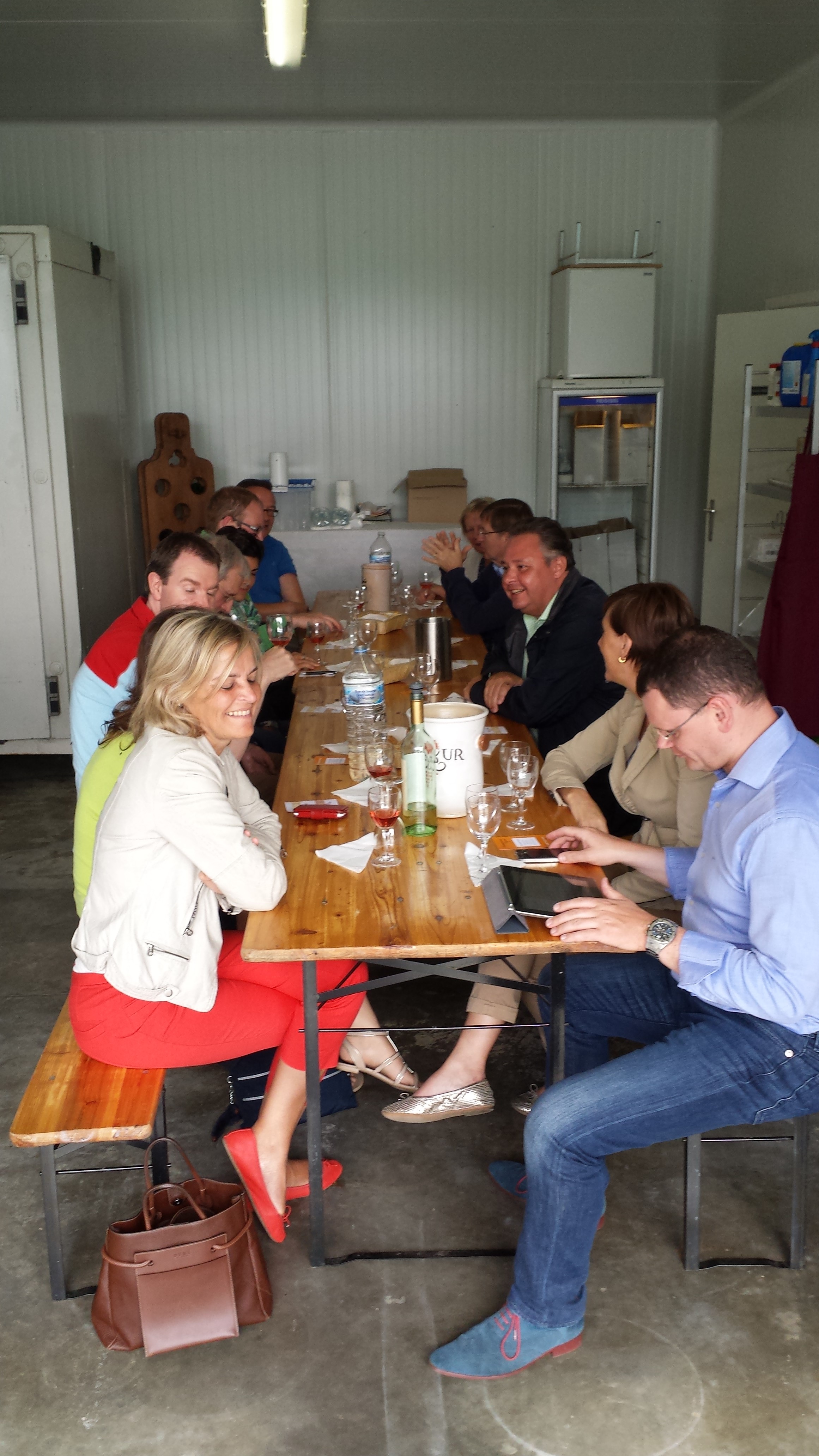
As the name Optimbulles (or the previous name) might make assume, this vineyard is especially specialized in bubbled wine aka sparkling wines (although they also have some mighty white wines). The wine I’ll always remember from this vineyard will definitely be the “Briljant” this wine made me so hungry!! It smelled exactly like one of my preferred bread kind Rye bread. I know I get hungry pretty fast, but due to the smell of a wine was a first 🙂 Don’t get me wrong all the other wines were also good, but this was just a unique smell I had never experienced before.

optimbulles (5)

Optimbulles (4)

Optimbulles (3)

Optimbulles (2)

Optimbulles (1)

Around the 90’s Guy Geunis, Theo Pasque and Rik Schreurs decided to make wine on their vineyard in Jesseren (at the border of Borgloon). Their focus (as I said before) is on sparkling wines made in/with the traditional grapes (Chardonnay, Pinot Noir and Pinot Meunier) and way of working. Something they cherish a lot at Optimbulles is that they don’t add extra sweeteners, they only “sugar” in them is the natural one. This is why their wines are referred to as Extra Brut or Brut Zero (No liqueur d’expédition has been added and has less than 6 grams of residual sugar per liter).  Optimbulles has 3 types of sparkling wine “Robijn”( 70% Chardonnay, 20% Pinot Noir red and 10% Pinot Noir white –  so basically this is a rosé sparkling wine), “Trilogie” (mainly Chardonnay, filled up with Pinot Noir and a little bit of Pinot Meunier)and Briljant (that I mentioned above and is made of 100% Chardonnay). Besides the sparkling wines they also make white wine and something more remarkable, rosé wine made from a local grape called “Vroege Loonse” which is a clone from the Pinot Noir.

Their 3 wines

Vroege loonse

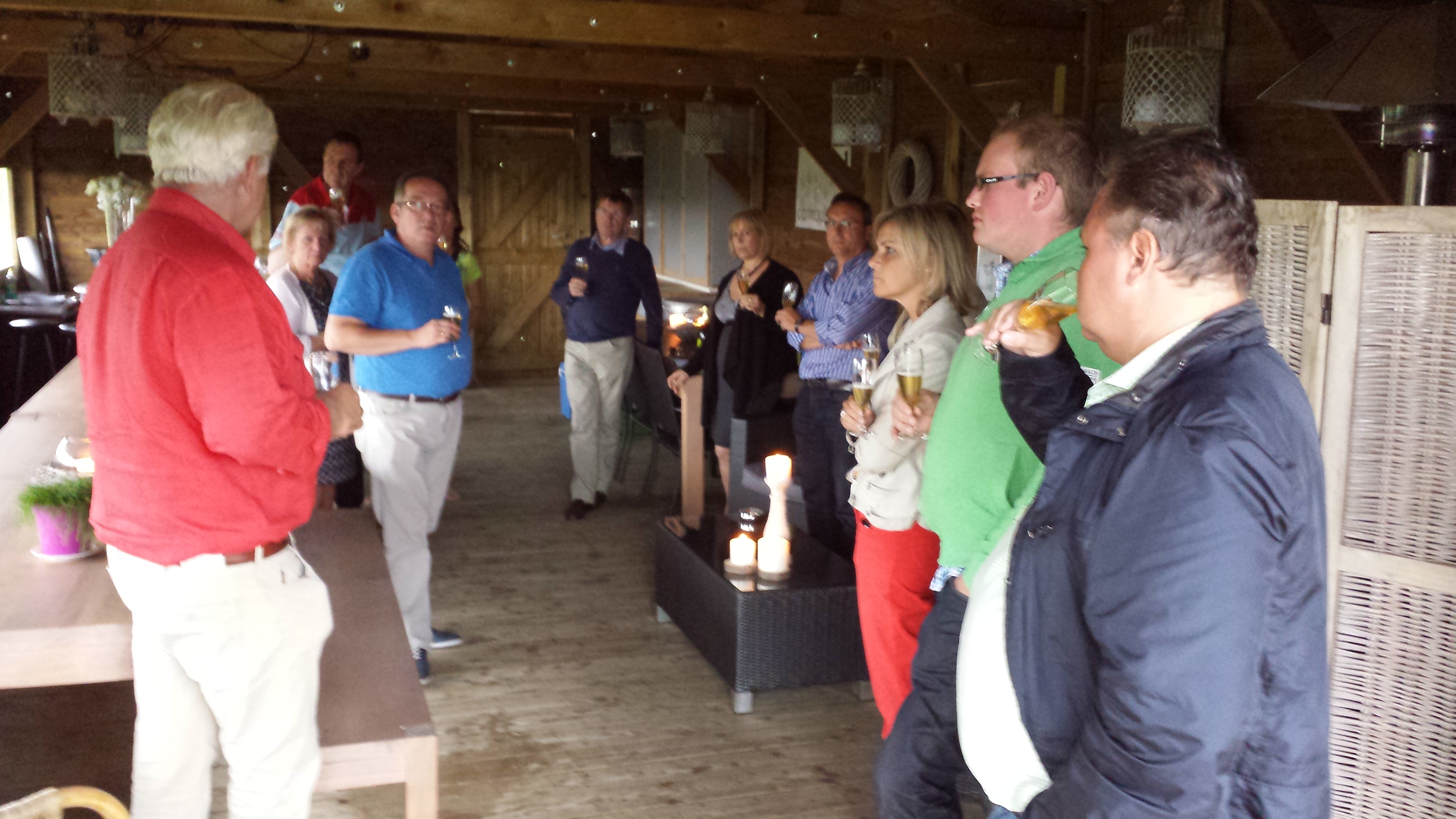
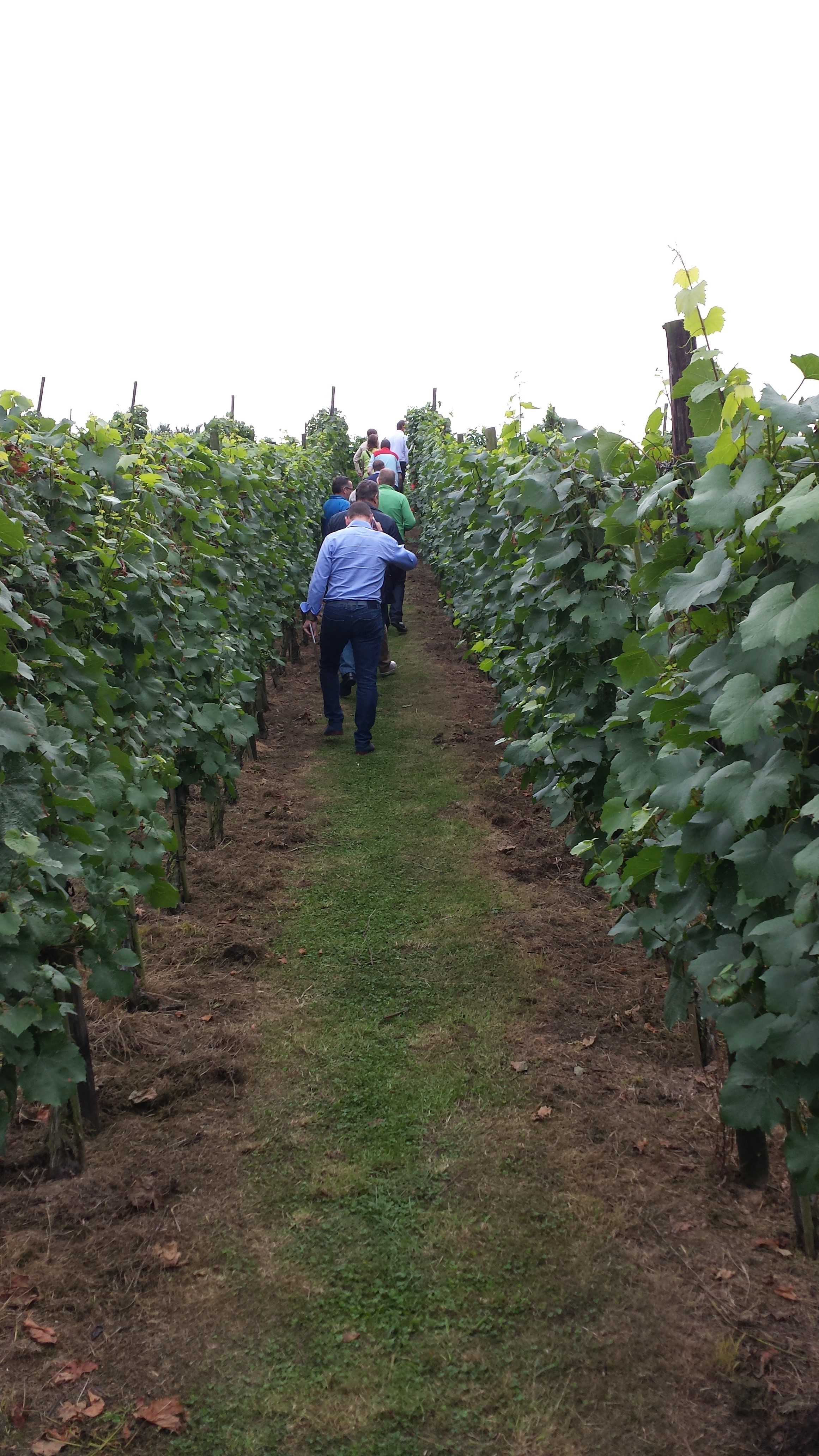
Every body listening to what Guy Geunis has to say

Another important thing to know about this vineyard is that until recently they only made sparkling wine using grapes, now they also make a kind of cider using the local apples (old types like “Boskoop”, “Ceuleman”, “Sterappel”) from their orchard…. again, some people who want to creative and that want to see what good can from the Belgian soil. I can only encourage that!! This product is better known as Apples & Pearls :-)… when tasting it, it obviously first of all tastes like apples, but it also reminded me a bit of wheat beer , but all tastes are well balanced!!  This actually goes for all their wines!!

Apples and pearls

One day I’ll be able to describe you the wines like a real wine expert! 😉

Unfortunately I couldn’t find a website from them, but in case you would want to know more I’ll give you their credentials: Lindesstraat 78, 3512 Hasselt –  0472 21 89 72 of 0478 20 57 79.

Ok, enough about Borgloon (for now)

A trip to little Burgundy part 3

Wine estate Hoenshof

Lots of winemakers in Belgium are people who just do it as a hobby and still have another job next to the winemaking. One of those examples would be Ghislain Houben  from Wine Estate Hoenshof or better Professor Ghislain Houben as he is Professor in economics at the University of Hasselt.

Ghislain Houben 2

Ghislain Houben

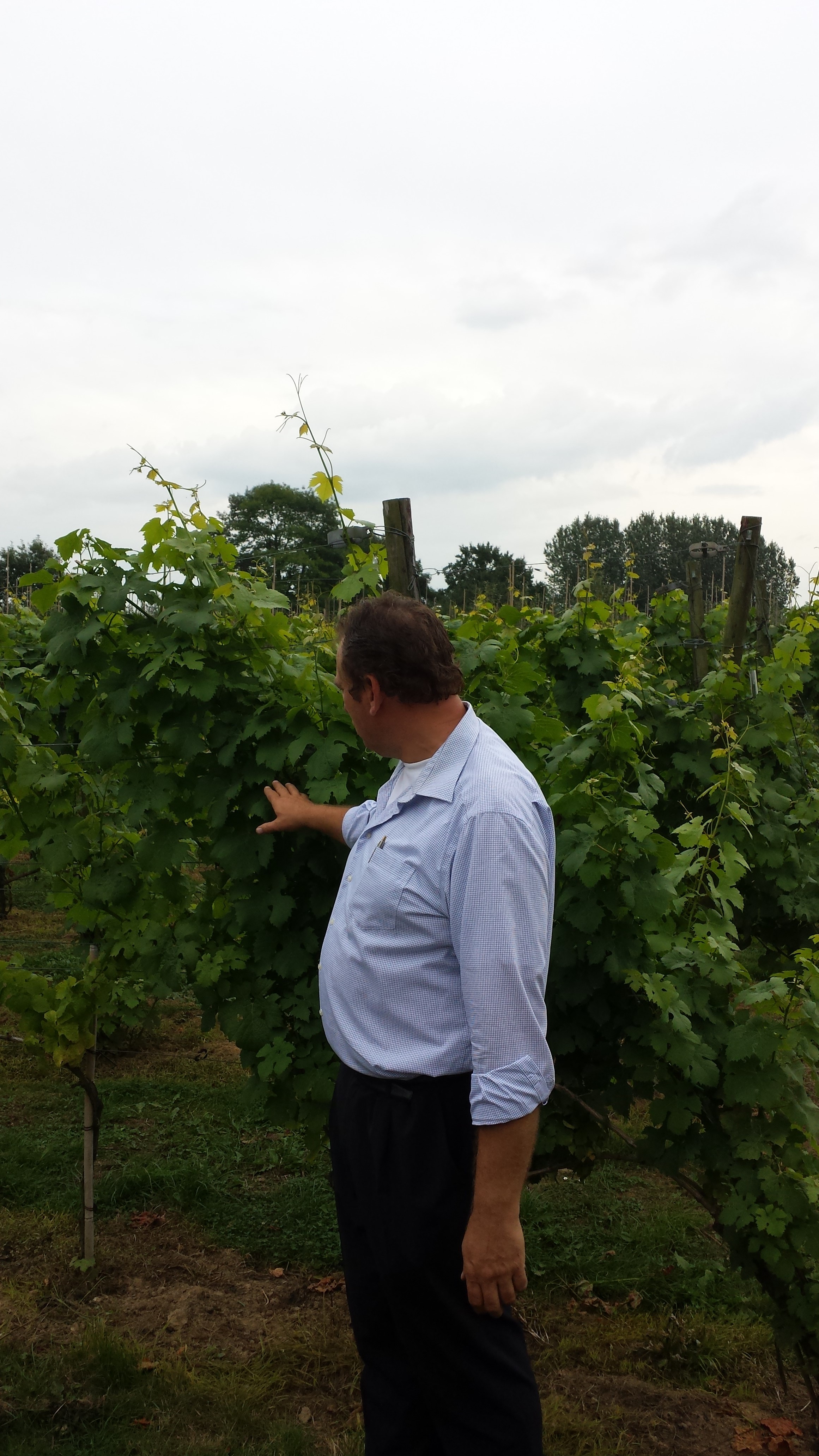
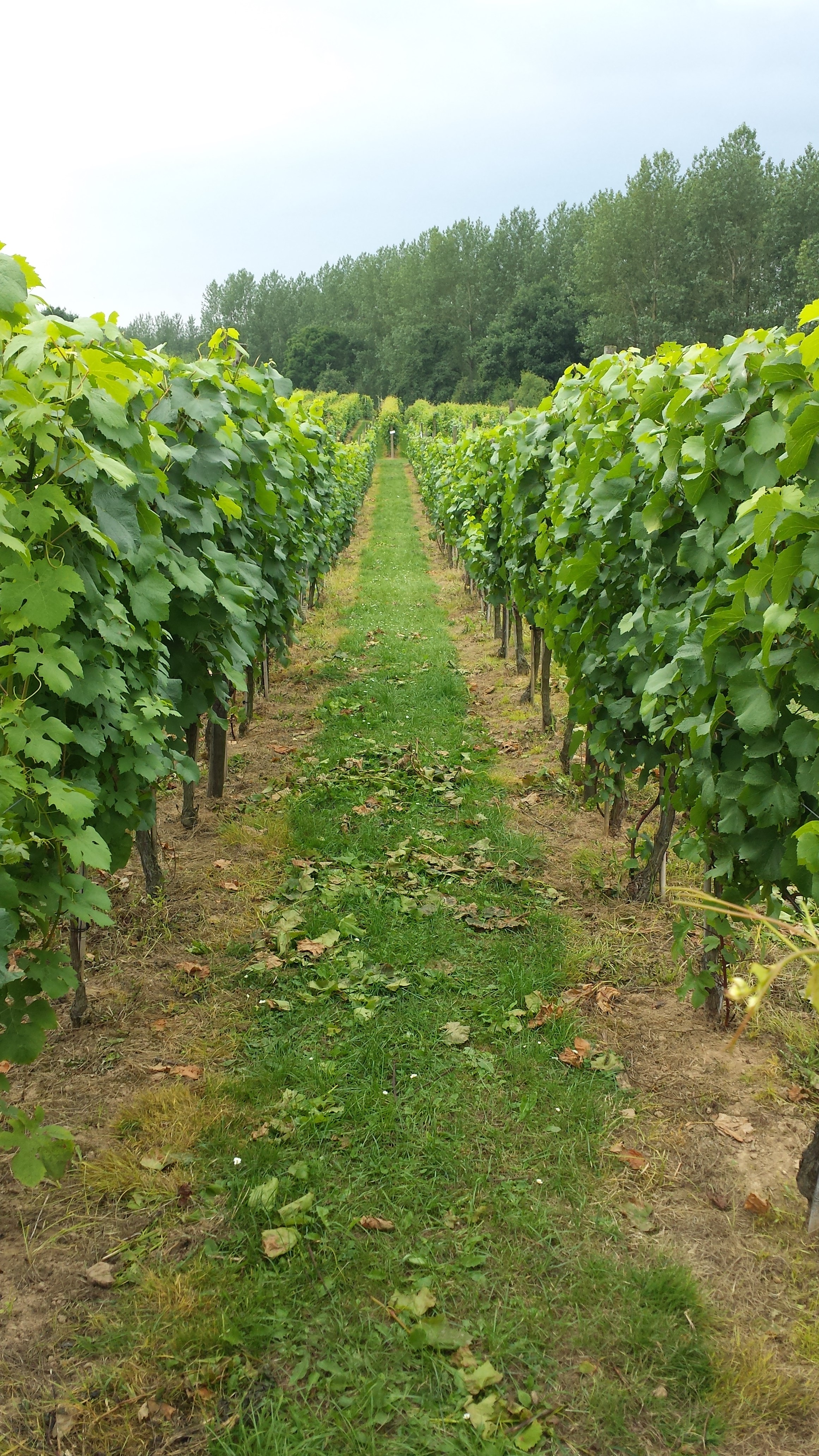
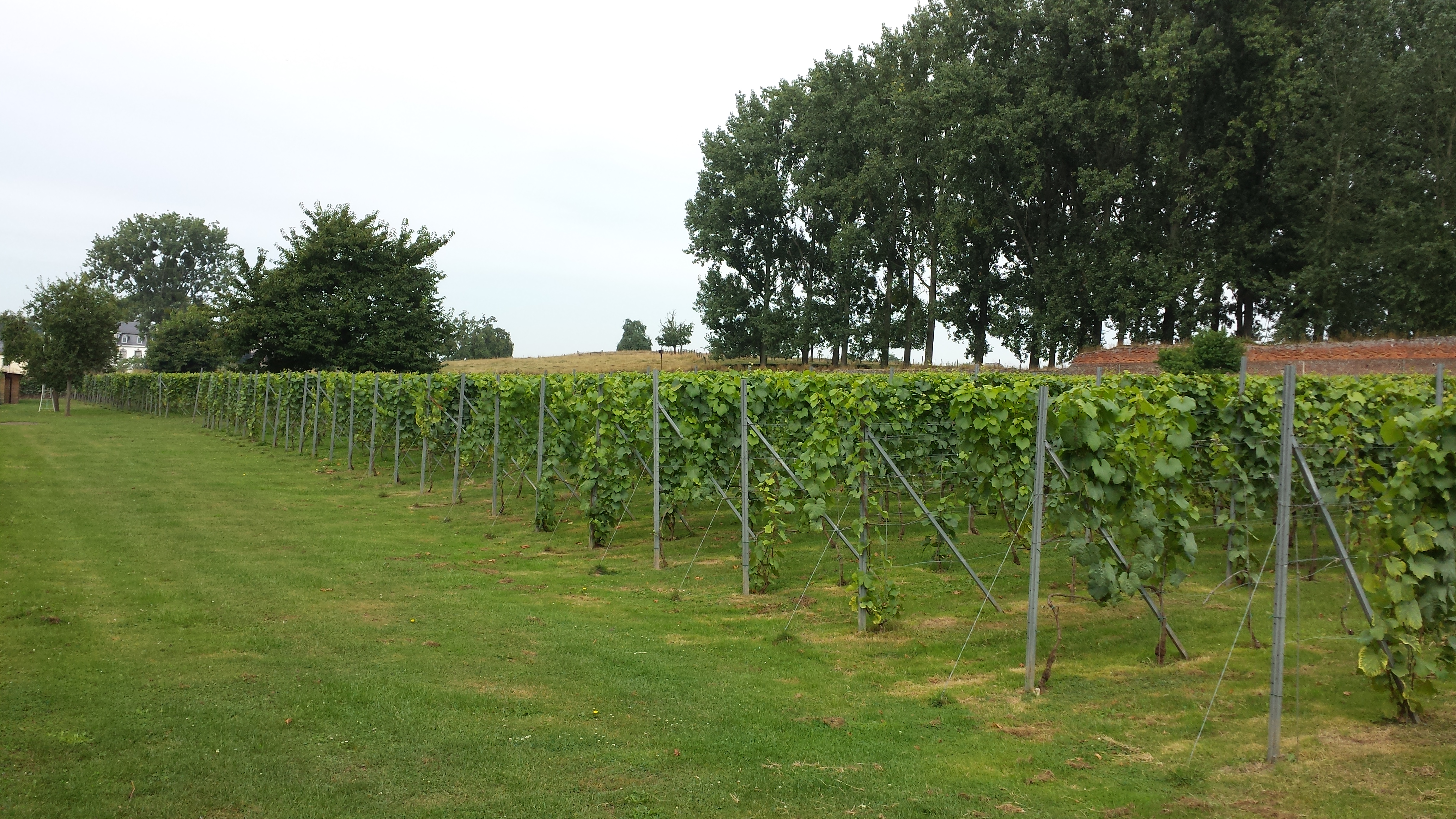
When I think of a Professor, I think of someone who likes to try new things and experiment. I think this does describe what Ghislain Houben really well when you look at his vineyard. What started with having some animals and a few cherry trees has since 2002 grown into a vineyard with more than 5000 vines known as Wine estate Hoenshof.  I was really surprised on the wide variety of different grapes (and wine as end product) Professor Houben has on his estate, from Chardonnay (with which he has won a price as best Belgian Chardonnay in 2011) to Cabernet to Dornfelder and he keeps  trying new things 🙂
Hoenshof vines 5

Hoenshof vines 4

Hoenshof vines 3

Hoenshof vines 2

Hoenshof vines 1

Although Wine Estate Hoenshof has won prices with his white wines, the future of the estate will be focusing on good quality red and dessert wines as the amount of vineyards producing this in Belgium is quite low. During our visit Professor Houben showed us a map with on it all the vineyards there were in Belgium around the 18th century (in red), I must say we were all amazed to see how many there were in these regions today the day it is not even 1/3 of amount you see on the map… funny enough most in the regions that are now also “well-know” for making wine.

Belgium vineyards 18th century

What differentiates Wine estate Hoenshof from most vineyard is Belgium is the type of barrels that get used. Most vineyards will be using French oak aka winter oak, as for Hoenshof they decided to go for summer oak which originates from Austria/Hungary. The big difference between the two types of oak is the fact the summer oak has bigger pores.

Summer oak

With the big assortment of wines we couldn’t just leave without trying all (or most) of them 🙂 I know we are too good for this world, I think one day I’ll be naming a street after me 🙂 🙂

Hoenshof tasting

Hoenshof assortment

Anyhow, tasting we did. Normally I’m not really a dessert wine kind of person as they are usually too sweet and sticky.  It has to be said that the dessert wines Hoenshof makes are anything but sticky or too sweet… they are soft, fruity and nice acids with a nice nose (they smell nice).  I’m not sure which one was my favorite, but if I would have to pick it would be the 2012 Wurzer as it had the smell that reminded me of Mosel/Austrian wines that I like a lot and has a fruity taste with well-balanced acids. Again, I’m not a pro… I just know what I like.

Wurzer

Overall some nice wines not all grape combinations were my cup of tea, but that is a matter of personal taste… I do admire Professor Houben for his creativity and would recommend you to try them yourself and you judge which one is your favorite.

Stay tuned for the last part about my trip through Borgloon…

A trip to little Burgundy the sequel

From all the tasting we did at clos d’opleeuw’s vineyard (that  you could read about in my previous blopost) a person becomes very hungry 🙂 luckily Kris Lismont is owner from a restaurant called “Mondevino”. Mondevino might not immediately ring a bell, but maybe restaurant “Ambrozijn” might sound more familiar. Restaurant Ambrozijn was the restaurant Kris Lismont had with his brother Johan, but earlier this year the brothers decided to go their own way. Johan will be focusing on teaching young cooks all tips and tricks. Kris on the other hand continued with the restaurant, but with a slightly different approach and concept where the focus will be mostly on wine, this resulted in Mondevino.

Mondevino logo

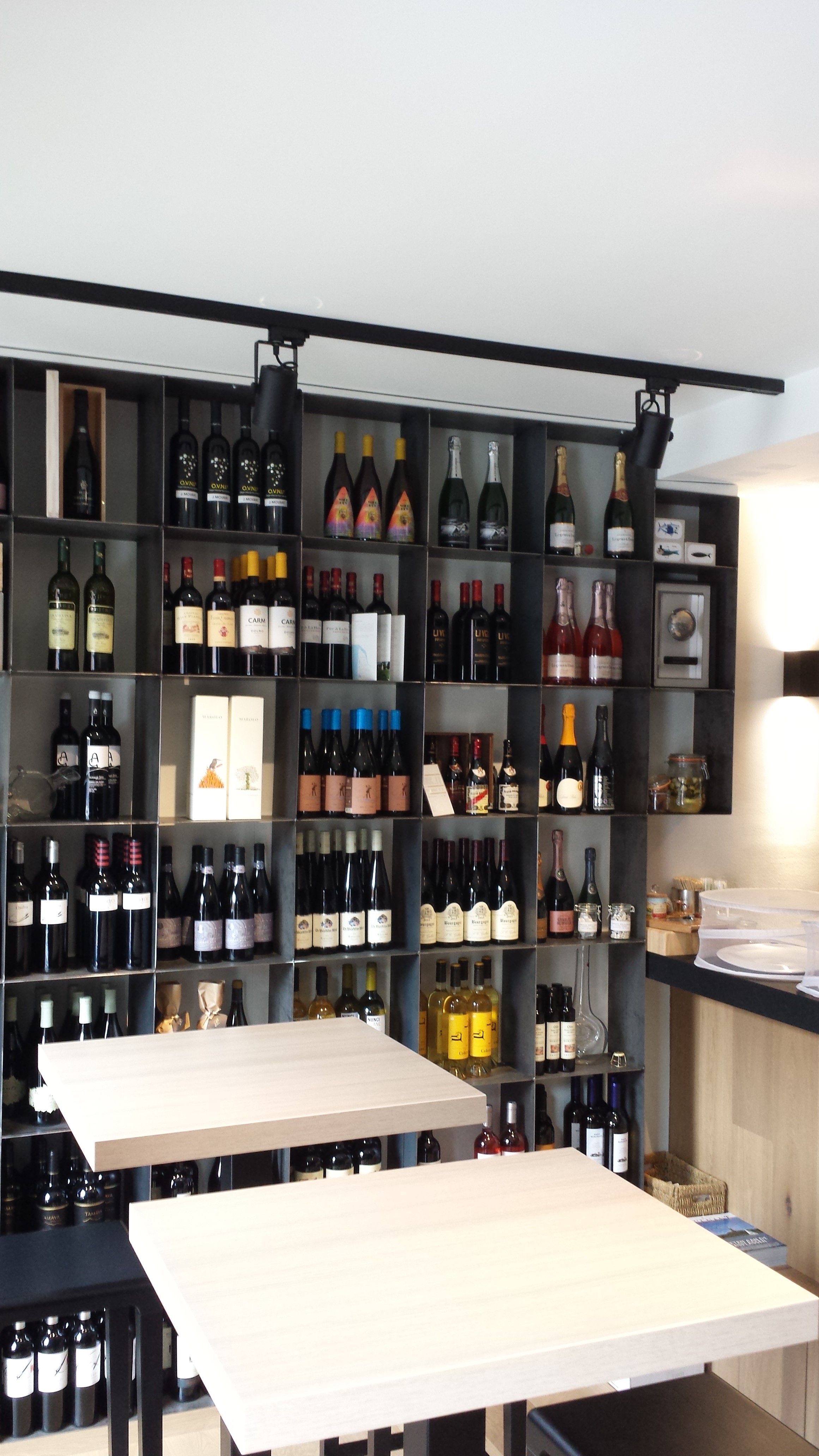
I got instant feeling of happiness when entering Mondevino, not only because of the nice selection of wines you immediately see (I saw some beauties I wouldn’t mind trying), but also because of the very warm welcome (aka Limburg hospitality) Kris Lismont and his wife give you!

Mondevino resto (1)

Mondevino resto (2)

Mondevino resto (3)

Mondevino resto (4)

Mondevino resto (5)

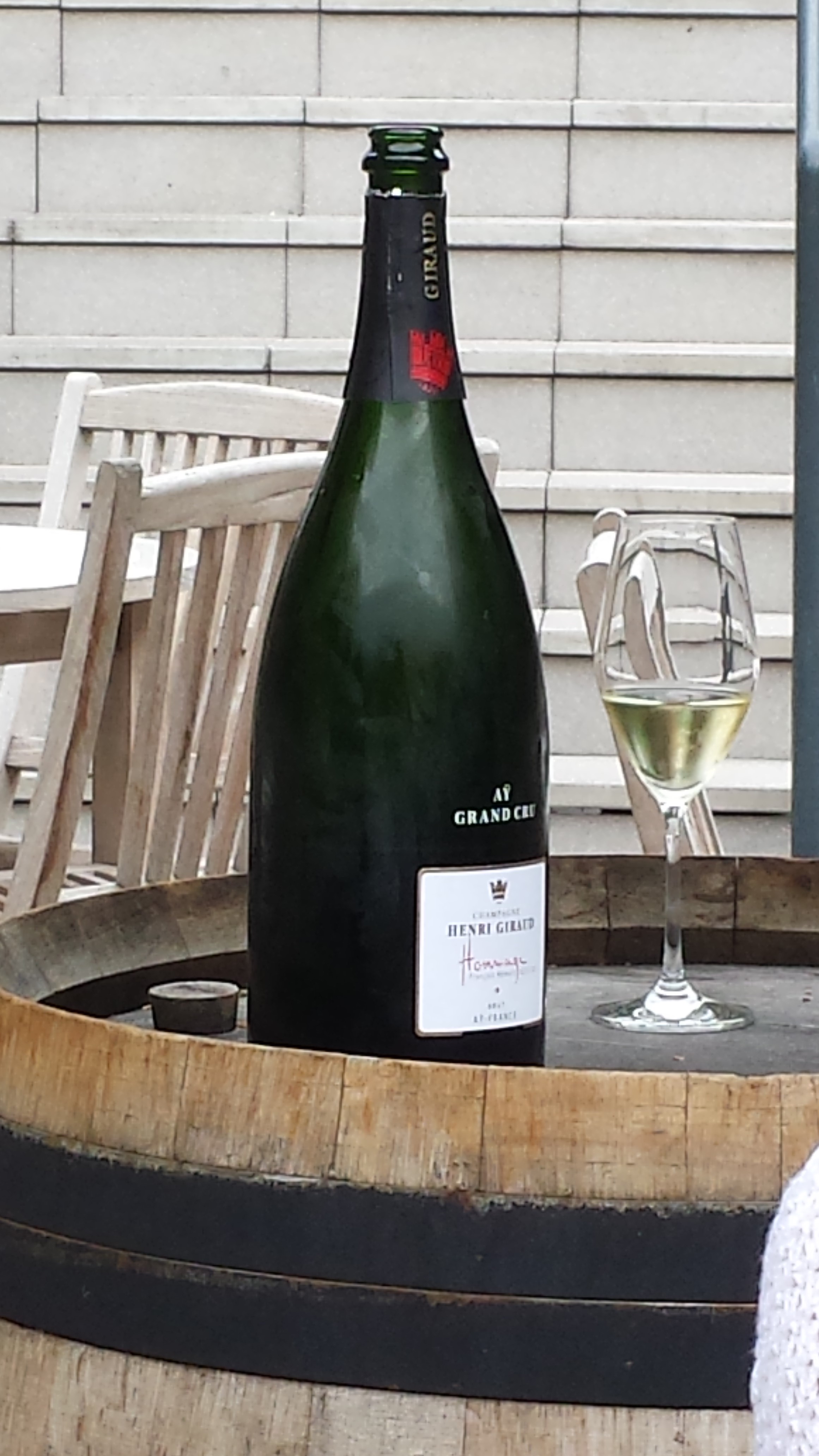
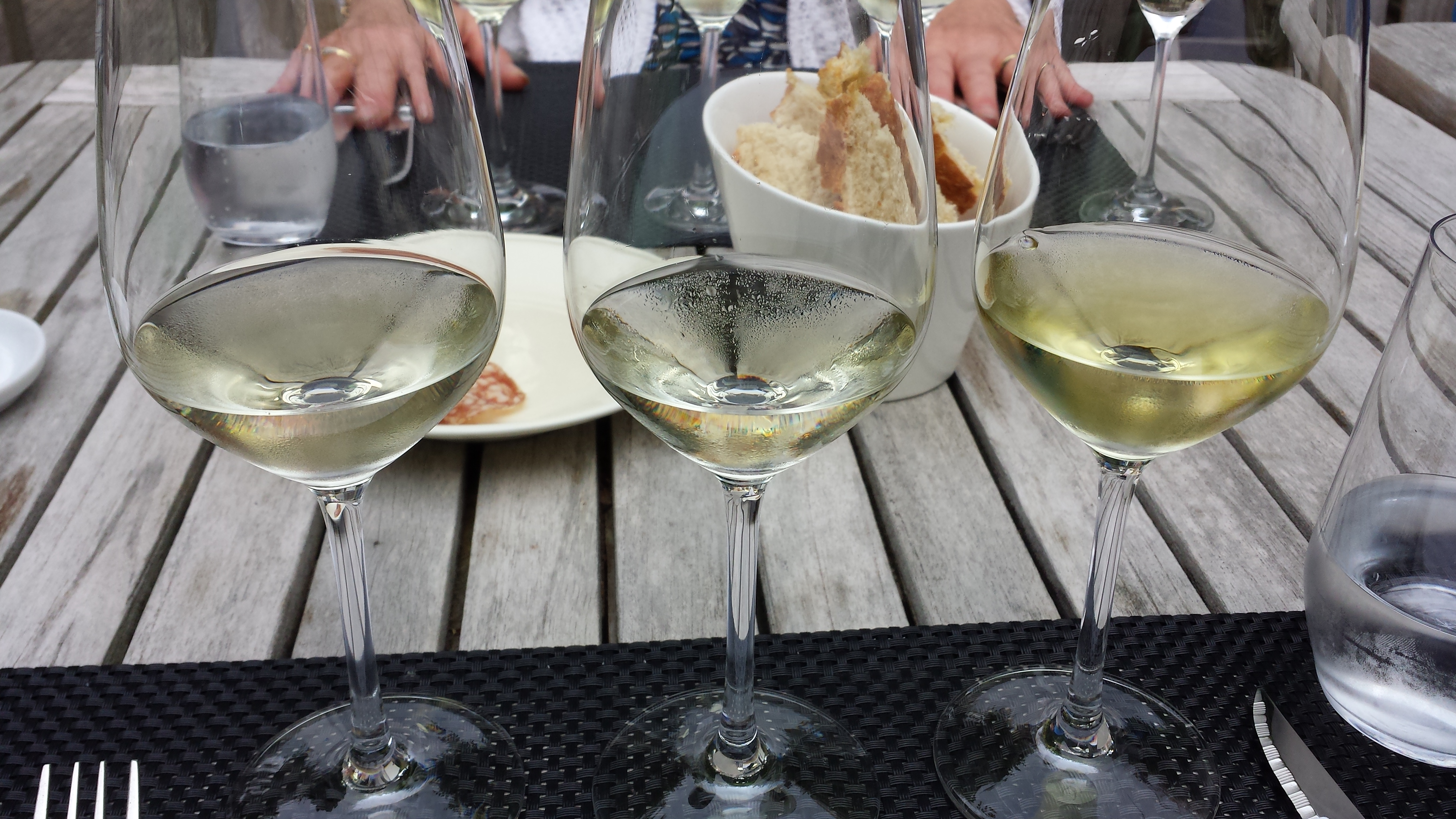
To make the lunch even more fun Kris decided to do a blind wine tasting. So with every course we were given 3 different glasses of wine from which we had to guess the country they were from and which was the best pairing with the dish. I know it might be they did it especially for us, but you should try it sometimes! Finding the country was obviously the most difficult, or at least it was for me 🙂 although sometimes the tastes seemed familiar, but I just couldn’t figure it out. At least everything after our glass of Champagne 🙂 Kris bought this bottle (Henri Giraud) during his trip to the Champagne region and wasn’t sure how it would be, I say it was good

Champagne 1

The first dish they served us was salmon with tepid potato slices and chive cream. The wines we got with it (first without knowing the kinds) were a 2012 Chateau Simon Graves Blanc (FR), 2009 Pinot Bianco (IT) and a 2012 El Hada (Verdejo – ES). It is strange that now that they gave us the choice one really starts drinking/tasting different. I mean normally you just drink whatever they give you and don’t really think if it really works together with the dish, but this time when having to choose between those 3 you start to think which taste goes best together… Me personally I don’t know the technical details behind it, but at some point you just feel/taste it that the combination is right! Cant’ explain it, it just is like that 🙂 I’m also glad my taste buds where nearly as good as the ones from the pros. I didn’t guess the countries, but I did guess which one was best with the dish and the winner was the Verdejo. (Everybody agreed on this one)

First course wines

First course salmon

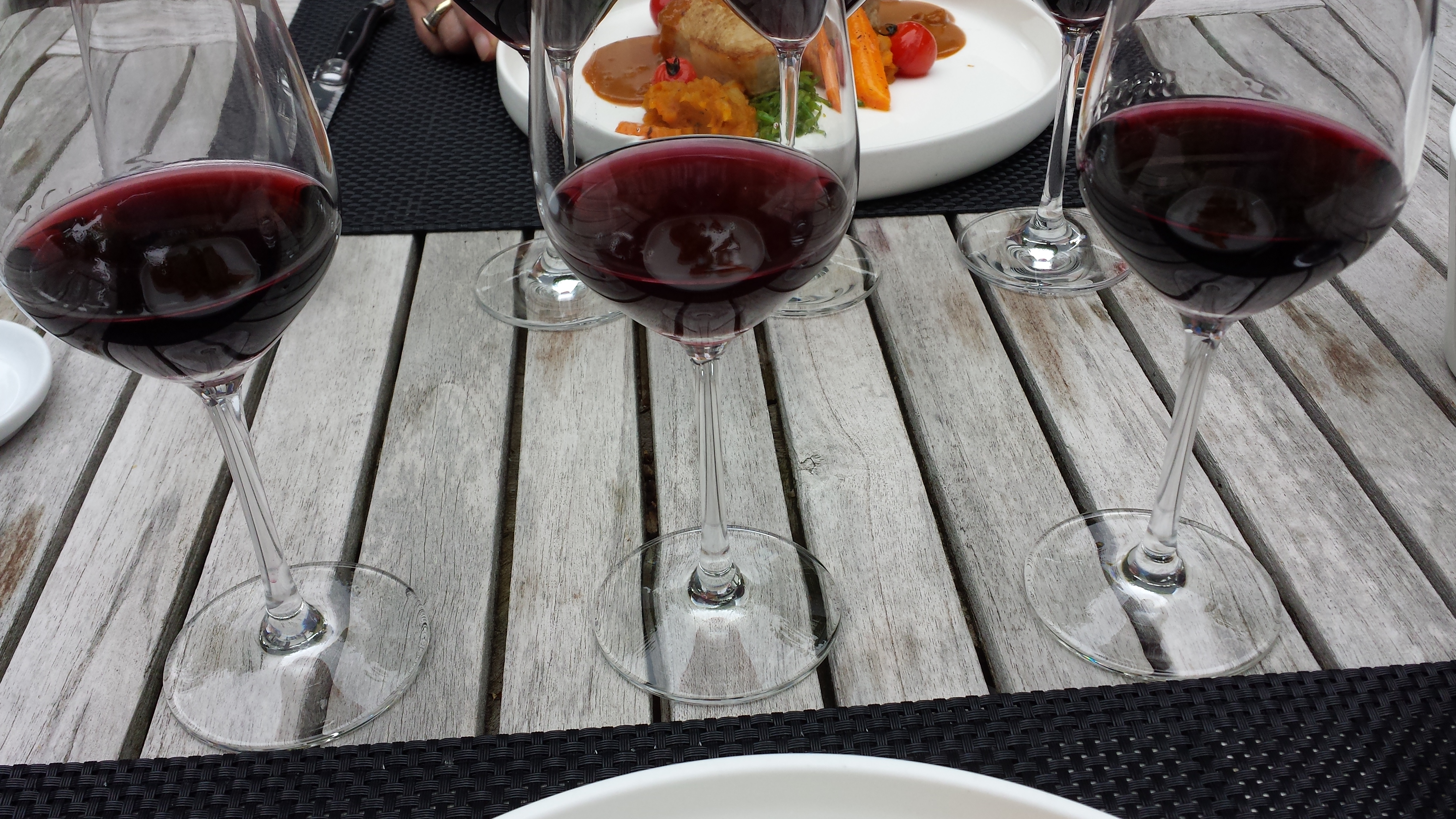
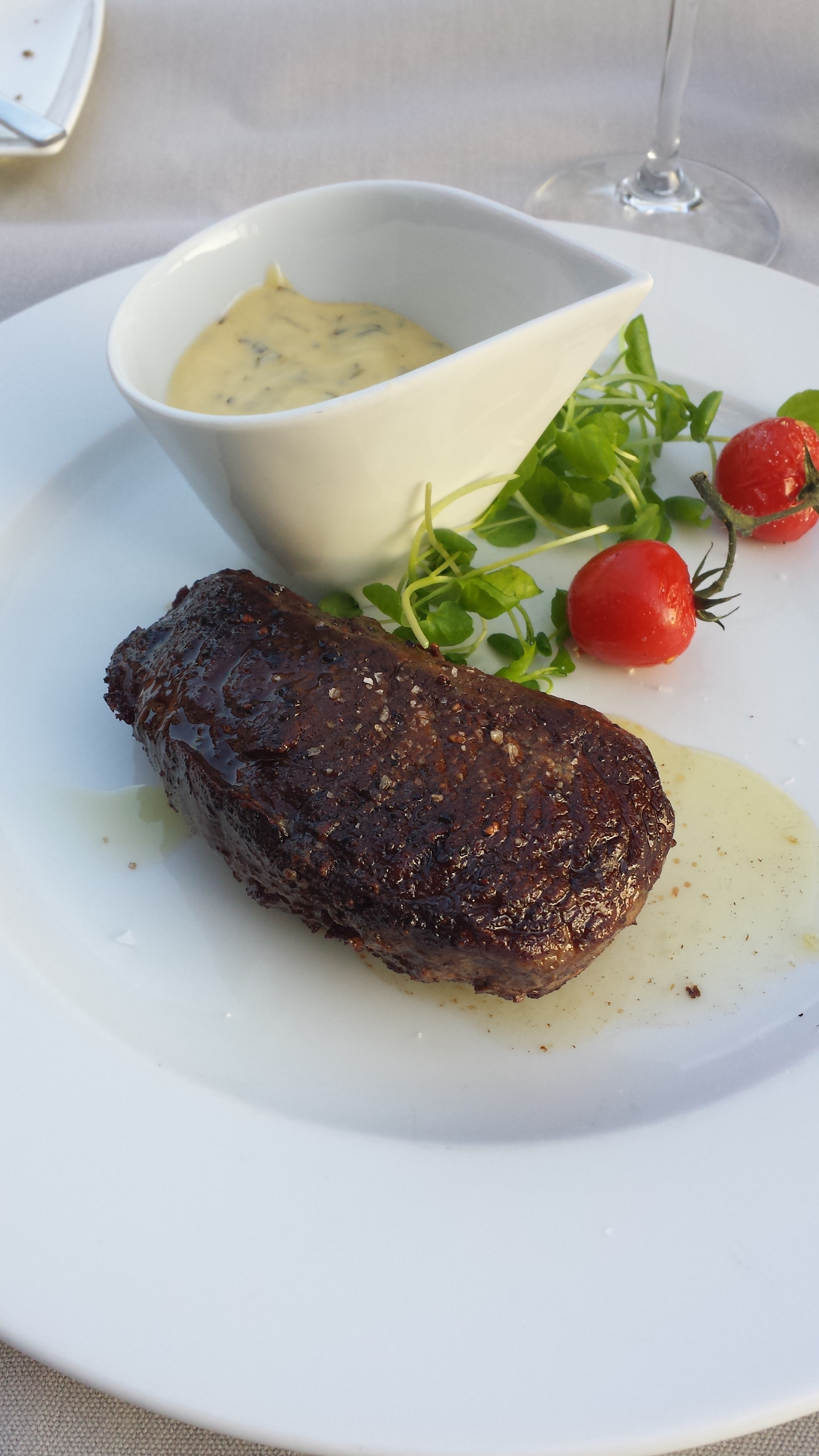
The next round was the same, but with red wines in combination with some Lomo Duroc with Blackwell sauce. This dish needed some strong, but not too strong though. They did chose to go for the same countries as with the white wines, but again we only knew that afterwards. The wines we had were a 2009 Chateau Argadens  (FR), a 2010 Les Crestes (ES) and a 2011 Dolcetto d’Alba (IT). It was the Dolcetto d’Alba that fitted best with the Lomo Duroc… it didn’t overpower the taste of the food, but was still powerful enough… and it might be a coincidence that Dolcetto is one of my preferred wines.

Main course wine

Main course

We finished our meal with a Trifle of red fruit from the area, this time no wine as we still had to visit 2 more vineyards and the line has to be drawn somewhere right? 😉

dessert

To summarize this lunch experience, it was not only a delicious meal, but also very educational one. I will definitely be back, if only already for Kris’ enthusiasm!

Definitely a nice spot to stop during your trip(s) in the beautiful hills of Haspengouw!

Address: Tongersesteenweg 30, B-3840 Borgloon

Website: http://www.mondevino.be/

Phone n° : +32 (0) 12 74 72 31

Opening hours:

Wed – Fri: 10.30h – 23h

Sat: 17h – 23h

Sun: 11.30h – 17h

To be continued with more about my trip and visits to vineyards in Borgloon…

A trip to little Burgundy

It might seem that I’m exploring a lot of the eastern part of Belgium (Limburg) lately, but they just have so many great things to explore :-). This time my trip east brought me a little town called Borgloon, which is a little town right in the heart of the Belgian Fruit region also known as “Haspengouw” (beautiful for cycling in spring). The red wires during this daytrip were top Belgian wines and 2010 best Belgian sommelier Kris Lismont.

I know Belgium is not known as a wine country, but I can say for a fact that the amount of winemakers making good and even great wine that can easily compete against the famous wine countries is getting bigger by the day! Thanks to Kris Lismont we were fortunate enough to visit a 3 of them with all the same goal putting Belgian wines on the map.

The first vineyard on our agenda is maybe to me the maker of the best Belgian white wine. I’m talking about the lifework (since 2000) of Peter Colemont aka Clos d’Opleeuw a vineyard from only 1hectare. Peter only makes Chardonnay (1 year in best quality oak barrels) wine from 5 chardonnay grape varieties. I must correct myself he also has a few Pinot Noire vines but the wine he makes from these grapes is for private use only, or at least until Peter finds the quality good enough for actually sharing it with the world (I tried it and have to say although it is still young it had a typical Pinot Noire taste to it). Back to Clos d’Opleeuw’s signature products their Chardonnay that during lots of blind tastings of well-known white wines is mistaking for a Burgundy wine… so that’s how good it is! Before I start speaking of the wine, maybe I should first tell you more about the person behind the vineyard. Peter Colemont is besides a very friendly and modest person also someone who knows what he wants and is not ashamed to say he consults well-known winemakers and wine experts to make sure he’ll make a TOP product. Peter even worked for a while in some well know vineyards in the Burgundy Wine region to fine-tune his knowledge on how to make wine. When we asked him who gave him the passion for making wine, he said without hesitation Jean Bellefroid who was a pioneer in making Belgian wine.

Peter Colmont

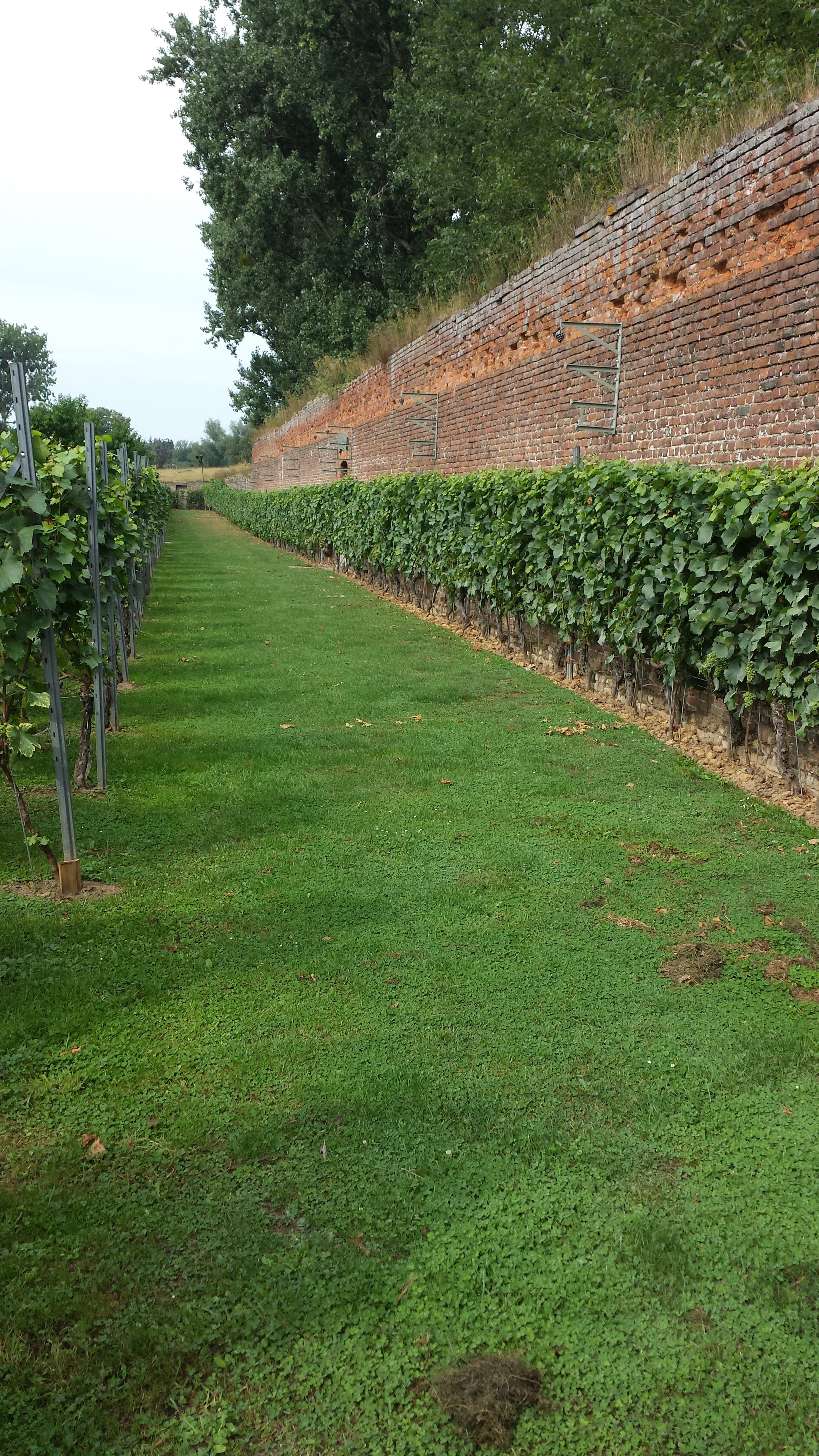
There are multiple reasons this wine is this wonderful 1st of all because of the lime/loam soil in combination with the fact it goes downhill is perfect for the “drainage “of the water (and in Belgium there is a lot of rain 🙂 ). Just think of vines of Chateau Petrus, this also goes downhill. BTW when you see a mistletoe tree you immediately know the soil is lime/loam as this tree only grows on this type of soil.  Secondly because of the fact it is a “Clos”, which is the French word for “closure” or “enclosed”, so basically this means it is a vineyard with walls around it used to protect the grapes from theft as well as improving the mesoclimate. The mesoclimate will be creating the perfect circumstance and environment for growing the grapes (or any other fruit you would like to grow). This is a “technique” used in lots of French regions for making wine. The last and maybe most important reason is Peter himself as he works with so much devotion, care and passion! There is a saying that says “everything you do yourself is done better” well this is Peter’s motto as he does do it all himself, he literally crawls on hands and knees between all his vines to check and take care of every branch. He could use a machine, but this would cut away too much.

Clos d'opleeuw 1

CLos d'opleeuw 2

CLos wijngaard 1 Clos wijngaard 2

Clos wijngaard 3

Clos rijpingskamer

Peter’s passion and high quality product didn’t stay unnoticed as people like Jancis Robinson tasted the wine and started spreading the word ( article) and on top of that Clos d’opleeuw’s chardonnay can also be found on the wine list of the 3 Belgian 3 Michelin star awarded restaurants and Oud Sluis! Lots of people would start flying and start to feel full of themselves, but not Peter he keeps his 2 feet on the ground :-).

Clos groep goed aan het luisteren

I did already know Clos d’Opleeuw for a few years, but it was not until 2 months ago (it might be 3 months) that I tried my first glass thanks to Tom Ieven from restaurant Ardent :-). I also wasn’t sad when I could taste it again, but this time in company of the winemaker himself, we tried the 2010 and 2011. The 2007 would be Peter’s personal favorite, at this moment that is.

Clos 2010

Anyhow, to make a long story short(er) you should definitely try a glass (or bottle) of Clos d’Opleeuw when you have the chance!!! I know it might be difficult to find it as the production is not enormous (3000bottles a year)…  and therefore very quickly sold out but you won’t regret it if you get hold of it.

Stay tuned for more about the 2 other vineyards we visited and the lunch we had with of course wine as main topic….

Hinky Pinky Robby Gin & Tonic

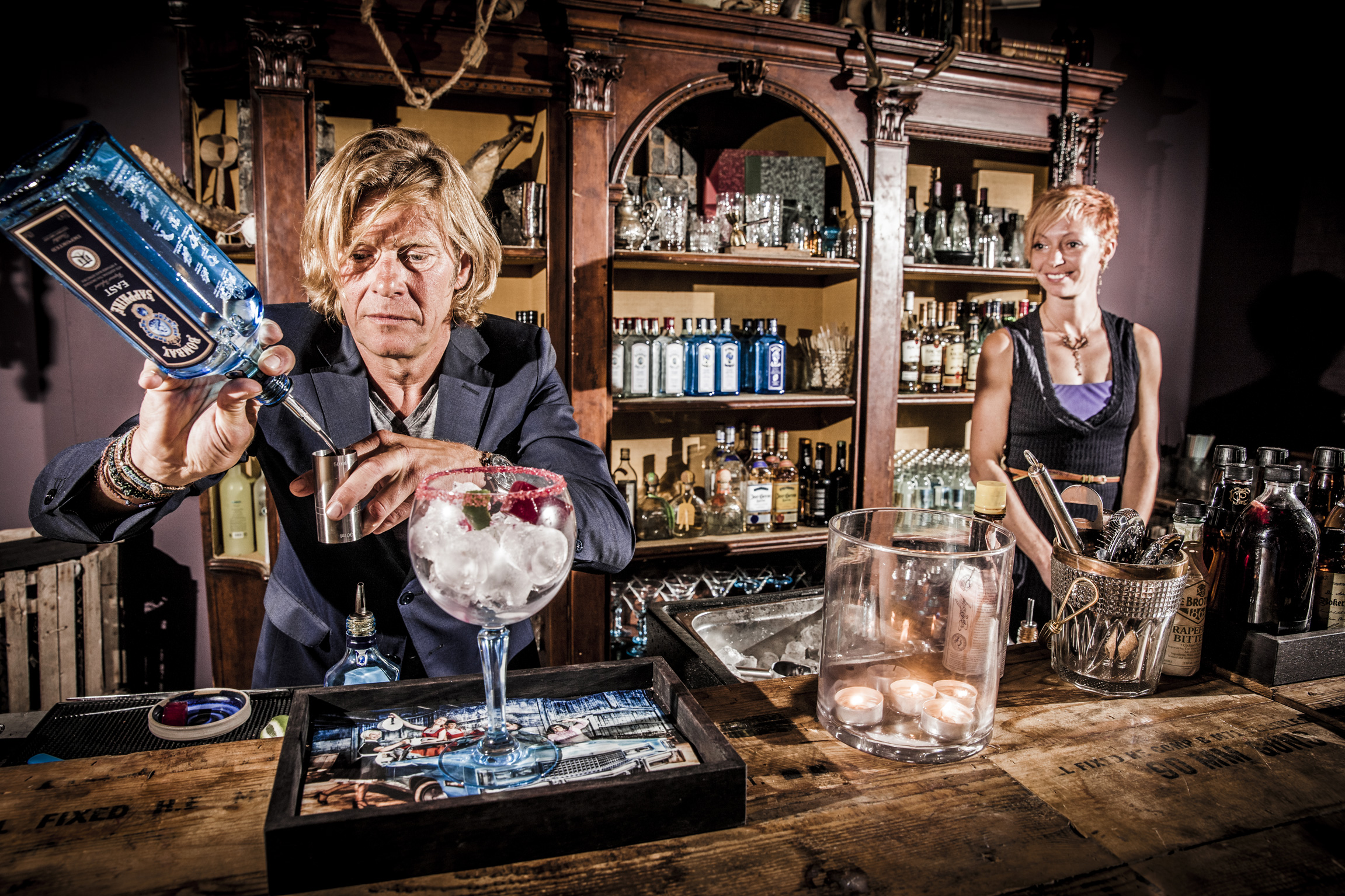
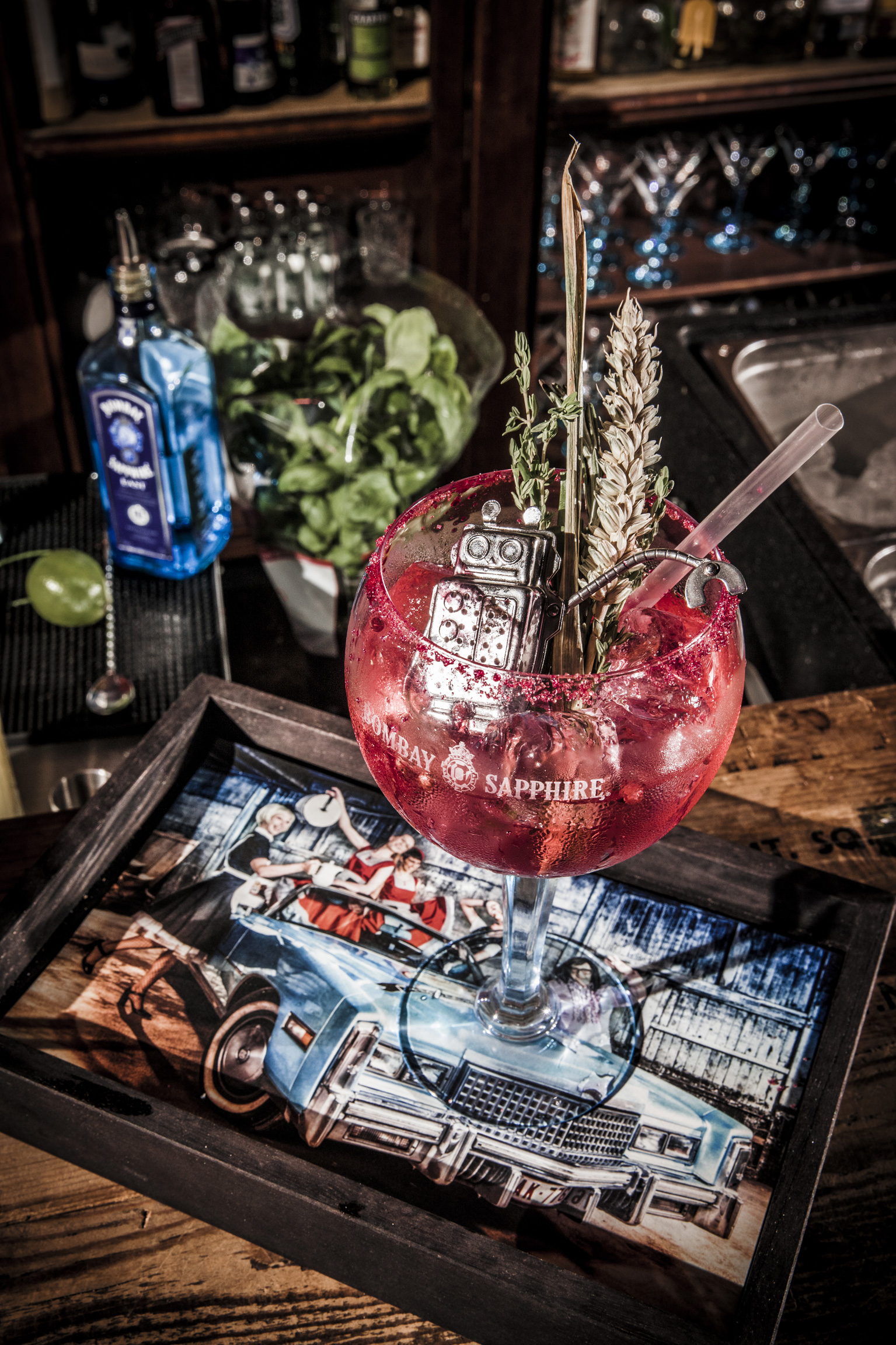
After Dominique Persoone’s Rock ’n Roll Gin & Tonic I now also share with you the recipe of coffee maker Eveline’s Hinky Pinky Robby Gin & Tonic creation.

Imagin - Cocktailbar - Bombay Sapphire - Fever-tree - Knokke

Ingredients:

  • Bombay Sapphire,
  • Tonic (Fever-Tree Mediterranean),
  • Red caster sugar,
  • Pure Fruit & Hibiscus tea,
  • Rose pepper,
  • Rosemary,
  • Chives in bloom,
  • Orange thyme,
  • Sage in bloom,
  • Lemon zest.

Get Started:

  • Make a day upfront a Pure Fuit & Hibiscus tea, let it cool and make ice cubes from them OR , as Eveline did, make 1 big ice cube using a tea holder (in this case Robby).
  • Rub a lime wedge on the rim of a glass (preferably a burgundy glass) and dip it the rim in red caster sugar.
  • Put 1 ice cube you made in the glass and top it with transparant ice cube, add the lemon zest, 5cl Bombay Sapphire and top with tonic

Imagin - Cocktailbar - Bombay Sapphire - Fever-tree - Knokke

Imagin - Cocktailbar - Bombay Sapphire - Fever-tree - Knokke

  • Garnish with some the fresh blooming herbs, rose pepper and if wanted some red fruits.

Imagin - Cocktailbar - Bombay Sapphire - Fever-tree - Knokke

If you don’t feel like making these Gin & Tonic’s yourself you can still taste the @Imagin.

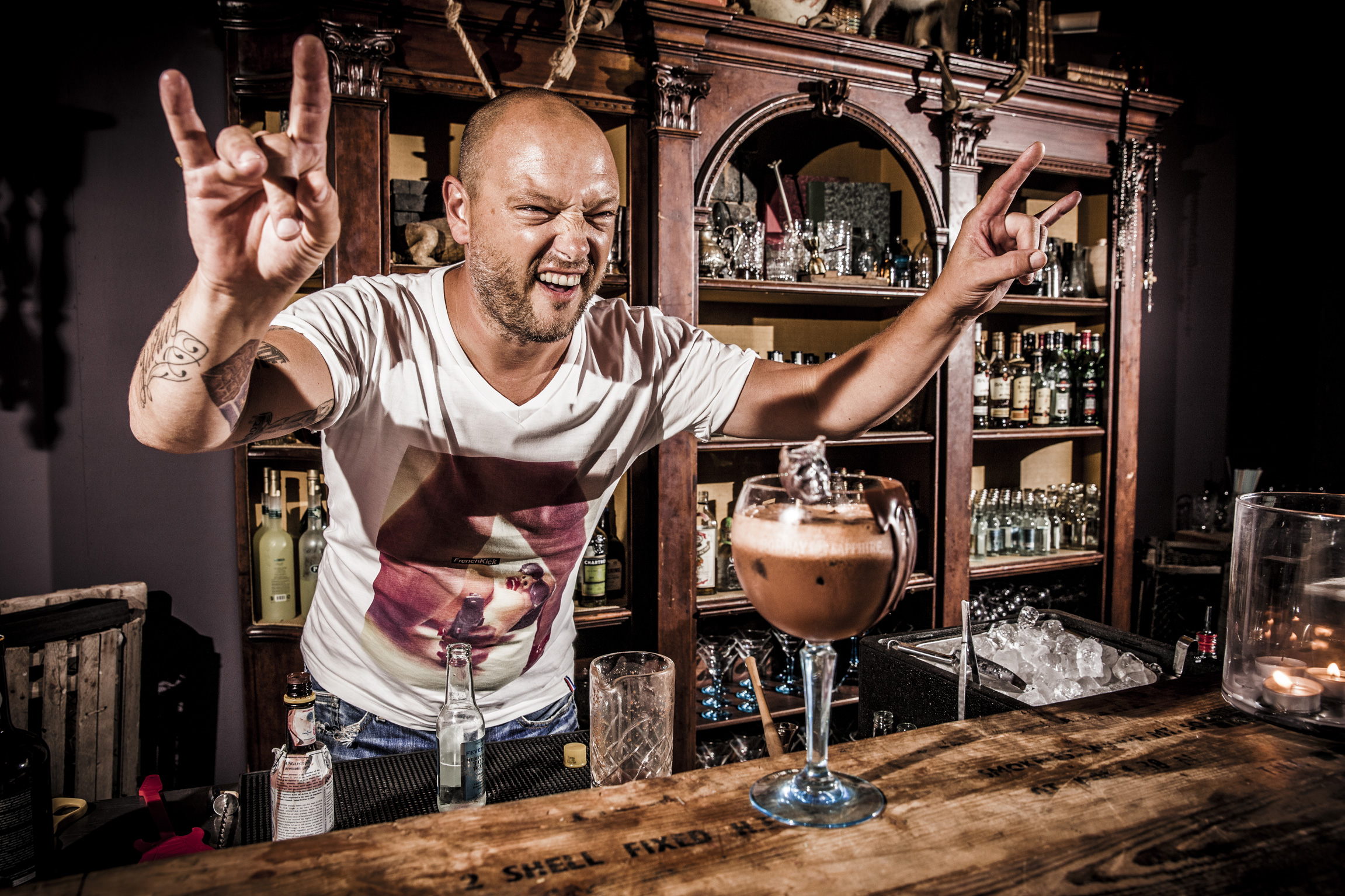
Cacao Hardcore Gin & Tonic

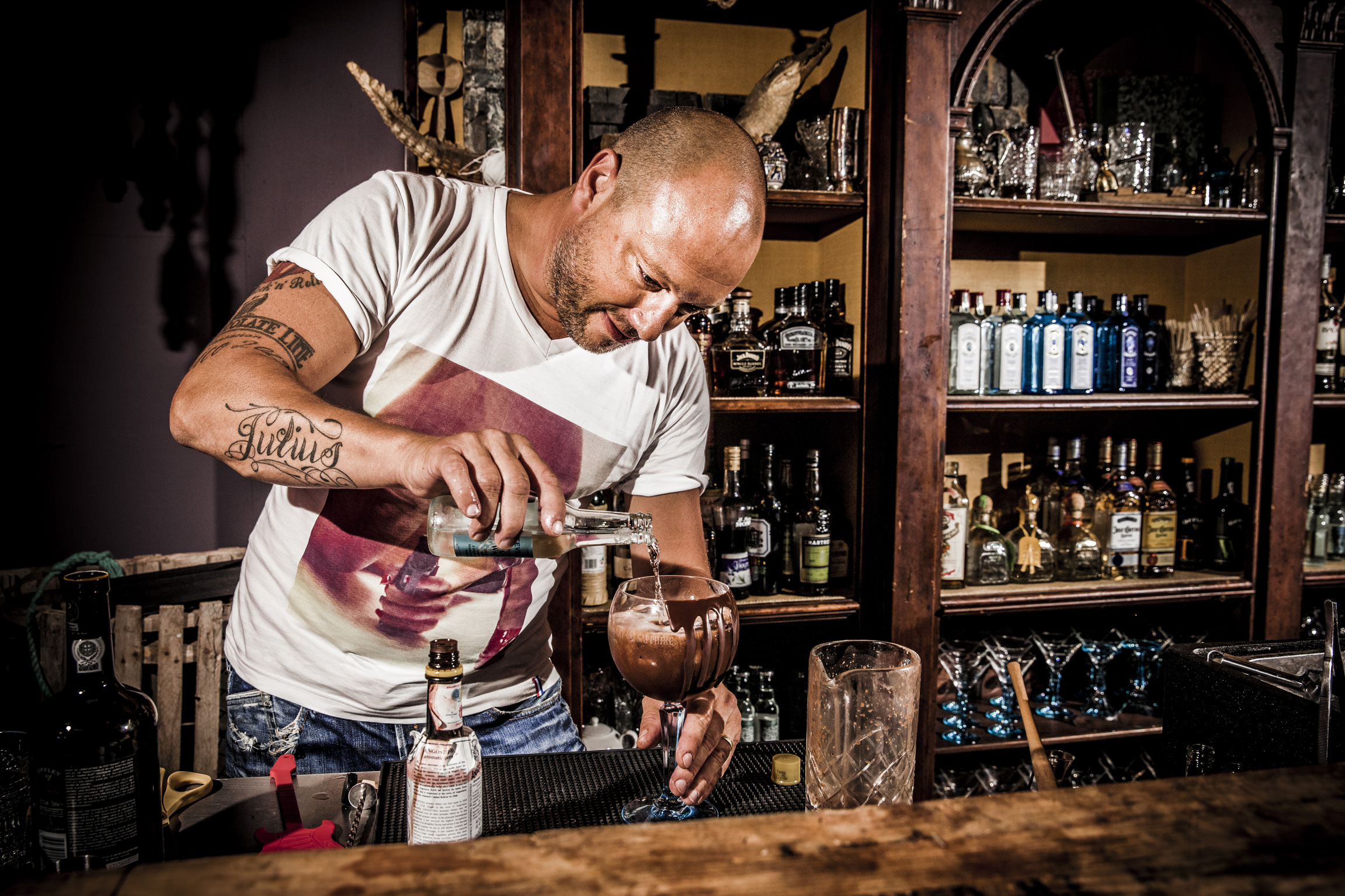
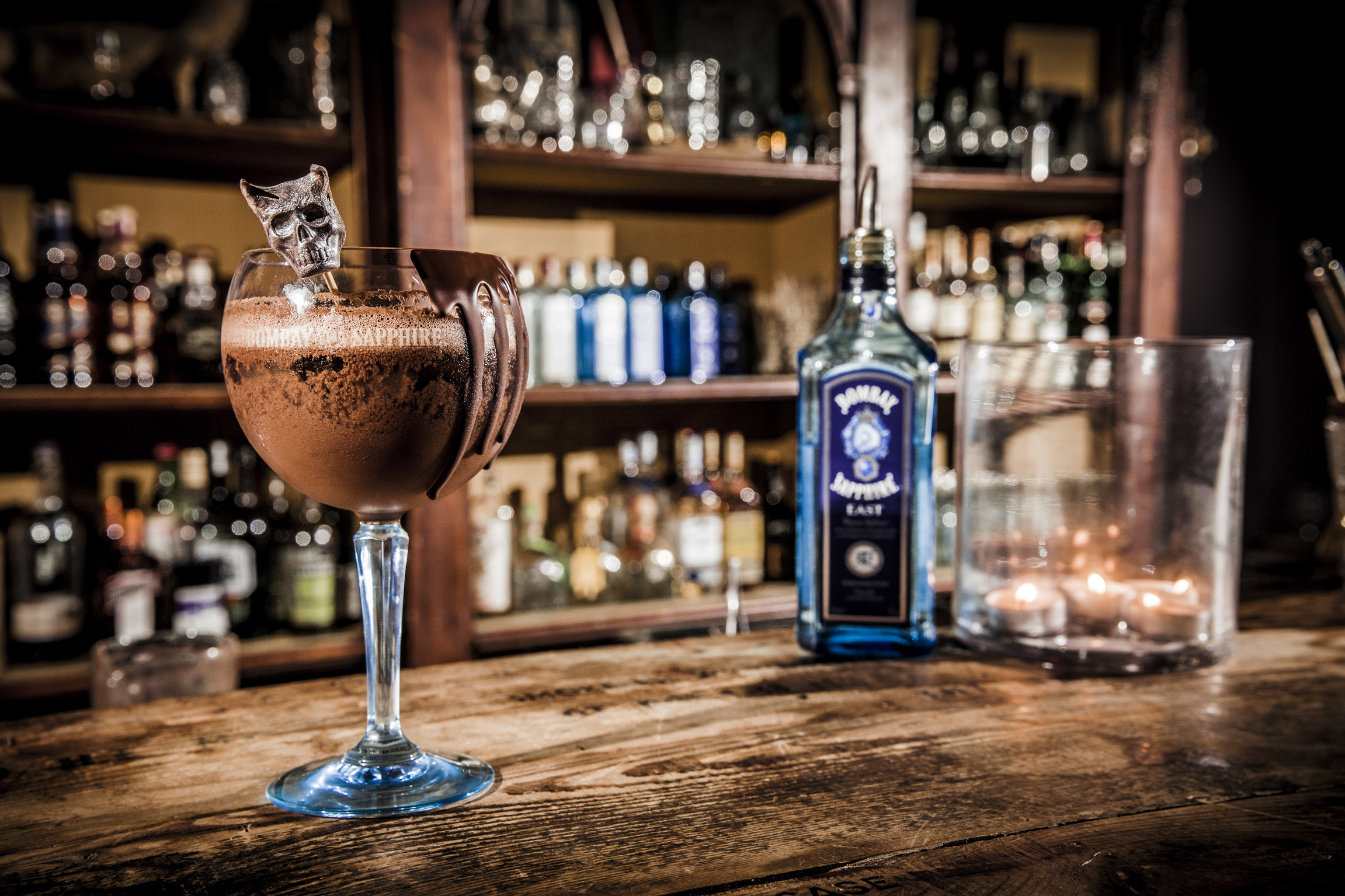
As promised in my Gin &Tonic revisited blogpost I now share with you the recipe of the Rock ‘n roll Gin & Tonic version by chocolatier Domique Persoone. A must drink for the chocoholics!!

Imagin - Cocktailbar - Bombay Sapphire - Fever-tree - Knokke

Ingredients:

  • Bombay Sapphire East,
  • Tonic (Fever-Tree Mediterranean),
  • Angostura,
  • Cacao beans,
  • Offley Tawny Porto,
  • 1 egg white,
  • Paprika powder,
  • Cacao powder,
  • Pure chocolate,
  • Ice cubes

Get Started:

  • Pour a teaspoon of angostura in your glass, thrown in 1ice cube and waltz it in the glass for a few minutes and empty the glass.
  • Put 2 tbsp. of roasted cacao beans in a small casserole.

Imagin - Cocktailbar - Bombay Sapphire - Fever-tree - Knokke

  • Add 3 cl Bombay Sapphire East and pour over the beans. Flambé it and let the liquid reduce until it has halved. When flame is out add another 3 cl of gin and strain the mass through a fine sieve in a cocktail shaker.

Imagin - Cocktailbar - Bombay Sapphire - Fever-tree - Knokke

  • Add 1 tbsp* Tawny Porto, the egg white of 1 egg, 1 tsp** smoked paprika powder and 1 tbsp* of bitter cacao powder. Whisk this mass with molinillo (Mexican wooden whisk) or regular whisk in case you don’t have a molinillo until a lovely foam layer appears (the egg white will make the drink very airy).

Imagin - Cocktailbar - Bombay Sapphire - Fever-tree - Knokke

Imagin - Cocktailbar - Bombay Sapphire - Fever-tree - Knokke

  • Decorate the edges of the glass (using a small piping bag) with drops of liquid dark chocolate.

Imagin - Cocktailbar - Bombay Sapphire - Fever-tree - Knokke

  • Fill the glass with ice cubes, add the mix and fill up with tonic.

Imagin - Cocktailbar - Bombay Sapphire - Fever-tree - Knokke

Imagin - Cocktailbar - Bombay Sapphire - Fever-tree - Knokke

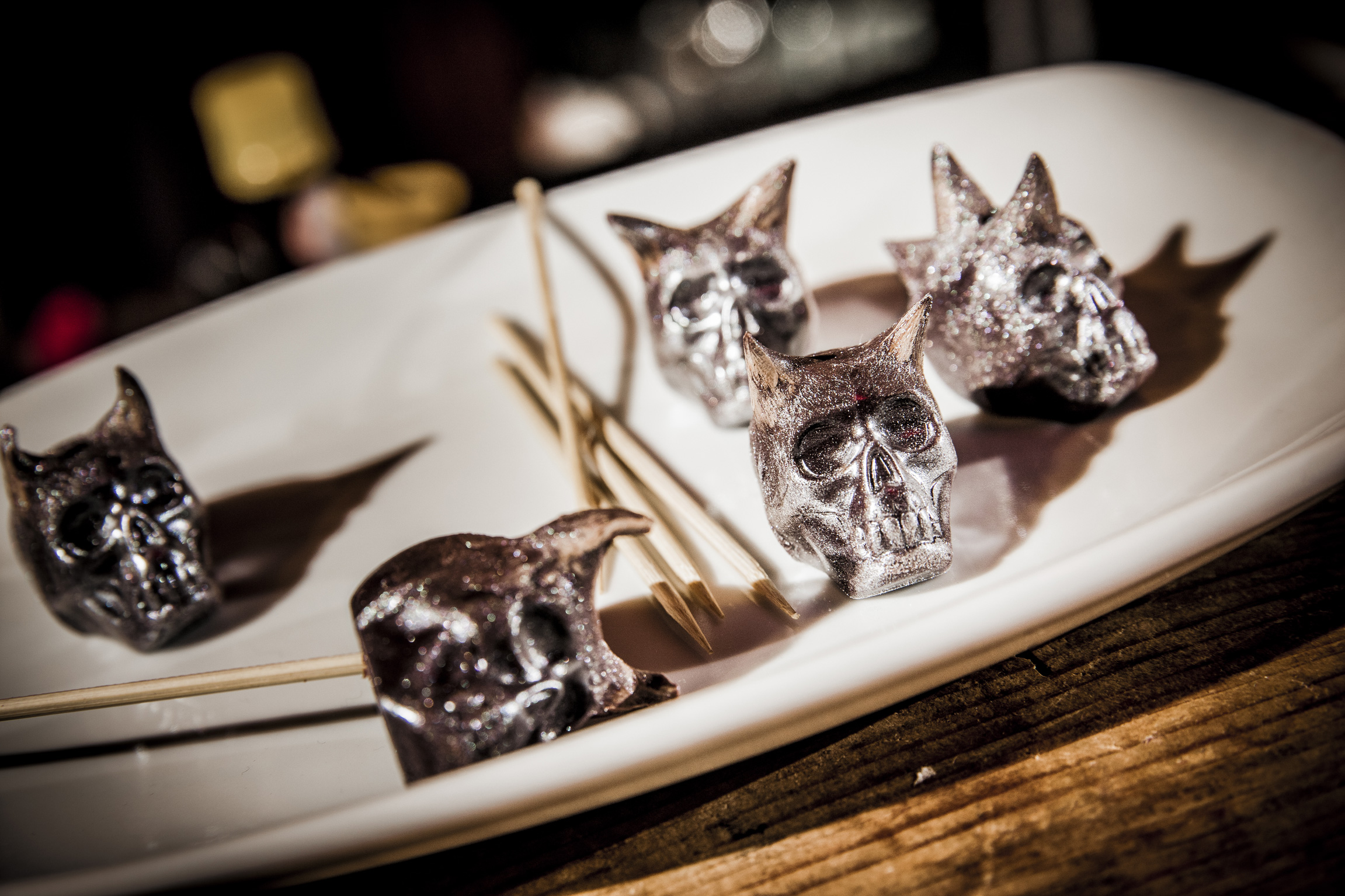
  • Finish the glass with a devil head chocolate praline on a stick (only 1 address to buy some: The chocolate line).

Imagin - Cocktailbar - Bombay Sapphire - Fever-tree - Knokke

Imagin - Cocktailbar - Bombay Sapphire - Fever-tree - Knokke

Imagin - Cocktailbar - Bombay Sapphire - Fever-tree - Knokke

* Tablespoon  ** Teaspoon

Distilled Duvel

Duvel Puurs

I figured something important was going to be announced at the Duvel Moortgat brewery as Michel Moortgat himself was doing the presentation. Although I wasn’t 100% sure, I did have the feeling they would be presenting a new Whiskey or Duvel Distilled as they prefer calling it (you can ask my colleagues if you don’t believe me as I told a few of them 🙂 ). I don’t know how much you guys know about whiskey, but one important thing to know that the base ingredient for making whiskey (or Gin) is “moutwijn” or “malt wine” in English which is basically beer. So the step for Duvel to make whiskey or a distilled beverage is not that imaginable. It took Hedwig Neven (Brewmaster @ Duvel Moortgat) together with a bit of help from the Distillers from Filliers 6 years to make another Duvel Distilled (last Duvel Distilled was from 2006). What makes this Duvel Distilled so special is that it is as the name might already make think is made with Duvel beer as a base. So with exactly the same ingredients with only 1 exception and that is hop.

Michel Moorgat & fles

Many people asked the question why the Brewery was starting to make Whiskey or Distilled bevrages. The answer was very simple, to be creative with their own products as a base. They did want to be clear that it is not their purpose to start competing against Scottish or Irish Whiskey’s or start mass producing Duvel Distilled as they respect them and admire their craftsmanship, they just do this to stay creative and make a limited amount of bottles that will only be distributed in Belgium.

Hedwig Neven & Michel Moortgat

When it comes to the taste of Duvel Distilled I think the big difference with the traditional whiskey’s is the Peat (turf) taste as for Duvel Distilled they didn’t make use of it. I’m not an expert on strong alcoholic beverages, but it did like the taste… the Duvel distilled is a soft and “easy” to drink kind of whiskey and the perfect step to learn to appreciate and enjoy the flavors of high quality whiskey. Don’t get me wrong it is not lemonade you’re drinking the effect when drinking will slightly be different than with lemonade 🙂  and a product like Duvel Distilled has to be drunk with care and lots of enjoyment!

21-08-2013 8-07-56

I’m a fan, if you want to become one as well you can either subscribe (but be quick as there are only 5000 bottles) and order a 50cl bottle via their website or you get a free sample when buying 18 (or 3x6pack) of Duvel beer.

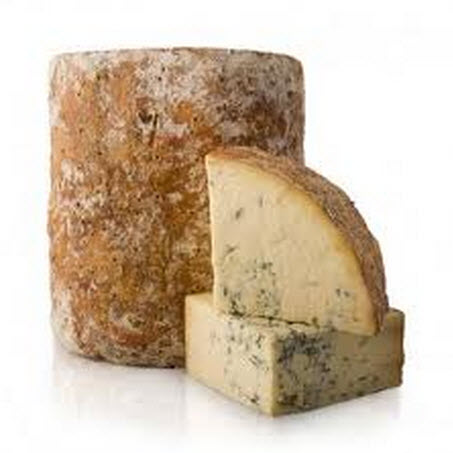
For the whiskey fans who also have a weakness for cheese, Cheese Masters Van Tricht have found some matching cheeses that pear perfect with the Duvel Distilled. The first cheese would be “La Gabarre” a farmer made goat cheese from the Loire Valley (made from raw milk), secondly a classic Stilton by Colston Bassett and last but not least “Fleur d’Audresselles” from the North of France made of raw milk (near Calais). They did say it was important to eat these cheeses with crust when pairing it with the Duvel Distilled

Fleur d'Audresselles Stilton Colston Bassett

Cheers!

Tomorrowland aka foodie heaven

Tomorrowland logo

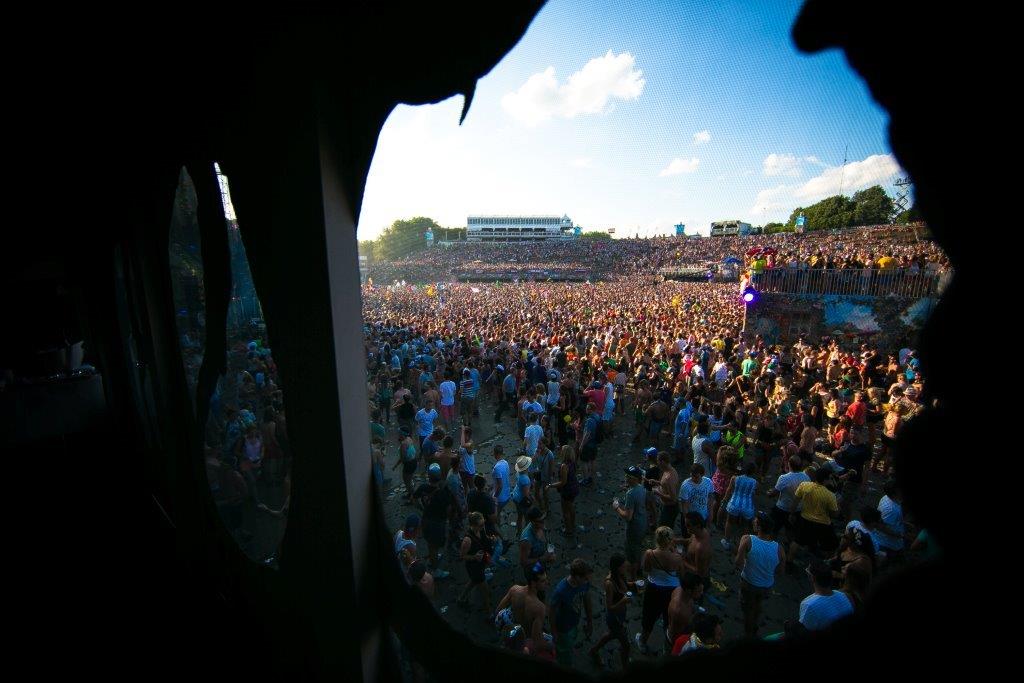
I am pretty jealous of the people who went to Tomorrowland, not really for the music as I could hear that in my livingroom due to the wind direction and also I’m not really too much into the music they play… or at least not for 3 days in a row. I’m more jealous about the great selection of eateries they had!! Really!! They have really outdone themselves.

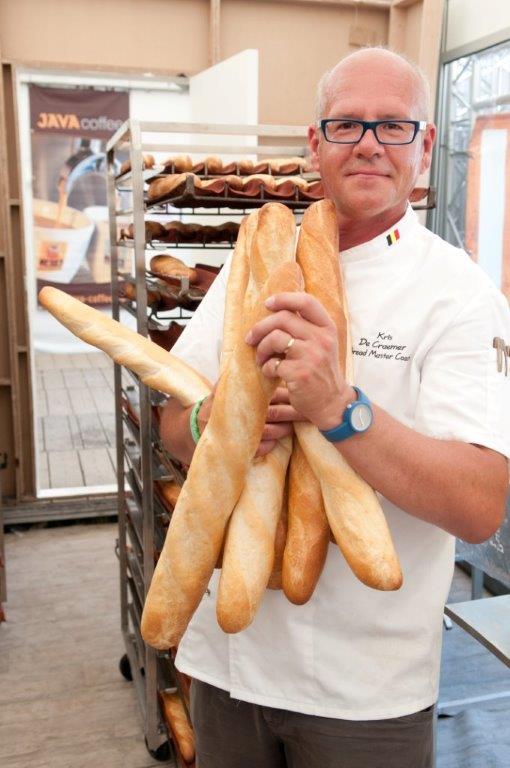
Did you know they even had a food inspector from the “Gault & Millau” guide quote every food stand and give it points? Of course there was a lot to give points to like the food stands in the International Street where you could taste Mexican, American, Greek, French, Spanish and (obviously) Belgian food. Or the fresh bakery shop… They also didn’t forget the vegetarians in cooperation with Lombardia.

Icecream

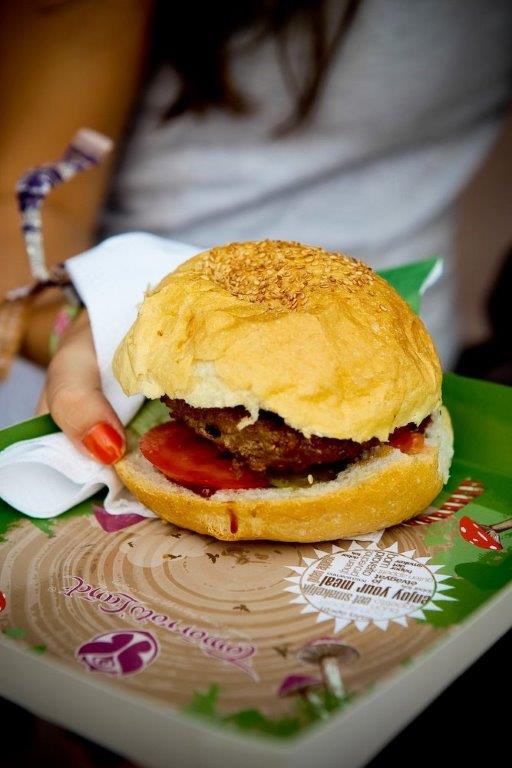
Hamburger Fruit

Bakery Baking fries

Belgian Beer

Belgian Waffles

Cupcakes

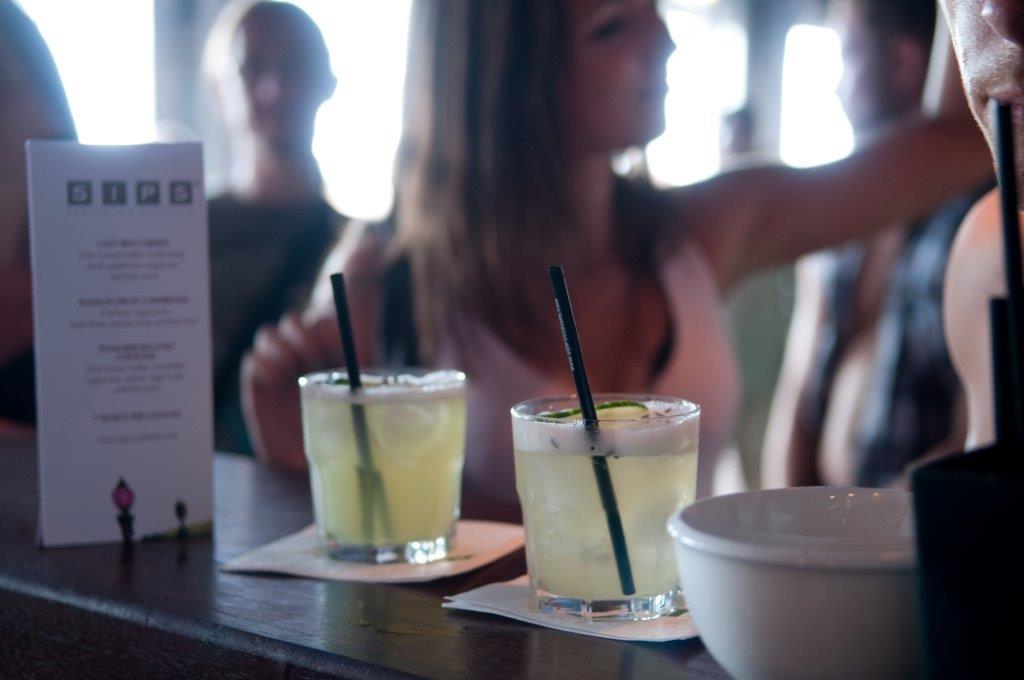
A reason I almost bought a ticket was the amount of top gastronomy present restaurant Wout Bru (Maison Bru *), Roger Van Damme (Het Gebaar *), Manuel Wouter (SIPS cocktail bar)

Wout Bru photo by Zita 2012 Maison Bru

Cocktails

The people who I envied the most were the people who got a spot at the secret restaurant!! First of all because having a dinner prepared by two 3 Michelin star awarded chefs Sergio Herman (Oud Sluis) and Jordi Roca (El Celler de Can Roca) and one of the few Michelin awarded “chocolatiers” Dominique Persoone (The Chocolate Line) and secondly to be in the company of yet another 3 Michelin star awarded chef Peter Goossens (Hof Van Cleve)… like food porn for me 🙂  Don’t get me wrong, the hamburgers would have also tasted well, but this is a different level of experience 😉 If only I won or was able to get a place at the secret restaurant…

Secret Resto view

Secret Resto Sergio Herman

Secret Resto food

Jordi Roca

Maybe next year they should have a special Gastronomical pass that one can try all food @Tomorrowland?

Congrats too the organizational team of Tomorrowland, you really did a hell of a job (also for the non-food part)

Dinner in a perfect summer setting

Brasserie Montreal 2

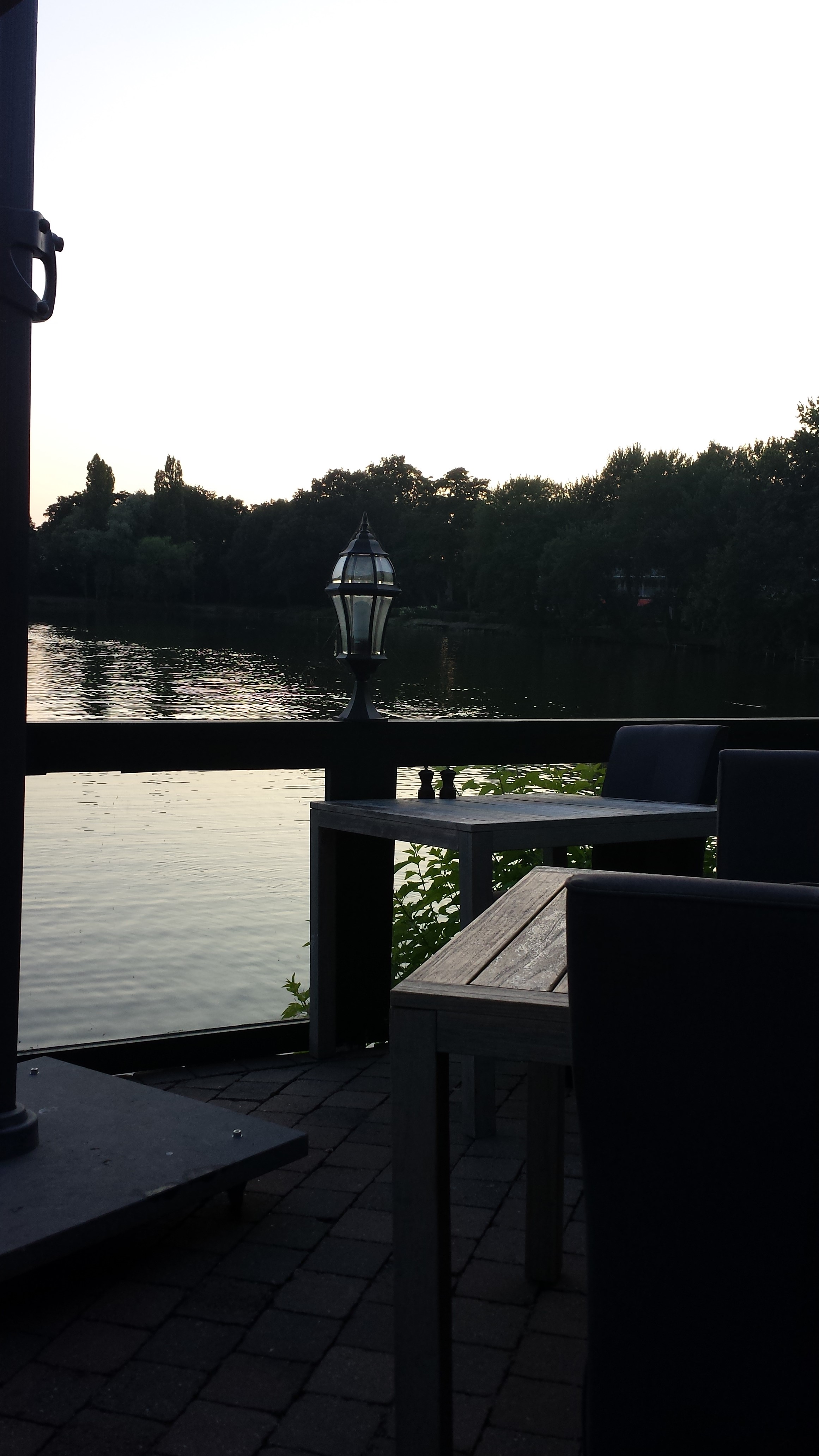
Eating dinner along the waterside is the ideal setting for at the end of a sunny day. Wouldn’t you agree? Last weekend we went out for dinner with some friends in that exact setting. I’ll admit that when going to a brasserie I’m always in doubt of the quality I’ll be getting on my plate, but Brasserie Montreal definitely served us some good quality! Brasserie Montreal is located at a fishpond right outside of the city center of Mechelen and I did enjoy our setting for the night overlooking the fairly big pond.

Brasserie_hotel montreal

Brasserie Montreal

Having a view is nice, but more important is what you get on your plate… They had outdone themselves and I didn’t expect to see such refined dishes. As an appetizer we got a soused herring with cucumber and black olive which already helped to get more appetite (if that is possible as my appetite is always pretty big). From this point on it only went crescendo.

apero Soused herring

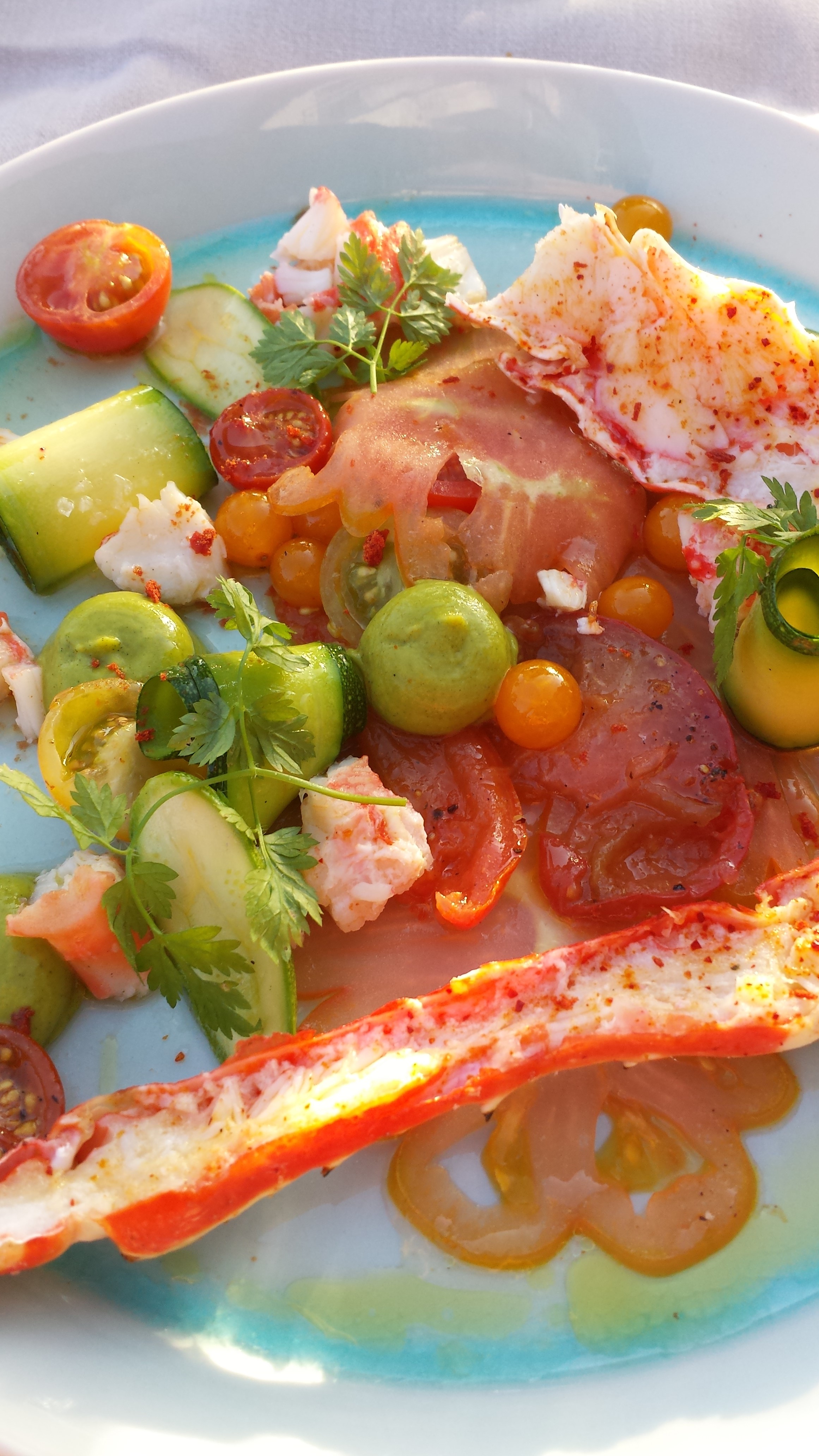
The starters for the night were for me pickled herring with jonagold apple, beetroot and dill. My table guests took Buffalo mozzarella with tomato varieties, a goat cheese salad with bbq pineapple and Granny Smith and some King crab with courgette, tomato and kaffir. A true treat for the eyes.

pickled herring with beetroot

Goat cheese salad

Buffalo mozzarella with tomato varieties

King Crab

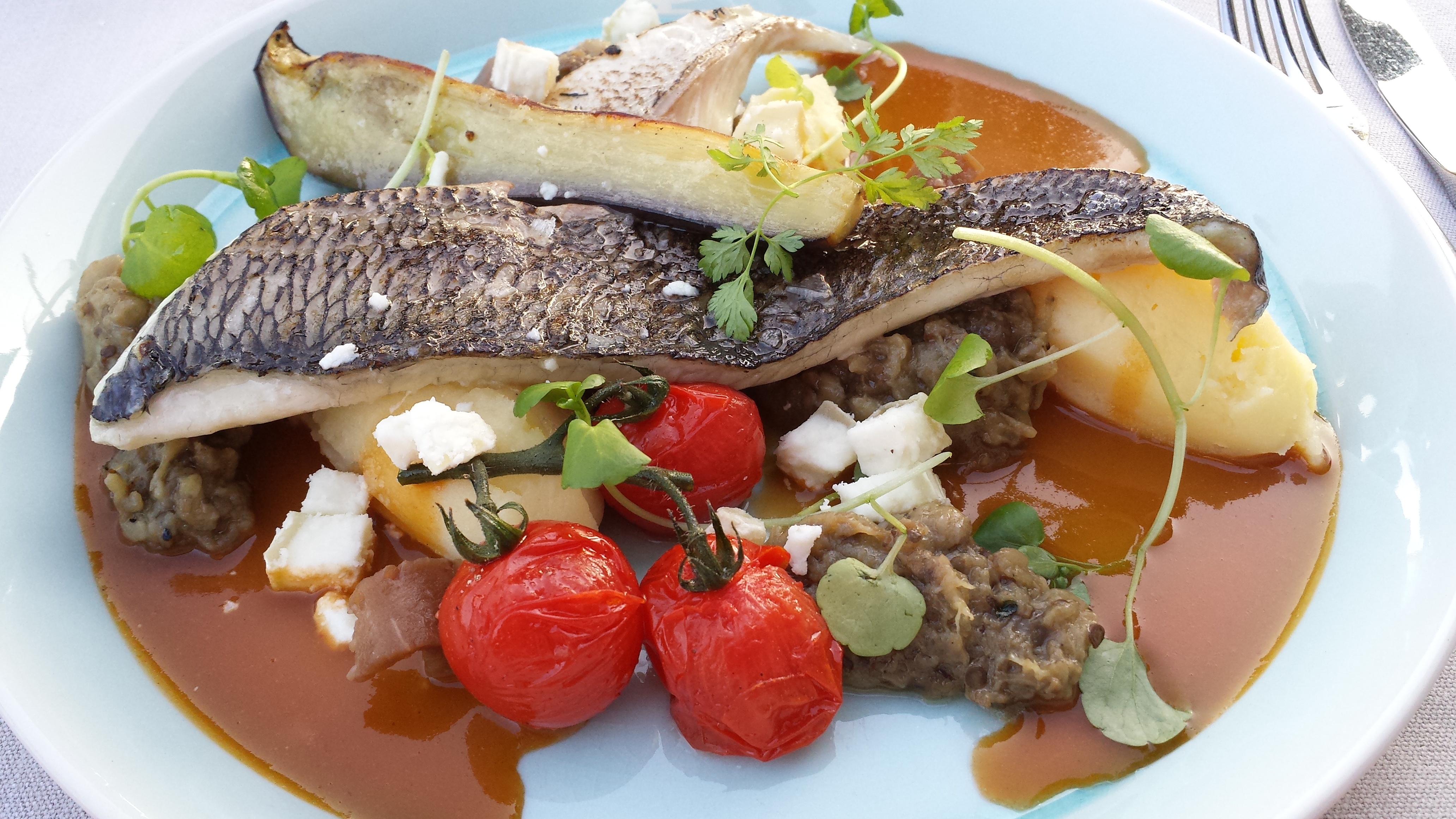
This got followed with for me a classical Belgian Blue Chateau Briand (I was craving for some red meat) with béarnaise and freshly fries. The ladies at the table took a Gilt-head bream and BBQ salmon “label rouge” with some green asparagus, kohlrabi and beech mushroom.

Chateau briand

Gilt-head bream

BBQ salmon

We combined this with a 2007 Spanish red Herencia del Padri from Priorat made by Bernard Magrez. The herbal like taste and stronger body of the wine went really well with the Chateau Briand (my modest opinion)

The best is yet to come as the dessert can either ruin the whole meal or make it an even better success… in our case luckily the second one 🙂

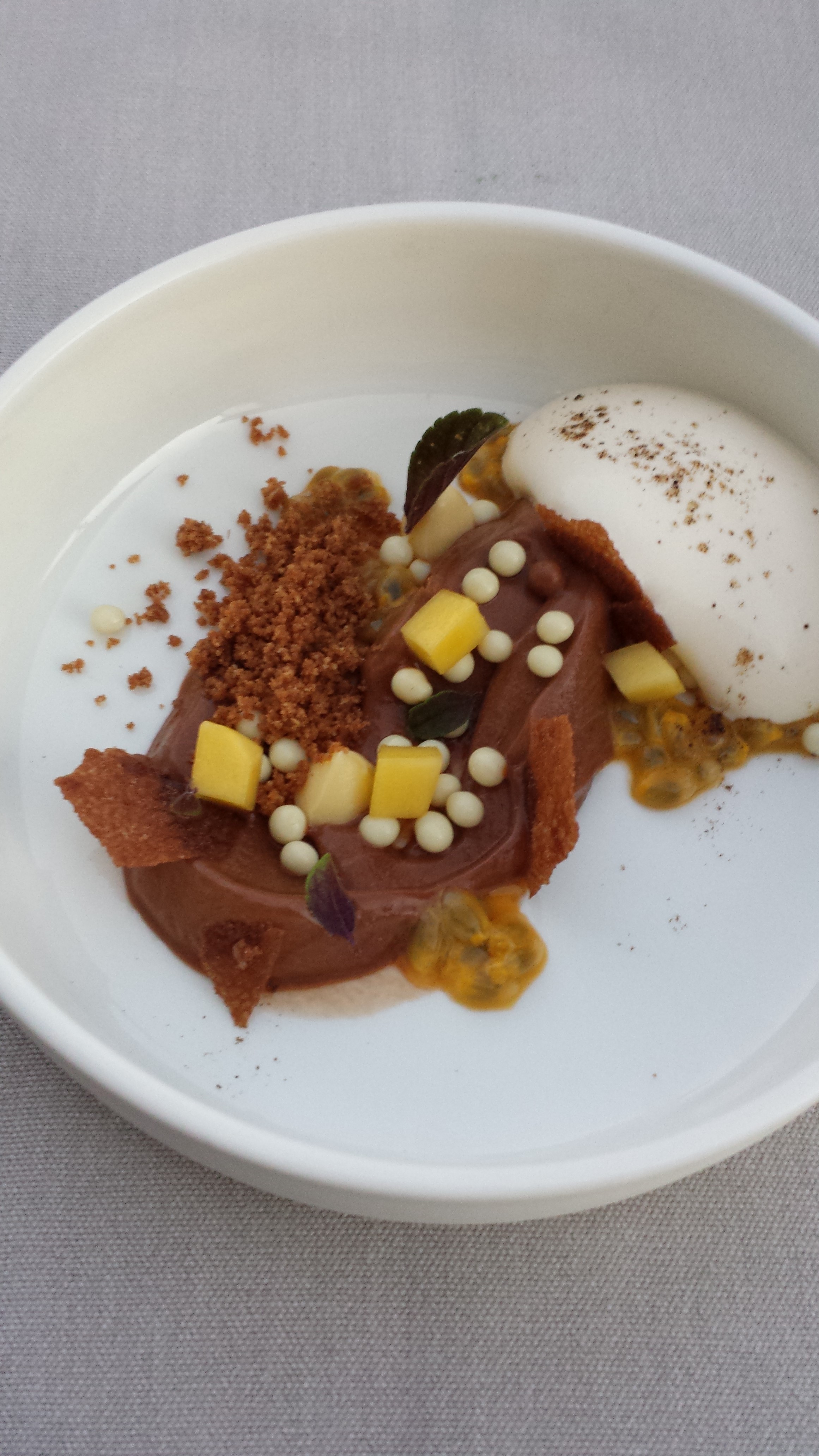
Not that we didn’t see any good dessert on the menu, but as we saw the chef (Toon) could be very creative with the previous plates we decided to let him free-wheel for dessert and be creative (with what he has in his fridge of course). This resulted in two njammy desserts: the first dessert was a fresh red fruit dessert with a white chocolate cream, flower bouillon (yes flower, this is not a typo). FYI all the herbs and flowers used in the dishes are all grown in their own garden!! The second dessert was chocolate inspired with mascarpone.

summer in a plate

Chocolat

I really like being surprised and to find out my prejudgment was totally wrong!! Once again it got proven to never judge a book by its cover.  I really enjoyed my dinner at Brasserie Montreal and as cherry on the cake I had some great table guests! I’ll definitely be back 🙂

Brasserie montreal logo

Brasserie Montreal

Website: http://www.brasseriemontreal.be/

Address: Duivenstraat 56, 2800 Mechelen

Phone n°: +32 (0) 15 20 40 77

Discovering more of the unknown

We could not come to the Pajottenland and not visit at least one brewery and learn more about the most famous regional products aka Lambic beers like Geuze or Kriek (cherry beer). Visiting only one brewery knowing we came from far would have been sad… that’s why we visited 2 breweries 😉

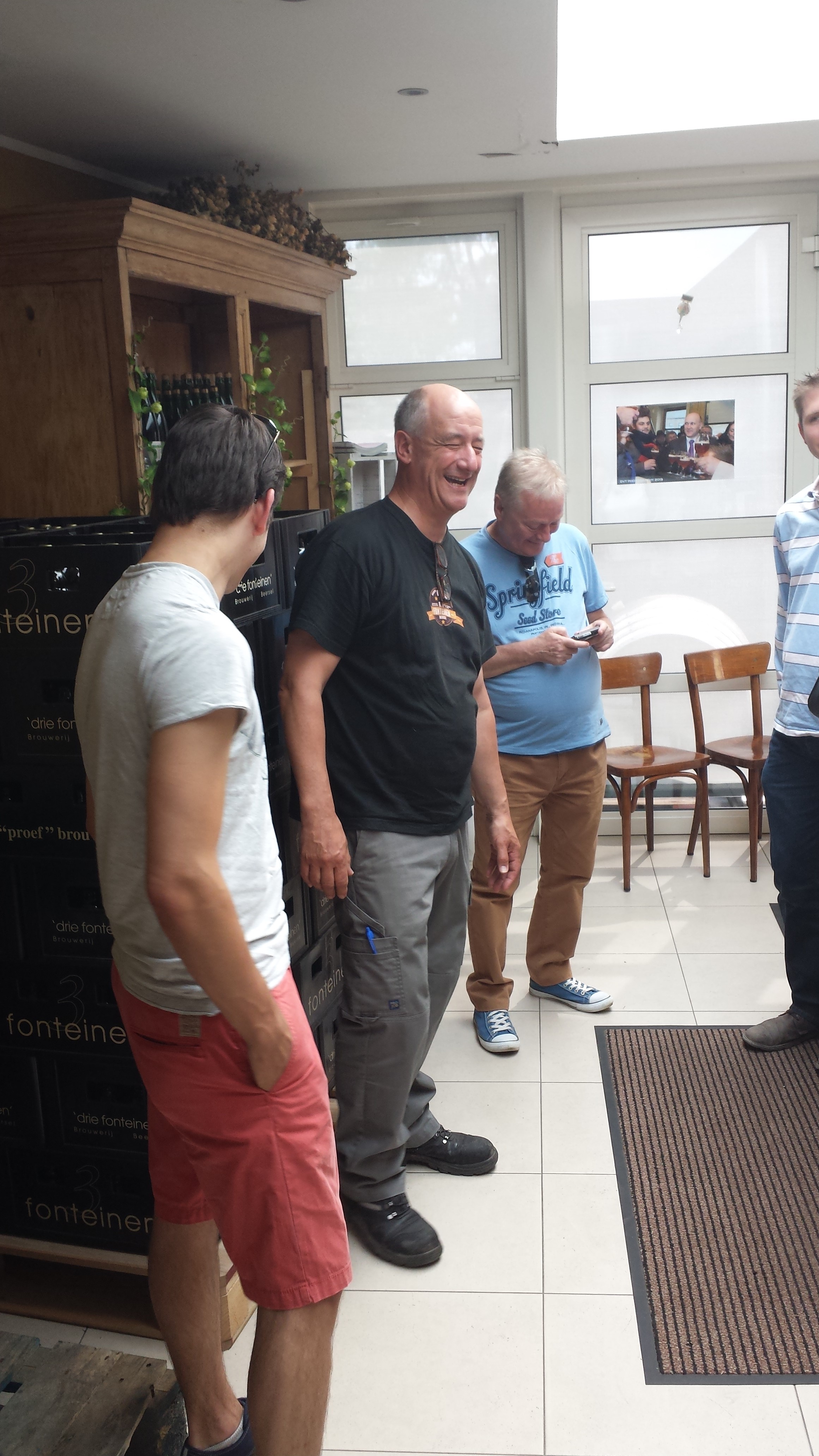
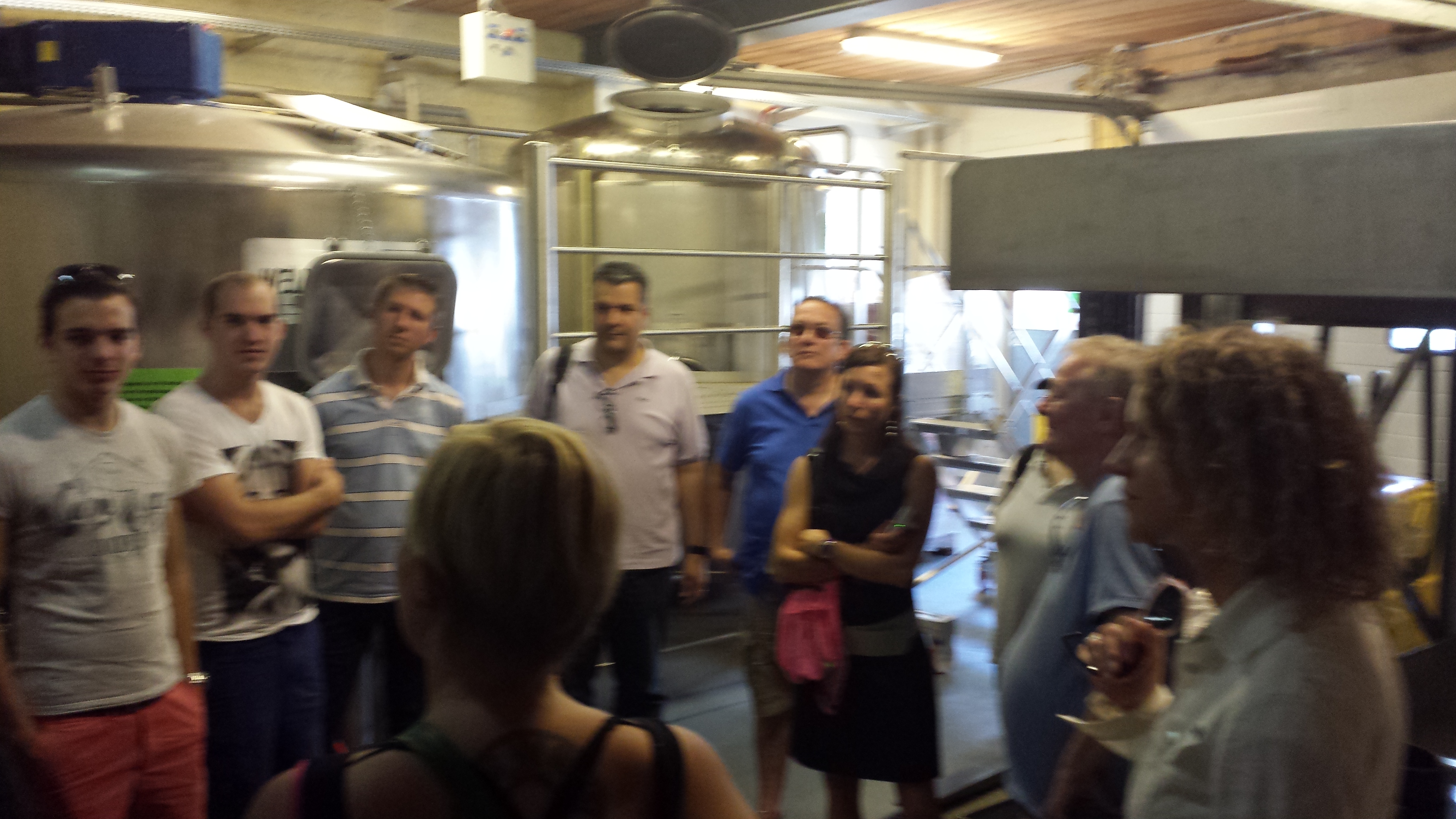
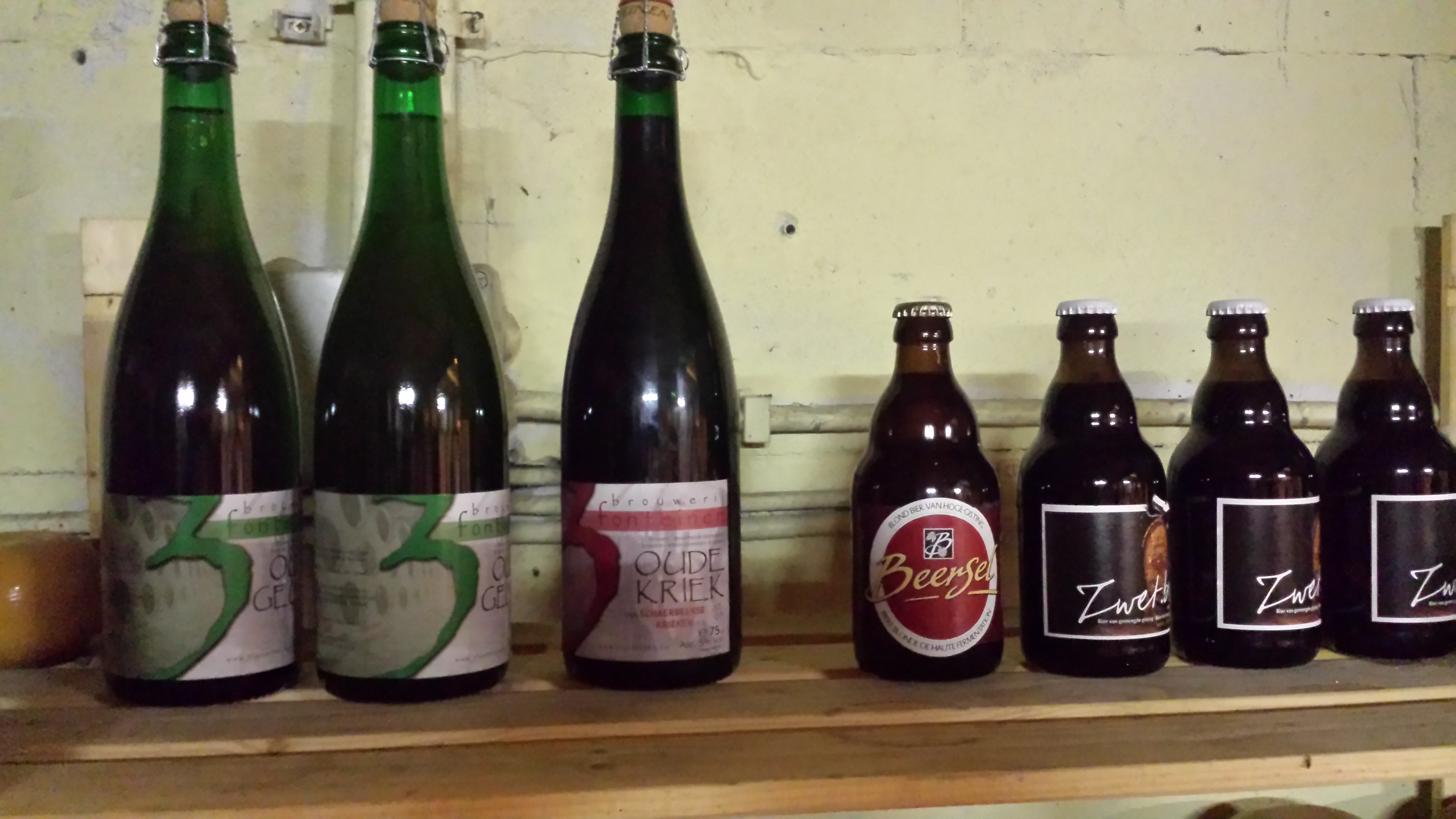
We visited 3 fonteinen and Boon that on size are very different as Boon is maybe 6 times bigger (at least) than 3 fonteinen . But when it comes to passion they are just alike, both owners have THE sparkle in their eyes when they can talk about Lambic beers and on top of that they are both great guys! If you want to learn what there is to learn on making Lambic beers, they are definitely the guys to contact!

Armand de Belder

Boon 6

Something important to know before I continue talking about the breweries is the difference between making of regular beer and Lambic beers. A very big difference can already be found in the fermentation process! Lambic beers have something called a spontaneous fermentation, because they make use of “wild” or “natural” yeast that comes  basically from the air around us… did you know there are 86 kinds of wild yeasts in the air? Well there are!  So you can imagine how long it must take before a Lambic beer can be made. Normally this takes between 3 and 8 months.  An essential ingredient in beer is hop. Hop is actually used against the acidification of the beer.  For Lambic beers the brewers will only be using “old” hop (2-3 years old) because if they would use young hop the beer would be to bitter and the beer won’t last as long (for ageing). So depending on the amount of Old hop the brewer use the Lambic beers will be sourer or bitterer. (Sourness is typical for the Lambic beers). The last thing you should know about the lambic beer making is that after cooling down the beer is put in old oak wine barrels to ferment for a few more years which gives yet another typical taste to Lambic beers.

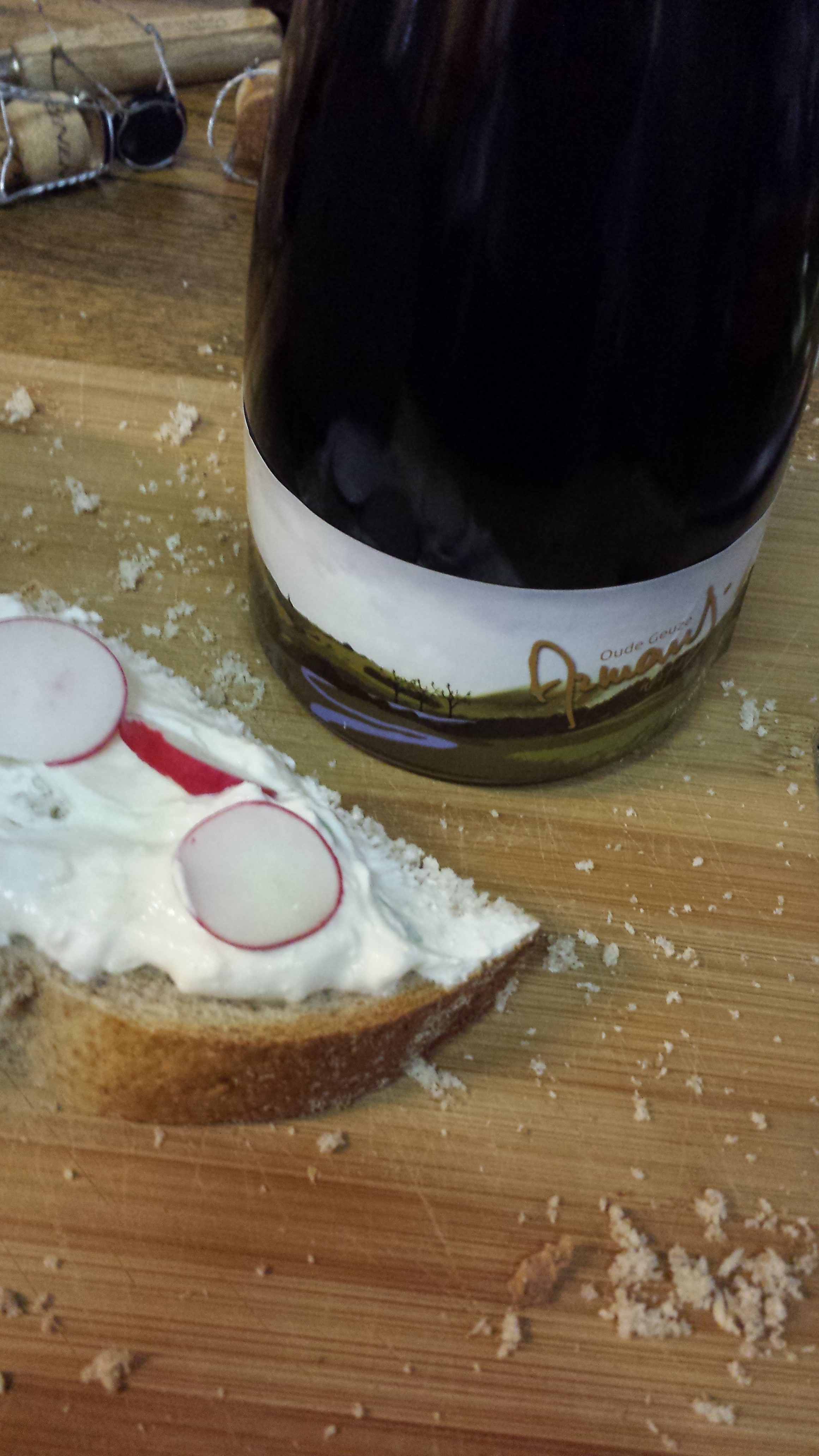
What makes Geuze extra special is that to make Geuze the brewer will be mixing (or blending) young and old lambic beer. The reason for this is because the young lambics are not fully fermented, the blended (so after mixing) beer contains fermentable sugars, which allow a second fermentation to occur. This is also the reason why the Geuze bottles are always closed with the same cork as a champagne bottle as the ,in our case beer, will keep fermenting in the bottle.

Ok, now I’ve explained a few important “must know” facts from Lambic beer I can tell you more about the two breweries we’ve visited. I’ll start with Armand de Belder’s story aka the man and passion behind the 3 fonteinen Brewery.  For some Flemish people the name 3 fonteinen might ring a bell as this is one of the favorite beers of the Belgian celeb chef Jeroen Meus (Restaurant Luzine) who used it in a few recipes that I think almost every Flemish family already make around the Christmas period 🙂 (Guilty as charged). Anyhow what is important to know about this brewery is that they initially  (the current owner’s parents)used to be “geuzenstekers”, which is the name for a brewery that will mix young and old Lambic beer from other breweries (so they don’t make their own beer from scratch). Back in the day the only used to make beer to serve in their own restaurant, but as. It was not until 1999 that Armand and his brother (after taking over business) started making their own Lambic beer from scratch which they then blended with “Lambic” from other breweries. 2009 was a catastrophic year for the 3 fonteinen  brewery as due to a defect in the warehouse thermostat 5000 bottles of beer exploded and beer to fill over 80000 bottles was ruined.  I’m sure I don’t have to draw a picture of the financial disaster this caused. But Armand it a fighter and didn’t thrown in the towel yet, he continued blending beers (without his own Lambic) and as of this year he slowly started making his own Lambic beer again. A truly remarkable story!

3 font 1

20130714_161746

20130714_162130

20130714_162136

3 font 2 3 font 3

3 font 4 3 font 5

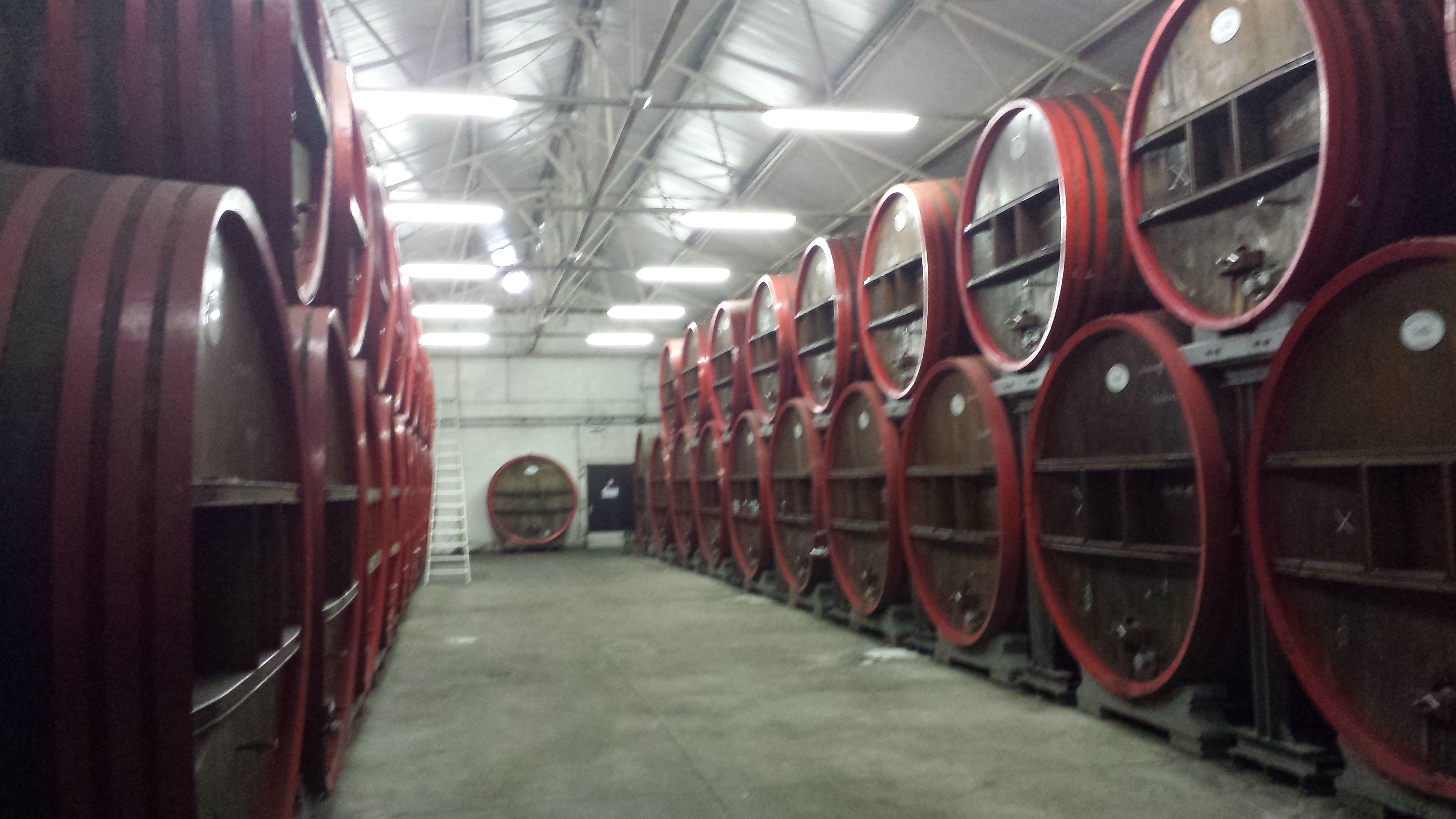
The second brewery, Boon, we visited has a totally different story. This brewery was originally founded around 1860 and mostly produced “Kriek” or better known as cherry beer in English. In 1978 the very small brewery got taken over by the current owners aka Boon family that made it one of the biggest breweries in the region and since 1989 has a partnership with Palm Breweries which made them an even bigger player on the beer market around the world.  I must say it is quite impressive walking through this brewery and seeing the process how a Lambic beer gets made from scratch and I’m not even talking about the incredible and enormous barrel chambers where the Lambic rests…

IMG_20130714_183909

What to do when you don’t want to break down the original factory but still want to enlarge your company? That’s write just build over it and keep the original inside in its original state :-). Unless that’s how Frank Boon did it with his factory.

  Boon 2 Boon 4

Boon 3  Boon 1 

Boon 5

Boon 7

I did indeed enjoy to hear all about their breweries, but at some point standing still and listening gave a dry throat 🙂 luckily we were in breweries so moooooooore than enough to solve that problem.

The biggest difference between the beers of the 2 breweries to me is the sourness as the beers made by Boon are easier to drink and for a wider public. This doesn’t mean I didn’t like the 3 fonteinen   beers because I did like them, especially the cherry beer as this one of the few ones where you can actually taste the actual cherries. I’m just saying that you’d serve a Lambic bier/Geuze to somebody who didn’t every drink this type of beer before you’d better start with Boon as 3 fonteinen  is more for the ones used of drinking this type of beer. This is my impression of the beers, it is like the French say “les goûts et les couleurs, ça ne se discute pas”. One of my personal favorites was th eGeuze “Mariage Parfait” from Boon.

Mariage parfait boon

One thing is for sure that both beers are made with passion and I’ve also learned there is a lot of mutual respect amongst the Lambic brewers!

You guys should really visit this beautiful region and taste its products! Enjoy