Welcome Malcolm McChouffe

I don’t know if  you guys remember it, but last summer the mascot of the La Chouffe brewery Marcel Chouffe (on picture below) got stolen. I’ve got no idea how they did it as the wooden sculpture weighs over 200kg , so it’s not that you can quickly move it…. but it seems that La Chouffe items are very wanted.
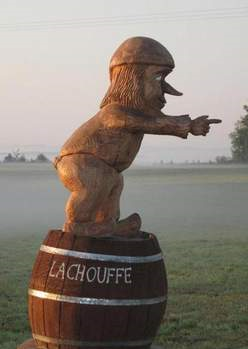
Marcel Chouffe

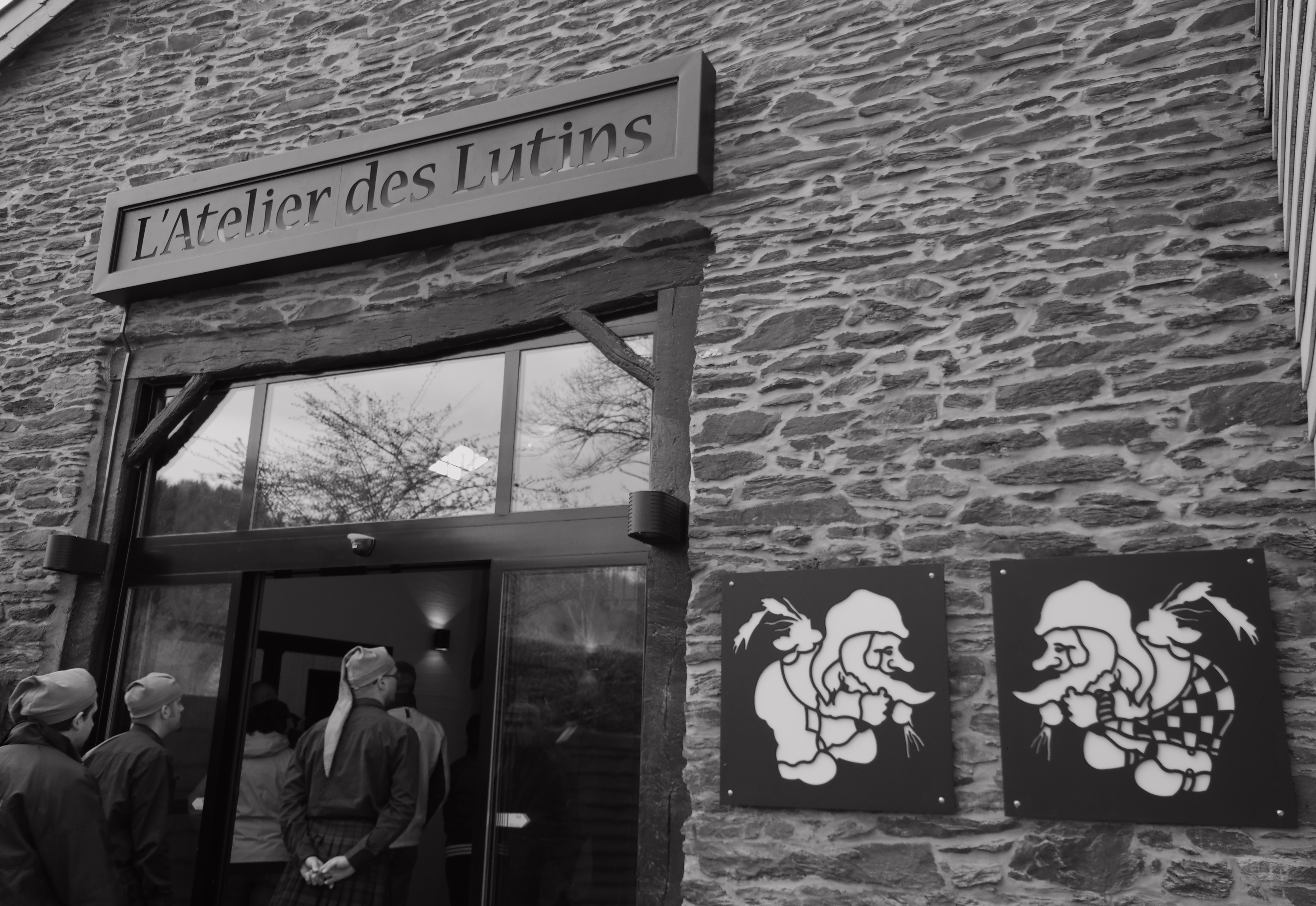
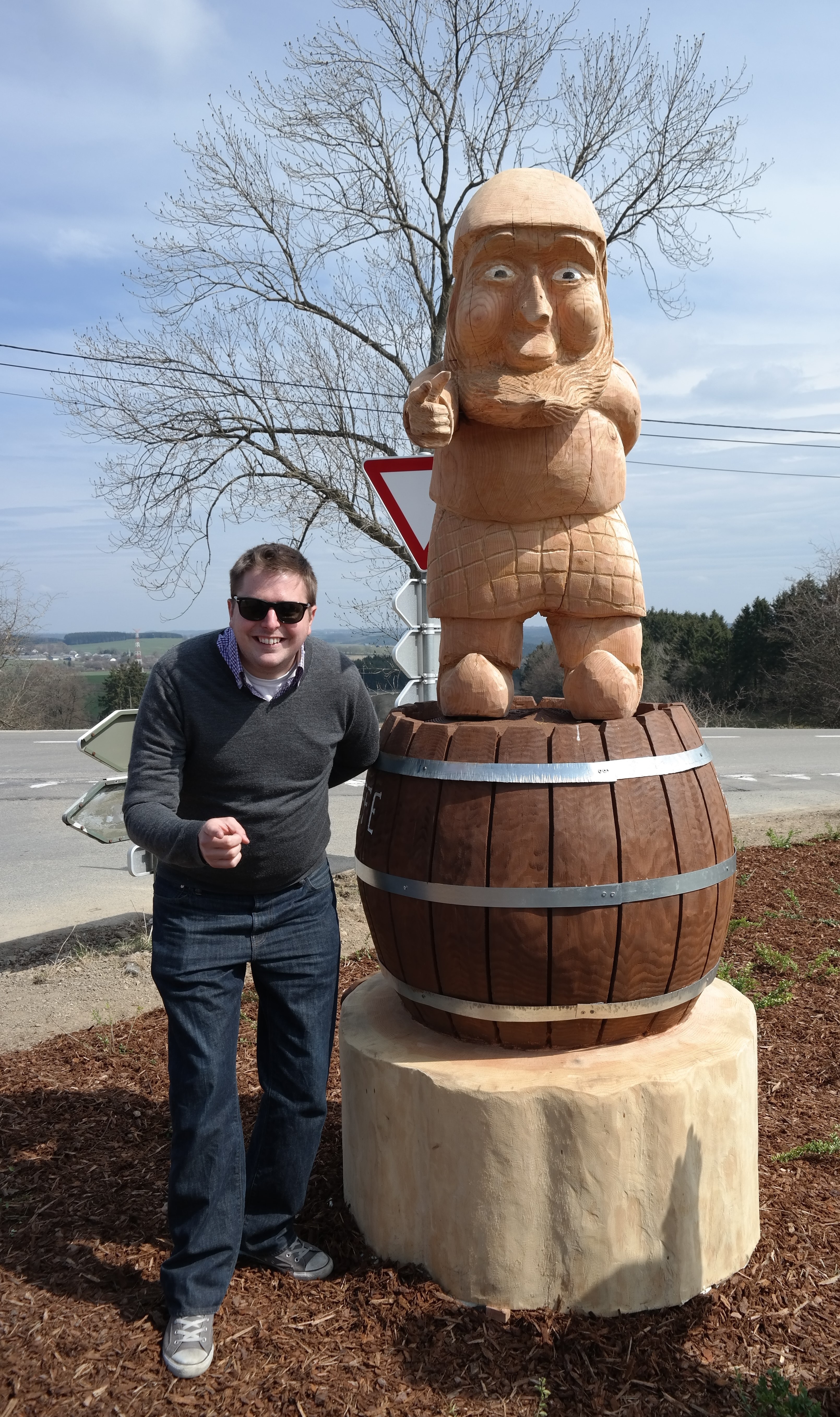
This Saturday we were proud and happy to be able to welcome Malcolm McChouffe aka Marcel’s cousin. Malcolm will now be pointing the direction towards the little town called Achouffe (where the La Chouffe beer is made), overlooking his cousin’s empty barrel, hoping one day he will be joined again by his missing cousin!  As the name might have already revealed, Malcolm is Scottish. So I cannot think of a better way to welcome Malcolm than on the tunes of the bagpipers?? Could you? I know not everybody likes it, but I really do (that’s the little drummer in me)!! I always feel like taking a snare drum and marching along!

???????????

SAMSUNG CSC

SAMSUNG CSC

Inauguration_Nain_Brasserie_Achouffe_20-04-2013_by_Dubois_Jean-Jacques_113

I first feel like sharing a piece written by a Walloon writer and Beerologist Rony Couteure after a visit to the La Chouffe brewery. I really couldn’t express it better myself:

“In the annals of his forefathers McChouffe, a Scottish gnome from the Edinburgh woods, discovered the origins of his lineage. More and more he became suspicious that long lost nieces and nephews were waiting for him in the Belgian Ardennes. One Scottish morning he decided to bid farewell to the land of his birth and to go and seek out his foreign family. He travelled for months and  took shelter in many golden mushrooms along the way. He enjoyed luxurious herbs in the Belgian beer land until suddenly he found himself at the edge of the dark Ardennes wood. Without hesitation he entered the deep wood but swiftly lost his way between the trees which resembled each other more and more. For days he wandered around until suddenly a stimulating smell of hops lured him to the brewing village of Achouffe. McChouffe was welcomed with open arms by the Achouffe gnomes. They told him all about themselves and their lives and this culminated in a great feast which went on until the early hours of the morning.

During this intoxicating feast McChouffe met the fairy Fleurdor and, as if a bolt of lightening hit his heart,  he fell madly in love. The beautiful fairy persuaded him to give her the secret recipe for a  brown beer which was once brewed in his fatherland. With his Ardennes family he set everything in motion to brew this beer. As an old and wise gnome he returned to Scotland with the fairy Fleurdor. Their many children are still roaming around there.

In order to keep up this tradition, Brasserie d’Achouffe is still brewing this special brown beer: McChouffe which is rightfully named “Skotch van de Ardennen” (Scotch beer of the Ardennes).

This legend was told by Professor Servoisius, alias Ronny Coutteure, God rest him…”

Achouffe church

SAMSUNG CSC

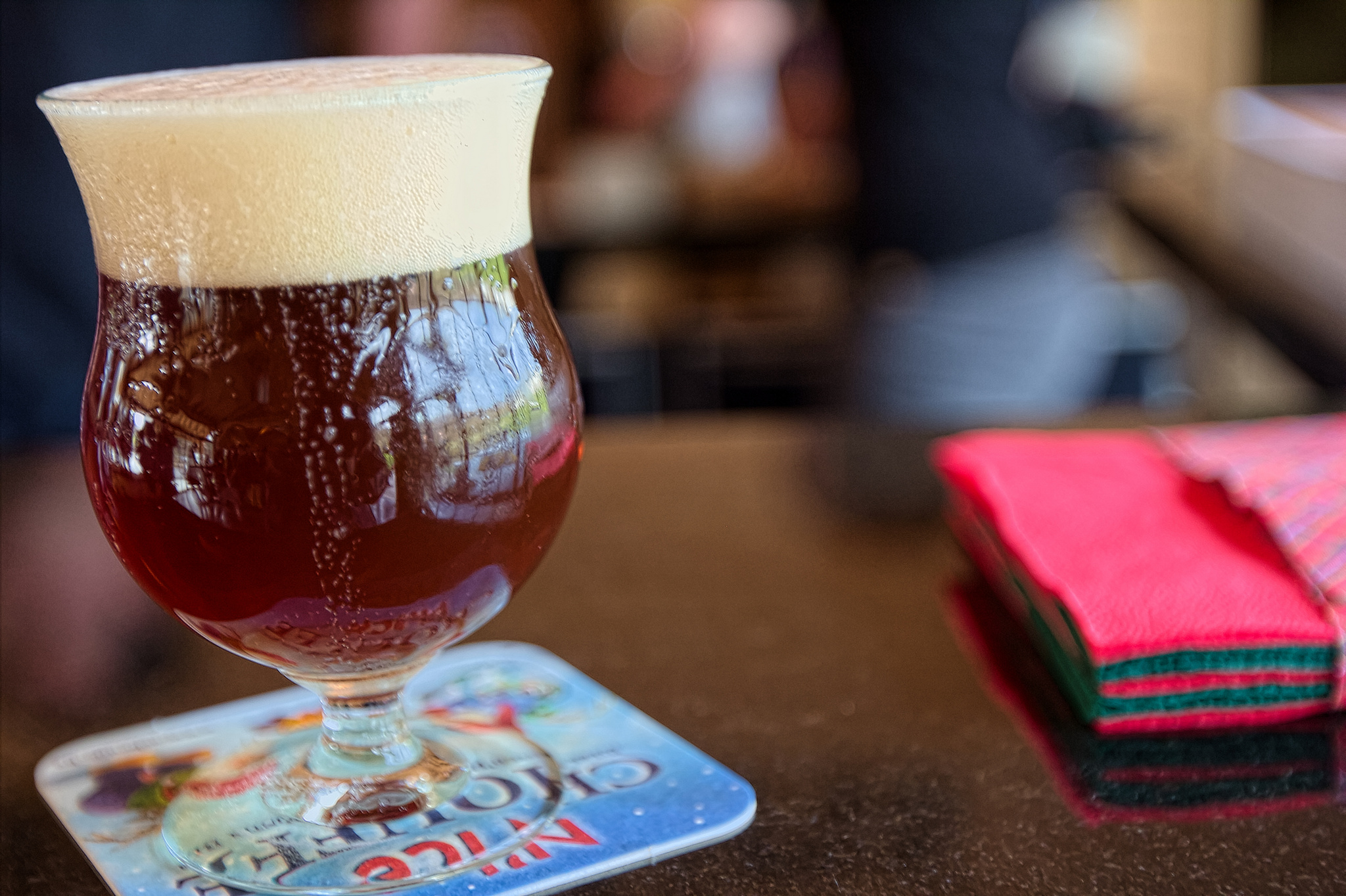
Of course after all this visiting and listening our throats needed some moisture! Being a very curious person (at a brewery) and wanting to make sure I only give good notes to my readers I felt obligated to test all the types of beer the La Chouffe brewery offers (Yes, this is how much I love you guys). It must be said that the beers were served in tasting glasses, otherwise I’m not sure how my visit would have finished ;-). Anyhow please find the whole La Chouffe gamma on the following link. I did learn during this ‘tasting’ that I prefer dark beers :-), I’m not really into the Houblon Chouffe (aka Triple) as for me it is a bit to bitter, but according to what I’ve learned during my introduction in the world of beer & women, women prefer drinking bitter drinks… so ladies do the test!

At the end there is only one question to ask ourselfs
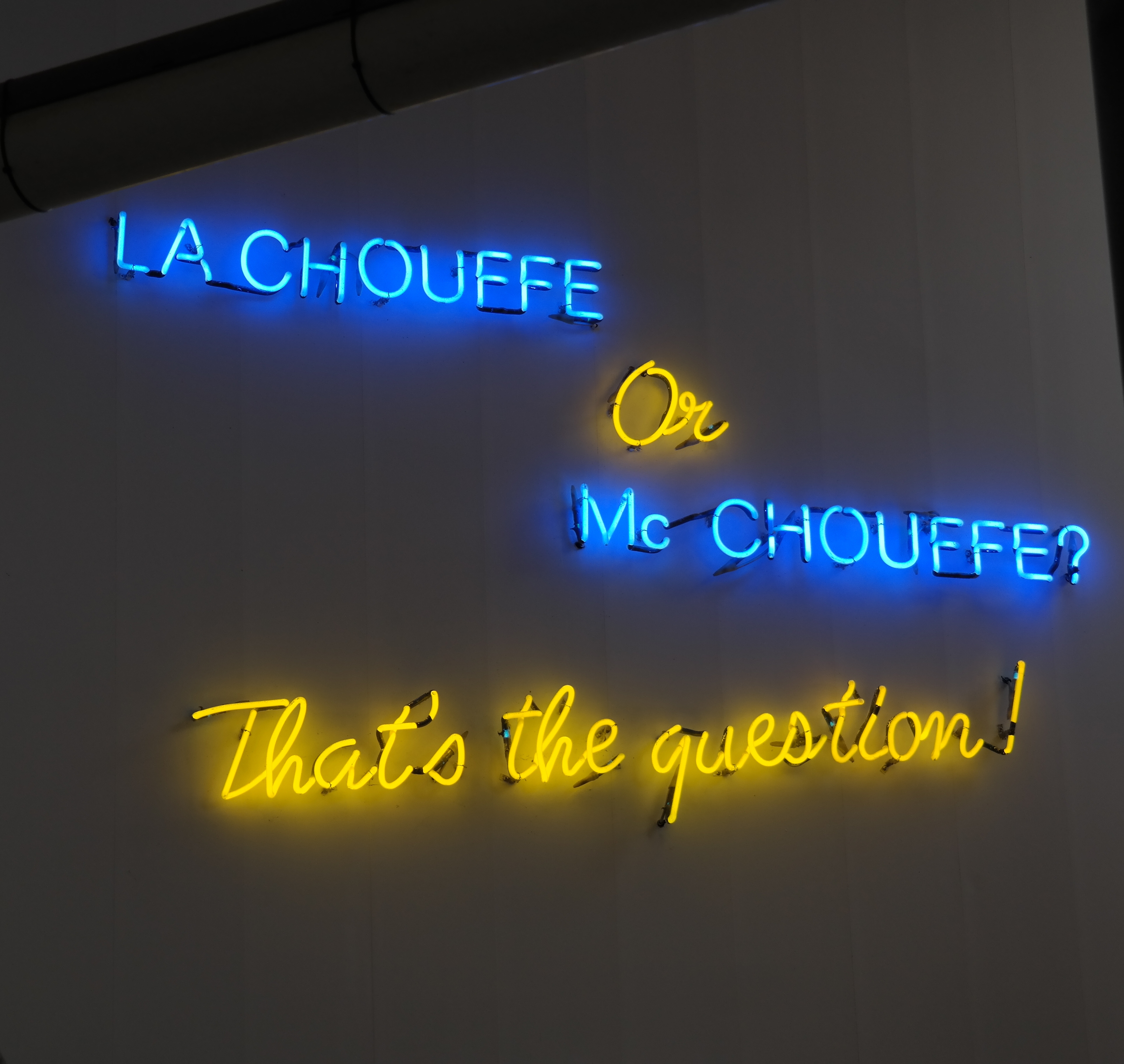
???????????

Inauguration_Nain_Brasserie_Achouffe_20-04-2013_by_Dubois_Jean-Jacques_108

I do hope you guys will one day be able to visit this brewery and very beautiful part of Belgium! With a good glace of La Chouffe of course… I got enchanted, hope you will too. We can only hope that one day the empty barrel beside Malcolm will be joined again by his cousin Marcel.

FYI, Malcolm is under camera surveillance, so don’t get any crazy ideas!

For some reason I think I’m related to Malcolm (picture taking after tasting)
Family

Women and beer

For some reason women and beer don’t always seem to go together? Or better that is what most men think. Personally I think those words fit perfectly! After my workshop with Sofie Van Rafelghem’s at Duvel Moortgat I got convinced even more that not only those words are a perfect match, but also that if it were not for women maybe there wouldn’t have been beer at all! Yes indeed, no beer at all! The first fact is that the first actual ‘beer recipe’ was a tribute/homage to the goddess Ninkasi from between 5000-3000 BC.

On top of that fact it is also known that until 17thcentury it were only women brewing beer. Mostly this beer was made by priestesses. They were making the beer because most men saw it as an inferior job and therefore good enough for women. It was even so that if the beer they made was too good or too bad these priestesses got executed for this! (Cruel times). It wasn’t until men in the 17th century noticed that a lot of money could be earned with making beer. From then on beer became a really manly drink with for some reason a macho tone to it. We cannot get around it; all beer related advertisement is always focused on men drinking it… I think if marketers would get rid of that macho image in the commercials more and more women would start drink beers. Although I have to admit that most women I know drink beer, all kinds of beers. The fact that women only drink fruitier or sweeter beer is a misconception.

Maybe we should also add some science to convince you? As you most probably have read in some of my previous post around beer, one of the key ingredients in making beer is hop (FYI, this plant helps against menopause). To make beer it is only allowed to use the female hop flower (virgin flower). It is even so that there is even a law that forbids planting a male hop flower within x meters from the female flower (not sure which cop would know the difference, but still…).

Sadly enough today’s day there are not too many female brewers in Belgium (or the entire world).  The first or one of the first Belgian Female head brewers was Rosa Merckx-Blanquaert from Brewery Liefmans her stamp and knowhow can still be tasted in the Goudenband. A few other female brewers that come in mind are An de Ryck from brewery De Ryck, Anne-Françoise Pypaert from Orval (she hasn’t yet been named officially as head brewer, because the friars need to get used to the thought) and last but not least Sofie Van Rafelghem herself 🙂 she started making her own beer (first at home, now more professional). I’m not sure if there are more, but I have to say it is pretty poor knowing that we have over 140 official breweries in Belgium. Never say never, maybe one day there will be more female brewers (it is said that women have 30% more taste buds than men, which only help making better beer). Don’t worry, we won’t burn you if you make it too good like in th 17th century  🙂

It becomes more and more clear that women and beer have more in common than we men knew!

To be continued….

Filliers, glasses filled with joy

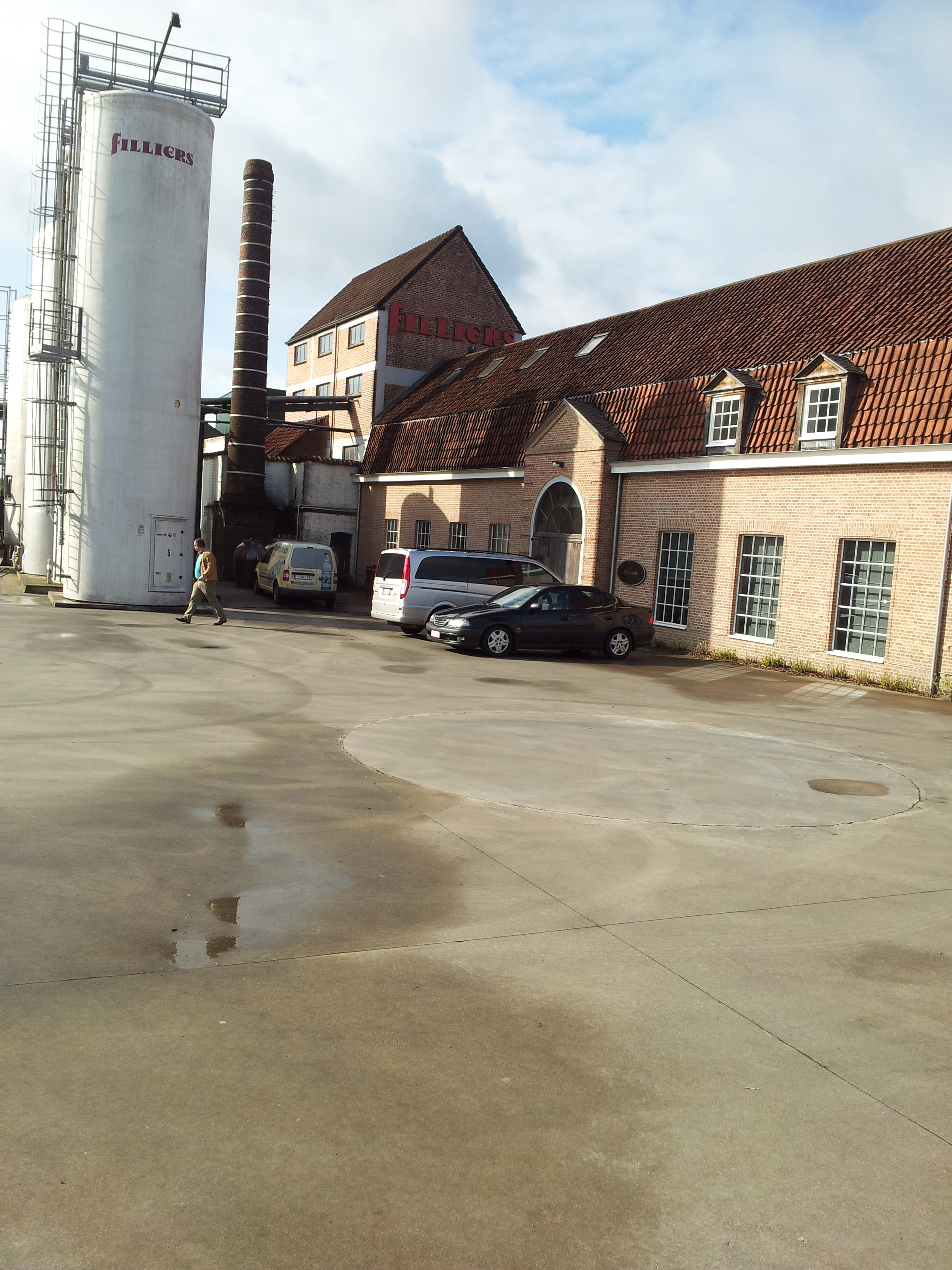
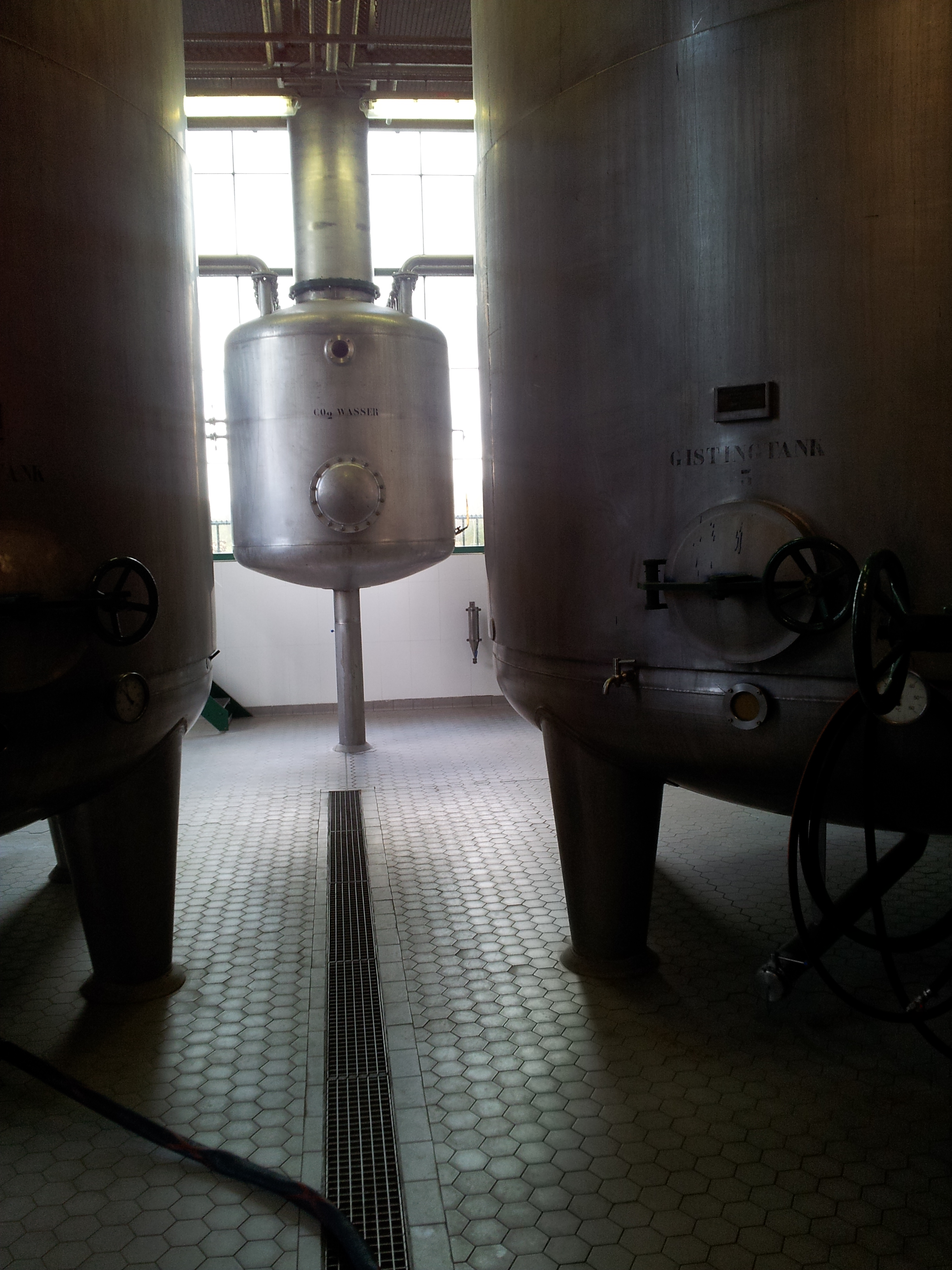
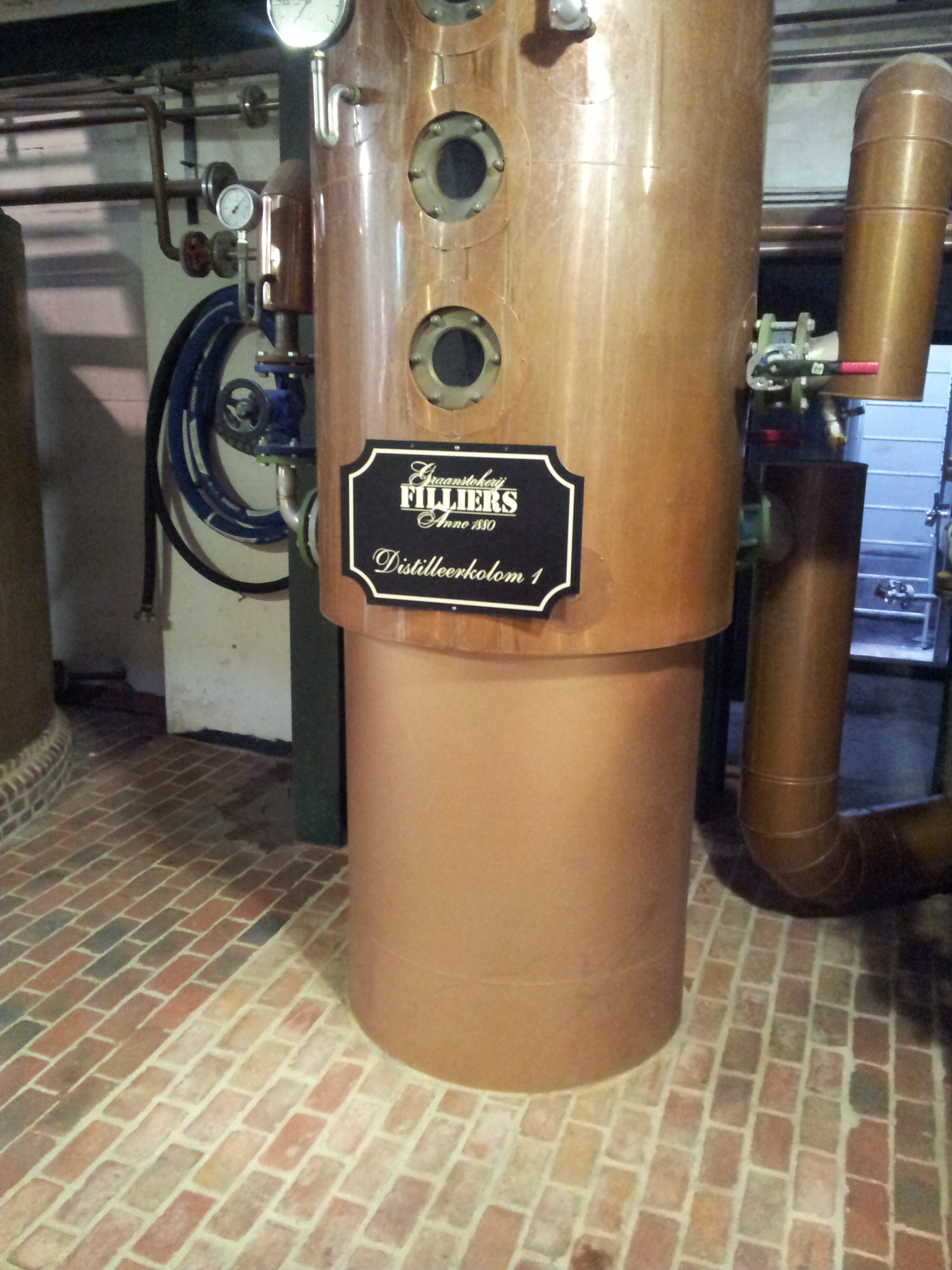
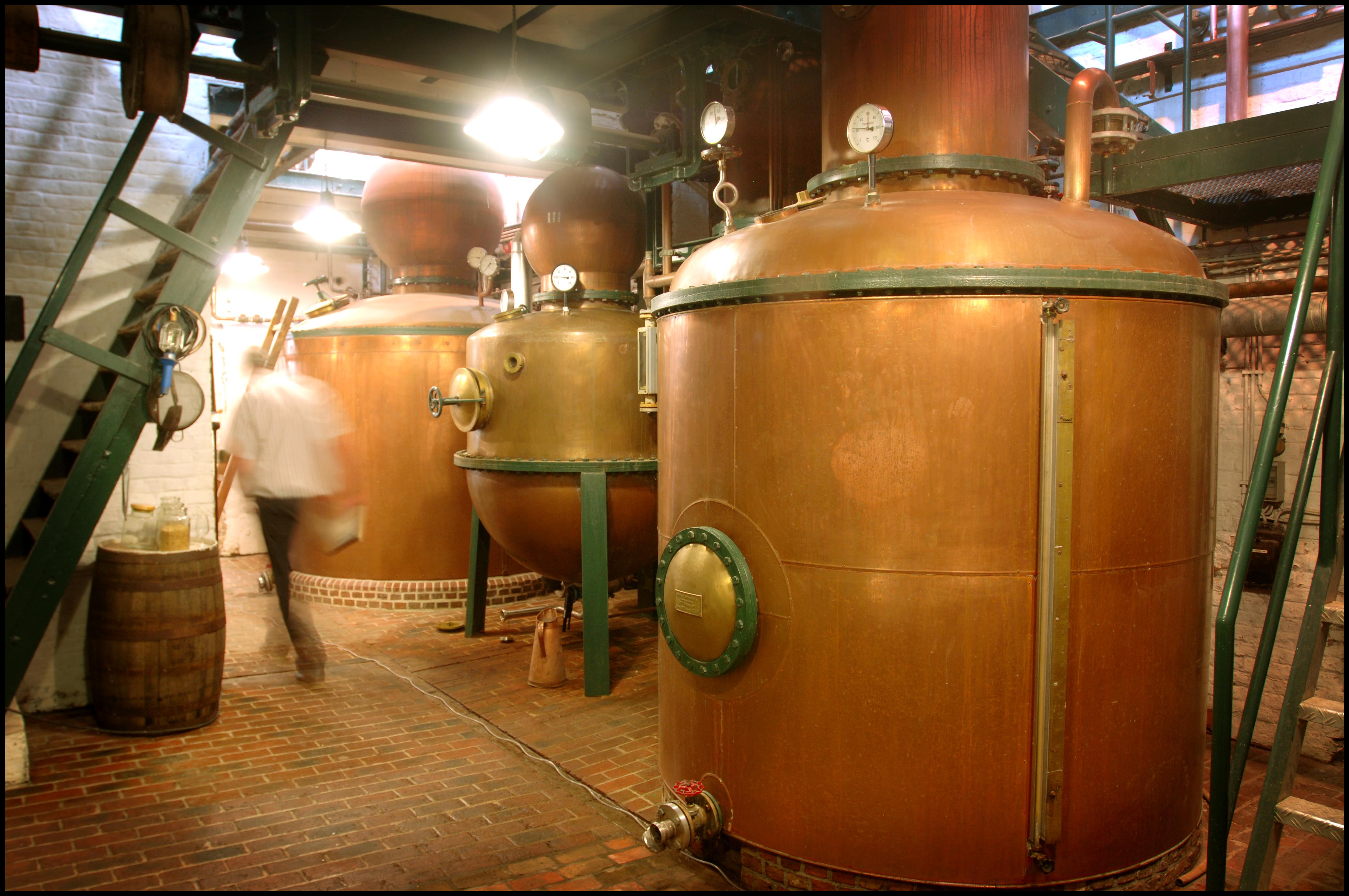
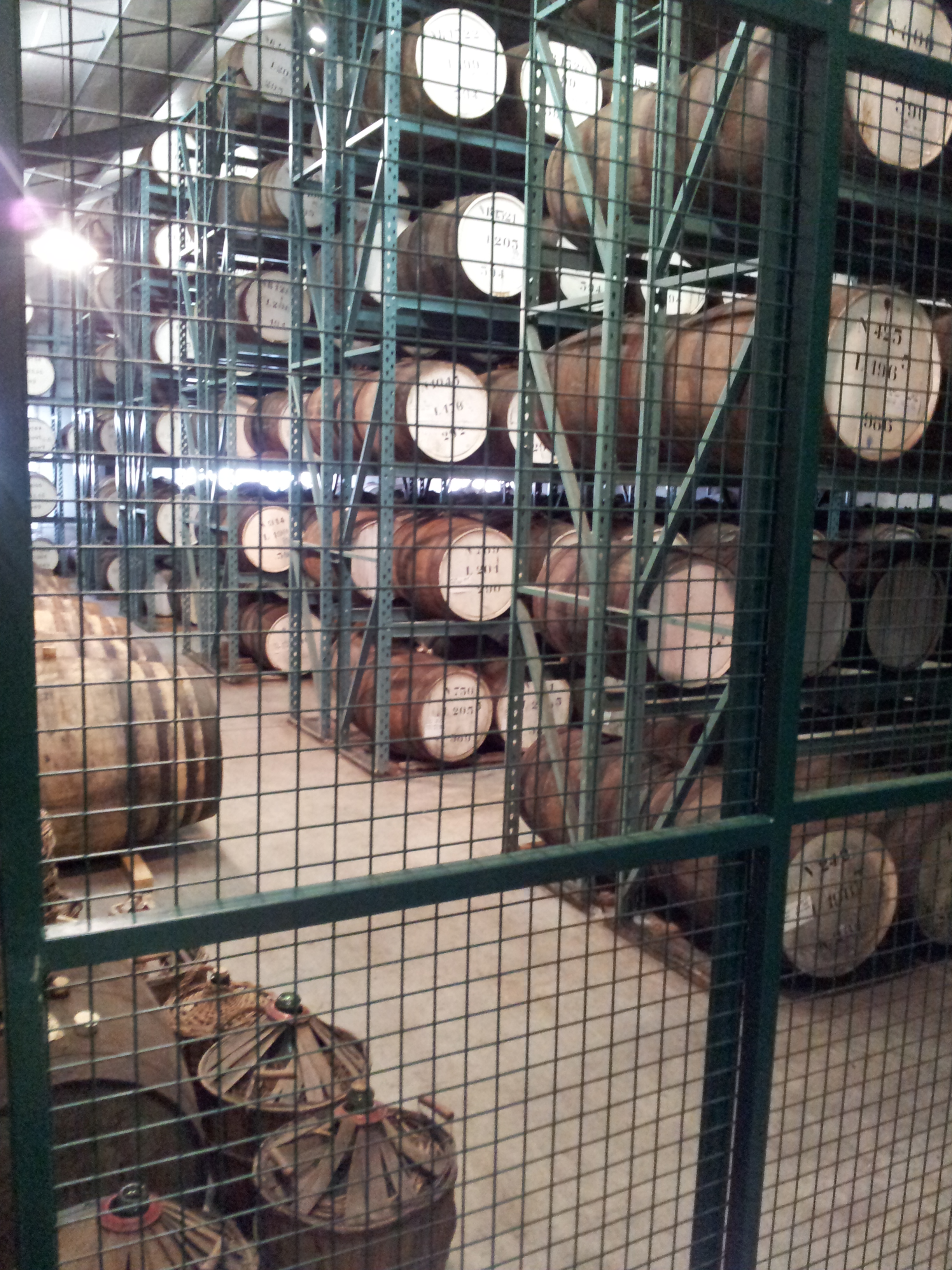
This weekend I really had a wonderful weekend, a weekend that made me even prouder to be a Belgian! Sometimes I really forget that we have so many great products. One of these products we Belgians can be proud of is ‘Jenever’, in English it is known as Gin (don’t confuse with English Gin, which has the same base, but herbs are added) or juniper. This weekend I was lucky enough to visit the distillery of Filliers, one of Belgium’s biggest ‘warm’ distilleries. Why do I say Warm distilleries, well there are2 sorts of distilleries warm and cold distillers. You can compare it like you have what we call “warm” bakeries and ‘cold’ bakeries, where in the warm bakeries they make their bread, pastries, etc… from scratch. Whereas a ‘cold’ bakery will get everything delivered.  In case of the distilleries a warm one will make its own Malt wine, (is like a kind of rough beer) that is the base used to make ‘Jenever’.  Just to give you an idea, in Belgium there are less than 10 warm distilleries and most of them are in the East-Flanders region and not in the Limburg as most people (including me) have always been thinking.  You might really be surprised the big Jenever brands that are actually not producing their own Malt wine.

Filliers is one of Belgium’s biggest warm distilleries and is good for around 1,6 million liters of Jenever a year…  and is already existing from 1880, which gives that the current owners are already the 5th generation of distillers! So you can be sure that they have all the knowhow to make some good stuff 😉 and is also the reason why I wanted to visit this Belgian monument.

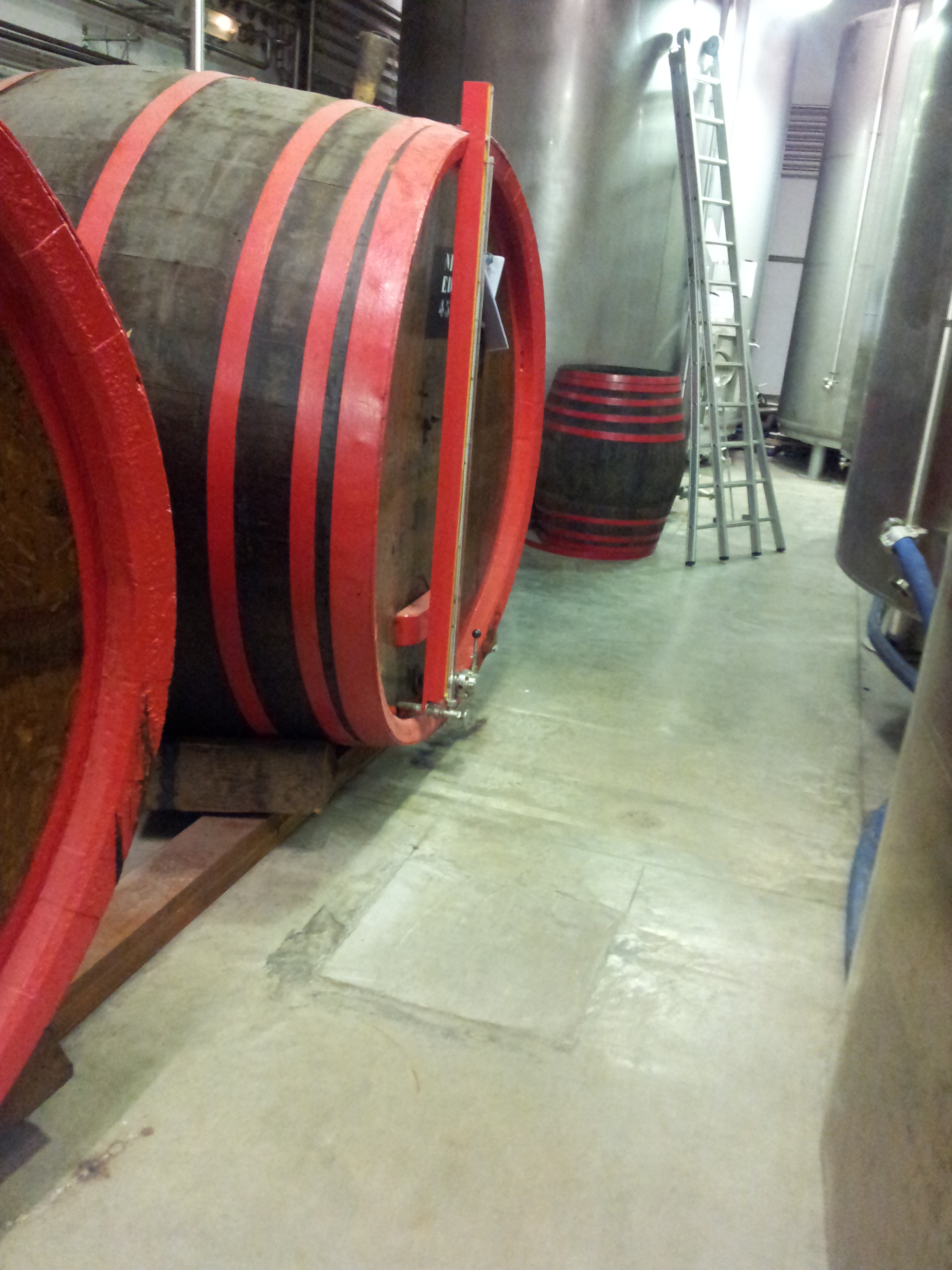
We do have to make a big distinction between the ‘grain jenever’ and the ones you find with fruit flavors.  As the production of the ‘grain’ ones is much more complicated and time consuming than making the ones with fruit flavor. As for the ‘Fruit’ jenever they will just mix the alcohol with the fruit. For the grain jenever the malt wine will be distilled 2 times (1st time in column kettle and second time in alembic at 85°C as alcohol heats quicker than water), wrests in barrels (bourbon and Sherry barrels) and after this has been done, and only after this has happened they will heat the ‘alcohol’ (as you could call it) together with the famous Gin berries that will give the particular taste to the Jenever.

I’m sure you guys have already heard talking about Old and Young Jenever. The big difference between both is actually that that Old one is made in the old way of making Gin and the Young in the new way… it is as simple as that 🙂 So not really the age of the Jenever as you might think.

What gives the different color to the older Jenevers is the type of wood of the barrel, not what has been inside the barrels (as for Jenever they always re-use barrels previously used for Bourbon or sherry). Once the Jenever is bottled, it will NOT age anymore, so basically 8 year old jenever will always stay 8 years old 🙂

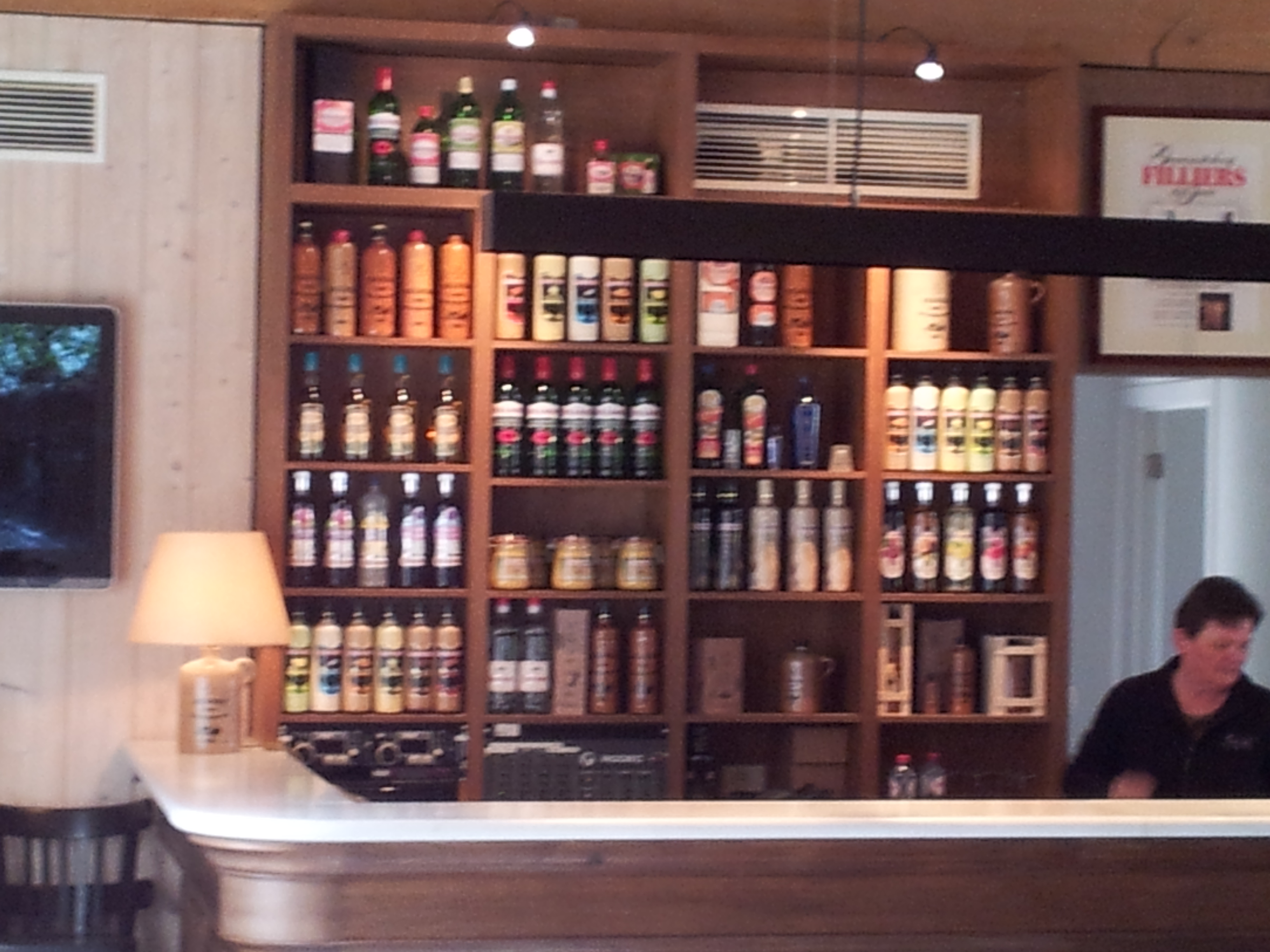
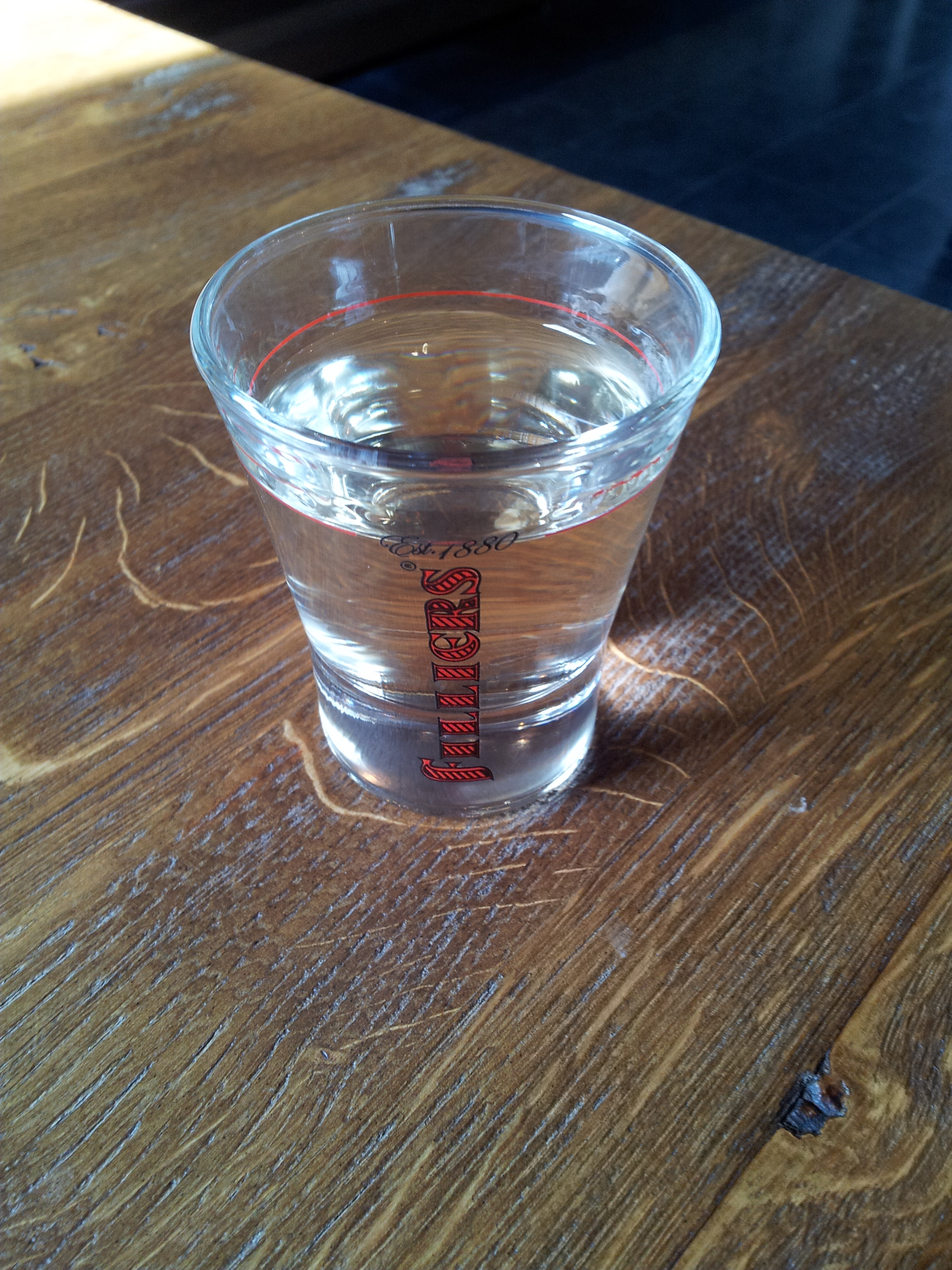
My (and I’m sure everybody’s) favorite part of the tour is the tasting 🙂 Ok, the tasting was at 11 in the morning, but I’m sure it was 5 pm somewhere else in world  🙂 :-).  On top of that I didn’t want to be rude or offensive against the people of Filliers.

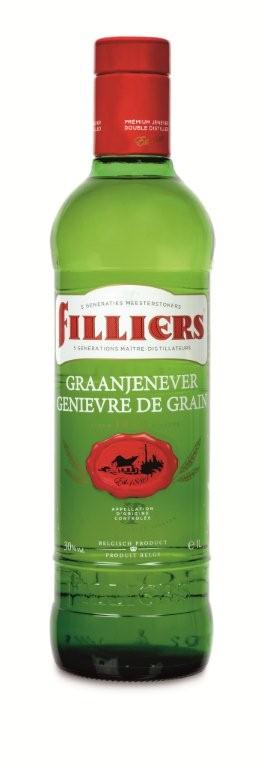
The first (yes, there were more) I tried was the traditional grain jenever or ‘druppeltje’ as people used to call them.

My second tasting was actually one on request, as during our tour, I was told that Filliers does not only make Jenever, but also makes one of the few Belgian Whiskeys… (Again, I’m sure somewhere it would have already been afternoon). I’m not really a whiskey drinker or expert, but I did like the aftertaste of this 12 year old malt whiskey… it had tones of vanilla.

I must say that my tour at Filliers was very interesting and I would really recommend it to everybody and not only the tasting ;-). Even if you are not really into drinking alcoholic drinks I’m sure that Filliers will have a product of your liking, I know I found a few :-). I have to thank Philippe (the Guide) for giving me a taste of the wonderful world of Jenever!  (FYI, if you visit the distillery, 1 euro per visit goes into funds for handicap people)

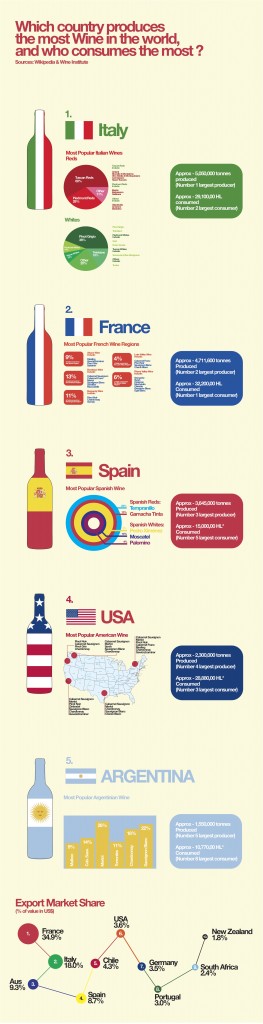
Which country produces and consumes most wine ?

Maybe not a question I’ve been asking myself, but nevertheless interesting to know 🙂

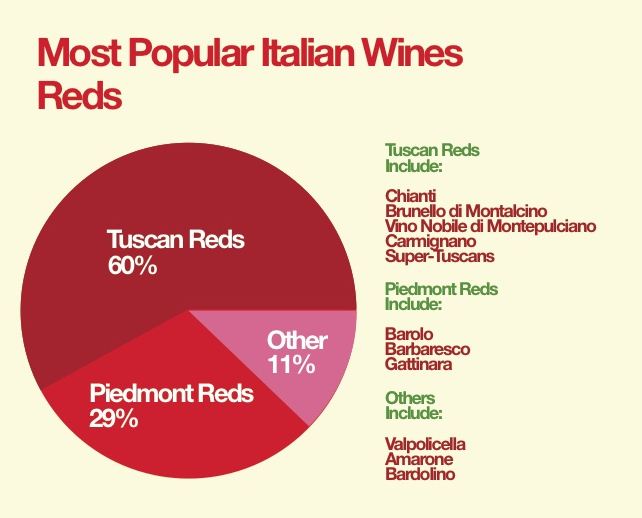
The graphic shows that Italy is nr 1 when it comes to producing most wine with more than 60% being Tuscany wines like Chianti, Brunello di Montalcino, …. But they are 2nd when it comes to consuming wines… as in that area France is the absolute nr 1.

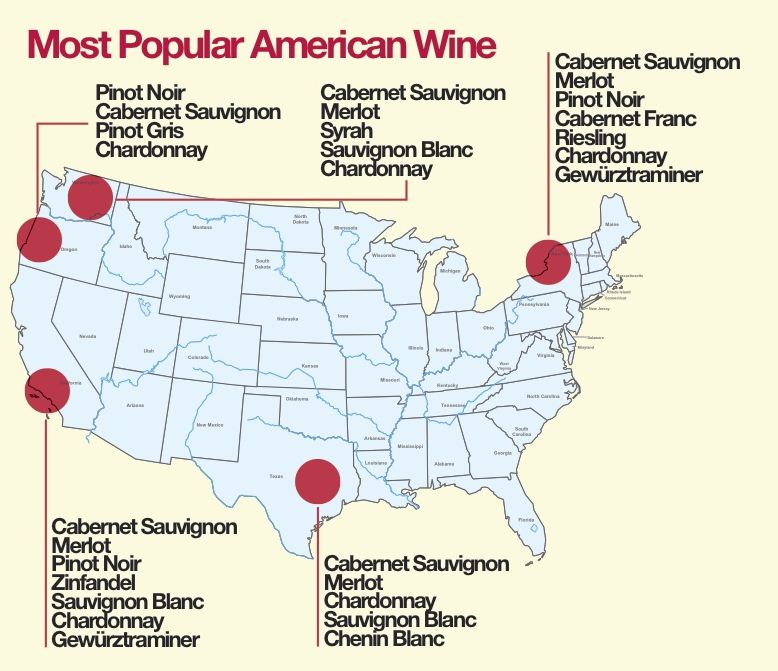
The biggest surprise for me was the many wines made in the USA, and the locations, I thought they only made wine in California…

Please take a look at this  infographic’ in more detail via following link

Not only do you learn more about the consumption, but you also get to know new wines, waiting for you to be tasted

My duvel discovery part 2

I promise I won’t give another history lesson today, but I just needed to tell you  bit or their history… That Duvel wasn’t discovered or made over one night, but took almost 40years of research to finalize  the actual recipe as we know  it today.

Back to my tour 🙂 I must say that they give this tour in a very professional  way. I actually joined a group that also booked  a tour at the same time. This brings to yesterday’s picture

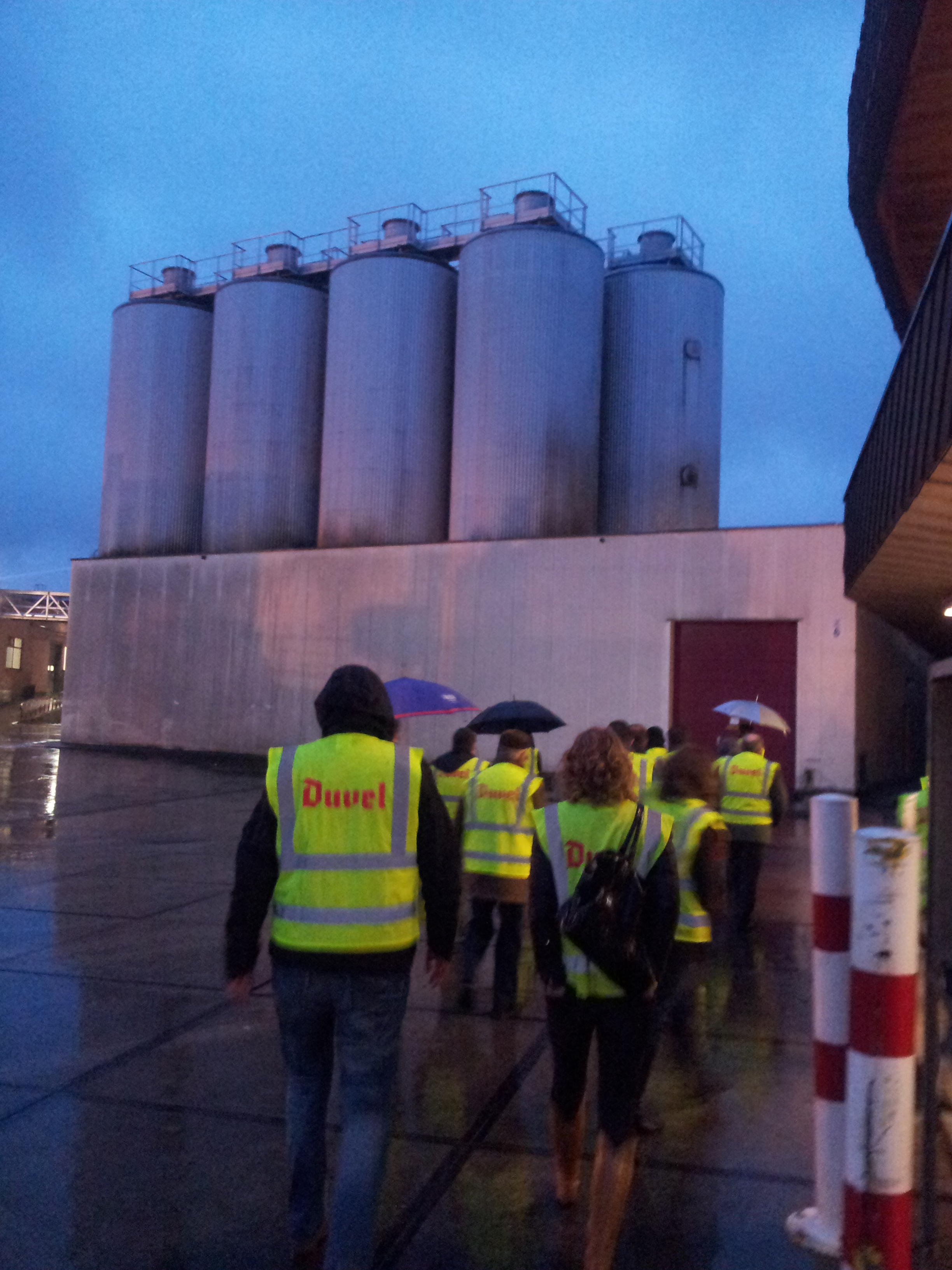
Before we started our tour, we all got a headset and a fluorescent vest. The vest was just for our safety as we were visiting a production area. At some point I fell like one of those guys who has to lead planes at the airport. The tour starts with to me the most important, with naming the 4 main ingredients of  Duvel/beer: Water, yeast, barley and  hop

What might surprise most of you, is that beer consists mostly out of water… so next time the police pulls you over, you just say you drank water :-).  In the case of Duvel, it is water that they get from 60 meters under the factory.

Did you know that the more hop there is in beer, the more bitter it tastes  And if I’m not mistaking, this also makes you pee more 🙂 :-). For me yeast is yeast, I didn’t know there were actually different kinds… In Duvel beer, they actually use a combination of 12 kinds of yeast 🙂 Scottish yeast that is (for more about history why they use Scottish yeast, check this website).

Every time I visit a production site I’m always amazed how incredible it all is and how high technological… Technique really stands for nothing these days. It is also nice to see that companies like Duvel Moortgat invest in their company, in new technology and research to be able to create the best possible product.

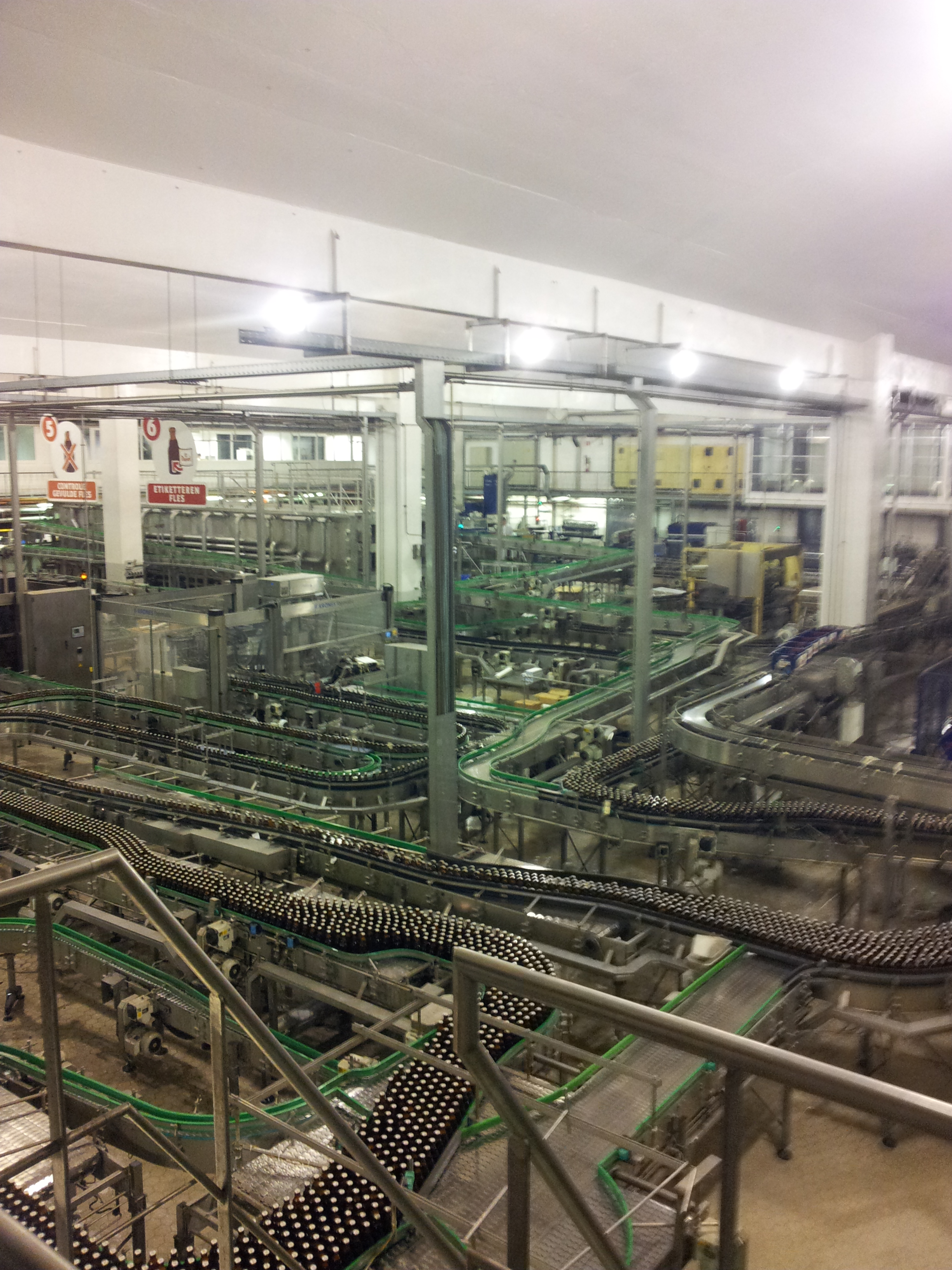
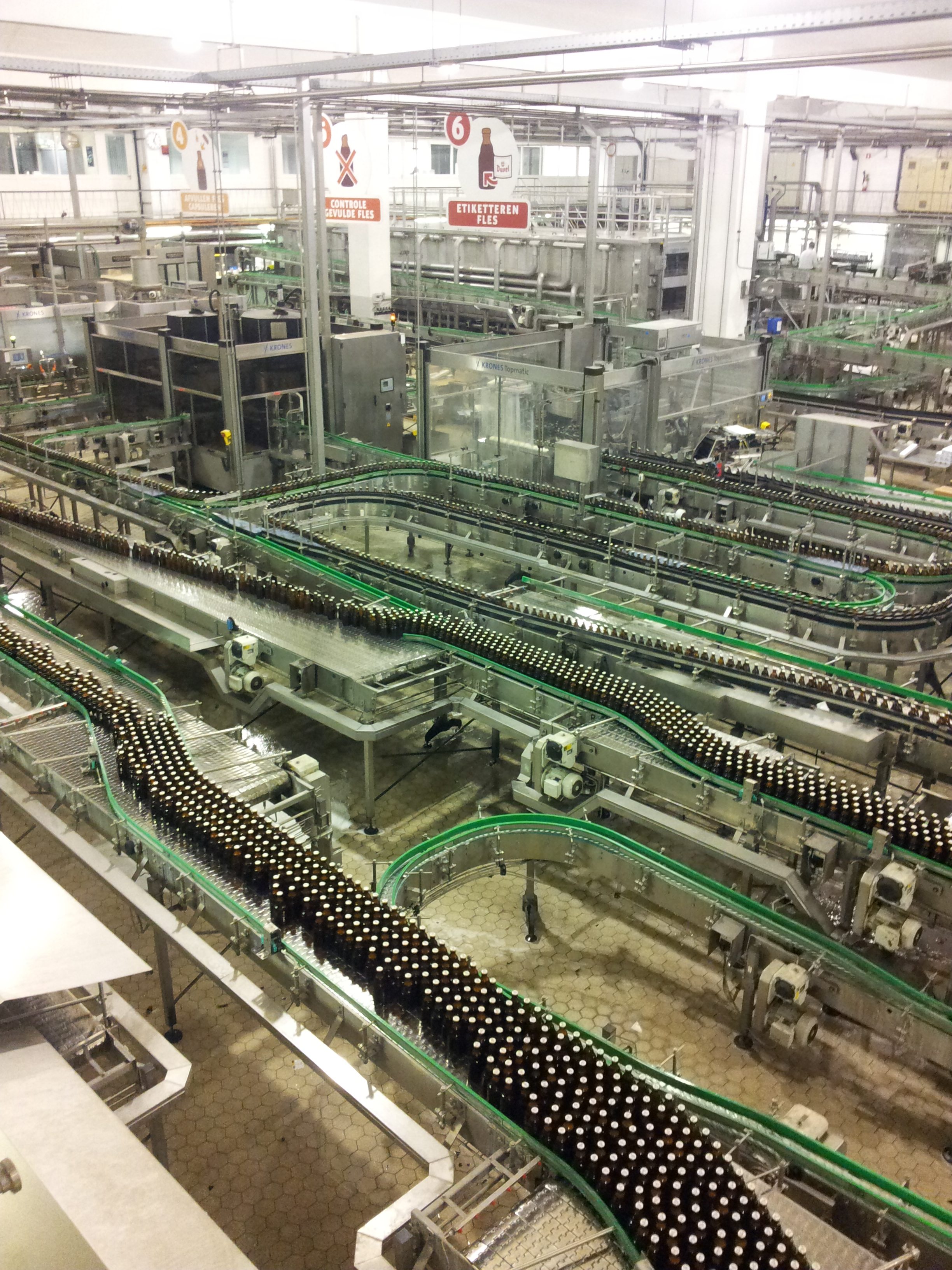
But the most impressive and amazing machine for me was the bottling machine

This machine will remove non Duvel bottles, remove the labels, check the bottle , fill the bottle and capsule, check the filled  bottles and put in boxes… and this machine can handle between 40 000 and 50 000 bottles per hour!!!! When at full capacity, I’m really amazed, as I know what this machine has to do, you also know, but how this machine is able to actually do it, always amazes me.

Just amazing. 1 thing during this tour actually got stuck in my mind. As I told, this machine is able to handle around 50 000 bottles, but this is not the case… as they prefer producing less and better… than producing a lot and a less quality product… Did you know that it takes about 90 days for a Duvel to be ready for selling?

After seeing all those bottles, we got to the best part of the evening/ tour

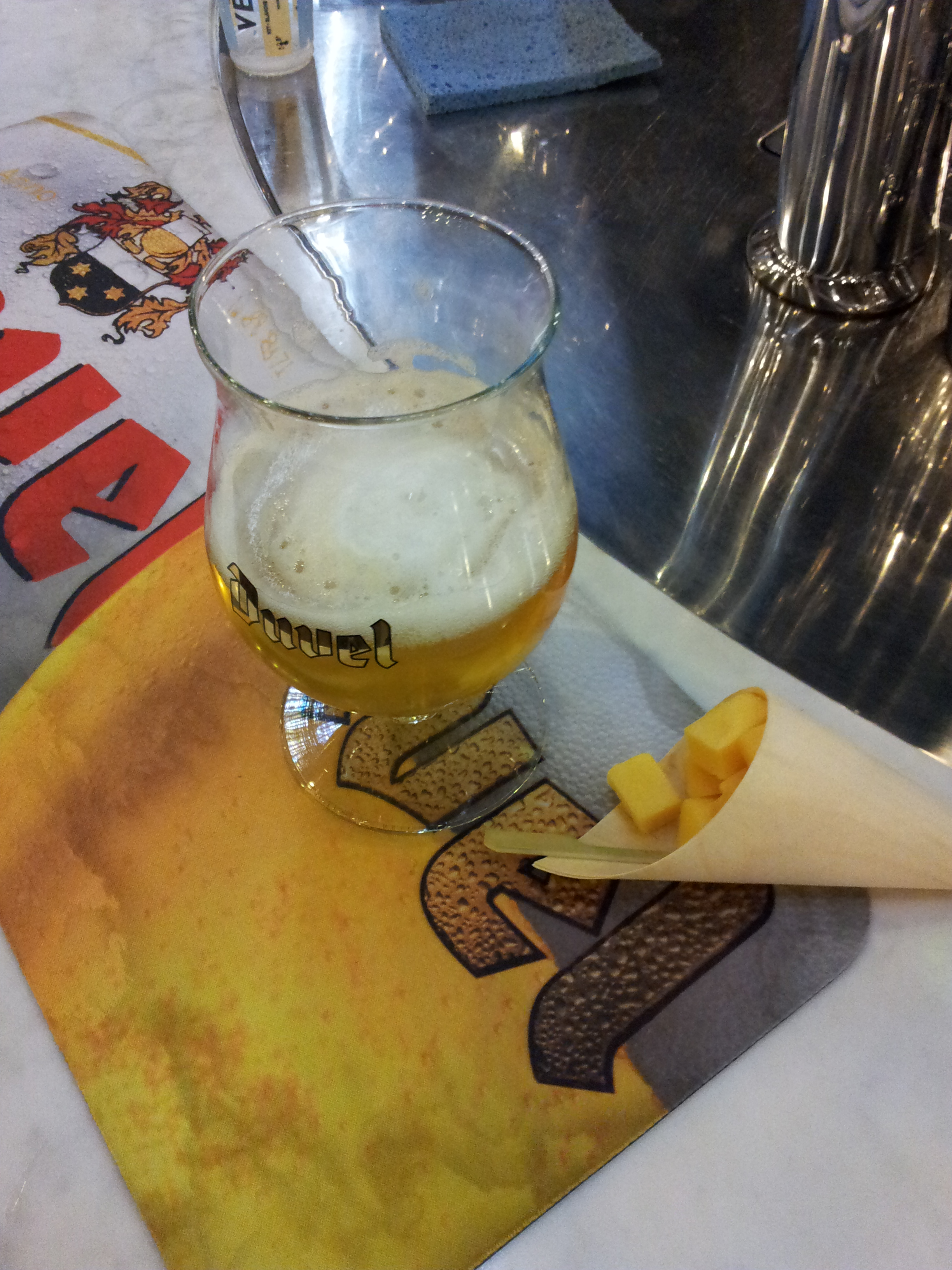
Yes, the tasting 🙂 I think the next picture speaks for itself.  For all of you who are wondering how long you can keep a Duvel beer… Normally you should drink it within 3 years, as than it is on its best. After the 3 years it would still be drinkable ofcourse, but it won’t be the same. Our guide had already drunk a Duvel from 21 years old. For him this wasn’t the best beer in the world, but that is a matter of taste, because for others, this might b heaven on earth.

And on top of that I got the company of the always super friendly Saskia :-)…What more does one need? Beer, good company and some cheese?

I have to admit that I really enjoyed this Duvel beer as it is not like any other beer! On top of that I learned a lot… but I think I’ll have to visit a few more breweries, just to get the real hang of bier loving …

But this was without any doubt a moment to remember! For anybody who would be interested to visit the brewery, you can look on the duvel website for the dates of guided tours.

My Duvel discovery

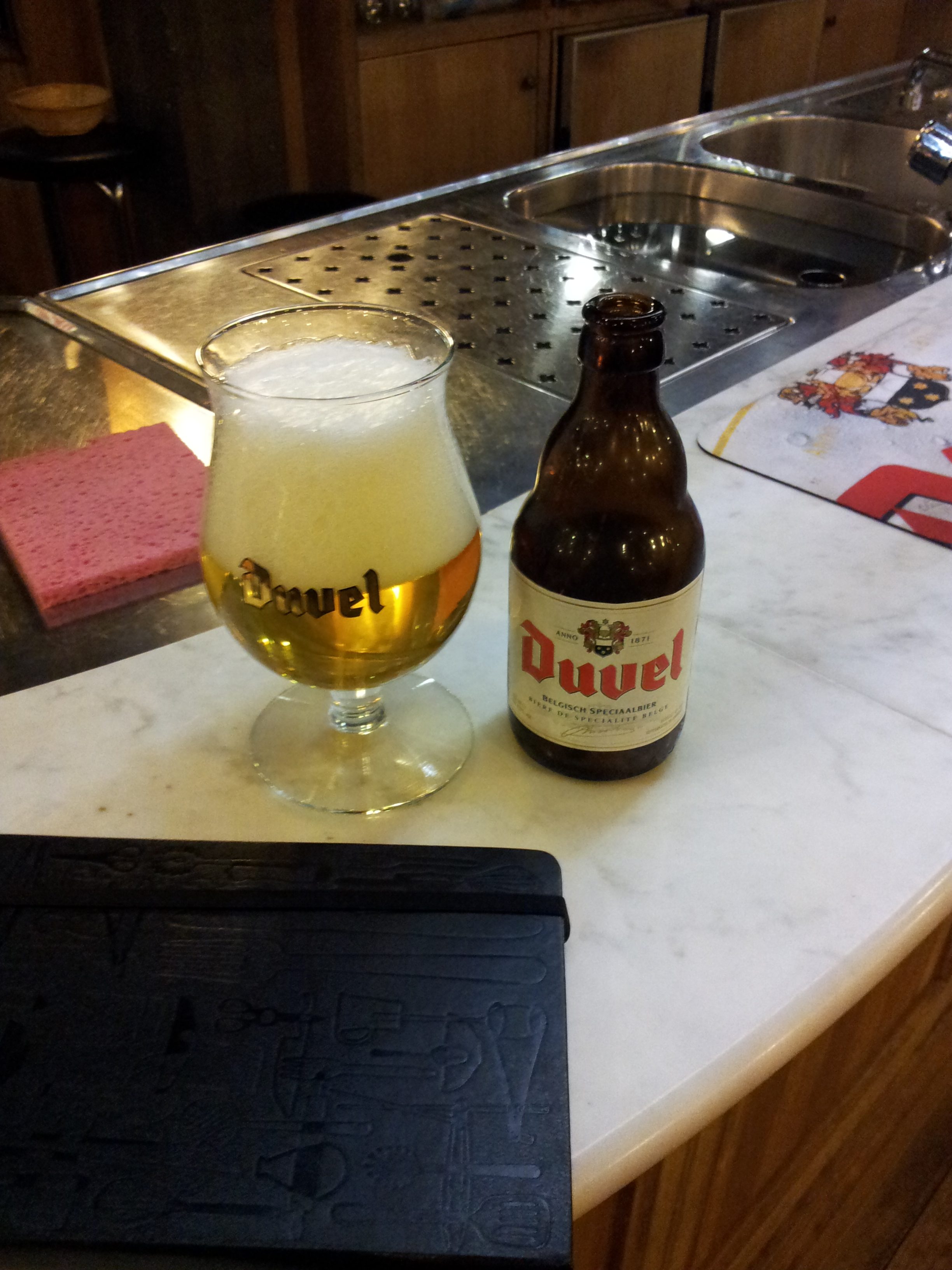
As some of you might have read, last Friday I visited the Duvel Moorgat brewery.  I’m sure that even my foreign friends know Duvel beer, as this is probably one of the most well-known Belgian beers. For those who aren’t sure, see the picture below to refresh your memory

I’m going be honest with you guys,  I’m not much off a beer drinker … Don’t get me wrong, I’ll drink it when people serve it…but I don’t like it that much.  So that is actually the first reason why I wanted to visit the brewery, to actually get to know more about how beers are made, what the best way is to serve it, etc… Because as a Belgian you cannot not be a beer lover… And this brings me to my second reason, just to learn how to enjoy some good beer.

So which beer better to start with than with the pride of Belgium, Duvel!?  And on top of that it is an Antwerp beer 🙂 , as the brewery is located just a few kilometers outside of the city of Antwerp, next to the old highway towards Brussels

Everybody might know Duvel, but how good do you know it? Our tour actually started with a little hisotry lesson about the Duvel brewery or Moorgat brewery as it is actually called was already founded in 1871 by Jan-Léonard Moortgat. What actually surprised most, was that it was not until vetween1918-1923 that the Duvel beer found its life and got produced as Victory Ale….Which actually a pretty long time?

You might be wondering how and why they gave it the name Duvel (which means devil in dutch)? Well the story behind it is actually quite funny 🙂 The name ‘Duvel’ came after a beer tasting 🙂 with notable people, and at that time people were not used to drink strong beers, they were used to drink regular quite light beer… So you probably see where I’m going…. they all got drunk and one of the guests  Mr. Van de Wouwer ( a shoemaker) started shouting that this beer was a real devil…. And from that day on this beer goes under the name Devil or Duvel. OK, enough history 🙂

Just to get all the confusion out of this world. Duvel is a specialty or fermented beer and not a regular beer. First off all because Duvel has an alcohol percentage of 8,5% and a regular beer is only max 5%. Another difference is that it is not pasteurized.

Ok, this is all that I’m telling you today… please stay tuned if you want know more about  my visit to the brewery and the picture below 🙂 ok and if they got me to love beer…

To be continued…

Wine discovery at the aperos de bordeaux part II

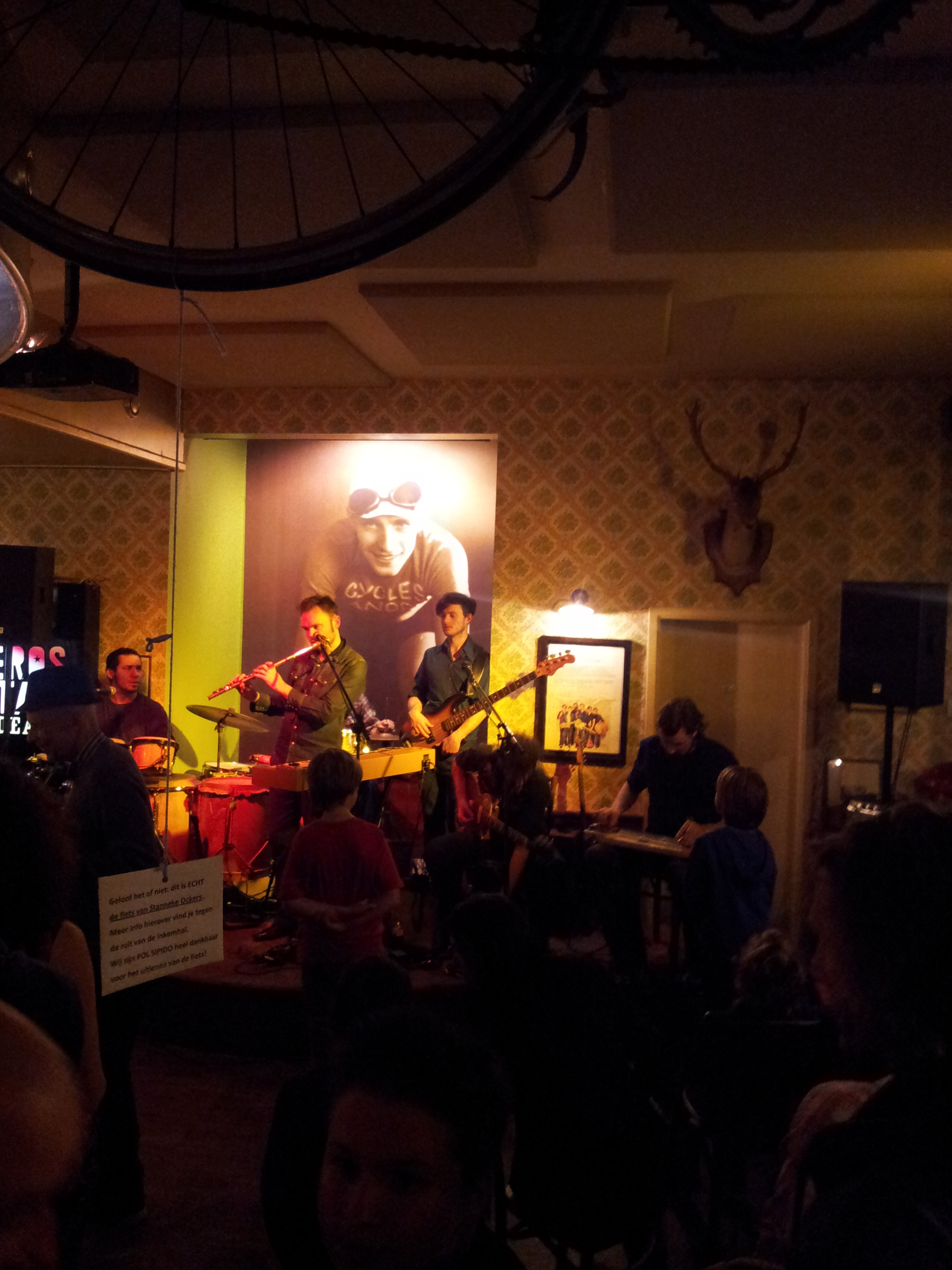
In the surveying eyes of  cyclist Stanneke Ockers I went to the last Aperos Vintage de Bordeaux in Antwerp or better. I must admit that I liked this edition a lot, even better than the one from last week!!

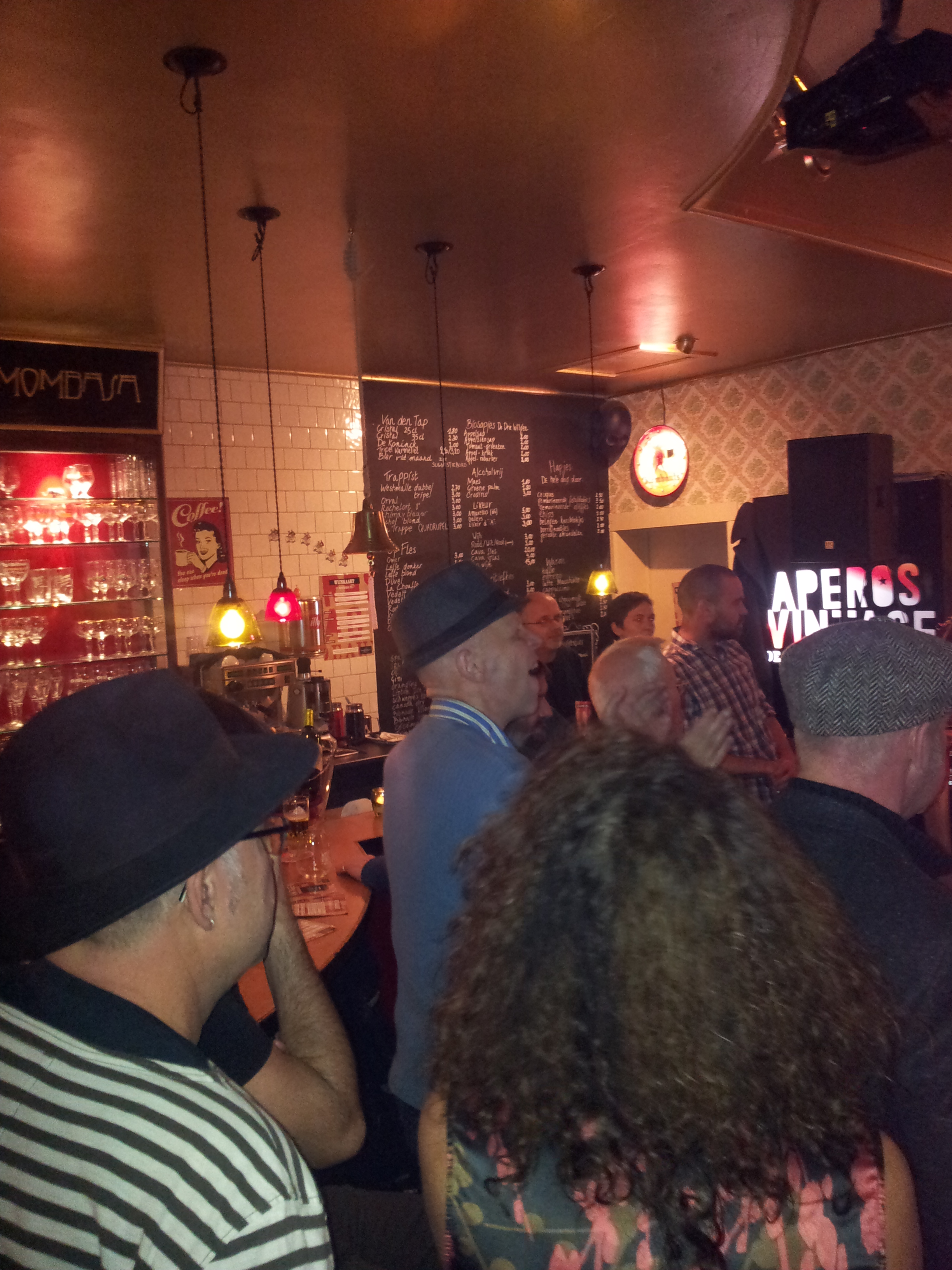
I don’t  know what it was that made this better, but there was something that gave me a great feeling from the moment I walked in café Mombasa . Like I come here every week … the place was really packed! Café Mombassa is a corner bar right in front of the city hall of Borgerhout with an interior  you would see in weekend issues  of Weekend Knack magazine or or some other interior magazine… It doesn’t get more vintage than this. With one remarkable item, namely the original bicycle from Stanneke Ockers  ok and maybe also the very large picture of him :)….

After a few minutes the South of border band featuring Bruno de Bruxelles started playing, they played a mix of jazzy, Latin American and bluesy music. This made the evening even smoother.

But ofcourse this was a wine event, so the main thing I was here for, was wine 🙂

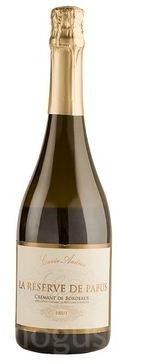
I first started off with a nice glass of bubbles, a Crémant de bordeaux blanc –Cuvée Andrea by La réserve de Pabus, a very nice refreshing starter to loosen my taste buds (for who wants to know, almost 100% use of Sémillon grape).  You can’t stand on one leg (or not long)… so I continued with a glass of Crémant de Bordeaux Brut Rosé by Jaillance, an immediate taste of red fruits. A real harmony in my mouth. This rosé crémant was made entirely out of Merlot grapes (that you might know is one of my preferred grapes). So far my evening was only going crescendo… it looked promising for what was to follow.

As you might remember from last  I wasn’t really crazy about the white Bordeaux wines… but the Graves by Château Pont de Brion  that I had this time did have everything  to convince me. You could taste that this was a wine that had been in a barrel for a while, also it was a very full taste in your mouth… some might call it a more complex flavor. In the “technical” details it said taste of pineapple, but I didn’t really taste this (but that could just be me 🙂 ). Le moment supreme of the evening was the red Fronsac by Clos du Roy a wine with a lot of character and 90% Merlot which gives it a notions of red fruit (but I’m sure you remember this from my post from last week).   All 4 wines would be wines I see myself adding to my collection of wines …

So conclusion, I passed a very nice evening and I hope that the organisation will have some more of these great after work Aperos vintage de Bordeaux, maybe in Gent ? If they do, all you guys should check this out! What more do you need than a good bar, nice wine and good music (and I have to admit, nice young ladies 🙂 )

For all of you who would want to buy some of the wines , you can do so via www.bordeaux-coups-de-coeur.be

A sip of Grappa for an instant Italian feeling

In my last year of high school  we had to choose a product that we had to work around the whole year. We had to write a marketing plan, plan some advertising, etc…. to promote and sell your product. I chose Grappa.  My first choice was actually Whiskey, but my dad made me change my mind 🙂

You might find it a strange choice, but I changed my mind because Grappa was/is a product people aren’t familiar with. I know that the teachers didn’t complain about my choice 🙂 .

What is grappa actually? Grappa is a distillated liquid made from the grape left overs  after making wine.

When you would use the whole grape (or fruit) this liquid would be an “Aquavit” and not “Grappa”. What would obviously make that “Aquavit” has a softer taste, while “Grappa” has a much stonger taste. Grappa’s origin is in Italy, the parts close to Slovenia/ Croatia, like Friuli, Veneto, Alto Adige,…  

Within the Grappa itself you also have a distinction:

          Monovitigno: made from 1 kind of grape

          Polivitigno: consists out of all different kinds of grapes (as well white as red)

          Aromatic grape: like the Moscato grape

My preferred Grappa and Aquavit distillery would be Nonino , which was also the company I worked with for my highschool thesis. To learn more about how the Grappa is made,  my brother and I went to visit the Nonino distillery . We took a guided tour with Cristina Nonino (daughter) and Giannola Nonino (mother)… who really took their time to explain everything we needed to know.

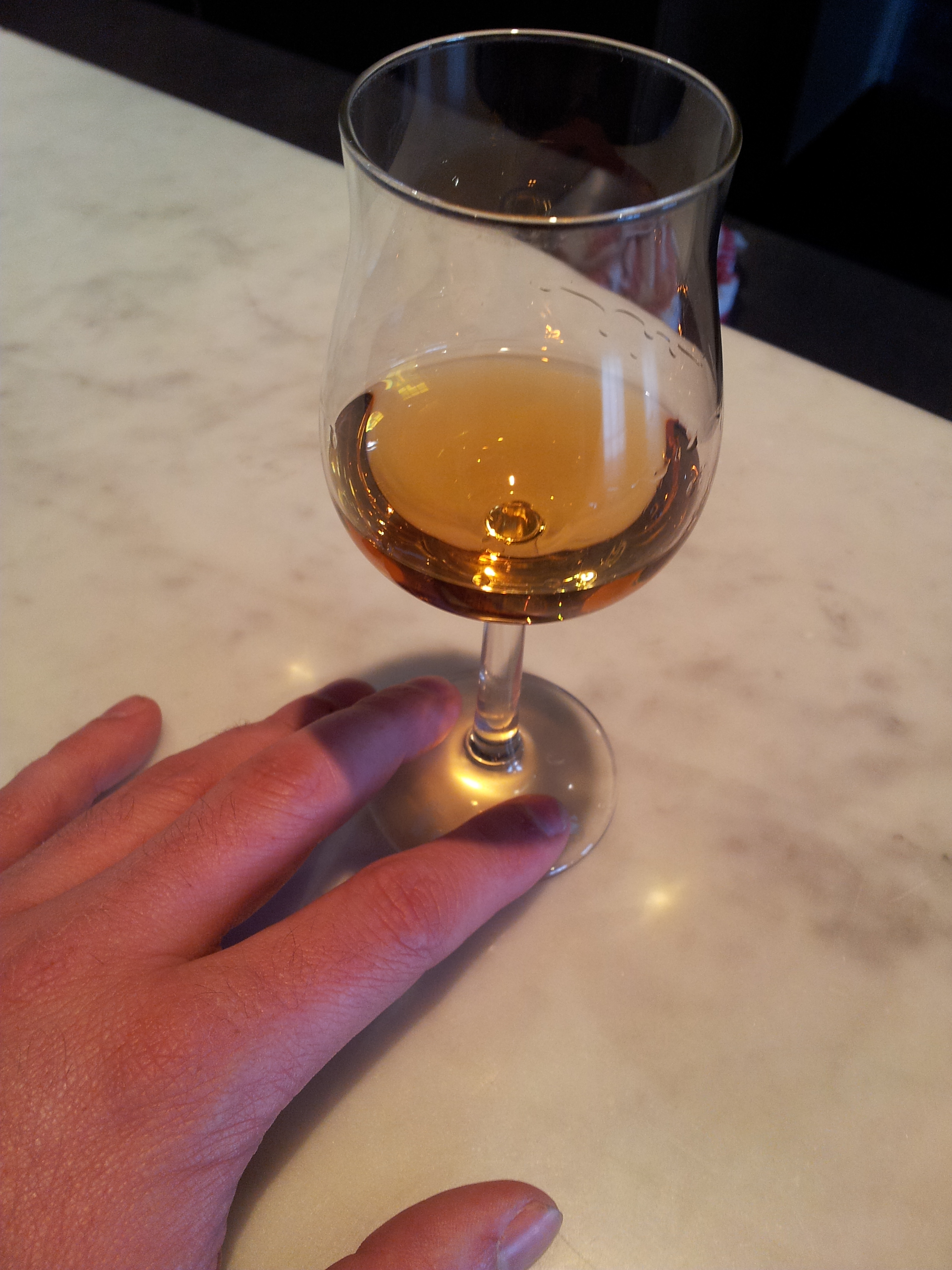
We also had a tasting (at 10.30a.m). But lilke for every drink, there is a special way or correct way how it should be drunk/ tasted, so  they also explained  us the best way is to taste Grappa. The best way to taste Grappa would be when the grappa is at room temperature (12°C) served an open glass and slowly drunk. My all times preferred grappa is the Picolit (made from the rare Picolit grape) . To make a “caffé corretto”, you should use the traditional grappa. Some of you will  be happy to hear that grappa goes well with dark chocolate 🙂

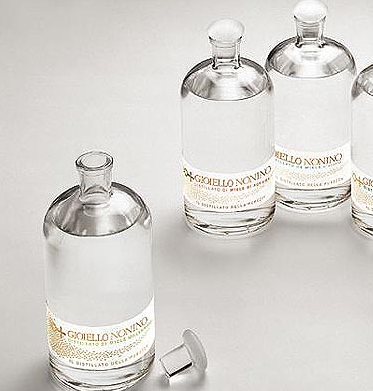
For the ladies who have a sweet tooth I would highly recommend the Gioiello, which would be a Honey distillated drink… very tasty.

The high school assignment story ended well.  All the teachers liked the work I wrote (I think the tasting during my presentation helped). If you would like more info about Grappa, don’t hesitate to ask me. It would be taking a trip down memory lane.