A trip down memory lane

If I would ask 100 people what they think of when I say Delacre, 99 of them will say of their grandmother (same goes for me) as everybody’s grandmother had a tin box filled with the delicious Delacre cookies at home… I personally also remember eating lots of them 🙂

Delacre logo

I also remember when I was in primary school we used to collect the empty boxes from the Delichoc cookies from Delacre, as the school who collected the most got a as price a concert from a than very popular Belgian band called “The Radios” (unfortunately we didn’t win). Check out the following links and listen to the songs, so you can see why I was buying (and eating) cookies like a real cookie monster: Link 1, Link 2 and link 3. I think I still have a cassette or a disk from them at home 🙂

The radios

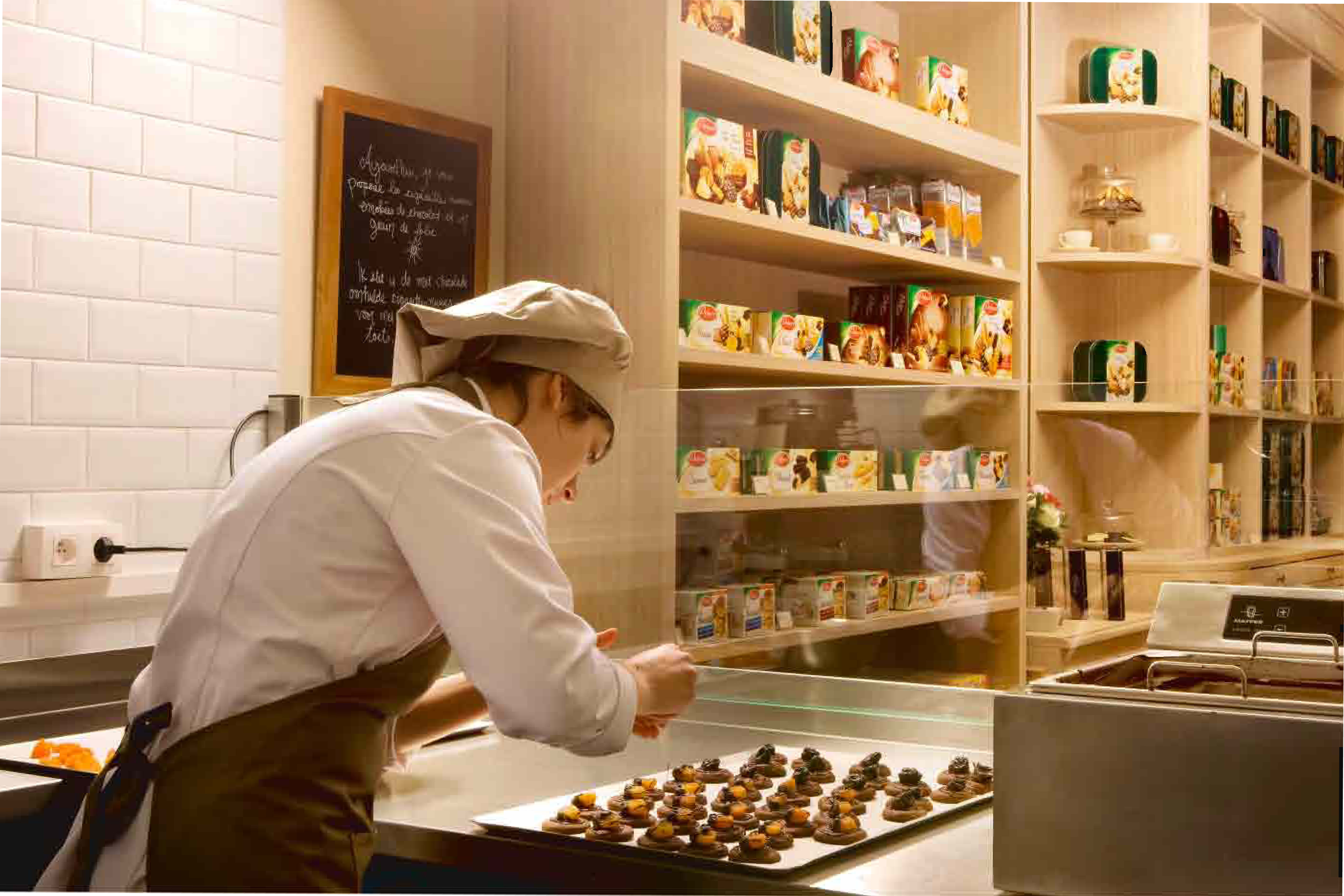
So when I walked into the Delacre shop a few weeks ago a lot of my childhood nostalgic memories came back… I made me feel very warm inside 🙂 (Ok, I’ll stop being sentimental 😉 ). Not only did I enter the shop I (together with 3 lovely ladies) got to make our own cookies with the guidance of the Delacre lady pastry chef Nadia, who is actually French-Canadian  who got stuck in Belgium thanks to love 🙂  and is very passionate about what she does (that’s the way I like them)…

IMG_0812

fotosboutiquedelacreopt-1

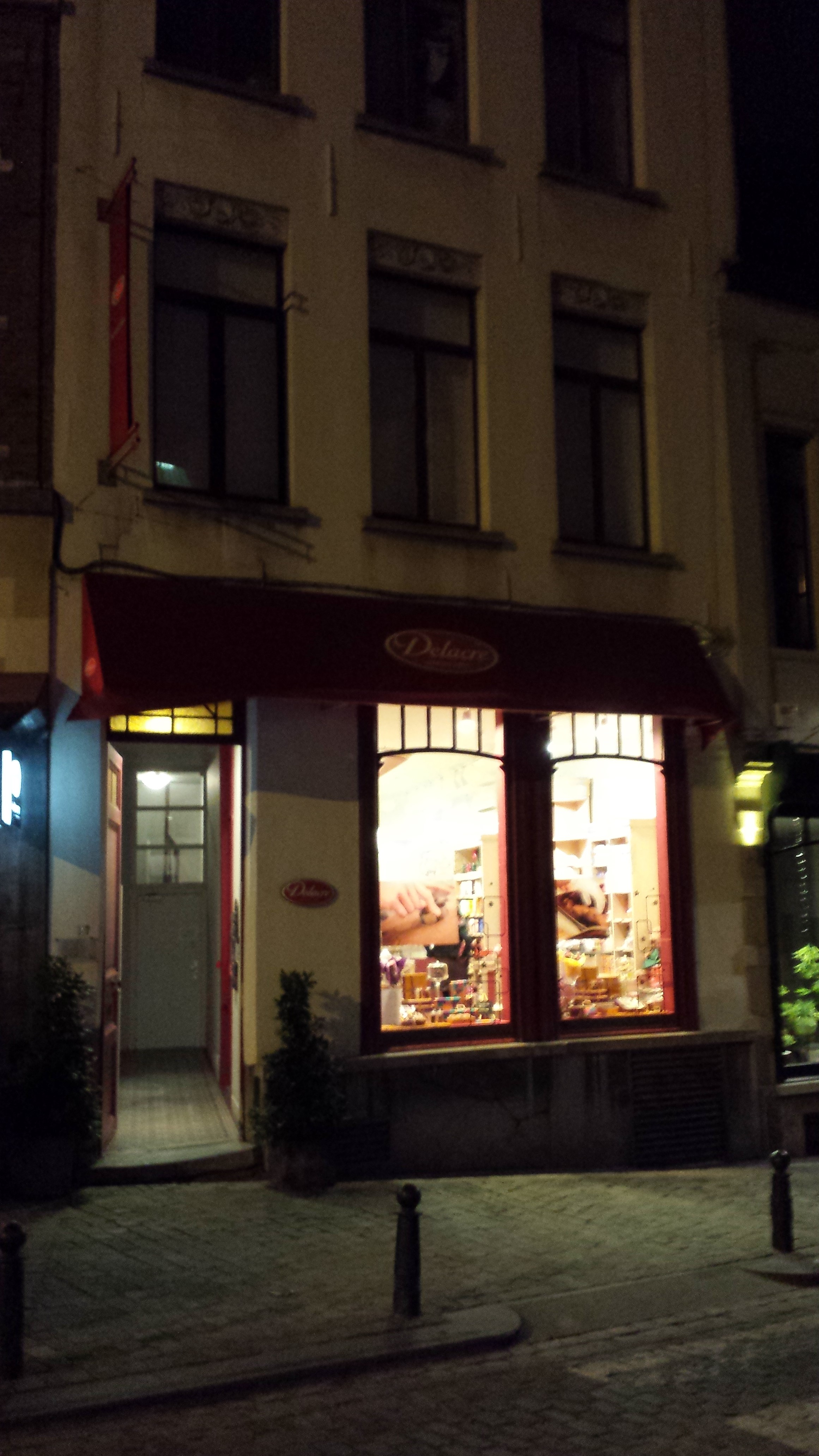
Anyhow I didn’t know there was a Delacre cookieshop in the city center of Brussels it is even located in between the “Grand place” and “Manneken pis”… so all you people out there, next time make a detour via this sweet shop next time you’re walking from the “Grand Place” to “Manneken pis”.(or just when you feel like having some great cookies) They don’t only sell the classic cookies in the famous boxes, they also sell cookies you’ll only find in this shop and all freshly made in the shop itself by Nadia and her colleague.
fotosboutiquedelacreopt-25

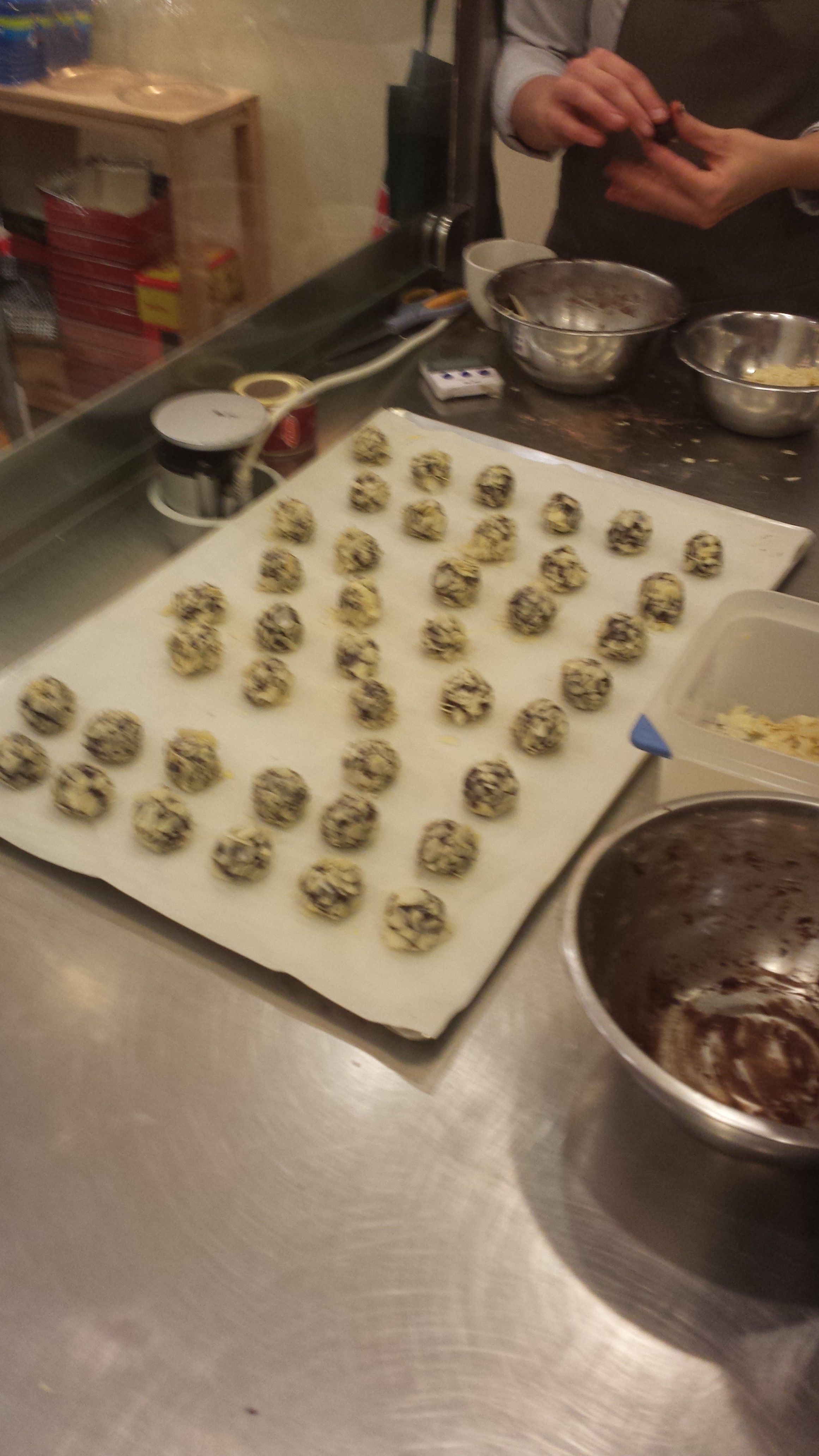
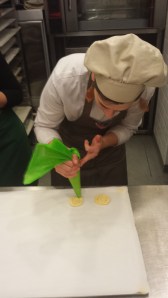
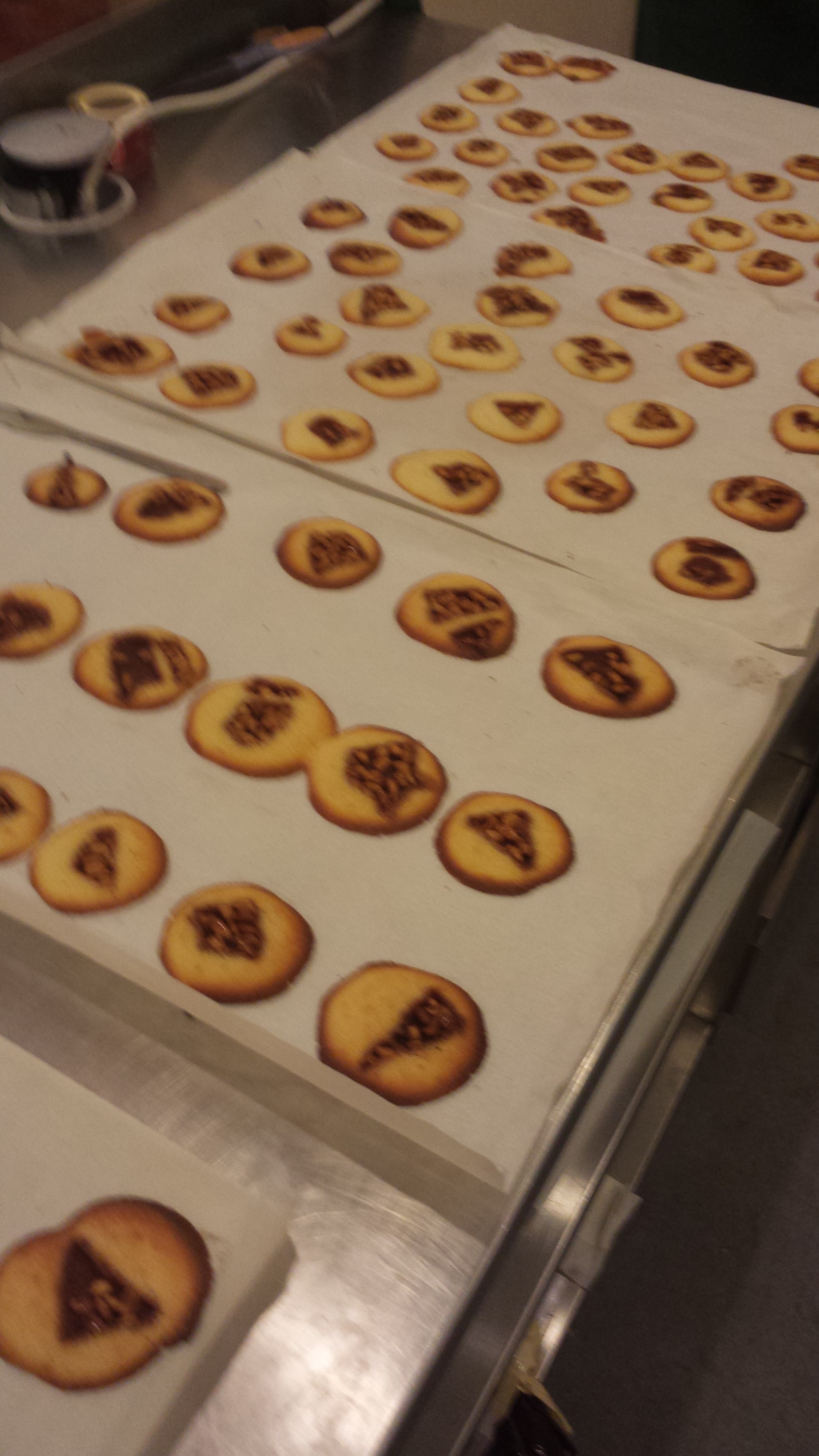
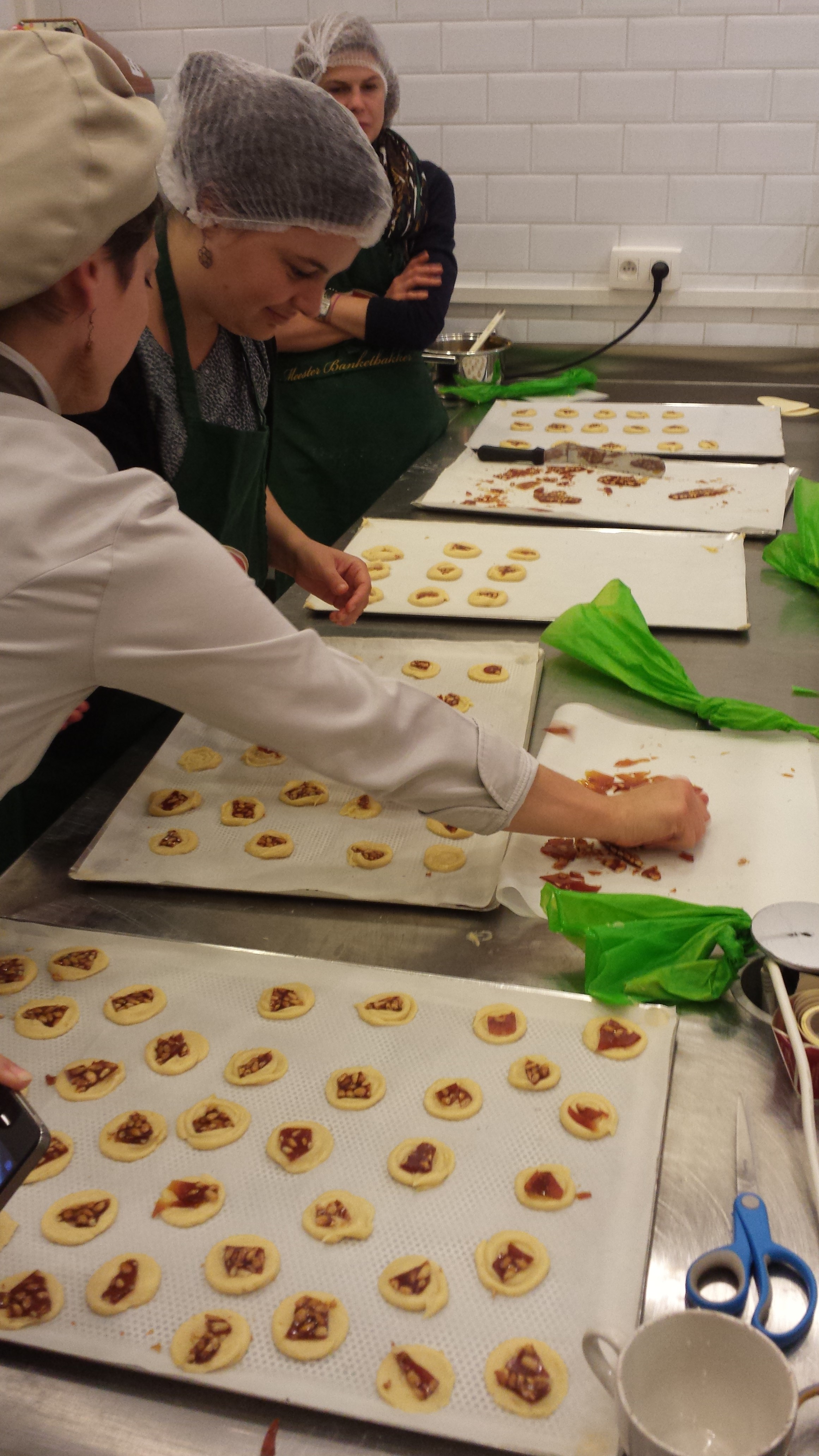
As if I wasn’t already enough down memory lane in this shop, the baking workshop brought me whole the way back to chef school during the baking classes :-). The cookies we baked during our workshop were the “Palais de Dame nougatine” and the “Ultime cacao” (a real treat for chocolate lovers). The bags I took home didn’t even make through the next day 🙂 so I think the question “where they good” shouldn’t be asked anymore…

Cookiemaking 1

Cookiemaking 2

Cookiemaking 3

Cookiemaking 4

Cookiemaking 7

Cookiemaking 6

Wanna taste them? Pass by the Delacre shop and feast your eyes on cookies and tin boxes as far as the eye can see 🙂
20131003_202439

Or you wait a bit and find the recipe on my blog … or do both 😉

Delacre Boetiek:

Address: Oud Korenhuis 27 – 1000 Brussels, Belgium

Open every Tuesday to Sunday between 11h and 18h30

Cheers!

The 2013 Best Belgian Sommelier Trophy

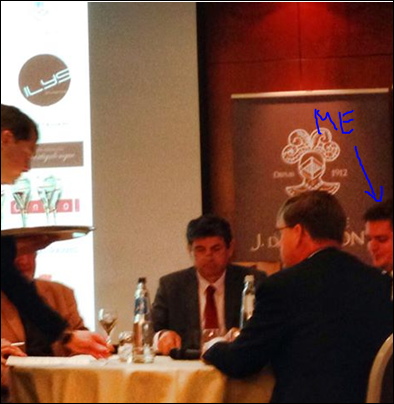
What a day!! My respect for professional sommeliers got bigger by the second during the annual Belgian Sommelier Trophy. First things first, before I start talking about anything else I want to clear out something. The title of “Best sommelier of Belgium” given yearly by the Belgian Sommelier Guild is the one and only real title as they are the only association recognized by the ASI or “Association de la Sommellerie Internationale” to hand out this title. During this competition there is also no favoritism as this contest gets observed by a bailiff to make sure the whole contest happens correctly. Secondly, during this contest every participant gets thoroughly tested on his/her knowledge and get judged by an international jury with special guests like Bernd Kreis (Best Sommelier of Germany 1990, Best Sommelier of Europe 1992, Semi-finalist Best Sommelier of the World 1992), Jan-Willem Van der Hek (Best Sommelier of Holland 2013, Candidate for World and European championships 2013), Cees Vos (Past president of the Dutch Sommelier Guild), Louis Havaux (Past president of FIJEV, Concours Mondial de Bruxelles…), international winemakers, me 🙂 and a few more… so basically people who know what they’re talking about. I (together 5 other judges at my table) had to evaluate the participant’s handiness, efficiency, politeness and professionalism during his tests. It might seem an easy task, but it really wasn’t!!

Gilde Sommeliers

Now you know the above I can continue with talking about the actual competition. Last Sunday 3 young sommeliers (remaining from the 11 candidates that participated the semi-finales) Yannick Dehandschutter (Restaurant Sir Kwinten), Antoine Lehebel (Restaurant Villa Lorraine) and Jan Rots (Restaurant Brasserie Latem) competed against each other to become the this year’s Best Sommelier of Belgium . I was really honored to be part of the jury and glad I was at the good side of the table as it wasn’t easy competition :-).

3 participant together with Louis Havaux

To give you guys an idea how difficult a contest like this I’ll give a few examples of tests they had to do. The first test they had to do might seem like a very easy test, but don’t get fooled!! They had to serve (according to the rules of the art) my table of judges a 2006 Telmont Blanc de Blancs Champagne and also tell us more about this champagne… to make it more difficult they also put a 2004 Blanc de Blancs and a totally different champagne in the ice bucket and to do this all they had 5 minutes. Only 1 of the 3 participants’ served us the correct bottle… it did cost them a point, but this way I got to try 3 different champagnes 😉

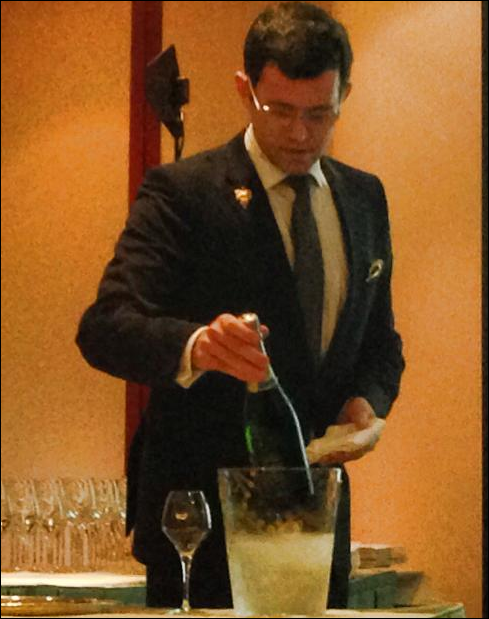
Antoine Lehebel

Competition

The most difficult tests were  saying from 6 glasses of alcoholic drinks which kind of alcohol it was and the country it comes from or maybe telling from 3 glasses of wine as much as much as possible and which wine it is… all this just by looking at the color, smelling and tasting again for which they only had between 5-9 minutes to accomplish. Or was it the 7 course menu for which they had to give 7 different wines from 7 different countries and tell us why? Although finding the mistakes in a wine list also didn’t seem like child’s play as the mistakes could be typo’s, but also references to wrong regions or vintages… so if after this test your respect doesn’t get bigger for them I don’t know what will?! Next time I’ll see a title like this given by some magazine or guide I’ll think twice and wonder on what they based themselves to determine the winner of their title!!

Yannick Dehandschutter Photo : Jean-Marc Brasseur

Jan Rots

Yannick Dehandschutter Photo : Jean-Marc Brasseur

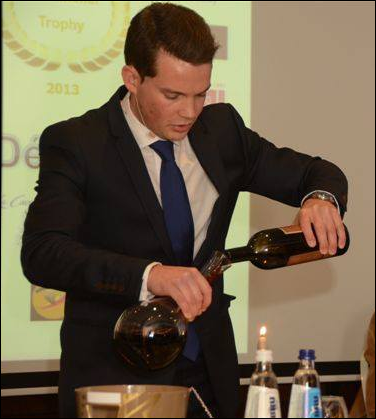
Grading the 3 finalists wasn’t an easy task as they matched on many levels… I mean they all had parts they did less or better, but in the end it evened out. I waited until I had seen all 3 participants before grading. I personally didn’t know as there were around 20 judges each judging a different aspect so it could go every direction… but in the end the best man won, the 2013 Trophy of Best Sommelier of Belgium went to Yannick Dehandschutter from restaurant Sir Kwinten

Yannick 3 Photo : Jean-Marc Brasseur

Check the following link for a little video of the awarding ceremony

With every victory there must be a good meal and celebration and boy did we eat and celebrate, but I’ll talk about that another time 😉

Congratz Yannick and see you soon @ Sir Kwinten 🙂

Unknown is unloved, the sherry saga continues

I must confess, I always thought there was only 1 kind of Sherry (I’m sure I wasn’t alone thinking this), but I have never been more wrong as there are a few more :-). Behold and feast your eyes on the different kinds of Sherry:

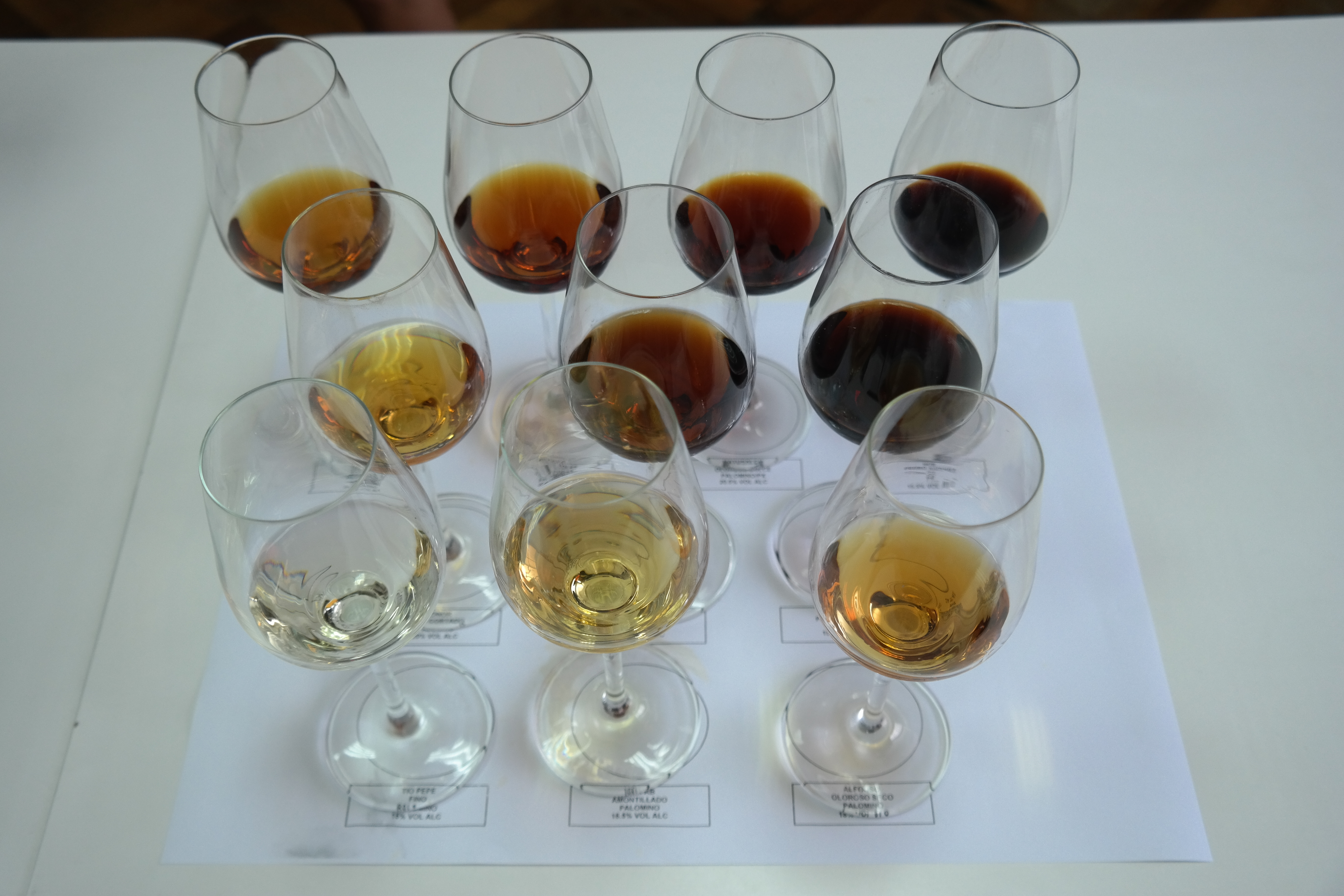
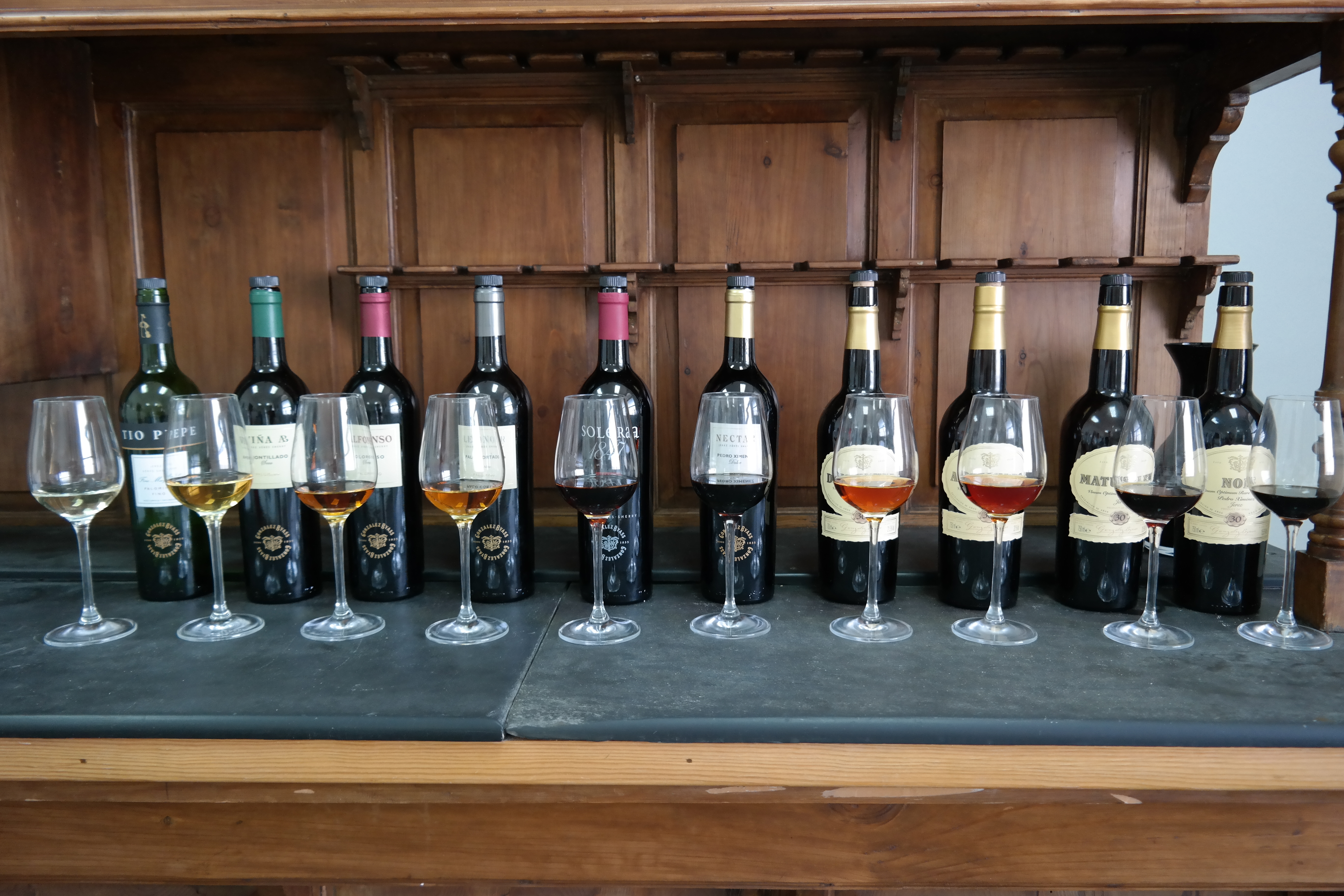
  • Fino (‘fine’ in Spanish) is the driest and has to me the sharpest smell of them all. The wine is aged in barrels under a cap of flor yeast to prevent contact with the air. This wine is made 100% of Palomino grape and only has 1g of sugar per liter of wine (4 years aging using the Solera system). Goes well with Spanish tapas or sushi.

SAMSUNG CSC

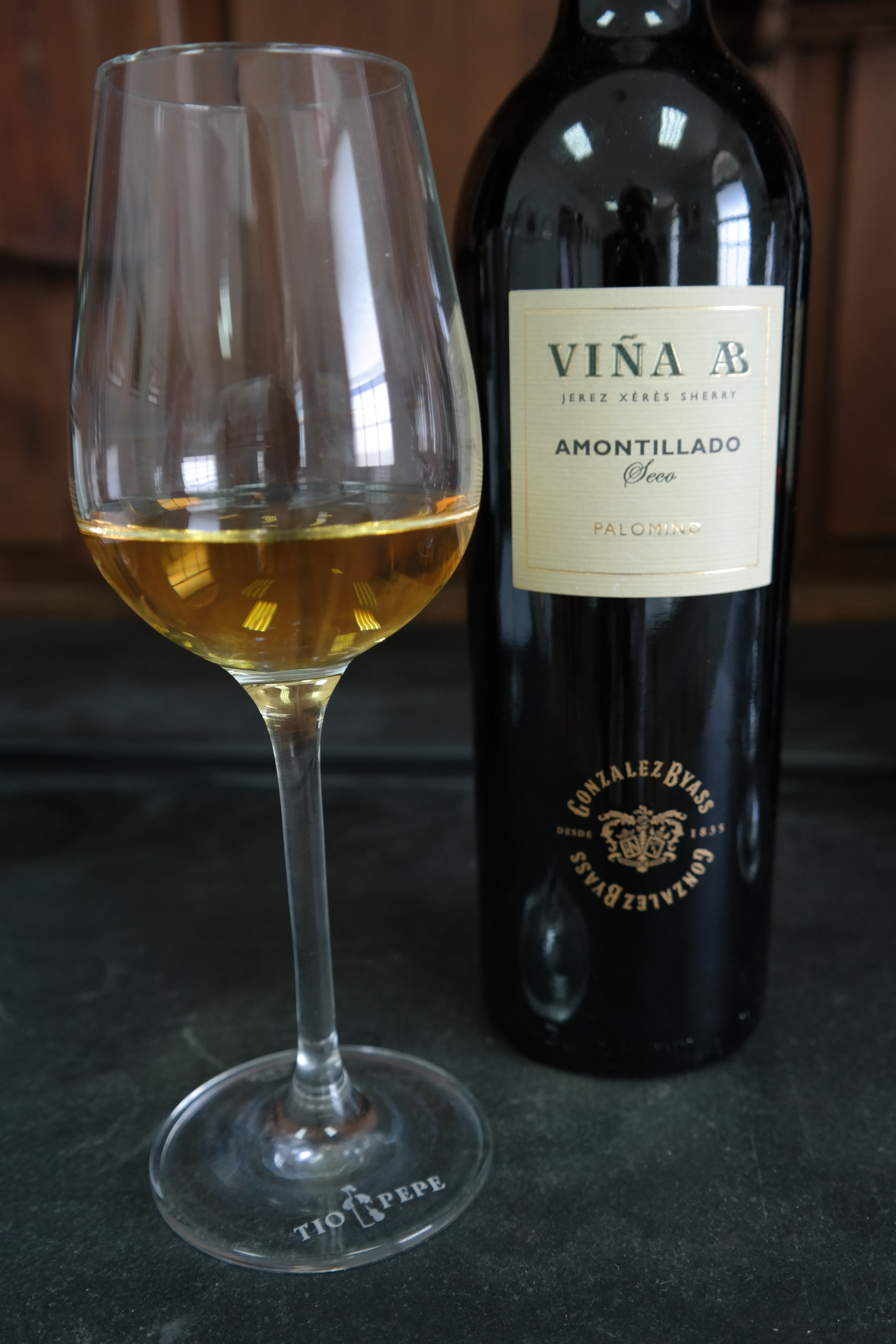
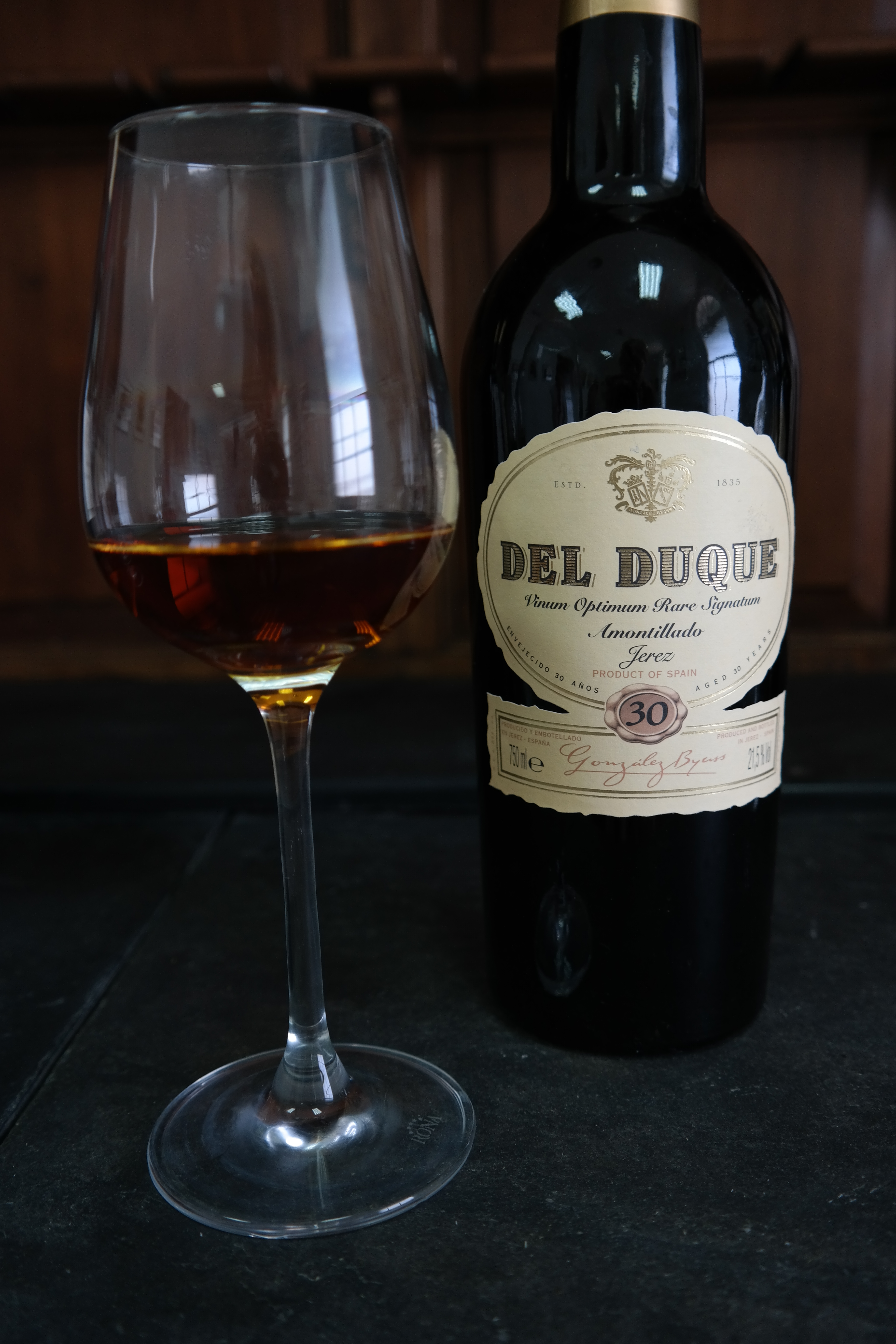
  • Amontillado finds its existence when the “flor” from the Fino disappears and so basically the wine comes in in contact with oxygen, this will give a sherry that is darker than a Fino but lighter than an Oloroso (8 years aging using the Solera system). This sherry has much a softer aroma than the Fino and I could smell some almonds (FYI, the aroma mostly comes from the yeast). Also 100% Palomino, but already a bit stronger alcohol level of 16,5%. This goes well with white meat, fish and aged cheeses.

SAMSUNG CSC

SAMSUNG CSC-> Aged for 30 years.

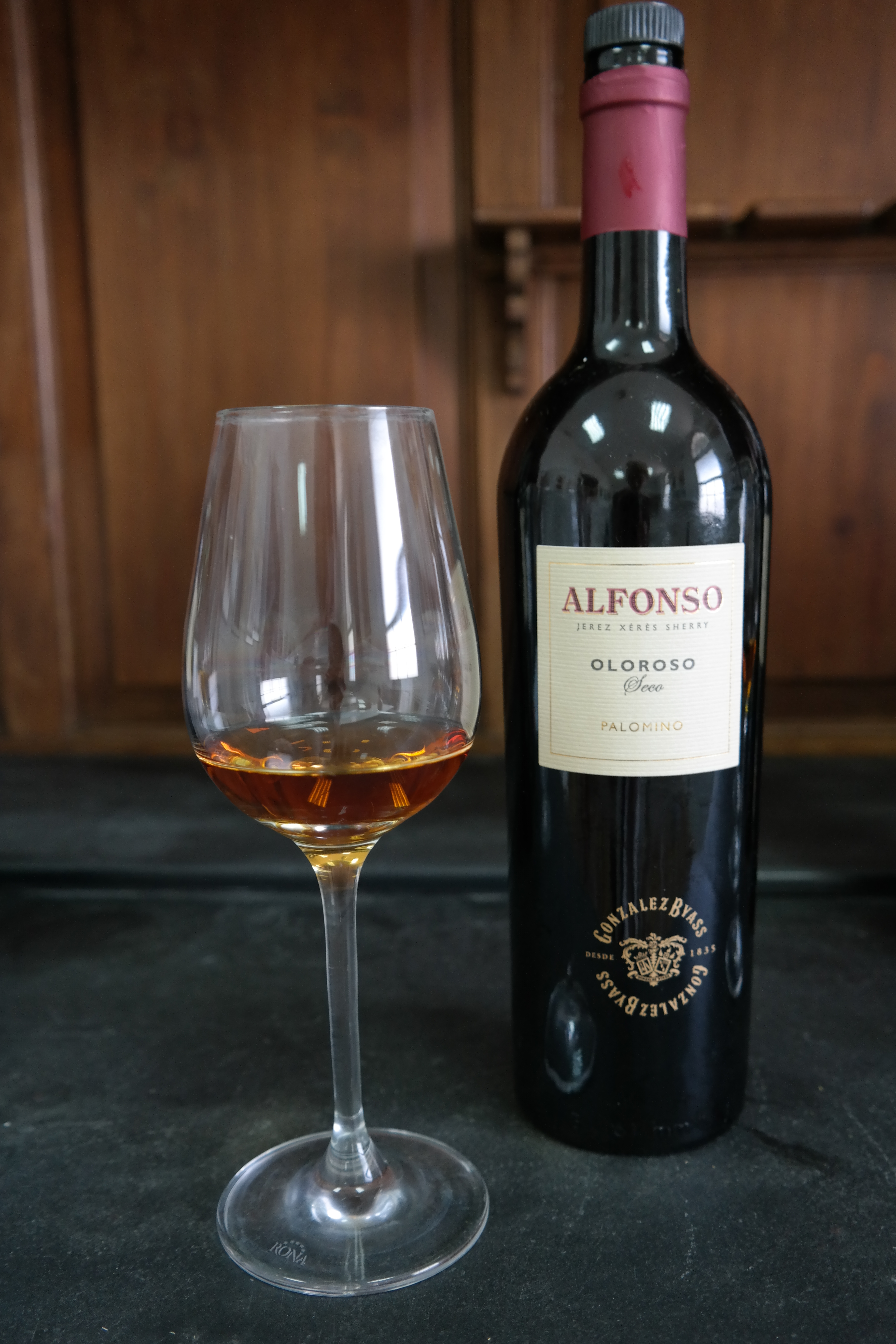
  • Oloroso is my personal favorite (both the “dulce” and the “dry” one) and has aged in contact with oxygen for a longer time than a Fino or Amontillado, (again using the Solera system) producing a darker and richer wine. With alcohol levels between 18 and 20%. I don’t know if it is the fact the Oloroso’s are the most alcoholic Sherries is why I like them this much ;-). Goes perfect with red meat.

SAMSUNG CSC

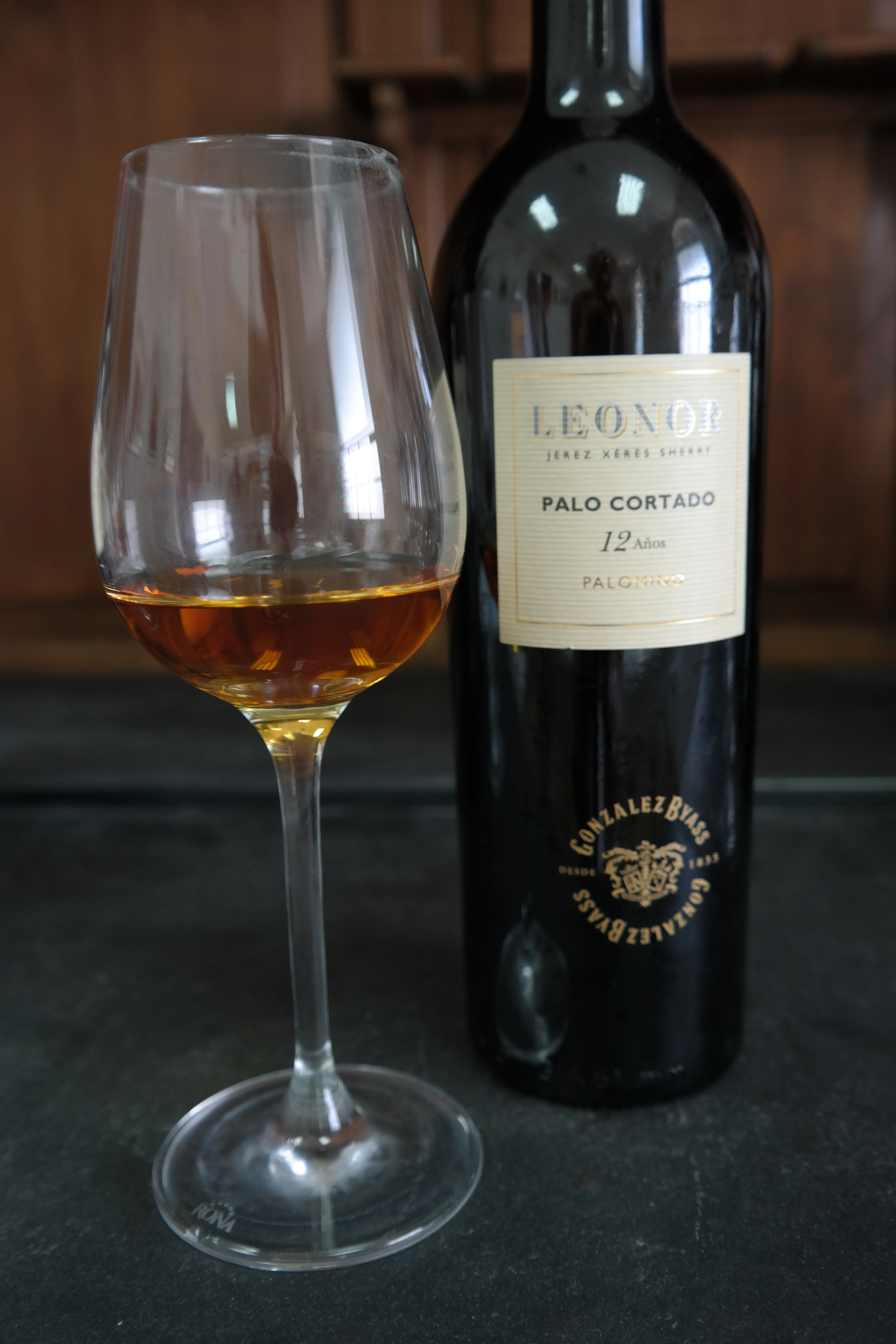
  • Palo Cortado maybe the most unique wine of them all as initially it is aged like an Amontillado and also smells like it, but eventually gets similar character closer to an Oloroso when you taste it. This “mix” happens by accident when the flor dies, or is killed by fortification or filtration. So basically this doesn’t happen very often. Also this wine ages for 12 years using the Solera system and still using 100% Palomino grapes. Goes well with red meats.

SAMSUNG CSC

SAMSUNG CSC -> Aged for 30 years. Mix of 87% Palomino and 13% PX

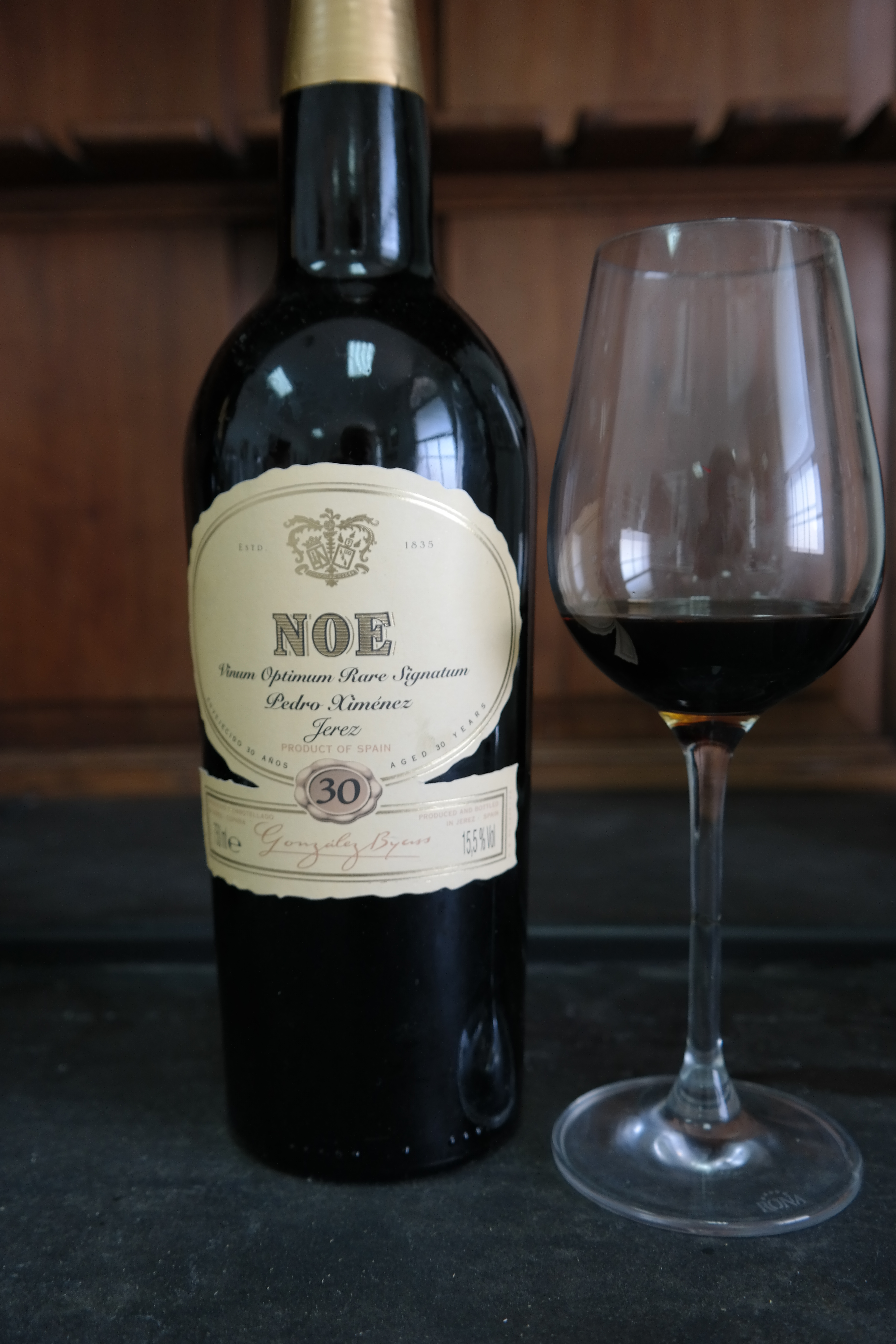
  • Jerez “Dulce” wines (Sweet Sherries) are made either by fermenting dried Pedro Ximénez (PX) (or Moscatel grapes, but less), which produces an intensely sweet dark brown or black wine, or by blending sweeter wines or grape must with a drier variety. Like the Nectar or Noe

SAMSUNG CSC -> Aged 9  years

SAMSUNG CSC -> Aged 30 years. This is also the sweetest wine/sherry they have with around 400g  sugar per liter.

  • Cream is a common type of sweet Sherry made by blending different wines, such as Oloroso sweetened with PX. A good example of this one is the Solera or Matusalem both consisting of 75% Palomino and 25% PX grapes. Don’t worry it is not too creamy

SAMSUNG CSC

SAMSUNG CSC-> Aged 30 years.

It was an eye opener for me to find out there were so many and I know this might all seem weird, but try to put all of these sherry’s next to each other like we did during our visit and taste and compare them attentively and I’m sure you’ll understand it instantly 🙂 just like I did.

SAMSUNG CSC

SAMSUNG CSC

SAMSUNG CSC

SAMSUNG CSC SAMSUNG CSC

SAMSUNG CSC SAMSUNG CSC

SAMSUNG CSC

Isn’t it special that depending in which “stage” the wine is in the it will change its kind? Like It all starts with the Fino and at the moment the flor is not there anymore they speak of a Amontillado and eventually evolve into a Solera which as I mentioned before is one my personal favorites as are other Oloroso’s and Amontillado’s.

The one that was less my taste was actually the Fino. Not that it wasn’t good, its smell and taste was just too sharp for me, but it is very possible that if you put them all next to each other you’d prefer the Fino over the other ones…

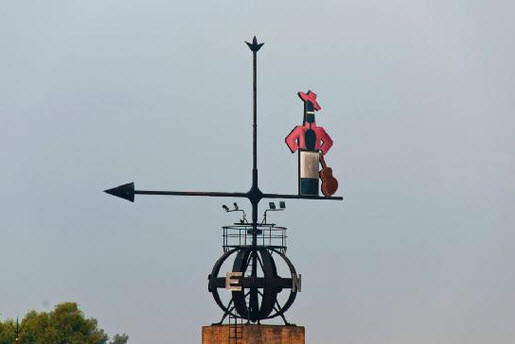
I do also want to share a few anecdotes from the Bodega. The first one would be about Bodega Tio Pepe being in the Guinness book of records :-). Yes, as they have the largest weather vane in the world (48 feet tall, with an arrow 26 feet long).

Tio pepe windroos

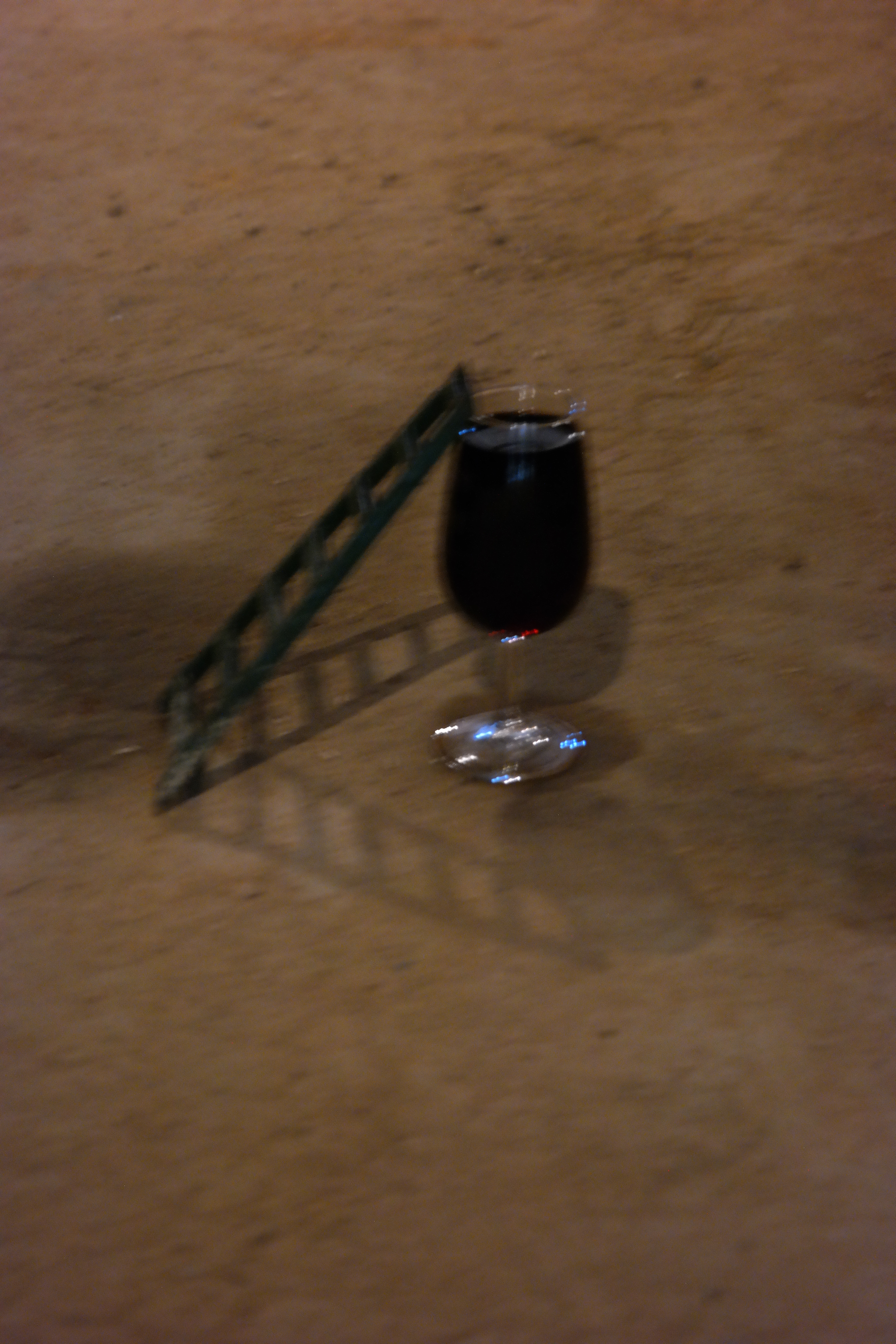
Did you ever hear about the sherry mouse? The story goes that a worker from the founder Manuel Gonzales saw that a mouse was sipping and liking glass of sherry that they had forgotten in the cellar… so since that day you’ll find in that exact same spot a glass filled with sherry with a little ladder next to it specially for the “sherry mouse” being able to have their daily sip of sherry 🙂 (see pictures below)

SAMSUNG CSC

SAMSUNG CSC

SAMSUNG CSC

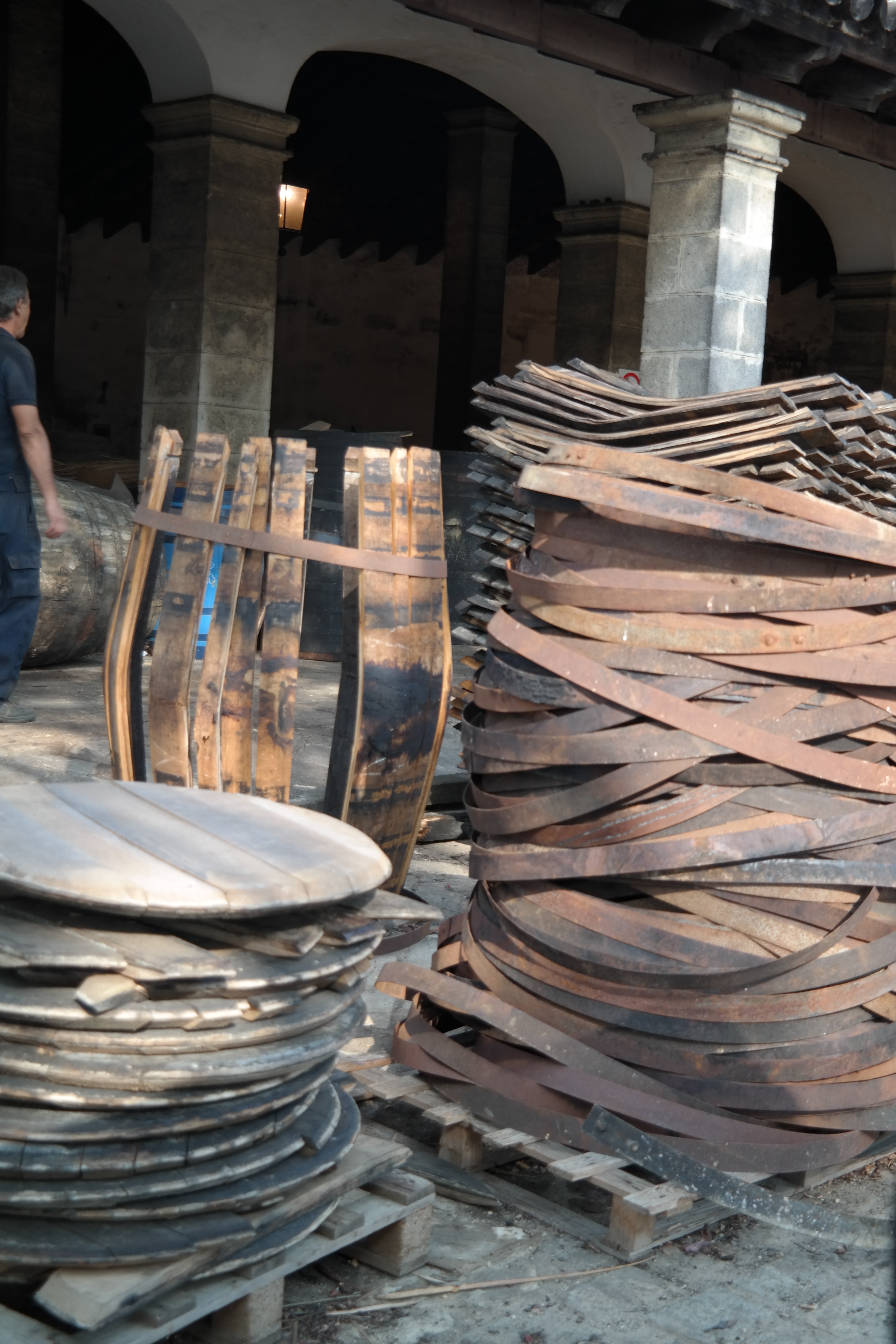
And the last thing I want to share is that Gonzales Byass’ barrels find a very good cause after being used for making sherry, as the factory first repairs them and afterwards get send (sold) to whiskey makers in Scotland like Dalmore.

SAMSUNG CSC

SAMSUNG CSC

SAMSUNG CSC

One thing is sure that I’ll be having a dinner with friends where I’ll be pairing sherry with my dishes instead of regular wine hoping they’ll become as enthusiastic as me (OK, maybe not 100% like me, but close enough 😉 )  As to my opinion sherry is a wine that doesn’t get the attention it deserves!!

Good that I said I’d keep it short 😉

I would like to thank William for telling me I had to go, Peter for helping me to get in and Oscar and Lola for teaching me and introducing me to the wonderful world of sherry!! Thank you all, both me and my fiancée learned a lot and became a big fan of sherry!!

BTW in case you Belgian readers would want to know more or even taste the TIo pepe (or other Gonzales Byass products check the following link 

Cheers!
Unknown is unloved, how I discovered Sherry

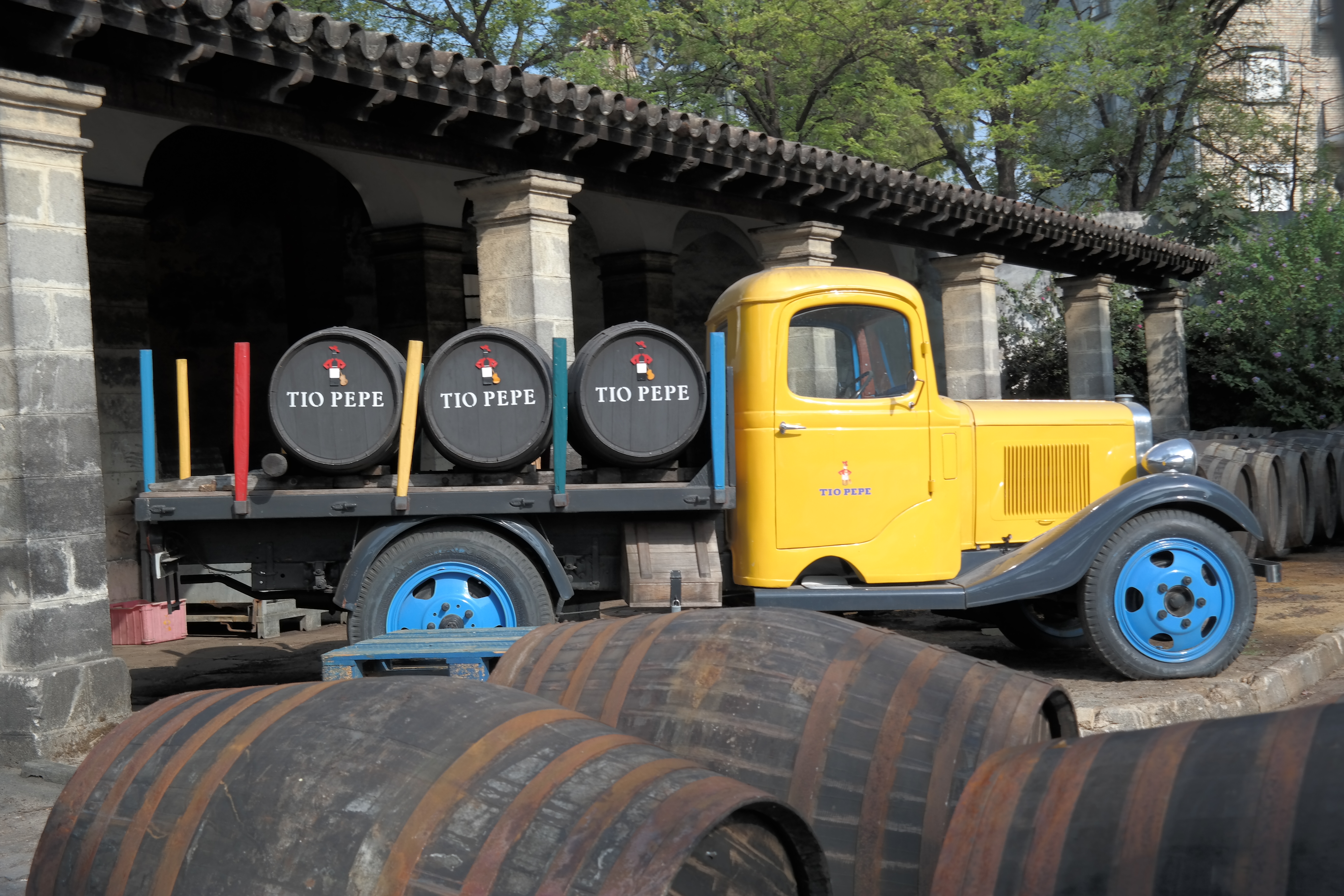
Something for old ladies and English Lords, that’s what most people think of when you say the word “Sherry”. For me sherry was something unknown. I mean I did know what it was but that’s where it stopped. A couple of weeks ago I was doing a tour of Andalusia and stopped for a few days in Jerez de la Frontera and as the name might tip-off this is the place where the Sherry comes from… so not visiting a sherry bodega would have been a crime… luckily my friends William Wouters and Peter Bollinger could help me with which one to visit as they know much more about this than me 🙂 . So with a little help from my friends my fiancee and I were able to visit Spain’s n°1 sherry Bodega Gonzales-Byass also known as Tio Pepe.

SAMSUNG CSC

Since my visit to the Bodega I’m VERY excited about sherry, so I’ll try to temper my enthusiasm and keep it as “short” as possible ;-)…

The whole Gonzales-Byass Sherry making story started around 1835 by Manuel María González Angel, who was later joined by his English agent Robert Blake Byass  I think this makes it clear where the name of the Bodega Gonzales Byass comes from… the part of the company Robert Blake owned got bought back by the González family, they decided to keep the name.  The name Tío Pepe actually comes from Manuel González beloved uncle. Today the whole bodega is still owned by the family (unlike lots of others).

Tio pepe kathedraal

Walking through this enormous bodega (I have never seen something this big) is like walking through history as every corner and even every barrel has a story behind it.  One of the stories Lola told us (our guide) that is quit special was that for the visit of the Spanish Queen Isabella II the firm had a special barrel build “La Concha” commissioned by nobody less than engineer Gustav Eiffel (Yes, that Gustav Eiffel), next to this barrel you will find 11 others that represent the apostles… no this isn’t a typo, 11 as they put the one from the bad apostle (Judas) with the sherry vinegar barrels as they were afraid his barrel would bring bad luck for the others. I could tell you more stories, but I promised to keep it short(er) and I would just advice to visit the bodega and be as amazed as me.

 SAMSUNG CSC

SAMSUNG CSC

SAMSUNG CSC

One of the most impressing views you see during your tour in this Bodega is without any doubt when you enter this “monument” which is a very big round depot filled with 250 barrels that represent every country they export to (every barrel has a different flag on it). BTW did you know they also make the wine for during mass in Church? 🙂 They do, I really didn’t know this.

SAMSUNG CSC

SAMSUNG CSC

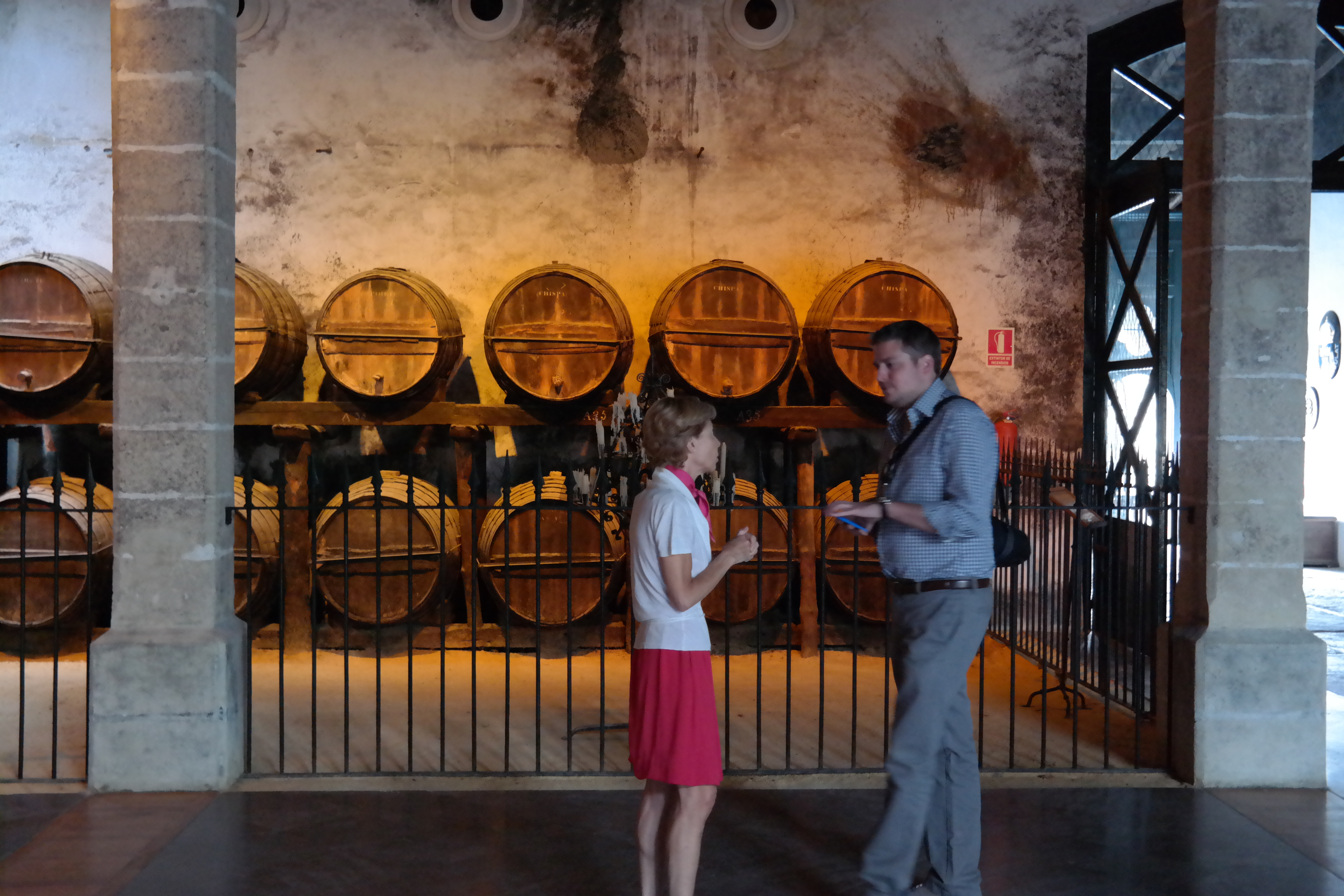
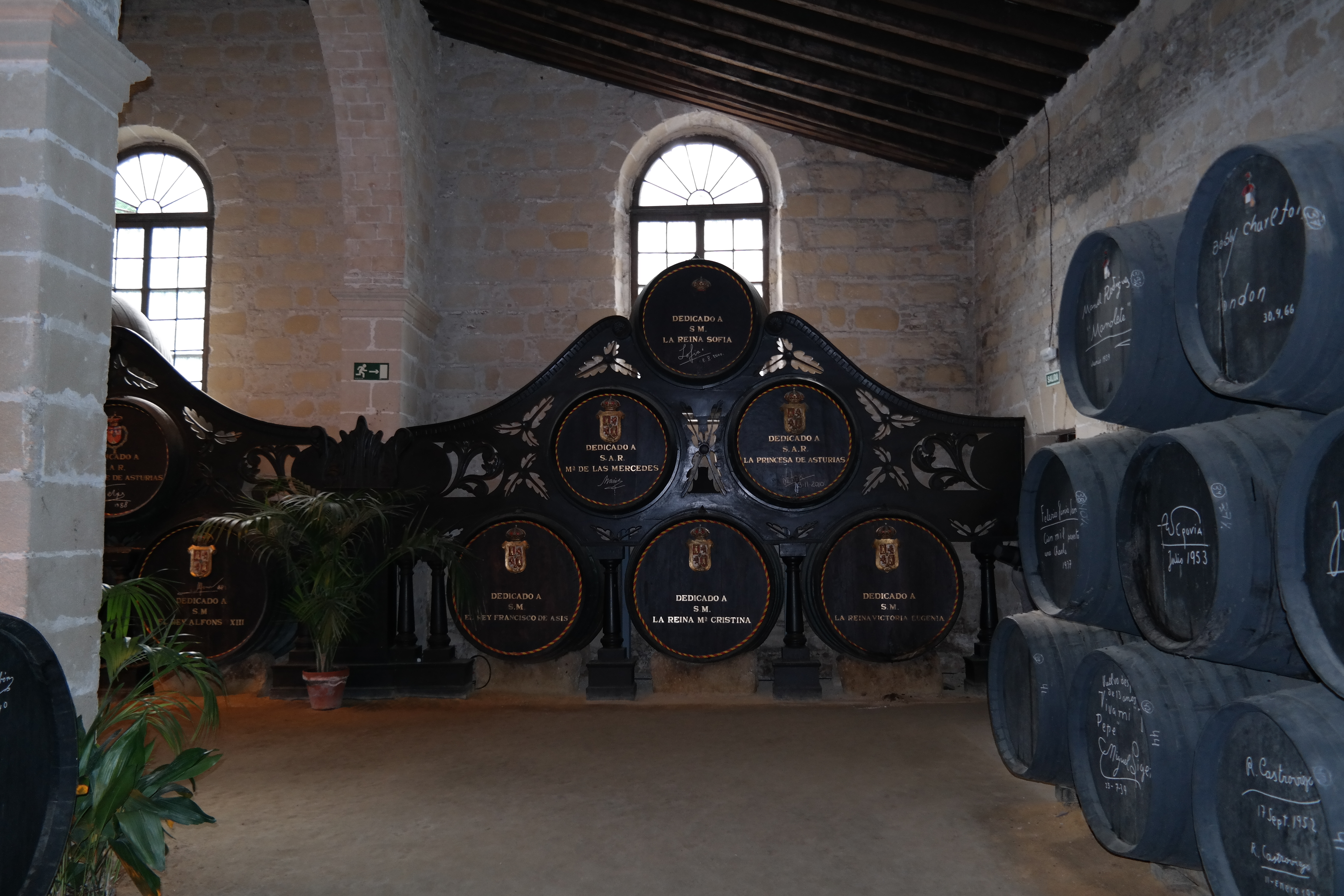
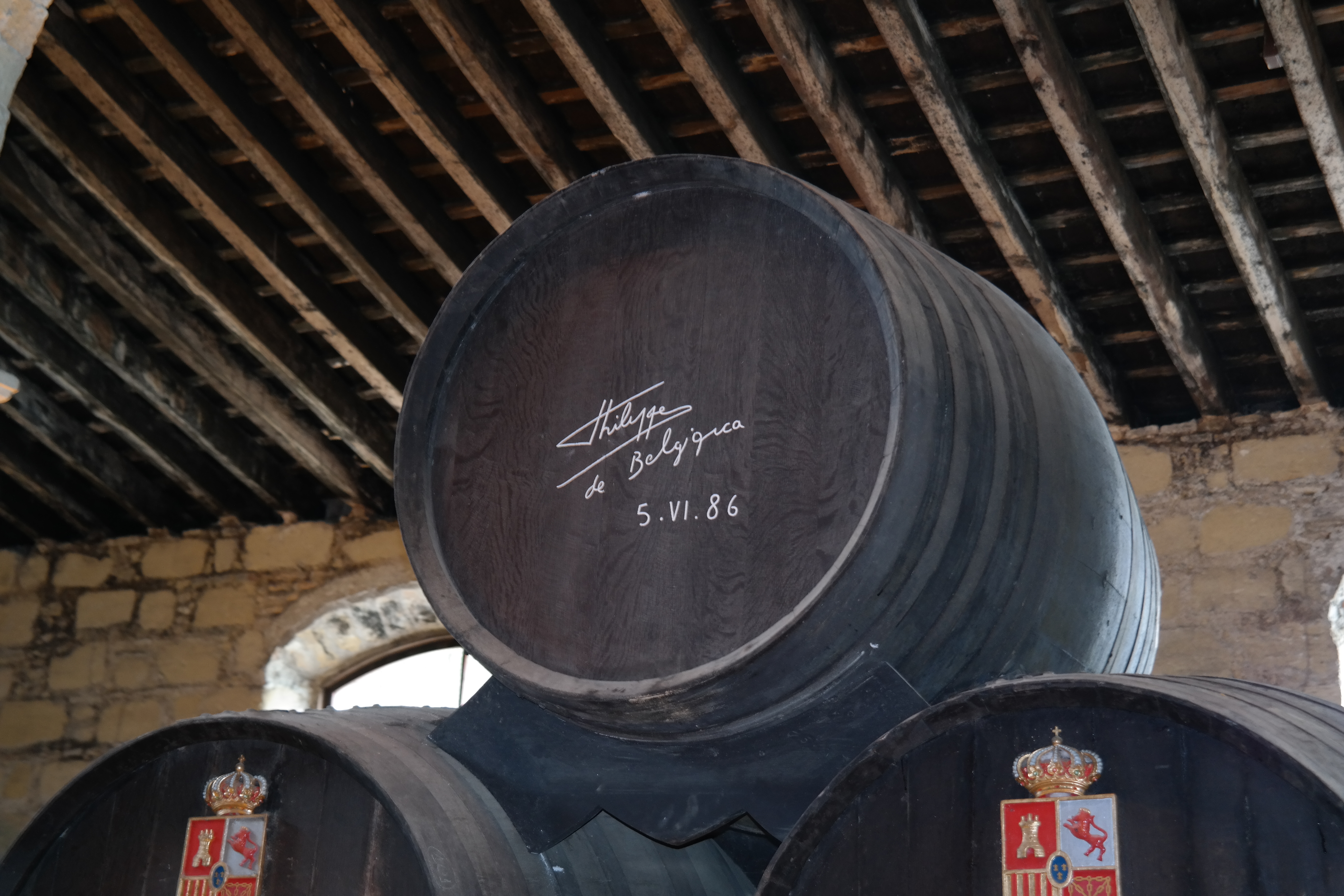
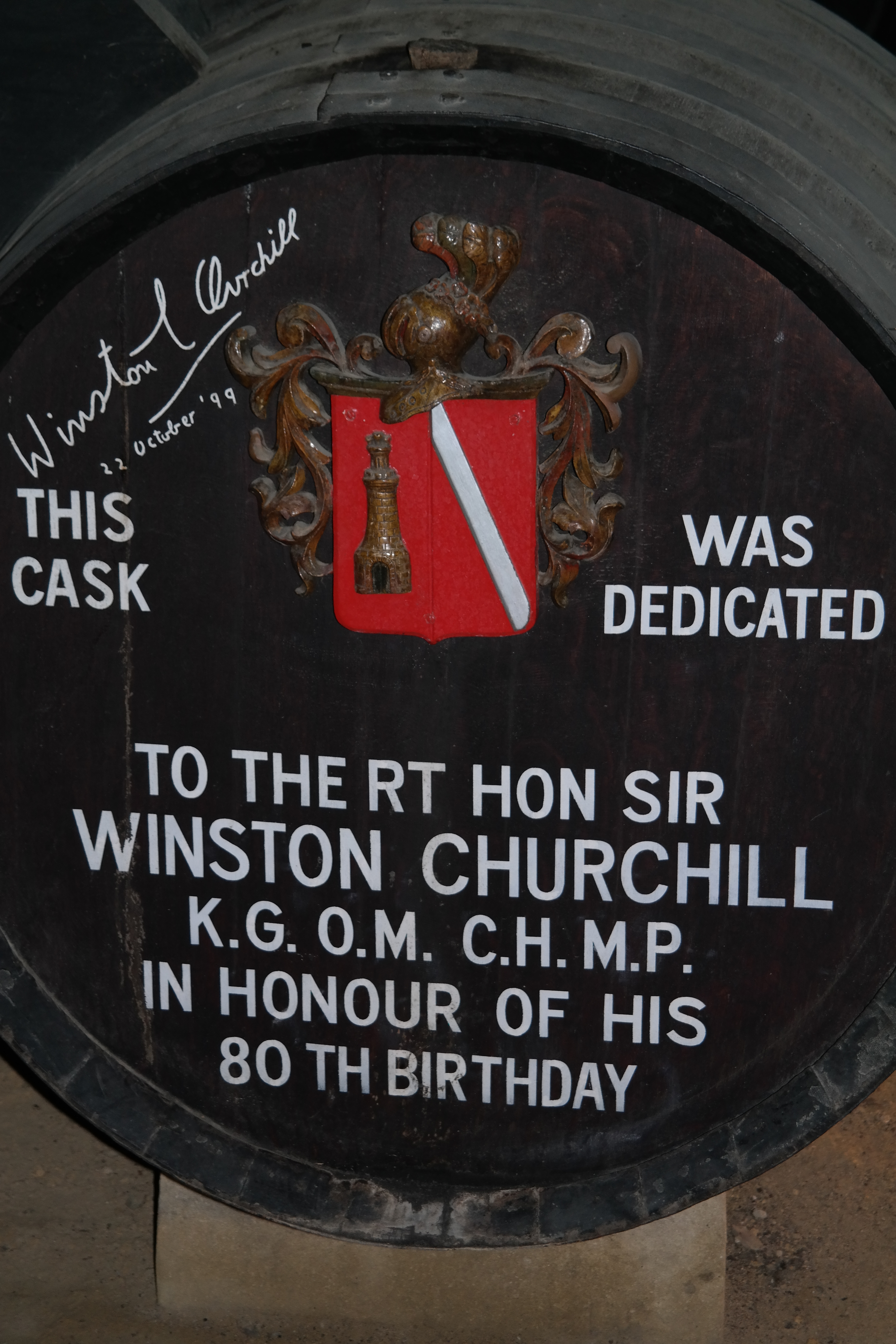
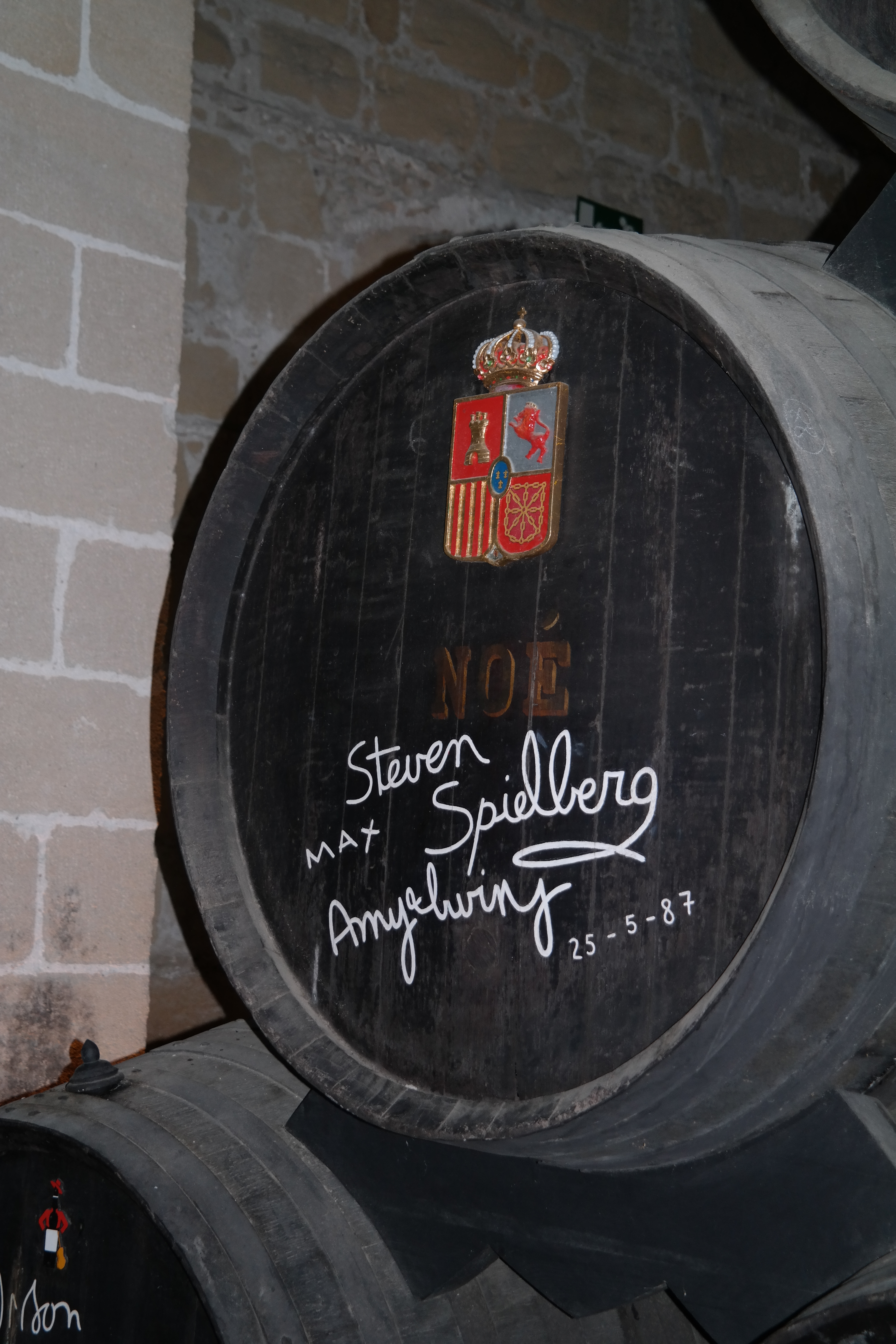
I must say that the oldest barrels or cellar or even the barrels with signatures from famous people are also impressive 🙂 (I’m sure you will be as well)

SAMSUNG CSC

SAMSUNG CSC

SAMSUNG CSC

SAMSUNG CSC SAMSUNG CSC

SAMSUNG CSC

SAMSUNG CSC SAMSUNG CSC

SAMSUNG CSC SAMSUNG CSC

Or the 1st “office” from Tio Pepe’s founder Manuel Gonzales. On this picture you see all different bottles, this way Mr Gonzales knew which blend/ mix was in which bottle. As there was not a lot of light inside of the room, Mr Gonzales had something that looked like a bird cage with a candle in it. He would hold his glass against this candle to be able to see the color of the wine…

SAMSUNG CSC

SAMSUNG CSC

SAMSUNG CSC

Now I think the time has come to talk about Sherry… First things first, something important to know is that sherry is a wine and it is not only something that can be drunk before or after dinner, but something also very suitable for during your meal. Sherry only gets made using 2 kinds of grapes (the 3rd one would be moscatel, but this is rather rare) Palomino and the Pedro Ximénez (which is the sweetener in the Sherry making process). Depending on the mixing of these grapes (of course in combination with a few other steps during the production process) make the wine either sweeter or dryer. A special process they use to make sherry is called the “Solera” system. What basically happens is that the barrels are piled up with all the top barrels filled with the youngest sherry and the oldest at the bottom. Every x months they will bottle sherry, but only using the bottom (oldest) sherry and only 1/3 of what is in the barrel. After this they will fill this barrel again with the sherry from the barrel on top of this and that barrel on its turn will be filled with the sherry from on barrel on top of it… and this continues until they get to the youngest and that one gets filled with newly made wine. (Check this link for more details about the process). So basically when you buy a bottle of sherry that has an age 30 years on the bottle in reality is a blend from much older sherry sometimes up to a few hundred years. It is it is not as simple as how I describe it, but that is in big lines what it does. What is amazing is that every step of this system will give a different type of sherry (BTW the Solera wine is also one of my preferred ones). Something very cool to see was the inside of a barrel while the wine was in there, as the Bodega used glass as closure instead of wood and you could clearly see the yeast which works as a kind of wall to keep the air separated from the wine. FYI this white layer is called “Flor” 🙂

Solera process by CAPIRETE  VINAGRE DE JEREZ

SAMSUNG CSC

SAMSUNG CSC

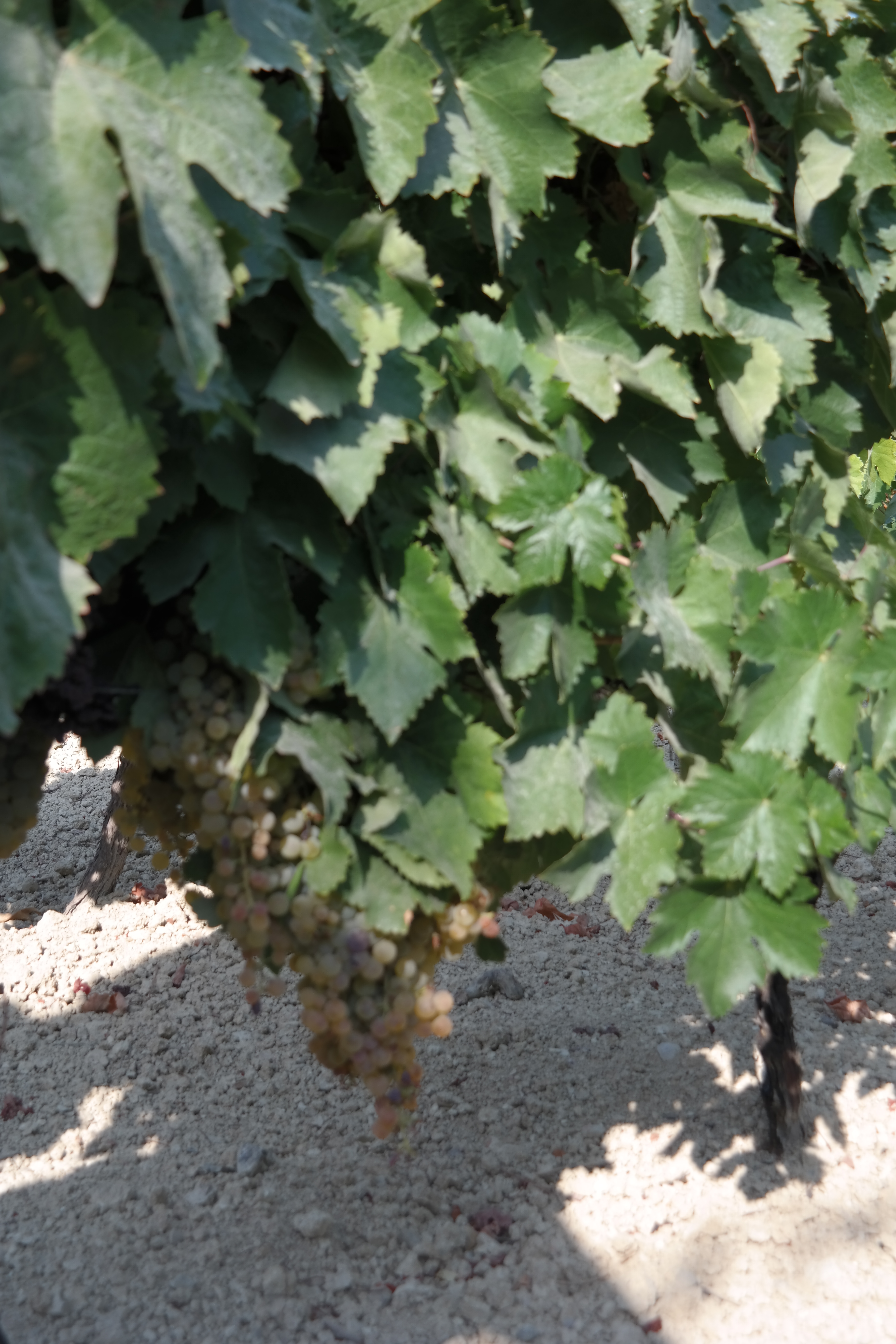
A difference with the vines from “regular” wines (that rimes) and the ones to make sherry is that these vines are put deeper in the soil as the weather in the South of Spain can get very hot and the top layers would be totally dried out and the lower layer of the soil would still contain water. Talking about the vines, a question that came to mine when I was driving through Andalusia was that I did see a lot of olive trees, but not too much vines… so one of my first questions during my visit was where they have their grapes 🙂 and it seems they are more north around Sanlucár (and I can confirm it as I drove by them 🙂 ). Also something interesting to know is that because the vines are so low, every x time they flip the branches (and grapes) over a wire… this way the grapes won’t touch the ground.

SAMSUNG CSC

SAMSUNG CSC

SAMSUNG CSC

SAMSUNG CSC

Now that you know a bit of the basics we can continue with something that I’m sure most of you didn’t know, so stay tuned for next week’s post as I was amazed 🙂

Cheers!
Lunch on top of Antwerp

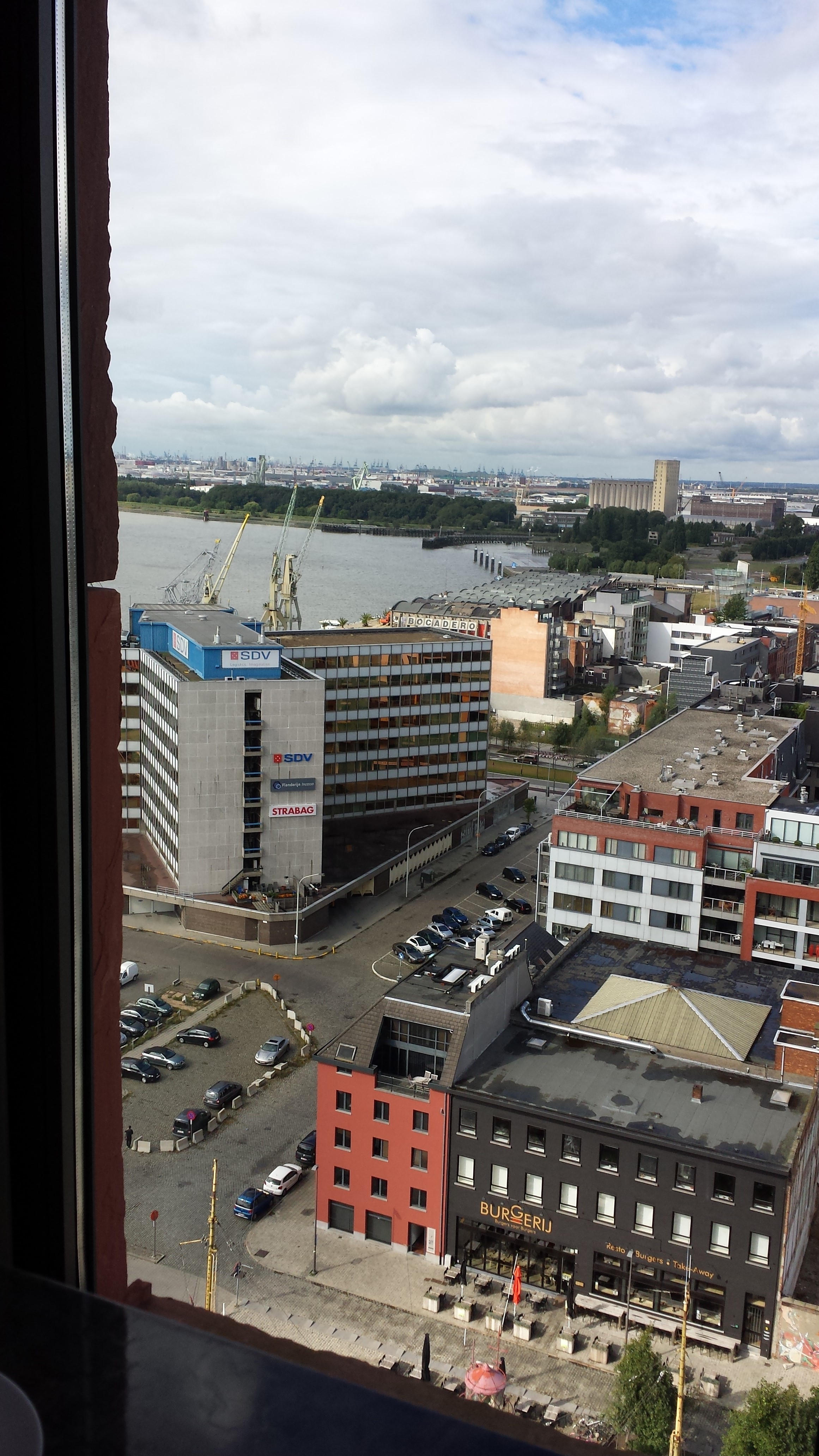
It took me a lot of time, but I finally had a meal at the restaurant with the most beautiful view over Antwerp… I’m talking about 2 Michelin star awarded restaurant ‘t Zilte. I’m not sure why it took so long, but thanks to a good friend of mine, who insisted (a few times)I just had to try ‘t Zilte, I finally made it there (in his company)… and I’m happy he did as I had a wonderful experience. I have to correct myself I was already at ‘t Zilte, but this was for the press conference of ‘Taste of Antwerp‘, but that time I didn’t have a meal.

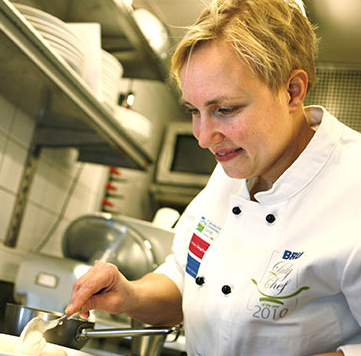
Viki Geunes

What makes this restaurant extra special is first of all of course its wonderful location on the 9th floor of the MAS… which gives you the best view  over city of Antwerp. And secondly the vibe. The first vibe you get when entering somewhere  is the most important one (or it is to me), so the same goes for when you enter a restaurant and although I was sure the vibe at ‘t Zilte would be good, but you never know 100% in advance.. anyway it was good 🙂 and it only got better by the minute…

Zilte Interieur

My view

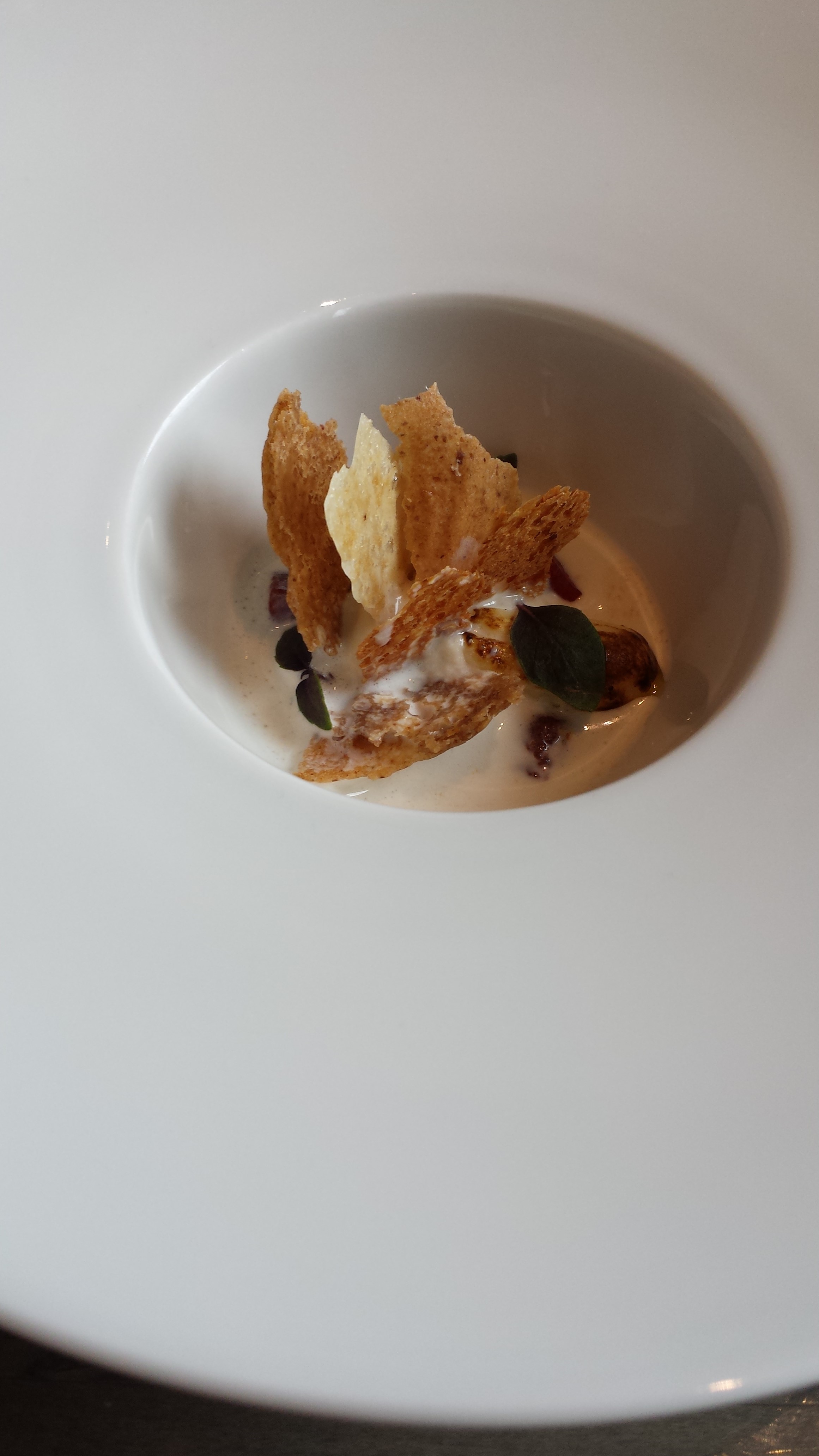
I know it is expected of restaurants like’ t Zilte that they serve very nicely presented plates, but still it must be said they have outdone themselves  as we saw some very nice looking dishes that day and with keeping my preferred saying in mind keep it “simple”. As even though all the dishes looked amazing they still wanted to make sure you understand what is in your plate and want to respect every product/ingredient.

As I arrived last (my table guest was already there) I just joined him with starting our lunch with perfect drink, a glass of Blanc de Blanc Ruinart champagne 🙂 With this we got served a variety of delicate “amuse bouches” which were great to already start to tickle the taste buds and stimulate the appetite (for as far as I needed it 🙂 ) and as if that wasn’t enough they came to us with a breadcart filled at least 15 different kinds of fresh bread!!! I’m a huge bread lover and it was more than only a treat for the eyes as man that was some good bread!!! I would already return just to have more of their bread.

hapje 1

hapje 2 met crispy parsley

Hapje 4

hapje 3

I wasn’t wrong was I when I said there dishes looked very njammy?? And they tasted even better. Anyhow now it was time for some real business…. As it was lunchtime it seemed best for us to go for the lunch menu… although I must say the other menus also seemed great, but sometimes you just have to make some though decisions… but as a peace offer we took and extra course with our lunch menu… as who could say no to turbot with porcini?

Finding the right wine with your food is never an easy task, especially when they give you a wine list from which you would want to order everything that it on it… luckily ‘t Zilte has not 1 but 2 sommeliers to help you make a choice. One of the sommeliers was another reason I wanted to come to ‘t Zilte as it is none other than my friend Gianluca that you might remember from my blogpost about Spiga d’oro(the better Italian restaurant)  as Gianluca is the son of the owner 🙂 (and their former sommelier).  So to make a long story short I was pretty sure I was getting some great wine pairing 🙂 (with a bit of consulting by the long time sommelier from ‘t Zilte Sepideh Sedaghatnia)

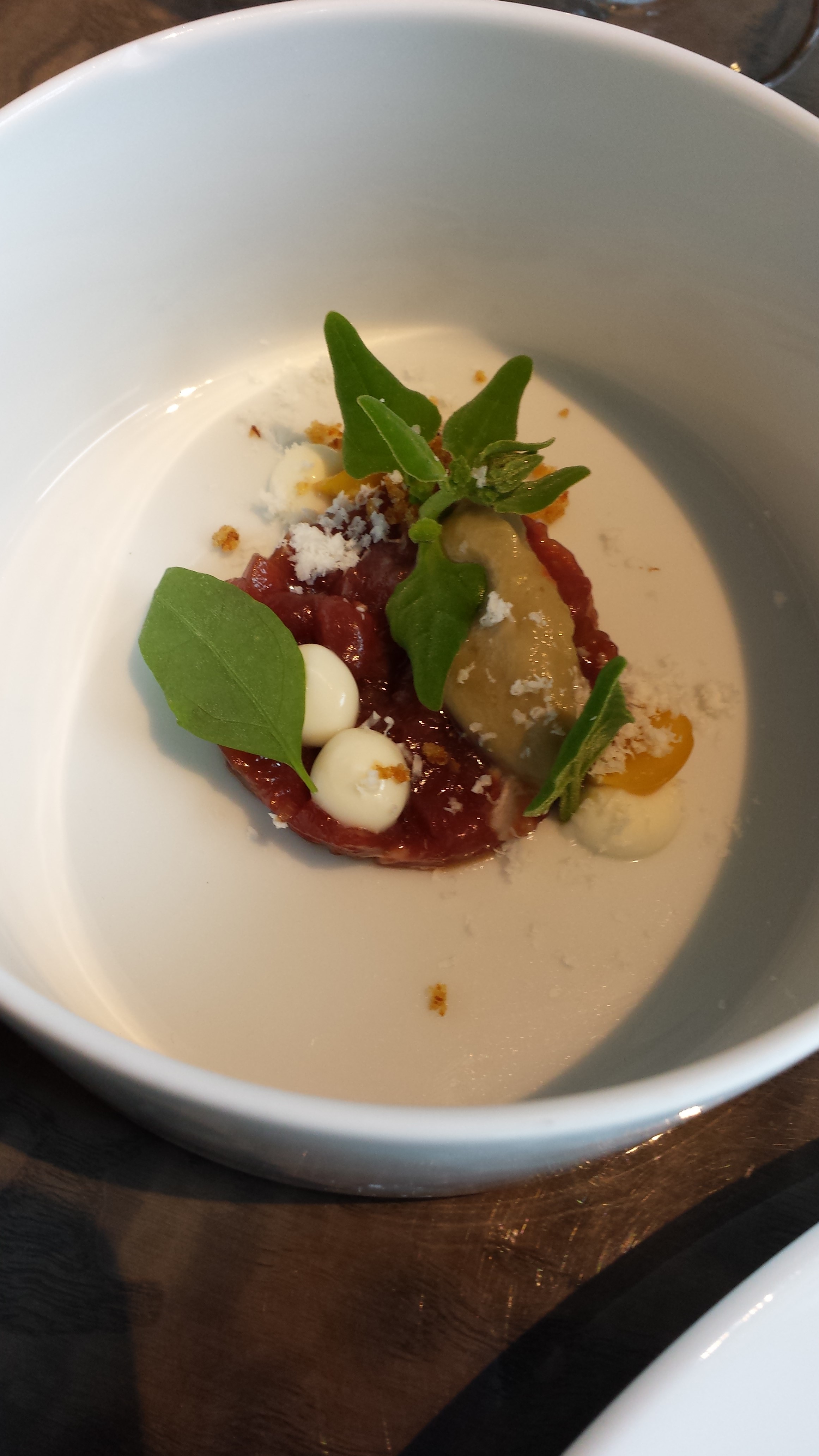
The first dish of our menu was a Crab and foie gras “pâté” with tomato, mushroom and curd (this some kind of drained yogurt ). With this dish my good friend paired us a Slovenian Rieseling from Joannes Protner, because  because the minerality of Riesling goes well with the crab, greasiness and filming character for the foie gras and acidity of the wine is  for the tomato and the earthy character of the wooden casks for the earthiness of the mushroom.  BTW these are Gianluca’s words, I really couldn’t define it as well 🙂

Foie gras  met crab

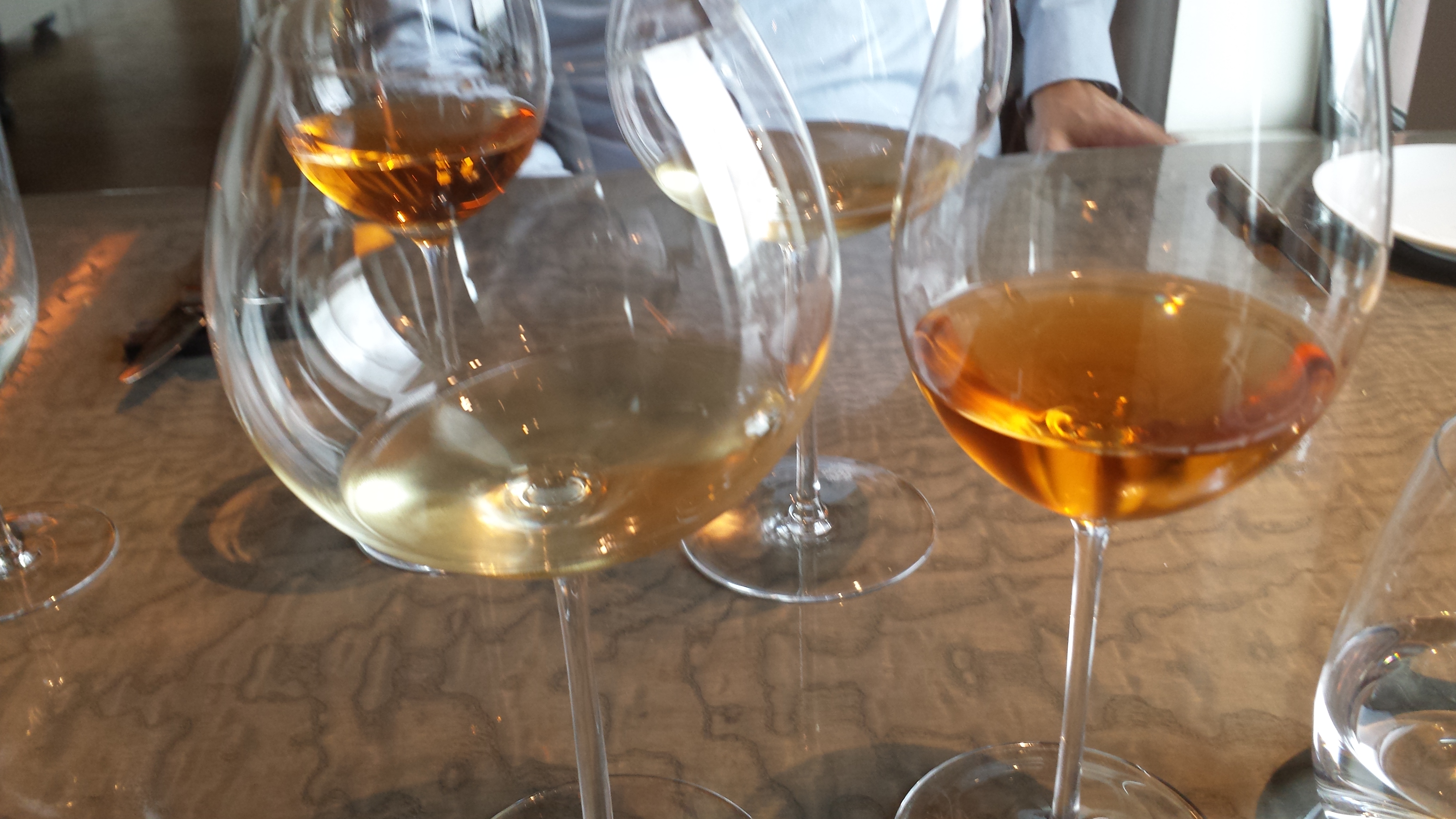
The next dish to put our teeth into was the turbot, for this dish we had a bit of a blind wine tasting as we got served two wines that both fit this dish but both in another way… and as it was a blind tasting we didn’t know in advance which ones we would be trying.  The first wine was a 2010 Burgundy – Meursault Tessons Clos de Mon Plaisir  which is actually a Chardonnay. The other wine was a wine that if I had to pick on on color this would be my preferred one 🙂 it on top of that came from a region in Croatia aka Istria where I still have some family living (my grandfather was originally from Croatia), it was a white blend of Chardonnay, Sauvignon Blanc, Malvazija, and Pinot Gris called Ottocento made by Giorgio Clai.  I’m still not sure which of both wines fitted more with this dish as both gave the dish another dimension

Blind tasting

Turbot with porcini

The last dish we got served before the dessert was lamb with zucchini, ricotta, panisse (kind of polenta made from gram flour) and cremolata. The lamb was cooked with perfection and melted on the tongue. With this came a lamb tartar  and a lambstock with herbs.  This time  Gianluca  chose a Austrian red wine to go with our dish, a 2010 Burgenland which has lots of common characteristics with Syrah wines, but the Burgenland is a bit smoother.

Lamb filet

Lamb tartar

Lambstock with herbs

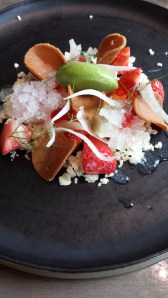
I’m glad the menu “ended” (it wasn’t totally over yet) with a refreshing dessert with strawberry varieties with crushed Gin ice and white chocolate… I must admit that I wasn’t really a fan from the Gin ice, but together with the white chocolate it got balanced (I don’t like bitter tastes 🙂 ) . I normally don’t like wine with my dessert, but who could refuse it when it is presented with so much enthusiasm? He did surprise us by giving us a glass of Riesling (not a dry Riesling obviously) with the strawberries, it was a 2011 Kabinett from the  Reinhold Haart  wine estate.

Strawberry variaties

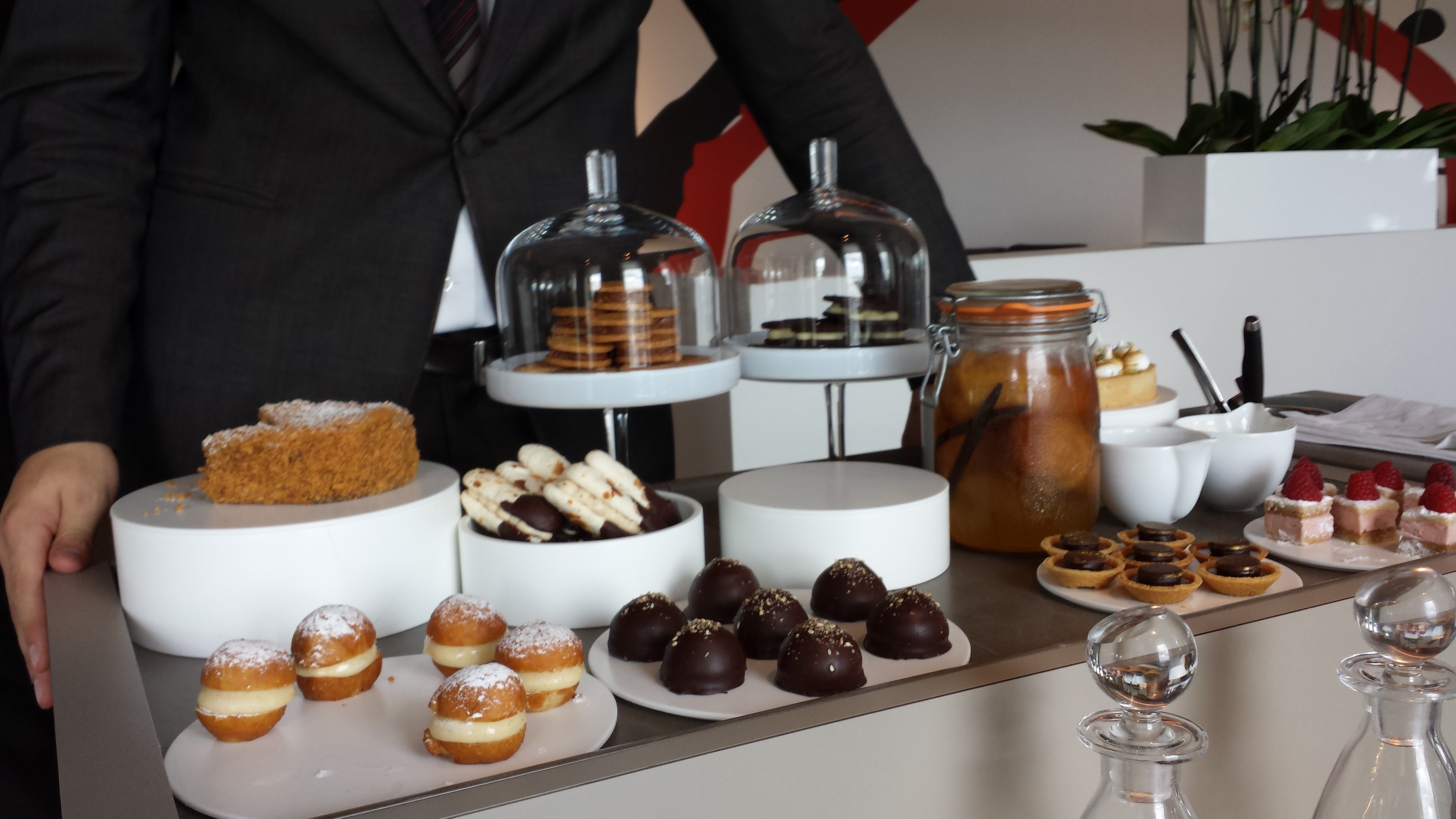
But best was yet to come as now instead of the the bread cart, the now came with the “cookies” for with the coffee cart 🙂  I wasn’t planning on being greedy, but I just couldn’t stop myself and I honestly didn’t care what they thought of me!! everything looked just sooo good, like the mini Berliner’s (in this case grease is very very good) or the Madeline set in a rum, vanilla and sugar jar… you would think it would have a too strong taste, but it didn’t it was juuuuust right 😉 … the reason to go back for a meal at ‘t Zilte just keep adding up 🙂 (BTW I didn’t take a picture of everything I had, that would have been to confronting 😉 )

What shall I take with my coffee

madeline in rum vanilla and sugar friandises

I can only say that I had an amazing lunch that because of the good coordination and professionalism from Viki Geunes’ team (multicultural team even) became an every greater experience!!  I’m sure this isn’t the last you’ve seen of me. Thanks!

Restaurant ‘t Zilte

Website: http://www.tzilte.be/

Address: Hanzestedenplaats 1, 2000 Antwerp – Belgium (in the MAS museum at the 9th floor)

Phone n°: +32 (0) 3 283.40.40

The way the cookie crumbles: Ingrid Neven

I hope you guys already had the chance to read some of my new blog items where I ask chefs 10 question. The previous 2 chefs I question were Syrco Bakker and Giovani Oosters. This time the I asked the questions is one that just couldn’t miss on my list.  In the 14 years I eat her dishes not once I have been disappointed!! (and trust me I’ve tasted quite a few in all those years) On top of that she’s a great chick 🙂 She no one else than Chef Ingrid Neven from my all-time favorite restaurant Pazzo!

Ingrid Neven

1. What is your favorite local product(s) to work with? And in which way should it be prepared?

Especially the things the seasons produce time after time, in autumn(my fav season) the wild forest mushrooms, the Polder hare (TOP!). Brussels sprouts, Belgian endive, …. In summertime all the njammy local fruits like strawberries, raspberries and in spring asparagus. In our kitchen we just love to mix all those things to get surprising results like mixing them with products from Italian and Japanese  cuisine.  Although the best way to prepare them is the most natural as possible!

BTW, we have a friend (no name) who searches for wild “rucola” or eatable mushrooms in roadsides, forests and fields (snappy and local).

2. Is it important for you to use local products?

Yes, but only if it are products of high quality… I mean if a product from down the street has a bad or poor quality, I prefer getting a product from high quality even if it has to come from somewhere else. Also because of our Italian and Japanese influenced dishes some ingredients can’t be found locally 🙂

3. An ingredient you couldn’t miss in your kitchen?

Spices, first of all salt & pepper, preferably sea salt, but also spices like ras- el- hanout,  wasabi, fresh herbs in general, they always give a different dimension to a dish.

4. When did you get the passion for cooking?

From my mom, I’m a real farmer’s daughter. My mom always made her own ice-cream from fresh milk from our own cows (nothing beats that!!). She was also butcher and for a long time we butchered and prepared our own animals… so I basically always had great and fresh food already from a young age.

5. Who is your big example in the gastronomical world?

I’m a huge fan of Nobu Matsuhisa, I have all his books and already ate at his original restaurant in LA, amazing Japanese cuisine with little twist.

6. Where do you get your inspiration for making new dishes and combinations?

Going out to eat, cookbooks, but also by just walking around in food stores, open air markets or supermarkets (mostly sun wah an Asian store in Belgium).

7. What has been the most culinary experience? (The restaurant was already on my list, but now I got even more curious)

My last culinary highlight was last year in NYC at the Chef’s Table at Brooklyn Fare, a very unique dining experience, nice pure flavors with Japanese influences. No nonsense!

8. For which dish would you make a big sacrifice to be able to eat it?

Well, if I would ever be in dead row, you never know, my last wish would be a last supper at Nobu LA!! (My ultimate dream would of course be Japan)

9. What is your most wonderful memory of chef school?

Without any doubt the practical classes by Mrs. Vanderstraeten, a small a small delicate woman who knew how to give gas, not your average teacher, but a real worker!! Every time it felt like it was the real thing, I learned a lot from her!

10. A culinary experience everybody should have had besides have a meal at your restaurant?

There are so many, but a piece of advice I’d like to give is that no matter at what level you eat, ENJOY it and go somewhere without expectations… only then you’ll have a total experience of a restaurant! Usually it is not only the influence of the waiter or food that counts, but also the atmosphere or company…so again ENJOY and every culinary experience will be an incredible one!!

ingrid neven by Mastercooks

A trip to little Burgundy the end

Optimbulles

The last vineyard we visited on our trip through Borgloon was Optimbulles or formally known as Champinnot. Champinnot had to change their name as the association behind the French Champagne wine region took it to court as the name referred too much to “Champagne”. Luckily this didn’t stop them to make wine! Visiting this vineyard as last was the perfect ending of an incredible slightly sunny day on top of a hill overlooking the beautiful Borgloon fields! And I couldn’t imagine ending this day without a nice glass of wine 🙂

As the name Optimbulles (or the previous name) might make assume, this vineyard is especially specialized in bubbled wine aka sparkling wines (although they also have some mighty white wines). The wine I’ll always remember from this vineyard will definitely be the “Briljant” this wine made me so hungry!! It smelled exactly like one of my preferred bread kind Rye bread. I know I get hungry pretty fast, but due to the smell of a wine was a first 🙂 Don’t get me wrong all the other wines were also good, but this was just a unique smell I had never experienced before.

optimbulles (5)

Optimbulles (4)

Optimbulles (3)

Optimbulles (2)

Optimbulles (1)

Around the 90’s Guy Geunis, Theo Pasque and Rik Schreurs decided to make wine on their vineyard in Jesseren (at the border of Borgloon). Their focus (as I said before) is on sparkling wines made in/with the traditional grapes (Chardonnay, Pinot Noir and Pinot Meunier) and way of working. Something they cherish a lot at Optimbulles is that they don’t add extra sweeteners, they only “sugar” in them is the natural one. This is why their wines are referred to as Extra Brut or Brut Zero (No liqueur d’expédition has been added and has less than 6 grams of residual sugar per liter).  Optimbulles has 3 types of sparkling wine “Robijn”( 70% Chardonnay, 20% Pinot Noir red and 10% Pinot Noir white –  so basically this is a rosé sparkling wine), “Trilogie” (mainly Chardonnay, filled up with Pinot Noir and a little bit of Pinot Meunier)and Briljant (that I mentioned above and is made of 100% Chardonnay). Besides the sparkling wines they also make white wine and something more remarkable, rosé wine made from a local grape called “Vroege Loonse” which is a clone from the Pinot Noir.

Their 3 wines

Vroege loonse

Every body listening to what Guy Geunis has to say

Another important thing to know about this vineyard is that until recently they only made sparkling wine using grapes, now they also make a kind of cider using the local apples (old types like “Boskoop”, “Ceuleman”, “Sterappel”) from their orchard…. again, some people who want to creative and that want to see what good can from the Belgian soil. I can only encourage that!! This product is better known as Apples & Pearls :-)… when tasting it, it obviously first of all tastes like apples, but it also reminded me a bit of wheat beer , but all tastes are well balanced!!  This actually goes for all their wines!!

Apples and pearls

One day I’ll be able to describe you the wines like a real wine expert! 😉

Unfortunately I couldn’t find a website from them, but in case you would want to know more I’ll give you their credentials: Lindesstraat 78, 3512 Hasselt –  0472 21 89 72 of 0478 20 57 79.

Ok, enough about Borgloon (for now)

A trip to little Burgundy part 3

Wine estate Hoenshof

Lots of winemakers in Belgium are people who just do it as a hobby and still have another job next to the winemaking. One of those examples would be Ghislain Houben  from Wine Estate Hoenshof or better Professor Ghislain Houben as he is Professor in economics at the University of Hasselt.

Ghislain Houben 2

Ghislain Houben

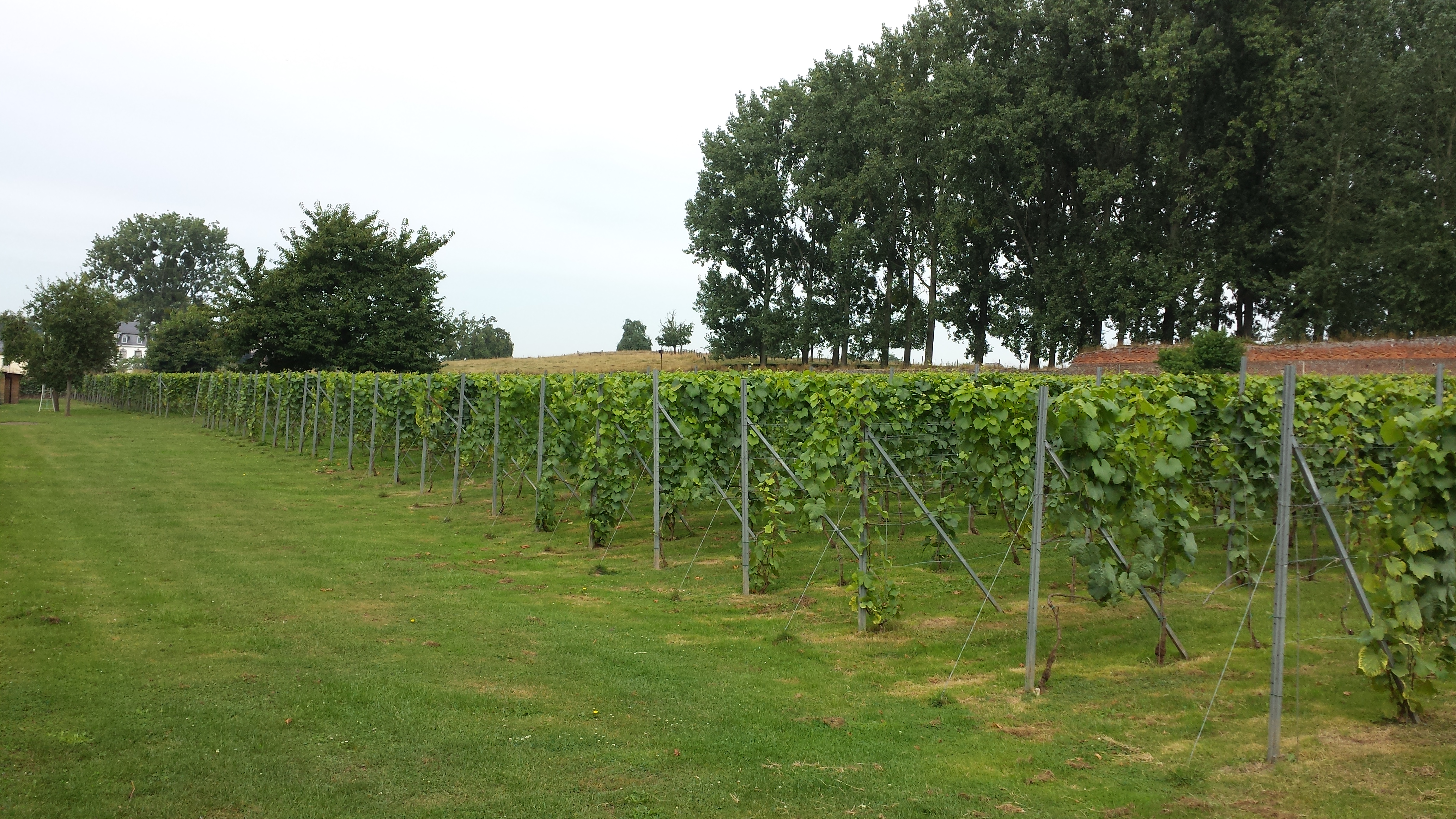
When I think of a Professor, I think of someone who likes to try new things and experiment. I think this does describe what Ghislain Houben really well when you look at his vineyard. What started with having some animals and a few cherry trees has since 2002 grown into a vineyard with more than 5000 vines known as Wine estate Hoenshof.  I was really surprised on the wide variety of different grapes (and wine as end product) Professor Houben has on his estate, from Chardonnay (with which he has won a price as best Belgian Chardonnay in 2011) to Cabernet to Dornfelder and he keeps  trying new things 🙂

Hoenshof vines 5

Hoenshof vines 4

Hoenshof vines 3

Hoenshof vines 2

Hoenshof vines 1

Although Wine Estate Hoenshof has won prices with his white wines, the future of the estate will be focusing on good quality red and dessert wines as the amount of vineyards producing this in Belgium is quite low. During our visit Professor Houben showed us a map with on it all the vineyards there were in Belgium around the 18th century (in red), I must say we were all amazed to see how many there were in these regions today the day it is not even 1/3 of amount you see on the map… funny enough most in the regions that are now also “well-know” for making wine.

Belgium vineyards 18th century

What differentiates Wine estate Hoenshof from most vineyard is Belgium is the type of barrels that get used. Most vineyards will be using French oak aka winter oak, as for Hoenshof they decided to go for summer oak which originates from Austria/Hungary. The big difference between the two types of oak is the fact the summer oak has bigger pores.

Summer oak

With the big assortment of wines we couldn’t just leave without trying all (or most) of them 🙂 I know we are too good for this world, I think one day I’ll be naming a street after me 🙂 🙂

Hoenshof tasting

Hoenshof assortment

Anyhow, tasting we did. Normally I’m not really a dessert wine kind of person as they are usually too sweet and sticky.  It has to be said that the dessert wines Hoenshof makes are anything but sticky or too sweet… they are soft, fruity and nice acids with a nice nose (they smell nice).  I’m not sure which one was my favorite, but if I would have to pick it would be the 2012 Wurzer as it had the smell that reminded me of Mosel/Austrian wines that I like a lot and has a fruity taste with well-balanced acids. Again, I’m not a pro… I just know what I like.

Wurzer

Overall some nice wines not all grape combinations were my cup of tea, but that is a matter of personal taste… I do admire Professor Houben for his creativity and would recommend you to try them yourself and you judge which one is your favorite.

Stay tuned for the last part about my trip through Borgloon…

A trip to little Burgundy the sequel

From all the tasting we did at clos d’opleeuw’s vineyard (that  you could read about in my previous blopost) a person becomes very hungry 🙂 luckily Kris Lismont is owner from a restaurant called “Mondevino”. Mondevino might not immediately ring a bell, but maybe restaurant “Ambrozijn” might sound more familiar. Restaurant Ambrozijn was the restaurant Kris Lismont had with his brother Johan, but earlier this year the brothers decided to go their own way. Johan will be focusing on teaching young cooks all tips and tricks. Kris on the other hand continued with the restaurant, but with a slightly different approach and concept where the focus will be mostly on wine, this resulted in Mondevino.

Mondevino logo

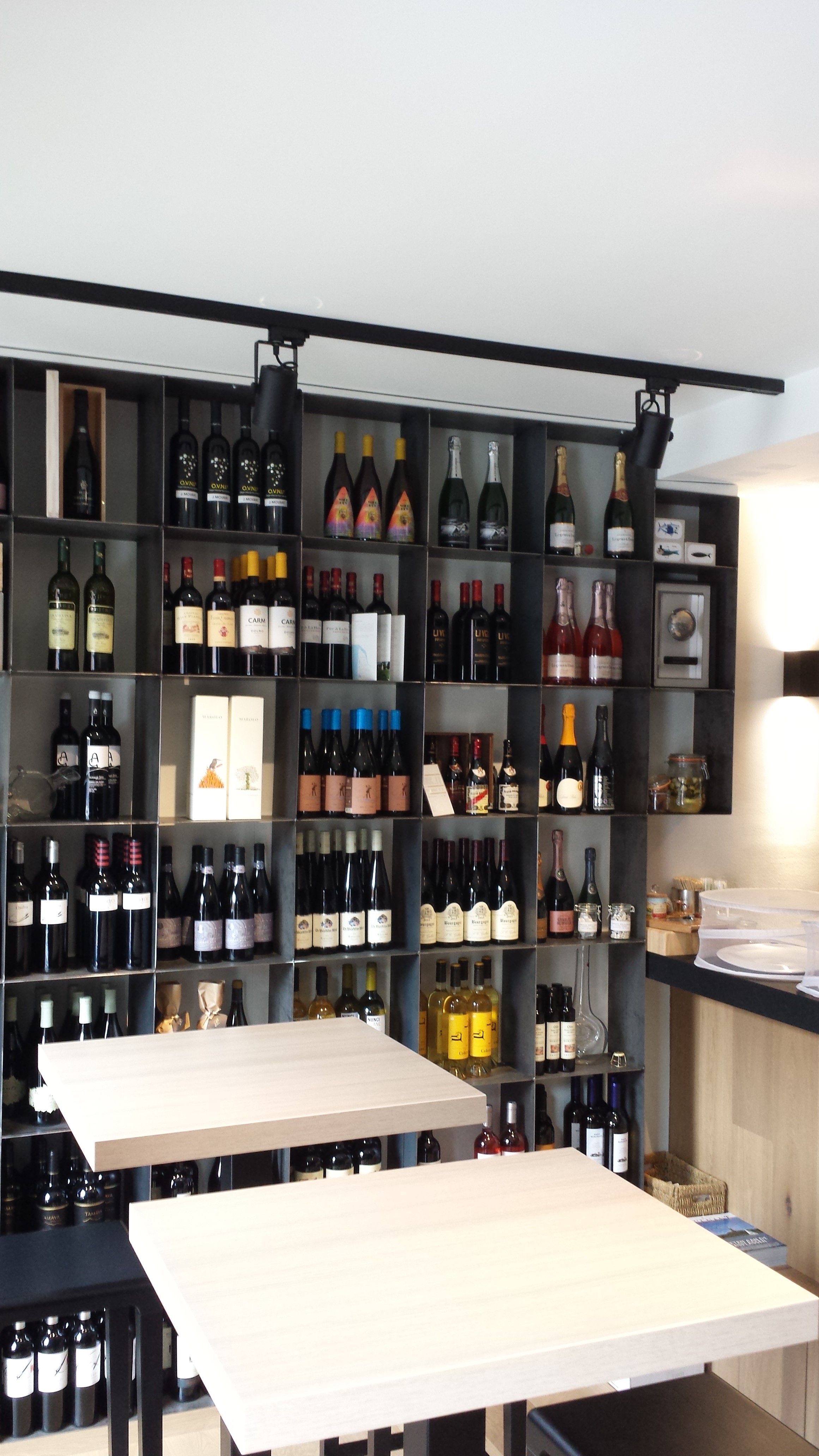
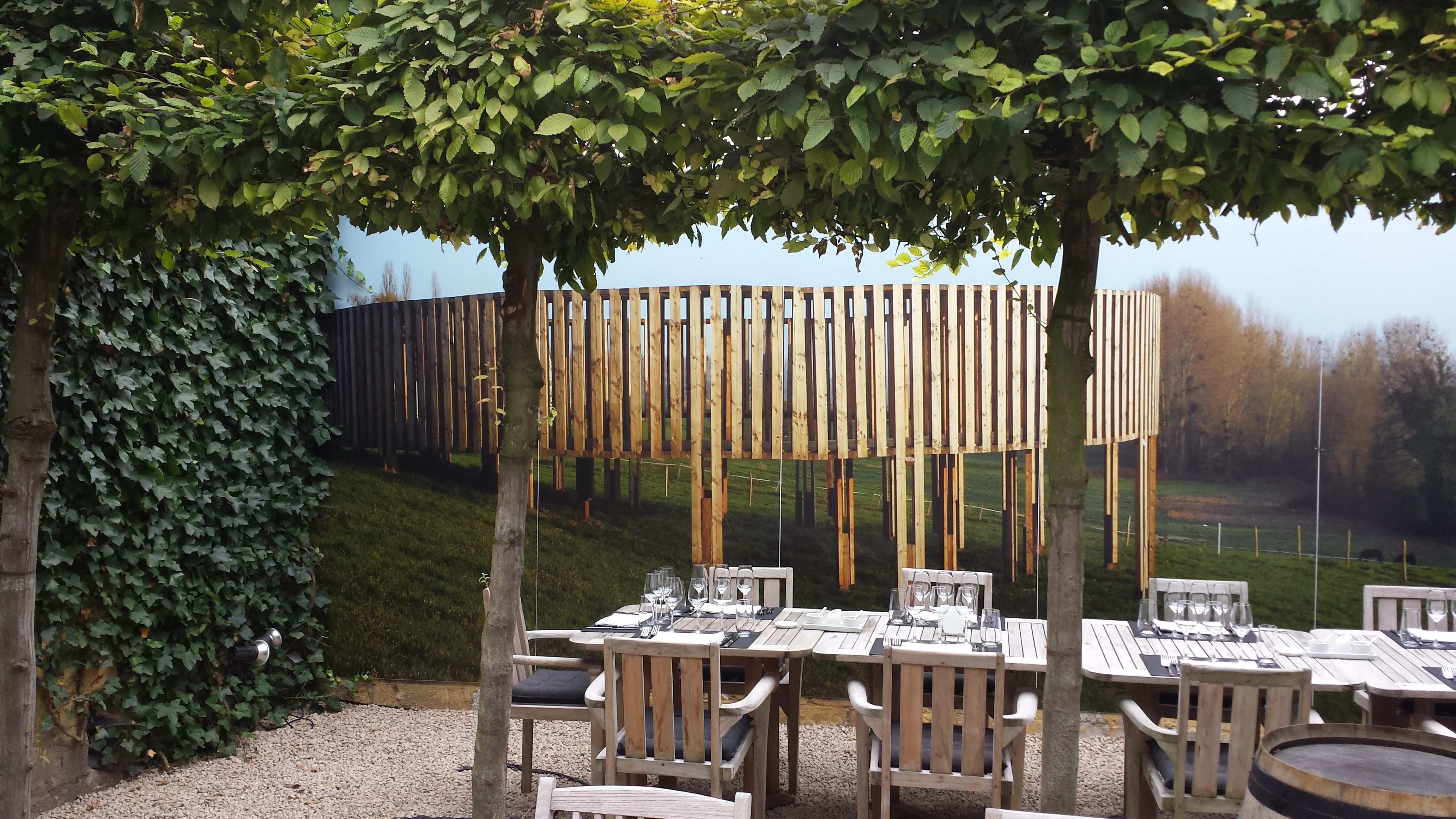
I got instant feeling of happiness when entering Mondevino, not only because of the nice selection of wines you immediately see (I saw some beauties I wouldn’t mind trying), but also because of the very warm welcome (aka Limburg hospitality) Kris Lismont and his wife give you!

Mondevino resto (1)

Mondevino resto (2)

Mondevino resto (3)

Mondevino resto (4)

Mondevino resto (5)

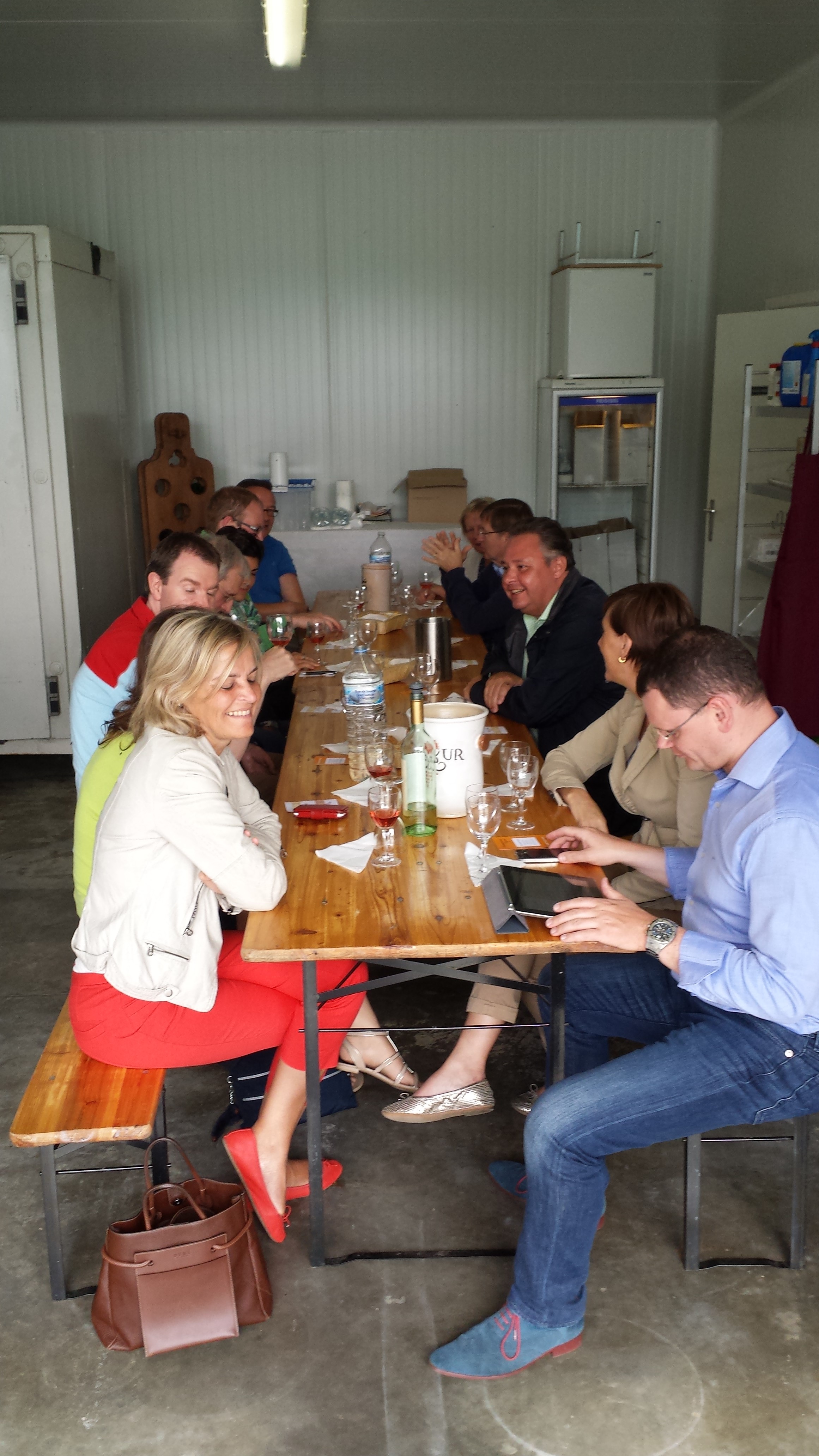
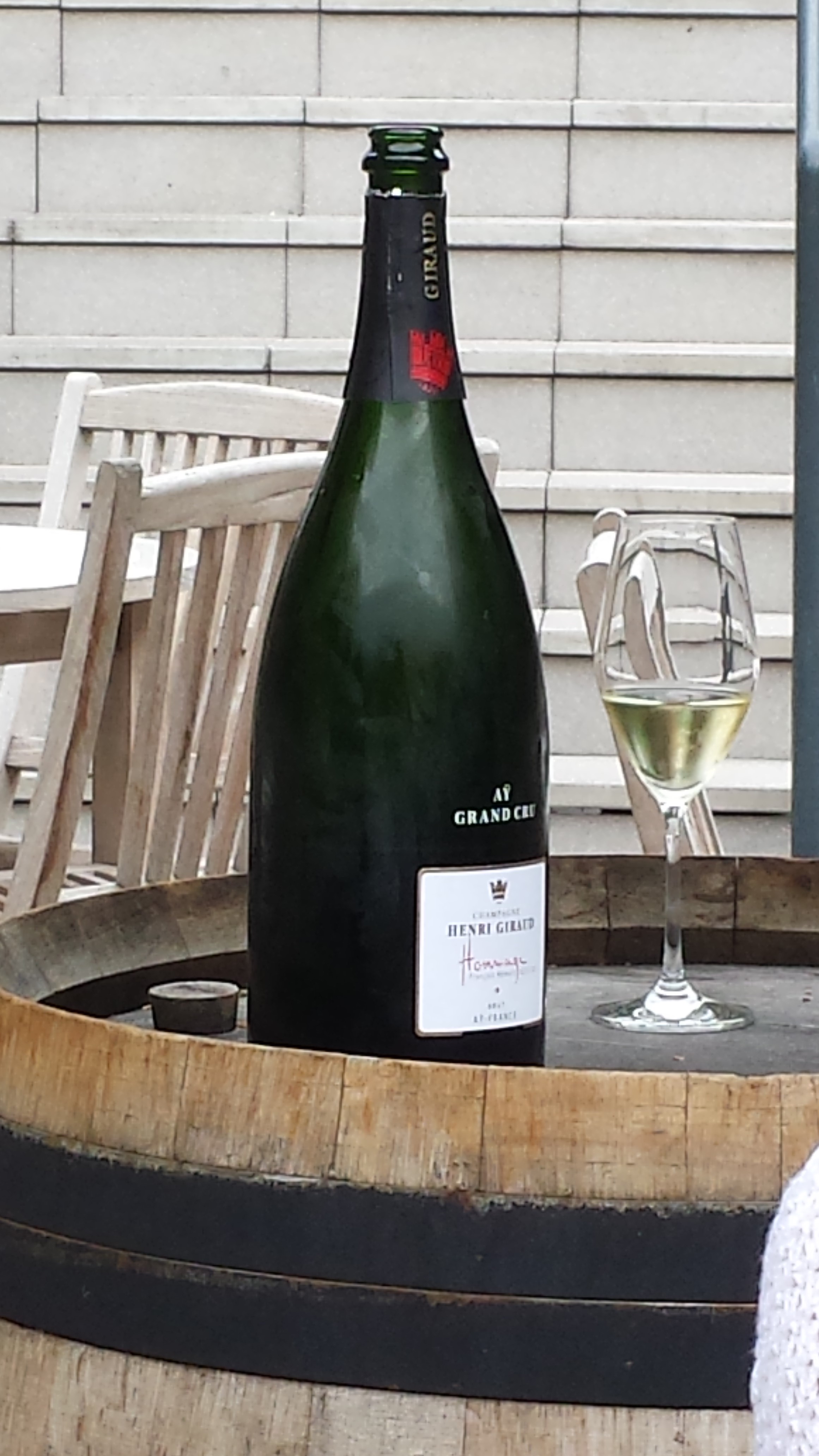
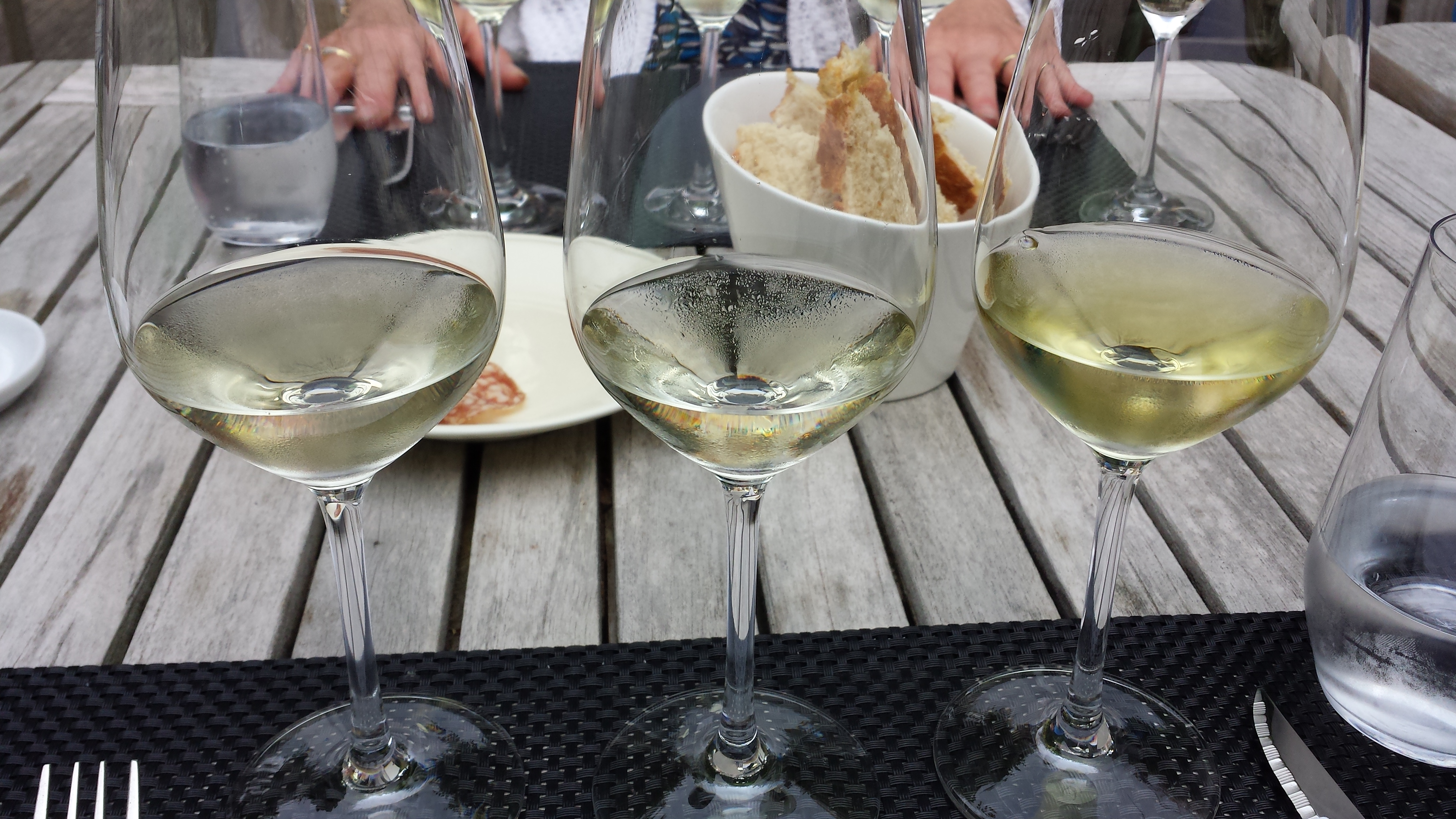
To make the lunch even more fun Kris decided to do a blind wine tasting. So with every course we were given 3 different glasses of wine from which we had to guess the country they were from and which was the best pairing with the dish. I know it might be they did it especially for us, but you should try it sometimes! Finding the country was obviously the most difficult, or at least it was for me 🙂 although sometimes the tastes seemed familiar, but I just couldn’t figure it out. At least everything after our glass of Champagne 🙂 Kris bought this bottle (Henri Giraud) during his trip to the Champagne region and wasn’t sure how it would be, I say it was good

Champagne 1

The first dish they served us was salmon with tepid potato slices and chive cream. The wines we got with it (first without knowing the kinds) were a 2012 Chateau Simon Graves Blanc (FR), 2009 Pinot Bianco (IT) and a 2012 El Hada (Verdejo – ES). It is strange that now that they gave us the choice one really starts drinking/tasting different. I mean normally you just drink whatever they give you and don’t really think if it really works together with the dish, but this time when having to choose between those 3 you start to think which taste goes best together… Me personally I don’t know the technical details behind it, but at some point you just feel/taste it that the combination is right! Cant’ explain it, it just is like that 🙂 I’m also glad my taste buds where nearly as good as the ones from the pros. I didn’t guess the countries, but I did guess which one was best with the dish and the winner was the Verdejo. (Everybody agreed on this one)

First course wines

First course salmon

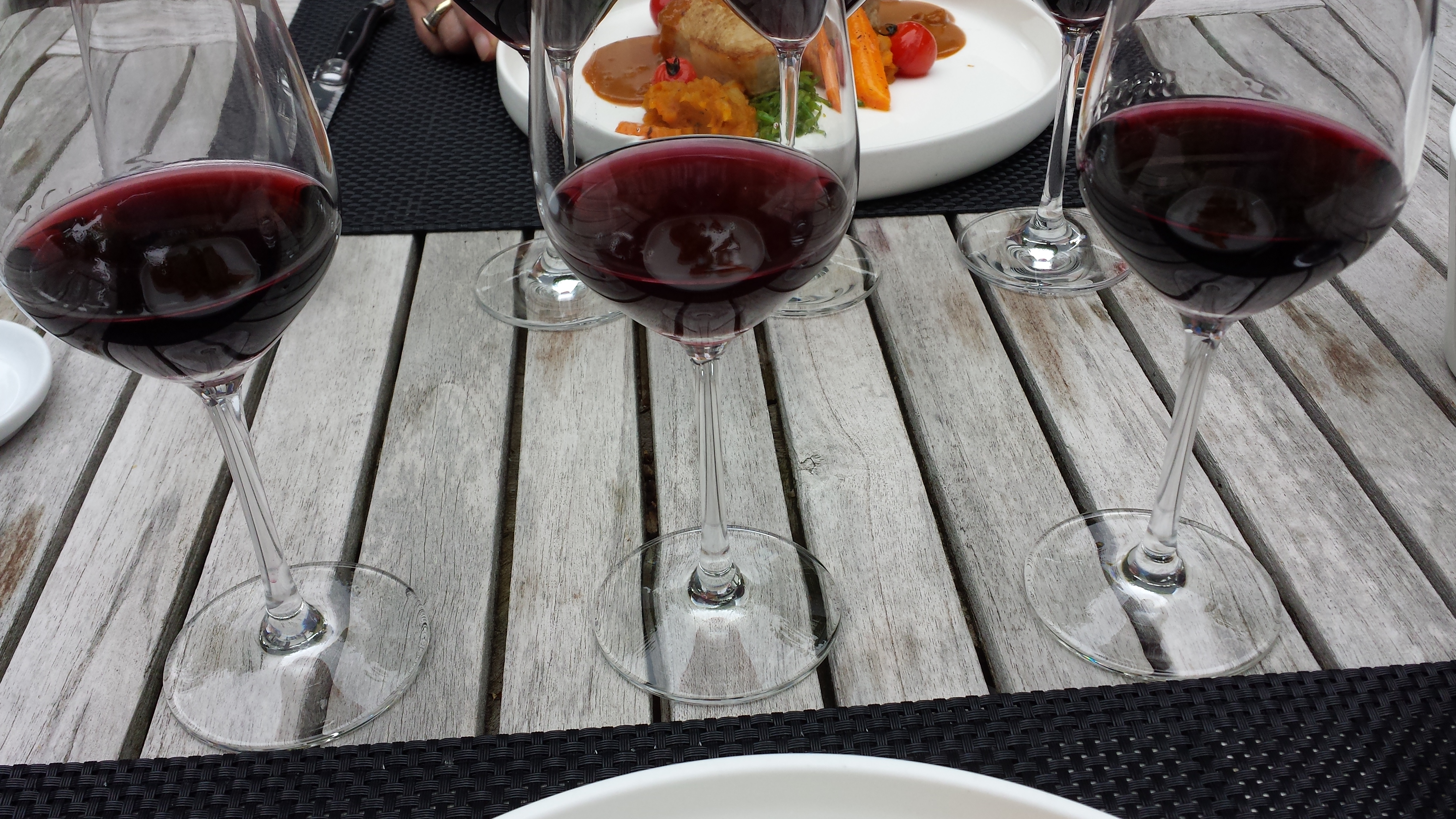
The next round was the same, but with red wines in combination with some Lomo Duroc with Blackwell sauce. This dish needed some strong, but not too strong though. They did chose to go for the same countries as with the white wines, but again we only knew that afterwards. The wines we had were a 2009 Chateau Argadens  (FR), a 2010 Les Crestes (ES) and a 2011 Dolcetto d’Alba (IT). It was the Dolcetto d’Alba that fitted best with the Lomo Duroc… it didn’t overpower the taste of the food, but was still powerful enough… and it might be a coincidence that Dolcetto is one of my preferred wines.

Main course wine

Main course

We finished our meal with a Trifle of red fruit from the area, this time no wine as we still had to visit 2 more vineyards and the line has to be drawn somewhere right? 😉

dessert

To summarize this lunch experience, it was not only a delicious meal, but also very educational one. I will definitely be back, if only already for Kris’ enthusiasm!

Definitely a nice spot to stop during your trip(s) in the beautiful hills of Haspengouw!

Address: Tongersesteenweg 30, B-3840 Borgloon

Website: http://www.mondevino.be/

Phone n° : +32 (0) 12 74 72 31

Opening hours:

Wed – Fri: 10.30h – 23h

Sat: 17h – 23h

Sun: 11.30h – 17h

To be continued with more about my trip and visits to vineyards in Borgloon…

A trip to little Burgundy

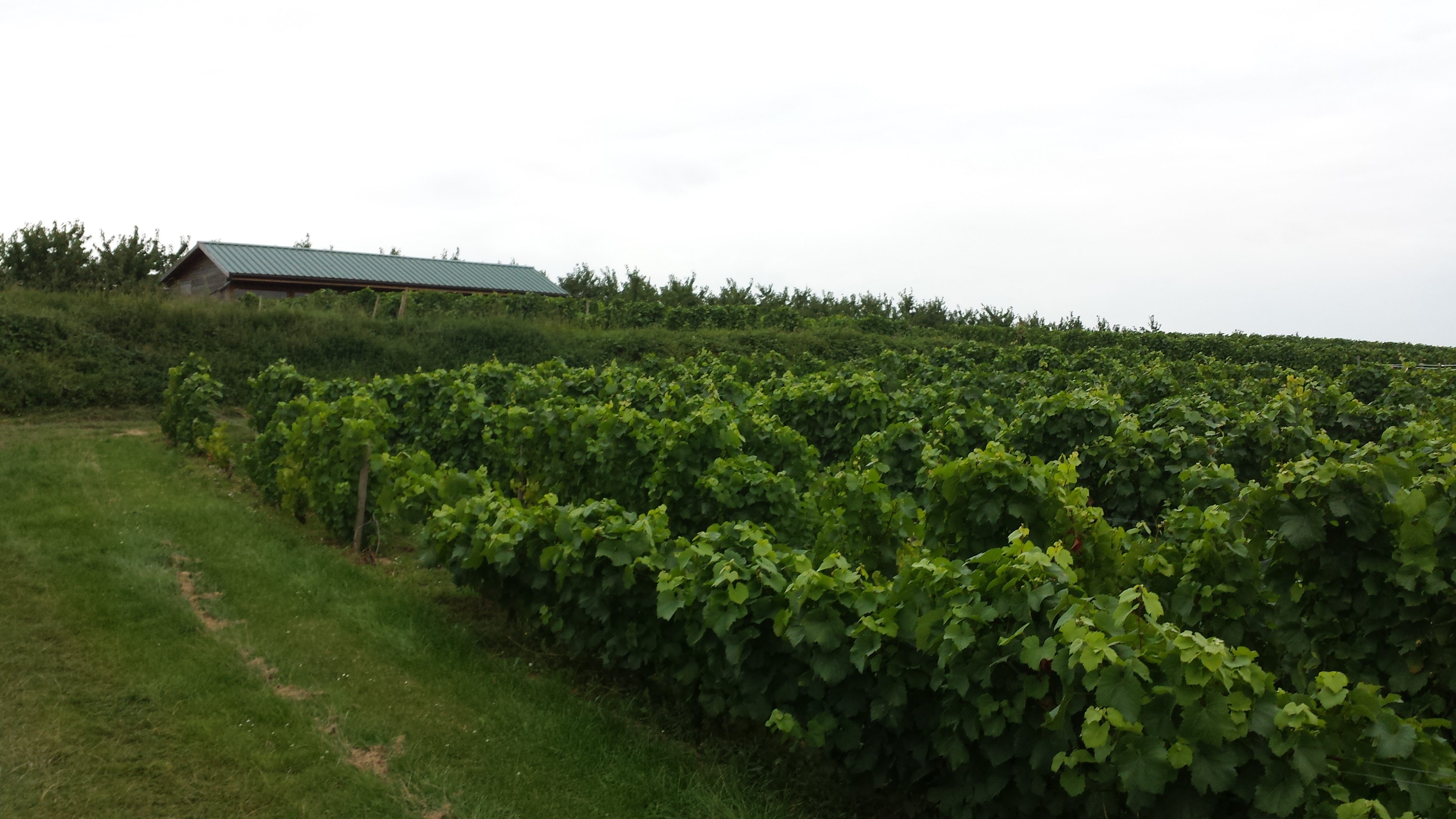
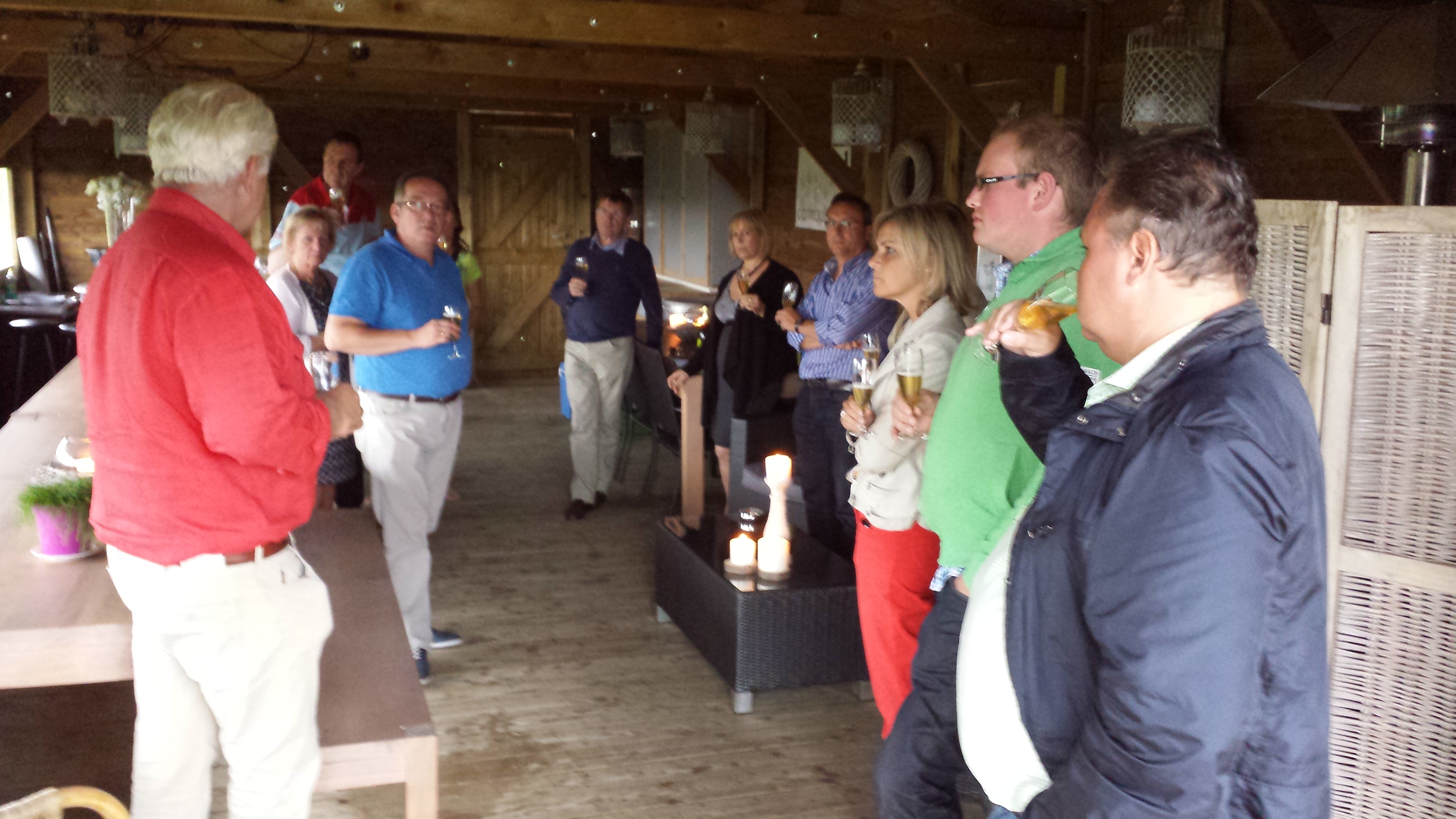
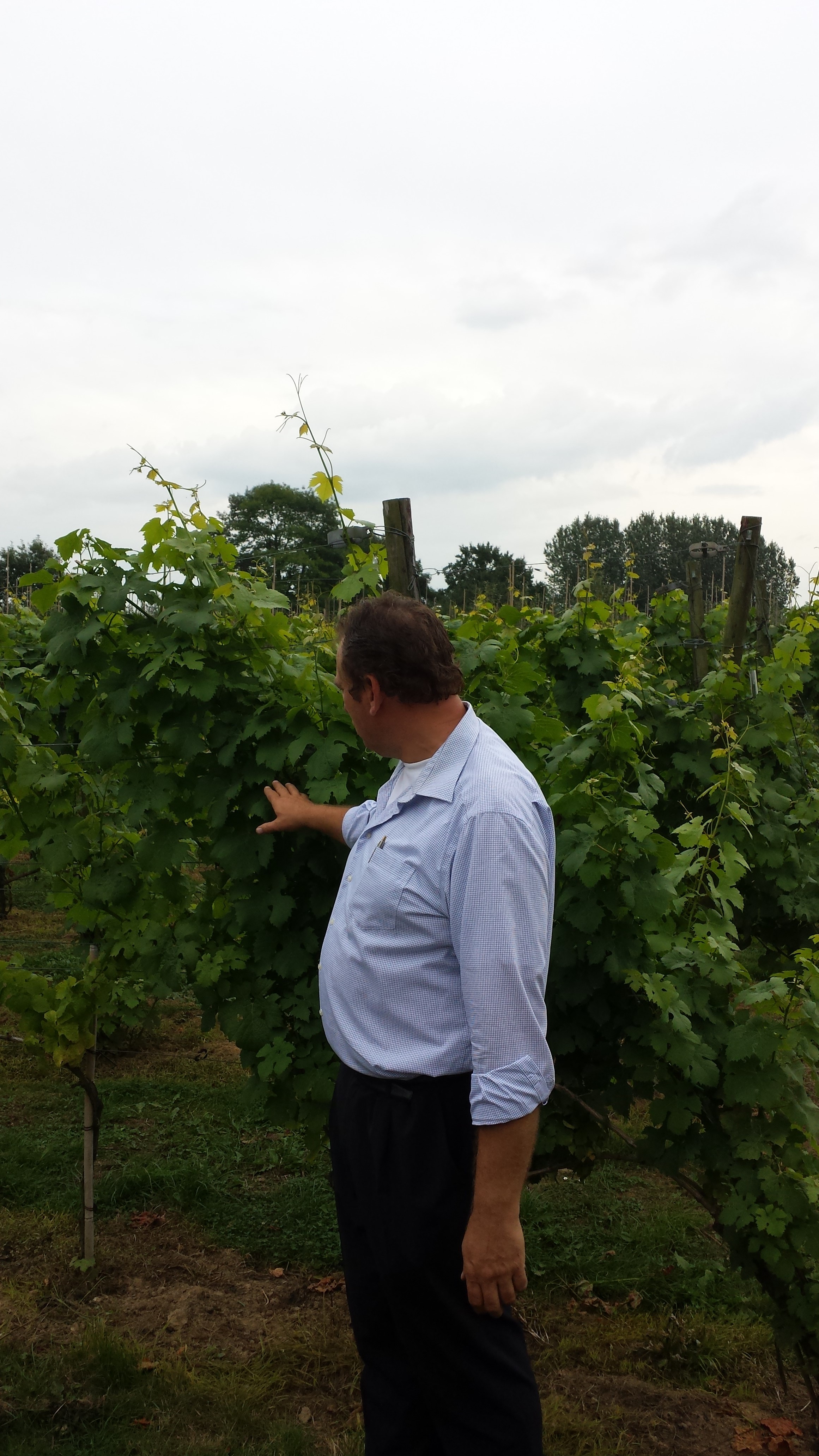
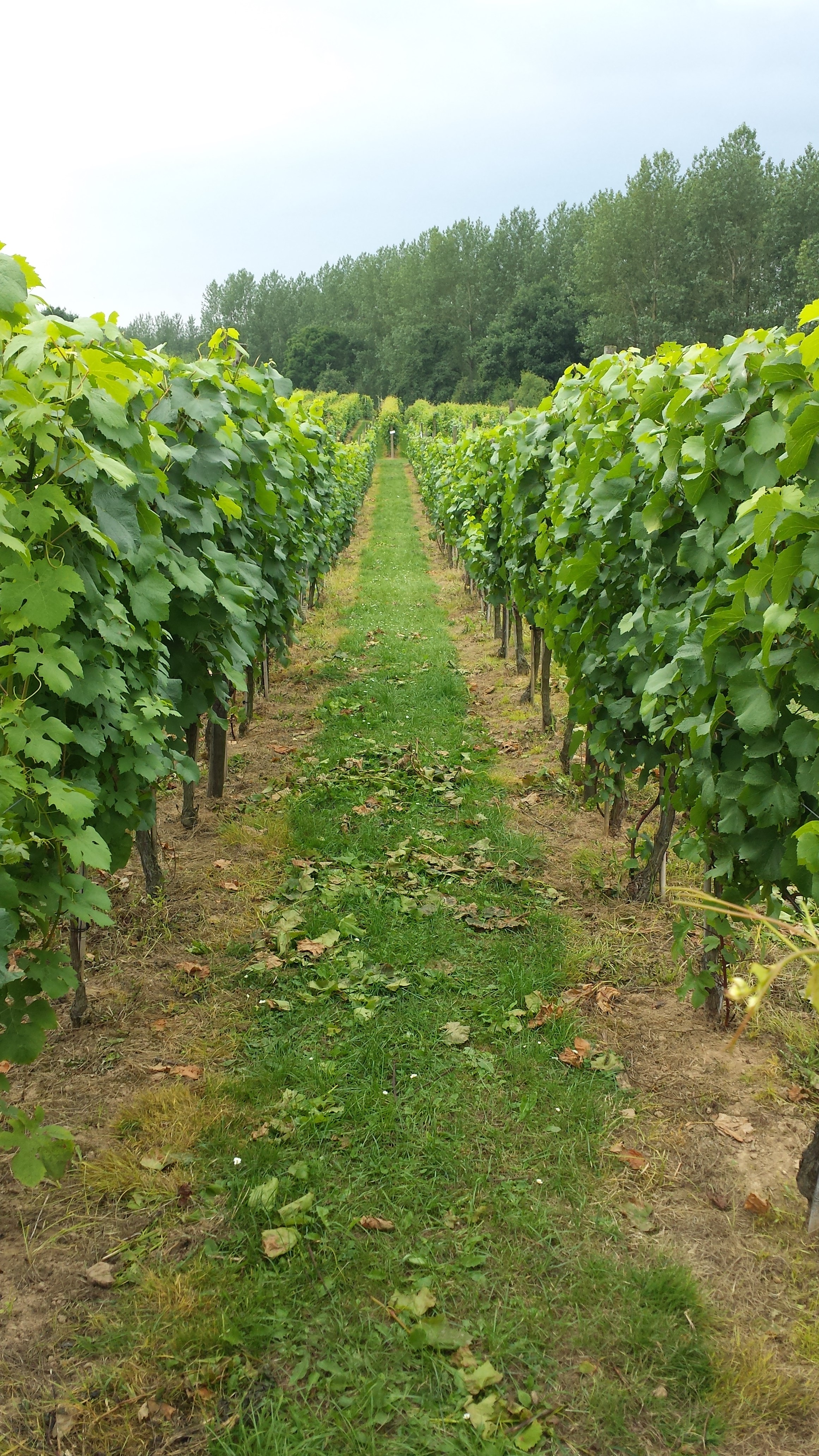
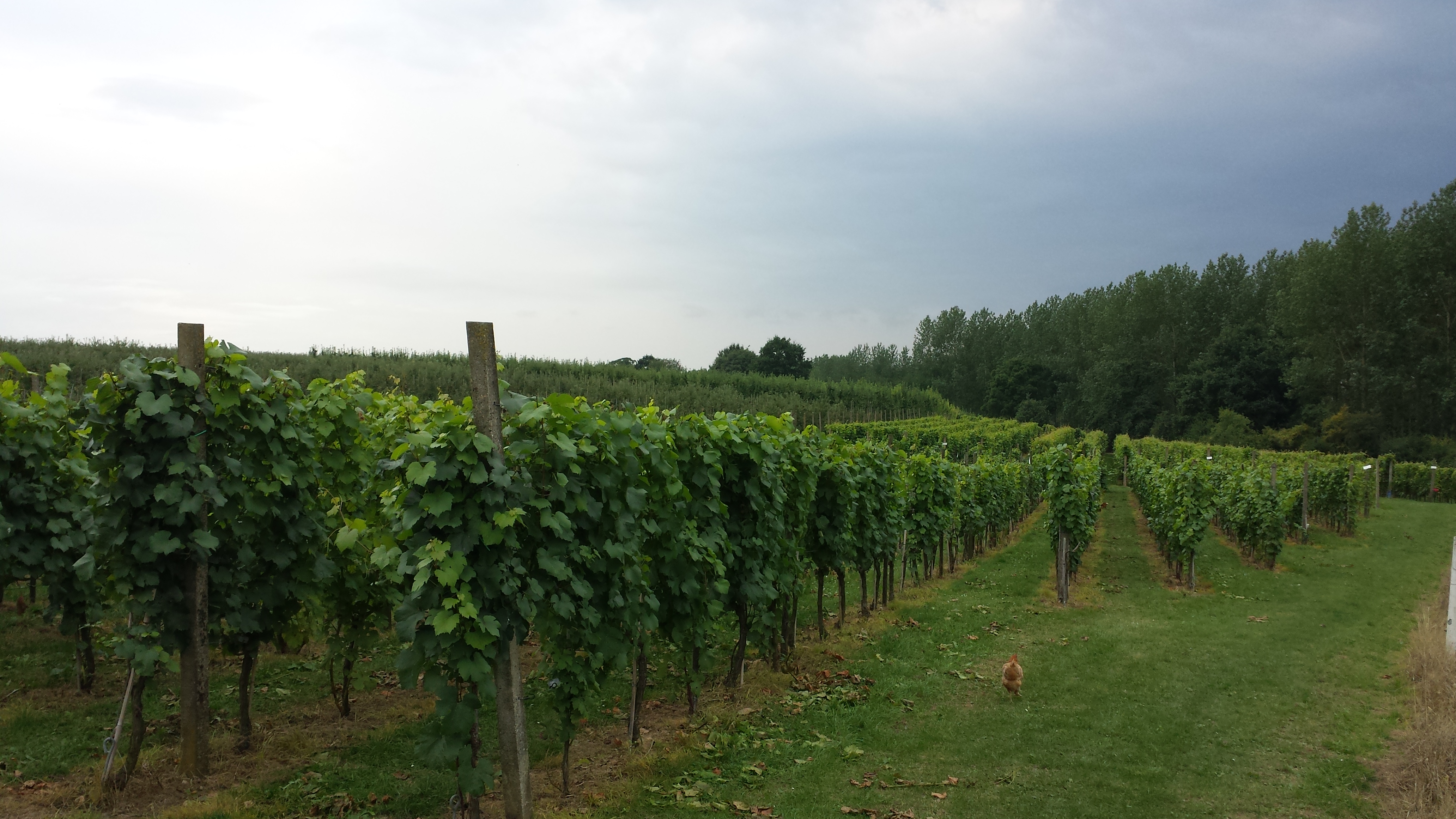
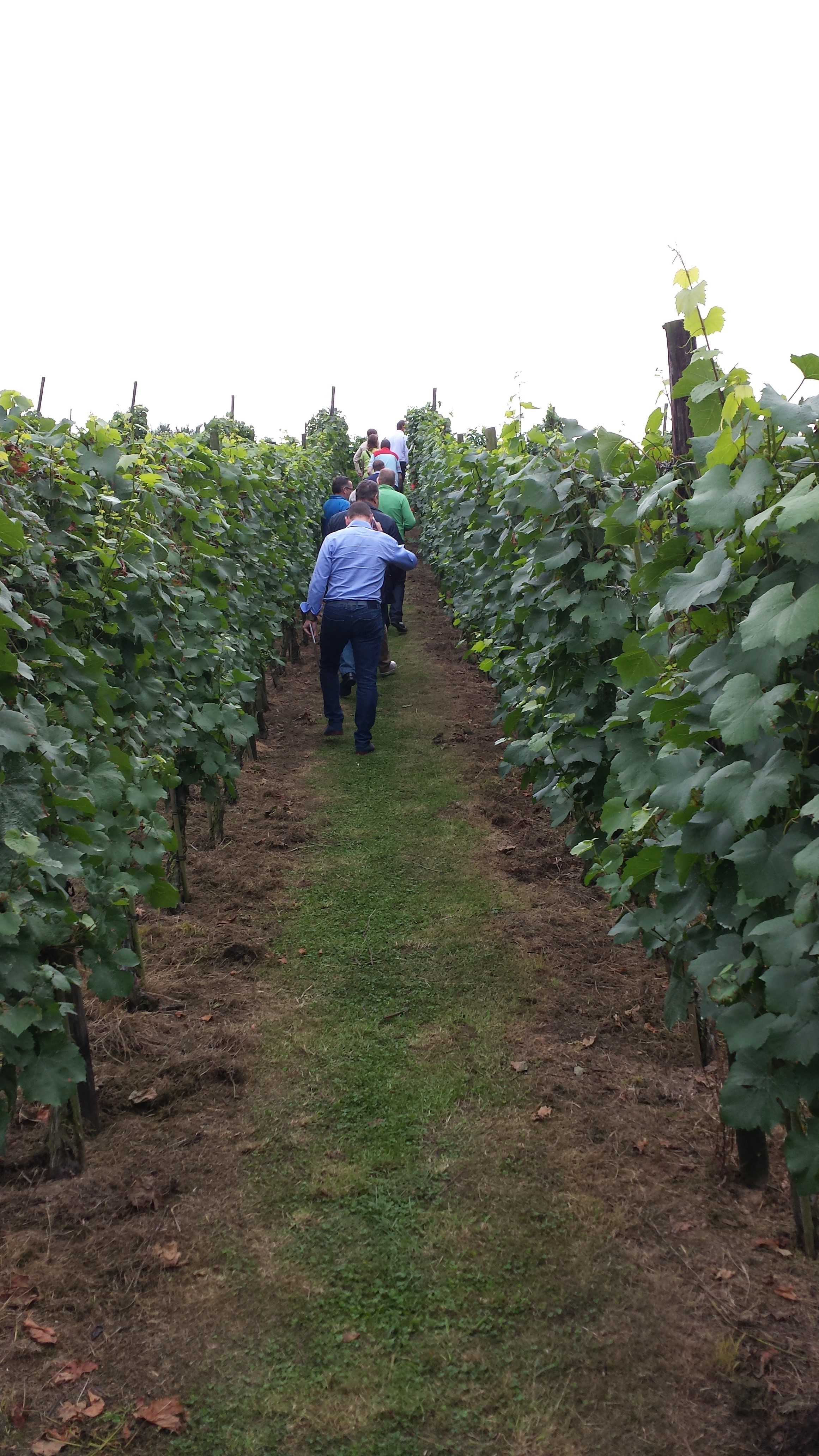
It might seem that I’m exploring a lot of the eastern part of Belgium (Limburg) lately, but they just have so many great things to explore :-). This time my trip east brought me a little town called Borgloon, which is a little town right in the heart of the Belgian Fruit region also known as “Haspengouw” (beautiful for cycling in spring). The red wires during this daytrip were top Belgian wines and 2010 best Belgian sommelier Kris Lismont.

I know Belgium is not known as a wine country, but I can say for a fact that the amount of winemakers making good and even great wine that can easily compete against the famous wine countries is getting bigger by the day! Thanks to Kris Lismont we were fortunate enough to visit a 3 of them with all the same goal putting Belgian wines on the map.

The first vineyard on our agenda is maybe to me the maker of the best Belgian white wine. I’m talking about the lifework (since 2000) of Peter Colemont aka Clos d’Opleeuw a vineyard from only 1hectare. Peter only makes Chardonnay (1 year in best quality oak barrels) wine from 5 chardonnay grape varieties. I must correct myself he also has a few Pinot Noire vines but the wine he makes from these grapes is for private use only, or at least until Peter finds the quality good enough for actually sharing it with the world (I tried it and have to say although it is still young it had a typical Pinot Noire taste to it). Back to Clos d’Opleeuw’s signature products their Chardonnay that during lots of blind tastings of well-known white wines is mistaking for a Burgundy wine… so that’s how good it is! Before I start speaking of the wine, maybe I should first tell you more about the person behind the vineyard. Peter Colemont is besides a very friendly and modest person also someone who knows what he wants and is not ashamed to say he consults well-known winemakers and wine experts to make sure he’ll make a TOP product. Peter even worked for a while in some well know vineyards in the Burgundy Wine region to fine-tune his knowledge on how to make wine. When we asked him who gave him the passion for making wine, he said without hesitation Jean Bellefroid who was a pioneer in making Belgian wine.

Peter Colmont

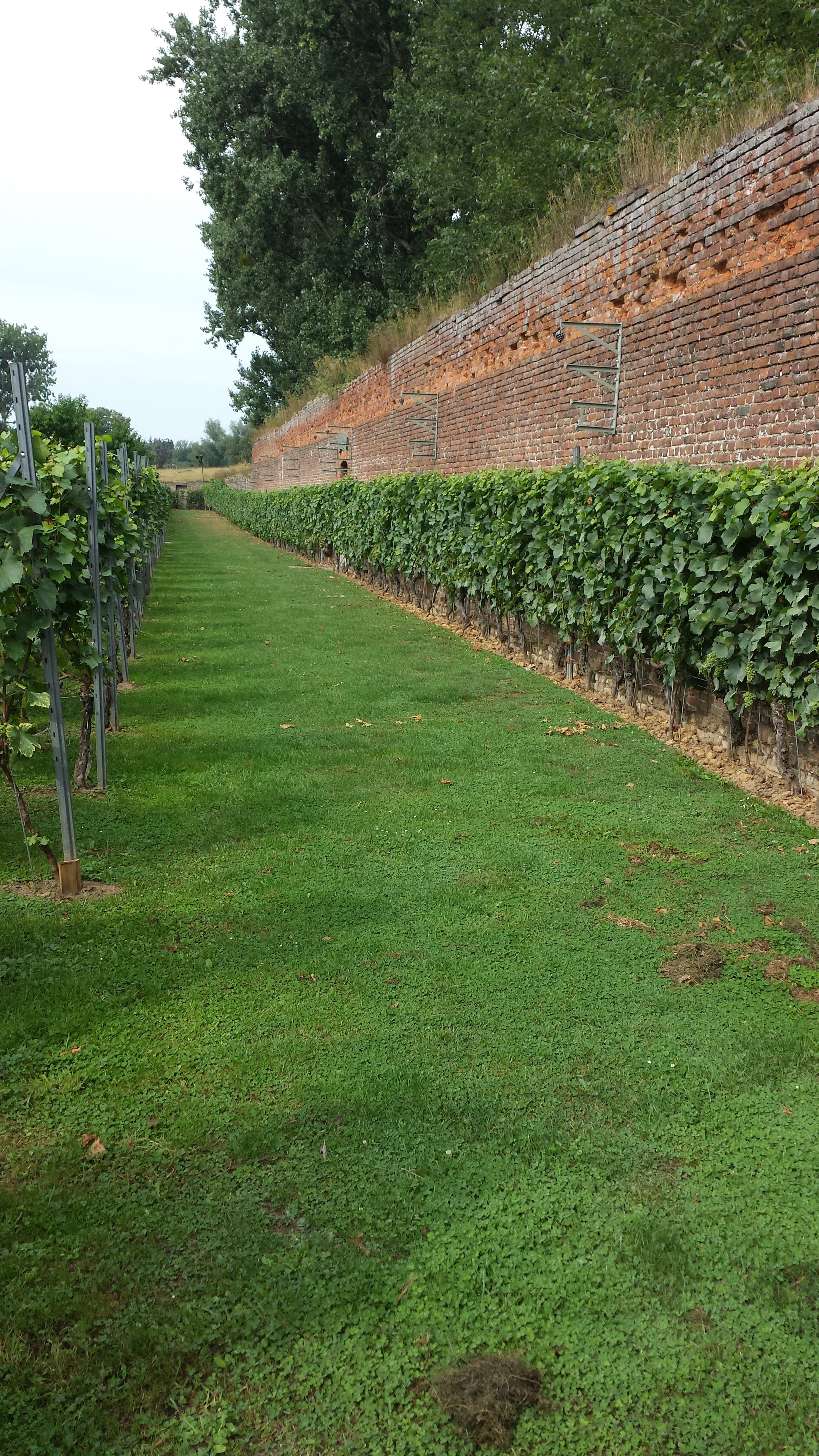
There are multiple reasons this wine is this wonderful 1st of all because of the lime/loam soil in combination with the fact it goes downhill is perfect for the “drainage “of the water (and in Belgium there is a lot of rain 🙂 ). Just think of vines of Chateau Petrus, this also goes downhill. BTW when you see a mistletoe tree you immediately know the soil is lime/loam as this tree only grows on this type of soil.  Secondly because of the fact it is a “Clos”, which is the French word for “closure” or “enclosed”, so basically this means it is a vineyard with walls around it used to protect the grapes from theft as well as improving the mesoclimate. The mesoclimate will be creating the perfect circumstance and environment for growing the grapes (or any other fruit you would like to grow). This is a “technique” used in lots of French regions for making wine. The last and maybe most important reason is Peter himself as he works with so much devotion, care and passion! There is a saying that says “everything you do yourself is done better” well this is Peter’s motto as he does do it all himself, he literally crawls on hands and knees between all his vines to check and take care of every branch. He could use a machine, but this would cut away too much.

Clos d'opleeuw 1

CLos d'opleeuw 2

CLos wijngaard 1 Clos wijngaard 2

Clos wijngaard 3

Clos rijpingskamer

Peter’s passion and high quality product didn’t stay unnoticed as people like Jancis Robinson tasted the wine and started spreading the word ( article) and on top of that Clos d’opleeuw’s chardonnay can also be found on the wine list of the 3 Belgian 3 Michelin star awarded restaurants and Oud Sluis! Lots of people would start flying and start to feel full of themselves, but not Peter he keeps his 2 feet on the ground :-).

Clos groep goed aan het luisteren

I did already know Clos d’Opleeuw for a few years, but it was not until 2 months ago (it might be 3 months) that I tried my first glass thanks to Tom Ieven from restaurant Ardent :-). I also wasn’t sad when I could taste it again, but this time in company of the winemaker himself, we tried the 2010 and 2011. The 2007 would be Peter’s personal favorite, at this moment that is.

Clos 2010

Anyhow, to make a long story short(er) you should definitely try a glass (or bottle) of Clos d’Opleeuw when you have the chance!!! I know it might be difficult to find it as the production is not enormous (3000bottles a year)…  and therefore very quickly sold out but you won’t regret it if you get hold of it.

Stay tuned for more about the 2 other vineyards we visited and the lunch we had with of course wine as main topic….